Image 1: Supporters of the Tisza Party follow the election results at the party’s election-night event held at Batthyány Square, Budapest. Photo by Julianna Ugrin
On the night of 12 April, in the wake of the landslide victory of the Tisza Party, Hungary erupted into collective euphoria. Images from election night quickly spread across global media, capturing an outpouring of emotion as people took to the streets not only in Budapest, but across the country. Many who experienced that night, including myself, felt they were witnessing a historic moment. This was not simply a parliamentary election producing a new government, it was a vote for full regime and elite change. Once again, Hungarians expressed a strong sense of belonging to their European allies and the illiberal and autocratic regime of Viktor Orbán, along with its left-liberal “progressive” opposition, was replaced.
This collective catharsis also reflected a deeper sentiment: for the first time in decades, Hungarians could truly claim the outcome as their own. Unlike earlier transformation shaped by global forces – such as the collapse of the Soviet Union – this result was driven by domestic political agency. In that sense, it felt like a belated regime change of 1990, when many Hungarians felt more anxious than relieved – rightly so – and did not perceive themselves as active participants in a transformation largely driven by external forces. It is telling that voter turnout in the first free elections of 1990 was only 65 per cent, while in other parts of the former Soviet bloc it exceeded 90 per cent.
This time, turnout approached 80 per cent. The Tisza Party secured a parliamentary supermajority with 53 per cent of the vote, while Fidesz received only 38 per cent. With this result, Péter Magyar (Prime Minister of Hungary) and his government received unprecedented legitimacy, which, of course, comes with enormous responsibility. There is immense social pressure to begin with a clean slate. It is therefore no surprise that the newly appointed head of the Prime Minister’s Office announced that one of the first measures would be the opening of socialist-era agent files, along with the establishment of an Asset Recovery Office to reclaim stolen assets and public funds misused by the Orbán regime.
What happened to the old opposition?
Since the crushing defeat of the Orbán regime, a number of essays, op-eds, and articles have already appeared, and deeper analyses and academic studies will certainly follow, seeking to draw lessons from the Hungarian case on how to defeat illiberal autocratic regimes (see also Pulay 2026). While the European Union and much of the world shared in Hungarian euphoria with a sense of relief, international and domestic commentators have expressed concern (Scheiring 2026) over the disappearance of left-liberal and progressive forces from the new Hungarian parliament, fearing that these perspectives would not be genuinely represented by Tisza. Many felt, understandably, that only various shades of the Right would now remain in parliament. Others saw Tisza’s victory as final proof of the country’s deeply conservative nature (Szakolczai and Eilenberger 2026).
However, by 2026, the left-liberal opposition’s work had become completely hollowed out. Opposition parties were reduced to a largely reactive identity-political force that, willingly or unwillingly, sustained Orbán’s Fidesz system while having long lost their social base, including the working class. It is revealing that, with the exception of the mass protests triggered by the so-called “slave law” (Overtime Act) (Szombati 2018) at the end of 2018, this opposition never meaningfully engaged with topics such as workers’ rights. Nor did they confront the underlying material and cultural forces of “double devaluation” (Kalb 2023) that had produced the class base of Orbán’s illiberalism in the first place.
At the same time, Orbán had meticulously created a system in which room was allowed for dwarf opposition parties focused on identity politics, thus maintaining at least the appearance of a functioning liberal democracy. The dynamic resembled a predictable political choreography between Fidesz and its opposition. The 2025 ban on Pride by Orbán, followed by the decision to organize the event with the support of left-liberal opposition politicians, was a case in point. Rather than joining the Pride march, Magyar and Tisza party continued to focus on its campaign centered primarily on economic and social issues. Their strategy aimed to address the concerns of a broader segment of society in order to unify the opposition. Magyar also understood that the persistence of these cultural wars at the center of political debate, cultivated for more than a decade by both Orbán and his opponents, had made regime change impossible.
Although the election swept away the left-liberal parties and their political elite alongside Fidesz, voters and politicians committed to leftist values did not disappear. Instead, they joined Tisza and its broader grassroots movement.
The rise of a counterhegemonic force from within
In recent years, Orbán’s illiberal hegemony had already begun to erode. In the wake of the COVID-19 crisis, Russia’s invasion of Ukraine, the drying up of European Union funds for Hungary, and a long series of poor governmental decisions, the economy has been in a bad shape for some time, causing significant material stagnation. Orbánism recorded the highest cumulative inflation in the EU since 2020, with prices rising by 57 per cent. The stark contrast between the material reality of average Hungarians and the unhinged corruption and extreme wealth of Orbán and his cronies became increasingly difficult to conceal. His hegemony was collapsing and the raw domination that had increasingly underpinned it was in plain sight (Éber 2025).
Amid the economic and moral exhaustion of the regime, the counter force emerged from within: Péter Magyar was an insider and for many years a loyal cadre of the Orbán regime. The landslide victory of Magyar’s Tisza Party – and its ability to bring about regime change – was preceded by two years of intensive work centered on a sustained nationwide tour and engagement with local communities. During this period, Magyar established dialogue with the rural majority, moving from village to village and from town to town. This experience distilled the core themes of his campaign.
Out of these encounters, local communities – civil society in its original sense – began organizing themselves into one of the largest grassroots movements of recent decades: the so-called “Tisza szigetek” (Tisza islands), which became the social backbone of the Tisza Party. Crucially, these were not formally part of the party, nor were they created by it. Rather, they were catalyzed by the emergence of Péter Magyar and the Tisza Party, evolving into a parallel social formation alongside it (Borbáth 2026).
Importantly, the main concerns of this social base centered on material issues: the dire poverty of workers, wage conditions, entrenched clientelism, working conditions, systemic corruption, and the erosion of public institutions essential to social reproduction such as health and education. These concerns formed the unifying core of Tisza’s campaign and produced a potentially counter hegemonic focus on everyday material concerns away from Orbán’s increasingly fictitious identity politics.
Nevertheless, these issues were in fact far from new. As a social anthropologist focusing on small business owners and conducting fieldwork in the countryside between 2015 and 2016 – at the height of the so-called migration crisis – I observed that the main concerns of my interlocutors revolved around much the same issues – even as people lived amid Fidesz’s hate propaganda and xenophobic hostility toward migrants, and the country was saturated with government posters conveying anti-Brussels hate messages.
Even during the relatively favourable global conjuncture between 2010 and 2019, when foreign capital and EU funds were flowing in, the structural problems of the economy and the labour market had persisted, particularly the extremely low taxation of capital, reaching as low as 3 per cent (Scheiring 2020) and the relatively high taxation of labour, despite the new flat tax (Scharle and Szikra 2015), which contributed to low incomes, a high level of undeclared employment and impeded formal job creation in small and medium-sized businesses. As a result, my interlocutors, small business owners, were often confronted with labour related issues, while self-employed workers were constantly hustling, working multiple shifts and combining various jobs simply to make ends meet. People managed to get by largely at the cost of self-exploitation. Meanwhile, formal labour became more flexibilized than ever, giving way to informal paternalistic mechanisms of labour control and surveillance (Szücs 2021). Fidesz’s ideology promoted a “work-based society” while curtailing workers’ interests. The so-called progressive side, meanwhile, had long abandoned the working class as well.
Contrary to the claim that the decline of left-liberal parties reflects an inherently conservative Hungarian society, value-mapping surveys indicate that majority of Hungarians lean economically left, with egalitarian and redistribution-supporting values remaining dominant, while only a small minority holds strong market-liberal views (Bíró-Nagy et al. 2022). This was clearly reflected in Tisza’s campaign and became the source of its success. To frame social and economic concerns, Tisza drew on national symbols and shared cultural references – Hungarian flags were everywhere. The reappropriation and rearticulation of the nation against an Orbánism that had turned it de facto against the demos proved a powerful mobilising any unifying tool, though it was often misinterpreted as evidence of an inherently conservative orientation.
The use of national symbols, including the Hungarian flag, may appear banal, but in a country where from the late 1990s the first Orbán government instrumentalised them for division, their reappropriation for democratic purposes carried a deeply liberating meaning for many Hungarians. It signified not ethno-national exclusion or national security vis a vis foreign forces, but rather a sense of popular democratic revival.
The new Tisza government was just inaugurated, so any full assessment of its policies remains premature. However, its general direction is already clear: strengthening ties with the European Union and reintegrating into its institutions; playing a more active role in Central European politics – Poland and Austria were the first to be visited after Brussels; diversifying energy sources in order to reduce dependence on Russia; rebuilding the rule of law and institutional frameworks, including going after misspent public money; restoring checks and balances; revitalizing the economy; strengthening public sectors such as education and healthcare; and reducing social inequalities.
Preliminary lessons learned
Liberal-left parties became embedded within Orbán’s illiberal system and failed, over sixteen years, to establish an effective counterhegemonic force, in fact replicating Orbán’s identity politics from the other side. Their focus on identity politics – largely shaped by Western liberal frameworks – proved politically powerless in the Hungarian context. The rediscovery of the material concerns of the broader population was crucial in Tisza’s victory.
A relentless presence on the ground, combined with the catalysis of a bottom-up grassroots movement, helped to counterbalance the omnipresent, increasingly AI-driven, fear-based propaganda of Fidesz. At the same time, the election was smartly framed as a choice between East and West, to which the Hungarian majority, always already pro-European, responded strongly. The Hungarian case demonstrates that what counts as “progressive” is context-specific, shaped by history, socio-political structure, and culture. Rather than relying on a priori assumptions of what progressive politics is and how progressive forces should respond to far-right and authoritarian challenges, it shows that credible political alternatives must be locally anchored and socially meaningful in order to succeed.
Luca Szücs is an anthropologist with a PhD from the Martin Luther University Halle-Wittenberg and the Max Planck Institute for Social Anthropology. After working at the International Labour Organization (ILO) headquarters in Geneva, she now works as an independent consultant on labour-related topics. Her research and writing explore the changing world of work, as well as the politics, society, and culture of Eastern Europe through historical and ethnographic perspectives.
Scharle, Ágota and Dorottya Szikra. 2015. “Recent Changes Moving Hungary Away from the European Social Model” in The European Social Model in Crisis: Is Europe Losing Its Soul?, edited by Daniel Vaughan-Whitehead. Cheltenham: Edward Elgar.
Scheiring, Gábor. 2020. The Retreat of Liberal Democracy: Authoritarian Capitalism and The Accumulative State in Hungary. Cham: Palgrave Macmillan.
Szücs, Luca. 2021. “Moral Economy and Mutuality at Work: Labour Practices in Tobacco Shops”. Pp. 57 – 75 in Moral Economy at Work, Ethnographic Investigations in Eurasia, edited by Lale Yalçın-Heckmann. Berghahn: New York – Oxford.
Image 1: Don Kalb and Marion Berghahn at the launch of Value and Worthlessness at the AAA annual meeting on November 21, 2025. Photo by Stefan Voicu
What a joy to be hugged, celebrated, and criticized by stellar colleagues who intimately know the stakes of invoking Marx in more than a fleeting way in anthropology; stakes that may be higher here than in other social disciplines. Theoretically and methodologically, anthropology is deeply imbricated in liberal and less liberal idealisms, with a stark belief in cultural contingency, and rather wild about the idiography of cultural difference, alterity, and autonomy. If the discipline moves Left, it naturally inclines towards anarchism, mutualism, ethics, radical versions of rights and humanitarianisms or posthumanitarianisms beyond the regular liberal offer, rather than to Marxism and political economy with all their system thinking. The anthropological desire is definitely for a human self that is autonomously thriving on ‘the outside to capital’.
This is largely how the discipline has fared during the worldwide political contestations of the 2000s. Hence the importance of a public anthropologist like David Graeber, who had the genius to catch the Left spirit of the time in the 2000s, before that time itself was fully aware of it. The soon to be coming counter revolution, however, was less noticed by David, or by our discipline at large, though the right wing backlash was smoldering already during the Left wing years. Anthropology only caught up with it, in shock, when the radical Right was already comfortably seated on the plush of Western governmental power, increasingly determining not just ‘policy’ but a full-fledged program of defensive-aggressive Western civilizational supremacy. Unpleasantly surprised, and aware of their own vulnerability, anthropologists at once realized they had long preferred to study ‘people like us’ (nice Left-wanting people) and had ignored questions about labor, class, right wing political anger, and fascism. The inside to capital was blowing back as a boomerang. Ten years later, this still describes our deeply worrying situation.
Admittedly, those of us who were located in, and working on postsocialist Eastern Europe (CEE) were somewhat better prepared than the Western and Southern liberal mainstream. We had seen the counter revolution of the illiberal Right taking shape in the late 1990s and early 2000s already. CEE, it turned out, possibly to our own surprise, was not the liberal laggard of Western imagination, but an illiberal avantgarde that would soon be followed by the West and many places of the South.
The political sociologist David Ost and myself were among the first to notice the deep class dynamics behind the process, dynamics that I later sought to succinctly capture with the concept of ‘double devaluation’, for which Jaume Franquesa salutes me. I love Jaume’s sudden observation that actually none of the concepts that are central to ‘Value and Worthlessness’ (Kalb 2025) are new, that the book is just an unapologetic argument for anthropological Marxism consistently worked out: class, labor, capital, dispossession, social reproduction…imperialism. These days I lay more emphasis than I used to on devaluation and on value, value regimes, and an anthropologically informed dialectical take on the law of value, what Voicu rightly calls my ‘huffing and puffing’. These concepts were less common in the anthropological structural marxisms of the 1970s (though I owe Jonathan Friedman, a survivor of structural Marxism 1970s style, for having pushed me along this path without him being much aware of it, I guess), but Jaume is so right: nothing new, really, just an update of an existing Marxist toolkit and a modest anthropological rethinking under new circumstances and with new problems at hand, within and against a drastically transformed capitalist totality of social relations as compared to the one that produced the 1970s Marxist upsurge. My categories and approach are tuned into that new reality and coined in order to help explain the radical right wing political backlash in CEE and anywhere, in anthropological ways, that is.
I want to emphasize that I have never felt much for the overt structuralisms of those days. At every turn I try to dip my approach to value (“value and values, value regimes”) in what I call relational realism: relations that can be studied, ‘life in and as action’ on worldwide, as well as regional, national, and intimate levels; levels that are dialectically imbued with each other as in multi-scalar relationships; relations with others on which we depend and that shape who we are and who we can and want to be. Hence the ‘structured totality’. Hence also Trotsky, not just for his combined and uneven development, which, as Stefan Voicu rightly notes, is essential, but also his early gesture towards multiscalar analysis as expressed in the distinctions he made between ‘algebraic, arithmetic, and molecular’ scales of analysis, a vision Eric Wolf would later set to work in his ‘faces of power’ (without ever citing Trotsky). There is a big and urgent anthropological project in bringing this multiscalar dialectical edifice of value, including the ‘systemic production of worthlessness’, to work ‘close on the skin’ in the biographies, actions and experiences of our key fieldwork interlocutors; helping to bring their hidden histories into view in ways that under normal circumstances are not usually revealed to them.
‘Intimate Marxism’, Sharryn Kasmir calls the result and she likes it; a profound observation plus a seductive name. Thank you, Sharryn. ‘Intimate Marxism’, almost an oxymoron given popular and anthropological prejudices against a Marxism believed to be preternaturally given to obscurantist or even violent abstractions. Marxist anthropology might want to embrace ‘Marxist intimacy’ as a key element of our mission as compared to other Marxisms, but also, and perhaps more importantly, in relation to liberal anthropologies, as Sharryn suggests. We are seeing avowedly ‘liberal’ anthropological approaches to fascism these days that thrive on and all but seem to fetishize what I am tempted to characterize as mere ‘spoken words’, utterances derived from interviews and social media content, without much of an effort to create a compelling understanding of the speaker’s whole, lived, emplaced social life as it unfolds in time and space, with all its contradictions, desires, fears, angers, disappointments, suffering, private victories. Intimate Marxism searches for the full human claim to a worthy and meaningful life beyond inevitably rather random moments of utterance, life with others, and within and against the ‘inside to capital’. This is an ambition that comes with a strong recommendation here, and with a sense of both urgency and patience, to get behind and beyond the facile fascist (etc.) surface. Words are so easily spoken and scribbled up these days, a massive social media – that is, digital capitalist – driven overproduction; a flow of half-digested fuzzy signifiers for people to just show they keep up with the socially necessary speed of circulation (and with their neighbors). But what the hell do they really mean when spoken?
Image 2: Don Kalb and Marion Berghahn at the launch of Value and Worthlessness at the AAA annual meeting on November 21, 2025. Photo by Stefan Voicu
This brings me to the point where I must engage with Ida Susser’s critique that in Value and Worthlessness I am weak on Gramsci, commoning, counter hegemony, ‘Left wing culture’. First, I am puzzled that I have apparently failed to show that my key informant Zadrozny – a person around whom a much broader story is told in my work on Poland – was precisely that type of an outspoken and important organic intellectual that she wants me to look for and that she strangely thinks is missing in my approach. As far as I know that problematic is right there in the middle; it’s what the whole story is about. Zadrozny was a lifelong key actor and organizer within a broad and powerful commoning movement for worker self-management, comprising at various points tens to hundreds of thousands of people, first against the ‘really existing socialist’ state, then against the neoliberal state, both of which would dispossess local workers of their self-managed factory commons (which included much more than those factories: credit, family benefits, kindergartens, health clinics, holiday camps, media!!). All of this is described though perhaps not really studied, it is more a starting point for another type of study, one that helps explain the puzzle of why this all lands on the radical Right side of the political spectrum. I am puzzled that Ida thinks I am neglecting Gramsci, hegemony, counter hegemony, commoning, and organic intellectuals. Maybe it is this: Many of my Western and in particular American friends have always found it hard to understand that the East European illiberal right was not an authoritarian imposition by the state or capital but an actual mass organic counter movement Polanyi style, as well as a counter hegemonic movement Gramsci style, against respectively authoritarian socialist and neoliberal state impositions. It is true that I do not study Left wing culture in Poland in the 2000s, that is because Right wing culture was the big issue and for us Western as well as Eastern analysts the big puzzle.
In Poland worker-led Solidarnosc ended up on the radical Right, just like the mass protests against the privatizations of health and pensions in Hungary in the early 2000s ended up with Orban’s Civic Circles and, in the Northeast of the country, now with a racist twist, with Jobbik. Western Gramscians often find it difficult to understand that there is no automatic affinity between commoning and the Left. The Left is a possibility, not more than that. But what if a self-nominated so called Left in power is your enemy? Regional histories, national public legacies, and relations of power produce crucial differentiations here. In France, the Yellow Vests could have moved rightwards too but in the end, partly as a consequence of street-commoning, as Ida’s (2026) new book shows, they ended up in a Left coalition. That Left coalition may not be strong enough though to keep the radical Right out of power in France: kindred processes of double devaluation as the ones I have observed in CEE are playing themselves out in that nation too, as elsewhere. Populist Lefts and Rights and their organic intellectuals and commoning practices are trying to capture and articulate that popular experience of double devaluation, both attacking the liberal center. As in CEE, in France the Right often dominates in the provinces and the rural areas, in particular those that have long stagnated and have seen big out-migrations. In CEE whole states as such have seen massive outmigrations and have indeed generated dominant, even hegemonic, right wing illiberal regimes in power. In France, the Left can compete in the big cities and sometimes in the provincial centers, such as in the recent electoral victory in Roubaix. More broadly, we should not ignore the fact that Gramsci is entirely embraced by the illiberal international nationalist Right and alt-right.
Being located in and working on CEE, I had to confront the objective of explaining the rise of the radical Right from the deeper popular experiences from which it was assembled. That included the commoning practices, but my curiosity went beyond the overt political organizing, which was established long before I arrived in the late 1990s: what happened to these well-organized manufacturing workers who went from Trotskyism against ‘neoliberal-Stalinism’ in the early 80s to radical illiberal nationalism against neoliberalism in fifteen years’ time? What was the popular experience, the hidden history, that helped to explain this political journey? That is what my approach in the ethnographic chapters helps do. Though I firmly believe that political outcomes are in the end somewhat contingent, they do happen by definition in regionally inflected and embedded ways – as part of the regional insertion into global capital accumulation and class formation; that is, they happen in relation to identifiable and describable value regimes. In the CEE postsocialist peripheries, where a neoliberal Left was hegemonic in the 1990s and 2000s, it meant that they overwhelmingly ended up on the radical right, as part of a counter hegemonic illiberal nationalist alternative. In France, in the core of the EU, with one of the most extensive welfare states in the region, the Yellow Vests in the end moved Left, but whole working class areas in the North and the East of the country moved right too, as they have been doing elsewhere in Europe and much of the world. CEE turned out to be an illiberal avant-garde. But we now also know, with the recent developments in Hungary, that such illiberal regimes too can succumb under their own contradictions, as seems to be happening with Trump and MAGA already.
Local commoning and its outcomes are not determined locally. Nor are what Ida Susser calls ‘political cultures’. Capitalism is a fast moving multiscalar edifice, no outside to that, even though any location has its fundamental specificities as part of its spatiotemporal insertion in the whole, which includes the socio-political histories and ‘political cultures’ of that insertion. That was also true for the South African anti-apartheid fight that Ida invokes; an invocation that is much to the point here. Would Southern Africa have seen the end of the Apartheid state in 1994 without the Polish 1989? Without the Soviet Union having gone bust? With the Apartheid regime still being seen among the Western ruling class as the last bulwark against a violently spreading African communism supported by the Soviet Union (Angola, Mozambique…South Africa)? We cannot be sure but quite possibly not. With communism and the Soviet Union all but gone, de Klerk was encouraged by domestic and international capital and the West at large to negotiate with the ANC. And Poland had delivered the example of the Roundtable. Thus, Poland and South Africa were again linked at the hip as two of the most ideologically and geopolitically significant ‘peaceful democratic transitions’ within an ever more neoliberal US led globalizing capitalism; both of them officially declared successes, but both also failing as inclusive democratic capitalisms for the many; both, as a consequence, ultimately giving rise to strong illiberal populist counter formations, in South Africa the Zuma faction within the ANC, in Poland, populist Solidarnosc against its former dissident anti-communist intellectuals, now the political elite. That new neoliberal Polish state elite and its wider hegemonic public culture and civil society was hellbent on telling the working class that they were just ‘worthless Poles’ who deserved the whip of capital pure and simple. These workers didn’t willingly agree and the Law and Justice regime was the biting result; an illiberal nationalist Right that was very unfriendly against leading liberals but that did reduce poverty and did push up the whole national economy by setting up a natalist/familialist welfare state against the loud protestations of the so called Left that this could only be economic suicide.
The fight, here and there, preferably combined, continues. But for now, the Left, too liberal, too neoliberal, too bienpensant, and in its more radical versions too much tempted towards the outside of capital, has lost. Is this overdetermined, I hear my friend Ida Susser ask? I hesitate and would love to say no. I actually whisper it, but then I see myself jump up and hear me exclaim loudly that there are no voluntarist escapes. Just pulling ourselves up on our belts and start organizing and commoning? No. My hope for counter hegemony does not start by confirming the importance of existing Left wing cultures because that is, as far as it goes, self-evident. It starts with listening very carefully to our ‘lost’ interlocutors in the field and with getting to grips with why ‘we’ ended up beaten by a popular force that ‘we’ used to associate with outright darkness and that we had imagined to have died out well before this 21st century had even started. And here we are. And this while capital and empire are going completely off the leash. Our deeply troubled predicament requires us to move the new global populist Left well beyond the limits of the liberal, limits that are so powerfully inscribed into the system and that will certainly not be overthrown by the illiberals, that is the power of property as capital, a power that is beyond the reach of any constitutional national democracy, and at the same time reject the utopian escape towards the outside to capital. That is why we need a full out rethinking of capitalism and its liberal and illiberal guardians, preferably in anthropologically informed ways. The well-trodden paths of the Left are exhausted. Call what we need revolution please. Some of that is tried in my book. Much more is needed.
Don Kalb is Professor of Social Anthropology at the University of Bergen, founding editor of Focaal and Focaalblog. His latest books are Value and Worthlessness: The Rise of the Populist Right and Other Disruptions in the Anthropology of Capitalism (Berghahn Books, 2025), and, co-edited with Walden Bello, Backlash: The Global Rise of the Radical Right (Pluto Press, 2026).
References
Kalb, Don. 2025. Value and Worthlessness: The Rise of the Populist Right and Other Disruptions in the Anthropology of Capitalism. New York, Oxford: Berghahn Books.
Susser, Ida. 2026. The Yellow Vests and the Battle for Democracy. Taking to the Streets of Paris in the 21st Century. New York: Routledge.
Cite as: Kalb, D. 2026. “Anthropological Use Value for an Anticapitalist Left” Focaalblog May 5. https://www.focaalblog.com/2026/05/05/don-kalb-anthropological-use-value-for-an-anticapitalist-left/
Image 1: Gift shop window in Belgrade, May 2025, photo by Astrea Nikolovska
In the mid-2010s, the tourist center of Belgrade was full of various souvenirs featuring the image of Vladimir Putin. T-shirts, hoodies, mugs, pins, and magnets were sold at every souvenir stand. It was not particularly surprising, given that Serbian people have long felt a particular closeness to Russia. The Pan-Slavic idea of a brotherhood rooted in similarities in language, script, and a shared “Slavic soul” still carries emotional weight in Serbian popular imagination (Đorđević et al. 2023). It also should not be forgotten that, in and around the 2010s, Putin was not yet the image of evil he represents today. In 2008, he danced with George W. Bush in Sochi, exchanged gifts and understanding for 16 years with Angela Merkel, and remained a regular interlocutor and a “victim” of Emmanuel Macron’s “charm.” At that time, he was still seen as an authoritarian, but one the West could work with. Even though the annexation of Crimea in 2014 and the war in Eastern Ukraine framed Putin as “the bad guy,” he was the kind of bad guythatthe “West” could still do business with. A decade later, despite Putin’s fall from grace in the eyes of the “West,” in Serbia, the situation did not change much. His face continues to fill souvenir shelves across Belgrade: Putin on mugs, Putin on T-shirts, and now, additionally, Putin on socks. But he is no longer alone.Putin on socks in 2025 comes in the company of Donald Trump, Kim Jong-un, Muammar Gaddafi, Viktor Orbán, and many other strongmen of similar provenance.
Although these socks are sold in a country that has been historically and currently entangled with many of these political figures (Bieber and Tzifakis 2019), having itself a leader worthy of being included in this gallery (Dufalla and Metodieva 2024), they are not part of any sort of state propaganda or institutionalized narrative. They are a pop-cultural, vernacular object that emerged from below. Stumbling upon a souvenir stall where the faces of Kim Jong Un and Trump sit alongside those of Harry Potter, Lionel Messi, and Van Gogh’s auto portrait, the first impression is one of absurdity. What in the world is happening here? How did all these faces come together on a souvenir stall in Belgrade, on no less than a sock? But as philosophy and theatre have taught us (Bennett 2015), absurdity emerges not from nonsense, but from the collapse of sense itself, in that very instant when categories blur and meaning no longer holds.
The absurdity here reveals an ongoing collapse of the symbolic order, the contemporary political and social momentum in which distinctions between fiction and politics, villain and hero, history and fantasy, and most importantly, “East and West,” no longer hold (Hall 2018, Krastev and Holmes 2019). In Serbia, a country that has been navigating complex alignments, these socks can be seen as tokens of political ambivalence; they neither celebrate the politicians depicted on them nor entirely ridicule them. They become a site where contemporary contradictions are literally woven together. Stepping into them, one also steps into a world where politics is increasingly driven by affect and spectacle, rather than ideology or coherence (Mouffe 2014).
In contrast to “Western” contexts, where affiliations with NATO, the EU, or the UN impose tighter boundaries around political belonging, Serbia inhabits a more fluid, contradictory position. It resists simple categorization due to its decades-long historical association with Yugoslavia. Until the nominal end of the Cold War, Serbia was part of a socialist, non-aligned federation that positioned itself outside both NATO and the Soviet bloc, nurturing the legacy of sovereignty, self-reliance, and skepticism toward global power structures (Stubbs 2023). During the 1990s, the violent disintegration of Yugoslavia, followed by the UN embargo and international isolation, further complicated this legacy. The NATO bombing in 1999, executed without UN Security Council approval, deepened public resentment toward “Western” institutions and reinforced a sense of betrayal by the global order, and made space for many conspiracy theories about the plans in the “West” to destroy the “East” (Byford and Billig 2001). At the same time, Serbia remained formally tied to many of these same “Western” institutions, borrowing from the World Bank and IMF, belonging to the UN, maintaining the accession dialogue with the EU, and even participating in NATO military exercises. Serbia also actively nurtures political, economic, and cultural ties with Russia and China, deepening its entanglement in competing global projects and imaginaries. These overlapping allegiances do not cancel each other out; instead, they coexist simultaneously, producing a geopolitical orientation that is neither fixed nor static, but ambiguous, ambivalent, and situational.
Image 2: Souvenir stall at the Belgrade fortress Kalemegdan, May 2025, photo by Astrea Nikolovska
This uneasy coexistence of resentment and dependence largely shapes how political symbols like Vladimir Putin and other strongmen emerge as popular objects. In 2010, when Putin made his first appearance around Belgrade’s tourist offer, Radio Free Europe published a short article claiming the Putin souvenirs are part of “Putin mania.” When something is proclaimed “mania,” it often suggests a kind of irrational collective obsession. But can the proliferation of memorabilia featuring Putin’s face truly be dismissed as irrational or delusional? Calling it mania makes it seem like a passing craze or emotional overreaction. Still, this label overlooks the deeper context in which it emerged. It pathologizes a behavior that is not a symptom of a psychological disorder, but rather a popular expression that challenges the dominant hegemonic order that tries to fix identities into clear categories, such as moral, good, and evil, rational and irrational, or, in this case, geopolitical.
In that sense, these socks can be seen not as simple glorification of the strongmen whose images they carry, but as products of the political and ideological confusion, often accompanied by ambivalence, irony, nostalgia, resistance, or general frustration with the world that rapidly gets complicated and devoid of language and politics to articulate the complexities. All of these conditions also frame contemporary populisms (Mazzarella 2019). The socks, therefore, represent a reified form of populism from below, a grassroots aesthetic practice that captures the contradictions, disillusionments, and ambivalences of the current geopolitical moment. In the absurd pairing of figures like Putin, Trump, Kim Jong-un, Messi, Van Gogh, and Harry Potter, these socks stage a kind of chaotic equivalence, flattening political, historical, and moral distinctions into a fashion/tourist garment. This flattening, however, does not have to be a celebration of authoritarianism, nor an explicit critique; it is something messier: an affective disorder sublimed into an everyday object as mundane as a sock.
The garment itself contributes to the absurdity of this whole story. Their physical position intensifies the sense of ambivalence, as the political message here is displaced from the more traditional messages written on T-shirts or baseball caps. The images of the strongmen are pushed down to earth, below eye-level messaging, on garments that can be easily shown or hidden, intimate, but importantly, often associated with dirt and stench. This shift leaves the meaning of the socks open to varieties of decoding (Davis 1992). Should they be taken seriously or dismissed as a joke? Are they bought and worn in admiration, irony, provocation, or simply for fun? The answer is never fully settled, and it is precisely this unresolved quality that makes them such apt carriers of contemporary populist feeling.
While not a typical space of political speech, socks as a fashion garment carry potential for subversion. They sit low on the body, close to the ground, and often partially hidden, yet they offer a recognised space for subversion within otherwise regulated outfits. In many corporate and professional environments, where suits and shirts are standardized, socks become one of the few tolerated sites of individuality. When I lived in London in 2009–2010, I noticed men in almost identical dark suits whose only visible departure from the dress code was brightly coloured or patterned socks. The rest of the outfit signalled obedience, but the socks remained as the space of individuality, a small insistence on not being fully absorbed by the uniform.
Today, socks also have a momentum and represent a symbolic battleground. For younger generations, especially Gen Z, socks have become a highly visible fashion surface, a place where logos, images, and slogans circulate as markers of taste, irony, or stance. Online, there is an entire “sock war” between millennials and Gen Z: while millennials are presupposed to favour short, invisible socks, Gen Z insists on longer, visible socks that are meant to be seen. The fashion industry has followed this shift, building whole lines and trends around socks as statement pieces rather than neutral accessories.
Strongman socks in Belgrade tap into the longer history of socks as a space for expression of individuality and the current Gen Z-driven fashion moment. They occupy a small but symbolically dense zone in the outfit, where political images can be worn without fully declaring themselves, and where individuality, irony, and unease can be articulated in a small but persistent way. They can be shown or kept hidden, treated as “just a joke” or as a quiet statement, depending on context. Anti-hegemonic yet non-revolutionary, the socks reflect the logic of populism that speaks not in programs, but in symbols; not in policies, but in feelings (Moffitt 2016). They do not offer a clear alternative, but use fashion as a field to symbolically challenge the existing order (Hebdige 1979). They capture the mood of collapse, the sense that something is ending, but nothing coherent is taking its place. And in doing so, they allow the publics, both local and international, to laugh, recoil, recognize, and step into the confusion together.
Image 3: Gift shop in Belgrade, June 2025, photo by Nikola Mijović
When I asked the souvenir vendor who buys these socks, he replied lightly: “Our people, and tourists equally.” This shared consumer interest suggests that the contradictions and political taboos these objects embody extend far beyond Serbia. The political ambivalence is global. The sense of ideological disorientation, the collapse of clear moral or geopolitical categories, is something many people feel. However, in most places, it remains unspoken, not because it does not exist, but because the vocabulary that could express it is not available. The categories invented during the Cold War, such as “East” and “West,” as well as liberal and authoritarian, good and evil, security and threat, no longer capture the complexity of the moment. The boundaries that once organized the world as Cold War binaries, moral hierarchies, and communist versus democratic geopolitical allegiances are rapidly blurring. The “West’s” presumed moral superiority is increasingly challenged, not only by the powers like China or Russia or the rise of South-Asian, African, and Latin American economies, but from within, as demands to reckon with colonial violence, historical erasures, and structural inequalities intensify. The very institutions that claim to uphold universal values, such as the UN, NATO, ICJ, ICC, and the EU, are viewed in many places as partial, self-interested, or inconsistent.
After Hamas’s attack on October 7, 2023, Israel launched a large-scale military attack on Gaza. As the death toll among Palestinian civilians rose and humanitarian organizations raised alarm over war crimes and genocide, many “Western” governments remained silent or offered unwavering support to Israel. Many observers noted the double standards of “Western” powers. The double standard casts doubt not only on the “West’s” credibility but on the very idea of universal human rights, suggesting that some lives are more grievable than others, and some civilian casualties more politically useful. The vocabulary of international law, human rights, and humanitarian intervention, once mobilized to justify the post-1989 liberal order, now seemed hollow, selectively applied, or brutally ignored. The invasion of Ukraine and then the attack on Gaza reactivated language, fears, and geopolitical imaginaries of the Cold War. Still, this time, the clarity of the ideological divide had eroded. In 2025, the global stage appears more complex than ever, caught between nostalgia for a past structure and the inability to define or navigate the present one. Liberalism no longer feels like a neutral, impassive pillar, but like one political option among many, often failing to account for people’s lived experiences of inequality, disillusionment, or humiliation.
Image 4: Gift shop in Belgrade, June 2025, photo by Nikola Mijović
Serbia, however, and Belgrade in particular, offers a space where that confusion is not only visible, but lived and openly consumed. The state itself occupies an in-between position, not fully aligned with any of the powers, and this liminal stance seems to enable a kind of open market for ambiguity. In Belgrade, the things that cannot be articulated elsewhere, such as the political contradictions, the uncomfortable affinities, and the guilty fascinations, are not silenced and repressed, but sold at eye level for a few euros on socks. To wear Victor Orban, Saddam Hussein, or Kim Jong-un on one’s feet is not necessarily to endorse them. It is to participate in a new kind of meaning-making, one that is bodily, ironic, and resistant to simple interpretation. These objects blur the line between joke and statement, between mockery and nostalgia. They reflect a world where people no longer trust the categories handed down from above, where “East” and “West,” “good” and “bad,” “rational” and “irrational,” no longer hold explanatory power.
And for that that cannot be named, the socks speak instead.They articulate confusion not through clear-cut discourse, but through juxtaposition. On one stall, Trump, Orban, Kim Jong-un, and Messi coexist without hierarchy, commentary, or context. The socks do not explain; they stage. They do not tell people what to think, but rather reflect what people already feel, joke about, or cannot yet fully articulate. Not sure how to feel about the 2025 Nobel Peace Prize? Have a pair of Maduro socks!
By placing dictators and pop icons side by side, by turning power into fashion, and by refusing to explain themselves, these socks expose the very contradictions that liberal democracies try to hide: that moral clarity is unstable, that ideology is marketable, and that political feeling is messy, unresolved, and often absurd. They testify to the change in the rules of the game once invented and refereed by the winners of World War II. They, however, do not proclaim new political loyalties, but instead give form to a spectacularized disorientation in which current politics is driven less by ideology than by affect, aesthetics, and irony. Like memes or graffiti, they operate through juxtaposition and absurdity, recalling the logic of what Laclau (1996) named the empty signifier, a symbol whose power lies in its ambiguity, able to unify diverse and even contradictory demands by standing in for a broader sense of discontent, without anchoring itself to a single fixed meaning.
A version of this text was originally published on the MEMPOP project blog.
Astrea Nikolovska is an associated researcher on the ERC project “Memory and Populism from Below” (MEMPOP), hosted by the Institute of Ethnology at the Czech Academy of Sciences. Her research interests are devoted to the visible and invisible legacies of the Cold War, questions of sovereignty, counter-liberalism, the aesthetics of commemoration, and popular forms of politics. She holds a PhD from the Department of Sociology and Social Anthropology at the Central European University, and has an interdisciplinary background in theatre and cultural studies.
References
Bennett, Michael Y. 2015. The Cambridge Introduction to Theatre and Literature of the Absurd. Cambridge Introductions to Literature. Cambridge: Cambridge University Press.
Byford, Jovan, and Michael Billig. 2001. “The Emergence of Antisemitic Conspiracy Theories in Yugoslavia during the War with NATO.” Patterns of Prejudice 35(4):50–63.
Davis, Fred. 1992. Fashion, Culture, and Identity. Chicago, IL: Chicago University Press.
Đorđević, Vladimir, Mikhail Suslov, Marek Čejka, Ondřej Mocek, and Martin Hrabálek. 2023. “Revisiting Pan-Slavism in the Contemporary Perspective.” Nationalities Papers 51(1):3–13.
Dufalla, Jacqueline, and Asya Metodieva. 2024. “From Affect to Strategy: Serbia’s Diplomatic Balance during the Russia-Ukraine War.” Southeast European and Black Sea Studies 0(0):1–20.
Hall, Stuart. 2018. “The West and the Rest: Discourse and Power (1992).” Pp. 141–84 in Essential Essays, Volume 2: Identity and Diaspora, edited by D. Morley. Durham, NC: Duke University Press.
Hebdige, Dick. 1979. Subculture: The Meaning of Style. London and New York: Routledge.
Krastev, Ivan, and Stephen Holmes. 2019. The Light That Failed: A Reckoning. London: Penguin Randomhouse.
Mazzarella, William. 2019. “The Anthropology of Populism: Beyond the Liberal Settlement.” Annual Review of Anthropology 48(Volume 48, 2019):45–60.
Moffitt, Benjamin. 2016. The Global Rise of Populism: Performance, Political Style, and Representation. 1st ed. Redwood City, CA: Stanford University Press.
Mouffe, Chantal. 2014. “By Way of a Postscript.” Parallax 20(2):149–57.
Stubbs, Paul, ed. 2023. Socialist Yugoslavia and the Non-Aligned Movement: Social, Cultural, Political, and Economic Imaginaries. Montreal, Quebec: McGill-Queen’s University Press.
Image 1: Beppe Grillo in Piazza Castello in Turin for the campaign of the 5 Stars Movement Piemonte on 14 March 2010, photo by Giorgio Brida
I do not want to focus too much on the definitions of social phenomena because I find it more interesting to look at the structures (synchronic and diachronic) and contexts (at various scales) underpinning them. It is – I believe – analytically more productive to compare those, instead of sticking to what a categorical label (which is always, to an extent, arbitrarily attributed) does or does not include. Moreover, the word “fascism”, having become so morally laden in its century old history, is almost impossible to use it without falling into excessive generalizations (both moral and historical). With this in mind, my tendency towards what might or might not be classified as “fascism”, hinges on one simple principle: I use it either when referring to the movement founded by Benito Mussolini in 1919, or when the category is used “emically” by my research participants to describe themselves.
Consistently with the above, I’d like to focus on some systemic aspects I have been concentrating on in my recent work on populism and conspiracy theory within the Italian 5 Stars Movement (5SM), and put that into relation with insights from previous research. I do not at all intend to suggest that 5SM is a phenomenon of the fascist type, albeit one might notice, historically, a few overlapping tendencies. Rather, I look at the 5SM as a political grouping that was, at its origin, populist. Fascism, too, is an historically specific form of populism. But not every populism is fascist.
My main areas of interest in political anthropology have been concerned with: 1) The ideological innovations of Spontaneismo Armato: a radical and partly clandestine neo-fascist galaxy of small armed groups, active in Italy in the late 1970’s, and deeply engaged in the political violence of those years, (Loperfido 2018, 2022). 2) The constitutive processes, and subsequent collapse, of a specific socio-economic ideology of autarchy/self-reliance in Veneto, Italy. The latter was organized around an organicist understanding of the social relations of production which had also framed the sub-nationalist discourses of Lega Nord, another populist protest party, that had seen the light in Veneto and Lombardia in the late 1960s and early 1970s (Loperfido and Pusceddu, 2019, Loperfido 2020). 3) The above mentioned 5SM, with particular reference to the articulation of its early populistic functioning, and the fantasies of conspiracy against the people, very widespread in the early stages of the party formation (2005-2016). With Victor Turner, I analyze this articulation in terms of the anti-structural logics of charisma/enthusiasm, that informed the party’s constitutive process within the complex political economy of the long crisis unleashed by the financial breakdown of 2009.
All three of these political phenomena have been associated with fascism by variously distributed detractors in the media and at times in scientific discourses. Personally, I only dealt with Spontaneismo in terms of “Neo-fascism”, for the reasons listed above. However, one can notice that the three political formations shared a few ideological features with historical fascism.
Some of these features are:
1) All three – at least in their constitutional phase – claimed to represent various expressions of a third way between left and right, socialism and liberalism.
2) They all, likewise, claim(ed) to represent some form of revolt against the bourgeois world, while leaving unchallenged the system of property, market relations, and capital accumulation more generally.
3) They all were charismatic in nature, vitalistic and transgressive. One could say enthusiastic in the Durkheimian sense, or – more appropriately – anti-structural in a Turnerian perspective.
4) They all opposed action to theory and reason, giving to the former the moral edge over the latter. This created, in all four cases, a strongly anti-intellectual orientation, with attacks on rationalism, and to bourgeois idealist notions of foundational identity.
5) They all produced forms of organicist ideologies which were, more or less explicitly, obscuring class differences, and thus attempting to deny and repress class conflict.
Reflecting on similar ideological configurations, Susana Narotzky makes an important statement when saying that:
“most ‘third-way’ attempts at producing alternative social models have been of the ‘organic’ type, from the social doctrine of the church at the turn of the twentieth century through republican solidarism and fascism, to present-day third-way and social-capital proponents. They are similar in that they all aim at maintaining capitalist market-led relations of production while solving the ‘social question’, that is, the social unrest created by the necessary differentiation those very relations produce. They differ in the means employed to reach these common objectives and therefore in the procedural structures of governance developed. However, they all stress the importance of personalized relationships between agents and the specificity of community contexts” (Narotzky 2007:406, my emphasis).
Following in her footsteps, I would like to explore how third way postulations, and the processes of personalization/naturalization of socio-economic relations that are integral to it, could be related to the macro-context of austerity measures. Can this dynamic of personalization/naturalization be interpreted as the nexus determining a mutually constitutive relationship between austerity and charisma? The above might not give us certainties on what fascism is or is not, but could perhaps illuminate social processes, structures and constraints that elicited the emergence of fascism in its historical form, and that have – at other times – produced ideological tendencies that are – to an extent – comparable with it.
If we look at the historical context, our first realization is that all of these formations were constituted at moments of deep crisis of capital accumulation (historical fascism in the late 1910s, the Liga Veneta – then Lega Nord, then Lega – in the early 1970s, Spontaneismo in the mid 1970s, 5SM in 2009). This is not to say these political formations were reacting to economic crisis per se, rather, they all seemed to embody a reaction to what Stuart Hall has termed – with Gramsci – “a passive revolution”, a sort of reaction to a non-reaction: “when none of the social forces were able to enforce their political will and things go stumbling along in an unresolved way” (Hall and Massey 2010).
Another recurrent aspect in all of these situations is the emergency of austerity as a culturally hegemonic discourse. In a recent book Clara Mattei (2022) explores the relationship between austerity and fascism in Italy, as a process of reciprocal constitution. She sheds new light on austerity presenting it as a project elaborated by British and Italian think tanks at the dawn of the last century with the goal of liberating the forces of capital from the yoke of political control. She reminds us of how in his very first discourse as Prime Minister, Mussolini spoke the idioms of austerity, and promised to de-politicize the economy and remove all meddling of the state within it (Mattei 2022:205). Obviously, the other conjunctures in which the “idioms of austerity” were enforced as culturally hegemonic, were precisely the moments, named above, where the forces of capital appeared to be under severe threat (the 1970s and the 2010s).
Now, there are of course enormous differences, and neither Lega, Spontaneismo, or 5SM, embraced austerity the way Mussolini’s regime did. But I am not interested here in the direct relationship between these movements and austerity. Rather, I’m trying to suggest that austerity became a paradigm, powerful enough to establish a new representation of the relation between the economy and the state, where the possibility and the duty of the former to intervene in the latter and regulate the markets, disappears. This implies a set of consequences that, I shall argue, can be seen as co-responsible for the emergence and social establishment of the ideological configurations listed above.
Yesterday, like today, austerity seems to have the power to de-politicize issues, where these are “removed from the level of public accountability, and designated as ‘non-political’” (Hadjimichalis 2018: 108). Integral to austerity is what Don Kalb has termed “the unstoppable rule of experts” (2011: 3), whereby economic forces are not any longer the object matter of politicians (who govern things), but of technicians, scientists and technocrats (who study and manage things). This seems to inaugurate a process whereby the necessity to govern socio-economic forces is obscured. More than that: these are divorced from their social situatedness, their rootedness in the social process, and their being integral to the unequal relationalities between power holders and the subaltern classes. We could say that – with austerity – economic processes, social facts, power relations, develop a tendency to exit the social, and enter the domain of nature. Costis Hadjimichalis (2018) has shown how the discourse of austerity seems to be endowed with the magic power of making bloody attacks on social welfare, budgetary cuts for health and education, disappear beneath the idioms of flexibility, efficiency, and modernization. The result is “a culture of fear, alongside feelings of injustice and anger” (Hadjimichalis 2018: 108).
I was grappling with similar issues when faced with the problem of populism and conspiracy theories within the 5SM in the immediate aftermath of the 2009 economic breakdown, where not only the relation between the masses and the leader had become personalized, individualized, and as it were unmediated (Calise 2016, Comby 2014), but social and political forces were seen as personified and animated. The state had become a Vampire, the politicians were Zombies, while conspiracy theories about vaccines or organ removal during Covid-19 had come to represent the penetration of the extractive logic of capital down to the intimate sphere of the body itself.
We have known at least since Weber that “the social relationships directly involved in charisma are strictly personal, based on the validity and practice based on charismatic personal qualities” (1964 [1947]: 363-364). Yet, we can perhaps enrich this idea further by exposing a relationship that might connect personalized logics of charisma, 3rd way attempts, attacks on rationalism, with the larger systemic shift to hegemonic austerity. As we have seen, austerity deliberately dis-empowers the state as an abstract mechanism of social-economic regulation: a normative centre immanent over social relations, overseeing, governing, and intermediating social, economic and political interactions between actual persons, groupings, and different orders of institutions. The power of abstraction with which we endow the state, is key to that socially regulating function, tasked with emancipating social relations from their situated imbalances of power and their hierarchical relationalities. It is via these abstracting properties that the socially equalizing function of the state can be implemented via the establishment of a normative order. Obviously, when that function is removed not only is the field open again to the re-embedment of power relations into the given social hierarchy, but also to the general essentialization of social characters and social forces. It seems to me that this is the kind of context Gramsci alluded to, precisely when talking about fascism in austerity ridden Italy, when he saw, between the old that is dying and the new that cannot be born, an interregnum where “a great variety of morbid symptoms appear”.
Giacomo Loperfido is an ERC researcher in social and political anthropology for the PACT (Populism and Conspiracy Theory) Project, at the University of Tübingen. His research deals with questions of political violence, political radicalism, cultural enclavization, social and economic disintegration, in the wider context of global systemic crisis. He edited the volume “Extremism, Society and the State” (Berghahn Books, 2022).
References
Calise, Mauro. 2016. La Democrazia del Leader. Roma, Bari: Laterza.
Comby, Jean-Baptiste. 2014. “L’individualisation des Problèmes Collectifs: une Dépolitisation Politiquement Située.” Savoir/Agir:2: 45-50.
Hadjimichalis, Costis. 2018. Crisis Spaces. Structures, Struggles, and Solidarity in Southern Europe. London, New York: Routledge.
Hall, Stuart, and Doreen Massey. 2010. “Interpreting the crisis.” Soundings 44.44: 57-71.
Kalb, Don. 2011. “Headlines of Nation, Subtexts of Class. Working-class Populism and The Return of the Repressed in Neo-liberal Europe, Introduction”, inKalb Don and Gabor Halmai, Headlines of Nation, Subtexts of Class. Working-class Populism and The Return of the Repressed in Neo-liberal Europe. New York, Oxford : Berghan Books.
Loperfido, Giacomo. 2018. “Neither Left nor RIght. Crisis, Wane of Politics, and the Struggles for Sovereignty”, in Kalb, Don and Mollona, Mao, Worldwide Mobilizations: Class Struggles and Urban Commoning, New York, Oxford: Berghahn Books, 118-141.
–. 2020. “The entrepreneur’s other: Small entrepreneurial identity and the collapse of life structures in the ‘Third Italy’”, in Narotzky, Susana, Grassroots Economies, Living With Austerity in Southern Europe. Pluto Press, 173-191.
–. 2022. “The Empire and the Barbarians: Cosmological Laceration and the Social Establishment of Extremism”, in Loperfido, Giacomo, Extremism, Society, and the State, New York, Oxford: Berghahn Books, 87-108.
Loperfido, Giacomo, and Antonio Maria Pusceddu. 2019. “Unevenness and Deservingness: Regional Differentiation in Contemporary Italy.” Dialectical Anthropology 43:4, 417-436.
Mattei, Clara. The Capital Order: How Economists Invented Austerity and Paved the Way to Fascism. University of Chicago Press, 2022.
Narotzky, Susana. 2007. “The Project in the Model. Reciprocity, Social Capital, and the Politics of Ethnographic Realism.” Cultural Anthropology, 48:3, 403-424.
Weber, Max. 1964 [1947]. The Theory of Social and Economic Organization. New York: The Free Press
Cite as: Loperfido, Giacomo. 2024. “Austerity, Charisma, and the Attacks on Reason” Focaalblog, 1 February. https://www.focaalblog.com/2024/02/01/giacomo-loperfido-austerity-charisma-and-the-attacks-on-reason/
Image 1: The United States Capitol Building stormed by Trump supporters on 6 January 2021, photo by Tyler Merbler
On November 14, 2023, at the University of Toronto, we, the conveners of the Political Economy Discussion Group, an informal transnational group of anthropologists working in political economy, brought together an in-person group of more than 25 colleagues to discuss the question of the status of contemporary fascism. As part of this process, we invited five of us to sketch out their own ideas in short “position papers” on fascism which were pre-circulated. These papers, only slightly revised, now appear as a feature on fascism on FocaalBlog. We hope these will generate and encourage research among anthropologists on contemporary extreme right-wing formations, whether these are called fascism, proto-fascism, “authoritarian populism,” (Hall 1988), “authoritarian statism” (Poulantzas (2014 [1978]), “authoritarian neoliberalism” (Bruff 2014), “illiberalism” (Rosenblatt 2021), or by some other term. Certainly no one will argue that this topic is not timely or in urgent need of discussion today.
Fascism is fundamentally anti-democratic and violent. It attacks the rights of people to criticize its governance regime or to realize their different realms of freedom and relative autonomy in everyday life. Here we wish to think about contingency and alliances as this is where people agree that they are fighting for the right to exist and exercise realms of autonomy in their lives. We are far from sure that we are confronting the same fascisms as in the past, and we believe we need to generate new tools and new analyses as we face our current disasters. In order to contribute to such a discussion, we see it necessary to draw on a wide range of theoretical analyses from both Marxist and other sources. The effort is to illuminate the present and to prepare for what we expect may be coming in whatever way seems most constructive and strategically valuable.
We begin by considering Marxist analyses of fascism, alerted by the warning posed by Alberto Toscano in his brilliant Late Fascism (2023) that drawing historical analogies between the fascisms of the past (notably in Italy and Germany) and the fascism-candidates of the present is at best unrewarding, and at its worst, given the acceleration of the global rise of the ultra-right and the imperative to respond, a waste of time. But we also need to parse out, given the many Marxist theorizations and numerous Marxist theorists of and organizers against past fascisms – who were among fascism’s first victims! – what was most rewarding from those analyses and what needs to be left behind.
The Inter-war struggles by communist and socialist parties, both before and after fascist movements took state power, provoked insightful inter-war critical Marxist theorizations of the causes of the rise of fascism by Gramsci (1971), Trotsky (1971), Clara Zetkin (1923) and others over and against the conservative and liberal formulations that marked conventional scholarship in the West. These analyses were rich in their sense of contingency and their openness to the social contradiction arising from the economic crises brought on by the uneven and combined development of capitalism.
Among Marxists not all interwar theorizations of fascism were the same. Most held that capitalists were crucial to fascist movements in attaining state power and that, once these movements came to power, the fascist state worked to the benefit of capitalists, even if they did not directly lead it, while it consistently showed extraordinary violence against the organized working class and its supporters on the left. However, here agreement among Marxist conceptualizations ended.
Marxist theorizations that were politically dominant within the Comintern saw the growth of fascist movements and the fascist state as no more than a teleological outcome of hypertrophied capitalism at an inevitable stage of its development, with which these other classes came to be inexorably aligned (Renton 2020 [1999]: 79-84). These approaches, when put into practice, had catastrophic effects. To put not too fine a point to it, these interwar Marxist analyses of the German and Italian cases of fascism (i.e., those coming out of the Comintern after 1928 with the ascent of Stalin) were grossly flawed because they defaulted to an economistic and rigid evolutionist account of capitalism. They failed to offer adequate theoretical accounts of German and Italian fascism’s mobilization of their bases through racism, antisemitism, ethno-nationalism, anti-Leftism, and patriarchy associated with their past bourgeois-imperial and colonial histories. These after all were histories of repression, genocide (viz. Germany’s extermination of Hereros), and ethnic cleansing whose effects continue into the present.
We suggest following Toscano (2023) that instead of assuming that liberal capitalist states, including neoliberal states, provide universal safeguards against fascism, that the practices and ideologies of fascism are far from incompatible with liberalism and the liberal state – and in fact lie within them. After all Western liberalism had indulged in colonialism, slavery, and genocide for centuries before Central European fascists began creating their violently vengeful empires. The latter did so with explicit envy and admiration for the earlier white Atlantic expansionism. This means that instead of regarding fascist movements and even the emergence of fascist states as sudden and unpredictable eruptions of political violence incidentally associated with the economic crises of capitalism, we must go beyond the economistic analyses of fascism to explore the “fascist potential” (Toscano 2023) of what appear unexceptional, even “ordinary” features of contemporary liberal capitalist states (e.g., incarceration, police violence toward Blacks in the U.S.) if we wish to more critically explore the possibilities of fascism today.
We start by pointing out that like the prehistories of German and Italian fascism, the histories of other Euro-American political formations (U.S., Britain, France, Belgium, Netherlands) are characterized by the racialized violence of colonization, enslavement, exterminism, and accumulation by violent dispossession of the non-European peoples they came to dominate politically. This has its theoretical corollary. Instead of only undertaking economic analyses of capitalism, there is the imperative of exploring the possibility that late neoliberal states already, like liberal democratic states before them, for historical reasons contain within them fascist potentials. We think, for example of the totalitarian treatment of huge numbers of incarcerated poor and racially marked populations in the United States, or the new state and popular violence against the Roma in central Europe or against North African, Turkish, and other immigrants in western Europe.
Marxist analyses of fascist potentials today must thus take into account the continuities and legacies of racialization, antisemitism, misogyny, and xenophobia that are associated with capitalism as a historical social order but are never merely reducible to its economic logics, in exploring the potential of new fascist emergences as these are occurring globally today. We must instead examine the racialized and gendered violence and ideologies encysted in neoliberal states today and think more of economic crises as the impetus and context for their emergence, instead of being their ‘cause’. In this regard, we could start by drawing on the concepts of racial capitalism, imperialist racism, and abolitionism within the Black radical intellectual tradition of Cedric Robinson, Aimé Césaire, W.E.B. Du Bois, Walter Rodney, Angela Davis, Ruth Wilson Gilmore, and numerous others (Toscano 2023: 25-48).
This might lead us, for example, to see fascist potential in the nostalgic imaginary by the Republican base (many of whom are not economically working class) of a golden age centered on a male “white working class” privileged by industrial employment and U.S. Cold War hegemony in the 1960s and 1970s (Toscano 2023: 8-9). Believers in this white supremacist imaginary, emboldened by Trump’s January 6, 2021 insurrection, form this base that he and the Republican Freedom Party elite now pander to with their MAGA cult of “popular” grievances — that the U.S. is being “invaded” by immigrant “rapists and murderers,” and that “the election was stolen” by “illegal” Black voting in Detroit and Atlanta as well as the age old theme of “the Jews will not replace us.” Above all, Trump and his elite have successfully incited violence against people of color, Jews, women, and trans people – those shut out of the golden age.
Going forward, while continuing to benefit from the classic analyses by Trotsky, Gramsci, Zetkin, et al. of capitalist crises, historical blocs and fascist formations while going beyond them to consider racialized and gendered fascist potentials, we can also draw from non-Marxist critiques of fascism to consider the ideas and practice of democratic freedoms and the ideologies of racism that deployed historical representations politicized in a fascist context. We need to take seriously, for example, the relationship between fascist formations and patriarchal structures as well as the diverse histories and forms of racism employed – from the racial ordering of color and US racism to the images of a Jewish race controlling global power and banks.
We are also attracted to other Marxist approaches which show more strategic openness to trying to tip the balance during periods of fascist ascent by attempting to build coalitions between the organized working class and other classes (e.g., the petty bourgeoisie, peasantry, lumpenproletariat) who could be converted to opponents to fascism, and who might otherwise join fascist movements. There were also strong democratic movements against fascism in many European countries, such as the Popular Front and the French and Italian resistance. These approaches have to be taken seriously in terms of questions of democracy and their possible effectiveness in different nations of the time which did not succumb to fascist domination. Some non-Marxist theories also viewed class relations and class struggle as relevant to the emergence of classical fascisms. However, many such analyses concentrated on fascist ideology or aesthetics, and lacked economic and social context.
For our November 14 session on fascism, we attempted to bring together a broad set of discussions, not in any way limited by the traditional Marxist debates but paying attention to them as part of crucial ammunition for addressing the threatening situation we face today. Are we confronting fascist movements at present that could assume state power by ostensibly democratic means, then transform radically into violent rule? Or are quite different right-wing formations from fascism ascending with very different trajectories if they assume state power?
For the November 14 session, we asked the authors of the blog pieces that follow not so much a factual as an epistemological question to engender discussion, leading off with “How would you know contemporary fascism when you see it, in the one or two cases you know best from your ethnographic or historical knowledge?” We also asked whether the formations in these cases might better be characterized by other terms and theories.
We concluded our questions by pointedly asking our authors about interventions in struggle. If the contemporary right-wing formations now in existence pose a risk to political democracy, peace, and the capacity of large populations to engage in social reproduction – as we believe they do – we asked, “What would be the most effective preemptive responses by the Left to them?” And lastly, “What would be the disposition of social and political forces and economic conditions that would make these responses feasible?” These last two questions were what we as conveners hope that these blogs will provoke the readers of FocaalBlog to respond to, given the grave political crises and economic and ecological contradictions now before us. There is already much practically at stake in these questions: theorists and organizers on the Left are already facing repression from the rising tide of extreme rightwing forces around the globe.
Don Nonini is Professor Emeritus of Anthropology, University of North Carolina, Chapel Hill. His latest book is Food Activism Today: Sustainability, Climate Change and Social Justice (New York University Press, 2024). His new research project examines racial capitalism and its eco-politics.
Ida Susser is Distinguished Professor of Anthropology at Hunter College and the Graduate Center of the City University of New York, is currently studying urban social movements, class and commoning in France, Spain, and the United States.
References
Bruff, I. 2014. “The Rise of Authoritarian Neoliberalism.” Rethinking Marxism 26: 113-129.
Gramsci, A. 1971. Selections from the Prison Notebooks. Q. Hoare and G.N. Smith, eds. New York: International Press.
Hall, S. 1988. The Hard Road to Renewal: Thatcherism and the Crisis of the Left. London: Verso.
Poulantzas, N. A. 2014 [1978]. State, Power, Socialism. London: Verso.
Renton, D. 2020 [1999]. Fascism: History and Theory. London: Pluto Press.
Rosenblatt, H. 2021. “The History of Illiberalism.” The Routledge Handbook of Illiberalism. A. Sajó, R. Uitz and S. Holmes. New York: Routledge, pp. 16-32.
Toscano, A. 2023. Late Fascism: Race, Capitalism and the Politics of Crisis. London: Verso.
Trotsky, L. 1971. The Struggle against Fascism in Germany. London: Pathfinder.
Zetkin, C. 1923. “Facism.” Labour Monthly, August 1923, pp. 69-78.
Cite as: Nonini, Don and Susser, Ida. 2024. “Introduction: Fascism, Then and Now.” FocaalBlog, 24 January. https://www.focaalblog.com/2024/01/24/don-nonini-and-ida-susser-introduction-fascism-then-and-now/
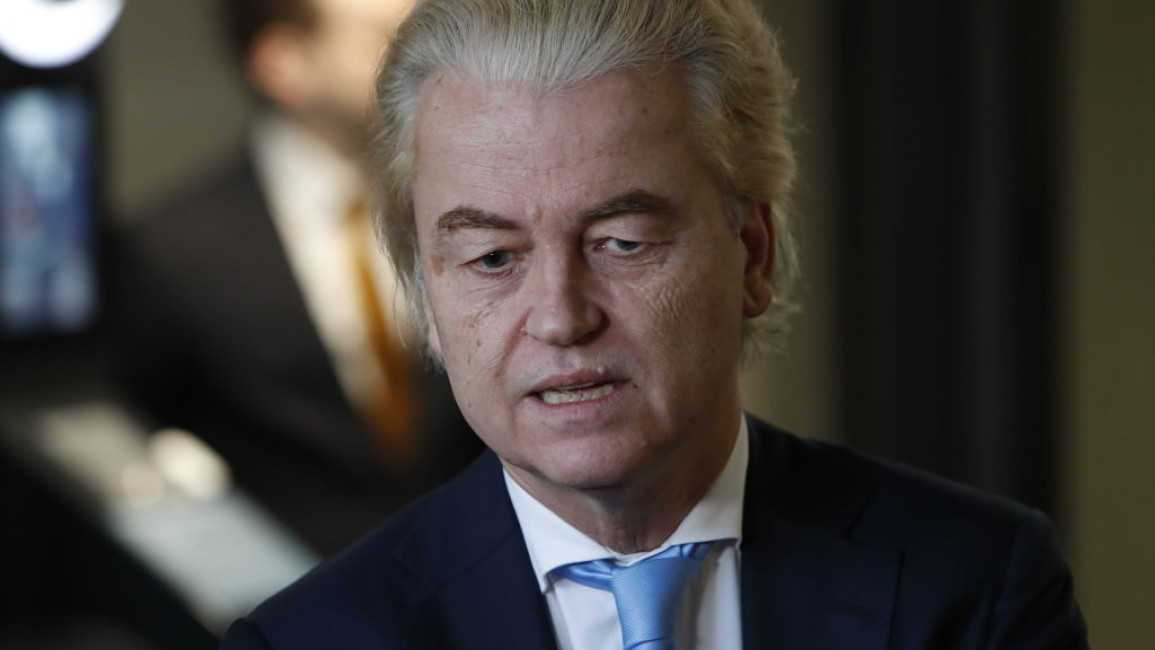
Far-right political leader Geert Wilders was convicted of inciting hatred against Moroccans when he called them “scum” at an election rally in 2016. [GETTY]
Last week, Geert Wilders’ far-right Freedom Party (PVV) won the largest number of parliamentary seats in the Dutch national elections. The political figure is known internationally for his Islamophobia, and demands for, among other thing, the closing of all mosques in The Netherlands.
Crucial to his victory is the radicalisation of former supporters of the mainstream conservative-liberal People’s Party for Freedom and Democracy (VVD) of the incumbent prime minister, Mark Rutte. As Dutch news satire website De Speld explained, VVD’s new leader Dilan Yesilgöz had run an excellent campaign…for Wilders.
Rutte had triggered the fall of his own coalition-government by demanding further restrictions on refugee rights that were unacceptable for part of his coalition. The VVD hoped the elections would be dominated by migration, and not other urgent issues such as the country’s housing crisis and the rising cost of living.
During the campaign, Yesilgöz exaggerated the supposed ease with which refugees enter the Netherlands. The main beneficiary of this tactic ended up being the PVV, the political force that for a decade-and-half built its political profile on hostility towards migrants.
The VVD lost 10 seats, leaving them with 24. Of the new PVV voters, one out of four previously voted for VVD.
Like many of his voters, Wilders is a product of the right-wing establishment. In the early nineties he worked for the VVD and in 1998 he represented the party in parliament. He also wrote speeches for the future European Commissioner, Frits Bolkestein, a pioneer in the ‘clash of civilisations’ rhetoric regarding the West and Muslim societies in Dutch politics.
Wilders eventually left the VVD in 2004, partly because they would not categorically oppose Turkey joining the European Union.
Since founding the PVV in 2006, Wilders gathered a loyal base; almost 80% of those who voted for him in the previous national elections, did so again last month. Whilst the PVV largely rallied support as an opposition to Rutte, it is important to highlight that Wilders is not a political newcomer. Voters showed up for a seasoned politician who for years has remained consistent in his main policies. His popularity therefore shows how mainstream Islamophobia has become in The Netherlands.
Indeed, the PVV’s manifesto presented the racist and authoritarian positions that characterise the party. Pledges ranged from the petty revoking of the government’s apologies for the role played by the Dutch state in slavery, to the deportation of criminals with double nationality, to the deployment of the army against ‘street scum’, and the closing of borders for refugees and preventive arrests of ‘jihadist sympathisers’. Particularly drastic was Wilders’ long-standing insistence on ‘no Islamic schools, Qurans and mosques’.
However, it is not only racist and xenophobic politics that has attracted voters to the PVV. Wilders was originally an explicit supporter of neoliberal economic policies but for the past decade, his party increasingly posed as defenders of the welfare state. The PVV programme contained seemingly progressive positions, such as raising the minimum wage, lowering healthcare costs, and returning the retirement age from 67 to 65.
Though such rhetoric is contradicted by the party’s actions.
In his book Marked for Death: Islam’s War Against the West and Me (2012), Wilders described the role of the PVV as supporting the austerity plans of Rutte’s first cabinet in return for measures to ‘restrict immigration, roll back crime, counter cultural relativism, and insist on the integration of immigrants’. In parliament, the PVV introduced a proposal to make collective bargaining agreements no longer binding, and supported further restrictions to access to social security.
Not to mention, today the PVV seeks to form a government with the VVD – the party that for the last decade headed the government’s implementation of neoliberal measures that they claim to oppose.
Whilst a substantial number of Wilders’ voters are certainly committed to far-right politics, part of his appeal is that he has been able to pose as an opposition force to an establishment that included the left-wing parties like the Labour Party.
In an attempt to present itself as a legitimate party that could govern, Labour entered a coalition headed by Rutte back in 2012 after they had won close to 25% of votes. They remained despite the deeply unpopular harsh austerity measures that were implemented, and even ran a former minister in the government as the candidate on a joint Labour/Greens ticket.
The result was a modest advance mostly through votes coming from the centre and other left-wing parties, but it hardly attracted new voters. In the elections last month Labour/Greens won 25 seats, and became the second largest party, but finished far behind Wilders.
Another error made by parts of the Dutch left is that anti-racism and migrants rights are considered secondary to social-economic issues. However, as the recent election dramatically showed, these are incredibly decisive issues in Dutch politics.
When Wilders’ electoral victory was announced, hastily organised protests took place in some cities. A coalition of progressive groups called a national demonstration in defence of civil liberties, freedom of religion and human rights. Such protests are of course not only important, but urgent because they make visible the opposition to Wilders’ agenda and show solidarity with groups that are threatened, especially Muslims.
After all, the case of Giorgia Meloni’s Italy shows what can happen when the far-right is in power; it may moderate some of its rhetoric, but it will not abandon its authoritarian and nativist project.
But protests alone are not enough. For years, Wilders pushed the mainstream to the right, pulling voters to his side. The Dutch left can learn something from this; instead of pandering the right, it needs to pressure them. As for rebuilding a left that can effectively pressure the centre and win new supporters, this will need to be a long term project.
What is needed now more than ever is a left that sees itself not as a government-in-waiting but as an opposition force.
Originally published in The New Arab. https://www.newarab.com/opinion/geert-wilders-left-needs-be-real-opposition
Alex de Jong is co-director of the International Institute for Research and Education (IIRE) in Amsterdam, Netherlands and editor of the Dutch socialist website Grenzeloos.org.
Cite as: de Jong, Alex 2023 “Geert Wilders’ election victory: The left must concern itself with being a real opposition” Focaalblog 18 December. https://www.focaalblog.com/2023/12/18/alex-de-jong-geert-wilders-election-victory-the-left-must-concern-itself-with-being-a-real-opposition/
The growth of extreme right-wing forces in the Argentine political process expresses the combination of global trends and specific trends associated with local political history. It also expresses the need to understand the embeddedness of these political preferences in the social experiences shaped by the generalized decline of the middle and popular classes, sedimented in a long cycle of forty years and currently intensified by the derivations of the pandemic and the leaps in annual inflation in 2017 and 2021 (in which it passed, respectively, from 25% to 50% per annum and from 50% to 100% per annum).
It is impossible to deny the correspondence with those right wing processes taking place in different world regions and countries (see Engelen, 2023; Henkel et al., 2019; Kalb, 2020; Pasieka, 2018). The longer-term trend that explains these triumphs is the complex and contradictory reconfiguration of economics and politics since the fall of the Berlin Wall, if we need an iconic date. The global dynamics of capitalism no longer just erode national democracy but have started to generate alternative proposals to re-establish social order on a national scale, underwritten by the cultural fragmentation and economic discontent produced by economic (neo)liberalization.
Image 1: A 2002 demonstration against the financial “Corralito” in La Plata, Argentina, photo by Barcex
The expressions of the extreme right represent a form of illiberalism claiming political institutions at the limits of democracy that would overcome the fragmentation of national units suffering from the international mobility of capital. The accumulation of unresolved problems is changing the social structure and the political process: the rising vulnerability of working classes leads to the abandonment of traditional parties. The result is radicalizing tendencies within the elites as well as the replacement of incumbent political elites with new ‘populist’ ones.
Capitalism and democracy have become divorced from each other. Now, the crisis of the national states and their political systems has finally become politically visible, in a deep and organic sense.
What happens in Argentina or Brazil, in this context, involves patterns that are different from the dynamics of the northern hemisphere. In the region there are no transnational institutional aggregations such as the European Union. In Europe, the EU is both a target and a moderator of the illiberal turns in Poland, Italy or Hungary. The supranational powers, without being totally determinant, tend to moderate the character and pace of political and economic reforms. A coup d’état like those that occurred in Honduras (2009), Paraguay (2012) Bolivia (2019), or Brazil (2023) is highly improbable in Europe today.
This is due not only to a difference in the political regimes, but also to a socio-economic process that has been producing especially in South America a deep discontent among a very volatile electorate. In countries such as Brazil and Argentina, the transitions to democracy in the 1980s were accompanied by hyperinflation and external debt crises, followed by monetarist stabilization and exclusionary ‘modernization policies’ in the 1990s, followed by new compensatory policies in the 2000s. The overall result of these processes was transformation of social structures marked by the growth of inequality, the growth of economically fragile popular classes, and the polarization of the middle classes. The long cycle of social transformations in these countries has coexisted with short cycles such as the 2000s where an emerging “new” middle class experienced a social mobility. As a result, in countries such as Argentina and Brazil the states have less capacity to respond to growing popular demands, which themselves tend to be more urgent than in the global North.
Analysts have noted a rightward lurch in the political options available to Argentine voters in recent years. In the analysis, however, insufficient attention is given to the impact of the popular experience of high inflation: the constant tightening of belts, growing household debt, an inability to budget, a political tunnel vision focused exclusively on inflation, with great impact on the expectations for the future, which are increasingly negative and desperate.
The pandemic triggered inflation in countries around the world that had experienced price stability for decades. In 2022, the war in Ukraine drove inflation even higher. The case of Argentina was exception: the country had been suffering from spiraling inflation for over a decade. After a relative drop in inflation in 2020, in which annual inflation reached 36.1%, Argentina suffered another year of high inflation (50.9%) in 2021 (INDEC, 2021). In 2022, it reached 94.8% for the year, leaving Argentina fifth on the ranking of countries with the highest inflation worldwide behind Venezuela (305.7%), Zimbabwe (244%), Lebanon (142%), and Sudan (102%) (Infobae, 2023). Local factors exacerbated the situation: a shortage of dollars (a historical problem magnified by the pandemic), the pressure from the IMF to address the fiscal deficit eliminating subsidies to public services and a monetary culture shaped by inflationary inertia contributed as well.
This inflationary dynamic intensifies the erosion of politics by multiplying the mismatch between social demands and state capacities. At this point it is necessary to underline the socio-political element that is part of the inflationary dynamics. The trade unions in the first Peronism (1946-1956), and the trade unions and social organizations in the later Peronism that was part of the “progressive wave” of the 2000s, have been the political agency of social and economic protections that guaranteed welfare levels for the working class. The flip side of these arrangements has been a lack of foreign exchange earnings (external restriction is the constant of the Argentine economy since the middle of the last century) to sustain them. Nor did the unions and social organizations have the necessary political strength to transform the performance of the economy. The scarcity of foreign exchange has turned the dollar price over time into the anchor of all prices in the economy without it being a dollarized economy in the strict sense of the term (Luzzi and Wilkis, 2023). The chronic devaluations of the Argentine peso – and the concomitant inflation – are the short term escape from the structural contradiction between strong working class forces on the one hand and an economic organization that hollows out their effective power at the same time.
At the time of writing these notes and six months before the presidential elections, the libertarian candidate Javier Milei has a vote intention of around 20-25%. He is the main promoter of the dollarization of the Argentine economy. It is in this context that the rise of candidate Milei can be understood. His position implies the rejection of “everything that is there” and its replacement by a utopian free competition that rewards the best without the parasitic intervention of the state. This program of denunciation channels towards the Right the multiple contemporary dissatisfactions. On the one hand, it is not clear at this stage of the electoral process that Milei will either triumph or just survive as a candidate. On the other hand, it is clear that he has extended the possibilities of political articulation so that other candidates, who perhaps have more potential, can follow his path. It reflects the popular exhaustion with inflation, relegating to a second place demands that used to occupy a central place in the public agenda, such as unemployment or insecurity. Dollarization continues and completes the exclusionary and polarizing dynamics of the neoliberal reforms of the 1990s. The promise of a stable currency is going to have a very high social cost.
The neo-liberal demands that after the 2001 crisis in Argentina had been left almost without an audience, are returning with a vengeance: dollarization is inevitably accompanied by demands for the privatization of institutions such as education and health care. They celebrate individual initiative and denounce the crisis of public services as of their own making. The mood of society towards the performance of the state – increasingly questioned before the pandemic, much more so by the end of it, and even more intensely after – is very favorable to the right wing libertarian privatizers: “si no me vas ayudar por lo menos no me molestes” (“if you are not going to help me, at least don’t bother me”). The promise of dollarization suits these sentiments. The U.S. dollar is a currency devoid of the arbitrariness of the Argentine state (and the governmental elite that commands it), a state that is perceived as guilty of disorganizing and worsening daily life through its inability to provide stability to the national peso. In a society in which people did the impossible to get through the long months of lockdown while weathering inflation, the pandemic left people with the distinct feeling that the state was coming up dramatically short. The controversial dynamics of an unknown virus affected the state and rendered it increasingly illegitimate. The pandemic, by damaging the civic bond of trust with the state, strengthened the anarcho-libertarian thesis.
Image 2: Javier Milei in 2014 at the World Economic Forum on Latina America in Panama City, photo by World Economic Forum
The pandemic and spiraling inflation are in Argentina intertwined processes in which sacrifice became a common currency. Argentine society emerged from the pandemic with an ideology that was family-oriented, anti-state, and anti-politics. More people had been convinced that government spending was the primary source of inflation, demanding in some cases extreme state cutbacks. The rise of right-leaning or extreme right options, the declining interest in politics, and a growing dissatisfaction with the political class all predate the pandemic and the high inflation, but the latter have profoundly accelerated existing trends.
The Right has renewed and sharpened its own repertoire of actions. During the last 12 years, a political consensus that established certain prohibitions began to be explicitly challenged: notes of racism, of vindication of the last military dictatorship, of macho vindictiveness in the face of gender agendas that many had believed to be in retreat are reborn with force in the public space. However, the growth of the Right is not only due to the ideological radicalism of some of its promoters, who have accumulated significant political capital to establish themselves as an autonomous force in relation to the mainstream right wing that governed in the period 2015-2019. That growth is also predicated on the weariness of the voters of the traditional parties (Left and Right).
Despite its cultural predominance, Peronism today in government has been losing since at least 2008 the battle for the interpretation of economic life in growing sectors of the population. A social majority, which includes part of the popular classes, identifies with its antipode in a dialectic in which the libertarian Right takes on a specific local meaning.
A great part of this electorate cannot be described as furious, pragmatic or reactive to all political positions equally. They want to improve economically, they believe in their own efforts, they demand order and market. And they do so less because of agreement with right-wing intellectuals and publicists than because of a long experience in which those right-wing ideas seem to become preferable. There is an authoritarian liberalism which, following Richard Hoggart (1957), must be seen as a contemporary development of the subaltern classes. These, contrary to what the political elites expect, especially those of the left, embrace the Right. This is also a reaction against the deference that the progressive forces have tried to impose on it, presuming moral superiority and capacity for leadership beyond the prosaic issues of everyday life. Thus, the process in which inclusive consensus is dissolved clearly contains a popular reaction against the Left progressivism of the traditional Peronist leadership.
Politics in Argentina has a specific intensity that makes it more than a simple reflection of what is happening in the world. In the 1970s, few countries in the world took state terrorism as far as Argentina. In the 1980s, the trial of the defeated dictators became an exemplary case for human rights. In the 1990s, the intensity of the neoliberal experiment in the country was exceptional when compared to Brazil and Mexico in terms of the scope of privatizations and economic and financial openness. It is worth asking whether this right-wing emergence will not have the same exceptional intensity as its precedents. The antecedents are already in place.
Pablo Semán is Professor at Universidad Nacional de San Martín and principal researcher at CONICET.
Ariel Wilkis is Professor and Dean at Escuela IDAES, Universidad de San Martín and researcher at CONICET.
Hoggart, Richard (1957) The uses of literacy: aspects of working-class life with special references to publications and entertainments. London: Chatto and Windus
INDEC (2021) “Índice Precio al Consumidor”, Vol. 6, No 1, december 2021
Luzzi, Mariana and Wilkis, Ariel (2023) Dollar: How the U.S. Dollar Became a Popular Currency in Argentina (1930-2019). Alburqueque: New Mexico University Press.
Cite as: Semán, Pablo and Wilkis, Ariel 2023. “Rebellion of the bastards: the rise of the extreme right in Argentina” Focaalblog May 11. https://www.focaalblog.com/2023/05/11/pablo-seman-and-ariel-wilkis-rebellion-of-the-bastards-the-rise-of-the-extreme-right-in-argentina
The shock among the Dutch chattering classes on 16 March was palpable. The right-populist Farmer–Citizen Movement (BBB) – established in 2019 by a small communications firm, bankrolled by the powerful Dutch agrifood complex and led by a former journalist for the meat industry – had in one go massively increased its vote share in the country’s provincial elections. It is now the largest party in all twelve provinces, and expected to achieve the same status in Senate in April. This would give BBB huge veto power at both national and local levels, potentially bringing an already hesitant green transition programme to a standstill. Faced with this prospect, an irate commentariat has begun to denounce the farmers as enemies of green progress, and speculate that voting restrictions – on the elderly, the lower educated, those in rural constituencies – might be necessary to override their resistance.
The casus belli for the farmers’ revolt was a 2019 ruling by the Dutch Supreme Court that the government had breached its EU obligations to protect 163 natural areas against emissions from nearby agricultural activities. This prompted the centre-right coalition government, led by Mark Rutte, to impose a nationwide speed limit of 100 km/h on highways and cancel a wide array of building projects intended to alleviate supply shortages on the Dutch housing market. Yet it soon became apparent that such measures could only be a short-term stopgap, since transport and construction contributed a pittance to national nitrogen emissions while agriculture made up a whopping 46%. A structural solution would therefore have to involve a substantial reduction of livestock. The suggestion long put forward by the peripheral ‘Party for the Animals’, to slash half of the aggregate Dutch livestock by expropriating 500 to 600 major emitters, was suddenly on the table. The unthinkable had become thinkable.
Image 1: Dutch farmers protesting in The Hague in October 2019, photo by Steven Lek
The number of Dutch workers employed in agricultural activities has declined precipitously since 1945, from around 40% during the Great War to only 2% today. Yet, over the same period, the Netherlands has become the second biggest food exporter in the world after the US. Its highly capitalized meat and dairy industry plays a pivotal role in global supply chains, which makes its ecological footprint unsustainably large. Hence the gradual realization among the Dutch political class – accelerated by the Supreme Court ruling – that meeting climate goals meant reorienting the national economy. For the rural and small-town oriented Christian Democrats in the coalition that was hard to swallow; for the eco-modernist, meritocratic social liberals in the coalition (D66) this came naturally; while for Mark Rutte’s own People’s Party for Freedom and Democracy, even though naturally in favor of ‘growth’, it was simply the pragmatic thing to do. As one centrist MP remarked, ‘The Netherlands can’t be the country that feeds the world while at the same time shitting itself.’
These green proposals triggered a wave of farmer protests – farmers blocking roads with their tractors, occupying squares and other public spaces, breaking into government buildings and turning up at the homes of politicians – as well as the formation of the BBB. After a brief pause during lockdown, the movement has now reached new levels of intensity. Since spring 2022, along the roads and highways leading into the forgotten parts of the Netherlands, farmers have hung innumerable inverted national flags: a symbol of their discontent, sprouting up like mushrooms after an autumnal shower.
Almost one fifth of the electorate, approximately 1.4 million people, turned out to vote for the BBB – a significantly larger number than the 180.000 farmers who comprise its core constituency. This suggests that more is at stake here than simple nimbyism. Pensioners, the vocationally trained and the precariously employed are overrepresented among the BBB’s supporters, and its largest electoral gains were in peripheral, non-urban areas which have been hit by falling public investment over a long time. Such groups have rallied around a class of farmers who present themselves as victims, but who are in fact among the most wealthy and politically well-connected in the country: one in five of them is a millionaire. It is clear that this heterogeneous bloc could only be assembled as a result of deep disenchantment with mainstream politics in the Netherlands – which has long been blighted by the arrogance and incompetence of its ruling stratum.
A number of historical factors laid the groundwork for the farmers’ movement. First, the Netherlands underwent an extremely rapid neoliberal makeover since the early 1980s, resulting in the fire sale of public services, the marketization of childcare, healthcare and higher education, a steep decline in social housing, the emergence of globalized banks and pension funds, and one of the most flexible labour markets in the EU, with one in three employees on precarious contracts. Next, the 2008 financial crisis led to one of the most expensive banking rescues in per capita terms, followed by six years of austerity which punished the poor and served to redistribute wealth from everyone else to the rich. The four lockdowns imposed between 2020 and 2022 had the same effect: workers lost their jobs, saw their incomes fall and died in greater numbers. Rising consumer prices, sparked by the war in Ukraine, subsequently pushed many Dutch households in the provinces into fuel poverty.
All this was interspersed with constant bureaucratic failures across a range of government departments: childcare, primary education, housing, the tax office, transport and gas extraction. At the same time, regressive subsidies were handed out to middle-class environmentalists to reimburse heat pumps, solar panels and Teslas, which of course only they could pre-finance. Add a constant trickle of high-handed insults about the lower classes from the putative experts who dominate public debate, and you end up with a festering and combustible mixture of resentments. The situation was finally ignited in 2019 by the mentioned court ruling, after which latent regional-cultural identifications of the provinces against the city (the ‘Randstad’, the Western urban conurbation that accommodates circa half the Dutch population) provided the raw symbolic material for the farmers’ adversarial narrative: core versus periphery, elites versus masses, vegans versus meat-eaters. With the help of some savvy political entrepreneurs, this message began to resonate far beyond the farmlands.
The French writer Houellebecq once wrote that the Netherlands is not a country but a limited liability corporation. It perfectly captures the view of Mark Rutte’s People’s Party for Freedom and Democracy. For thirteen years now it has reimagined the Netherlands as a European Singapore on the Rhine. It is a form of mercantilist neoliberalism that aims to attract as much foreign capital, both financial and human, to the Netherlands as possible. The tax rule book is arranged with that goal in mind, transforming the Netherlands into one of the largest tax havens in the world. The social security regime has been redesigned to serve highly educated expats, turning the city of Amsterdam into an Anglophone outpost where shopping and dining requires one to speak English, while refugees and asylum seekers are locked away near some of the poorest villages in the Dutch outback. Public investment has been rechanneled into the shiny metropolitan areas in the West, while largely surpassing the peripheries along the German border. Last week it took me nearly four hours to go from Arnhem to Veenhuizen in the North of the Netherlands by public transportation, a distance of less than hundred miles.
As in the UK where everything goes to London and the home counties, this was legitimated by the mercantilist narrative of the triumph of the city and the creative class, peddled by hip geographers like Richard Florida and Edward Glazer, that told post-ideological, neoliberal politicians to stop backing losers and start picking winners and steer massive amounts of public funding to cities. For that is where human capital resides, so the story goes, and that is what is key to national economic success. And so it went: while hospitals, schools, fire stations and bus lines slowly but gradually disappeared from the periphery, the metropolitan core was sprinkled with massive public investments in glittering metro lines etc, Amsterdam on top.
The one that has overseen it all, Mark Rutte, who is in the race to become the longest sitting head of state in the two hundred years history of the Kingdom of the Netherlands, fits to a tee with the reckless opportunists so wonderfully described by the New Zealand sociologist Aeron Davies (2018): Rutte is the ultimate expert in surviving the political game but totally lacks the vision that is required in times of crisis. In fact, Mark Rutte famously quipped that voters who want vision should better go to an optometrist.
The disaffection of a growing slice of the electorate is not a performative effect of media framing, as some maintain, but is based in real, material neglect. As was hammered home two days after the election results came in by a report from one of the Dutch public think tanks: there are large discrepancies in life expectancy between core and the periphery of the country as well as huge gaps in terms of wellbeing and trust in politicians (2013). The report concluded that this was the unintended effect of decades of underinvestment in the provinces: the places that, in the worldview of people like Mark Rutte, do not matter
Demography, balanced budgets, the euro, Covid-19, war, climate change: these are the imponderabilia that centrist politicians, backed by their battery of experts, have used to discipline voters into submission. Nitrogen emissions fit seamlessly into this technocratic pattern. The plan to halve livestock numbers in the Netherlands was not drawn up after a lengthy process of democratic debate; it was a summary decision made by politicians hiding behind an unaccountable judiciary and a set of scientific numbers.
Hence, it may be necessary to revise the famous observation by the German poet Heinrich Heine: ‘In Holland, everything happens fifty years late’. Here, it seems, the backlash against the green technocracy has come early (though France’s yellow vests had been there already). The Dutch (and French) conjuncture foreshadows the fate of other countries in the global north – as centrist governments, striving to assert their green credentials, begin to make heavy-handed policy reforms with major redistributive consequences. This, after forty years of neoliberal upward redistribution, and in a situation where governing elites in the preceding decade had already felt very uncertain in the face of the ‘populist’ revolts.
What Andreas Malm (2016)calls the ‘energetic regime’ of global capitalism has so far taken up most of our political attention; but as the environmental fallout of its ‘caloric regime’ becomes impossible to ignore, livestock farming (among other forms of industrial agriculture) will enter the crosshairs of governments and climate activists. Recent data from Eurostat show that livestock densities are particularly high in Denmark, Flanders, Piemonte, Galicia, Brittany, Southern Ireland and Catalonia. Soon enough, these regions will have to introduce measures similar to those currently under discussion in the Netherlands. And if the Dutch case is anything to go by, technocracy will hardly do the trick. A state that has imposed privatization, flexibilization, austerity, disinvestment and regressive environmental subsidies on its citizens for years cannot expect to be trusted when it comes to climate politics. Instead, it will have to redress the ruinous effects of these policies, while slowly building support for the green transition through a process of engagement that does not shy away from democratic disagreement and the hard work that entails.
Ewald Engelen is professor of financial geography at the University of Amsterdam and a feature writer for De Groene Amsterdammer.
This text first appeared on NLR’s Sidecar (6 April 2023).
References
Davis, Aeron. 2018. Reckless opportunists: Elites at the end of the Establishment. Manchester: Manchester University Press
Malm, Andreas. 2016. Fossil Capital: The Rise of Steam power and the Roots of Global Warming. London: Verso.
The cultural and linguistic heterogeneity of Ukraine is a well-known fact, used and abused in explanations of the ongoing war. Having taken root in the early modern period in the interstitial area contested by three empires – Polish, Turkish and Russian – the Ukrainian nation was, indeed, formed through demographic processes that have left in their wake a complex multi-ethnic composition with varied legacies.
The South, conquered by the Russians from the Ottomans in the 18th century, underwent the process of ‘internal colonization’ (Etkind 2011) that consisted of cleansing the newly acquired lands of the Turkic-speaking nomads and replacing them with sedentary agrarian producers. Persecuted minorities from other countries – German Mennonites, Ottoman Serbs etc. – were invited by the imperial government and settled there. Much of the land, however, was distributed among Russian noblemen, who brought with them serfs from the core ethnic regions of Ukraine and Russia. This settler colonization moment, akin to the one that took place in Northern America at the same time, combined fertile soils with forced labor and made the Russian Empire the breadbasket of Europe.
Image 1: ‘Girls in the field’ (1932), by Kazimir Malevich
One century later, during the Long Depression of 1873-1896, this region was colonized again. At the time, French, Belgian, and British capital was looking for profitable investment opportunities. The Scramble for Africa offered one such possibility; another option was to participate in the rapid industrialization of the Ukrainian steppes, benefiting from the generous protectionism of the Russian government. The massive influx of workforce from every corner of the empire only intensified in the Soviet era, when many if not most of industrial megaprojects were concentrated in Southern and Eastern Ukraine. This produced heavy industrial Russophone cities with no strong ethno-cultural attachments.
Territories on the right bank of the river Dnipro that today constitute northern and central Ukraine became part of the Russian Empire after the partitions of Poland in the late 18th century. To combat the influence of Polish nationalism there, Russian ethnographers promoted the idea of a separate Ukrainian ethnicity, Orthodox religion being the chief criterion versus Catholic Poles. This idea later backfired when Ukrainian romantic intellectuals turned it against the Russian imperial center itself. Following the partitions of Poland, the western-most part of Ukraine became part of the Austro-Hungarian empire, later of interwar Poland and Czechoslovakia. Hotspot of a nationalist guerilla war in the 1940s, Galicia – the former Polish-controlled part of Ukraine – became “the Ukrainian Piedmont” during the national revival of 1989-1991. Being the least Russophone region, it projected an aura of Ukrainian ethnic authenticity. Galicia’s Habsburg past allowed Ukrainian nationalists to articulate their ideology with a quest for a lost Europeanness, from which they imagined an ‘Asian’ Russia to be excluded.
I admit that this is an extremely cursory and almost caricatural snapshot of ethnic histories in Ukraine, but it is still more credible than the simplistic tale of ‘two Ukraines’, cooked up by Ukrainian nationalist intelligentsias in the early 1990s (Riabchuk, 1992). The latter was picked up by Samuel Huntington, the prophet of civilisational wars ([1996] 2011), but even, surprisingly, by an anti-nationalist anthropologist such as Chris Hann (2022). In that narrative, the population’s historical heterogeneity easily slides into an unbridgeable chasm between two civilizational different societies: pro-Western ‘Ukrainians proper’ and Russified ‘Creoles’.
How it started
Still, throughout Ukraine’s 30 years of independence there was considerable diversity in the country’s political geography and political identities, but the cardinal differences were changed together with the transformation of political struggles. Contrary to the nationalist narrative that has gradually become dominant, in the 1990s the actual key political cleavage in the Ukrainian public sphere was closer to the classic left-right binary – not least in the terms used by politicians and journalists themselves. The change toward an ethnic vocabulary came with the Orange revolution in 2004, when the center of gravity in the political field moved from the presidency to the parliament. As a result of that shift, the rivalry between oligarchic groupings that stood behind the major party-political formations had become more transparent and involved from now on open electoral struggle. It was at this point that perceived ethno-linguistic differences between East and West turned into a deepening political cleavage and ‘cultural identities’ began absorbing more conventional programmatic distinctions.
Ukrainian politics after the Orange Revolution became an arena of confrontation between two competing nationalist projects, which perceived themselves as ‘ethnic Ukrainian’ and ‘East Slavic’ (Shulman, 2005). The former put high value on the Ukrainian language and its associated ethnic identity, was implacably hostile to Russia, which it equated with the Soviet Union, and craved a liberal Euro-Atlantic integration. The latter was centered on the protection of Russian language rights, the Russian Orthodox church, and the historical memory of the Soviet people’s victory in the Second World War (which it saw as a victory of its own), and purportedly leaning towards Russia. This division gave elites an easy tool to mobilize the voter base. But at the same time, it served as a safety stop, preventing an authoritarian consolidation of power: any potential dictator backed by either bloc was easily overturned by rivals mobilizing the other “half” of the country against him. This “pluralism by default” became the hallmark of the Ukrainian political system (Way, 2015). Such pluralism was also an insurance against a neoliberal consolidation in the economic domain: the importance of the “populist” component did not allow governing elites to disembed the economy from local social and political configurations and forced all political forces to maintain the Soviet legacy of redistributive mechanisms.
The making of the supposedly identitarian cleavage thus served as a useful fix for social reproduction during the decade of economic growth between 2000 and 2010. However, as with all politico-economic fixes, this one was only temporary. Several factors contributed to its undoing in the early 2010s. First, with no inbuilt checks, the amplitude of the nationalist see-saw kept widening dangerously until the polarization reached unsustainable levels. In the parliamentary elections of 2012, the far-right (‘ethnic Ukrainian’) Svoboda party gained 10% of votes. Its popularity was propelled by the ‘East Slavic’ President Yanukovych, who was visibly aiming at orchestrating his 2015 reelection the way Jacques Chirac had done it in 2002 vis a vis Le Pen, but he must have underestimated the level of tension already accumulated in the society. Predatory activities of the Yanukovych team in the economic domain irritated both the oligarchs and the much more numerous small entrepreneurs and urban middle classes in Kyiv and the West, pushing up the nationalist vote. This coincided with the end of the commodity super cycle that had been sustaining Ukrainian economic growth between 1997-2012 (Chim, 2021). There was less and less to redistribute – especially given that in 2012 Russia, affected by the same turn of the global cycle, launched a full-scale economic attack against Ukraine, with exorbitant gas prices and countless trade wars affecting Ukrainian exporters. Starting from the second half of 2012, after the end of the stimulus from the infrastructure projects associated with the European football championship, Ukraine entered a steep recession. The Russian economic offensive marked the closure of the geopolitical interstitial space that had been vital for Ukraine: Yanukovych was forced to choose a camp while knowing that any choice would be disastrous.
All these contradictions came together in the political crisis known as the Euromaidan of 2013-2014. With Yanukovych deposed, Crimea annexed by Russia, and the Donbas plunged into war, the internal balance of Ukrainian politics became skewed beyond repair. Millions of ‘East Slavic’ voters found themselves now outside the playing field, and the ‘ethnic Ukrainian’ party became mathematically dominant (D’Anieri, 2018). This antagonism, however recent and constructed, now all but drove national politics. At the same time, however, both the ‘ethnic Ukrainian’ and the ‘Eastern Slavic’ identities that were being offered in the political arena were only weakly anchored in the worldview of the common people. Wherever one lived and whichever language one spoke most smoothly, the dominant popular attitude was an anti-political rejection of party-political games as such, rather than a firm endorsement of one side against the other. As a result of this disconnection between political society and the wider society, and pushed by the logic of the public sphere, Petro Poroshenko spent his presidential term drifting towards an ever more radical form of ‘ethnic Ukrainian’ nationalism. In the end he suffered a humiliating defeat at the 2019 elections: 73% of voters supported Volodymyr Zelenskyi, who was the veritable embodiment of the popular anti-political and anti-elitist attitude.
Once elected, however, Zelenskyi, too, began obeying the structural logic of the political field. By the autumn of 2020, it became clear to the Russian government that Zelenskyi would not accept their version of the Minsk accords, and the Kremlin began military preparations. In the lower echelons of Ukrainian society, meanwhile, the same old detachment from identarian politics persisted. For instance, one of the leaders of the 2020 miners’ strike in Kryvyi Rih, Zelenskyi’s native city, was hailed as a hero of the two hardest battles of the Donbas war. However, this did not mean much to him subjectively: in a polemic around the strike, he said he had never even considered himself a patriot (Gorbach, 2022).
How it’s going
What happened when Russia finished its war preparations and moved its troops into Ukraine? Kryvyi Rih, a stronghold of the supposedly ‘East Slavic’ elite, provides a telling example. The city’s mayor Yuriy Vilkul was elected in 2010, after Yanukovych’s presidential victory. The mayor’s son Oleksandr was a CEO of two large industrial enterprises of the city during the crucial moment of their contested transfer to Rinat Akhmetov, the richest man in Ukraine and the traditional sponsor of ‘East Slavic’ political projects. The anchoring of this family’s political power in the city was accompanied by their sponsoring of the construction of numerous Russian Orthodox churches and other religious objects, as well as monuments reinforcing the Soviet-centred version of WW2 historical memory. Local Ukrainian nationalist and liberal activists were convinced that the ruling elite would switch sides at the first sight of Russian troops.
Instead, Oleksandr Vilkul became the head of the local military administration. Shortly after the invasion, he wrote: “Dear friends, every generation has its own Brest fortress, and its own Stalingrad. We will not give up even a meter of our native land to the occupiers. Kryvbas is behind our backs, we have nowhere to retreat. Behind our backs are our families and our families’ graves… The enemy will be beaten.” These four sentences contain no less than five allusions to Stalin’s wartime speeches. The ‘East Slavic’ identity, long perceived as ‘pro-Russian’, became a mobilizing tool against the Russian invasion. The local ‘ethnic Ukrainian’ civil society has been annoyed and disoriented by this turn of events, but whatever they might think of it, the fact remains: resistance to the Russian invasion is being efficiently organized under the slogans of Soviet antifascism and Orthodox faith. The political leader who spent years opposing Ukrainian ethnonationalism and fighting the post-Euromaidan “decommunization” of urban space, has now received friendly visits from the figureheads of Ukrainian nationalism and initiated renaming all toponyms that have anything to do with Russia (which implies even greater changes then the removal of communist names).
What about the workers? None of my previously ‘apolitical’ or ‘East Slavic’ informers in Kryvyi Rih seem in doubt about the invasion. The specter of reactions ranges from patriotic emotional outbursts in group chats to joining the war effort personally. A trade union leader has demanded weapons from foreign comrades who wanted to send humanitarian aid; a displaced miner from Donetsk has left aside his skepticism about politics and enthusiastically participated in the city’s defense. Further examples abound.
The end of ambiguity?
For decades, the relation of the Ukrainian working class to politics was distant, if not actively antagonistic. Politics of all sorts and colors was perceived as the domain of corruption and lies. What has changed? Probably not much. The univocal reaction to the Russian invasion is so loud precisely because of its ‘non-political’ character: the experience of the war and the response to it are visceral, unmediated by ‘corrupting’ ideologies and politicking. Contrary to previous political events, this one feel ‘real’. It touches upon the very fabric of everyday life and does not rely on abstract reflections mediated by an intellectual class. Hence the surprising level of personal involvement.
Volodymyr Artiukh makes a similar point while comparing the Russian and Ukrainian official narratives that accompanied WW2 commemorations this year: “whereas the Ukrainian side fights iconic signs and appeals to visceral bodily experience through indexes, the Russian side relies almost exclusively on symbols devoid of any relation to lived experience” (Artiukh, 2022). Both discursive strategies exclude the possibility of building a sustainable political movement from below, but whereas the Russian symbolism is demobilizing, the Ukrainian appeal to lived reality mobilizes by generating a powerful emotional loyalty to the event. Oleg Zhuravlev and Volodymyr Ishchenko studied a similar ‘immediate politics’ in the case of Euromaidan – an enormous mobilization that had no verbalized agenda, relying instead on emotional ties between movement’s participants, and between them and their political object (Zhuravlev & Ishchenko, 2020).
Will this bond stabilize enough to create a shared common sense, thus finally constructing a ‘proper’, undivided, Ukrainian nation as a response to the war? It is tempting to anticipate a Hegelian emergence of synthesis out of two antithetic ideologies, the coexistence of which made Ukraine somewhat deficient in many narratives. However, even if such a project does become reality, what might it look like? It may either slide back into narrow ethnonationalism or develop into an inclusive national project, based on the shared war experience, EU aspirations, and a redistributive agenda. It can remain pre-rational (after all, what is nationalism if not a romantic negation of the rationality of Enlightenment?) or morph into a more legible political program.
Little is certain about it at a moment when everything – including the future geographical shape of Ukraine – depends on the war’s outcome. However, it is important to acknowledge that the war is not an independent variable, either; its course is structured by the contradictory political agency of people inhabiting the country.
Denys Gorbach is a postdoctoral fellow at Max Planck Sciences Po Centre for Studying Instability in Market Societies (MaxPo, Paris) and an adjunct lecturer at Sciences Po Toulouse. His recently defended PhD thesis is an ethnographic study of the moral economy and everyday politics of the Ukrainian working class.
QAnon, Deep
State, pedophile plots, George Soros, stolen elections, 9/11 truthers, Obama
birthers, 5G penetration, the anti-maskers, the anti-vaxxers… We slow-working, ever
so reflective anthropologists are being inundated with one conspiracy theory
after another. A May 2021 survey reveals that 15% of Americans and 23% of those
who call themselves Republicans believe that ‘the government, media, and
financial worlds in the U.S. are controlled by a group of Satan-worshipping
pedophiles who run a global child sex trafficking operation’ (PRRI 2021). The evil
conspirators are often termed a ‘cabal’ (a word derived from the Hebrew ‘kabbalah’/esoteric
teachings). This subversive cabal is viewed as embedded in our governments, collaborating
with the global financial elite and the Davos crowd, within the US and European
Left, the Hollywood elite, the mainstream media, and with transgender activists
and Critical Race Theory proponents, even with the West European welfare states
with their Covid-19 lockdown/vaccine policies. Cabals are the secret agents of conspiratorial
plots. To study conspiracy theory is to do cabal anthropology.
Conspiracy
theories are stigmatized knowledge. This has led some anthropologists to view
conspiracy theorists as ‘contesting’ power. Conspiracism becomes a form of
resistance by the powerless against the arrogant elites and elite institutions
(Pelkmanns and Machold 2011, Dean 2000, Fassin 2021). So, what do we anthropologists
do about the kind of stigmatized knowledge promoted by the QAnon believers? Who
assert that America is threatened by a Satanic, pedophile cult from which only
Donald Trump can save us? What do we do about the 9/11 ‘truthers’ who say that
the World Trade Center buildings were destroyed by the U.S. government, or the
‘birthers’ who assert that Obama (whose mother was an anthropologist!) was born
a Muslim in Kenya? Should we
view Holocaust deniers, the Stolen Election crowd and the racist Great
Replacement adherents as ‘contestation’?
We all
like ‘speaking truth to power’, but what about those who speak untruth to power?
Are there good and bad forms of contestation? Are we anthropologists in danger of becoming what the philosopher Cassam
called ‘conspiracy apologists’? What, in fact, can we anthropologists add to
the now frantic discussion of conspiracy theories?
Theories of conspiracy versus conspiracy theory
In the
ordinary forensic sense, a conspiracy is simply a secret plot to do something
bad, such as robbing a bank or political subversion. Conspiracies require secret
plans, malevolent motives and a group of conspirators. Forensic conspiracies
are commonplace. Some succeed, others are discovered and in most cases the
plotters exposed, caught and punished. The bombing of the World Trade Center garage
in 1993, and the suicide plane hijackings of September 11, 2001 were
both forensic conspiracies.
What we
call ‘conspiracy theories’ are also secret plots, to be sure, but the plotters tend
to be all-powerful, sophisticated, and diabolical. Their project is more than
robbing a bank, tapping phones or a terrorist attack. It is nothing short of total
control and world domination. Conspiratorial plots of this kind do not occur
alone. They are connected to other plots over space and time (Illuminati,
Freemasons, Jews, Communists, Trilateral Commission, Icke’s ‘lizard people’, alien
abduction, ‘New World Order’, the Neocons, the Deep State, etc.).
Because
the conspirators are considered to be so deeply embedded among us, the work of
a conspiracy theorist is to expose their deception. The 9/11 truthers, for
example, believe that the Bin Laden-based, ‘Official Conspiracy Theory’ is one
such deception, what they call a ‘false flag operation’. They believe that the
World Trade Centers collapsed because U.S. military/intelligence organs,
perhaps helped by the Mossad, planted explosives in the buildings. Somehow, these
explosives detonated precisely when the planes flew into the buildings, and it
is assumed that a third building close by, Building no. 7, also collapsed not
due to fire but due to explosives. How and why this was done remains
unexplained.
Of
course, no conspirator has ever been found. The truthers believe that the U.S. government
decided to murder thousands of its own citizens in order to achieve some
nefarious end, presumably connected to domination of the Middle East and its
oil and to create a military/security state in the U.S. The QAnon conspiracy
theory is even more elaborate, with narratives of child kidnapping and blood libel
in a plot that has long anti-Semitic roots, but which now brings together the
Clintons, the Democratic party left, and their Hollywood friends. Whether 9/11
truth or QAnon, conspiracy theorists see themselves as ‘truth tellers’ or
‘truth-seekers’ (Toseland 2018). They are not just propounding theories; they
are on a mission.
Conspiracy theory: the state of research
Conspiracy
theory research has focused on the logical structure of conspiratorial
explanations and why these are so attractive to so many. For the cultural
theorist Michael Barkun (2014), all conspiracy theories revolve around three
premises: Nothing happens by accident, Nothing is at it seems, and Everything
is connected. Conspiracy is thus the reverse side of transparency. Anything
on the surface is false or misleading. Hence the need to look deeper in search
of the real, more significant truth. According to the philosopher Karl Popper, who
was the first to coin the idea of a ‘conspiracy theory of society’, conspiracy
theory begins with the death of God. When God was around, all disasters and misfortunes
could be attributed to this higher power. With the Enlightenment, however, disasters
and misfortunes are now blamed on human actors (secret cabals in the King’s
court), newly powerful social groups such as the Freemasons, or outsider groups
such as Jews or Roma. During the Enlightenment, conspiratorial thinking becomes
a theory of total agency (Wood 1982). Bad things happen because secret sinister
groups of people intend them to happen.
Social
psychologists have speculated on the attraction of conspiracy theory, based on
the premise that conspiratorial beliefs are a danger to society. Clearly, conspiracy
theories give believers a simple, all-encompassing explanation for adverse
developments or disasters. We obtain a ‘who’ behind a complex or chance event. For
ardent conspiracy believers, this also gives them a mission, and the chance to
enter a community of fellow believers seeking to expose the sinister cabal. The
Trump ‘stolen election’ conspiracy – whose culprits are corrupt inner city
Black voting officials, Democratic Party swindlers and evil voting machine
companies with ties to Venezuela – has now become the latest ‘cabal’. In this
narrative, political power was stolen from the American people, and Mr. Trump
will help them get it back.
Part of
the conspiracists’ mission is to connect the dots. For conspiracies do not
occur alone. The death of JFK junior, Covid-19, faked moon landings, the ‘stolen election’ plot, transgender activism,
Black Lives Matter and Critical Race Theory can now be related to a secret
elite and their lackeys in government, in Silicon Valley, in the media, etc. This
is the QAnon project. Outside observers have described this mission as falling
down the ‘rabbit hole’. Hence, a recent book on QAnon adherents invokes the
‘rabbit hole’ imagery no less than 22 times (Bloom and Moskalenko 2021).
The work
of the conspiracy theorists is to uncover and interpret ‘evidence’, to discover
the truth. They are truth-seekers who do research (googling) by ‘connecting the
dots’, interpreting the evidence and communicating their interpretations to
others in meetings, forums and chat rooms.
Like others involved in political advocacy projects, conspiracy
theorists – be they truthers, birthers, QAnon followers, anti-Covid activists
— are emotionally engaged and
articulate. They are ready, willing and able to promote their views and defend
the most minute points, armed with ever more evidence along. This is because
conspiracy theorists are not simply propagating ‘theories’. Their explanatory
theories are ‘unlikely’, their premises are ideological, and their mission is
political, as the philosopher Quassim Cassam has argued (2019).
The
QAnon community, heavily overlapping with ardent Trump supporters and
right-wing extremist, is typical. QAnon revolves around the cryptic tweets, called
‘drops’, issued every few weeks by ‘Q’, someone supposedly deep inside the U.S.
government (for a discussion of who Q might really be see Bloom and Moskalenko
2021, ch. 1; on QAnon see also CBS News 2020, Quandt 2018, and further
references below). These texts are then interpreted, and often associated with
tweets by Trump or his followers, and connected to signs of an impending
‘storm’ or ‘awakening’ that will come but never does (that Hillary Clinton
would be arrested, that Trump would assume power in March, now in August). The
QAnon narrative is continually expanding, with any attempts at refutation
viewed as part of the plot to destroy its followers.
Populist expertise as Latourian matters of concern; but why?
The 9/11
truthers and QAnon are forms of ‘populist expertise’. Imitating experts, they
assemble facts, assess evidence, pass on newly found explanations for enigmatic
or troubling events (Marwick and Partin 2020). If Latour and STS described the ‘social
construction of scientific facts’, we now have a populist construction of ‘alternative
facts’. Latour’s ‘matters of concern’
have outrun us (Latour 2004).
QAnon,
the 9/11 truthers, the birthers, the 5G telephone protesters, the antivaxxers
who believe a chip is being implanted in their bodies, they are Foucault run
wild. To the extent that QAnon followers and other conspiracists question
established knowledge regimes and authorities, they are certainly ‘critical’. This
generates some sympathy among those who see conspiracists as performing a
valuable function for society, what Cassam calls ‘conspiracy apologists’. But
the conspiracists’ critique is based upon a profound and yet naïve distrust of
established institutions, a resistance to any kind of falsification or data
that would contradict their ‘findings’, and a vicious anti-Semitism and racism that
the apologists tend to overlook (Byford 2015). Conspiracy theorists may be
naïve or sympatico as individual human beings, but conspiracism is a pernicious
masquerading as science.
With the rise of QAnon pedophile blood libel conspiracy, the Trumpian ‘Big Lie’ and anti-Covid protests, we now face a presumed ‘rise of conspiracism’. The fear of conspiracism, a veritable ‘conspiracy panic’ is nothing new (Bratich 2008, Thalmann 2016). Past or present, one overarching question takes center stage, a question posed by the media and addressed by various experts who view conspiratorial thinking as dangerous: Why do people believe this stuff?
The
search for an answer forms the basis for the entire conspiracy research industry,
from ERC research projects to panels among our own tribe of anthropologists
(including a panel that I co-organized at EASA in 2018), to EU policy papers
and government reports proposing various counter-conspiracy measures (Institute
for Public Affairs 2013, European Commission 2021; Önnerfors 2021). My own fascination with
conspiracism began with my research in Romania, long before 1989, where I noticed
how people believed in all kinds of outlandish rumors and conspiracies about
domestic and foreign enemies (including me as spy; Sampson 1984). I then followed
conspiracies about the EU, the Soros Mafia and the Western NGO industry, which
led me to years of following the 9/11 truthers, many of whom are older male,
end-of-career academics, taking similar positions in society as myself and
other anthropologists.
Indeed,
the 9/11 truther activists share with us in anthropology that they search for
‘evidence’. Many are familiar with the protocols of the peer reviewed journal
article; as I have argued for the pretentious
Journal of 9/11 Studies and its truther editorial board (Sampson 2010). Indeed,
conspiracy producers, consumers and conspiracy entrepreneurs are not just
lonely ‘losers’ sitting in a basement staring at a screen all day. They are
active members of a community who ‘produce content’, and keep abreast of
events, even in mainstream media. So why indeed do people believe this stuff?
Image 1: How important is it to be paranoid? A selection of readings (photo by the author)
Conspiracism
as epistemology
Early theorizing
on the ‘why’ question begins with Hofstadter (1964), who depicted conspiracy
believers as acting out a ‘paranoid style’, perhaps socially disoriented, isolated
and even cognitively disabled. Recent surveys of those arrested in the January
6th riots at the U.S. Capitol finds that a sizeable percentage of
participants have (had) a variety of mental illnesses such as anxiety,
depression and PTSD, and estrangement from their children (Bloom and Moskalenko
2021, who also highlight the propensity of ‘truther’ women for some of these
sufferings). Along with the mental instability argument, Sunstein and Vermeule
(2009) argue that conspiracism is based on a ‘crippled epistemology’. This
individualized understanding, based on the psychological or cognitive
characteristics of ‘the conspiracy believer’, or the conspiratorial mind-set, focuses
on conspiracists as somehow irrational, as overly fearful as frantically
searching for someone to blame for their personal troubles or social deroute.
Their anxiety both
reflects and results in an intense distrust of institutions, authorities, or established
science and thus a susceptibility to conspiratorial explanations of suspicious events,
disasters or other misfortunes, ranging from 9/11 to Covid-19 to Trump’s
election loss. Moreover, since they trust no institution, imploring them to ‘believe
the science’ is useless. Scientific experts and institutions are themselves
suspect. Conspiracists must do the research themselves, on the internet, encouraged
by like-minded conspiracy theorists and amateur experts who can parlay their
academic expertise from one field into another: the leading 9/11 truther, David
Ray Griffin, is a professor of religion. This distrust of authorities has a
derivative effect: conspiracists can be easily manipulated by populist
politicians (Bergmann 2018).
The conspiratorial
mindset was also depicted in a famous study by Leon Festinger and his
colleagues (1956) when they described how a UFO cult that predicted the end of the
world was only more reinforced in their belief when the disaster did not
happen. Festinger’s cognitive dissonance approach seems to be supported by the
hardcore support for Trump and his ‘stolen election’ theory, culminating in
Trump supporters’ invasion of the U.S. Congress on January 6th 2021,
and the election of QAnon supporters to political office. The consensus among
conspiracy theory researchers is that conspiracy theorists cannot be combatted
by any kind of fact-checking enterprise. People do not get converted, nor do
they see the light, simply because they are confronted with contradictory
evidence, new facts or sophisticated counter-arguments. The conspiracy mindset
is not about facts and evidence. It is about social engagement, political
projects, and belief.
The problem
with explanations of conspiracy followers as people who are somehow socially,
emotionally or cognitively disabled is that these explanations are far too
general. After all, who among us does not at times feel disempowered, confused,
uncertain, insecure or distrustful of institutions and science, most especially
in this Covid-19 era? How much should we ‘trust science’ when scientific
explanations are contested or change? If we all suffer from ‘confirmation bias’
or other such psychological syndromes, then why aren’t we all conspiracy
theorists? Could it be that a healthy scepticism about the scientific enterprise
is a core theme in the work of STS and anthropologists of policy? Are the
conspiracy theorists just another form of institutional critique? Do we regard
Holocaust deniers, Great Replacement adherents or QAnon activists as fellow
compatriots ‘contesting authority’? What indeed is the difference between an
outrageous conspiracy theory and hard-hitting critique of subtle powers and
hidden agendas in state institutions and global capitalism?
What is belief?
Let me
come back to the question of “Why people believe this stuff”?
Anyone
who has argued with a conspiracy theorist, a religious zealot or political true
believer of any kind knows that refutation of their evidence is fruitless. You
point out contrary facts or illogical arguments and your remarks are simply
cast aside as irrelevant or confirmation of the conspiracy. This is because the
conspiratorial narrative is in fact an expression of belief. The problem, then,
is not about the facts but about belief. Conspiracy theorists do not assert
claims. They express beliefs. What does it mean to believe, for example, that
Trump won the election with 70% of the vote or that the US military blew up the
World Trade Center? What is belief all about?
I
decided to re-read a bunch of anthropological analyses of belief. Virtually all
of these were written to explain religious beliefs, as when
Evans-Pritchard wrote that the Nuer ‘believe’ that twins are birds. I think
that we can fruitfully apply the discussion of religious belief to secular,
conspiratorial beliefs as well. There are obvious overlaps between religious
and conspiracy belief systems: grand forces of good and evil; an apocalyptic
reckoning some time in an imminent future; scriptures and texts that provide clues;
esoteric interpretations and discussions of what the clues mean; struggles over
orthodox and deviant interpretations; and an institutional practice in which
communities of believers seek out converts, debate skeptics, and ex-communicate
apostates and perceived heretics. The conspiratorial universe thus contains conspiracy
producers, conspiracy consumers, and even conspiracy entrepreneurs (David Icke,
Alex Jones, etc.). It includes not only true believers and former believers (read QAnon causalities on Reddit), but also
anti-conspiracists, the debunkers.
Being in
a conspiracist community involves work, or ‘research’. The 9/11 truthers, for
example, include many students and retired academics who do internet googling,
organize evidence and hold conferences, even selling truther merchandise. The
QAnon community has gatekeepers who run the web portals, moderate chatrooms,
assemble narratives, sell merchandise, and retweet the preferred interpretations.
Like any religious community, conspiracy communities have their rites and rituals.
Long before January 6th, QAnon followers were appearing at
demonstrations, recruiting followers and arguing with skeptics and debunkers. We
need to recall the very banal, anthropological insight that conspiracy theory is
not just about a bunch of random facts and a set of outlandish, unfalsifiable
beliefs. It is also a set of practices. Conspiracists do not just stare at a
screen. They do things with the screen and in real life. They search for
confirming evidence, they connect the dots, they discuss their findings with
like-minded others, they try to unmask provocateurs, etc. It’s the doing that creates
that passion and the commitment behind conspiracism. The conspiracist ‘rabbit
hole’ is not a place of isolation, it is a community. This passionate community
explain the sense of exhilaration common to many true believers. It’s so
wonderful to know the truth and to share it with others, especially after
having experienced an adverse life event or a traumatic experience (as so many
QAnon followers have, according to surveys; see Jensen and Kane 2021).
So
perhaps the anthropological discussion of beliefs can help us understand the
power of beliefs in the conspiratorial universe of truthers, birthers, QAnon
followers, flat-earthers, anti-vaxxers, New World Order proponents, Holocaust
deniers, alien abductionists and similar groups.
Back to Needham
In 1972,
Rodney Needham published Belief, Language and Experience, a long
philosophical treatise on belief, much of it inspired by Wittgenstein. What do
we mean, asked Needham, when we say that members of tribe X ‘believe’
something? Needham stressed that ‘statements about belief’ made by our
informants should be distinguished from belief itself. Ethnographers love
eliciting such statements, but for Needham these are the result of informants’ effort
at introspection. For Needham, statements about belief are not belief. Belief is
an inner state. This inner state may be articulated as an accepted doctrine (‘I
believe that…’), as knowledge (‘I know the truth about…’) or as an emotional
conviction (‘I believe in …’). Needham concludes that we just cannot know what
is inside people’s heads. We can elicit statements, listen to what they say, we
can observe what they do, and at best try to infer some kind of inner state
that we call ‘belief’. Yet Needham is skeptical: the concept of belief is so
vague that it should be thrown out. Needham does not believe in belief.
Pouillon
(1982), in a widely cited essay, reminds us that we must distinguish between believing
in something versus believing that something. Expressions of belief
in reveal whom we trust, who has legitimate authority, in whom we have faith.
In contrast to ‘believe in…’ believing
that is about a coherent doctrine of propositions. If belief is ultimately about
faith, the project of debunking beliefs, e.g., showing conspiracy theories to
be based on incorrect facts or illogical arguments, is beside the point. Conspiracies
are not about facts or evidence. They are about ‘beliefs in’. And we cannot
disprove beliefs. People can articulate, adjust or renounce beliefs. As such, beliefs
are tied more to emotional commitment rather than facts. Conspiracy theories,
despite the quasi-scientific label of ‘theory’, are clearly of this kind. They
are beliefs, not theories in the scientific sense.
We often
assume that conspiracy theorists articulate a coherent, fundamental set of
propositions. Yet anthropologists have shown us that people can operate with
overlapping, fragmented, alternative and contradictory belief systems, what we
now euphemize as ‘syncretism’. Hence, J. Mair reminds us that ‘[not] every
believer […] is a fundamentalist or a systematic theologian’ (2012, p. 45). Our
analysis should therefore focus not so much on what people believe but rather how
they believe. We should focus on what Mair calls ‘cultures of belief’.
Studies of religious groups reveal how people can comfortably maintain two or
more sets of beliefs that are complementary or even logically contradictory.
Numerous studies of the anthropology of Christianity describe people who are
sincerely converted Christians, but who also interact with spirits, react to
witchcraft accusations or believe in reincarnation (Stringer 1996, Robbins 2007).
While these studies have been applied largely to religious believers and
converts, they are equally valid to those who have fallen down the ‘rabbit
hole’ of QAnon, 9/11 truther, Holocaust
denial, Great Replacement, alien abduction or other conspiratorial narratives. Like
religious groups, conspiratorial communities are also full of dual,
overlapping, contrasting and conflicting belief systems. An ethnographic approach to conspiracy
theories might therefore profit from a ‘situational belief’ approach (Stringer 1996).
The focus here should be less on who assents to certain propositions (‘I
believe that…’;) and more on what kinds of truths and authorities people commit
themselves to (‘I believe in….’ ‘I have
faith in…’).
Practicing conspiracism
The
QAnon belief system has its logical fallacies. Some may fully believe in the
pedophile plot, while others focus only on the Deep State. However, they are
united in their sources of authority (Q ‘drops’ and Trump statements,
supplemented by various authoritative interpretations that are then retweeted
and discussed). Exposing the cabal is both ‘research’ and an act of faith.
Anthropological
approaches to religious belief have always included descriptions of religious
practices, rites and rituals. Conspiracy adherents are no different. They also
have their rites and rituals. They meet on line, in hundreds of web
communities. They recruit followers and argue with debunkers. And they meet in
real life at demonstrations, political meetings, in anti-vaccine gatherings, and
of course, on January 6th. Conspiracists have been busy trying to
expose the Covid vaccine chip insertion plot (led by Bill Gates). They have
been digesting the shock of Trump’s defeat; promoting the narrative of the
Stolen Election and his imminent return; reading and interpreting the QAnon clues; and fighting the regulations to
wear masks. They do the work of textual interpretation. They re-tweet and add
comments. They discuss these messages with family members, argue with skeptics,
and end up in echo chambers of like- minded conspiracists who can confirm and
reinforce their ideas.
What all
this means is that we need to show how conspiratorial belief and conspiracist practice
interact, as we have done with the study of religious beliefs and practices. Regrettably,
conspiracy theory research has tended to focus on the psycho-social
vulnerabilities of the most radical believers. Certainly, these committed conspiracists
have from emotional ‘baggage’, social isolation or violent tendencies (as the
recent QAnon studies show). But most conspiracy adherents are only partially or
borderline committed; many view conspiracy theory adherence as more of a social
activity than an all-out ideological commitment, much like church attendance
can be more a social obligation than a religious act. Second, the focus on
individual vulnerability assumes some kind of coherent ideology among
conspiracists. It ignores the way people use religious belief in creative ways,
amalgamating, adapting and converting it to strategic ends. Conspiratorial ideas
have a political message: the evil plot by the sinister outsiders, but it is
also a personal project, a voyage of discovery that gives people new meaning in
their lives as they become part of history. Both religious and conspiratorial practice
are more than acting out an ostensibly coherent set of beliefs. Our
understanding of conspiracists is best served by observing what they do: how
they are recruited, how they participate, how they recruit others, and even how
they often exit or even express regret (see again the Reddit thread for ‘QAnon Casualties’;
or the testimonies of ex-Truthers).
From how to why
Let me
close with the question of why does one become a believer? Robbins (2007)
described how some converts to Christianity are truly sincerely converted, but
we also have examples of conversion for purely strategic reasons. This
distinction between sincere and instrumental conversion may be simplistic, but
it is worth recalling when observing why people might join the QAnon, truther,
anti-vaxx or alien obduction community. We join groups for many reasons: to resolve
existential problems, to gain some control over the world, to obtain social contacts
or to re-affirm our political beliefs. Conspiracy groups seem to solve all these
tasks at the same time. Moreover, joining one conspiratorial community seems to
lead to others: QAnon people form the core of Covid denial and anti-vaccination
resistance, as well as 5G-telephone skepticism and of course, they are
enthusiastic supporters of the stolen election theory. Since belief is an inner
state that we can never really know, the best we can do as ethnographers is to
listen to statements and observe behaviors.
What
then, is a believer? Believers here don’t just read tweets. They save them,
comment on them, retweet them, discuss them, embellish them, delete them,
switch platforms, go to meetings, participate in demonstrations, buy
merchandise, and spend hours of their day looking for further clues and reinterpret
these. Their closed groups can decide to ban or unfriend others. They may have
fallen down a rabbit hole but they are also actively exploring new paths,
routes, tunnels and dead ends. Conspiracy is not just about belief; it is also about
community.
If we
are to understand conspiratorial movements like QAnon or those following the
Deep State conspiracy, we anthropologists need to promote our own insights
about what belief is all about. While Needham
argued that the concept of belief was useless for anthropology, we still need
to explain what it means to be a believer. We need to go beyond the conventional
wisdom that every conspiracy theorist suffers from some kind of cognitive
deficiency, emotional damage or social isolation. The leaders and mobilizers
may be emotional, committed, even fanatic (as so many leaders of social
movements are), but the followers and adherents are much more like us than we’d
like to admit. Resorting to a psychological explanation is not sufficient. Who
among us has not suffered from anxiety, depression, loneliness or a traumatic
event that might lead us to fall down the proverbial rabbit hole? Who among us
has not spent hours on line immersed in some incessant search to solve a puzzle?
The conspiracy followers are hardly exotic. Take away their beliefs, and they
suddenly become just like us, ordinary men and women with family obligations,
precarious jobs, worried about their future and their place in it. They are
both strange and familiar at the same time. And it is this contrast that makes
them the perfect object of anthropological scrutiny. The task of anthropology,
after all, is to show that the strange is actually familiar, and that the familiar
has its exotic elements. We need more cabal anthropology.
Cabal
anthropology might therefore provide a corrective to the journalists,
psychologists and political commentators who so often classify conspiracy theorists
as lonely, alienated souls. The narratives being promoted by conspiracists (QAnon
anti-pedophiles, Deep State, Obama birther, 9/11 truth, stolen election, New
World Order, Covid anti-vaxxers) are clearly false and pernicious. But the
issue not just about the kind of evidence they use or the doctrines they
promote. They reflect new forms of commitment. We need to understand how
‘believe that…’ interacts with ‘belief in …’
In this
sense, QAnon and other conspiracy theories are secular forms of religious
revival. The search for Satanic forces, and the premonitions of a great
reckoning led by Trump are obvious parallels with religion. Alongside this are
the conspiracy theorists’ profound mistrust in our financial institutions, elite
universities, government institutions and in scientific expertise. Lack of
trust in these institutions is why the ‘stolen election’ discourse has stayed
with us. No amount of fact checking or debunking will solve the conspiracist
wave. This is because conspiratorial thinking is not about incorrect facts or
crippled epistemologies. It’s about the power of belief and the communities of
believers. What beliefs did QAnon replace? What bonds of trust have been
dismantled in order for QAnon to move in? How could these bonds be
reconstructed? How are conspiracy communities being manipulated by unscrupulous
conspiratorial entrepreneurs and political actors? Here is an agenda for cabal
anthropology. The rabbit hole awaits.
Steven Sampson is professor emeritus at the Department of Social Anthropology, Lund University (Steven.sampson@soc.Lu.se). He has done research on Romania and the Balkans, NGOs, the anti-corruption industry, conspiracy theory and business ethics. For a list of his publications with open access see: https://www.soc.lu.se/steven-sampson.
Astapova. A. E. Bergmann,
A. Dyrendal, A. Rabo, K. G. Rasmussen, H. Thorisdottir and A. Onnerfors (2020)
Conspiracy Theories in the Nordic countries. London: Routledge.
Dyrendal, Asbjørn, David
G. Robertson and Eigel Asprem (eds) (2019) Handbook of Conspiracy Theory and
Contemporary Religion Leiden: Brill.
Fassin, Didier.,
2021. Of plots and men: the heuristics of conspiracy theories. Current
Anthropology 62(2)L: 128-137. DOI: 10.1086/713829
Garry, Amanda, Samantha
Waltherb, Rukaya Mohamedc, and Ayan Mohammedd
(2021). QAnon Conspiracy Theory: examining its evolution and mechanisms of radicalization.
J. of Deradicalization. Spring, no. 26. https://journals.sfu.ca/jd/index.php/jd/article/view/437/265
Gardner D (1979) The analysis of ‘belief’ and the avoidance of ethnocentrism. Canberra
Anthropology 2(1): 30–43.
Drazkiewicz, Elzbieta and
Rabo, Annika (2020). Conspiracy Theories. Int. Encyc. of Anthropology ed. By
Hillary Callan. Doi:
10.1002/9781118924396.wbiea2449.
Dyrendal, Asbjørn,
Robertson, David G. and Asprem, Eigil, (eds)
(2019) Handbook of Conspiracy Theory and Contemporary Religion.. Leiden:
Brill.
European Commission (2021)
https://ec.europa.eu/info/live-work-travel-eu/coronavirus-response/fighting-disinformation/identifying-conspiracy-theories_en
Fassin, Didier 2021. Of
plots and men. Current Anthropology. April.
Festinger, L. , Riecken, H. and Schachter,
S., (1956)When Prophecy Fails: A Social
and Psychological Study of a Modern Group That Predicted the Destruction of the
World. Minneapolis: Univ. of Minnesota Press.
Hagen,
Kurtis (2018) Conspiracy theorists and social scientists. In M. R. X. Dentith (ed.), Taking Conspiracy
Theories Seriously. London: Rowman and Littlefield. pp. 125-14.
Hofstadter,
Richard (1964) The Paranoid Style in American Politics. Harpers, November.
Jensen,
Michael and Sheehan Kane. 2021. “QAnon Offenders in the United
States,” START: College Park, MD (May).
https://www.start.umd.edu/publication/qanon-offenders-united-states.
LaFrance,
A. (2020) The prophecies of Q. Atlantic Monthly, June. https://rb.gy/1abo5n
Latour, B. (2004) Why has critique run out of steam? From matters of fact to matters of concern. Critical Inquiry 30:225-248.
Lindquist G and Coleman S (2008) Against belief? Social Analysis 52 1–18.
Lindholm, C. (2012) ‘What is bread?’ The
anthropology of belief. Ethos 40:341-357.
Mair J (2013) Cultures of belief. Anthropological Theory 12(4): 448–466.
Marwick, A., and Partin, W. (2020, October). The Construction of Alternative Facts:‘Qanon’ Researchers as Scientistic Selves. Paper presented at AoIR 2020: The 21st Annual Conference of the Association of Internet Researchers. Virtual Event: AoIR. https://rb.gy/8alnnm.
Moskalenko,
Sophia (2021) Many QAnon followers report having mental health diagnose.
The Conversation, March 25.
https://theconversation.com/many-qanon-followers-report-having-mental-health-diagnoses-157299
Needham R (1972) Belief, Language, and Experience. Oxford, UK: Blackwell.
Önnerfors, Andreas 2021 Konspirationsteorier och covid-19: mekanismerna bakom en snabbväxande samhällsutmaning Myndigheten för samhällsskydd och beredskap (MSB) Enheten för skydd mot informationspåverkan. https:// www.msb.se/contentassets/555542e57381475cb26d6862dc7a543a/msb-studie.pdf
Önnerfors, Andreas and Krouwel, Andre (2021). Europe, Continent of Conspiracies: Conspiracy Theories in and about Europe. Abingdon, UK and New York, NY: Routledge.
Pelkmans, Mathijs and Machold, Rhys(2011) Conspiracy theories and their truth trajectories. Focaal 59:66-80. DOI: 10.3167/fcl.2011.590105
Pouillon, J. (2016 [1982]) Remarks on the verb ‘to believe’. Reprinted in Hau 6:485-492. https://doi.org/10.14318/hau6.3.034. Orig. In Between belief and transgression: Structuralist essays in religion, history, and myth, edited by Michel Izard and Pierre Smith, translated by John Leavitt, 1–8. Chicago: University of Chicago Press, 1982.
Public
Religion Research Institute (PRRI) (2021) Understanding QAnon’s Connection to
American Politics, Religion, and Media Consumption. 28 May.
https://www.prri.org/research/qanon-conspiracy-american-politics-report/
Räikkä,
J. (2018) Conspiracies and conspiracy theories: an introduction.
Argumenta 3(2):205-216. Doi 10.23811/51.arg2017.rai.
Robbins J (2007) Continuity thinking and the problem of Christian culture: Belief, time, and
the anthropology of Christianity. Current Anthropology 48(1): 5–17.
Ruel M (1982) Christians as believers. In: Davis J (ed.) Religious Organization and Religious Experience, A.S.A. Monographs 21. London, UK: Academic Press, pp. 9–31.
Russonello, Giovanni 2021
QAnon is now as popular in America as some major
religions, poll suggests. New York Times 28 May.
https://www.nytimes.com/live/2021/05/28/us/biden-news-today#qanon-is-now-as-popular-in-america-as-some-major-religions-poll-suggests
Saglam, Erol (2020). What
to do with conspiracy theories? Insights from contemporary Turkey. Anthropology
Today 36(5) 18-21.
Sampson, Steven (1984).
Rumours in socialist Romania. Survey: A Journal of East-West Studies 28(4):
142-163. (www.stevensampsontexts.com
and https://rb.gy/swtuit).
Sanders, Todd and West,
Harry G. (2001). Power revealed and concealed in the new world order. In Transparency
and Conspiracy : Ethnographies of Suspicion in the New World Order. Durham:
Duke University Press, 2001.
Stringer, M. (1996)
Towards a situational theory of belief. JASO
27:217-234
Sunstein,
C. and Vermeule, A. (2009). Conspiracy theories: causes
and cures. J. of Political Philosophy 17:202-227. https://doi.org/10.1111/j.1467-9760.2008.00325.x
Thalmann, Katharina
(2016) The Stigmatization of Conspiracy Theory since The 1950s: A Plot to Make Us Look Foolish. Ann Arbor,
MI: Milton Routledge.
Toseland, Nicholas R.
E. (2018) Truth, ‘Conspiracy Theories’ and Theories: An Ethnographic Study of
‘truth-seeking’ in Contemporary Britain. Ph.D. Thesis, Dept of Theology and
Religion. Durham Univ. http://etheses.dur.ac.uk/13147/
Wood, Gordon A. (1982) Conspiracy and the paranoid style: causality and deceit in the eighteenth century, William and Mary Quarterly, 39: 401-41.
Cite as: Sampson, Steven. 2021. “Cabal Anthropology – or whether the anthropology of belief helps us understand conspiracism.” FocaalBlog, 13 September. https://www.focaalblog.com/2021/09/13/steven-sampson-cabal-anthropology
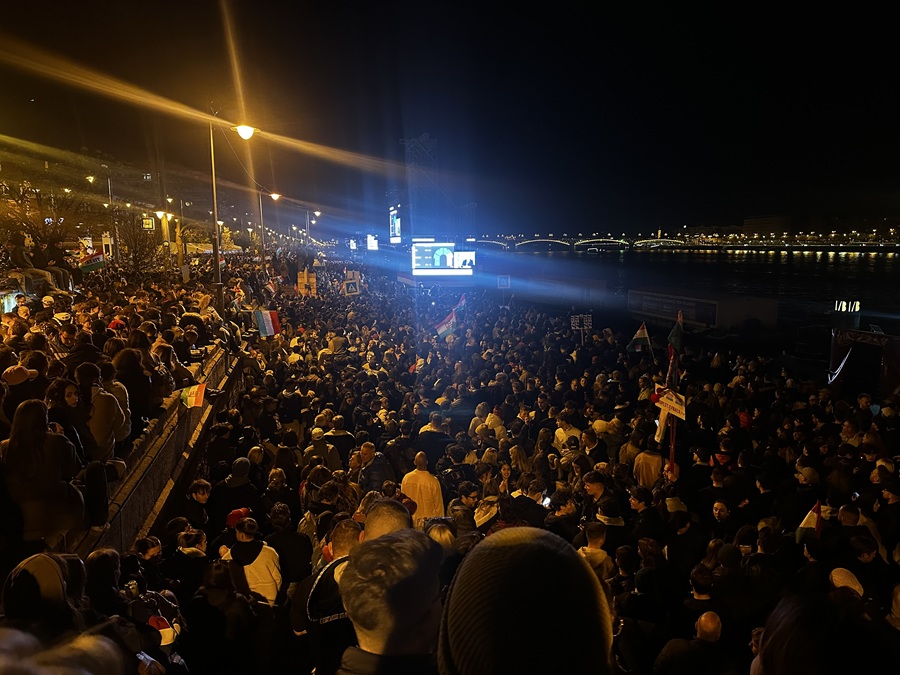




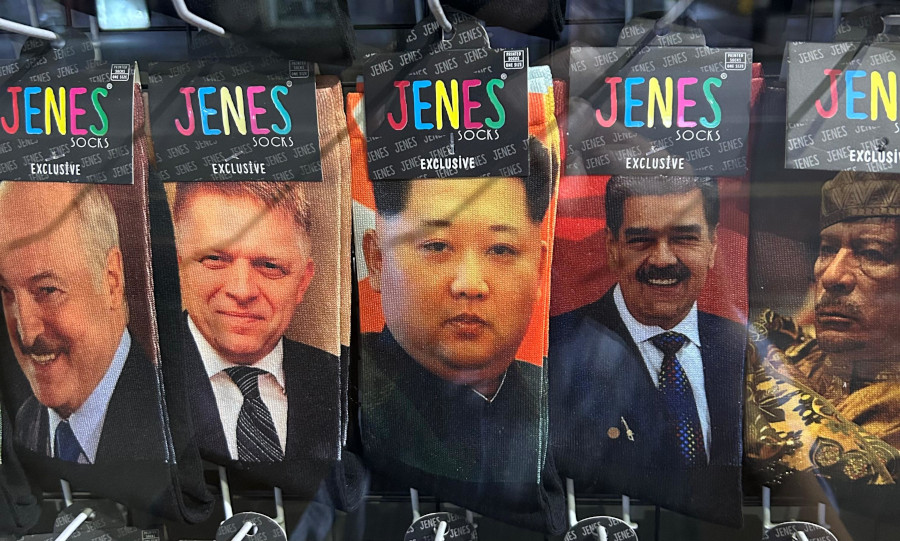
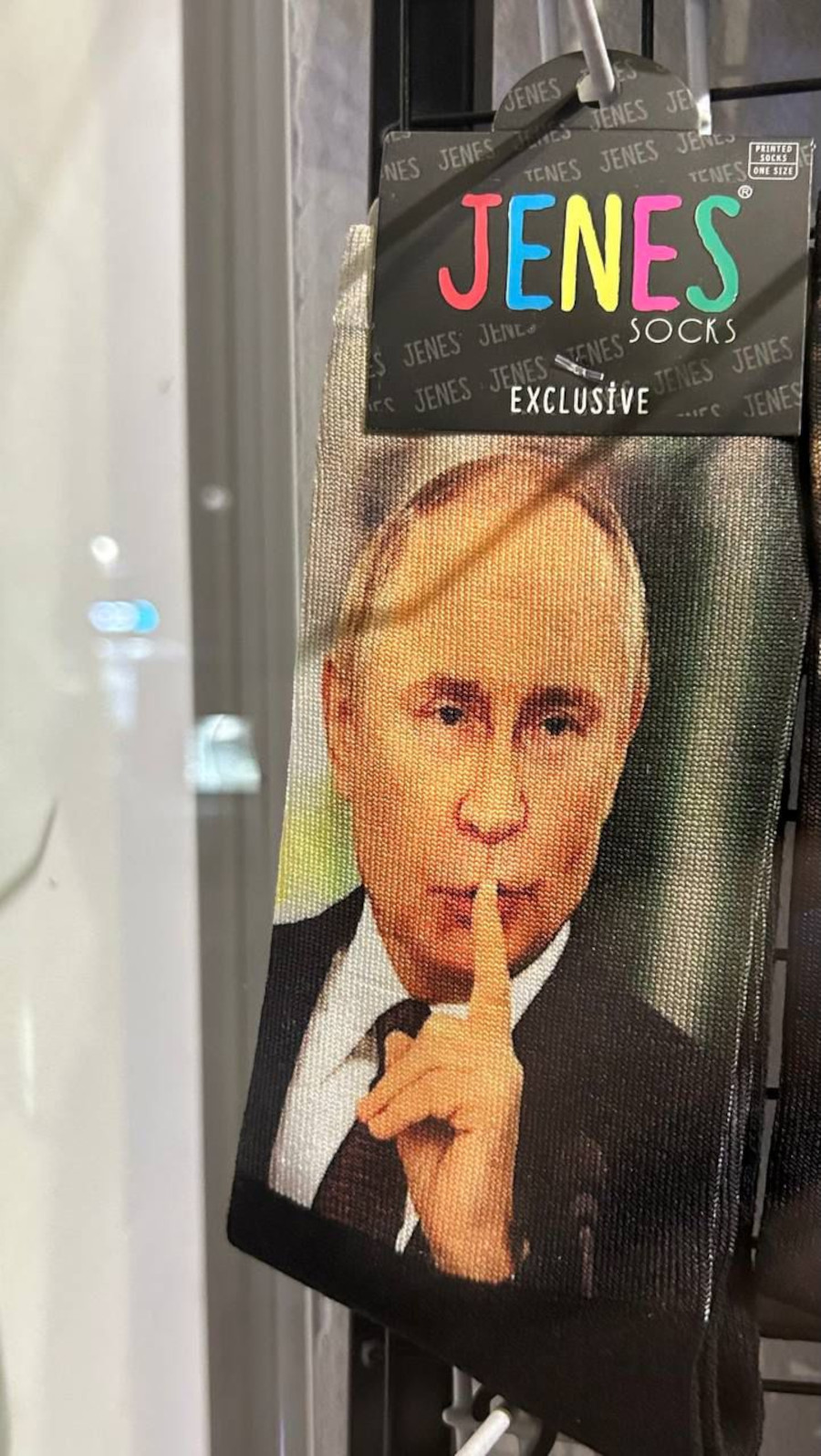
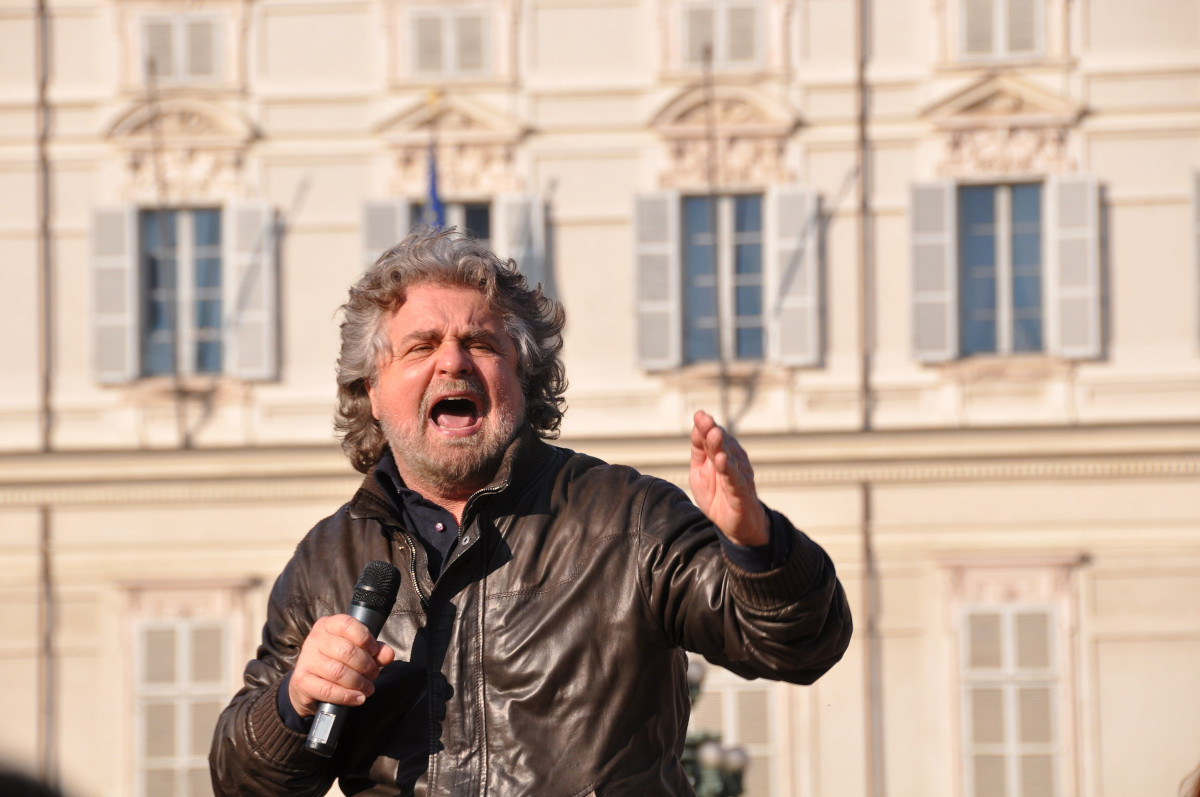
.jpg)