Tag Archives: war

Katharina Lange: Uses of the Past by Representatives of Syria’s tribal groups (asha’ir) – the Wulda example

On December 8, 2025, a brief video video was disseminated on You Tube, X and other social media to mark the first anniversary of the overthrow of the Asad regime. For just over three minutes, it showed a speech delivered by an older man wearing a black headband (‘agal) with a red-checkered headcloth and a long robe (gallabiya) with a suit jacket. Identified as Sheikh Hamed al-Faraj al-Salama in the video’s title, the speaker is framed by two large flags of the Syrian revolution and the new Syria, green-white-black with three red stars in the white field. They were held up by a silent and unmoving group of sixteen young men, some dressed in camouflage, others in black. In front, to Sheikh Hamed’s right hand (or more precisely, his right knee), we see two little boys in civilian clothing.
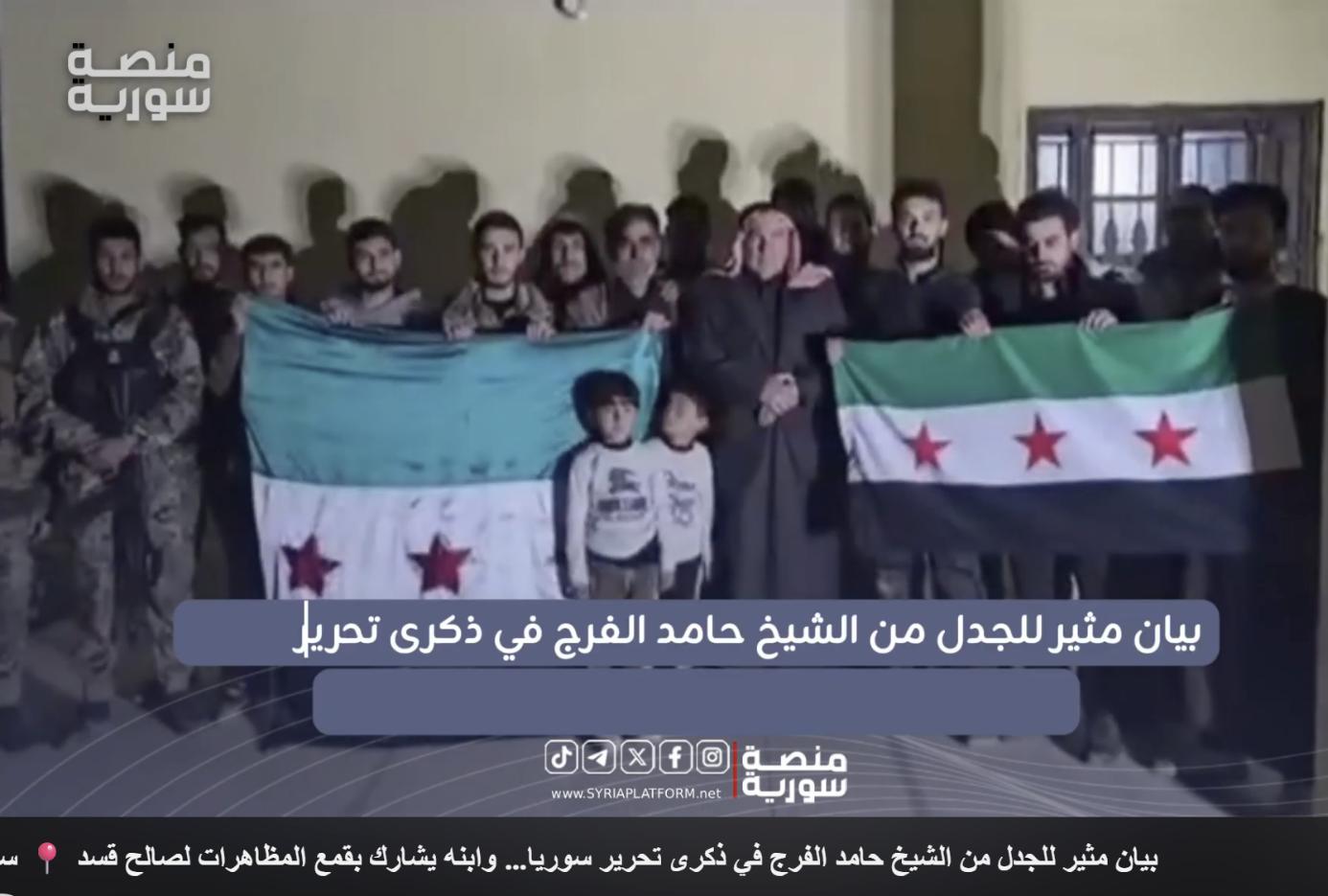
Image 1: A still from a video uploaded on Youtube, and X (among other platforms) on December 8, 2025 (still by the author).

The speaker begins his speech by marking the occasion that prompts the publication of the video:

“Today we celebrate the first anniversary of the fall of the defunct Ba’athist regime in Syria. We congratulate our people and everyone on this occasion, from […] the guesthouse (madafa) of the Wulda – the very guest house [he gestures to the house behind the group] where my father and my younger brother were killed by shelling from the Tabqa airport artillery […] we have stood with the Revolution since its beginning […] we fought in all the battles against the defunct [Baathist] regime […] We are patriots. My grandfather was exiled to Kamaran Island for three years for the sake of this people’s livelihood, and we are ready to make every sacrifice for our people.”

These first seconds of the video thus allow for a political as well as social positioning – the speaker politically aligns not only himself, but a “we” that includes “al-Wulda”, one of Syria’s tribal groups (asha’ir / Sing. ashira), with the victorious Syrian revolution. Terms such as “madafat al-Wulda” i.e. the guesthouse or reception hall of the Wulda, and the clothes worn by Sheikh Hamed, point to this tribal identity, while the educated accent in which the speech is delivered, as well as the dark suit jacket worn over the gallabiya, add a layer of Syrian urbanity.

This entry interrogates how the past has been referenced to underline present-day political claims among some of Syria’s tribal communities (asha’ir or qaba’il) in the Euphrates valley upstream of Raqqa. As an example, I focus on the Wulda ashira, in which I have been interested for a long time. This post is based on fieldwork I conducted in Syria between 2001 and 2011, and a short visit in May 2025.

The Wulda are one of numerous tribal or descent-based social groups which have long served as a fundamental structuring factor for social belonging in Syria’s eastern and southern parts. People who identify as belonging to one of these tribal groups are tied into long genealogies through the male line (although, as I have argued elsewhere, female perspectives are an essential if invisibilized component of this history). Reflecting segmentary models of social order, the Wulda specifically are made up of a number of smaller descent groups (confusingly, also referred to as asha’ir) among them the Nasser (from whom Sheikh Hamed himself has descended), the Ghanim, the Bu M’sarra, the Turn, ‘Ili, etc. Each of them, again, consists of distinct clans and families. In turn, the larger unit of the Wulda itself (like neighbouring groups such as the Afadla or the Sabkha) forms part of the Bu Sha’ban who in turn trace descent from the Zubaid and eventually, the Qahtanite Arabs whose roots lie in Yemen.

The ability to trace one’s genealogy to these ancient roots is particularly important given the collective classification of the Wulda (and other tribes) as “shawaya”, a classificatory term that has historically been distinct both from “sedentaries” (hadar) and also from the Bedouin who can claim Arab authenticity, strong genealogies, and nobility. The term itself is most often explained as a derivative of “shat”, sheep, indicating that “shawaya” were originally herders of small livestock. The term has also been used pejoratively, as an insult to designate the tribal inhabitants of Syria’s Eastern regions who are sometimes feared, but also looked down upon as backward, less civilized, wild and potentially violent.

For a critical intellectual readership, talk of tribes, asha’ir or qaba’il, and descent-based models of social belonging may seem outdated – or even, particularly among (some) anthropologists, suspicious of a dangerously exoticising and Orientalising view of at least part of the Syrian population. Yet for those who identify as a descendant of this milieu, genealogies and narratives about particular groups and ancestors are often a source of fierce pride. Moreover, in times where state structures are weak or even absent, the social networks created by tribal belonging and genealogy serve as a real and vital resource for social solidarity and mutual support.

Genealogies, anecdotes and icons of the tribal past, are a matter of great interest and debate in this region, as well as Syria’s tribal milieu more generally. Thus, to a local audience, Sheikh Hamed’s videotaped reference to his grandfather and his enforced exile immediately evoked a familiar discourse. This reference draws from a well-known narrative that has been told and retold to cement the status of the Wulda as a “patriotic” (watani) tribe. Its roots go back to the colonial era in Syria, the period of the French mandate (1920-1946).
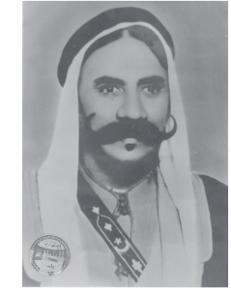
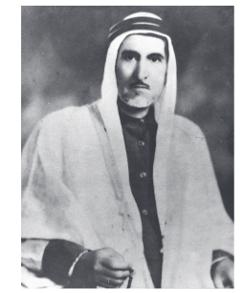
Sheikh Hamed’s grandfather, Muhammad al-Faraj al-Salama (d. 1972) was one of the two paramount sheikhs representing the Wulda tribe during this era, alongside his equally famous cousin, Sheikh Shawakh al-Bursan (d. 1981), whose portrait, featuring a memorable, pointed mustache, has become popular as an iconic image of tribal masculinity on social media, proudly referred to especially by people identifying with the Wulda. The “exile” which is mentioned in the video refers to an event from the 1940s. In July 1941, the administration of Syria had been taken over by the British and the Free French. Before the background of the Second World War, they imposed strict regulations on Syrian cultivators regarding the production and marketing of wheat, which was considered a strategic resource. In 1943, Sheikh Muhammad, who was one of the regions large landowners, was found guilty of “grain hoarding” – i.e., hiding part of the wheat harvest from the authorities. Together with other notables, among them the Shammar sheikh, Daham al-Hadi, he was sent into exile on Qamaran Island in the Red Sea, from where he returned in 1945.

This event has retrospectively been celebrated by members of the Wulda tribe as an example of anti-colonial resistance by the Sheikh and, by extension, the Wulda, underlining their self-ascribed credentials as a “patriotic” tribe. Besides conflicts and battles involving other members of the Wulda, notably the other famous Wulda sheikh of the mandate era, Sheikh Shawakh al-Bursan, Sheikh Muhammad’s exile was one of the moments of Wulda history that was mentioned repeatedly during my fieldwork.

During the 2000s, a number of books authored by writers who for the most part originated from Syria’s tribal milieu themselves amplified such historical perspectives, which had hitherto been transmitted mainly orally. While the books had limited circulation (editions were typically printed by local publishing houses with 1000 or 2000 copies), after 2011, these (and other) iconic references to particularist, tribal histories were made more widely accessible through social media, which during the revolution became a forum for debates, controversies, and political (self)positionings hitherto unheard of for Syria. Beyond textual and discursive sources, images serve as references to Arab tribal values. Among them, visual indications of generosity and hospitality (videos of receptions in tribal guest houses, images of coffee pots, large metal trays or rows of big cooking pots come to mind).

The video from December 2025, cited at the beginning of this text, is an example of such a political self-positioning. In his statement, Sheikh Hamed makes more or less explicit reference to his controversial position as a vocal supporter of the Kurdish-led Autonomous Administration of North and East Syria and its Syrian Democratic Forces. To counter accusations of “treason”, Sheikh Hamed gestures to descent and tribal history, emphasizing that his understanding of patriotism encompasses the wellbeing of all components of Syrian society (in other words: Kurds as well as Arabs).

The position of the Wulda with regard to Arab-Kurdish politics in the Syrian Jazira (the land between Euphrates and Tigris; i.e., for Syria, the territory east of the Euphrates) has a long and complex history that is directly related to their geography. Historically, for the past two hundred years at least the Wulda have settled on both banks of the Euphrates river upstream of Tabqa. Until the mid-twentieth century, most households derived their income from a combination of seasonally mobile raising of small livestock (mostly sheep), as well as seasonal farming near the river. This gradually was replaced by a sedentary lifestyle and year-round agriculture. The construction of the Euphrates Dam at Ṭabqa, officially inaugurated in 1973, and the ensuing flooding of this part of the Euphrates valley marked a decisive rupture. The emerging reservoir submerged up to three hundred villages, displacing an estimated number of at least 60 000 to 70 000 individuals. A significant part of these so-called “submerged Arabs” (“Arab al-Ghamr” or “Maghmurin”), the majority of whom identified with different branches of the Wulda, were resettled in the Syrian Jazira on lands that had previously been farmed by ethnic Kurds. As Arabization measure and “Syria’s greatest social engineering project” of the Baathist era, a chain of thirty-nine new villages now formed the so-called “Arab belt”.

While the Arab belt villages have been governed by the Kurdish-led AANES since 2012, most Wulda villages on the Euphrates between 2013 and 2017 were ruled by the so-called Islamic State of Iraq and Syria (ISIS) as part of its “Caliphate” centered in Raqqa. Since its demise, the area around Raqqa and the Jazira more generally became part of the AANES governed territories – a situation that is changing dramatically just as this blog post is being written.

For the Autonomous Administration, the co-optation of the Arab tribes of the Jazira was an important political goal; and not least, more than half of the Syrian Democratic Forces (SDF) were estimated to be Arab tribal fighters. Among other measures, tribal representatives were included in local councils. In 2017 Sheikh Mahmoud Shawakh al-Bursan of the Wulda, distant cousin of Sheikh Hamed and son of above-mentioned anti-colonial hero, Sheikh Shawakh al-Bursan, was appointed to co-chair (together with a female Kurdish civil engineer, Leila Mustafa) the Raqqa Civilian Council (RCC).

Sheikh Mahmud’s and Sheikh Hamed’s public support for the AANES and the SDF can be seen as a pragmatic position, echoing earlier accommodations of Baathist structures. However, in light of the political polarization between Arab and Kurdish sides in the Syrian conflict, and wide-spread anti-Kurdish sentiment, Sheikh Hamed’s support for the AANES has also been explicitly criticized as “betrayal” of the Arab cause. Thus, Sheikh Hamed’s speech of December 2025 can also be understood as a way to counter this criticism by balancing support for the AANES with equal support for the new leaders of Syria.

While a more detailed account of the different positions taken by men who claim to speak in the name of the Wulda, or the Bu Sha’ban, cannot be given here, it is important to note that the above-mentioned Wulda notables’ declarations of support for AANES are countered by others who have lent support to political and paramilitary forces on other sides of the conflict in Syria. Thus, in a familiar historical pattern, representatives of the Wulda and related groups have politically aligned with different, even opposing sides. Tribal fighters who identify as members of “the Bu Shaaban” or other descent groups related to the Wulda have also inscribed themselves into formalised structures of the Syrian revolution, including the HTS.

Among the tribal notables who have vocally opposed the AANES is Sheikh Abd al-Qadir al-Bursan, another descendant of famous anti-colonial hero, Sheikh Shawakh. Using social media, Sheikh Abd al-Qadir has repeatedly called on the tribal fighters of the Euphrates valley to rise up in arms against the SDF – most recently in the January 2026 war between the two sides. To support his political agenda, he, too, draws on the anti-colonial history of the Wulda, and especially the role played by above-mentioned, famous Shawakh al-Bursan, who is remembered locally for his armed opposition to French mandate forces. In the case of Sheikh Abd al-Qadir, this past is invoked mainly through visual means. Besides clothes that are typically worn by tribesmen of a certain social status, Sheikh Abd al-Qadir cultivates a mustache that closely resembles that of Sheikh Shawakh, creating immediate visual associations between the two men.
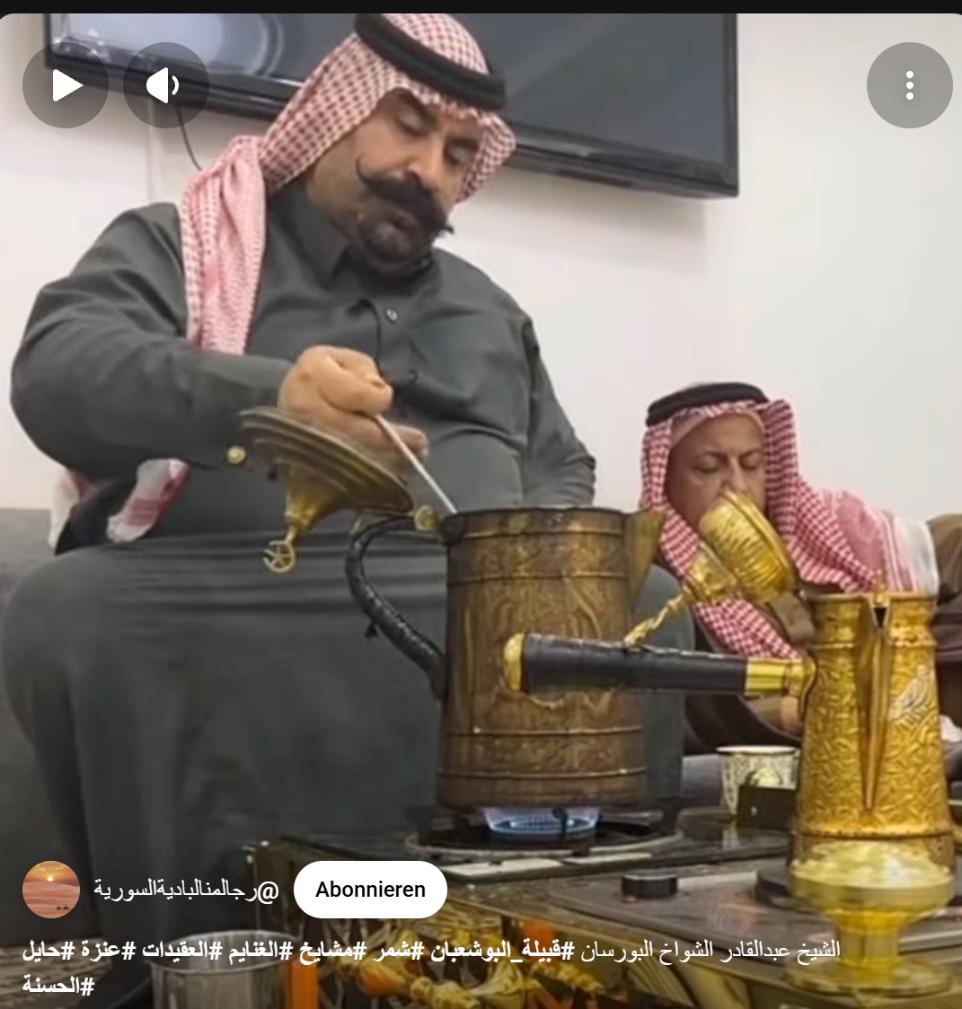
Image 4: A still from a video uploaded to social media shows Sheikh Abd Al-Qadir wearing clothes typically worn by tribesmen of a certain status and sporting a moustache resembling that of Sheikh Shawakh al-Bursan brewing coffee (still by the author).

A final point that must be noted but cannot be explored here in detail is the gendered nature of this digital universe: the images and iconic references to tribal history described here project a distinctly male image of history as well as politics in the Syrian Jazira. From this vantage point, a particular image of tribal masculinity is an integral part of these references (strongly contrasting with otherwise gendered images of female activists and fighters, for instance – but not exclusively – characteristic of Kurdish representations).

The Syrian uprising against the Asad regime, which has transformed Syrian society in so many ways, has also impacted the role of Syria’s tribal groups. Men who position themselves as members of Syria’s tribal milieu legitimize and mobilize support for different, even opposed political positions in (post)revolutionary Syria by referencing well-known tropes and images of tribal history – expressing values such as “patriotism”, hospitality, masculinity, courage – that are well familiar from earlier decades. But the persistence of these symbols and tropes despite the considerable changes that this region has seen over the past fifteen years should not be taken as an indication that Arab tribal identity is unchanging or even timeless. Rather, the value attributed to certain symbols of social belonging based on descent and genealogy can be seen as a response to unstable and changeable political orders on the ground.


Katharina Lange is a senior research fellow at Leibniz-Zentrum Moderner Orient (ZMO) in Berlin with fieldwork experience in Syria and Iraq’s Kurdistan Region, among others. Her current research focuses on oral and gendered histories, rural and agrarian lives, and the impact of war and violence on livelihoods in northern Syria.


Cite as: Lange, K. 2026. “Uses of the Past by Representatives of Syria’s tribal groups (asha’ir) – the Wulda example” Focaalblog, April 6. https://www.focaalblog.com/2026/04/06/katharina-lange-uses-of-the-past-by-representatives-of-syrias-tribal-groups-ashair-the-wulda-example/
Zoya Masoud: Of Exclusive Victimhood and its Competitive Narratives in Post-Assad Syria

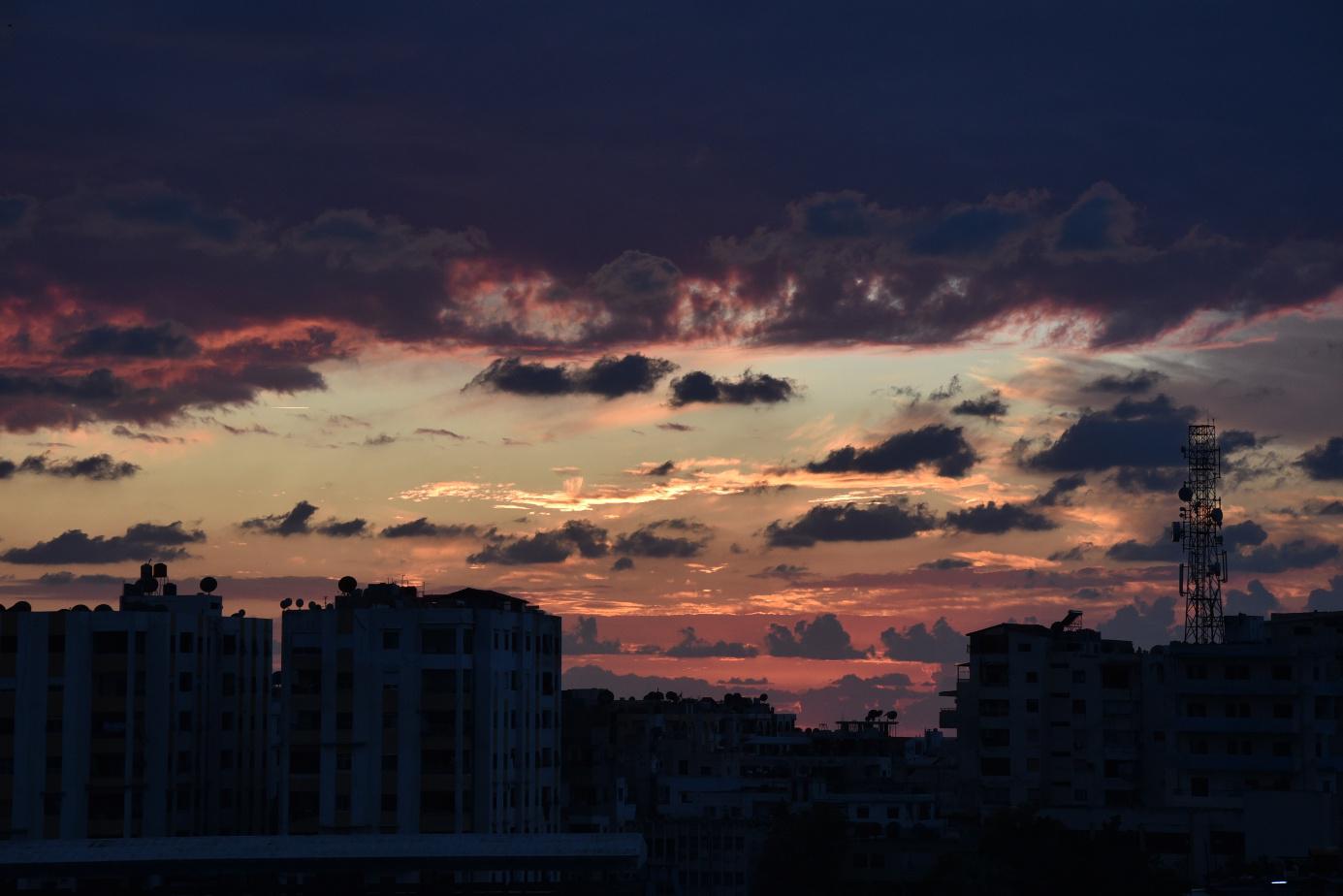
Image 1: The city of Jableh on the Syrian coast witnessed extreme stress between Alawite and Sunni communities since December 8th, 2024. © Zoya Masoud, 2017.

In this contribution, I investigate continuities and ruptures across various patterns of exclusive victimhood in Assad- and post-Assad Syria. Having been born and spending the first 24 years of my life in Damascus, I witnessed the peaceful demonstrations that erupted in 2011, the subsequent outbreak of war in 2012, and its repercussions. Since 2015, I have conducted interviews with Syrians as part of my academic and professional work focusing on heritage destruction and how experiencing loss (re-)constitutes heritage and ascribes new values to it. These interviews contained testimonies about imprisonment and/or forced migration due to indiscriminate shelling and bombing and various forms of pervasive violence. After the euphoria over the Assad regime’s collapse in December 2024 had faded in the wake of massacres against some Syrian communities, I witnessed some public responses of my earlier interviewees to these acts of violence. In the following, I invoke these two kinds of material to probe the possibility of imagining a practice that recognizes the extreme experiences of violence beyond attributing exclusive categories of victims and perpetrators to any certain group. I do this from a position of uncertainty, as events continue to accelerate and unfold.

Ruptures of the dictator-era

At the beginning of the peaceful demonstrations against the Assad regime in 2011, social media platforms became an arena for heated debate over the “truth” of what happened in Syria. Over nearly a decade and a half of an “infra-state conflict” (Vignal 2014), polarisation regarding the events in Syria led to extreme segregation in the virtual sphere of social media: pro-Assad supporters unfriended/unfollowed those opposing him, and vice versa. Pro-Assad mass media outlets framed the peaceful demonstrators of 2011 as “sleeper-cells” of terror and “incubators” of terrorism, while the pro-revolution media channels portrayed it as a legitimate act of resistance against the repression policies of the Assad regime.

The regime had been implementing systematic and widespread violations against the Syrian population, including arbitrary detention, torture, enforced disappearances, and extrajudicial executions. International organisations such as the United Nations and Amnesty International characterise the Syrian war as a state of exception in which strategies such as “surrender or starve” have been implemented (Amnesty 2017, Daniels 2020).

The rebel areas inhabited by a Sunni majority were intensively bombed by the Assad government, supported by both the Russian army and Iranian and Lebanese Shi’a military forces (Alkousaa 2016, Graham-Harrison 2016, Grant & Kaussler 2019, Neumann & Schneider 2022). Various reports have interpreted the large-scale bombing by the Syrian-Russian coalition as a form of collective punishment (e.g., Vignal 2014, Clerc 2014, Sharp 2016, Abou Zainedin 2021). Individuals were exposed to constant fear of being murdered everywhere and at any time. Achille Mbembe names such a constellation of modern terror as “death-worlds;” namely “new and unique forms of social existence in which vast populations are subjected to living conditions that confer upon them the status of the living dead“ (Mbembe 2016:92). Many Syrians fled the death-worlds and sought refuge in neighbouring countries, in Europe and the rest of the world.

After 14 years of war, a militia named Hay’at Tahrir al-Sham (HTS), supported by allied Turkish groups, led a coalition of military factions that on November 27, 2024, launched a military offensive campaign entitled “Deterrence of Aggression” against the Assad troops. The campaign was successful, and in the early morning on December 8, 2024, the fall of the Assad regime was officially announced, after Bashar al-Assad fled Damascus to Moscow, ending a 54-year-long dictatorial regime of the Assad family.

In a matter of hours, social and mass media were full of images and videos depicting the ongoing return of numerous refugees to Syria. Since then, and for the following weeks and months, many individuals I interviewed, who either remained in Syria throughout the war or returned after the fall of Assad for a visit, shared pictures of themselves in their cities on their social media profiles. Other visuals emerged documenting moments of liberating political prisoners from Assad’s torture-security centres, evoking a dual response: they are both horrifying and glorious visuals. The glory lies in the fact that individuals who endured captivity in dark underground prisons can now experience sunlight again. In contrast, the disturbing nature of the photographs from these facilities revealed the extreme conditions to which these prisoners were subjected. Each individual in Syria was exposed to the fear of entering such horror facilities. Those who were “living dead” in death-worlds before December 2024 got the chance after the collapse of the Assad dictatorship to speak out and articulate their experiences of injustice and get attention in the public sphere. The Assad regime not only marginalised their suffering but also stigmatised them as criminals and a risk to Syrian society.

Same slogans, different names

Before the collapse of the Assad regime, slogans glorifying Assad and portraying him as the saviour of Syria took an extreme form of self-destruction. For example, “al-Assad au la Ahad” (Either Assad or no one); “Al-Asad au Nahruq al-Balad” (Either Assad or we will burn the country). In the final months of 2025, similar slogans referring to Al-Sharaa appeared from the region around Deir az-Zour, particularly from al-Asha’er (Bedouin groups). Some people displayed messages on their cars, “al-Sharaa au Nahruq al-Zare’” (Either Al-Sharaa or we will burn the agricultural crops). These parallel uses of wording and terminology seem neither coincidental nor accidental; rather, they represent a continuity of belief in the exclusive occupation of power.

Though the impact of war was drastic in all of Syria, Sunni majority rebel regions faced disproportionately higher levels of violence during the conflict compared to areas controlled by the regime or inhabited predominantly by minorities (as documented also by Mazur 2021). The mass media of the Assad regime did not record these acts of destruction and killing in rebel areas as crimes, but as collateral damage of dismantling the danger from terrorists. While the regime categorized its own casualties as “shahis” (martyrs), it designated those who fell from the opposing side of rebels as terrorists. This oppressive pattern of collective punishments especially against certain rebel areas and of denial of victimhood for the Syrians living in these areas was arguably linked with a systematic instrumentalization of minority protection as a tool to consolidate the authoritarian regime’s power in Syria. Also, before 2011, the Assads portrayed any alternative to their rule as a direct road to sectarian chaos. Especially after they successfully suppressed Sunni Islamist opposition of the Muslim Brotherhood in the 1970s and 1980s, they presented themselves as a bulwark against Islamists who would persecute religious and ethnic minorities if they came to power.

Propagating the image of Assad as the sole guarantor of security for Syria’s minorities – particularly Alawites, Christians (including Armenians, Assyrians), Druze, Ismailis, and others – did not reflect the reality. Many minority communities lived below the poverty line without proper infrastructure. Additionally, many of their male members were forced to serve the compulsory military service, where they often faced injury or death.

When the regime fell, assaults against Alawites were often dismissed by the transitional government as “individual cases,” but they escalated on March 7, 2025. Following attacks on the new security forces by armed Alawite Assad-loyalists, a systematic massacre of Alawite communities began on that date. Human Rights Watch reported on identity-based killings against Alawites (2025). Records reported around 1400 victims (UN News 2025), with probably a greater number of undocumented cases. Since then, reports of abducted Alawite Women and girls frequently emerged. The perpetrators, many of whom belonged to the Ministry of Defence of the al-Sharaa government or to militias allied with it, filmed themselves and proudly posted evidence of their crimes (Reuters 2025). There have been reports of forced migration, eviction from homes and villages and the prevention of these communities from returning to their property (Syrians for Truth and Justice 2026).

Until now, the government’s response to the abduction and sexual enslavement has been limited to publishing a belated report by the Ministry of Interior that claims to record only 42 suspicious cases of abduction. However, the report found that 41 of the 42 suspicious cases were falsified or incorrect, and that only one abduction case was proven. No further details around the only one abduction were mentioned (see the Enab Baladi report on the investigation of Ministry of Interior, Syrian National News 2025).

As the Assad regime forcibly displaced Syrians, there are reports about a new practice of evicting Alawite families from their houses. For example, there was a mass forced displacement of predominantly Alawite villages in the eastern rural areas of Hama. Villages like al-Zughbah, Muraywid, al-Talisiyah, Ma’am, al-Faam and Abu Mansaf were directly attacked following the collapse of the Assad regime on the 8th of December 2024 (Syrians for Truth and Justice 2026). Though the scale of displacement might have been greater during the Assad era against Sunni communities, it is still an unethical vantage point to accept evicting families from their houses due to their sectarian identity.

The mass media under Assad labelled peaceful demonstrators as “infiltrators” (mundassūn), or “revenge seekers” (Mawtwrūn) and ascribed political opponents of Assad to be “terrorists” and “criminals.” Then, many families suffered the fateful disappearance of family members and watched them later on Syrian Television, admitting their participation in terrorist attacks on governmental facilities. These confessions were extracted from the victims under torture in Assad’s security centres. After Al-Sharaa came to power, the abduction of Alawite girls and women became increasingly common. Over time, more families began to raise their voices about the whereabouts of their daughters. Some female victims of sexual violence returned to their families and appeared in videos broadcast on social media accounts of the official Syrian TV channels. These videos were produced under obscure circumstances and aimed to systematically negate and deny the reality of the females’ abduction. The explanations given for their disappearance were trivial and nearly impossible to believe: visiting a friend in another city, forgetting to inform their family; finding a job in a faraway city and travelling there without giving notice to their relatives; experiencing family stress, or having fallen in love with another man, leaving their husband and kids behind without any note of their decision. One should keep in mind that Syrian society, and the Alawite community from cities and villages in the coastal area, is conservative and considers such behaviour of females to be unacceptable. Here, too, the practice of extracting fake confessions is repeated in both the Assad and Al-Sharaa eras.

The amount of discrediting directed at Alawite victims on social media and intergovernmental mass media shows a pattern of discrimination against these women, stripping them of their rights to be heard and believed. Such videos of Alawite females explaining their disappearances to be voluntary or forced due to family stress and not abduction are omnipresent on social media. I prefer not to quote these stories and reproduce their violence. For documented cases of unpublished cases, see the work and summary of the campaign’s documentation on cases of women’s abduction in Syria (February–December 2025) of the grassroots campaign “Stop the Abduction Of Syrian Women” in English and Arabic on their social media page, and the reports on the website of the Syrian Feminist Lobby (2025, 2026).

Exclusive victimhood

Since the beginning of 2025, my social media feeds have been filled with testimonies and news of horrifying incidents of sexual violence. Posts from friends of friends in the cities and villages where my aunts and cousins live – the same places where I spent my childhood vacations at my grandmothers’ and relatives’ houses on the Syrian coast – have been particularly unsettling. Social media also played a crucial role in shaping narratives around these events, with many blaming the victims due to their alleged ties to the former regime. The acceleration of events was accompanied by waves of amplified polarisation and campaigns that oversimplified complex issues on social media, resulting in effects with global repercussions. Syrians around the globe participated in such debates. Some individuals, whom I interviewed for my research before the fall of Assad, expressed discriminatory views against Alawite victims and shared pejorative jokes about Alawite women, suggesting they were disloyal to their men, hence blaming the victims for the sexual violence imposed on them. Even some of my female interlocutors engaged in such social media discourses.

In this contribution, I will share insights on two patterns of my former interviewees and their reactions to the violence against Alawite women. There are other patterns within my interview samples, supporting Alawite victims. However, this contribution focuses only on these two patterns.

The first group did not actively celebrate the violent events but rather focused on celebrating the achievements of the interim government without mentioning the atrocities committed against the Alawite communities. For instance, they celebrated an agreement between the interim Syrian president Ahmad al-Sharaa and Mazlum Ibadi, the leader of the Syrian Democratic Forces (SDF), which was signed on March 10, even as attacks on Alawites were still unfolding. This agreement promised to affirm the inclusion of Kurds in the political transition process and guaranteed their rights and interests. Some interviewees posted about this but failed to mention war crimes against the Alawites. During the Assad era, members of this same group of interviewees accused any Syrian who did not openly condemn the regime’s criminal acts of complicity and indirect participation in causing their suffering. Nevertheless, in March 2025, they themselves ignored the suffering of Alawites.

The second group of my interviewees did not remain silent; but engaged with the news about the massacre, responding with the “haha” emoji and claiming that the victims were adopting a fake “mazloumiyya” (oppression position). According to them, Alawites were misusing and abusing their victimhood to undermine what the people posting perceived to be a fair and just interim government of Syria. They labelled anyone who shared information about sexual violence or the murder of Alawites as “fulul” (remnants of the Assad regime). The landscape on social media became extremely polarised.

Many of my interviewees before December 2024 experienced the horror of the death-worlds and stepped out of their previous home cities, traumatised with scars on their personal biographies. Following the downfall of the Assad regime, however, these individuals, who had been denied their rights to representation, experienced a moment of recognition. Those who were defeated and denied their civil rights of freedom of speech and were either forcibly displaced or imprisoned under the Assad era, celebrated what they considered a victory after the fall of the Assad dictatorship. Nevertheless, they also managed to deny or justify the crimes against the Alawite communities in post-Assad Syria.

The cluster of social media reactions around the Alawite massacres showed that some of these interviewees internalised the dominant discourse of the interim government and aimed to be virtual defenders of Ahmad al-Sharaa in a dogmatic attitude, denying the pain of others.

Al-Sharaa’s government is thus establishing a hegemonic discourse that mirrors that of Assad, marginalising the sufferers of certain groups, while framing the suffering of its own group as singular, unique, incomparable, or morally superior. This approach comes at the expense of acknowledging harm to others. By introducing competitive narratives of suffering, the government positions its own persecution as the only legitimate one, delegitimising other narratives and framing victimhood as bound solely to its social groups of allies. This transforms suffering into a political category to be instrumentalised to justify own committed crimes, rather than acknowledging it as a universal human experience. Within post-conflict communities worldwide, these transformations have been a recurring theme (see Druliolle and Brett 2019). Institutionalising such exclusive spaces also means consolidating them through commemorative practices. For example, certain Syrians posted pictures of humiliations of Alawites on social media on the first anniversary of the massacres against Alawites in March 2025. Some even indicated that the 7th of March 2025 was an “extension of the revolution,” as one post put it.

The interim government aims to capitalise on and appropriate the trauma of the death-worlds, which Syrians went through in a single cast that aligns with its objectives, namely, a trauma or persecution of Sunni communities, which the new regime argues was inflicted mainly by the Alawite minority. In doing so, the new government downplays or mitigates the suffering of Alawite individuals under its reign and frames the atrocities against them as fragmented and as a quest for rightful revenge against a perpetrator. This sense of exclusive victimhood stems from the intensity of suffering and its temporality. One interlocutor captured this sentiment by saying, “We suffered first.” This quote reflects the broader tendency recorded in several excerpts. In an interview on the official Syrian TV, a narrative of disproportion between Sunni and Alawite perpetrators was propagated (Syrian National News 2025). Even if we entertain the concept of accusing all perpetrators of atrocities in the Assad era of being Alawite, this still does not justify attacking civilian Alawite women and abducting them, nor does it justify assassinating Alawite perpetrators. The latter must be brought before the court and held accountable for their crimes. The instrumentalizing or manipulation of one social group’s victimhood to legitimise or justify further violence, are evident here.

But what constitutes Sunni trauma? Many victims of the Assad regime, who were born to Sunni families, are advocating for Alawite victims. Some of those celebrating the sectarian atrocities remained silent during the Assad era, especially the ones who stayed in Syria and did not flee the war. These latter individuals did not lend their support to Assad’s victims regardless of their sect and ethnic backgrounds. Jeffrey C. Alexander (2012) defines collective traumas in his social study as “reflections of neither individual suffering nor actual events, but symbolic rendering that constructs and imagines them.” The ambiguity of mental images on trauma resulted after the Assad era played the role of an incubator for spacing processes, assigning all Alawites as perpetrators, and all Sunnis as victims. These claimed homogenous groups have never existed as such in the Syrian society: some Sunni elite actors cooperated with the regime, and some Alawites opposed the regime and vice versa. Here, trauma appears to be not only socially constructed, but also fails to resonate with any holistic, alleged homogenous group of Syria.

In a post-dictatorship Syrian setting, implicit or explicit comparisons of suffering treat recognition as a scarce resource rather than a shared moral and ethical obligation. This reproduces the Assad regime’s mechanisms for treating individuals and groups unevenly based on their sect, political, and ethnic affiliations, and definitely reproduces the exclusive patterns of binary thinking: those “good” citizens loyal to the interim government against those “bad” citizens who oppose it.

Of multidirectionality

The primary issue with such a competitive narrative is its drastic effects on civic identity and a sense of belonging in post-Assad Syria. Michael Rothberg (2009) introduced the concept of multidirectional memory, going beyond competitive memory. This invites us to promote multivocality and plurality in our thinking of identity’s discourses. It is essential to create a representational space that encompasses all human communities that have historically inhabited the geographical territory known as Syria. To truly celebrate our plurality and diversity, rather than suppressing it under the dominant narratives of majorities and minorities, we must actively engage economically, politically, and socially marginalised groups in public discourse. These groups should be empowered to articulate their suffering, their rights to the city, village, heritage, and express their identities.

When marginalised populations, who often lack representation in official discourses, raise their voices through narratives that reflect their histories and heritage, they challenge the prevailing interpretive systems that govern societal discourse. By elucidating their demands for safety, justice, and dignity, both spatially and socially, they play a crucial role in shaping the conversation around governance.

Interim governments should be held accountable for refining the discourse surrounding a unified Syrian national identity by emphasising the pluralism inherent in historical narratives. This entails fostering democratic spaces that facilitate the representation of diverse identities within the public sphere. Achieving fair and democratic representation necessitates ongoing negotiation and dialogue regarding the foundations and narratives of these identities, alongside a commitment to honouring the lived experiences of all citizens. This is particularly crucial given Syria’s complex and painful legacy of 54 years under dictatorship and violent repression.

The painful stories of those affected by this tumultuous history must not be overlooked, as they are integral to understanding the social fabric of contemporary Syria. Integrating and acknowledging the experiences of all individuals and communities identifying as Syrian can foster chains of solidarity and mutual support. This approach promises to assist in the sustainable reconciliation and enhance social relationships among Syrians.


Zoya Masoud is an urban researcher, currently conductign her Project “Irrestitutable” within the ERC Project “BEYONDREST”. Her work engages in critical inquiry into identity, architecture, heritage, commemoration, violence, and knowledge production.


References

Abou Zainedin, Sawsan (2021, March 24). ‘أنقاض وباصات خضراء واستثمارات’, Aljumhuriya.Net الجمهورية.نت, https://aljumhuriya.net/ar/2021/03/24/%D8%A3%D9%86%D9%82%D8%A7%D8%B6-%D9%88%D8%A8%D8%A7%D8%B5%D8%A7%D8%AA-%D8%AE%D8%B6%D8%B1%D8%A7%D8%A1-%D9%88%D8%A7%D8%B3%D8%AA%D8%AB%D9%85%D8%A7%D8%B1%D8%A7%D8%AA/.

Alexander, Jeffrey C. (2012). Trauma: A Social Theory.

Alkousaa, Riham; et al. (2016, October 2011). ‘Battle for Aleppo: How Syria Became the New Global War’, International, Spiegel International, https://www.spiegel.de/international/world/syria-war-became-conflict-between-usa-and-russia-and-iran-a-1115681.html.

Amnesty International (2017, January 1st). ‘Syria, “Surrender or Starve” Strategy Displacing Thousands Amounts to Crimes against Humanity’, https://www.amnesty.org/en/latest/press-release/2017/11/syria-surrender-or-starve-strategy-displacing-thousands-amounts-to-crimes-against-humanity/.

Charles River Editors (2016). The Battle of Aleppo: The History of the Ongoing Siege at the Center of the Syrian Civil War.

Clerc, Valérie (2014). ‘Informal Settlements in the Syrian Conflict: Urban Planning as a Weapon’, Built Environment 40, no. 1: 34–51, https://doi.org/10.2148/benv.40.1.34

Daniels, Brian (2020, February 11). ‘Precarious Heritage: Cultural Protection, Necropower, and Political Resistance in the Syrian Conflict’, Ringvorlesung des GRK 2227, https://www.identitaet-und-erbe.org/veranstaltungen/brian-daniels-philadelphia/;

Druliolle, Vincent & Brett, Roderick Leslie (2019). The Politics of Victimhood in Post-Conflict Societies: Comparative and Analytical Perspectives.

Enab Baladi (2025, November 2). “الداخلية” تكشف نتائج التحقيق بخطف نساء في الساحل’, https://www.enabbaladi.net/781879/الداخلية-تكشف-نتائج-التحقيق-بخطف-نسا/.

Graham-Harrison, Emma (2016, November 15). ‘Aleppo Airstrikes Restart as Russia Announces Major Syria Offensive’, World, The Guardian, https://www.theguardian.com/world/2016/nov/15/aleppo-airstrikes-resume-as-russia-announces-major-syria-offensive.

Grant, Keith A. & Kaussler, Bernd (2020). ‘The Battle of Aleppo: External Patrons and the Victimization of Civilians in Civil War’, Small Wars & Insurgencies 31, no. 1: 1–33, https://doi.org/10.1080/09592318.2020.1672959.

Human Rights Watch, (2025, September 23). ‘“Are You Alawi?”’, https://www.hrw.org/report/2025/09/23/are-you-alawi/identity-based-killings-during-syrias-transition.

Mazur, Kevin (2021). Revolution in Syria: Identity, Networks, and Repression, Cambridge Studies in Comparative Politics.

Mbembe, Achille (2016). Necropolitics, Theory in Forms.

Neumann, Julia & Schneider, Lisa (2022, March 8). ‘Elfter Jahrestag des Syrienkonflikts: Bis heute herrscht Krieg’, TAZ, https://taz.de/Elfter-Jahrestag-des-Syrienkonflikts/!5842376/.

Reuters, (2025, June 27). ‘“She’s Not Coming Back”: Alawite Women Snatched from Streets of Syria’, Middle East, https://www.reuters.com/world/middle-east/shes-not-coming-back-alawite-women-snatched-streets-syria-2025-06-27/.

Rothberg, Michael (2009). Multidirectional Memory: Remembering the Holocaust in the Age of Decolonization.

Sharp, Deen (2016). ‘Urbicide and the Arrangement of Violence in Syria’, in Beyond the Square: Urbanism and the Arab Uprisings, eds. Deen Sharp and Claire Panetta.

Siege Watch (2019). Final Report. Out of Sight, Out of Mind: The Aftermath of Syria’s Sieges – Syrian Arab Republic, https://reliefweb.int/report/syrian-arab-republic/siege-watch-final-report-out-sight-out-mind-aftermath-syria-s-sieges.

Stop The Abduction Of Syrian Women, (2025, December 8). ‘Summary of the Campaign’s Documentation on Cases of Women’s Abduction in Syria (February–December 2025)’, Facebook, https://www.facebook.com/StopkidnappingSW.

Syrian Feminist Lobby (2026). https://syrianfeministlobby.org/.

Syrian News Channel, (2025, November, 11).وزارة الداخلية: حالة واحدة فقط حقيقية من أصل 42 حالة اختطاف https://www.youtube.com/watch?v=0E3sg0HLkvw.

Syrians for Truth and Justice (2026, February 9). ‘Syria/Rural Hama: Forced Displacement and Unlawful Seizure of Property against Alawites Following the Fall of al-Assad’, https://stj-sy.org/en/syria-rural-hama-forced-displacement-and-unlawful-seizure-of-property-against-alawites-following-the-fall-of-al-assad/

UN News (2025, August 14). ‘Syria: Violence in Alawite Areas May Be War Crimes, Say Rights Investigators’. https://news.un.org/en/story/2025/08/1165649.

Vignal, Leïla (2014). ‘Destruction-in-Progress: Revolution, Repression and War Planning in Syria (2011 Onwards)’, Built Environment 40, no. 3: 326–41, https://doi.org/10.2148/benv.40.3.326;f humiliating Alawites and indicating the 7th of March 2025 as an extension of the revolution.


Cite as: Masoud, Z. 2026. “Of Exclusive Victimhood and its Competitive Narratives in Post-Assad Syria” Focaalblog, March 30. https://www.focaalblog.com/2026/03/30/zoya-masoud-of-exclusive-victimhood-and-its-competitive-narratives-in-post-assad-syria/

Antonio De Lauri: The Trump Administration: Theology into Statecraft

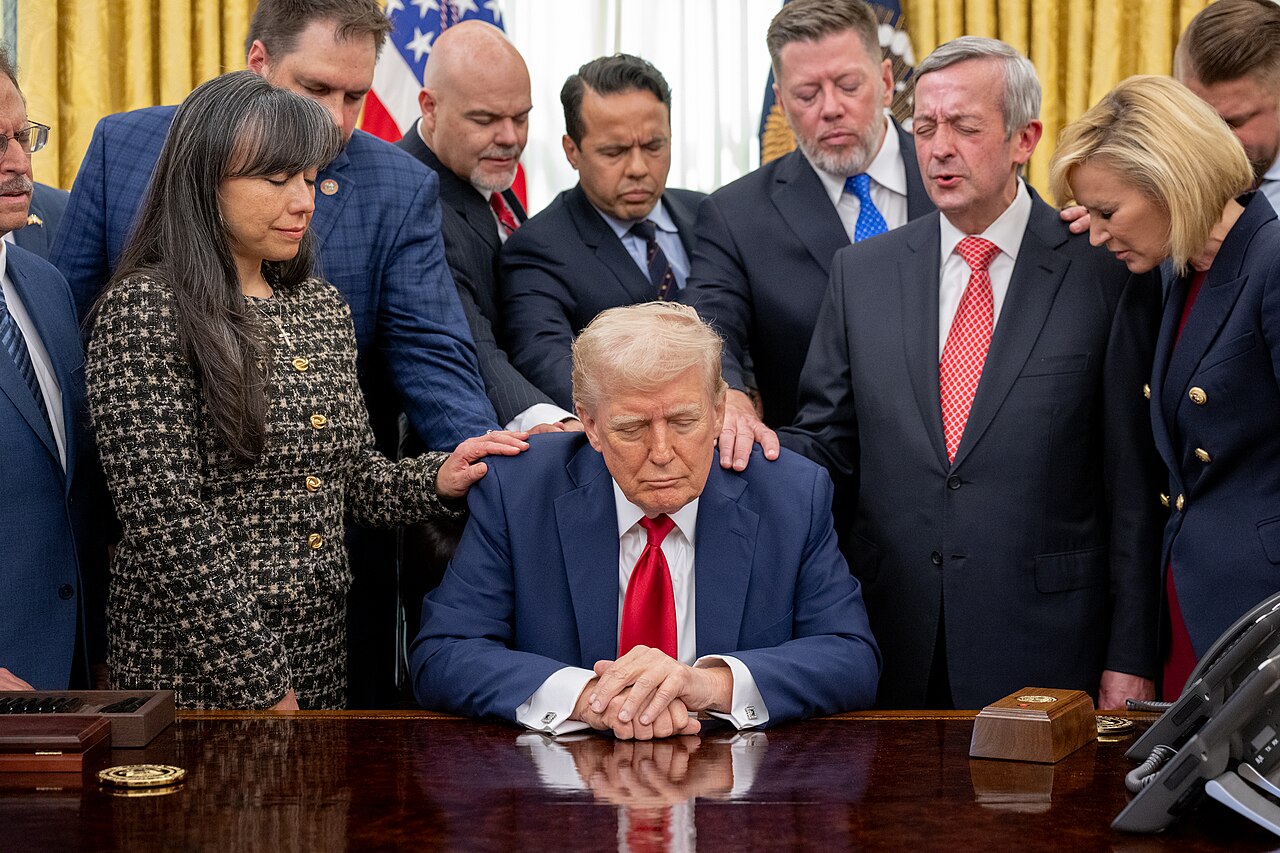
President Donald Trump meets with Faith Leaders from across the country to pray in the Oval Office, Wednesday March 19, 2025. (Official White House Photo by Molly Riley)

One of the most troubling features of Trump-era politics is not simply nationalism, authoritarian style, or contempt for institutions. It is the extent to which large parts of the administration and its surrounding ecosystem have normalised a form of religious absolutism, especially in its Christian Zionist variant, as a legitimate basis for public policy. This is most clearly visible in relation to Israel–Palestine, where biblical claims, apocalyptic imagination, and civilisational rhetoric increasingly bleed into state language, lobbying, and diplomacy.

This is not a story about religion in politics in the broad sense. American politics has always been saturated with religion. Nor is it a story about American Christians as such, many of whom reject Christian Zionism and oppose the sacralisation of war and occupation. It is, rather, a story about a specific ideological formation: the convergence of Trumpism, evangelical power, militarised Christianity, and an unqualified pro-Israel agenda that increasingly treats territorial expansion and permanent domination as morally righteous, even divinely sanctioned.

Consider Pete Hegseth, now serving as U.S. defense secretary. His tattoos include both “Deus Vult” (the medieval crusader slogan meaning “God wills it”) and the Jerusalem Cross, a symbol with a long Christian history that has also been adopted by some far-right groups as an emblem of struggle for “Western civilisation.” Symbolism matters, especially when it aligns with a broader worldview. Hegseth’s public commentary has long deployed crusade-inflected language and cast politics in civilisational terms. In a political environment already inclined to frame conflict as existential and redemptive, such imagery is not merely ornamental. It signals a moral universe in which force can be imagined as a sacred duty.

Then there is Paula White-Cain, Trump’s longtime spiritual adviser, now serving as senior adviser to the White House Faith Office, created in February 2025. White is not a marginal pastor offering private counsel; she is an institutional actor at the centre of the administration’s religious outreach. Her prominence illustrates how charismatic evangelical leadership has been folded directly into executive power. Whatever internal diversity exists within evangelicalism, White’s role provides formal access and symbolic legitimacy to a religious-political bloc that has made unwavering support for Israel central to its moral vocabulary.

That bloc has organisational muscle. Christians United for Israel (CUFI) describes itself as the largest pro-Israel organisation in the United States, with more than 10 million members. It presents its mission in explicitly activist terms: to educate and mobilise Christians “with one voice in defence of Israel and the Jewish people.” CUFI is not merely a constituency group; it is a mass infrastructure for translating prophetic belief into lobbying pressure. When biblical narratives are converted into organised political leverage at this scale, they shape the range of what elected officials can say and do.

The American Israeli Public Affairs Committee (AIPAC) is different, but no less important. It is a major pro-Israel lobbying organisation that plays a key role in shaping the U.S.–Israel relationship. Its worldview is more conventionally strategic than theological. Yet in practice, the agendas of groups like AIPAC often converge with those of Christian Zionist networks, producing an American political field in which the costs of backing Israeli occupation, settlement expansion, or maximalist territorial claims are drastically reduced. Theology and lobbying are not identical, but they are politically complementary.

The administration’s own institutional architecture reinforces this trend. In February 2025, Trump signed an executive order creating the Task Force to Eradicate Anti-Christian Bias, led by Attorney General Pam Bondi. On paper, the initiative is framed as protecting Christians from discrimination. In practice, such moves risk deepening a politics of Christian grievance and exceptionalism, presenting the state as the guardian of a supposedly besieged majority faith at the very moment when Christian nationalist language is becoming more entrenched in public power.

The rhetoric becomes even clearer in the case of Elise Stefanik. During her January 2025 confirmation hearing for the UN post, Stefanik endorsed the claim that Israel has a “biblical right” to the West Bank. The significance lies not only in the remark itself, but in what it reveals: a willingness to displace international law, diplomacy, and Palestinian political rights with a sacred title deed. Although her nomination was later withdrawn, the statement remains politically telling.

Mike Huckabee, now U.S. ambassador to Israel, has long embodied this same logic. He is widely described as a staunch evangelical supporter of Israel and a longstanding defender of Jewish settlements in the occupied West Bank. His politics are not simply “pro-Israel”; they are rooted in a theological reading of land, sovereignty, and history that aligns closely with Christian Zionism. That worldview narrows the space for any policy grounded in equality, international law, or genuine Palestinian self-determination.

This alignment is clearly reinforced by the relationship with Israeli political leadership. While Benjamin Netanyahu has strategically engaged with evangelical audiences and Christian Zionist networks, he is not alone. Extremist figures such as Bezalel Smotrich and Itamar Ben-Gvir have drawn explicitly on religious justifications in articulating territorial claims and in dehumanising Palestinians. This does not imply a simple ideological overlap with American Christian Zionism, but it highlights a growing convergence in which theological narratives and state interests intersect, mutually reinforcing a political environment where extremist ideologies and military policies acquire both strategic and symbolic legitimacy.

Crucially, this ideological framework does not stop at Israel–Palestine. It extends into broader geopolitical imaginaries, including the war in Iran, where segments of the same evangelical ecosystem interpret conflict through apocalyptic and civilisational lenses. In such narratives, geopolitical confrontation is not merely strategic but part of a larger, divinely ordered struggle. The effect is to further erode the space for diplomacy, recasting war as destiny rather than as a contingent and avoidable political choice.

At the centre of this configuration stands Donald Trump himself. Trump is not a conventional religious actor, nor does he consistently articulate a coherent theological worldview. His relationship to religion has been largely instrumental and politically attuned rather than doctrinal. It is precisely this pragmatism that has enabled a particularly effective alignment with Christian Zionist constituencies. Trump’s approach to Israel has combined strategic calculation with symbolic gestures that carry deep theological resonance for evangelical supporters. Decisions such as the relocation of the U.S. embassy to Jerusalem, the recognition of Israeli sovereignty over contested territories, and the consistent avoidance of pressure on settlement expansion have not been framed in explicitly religious terms by Trump himself. However, they have been readily interpreted within a Christian Zionist framework as affirmations of biblical promise and prophetic fulfilment, in line with the “Greater Israel” vision. Trump’s significance lies less in personal belief than in political calculation: he has translated a set of religiously inflected expectations into concrete policy shifts, while maintaining enough ambiguity to keep these commitments legible as both strategic choices and moral imperatives.

Taken together, these figures and institutions reveal a deeper pattern. Christian Zionism is not a decorative feature of Trumpism; it is one of the moral languages through which power justifies itself. It sanctifies hierarchy, recasts occupation as covenant, and turns war into destiny. Its extension beyond Israel–Palestine into wider conflict theatres underscores the risks of allowing theological absolutism to shape statecraft.

Its danger lies precisely in this fusion of transcendence and politics. Once territorial claims are rendered biblical, and military force is wrapped in sacred symbolism, political argument becomes harder, compromise becomes sinful, and domination begins to masquerade as faith. The ritual of “laying on of hands” in the Oval Office on 5 March 2026—during which prominent evangelical figures gathered around Donald Trump, placing their hands on his shoulders and arms while praying over him—epitomises this convergence. It is not merely a display of personal devotion, but a performative enactment of political theology: a moment in which spiritual authority and executive power collapse into one another, reinforcing the idea that political leadership itself is divinely sanctioned and that state action can be endowed with sacred legitimacy.


Antonio De Lauri is a Research Professor and Research Director at the Christian Michelsen Institute. He is the President of the International Humanitarian Studies Association, and the Editor-in-Chief of Public Anthropologist.


Cite as: De Lauri, A. 2025. “The Trump Administration: Theology into Statecraft” Focaalblog March 27. https://www.focaalblog.com/2026/03/27/antonio-de-lauri-the-trump-administration-theology-into-statecraft/

Ahmad Moradi: Iran, Year 1404: Chronicles of Planned Chaos

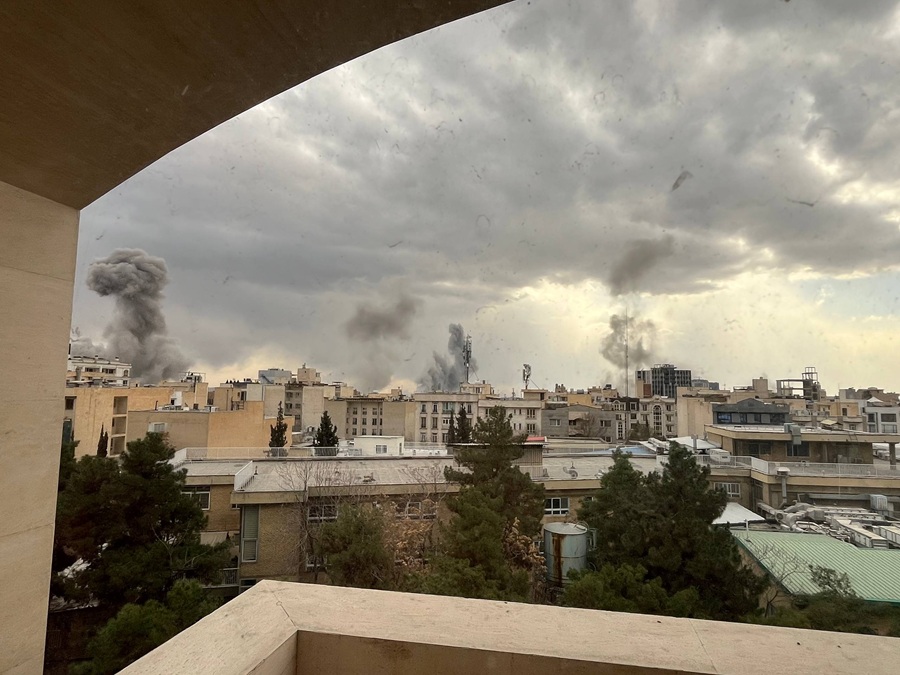
Image 1: Bombing scene in Tehran, 2 March 2026. Anonymous photographer. Shared via the Telegram channel Vahid Online.

No, dear Rira,
my letter must be short,
must be simple,
with no talk of ambiguity or mirrors.
I will write to you again:
We are all well—
but do not believe me.

(Ali Salehi, Iranian poet)

The Sense of an Ending — April 26, 2025

Thick black smoke is rising over the port of Bandar Abbas, where Iran’s largest port is located. A massive explosion has just torn through the area. Authorities urge people to stay indoors, warning of airborne toxins possibly spreading across the city.

We’re watching a local TV station livestream the explosion site. Ambulances move back and forth, firefighters enter and leave the frame, and there is a constant stream of water aimed at the large black billows rising into the sky. “War must be really scary. I’ve thought about it often, for a long time. But yesterday, I realised war is truly terrifying,” Javid tells me. Although we were born during the Iran-Iraq War in the 1980s, we have no clear recollection of the bombings and explosions.

Despite the shock of yesterday, friends call, describing an eerie stillness in the city. The blast was so powerful it shook windows; many initially thought it was an earthquake—a frequent occurrence in this part of Iran. Speculation runs rampant: some fear sabotage by Israel, recalling the devastating 2020 Beirut blast; others blame incompetence by the corrupt regime. The only shared certainty in this divided society is the overwhelming reality of the explosion itself and how devastatingly powerful it was.

I had landed in Bandar Abbas just hours earlier, flying from Tehran. The plane was old, part of Iran’s aging air fleet, historically hampered by years of Western sanctions. Its engines rattled and the seats were worn out, but it got us here. Like much of Iran’s infrastructure, it was fragile, underfunded, yet stubbornly functional. Whatever that means.

Julian Barnes’ book title The Sense of an Ending keeps coming to mind. The explosion feels like a prelude to war, echoing the trajectory of Beirut: first the port explosion in 2020, then full-scale conflict.

Yet my sense of looming catastrophe doesn’t fully align with the general mood of those around me. My family continues to rely heavily on the healthcare system. My mother visits the hospital twice a week for kidney dialysis. Another relative is undergoing cancer treatment. They return home relieved, even cheerful, knowing most of their medical expenses are still covered by public insurance. People persist in their routines, driving their children from school to the gym to music lessons. They adapt. They press on. Rent consumes an entire salary. I keep asking nearly everyone I meet how they make ends meet. Hardly anyone knows precisely how daily life holds together. Nothing quite works, yet everything somehow remains in place. Politically, the atmosphere feels similarly precarious.

In many respects, Iran seems to be experiencing a rare period of calm. For now, a delicate peace holds between the state and society. In Tehran, women without hijabs walk openly through the streets. At night, new cafés buzz with conversation, laughter, and young people lingering into the late hours. A cautious optimism lingers in the air.

Iran and the U.S, the archenemies for over four decades, appear closer than ever to resolving their hostilities. Iran might agree to curb its nuclear ambitions, while the U.S. is expected not only to lift sanctions but also to commit billions of dollars in investment. Such steps would strongly reassure Iran that the U.S. won’t abruptly withdraw again, as it did in 2018 when the Trump administration unilaterally abandoned the JCPOA—the nuclear agreement meticulously negotiated during President Obama’s administration.

The Blown Up Table — June 13, 2025

Except it wasn’t.

Israel launched an unprovoked assault on Iran. In the first few minutes, several high-ranking military commanders and nuclear scientists were assassinated. At that moment, Iran and the U.S. were gearing up for the sixth round of indirect negotiations, with Oman serving as intermediary. Looking back, it is easy to believe the growing reports that the U.S.-initiated talks were a cover for Israel’s surprise attack.

The assault began exactly on the sixty-first day of the two-month deadline Trump had set earlier in a letter to Iran’s Supreme Leader. On June 20, days after Iran’s renewed discussions with the European powers—Germany, the UK, and France—the U.S. joined the Israeli offensive. The U.S. bombed three main nuclear facilities. Other targets included security command centers and the so-called “centers of oppression”—among them Basij bases, where I had conducted fieldwork since 2015. These sites range from military compounds to humble bureaucratic offices dispersed throughout neighborhoods. They form a sprawling network under the Revolutionary Guards’ control. For years, these bases played a crucial role in surveilling ordinary citizens, especially during unrest. Now, they are under bombardment, just like military bases, the notorious Evin prison, and state TV headquarters.

They claim it is a liberatory act—aiming to set the Iranian people free. How strangely familiar this rhetoric sounds. The Iraqi invasion déjà vu.

Politics of Rightful Killing — June 21, 2025

An old woman in her seventies darts across a shopping store in Berlin, shouting to her companion in Farsi: “Look, good news. Israel has continued the bombing of Iran.” She is referring to events that unfolded just hours after the announcement of a ceasefire between Israel and Iran, brokered by the U.S. and Qatar. News circulating on social media reports that the Israeli government instructed a fleet of jets to bomb targets in Iran, allegedly in response to a missile launched from Iran into Israel shortly after the ceasefire began.

A sense of disgust washes over me. Nausea, as Sartre describes it.

In a second episode that day, a friend calls and asks for advice on how to respond to a voice message she has just received. The internet has finally come back after the ceasefire. The message explains that the sender had to rush back to Iran—despite the closure of the airspace—for the funeral of his brother. “He passed away,” the voice says, referring to one of the recent attacks. My friend tells me she has no idea how to respond to the message from her colleague. “Was her brother a member of the security forces in Iran?” she asks. She explains that her colleague had once hinted at her family’s involvement and alignment with the Iranian regime. “Now,” she continues, “I wonder how to respond. If her brother was part of the regime, wouldn’t he have been involved in the mass oppression and killing of protesters just a couple of years ago?”

I suggest she let it go—for now. People from all walks of life were killed in the attacks. I tell her to focus on the simple fact that her colleague has lost a brother. Just offer condolences.

She agrees, reluctantly, and ends the conversation with a quiet question: “In the absence of the regime, how would people treat those who aligned with it?”

Resentment runs deep, and revenge seems to be the only instinct left in our repertoire. Some call it the politics of rightful killing.

Snapback- 28 August 2025

All U.N. sanctions have been reimposed, one of the harshest sanctions regimes laid against any country. Iran has already been under Western-imposed sanctions for decades. It is not yet clear what the effect is going to be.

Lottery — January 12, 2026

It is Monday evening. My phone finally rang. It is my sister’s voice. It has been more than four days of complete blackout. No internet in Iran, no chance to call family back home from abroad. Videos of dead bodies under black covers in the central morgue of Kahriyak in Tehran have been trickling in since Saturday. Those of us abroad with internet have been searching for loved ones in the videos. Someone has smuggled the video out, and then shared it on a Telegram channel. Hundreds of dead bodies have been laid out in the yards of the morgue, and many more are lined up in the compound. I have paused and replayed the videos many times, checking to see if there is a familiar face.

In this total communication darkness, there are reports from Persian-speaking TV channels giving mounting numbers of the murdered. They were all killed with live ammunition on the 8th and 9th of January. Shortly after the beginning of massive protests on the streets of Iran and the internet shutdown, the security forces, the Basij, and members of the Revolutionary Guards Corps, in a coordinated act, opened fire.

There were Mossad agents among the protesters. This is what the Iranian state claims. No one knows. The number of dead keeps piling up, by thousands. From the morning of January 12, we know that phones are being restored, and some people on social media say that their families were able to call them from Iran. No word from Tehran yet—does this mean that we have lost a loved one? “It is a lottery,” a friend in Berlin tells me on the phone, waiting impatiently for a call from inside Iran. “When you receive the call, you will ask, ‘Is everyone safe?’ You may hear yes or no. Even if you hear a yes, you are sure that many will hear a no.”

Stockpile — February 27, 2026

“We are going to be fine,” my brother tells me. “They will reach an agreement at the last minute. Badr bin Hamad Al Busaidi is in Washington to offer what the U.S. wants.”

“We have stockpiled food for a few weeks,” my brother tells me. “But we have already eaten half of it,” my sister says in the background. “It’s been two months since Trump has wanted to make his decision.”

It is not clear if Iran is refusing to hand in its highly enriched uranium to the US, or according to Badr bin Hamad Al Busaidi, the Omani foreign minister and mediator, Iran has accepted ‘zero stockpile.’

Having a Blast? — February 28, 2026

They blew up the negotiating table again. The supreme leader, Ali Khamenei, is dead.

I have to confess that for over thirty years, every Newruz, the Iranian new year that happens on 20 March, when all family members rush to come together and make a wish during the countdown, I too always rushed, my mind bubbling, not knowing what I had to wish for. In that moment of chaos, I always wished that this year Khamenei would be dead.

Until the year 1404. This year, I joked to my German friends who are visiting us: “This year I’m not going to wish for his death. For thirty years it was not granted. I won’t do it this year, and maybe that will make my wish come true.”

In the evening of 28 February, it is Netanyahu first, and then Trump, who confirm Khamenei’s death. After several hours, Iranian outlets confirm it too. I have a whirlwind of emotions. There are videos of some Iranians having a blast on the streets. There are other videos of a school ruined by several blasts by the US-Israeli strikes. There are 21 days left until Newruz.

We are only 24 hours into the U.S.-Israel war against Iran. I am not sure when the war will end. The consequences are deeply uncertain and potentially chaotic. Violent chaos may very well be the only true objective Trump and Netanyahu have for this country.


Ahmad Moradi is a Senior Research Fellow at the Leibniz-Zentrum Moderner Orient in Berlin. He has conducted ethnographic research with the paramilitary organization of the Basij, as well as with Afghan refugees in Iran who fought in the Syrian civil war and were wounded there. His broader research interests include revolutionary politics and the politics of care in contexts of protracted conflict and displacement in the Middle East.


Cite as: Moradi, A. 2026. “Iran, Year 1404: Chronicles of Planned Chaos” Focaalblog March 5. https://www.focaalblog.com/2026/03/05/ahmad-moradi-iran-year-1404-chronicles-of-planned-chaos/

Erella Grassiani and Nir Gazit: The Smell of Fear, The Sound of Relief: Sensing War in Israel/Palestine

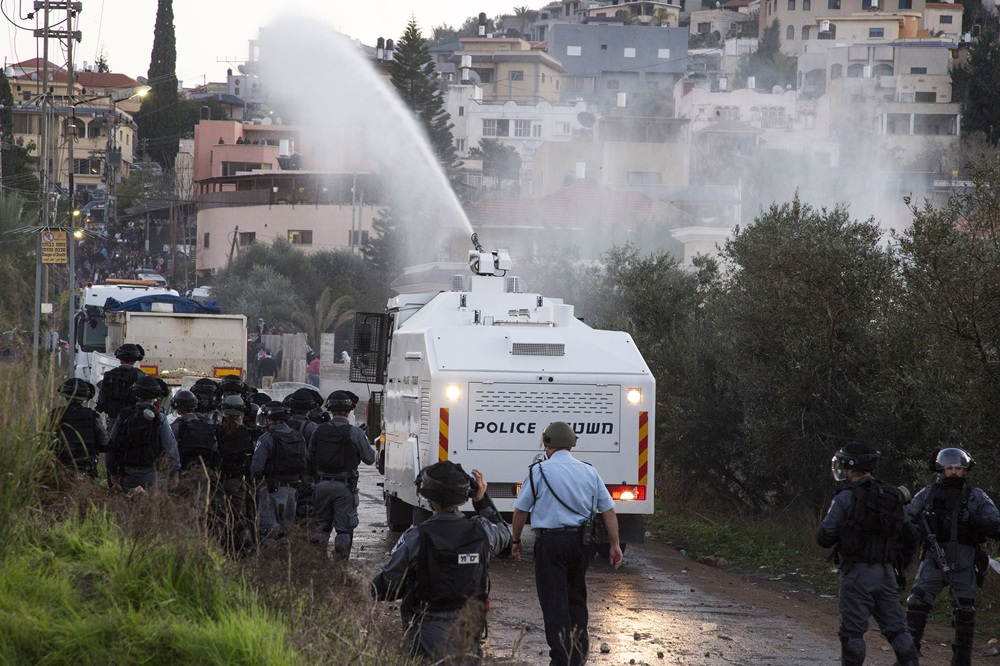
Image 1: A police truck fires “skunk” water at protesters during a demonstration against recent home demolitions in Palestinian communities, Ar’ara, northern Israel, January 21, 2017. Photo by Keren Manor

As we write this, in January 2026, there is, theoretically speaking, a ceasefire in place in Gaza. Unfortunately, this does not mean that the war, the genocide, the violence, and horrors have come to a stop as Israel is breaching the ceasefire on a daily basis. Violence and death are still omnipresent in Gaza and the largely overlooked Occupied Westbank. And so are the sights, smells, and sounds that we associate with death: they are everywhere, albeit experienced differently depending on one’s identity, locality, and positionality. These sounds, smells and sights remind us of the multitude of ways in which war and destruction enter daily lives. War habitually comes in the form of deadly violence, destruction, and famine, and makes itself present through ‘daily’ experiences, such as the sounds of the air raid sirens, the smell of death, and the sight of weaponry in the public sphere.

The senses, of course, cannot be separated from broader issues of embodiment. As several scholars working on the senses and embodiment have demonstrated, senses mediate lived reality and help us to understand it, through our bodies, in a political sense (e.g. Howes 1991; Pink 2015). As such, senses are a means of inquiry that help us understand the realities around us and how we feel this bodily. A focus on the senses can tell us something about what smells, sounds or sights make us feel comfortable and secure, which ones alarm us, frighten us, and how such experiences fluctuate over time and/or in different contexts for divergent groups of people. As such, sensory experiences serve as important mediators in violent conflicts.

In this piece we are interested in the ways war and its violence travel from battlefield spaces to civilian spaces. While it is more common to analyse the ways in which the two are blurred, meaning how the war itself invades civil spaces, we will focus on the ways that war, both purposefully and incidentally, enters Palestinian and Israeli spaces through the senses and what political message the senses convey to different actors in divergent contexts. We include several wars, such as the genocidal war in Gaza, but also the other wars Israel has waged and is still waging with other neighbours, such as Lebanon and Iran, and the ongoing violent occupation and increasing annexation of the Westbank. While we will not be able to delve into the relations between these separate fronts, or their own specificities, we will discuss war and violence are mediated through the senses and how sensorial experiences are individually and collectively interpreted.

We focus on two distinct ways in which the senses are attacked and/or affected in war in Israel/Palestine. First, we recognize the intentional use of sensorial attacks where the senses are purposefully weaponized by Israel and its military through the development and use of technologies that attack sight, sound, taste, and smell. Secondly, we will discuss the sensorial ‘byproducts’ of war’s violence and a society’s militarized characteristics. Although often done unintentionally, this also serves to normalize the war and its violence by bringing it into ‘civilian’ spaces. Here smell and sounds also become sources of conflict and security and they start to play a role in the making of the (enemy) other.

During times of emergency, the way we perceive and digest sensorial input is intensified and feelings of (in)security and fear are (re)constructed by, for example, the sounds of sirens warnings that rockets are on their way, but also through the sight of the huge number of weapons that have been flooded into the Israeli civil space in the last two years. For some, feelings of security increase with this sight of weapons, while for many others it is the opposite.

Intentional sensorial warfare

The direct attack on the senses during war is a practice that goes back many years. Think about the use of tear gas by Britain in WWI to help disperse crowds (Feigenbaum 2017), or the use of sound bombs in Brazil’s favela’s, employed by the military police in their ‘pacification’ efforts (Vieira de Oliviera 2019).

Over the last few decades, Israel has put itself on the map as a major player in the sale of defensive security products and knowledge, and as a specialist in technologies of ‘crowd control’, also known as ‘anti-riot’ weaponry, non-lethal, or even less-than-lethal weapons. The Israeli government, as well as several private companies developing such products sell these globally to clients interested in pacifying both external and internal ‘enemies’, such as protesting citizens (Grassiani 2022). Many of such technologies purposely attack the senses; the eyes, the nose, the ears and have been originally developed to disperse crowds in the Occupied Palestinian Territories, such as protests against the occupation and its violent repression. One notorious example of such an Israeli invention is a substance called Skunk, which has a terrible smell that sticks to anything that it encounters. Not only is it sprayed on people themselves, but it is also used as a form of communal punishment as it is sprayed on houses, leaving the stink lingering for a very long time (Joronen and Ghantous 2024). Another example is how Israeli soldiers release diesel fumes from their tanks—originally intended for battlefield camouflage—onto Palestinian civilians.

An additional technology designed by the Israeli military to disperse people is the ‘Scream’, an acoustic weapon also known as the ‘Shofar’, after the religious horn used during Jewish Holidays. It produces a very high-pitched sound that causes dizziness and feelings of nausea and was used by the Israeli military against Palestinian protestors for the first time in 2011.

More recently, during the genocide in Gaza, human rights organizations also reported the use of supersonic boom by Israeli Air Force fighter jets as a mean of deterrence and terrorizing, as well as the use of quadcopters by the Israeli Defence Forces (IDF). These drones fly very close to windows of houses and tents and broadcast horrific sounds of crying babies, attacking dogs, and constant ambulance sirens. These sounds were purposefully broadcasted as a form of psychological warfare, to terrorize people, and to draw them out of their dwellings (Euromed 2025). In an article in the Guardian, two Gazans relate about the ‘sonic hell’ that is the night in Gaza with the ‘high-pitched whirring that Palestinians call “Zanzana”’ of the drones and the loud explosions (Ahmed and Gonzalez Paz 2024). During the day people receive calls from the Israeli military where a computer voice tells them to evacuate. “You’ve got no option to actually talk to a human being, to ask questions, to negotiate’” says Zaharna in the article (Ahmed and Gonzalez Paz 2024).

Importantly, these technologies have all been designed and intended as an attack on the senses; they are intentional weapons developed and used by the Israeli state and its proxy violent actors.

Sensorial byproducts of war and militarization

In addition to intentional attacks, there are also many more mundane, yet very violent ways senses are targeted in civilian spaces. Those most affected in the case of Israel/Palestine are the Palestinians in both Gaza and the Westbank. Regarding Gaza, it is very difficult to speak about any ‘normal’ civilian space, as almost all infrastructures have been destroyed or damaged. There, Gazan civilians narrate extensively about the smell of death around them, as many bodies of the dead have yet to be found under the rubble. As mentioned above, attacks by sound have been deliberately used as a weapon, but the continuous sounds of the artillery attacks and drones around them similarly have a devastating effect on the civilian population. As Nadera Shalhoub-Kevorkian (2017) has demonstrated, the Israeli occupation of Palestine is also an ‘occupation of the senses’. She refers to the different mechanisms in which the senses are controlled by the Israeli occupation, such as through camera’s, checkpoints and other forms of surveillance and how these ‘sensory technologies …manage bodies, language, time and space’ (2017: 1279).

It is important to note that Israeli citizens are also affected by the ongoing war, although we do want to stress that this cannot at all be compared to what is experienced by residents in West bank and Gaza. Israeli civilians are affected by the ongoing war, which permeates both public spaces and private homes, not in the least through the government’s propaganda machine and society’s militarized character. Daily siren warnings signal incoming rockets, and the IDF issues additional alerts directly to citizens’ mobile phones through the Tzeva Adom (Red Colour) system. The sounds and sights of war—especially within Israel—dominate the national atmosphere, with television networks transformed into 24/7 news channels focused solely on war coverage.

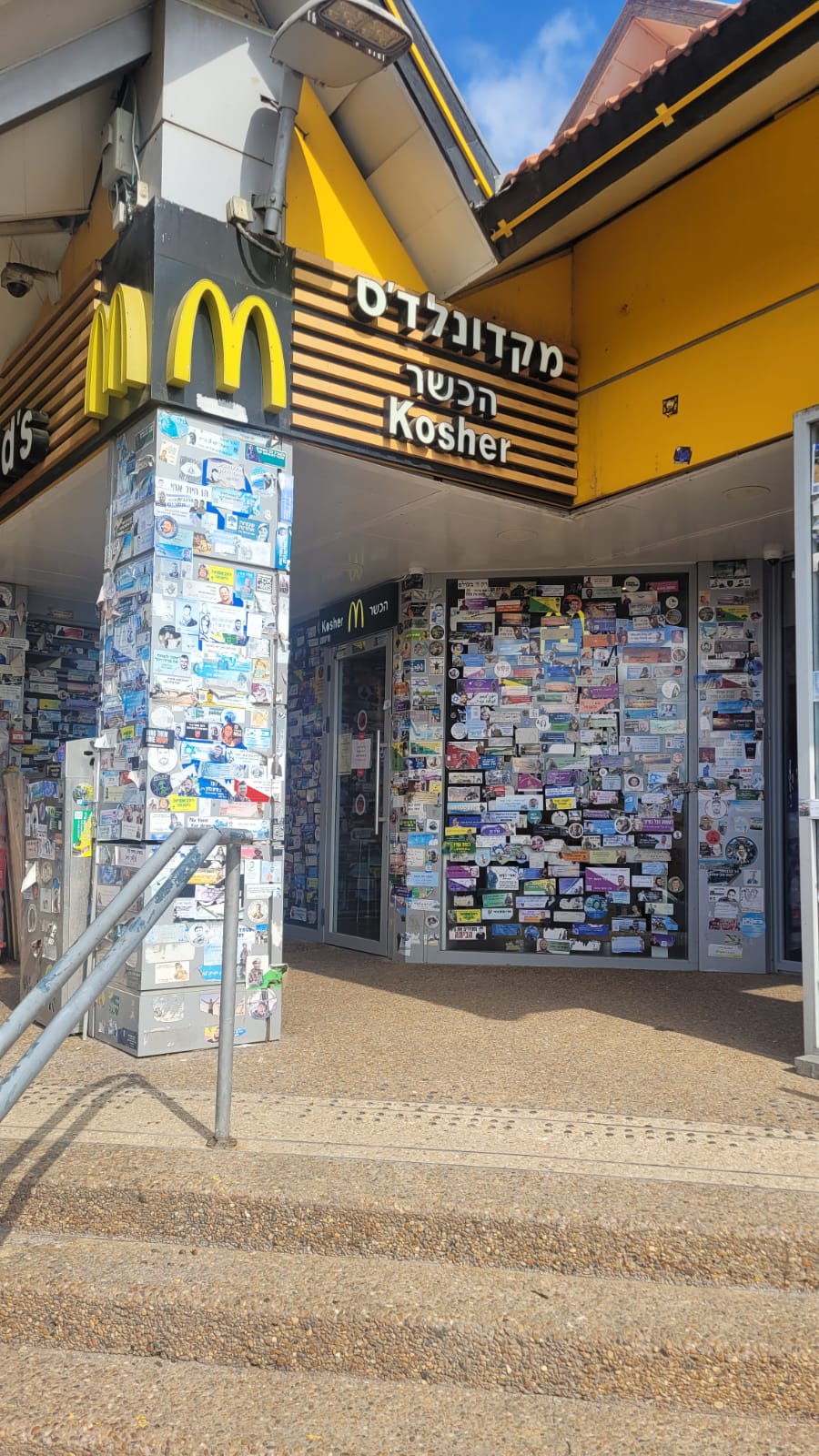
Image 2: Stickers commemorating fallen soldiers on walls of McDonalds at gas station in South of Israel. Photo by Erella Grassiani

In the streets of Tel Aviv, the presence of conflict is inescapable: stickers commemorating fallen soldiers cover walls and signs, posters of Israeli hostages held in Gaza hang on public buildings, shops, and balconies, and yellow flags symbolizing the campaign to free the hostages flutter from nearly every other passing car. The status of war is also evident through the different sounds of ambulances after the Israeli emergency service changed these after the October 7 attack. This change has been made to prevent public confusion and panic, as the traditional ambulance siren was sometimes mistaken for rocket or air-raid alerts, which led people to believe there was an immediate security threat. To address this, emergency services began using alternative siren tones that are more similar to European or international ambulance sounds and clearly distinguishable from military warning alarms. At the same time, however, these exceptional urban sounds have also intensified the sense of emergency among residents.

It is important to realize that there is a high proximity of Palestinian/Israeli spaces that oftentimes completely overlap, and as such, it is difficult to distinguish between them. For example, Palestinian villages and towns that are located within Israel will have similar sensorial experiences as their Jewish neighbours (for example hearing warning sirens or war helicopters flying by), while at the same time they can have a completely different interpretation of these sounds and sights. For one community such sounds might be reassuring, for others they are threatening. Simultaneously, within Israel’s internationally acknowledged borders, some communities are also excluded from the warning sounds from the state that they are part of. This became painfully clear in April 2024, when the only person hurt by the Iranian attacks on Israel was a Bedouin girl, living in an unrecognized village without an alarm system or a proper shelter. In this case, the sound of silence during war time may be interpreted as very alarming and even terrifying.

With such instances, we are not speaking of the deliberate weaponization of the senses, as we do in Palestinian spaces, but rather of the effect on the senses as a byproduct of the militarization of Israeli public space and the normalization of war—its transformation into an ordinary aspect of daily life. This produces a highly selective perception of war, one centred almost entirely on the Israeli (Jewish) experience. In this experience, Gaza appears distant, portrayed as another world rather than a place merely seventy kilometres away, and for some even less. Israeli news coverage rarely addresses the personal suffering or death of individuals in Gaza, and Gazans are shown up close only in sanitized contexts—on the beach, for instance—when the image can be deemed free of visible violence. Although Israeli soldiers sometimes share photos from the fighting in Gaza on social media, and testimonies are increasingly surfacing that expose extreme violence, such images and stories seldom reach the broader public. Moreover, when Israeli activists attempt to circulate pictures of Palestinian child victims, such as on university campuses, they are frequently censured or punished.

Interestingly, the very sounds that evoke fear and terror among Palestinians often carry reassuring or even uplifting meanings for Israelis. The noises of Israeli aircraft and the Iron Dome anti-missile system are perceived as sounds of protection, embodying both national defence and technological superiority. Even the artillery fire directed toward Gaza—audible to Israelis living near the border and at times even in Tel Aviv—is frequently interpreted as a sign of justified retaliation and military strength. Many Israelis describe having developed an ability to discern between sounds that signal real danger and those that do not.

Concluding remarks

Conflict and war cannot be fully understood through geopolitical or military strategy alone; they must also be grasped as a deeply embodied and sensory reality. By centering the senses, we illustrate how war and violence migrate from the battlefield into the most intimate of civilian spaces, mediating how individuals and communities interpret their lived reality. We draw from the concept of the ‘occupation of the senses,’ by demonstrating that state power is exercised not merely through the management of land and borders, but also through the governance of bodies and sensory perception. Following Judith Butler (2009: 51), we conclude that the sensory regime in Israel/Palestine functions to differentiate ‘the cries we can hear from those we cannot,’ effectively pre-determining whose lives are deemed worthy of grief and defence. The sensory experiences discussed—from the ‘sonic hell’ in Gaza to the ‘uplifting’ sounds of artillery in Israel—serve as somatic evidence of this political chasm. Ultimately, by attending to the smell of fear and the sound of relief, we gain a more nuanced understanding of how war inhabits the body, ensuring that the violence of the conflict is felt—and remembered—long after the sirens fall silent.

Moving forward, we encourage further analysis of the long-term somatic effects of these sensory assaults on both populations. Future research might explore how the ‘olfactory duration’ of substances like Skunk water or the sounds of drones shapes the psychological landscape of survivors long after the physical violence ceases. By the same token, it is essential to analyse how those living under a sensory regime develop modes of ‘sensory resistance’ or alternative environmental interpretations to maintain agency and community. As militaries continue to deploy ‘less-than-lethal’ technologies, there is a pressing need to study how these sensory weapons are being adapted for use against protesters and marginalized groups globally, transforming the human body into an additional domain of war.


Erella Grassiani is Associate Professor at the Department of Anthropology, University of Amsterdam. Her work focuses on the Israeli military, the Israeli security industry and non-state violent groups. She is currently working on a new project on aroboreal nationalism.

Nir Gazit is a senior lecturer at the Department of Behavioral Sciences at the Ruppin Academic Center. His research interests include civil–military relations, political violence, and vigilantism.


References

Ahmed, Kaamil and Ana Lucia Gonzales Paz. 2024. ‘I hate the night’: Life in Gaza amid the incessant sounds of war. https://www.theguardian.com/world/ng-interactive/2024/oct/17/i-hate-the-night-life-in-gaza-amid-the-incessant-sounds-of-war

Butler, J. 2009. Frames of war. When is life grievable? London: Verso Books.

Euromed. 2025. ‘Israel intensifies use of quadcopters to terrorise and target civilians in Gaza, with terrifying sounds and home invasions’. https://euromedmonitor.org/en/article/6747/Israel-intensifies-use-of-quadcopters-to-terrorise-and-target-civilians-in-Gaza,-with-terrifying-sounds-and-home-invasions

Feigenbaum, Anna. 2017. Tear Gas: From the Battlefields of World War I to the Streets of Today. London: Verso Books.

Grassiani, Erella. 2022. “The Shifting Face of the Enemy: ‘Less than Lethal’ Weaponry and the Criminalised Protestor”. Journal of Illicit Economies and Development, 4 (3): 323–36.

Howes, David. 1991. “Sensorial anthropology.” In: Howes, David (ed.) The varieties of sensory experience: A sourcebook in the anthropology of the senses ( 167-191). Toronto: University of Toronto Press.

Joronen, M., & Ghantous, W. (2024). “Weathering violence: Atmospheric materialities and olfactory durations of ‘skunk water’ in Palestine”. Environment and Planning E: Nature and Space, 7(3): 1122-1141.

Pink, Sarah. 2015 Doing sensory ethnography. Sage Publications.

Shalhoub-Kevorkian, N. 2017. “The Occupation of the senses: the prosthetic and aesthetic of state terror”. British Journal of Criminology 57: 1279-1300.

Vieira de Oliveira, Pedro J. S. 2019. “Weaponizing Quietness: Sound Bombs and the Racialization of Noise.” Design and Culture 11 (2): 193–211.


Cite as: Grassiani, E and Gazit, N. 2026. “The Smell of Fear, The Sound of Relief: Sensing War in Israel/Palestine” Focaalblog February 17. https://www.focaalblog.com/2026/02/18/erella-grassiani-and-nir-gazit-the-smell-of-fear-the-sound-of-relief-sensing-war-in-israel-palestine/

Arpan Roy: Introduction: Staying-With Palestine. Making and Remaking Postcolonial Worlds

Image 1: Palestine is not alone (2020), by Vishal V. Shenoy

Extrajudicial arrest, termination from employment, suspension of university enrollment, being declared persona non-grata (Karl 2025), police violence at demonstrations, harassment at airports, online doxxing, and, in the case of six-year old Wadea al-Fayoume, a martyrdom in a strange land—these are some of the ways in which solidarity with Palestine has, since October 2023, been rebuked in the Global North in unprecedented ways. We do not yet know the longue durée of how the annihilation of Gaza and the genocide of its people will recalibrate the way in which the world relates to Palestine. In the darker continents, and especially in the lands immediately surrounding Palestine—lands with which Palestine has historically been organically linked and nurtured—punishment for resisting injustice has been more damning. Al-Hudaydah Port in Yemen has been repeatedly targeted by American and Israeli weapons of mass destruction in retribution for the country’s military operations against Israel, and entire towns and villages in Lebanon have been wiped off the map, and thousands of its people martyred. Regardless of how one evaluates the political efficacy of Hezbollah’s involvement in the Al-Aqsa Flood Operation, it is difficult to argue that any people on earth have paid a higher price for standing with Palestine than the Lebanese. Elsewhere, for much of the last half-century, Palestine solidarity at the level of state policy has been neutralized by economic sanctions and has sometimes been engineered toward permanent instability through regime change wars, bringing poverty and civil conflict upon millions of people, particularly the Arab and Iranian people. Indeed, in the weeks during which I began writing these words, Iran fought for its survival, perhaps its survival at the level of civilization, in the face of an unprecedented Israeli aggression coordinated with much of the Global North.

This forum is an inquiry into what it means to stand with Palestine. It is an exploration of how Palestine has stayed-with “local” political contexts, and how it has survived setbacks and tribulations, and ultimately inspired a commitment. The five essays in this forum explore disparate contexts, each with its own geopolitical history and postcolonial trajectory, that has negotiated its commitment to Palestine in spite of this principled position having invited hardships and at times catastrophic consequences. Moreover, the essays are penned by scholars—a literary scholar, a historian, an anthropologist, and a philosopher—whose respective research is outside the geographic boundaries of Palestine, but which intersects in irretractable ways with Palestine. What to make of this irretractibility?

Inspired by the anthropologist Nazan Üstündağ’s (2023) remarkable recent ethnography of the Kurdish Movement, I term the affective and political committing to Palestine as a mode of “camaraderie.” Üstündağ translates the Kurdish hevalti, the semantic equivalent of the Arabic rifqa, as “friendship,” but, for reasons I will elaborate on shortly, it may be more accurate to expand its semantic range also to “companionship;” a richness of meaning most succinctly captured by “camaraderie.” Indeed, in leftist movements in Kurdish, Arab, and Anglophone worlds, a partner in revolution is, respectively, heval, rafiq, or comrade.

Üstündağ sees hevalti as designating a “position in a particular revolutionary grammar,” and the revolutionary movement as an “organization of relationships.” Camaraderie emerges from an “accumulated perspective and knowledge of the ways in which these relationships will be molded.” (Üstündağ 2023:142) I find this semantic sketch of camaraderie as a useful reference for how to think through committing to Palestine, particularly in the world’s leftist movements—historically the natural home of camaraderie with Palestine—in the sense that a commitment to the Palestinian cause organizes one’s more immediate political life in all kinds of practical ways. As Omid Mehgran writes in this forum, Palestine is a “mode of relating to the politics of material conditions of life that touches all forms of politicization in the globalized ecologies of war and of remnants of life today.”

The essays in this forum may very well evoke a certain melancholy. A hundred years of the Palestinian cause, and the support that it has received from various actors from various stages, has not resulted in the liberation of Palestine. Yet, Palestine has accompanied these actors and stages, as a comrade that becomes a part of one’s own life and politics, but without resolution. It is in part because of this (among other reasons) that I find the paradigm of “solidarity” to be useful but incomplete in theorizing state-level affects with Palestine as a world-leftist issue. This paradigm has been closely examined in scholarship in recent years, often focusing on the 1968-1982 period as the zeitgeist of a globalizing Palestine solidarity (Thompson & Olsen 2023, Randall 2023, Harrison 2016, Haugbolle & Olsen 2023), and also appears in the essays in this forum, particularly that by Olivia Harrison. At the same time, solidarity as a symbol of a mythologized world-leftist revolutionary moment—now gone—now appears often in a romantic lens conditioned by temporal distancing (see Abu Hatoum, & Assali 2024). While not negating the importance nor the veracity of the solidarity framework, the essays in this forum search for deeper epistemologies, placing emphasis on Palestine as a tragedy that inflicts its pain also onto other stages and contexts. It is also a creative and generative force; a point of inspiration for political mobilization (leftist, Arab nationalist, Islamist) for over half a century, lending its companionship to debates, impasses, countermovements, and a negotiating of local paradigms. It is in this sense a camaraderie, a companionship or a staying-with.

This forum mostly concentrates on “other” worlds—known by various names: postcolonial, Third World, Global South—because those are the ones whose entanglements with Palestine have been more direct and, in some cases, devastating. However, as the essays by Olivia Harrison and Nico Putz show, these worlds are not bounded, and interact in dynamic and complex ways with European and North American metropoles. Harrison traces discourses around decolonization in Algeria (the “Mecca of revolutionaries”) to anti-immigrant fervor in contemporary France, where “yesterday’s indigène has been transformed into an immigrant, and the settler of old has become a native.” In these discursive transformations from indigenous-immigrant and settler-native, it is Palestine that links the two ends of this transformation, saturating the time in between through its camaraderie with revolutionary cultural production by North African intellectuals. Putz, in his essay, shows how contemporary German leftist politics has been informed by a trajectory in which its ethical self-making has been in close dialectic with events in the postcolonial/Third world—Iraq, Yugoslavia, and above all Palestine—particularly in the reactionary Anti-Deutsche movement. Beginning as a communist-tinged leftist movement but the self-proclaimed vanguard of the politics of antisemitism, the Anti-Deutsche is a compelling case of how the Palestine question continues to interrupt and disorient European political life. Although ostensibly exiled from mainstream German politics, Putz shows how the exaggerated police repression of Palestine demonstrations in Germany since October 2023 is an embodiment of a decades-long German political trajectory in which Anti-Deutsche has found an unconscious place.

Discussing the multi-layered interplay between class, sectarianism, and the Palestinian Revolution during the Lebanese Civil War (1975-1990), Aaron Eldridge reviews a major work by the iconic Lebanese leftist intellectual Mahdi Amil, who theorized the infestation of sectarianism in Lebanon, and all the mythic violence that it entailed, to be a metonymic expansion of class ideology. For Amil, the Civil War, if the reader allows my simplification of Eldridge’s complex and close reading of Amil, was a confrontation between the “dominant class,” composed of the Lebanese bourgeoisie dominated by those with material interests to protect, and the “revolutionary class,” the wretched of the Earth composed of the Palestinian revolutionaries and their allies. Materialist analysis of this kind, a long-held position by Lebanese (and generally Arab) leftists, locates the Palestinian cause embedded into the broader class politics of Lebanon and the region. Here, Palestine is not a site of “solidarity” between two struggles, but, rather, an index that organizes the politics of a given place, accompanying it at every step. Around 150,000 Lebanese were killed during the Civil War, and another 6,000 in the Israeli war campaigns since 2006. If one is to take Amil’s analysis seriously, to abandon the Palestinian cause in the Lebanese context would mean to abandon the materialist basis of society itself—an impossibility that Israel and the wider West is unwilling or unable to understand.

The fourth essay in this forum, by Omid Mehrgan, overviews the Palestinian cause as a central tenet of the 1979 Iranian Revolution, and Palestine’s staying-with in Iranian politics as a principled commitment often to the detriment of the Revolution’s standing even to its own public. Mehrgan does not give cover to the many repressive policies of the Revolutionary government (nor do I), but he makes a lucid case linking a detachment from the Palestinian cause on the part of many anti-government activists in Iran since at least 2009 to a certain “apolitical radicalization;” a certain worldlessness that I think is perhaps best shorthanded by Alain Badiou’s (2009) critique of politics sometimes becoming mere “bodies and languages” without a militant commitment to a revolutionary Idea.

The final essay is a commentary on the forum by Laura Adwan. Commenting on the points discussed in the essays (as well as on this introduction), by exploring the case of Iraq since 2003 Adwan argues that Palestine does not only stay-with local contexts but also but also stands-in-for them, showing how echoes of Palestine ring out from Iraq since the American invasion. But these echoes do not only reverberate between bodies. As Adwan claims, the pain of Iraq is the pain of Palestine severed from what was once a possible singular political community. As such, the fragments of Palestine explored in the previous four essays are also fragments of a dismembered region, of which Iraq and Palestine are victims of a closely related human geography.

This forum was conceived in exceptional times. On the one hand, these essays are a response to the longevity and inextricability of the Palestinian question in a time in which Palestine is, in a very literal sense, undergoing destruction on an unprecedented scale. Of course, they do not come close to comprehensively surveying the entirety of the world scene, but they do illuminate the entanglements of the Palestinian question into other world-political questions. As Edward Said (1979) noted, a “question,” as a strictly political term, is something that is long-standing, intractable, and insistent, and, as such, it is something that stays-with us. This forum is also a friendly rejoinder to our comrades in the Global North, newly under duress in the bosom of Empire, to take stock of the global scene: a dismemberment of the political and social bodies nearest to Palestine—Lebanon and Syria—an unforgivable Gulf betrayal, and a late-stage Zionist colonialism making a desperate grasp for hegemony between the Nile and the Euphrates. Decolonization, to borrow again from Üstündağ (2025: 143), means “transforming life and death into offerings, thereby initiating new communications.” The task of committing to the emergency of the Palestinian cause, it seems to me, is to withstand the present ruptures. The five essays in this forum are invitations, albeit difficult, to old and new possibilities.

Acknowledgements: Thanks to Ahmad Moradi and Aaron Eldridge, conversations with whom inspired this forum.


Arpan Roy is a Marie Skłodowska-Curie Postdoctoral Fellow at Leibniz-Zentrum Moderner Orient in Berlin. He is the author of Relative Strangers: Romani Kinship and Palestinian Difference (University of Toronto Press, 2024) and the co-editor of Naseej: Life-Weavings of Palestine (Pluto Press, 2025).


References

Abu Hatoum, Nayrouz. & Assali, Hadeel (2024). Becoming Al-Mulatham/a: Fedayee Art, Abu Oubaida, and Palestinian TikTok. In D. Matar & H. Tawil-Souri (Eds.), Producing Palestine: The Creative Production of Palestine Through Contemporary Media (pp.51-62). Bloomsbury.

Badiou, Alain (2009). Logic of Worlds: Being and Event 2. Continuum.

Harrison, Olivia (2016). Transcolonial Cartographies: Kateb Yacine and Mohamed Rouabhi Stage Palestine in France-Algeria. In Singh, J. & Kim, D. (Eds.), The Postcolonial World (pp. 243-259). Routledge.

Haugbolle, Sune. & Olsen, Pelle (2023). Emergence of Palestine as a Global Cause. Middle East Critique *32* (1), 129-148.

Karl, Rebecca E. (2025). What Does It Mean to Be Declared Persona Non Grata by My University? Journal of Palestine Studies 54 (1), 77-81.

Randall, Jeremy (2023). Global Revolution Starts with Palestine: The Japanese Red Army’s Alliance with the Popular Front for the Liberation of Palestine. Comparative Studies of South Asia, Africa and the Middle East *43* (3), 358-369.

Said, Edward (1979). The Question of Palestine. Vintage.

Thomson, Sorcha & Olsen, Pelle (Eds.). (2023). Palestine in the World: International Solidarity with the Palestinian Liberation Movement. Bloomsbury.

Üstündağ, Nazan (2023). The Mother, the Politician, and the Guerrilla: Womens Political imagination in the Kurdish Movement. Fordham University Press.


Cite as: Roy, Arpan 2025. “Introduction: Staying-With Palestine. Making and Remaking Postcolonial Worlds” Focaalblog September 26. https://www.focaalblog.com/2025/09/26/arpan-roy-introduction-staying-with-palestine-making-and-remaking-postcolonial-worlds/

Anna Balazs: War, displacement, and cultural heritage: reflections on a workshop

Image 1: Screenshot from the Mariupol Memory Park website

On the form, I ticked that I had got enough pads. I ticked that I had been instructed. I ticked that I had applied for microloans, more than once. I ticked that I had been encouraged. I ticked that I had nowhere to live. I ticked that I had nowhere to study. I ticked that I had nowhere to go. I ticked that I had nothing to lose. I ticked that I didn’t mind the NGO using my personal data for their future projects.”

This quote is an excerpt from a Sashko Protyah short story, where a citizen of Mozambique makes a deal with a people smuggler. The business offers an innovative method of (post)human trafficking, promising to turn their clients from the Global South into a bird, and flying them to European shores, where they can regain human form and continue their way to the European Union. To her ill fortune, the protagonist reaches European land in Mariupol, Ukraine, in the spring of 2022, when the Russian invasion of the city was in full force. Eventually, she manages to escape with a group of volunteers who evacuate pets from the occupied territory, but her transformation fails, and she is caught in a netherworld between being animal and human, with no acceptable form, identity or document to prove her belonging to any official entity. Falling through the cracks of state assistance, she is approached by humanitarian NGOs that work in the conflict zone and recruit vulnerable people for well-worded but questionable development projects. In the end, the protagonist is hired in an “apocalypse theme park” that recreates the siege of Mariupol as an infotainment experience, engaging the visitors with authentic scenarios of explosions, looting, and no running water.

The author of the short story, Sashko Protyah from the Freefilmerz art collective was one of the speakers at the workshop “REMEMBERING / RECLAIMING / RECONSTRUCTING SPACE: Working with local heritage in times of war and displacement” I organized at the University of St Andrews as a knowledge exchange event during my ESRC Postdoctoral Fellowship., The workshop invited Ukrainian cultural practitioners working with precarious heritage during the Russian invasion to share their experiences with a group of international researchers studying similar topics. Besides broadening our knowledge about pragmatic aspects of heritage work in the context of war, the short lectures delivered by Ukrainian participants highlighted a set of ethical issues equally relevant in the work of ethnographers and other researchers working with vulnerable communities.

Protyah talked about his experience of creating Mariupol Memory Park, an online archive that commemorates and celebrate life in Mariupol. The website collects testaments about the city from a variety of authors in different genres, all of them affectionate while reflecting the multivocality of urban life and the complicated emotions elicited by the place. As Sashko pointed out, and his short story addresses in a critical self-reflexive manner, one of the major risks of creating this kind of archives is the exploitation of traumatic memories. Since the start of the full-scale invasion, refugees from Mariupol and other places have been asked on countless occasions by journalists, researchers, NGO workers and others to share their experiences of war and displacement for various projects. While these conversations require significant temporal and emotional investment from the participants and can have a re-traumatizing effect, interlocutors are rarely compensated or offered psychological support. The dynamics of this exchange reflect a deeper running process that Asia Bazdyrieva (2022) termed the “resourcification of Ukraine”, referring to the continuing tendency of Western and Soviet geopolitical thinking to reduce Ukrainian land and people to a “resource that qualifies for a long list of services.”

The idea of resourcification, when applied to people, recalls long-standing conversations in anthropology regarding the inequality of researcher and interlocutor. Even in times more peaceful than the current moment, academics need to confront the dilemma of waving goodbye to our interlocutors and returning to Western institutions to advance our careers using the knowledge they have shared with us, leaving them with… what exactly? In a context of war or other forms of violence, this situation gets complicated by concerns about personal safety, stigmatization and psychological trauma, reiterating the question: on what ground do we expect people to share their most difficult life experiences with us? How do we make participation beneficial for them in the short as well as the long term? What is our role as researchers in a time when the communities we work with are fighting for survival?

Image 2: Screenshot from the online workshop (image courtesy of Victoria Donovan)

While in certain cases, interlocutors think about sharing traumatic experiences as a politically or psychologically important act of giving a testament or gaining recognition of the injustices they have suffered (see Veena Das’ essay “Our work to cry: Your work to listen” (Das 1990)), the expectations of the research relationship can also become a source of frustration to the members of “over-researched and underserved” (Yotebieng 2020) communities.

Mariupol Memory Park addresses the problem of exploitation by commissioning new works to construct an archive, shifting the emphasis from the extraction of painful memories to the process of creation and reflection. Contributors retain the agency to tell their story in a way they feel appropriate instead of being used as information sources or credibility props in someone else’s project. Importantly, they are all paid for their work from the funding received by Western European NGOs and government research agencies.

In anthropological practice, financial compensation for research participation is rarely used due to issues around voluntary consent and authenticity of information. However, this should not discourage academics from contemplating the place of money in supporting interlocutors, especially in a time when communities face the ongoing existential threat of war and genocide. One way to do this is acknowledging the role of participants as co-creators and channelling institutional funding to financially honour their contribution. Another avenue might involve collaborative projects with local organizations using research funding from Western institutions. Area studies professor Victoria Donovan (2023) evokes the figure of the “trickster” to propose a strategy for academics to facilitate this process within the often rigid institutional hierarchies, suggesting “using the power (and, crucially, the funding) that we are assigned to manifest the changes that we want to see.”

Image 3: Screenshot from the City in the Suitcase website

Approaching the theme of collaboration from another angle, Kateryna Filonova from Mariupol Local History Museum and Iryna Sklokina from Lviv Center for Urban History presented during the workshop their initiative City in the Suitcase: Saved (Family) Archives. The project addresses the problem of museum heritage lost in the war due to physical destruction, looting, and the logistical problems created by relocating whole museums from the occupied territories. Attempting an alternative route to reconstruct lost local heritage, the curators published a call inviting residents from occupied cities of Eastern Ukraine to share their family photography collections. The call, while it received valuable material, had a relatively low response rate. Having worked with IDPs from the Donbas since 2014, Kateryna from Mariupol Local History Museum remarked that this was more or less expected: the experience of the previous ten years suggests that people who need to flee in a hurry do not prioritize taking family albums. As a result, the call received less material from Mariupol, and more from other places where residents had more time to prepare evacuation. The other limitation of the entries is related to the specific status of digital media in contemporary conflicts. While digital data becomes more important in conditions of material destruction and displacement, as people are often left with their phone memory as their only source of personal photos, phones and social media accounts were thoroughly examined by Russians at the military checkpoints. As a result, several people had to delete their photos and apps on the road, and many of them got locked out of their accounts, losing access even to the digital memories they had left.

In the end, the project received eighteen collections of family photography from different cities of Eastern Ukraine. The material collected this way offers “an alternative history of the Donbas”, featuring elements of Ukrainian culture, the democratic movement of the 1990s, as well as the pro-Ukrainian and Anti-Maidan demonstrations of 2014. Discussing the potential of representing “history from below”, Iryna emphasized the importance of reflexivity in their curatorial practice. Archives are instruments of power, and the decisions made by the archivist determine what story will be told for future generations of historians and the public. In the case of personal collections, the curators paid extra attention to avoid imposing their own interpretations while processing the data according to archival standards. To achieve this, they employed what they call a “non-institutional approach to documenting”, archiving what respondents chose to include and annotating the material in a continuous conversation with the owners of the photos. At the same time, they emphasized that the owners’ interpretation was also situated, reflecting their current position in relation to the post-independence political history of Ukraine.

Lessons from the project City in a Suitcase reiterate the idea that there is no “view from nowhere” during the creation of an archive (Zeitlyn 2012), making it inevitable to reflect on the position of each stakeholder. For an anthropologist, such an approach evokes familiar debates on reflexivity in social research. Both in archival and anthropological practice, discussions on reflexivity question the neutrality of knowledge produced within a hegemonic system of institutions by members of privileged social groups (Al-Masri et al. 2021). Restructuring the research process into an act of co-production, as it happened with the contributors of the photo archive, offers a way to decolonize the hierarchical relationship between the knower/known (Casagrande 2022).

Image 4: Screenshot from Contemporary History of Ukraine by Oksana Kazmina

The last major theme emerging during the workshop was the relationship of traumatic memories and global heritage regimes. The “apocalypse theme park” described in Sashko’s short story is an exaggerated version of memory parks that turn places of collective trauma into profitable tourist attractions, disregarding the needs of the affected communities (Meskell 2002). As Sashko said, similar projects are already taking place in relation to Mariupol, and it is important to speak up against the commodification of people’s loss and sorrow. However, as it was abundantly demonstrated in recent years in Ukraine, Gaza and elsewhere, the destruction of cultural heritage is not simply a by-product of contemporary warfare, but an integral part of genocide and cultural erasure (Tsymbalyuk 2022). The “dark heritage” of such cynical and calculated destruction demands a tactful approach of representation that allows the world to learn about what happened while prioritizing the needs of community members. Discussing the case of the 9/11 memorial in Manhattan, Lynn Meskell observes a growing “desire for grounded materiality” (Meskell 2002) in a moment when the broader public collectively encountered the experience of a virtually broadcasted, real time terror attack for the first time. The present context of urbicide and displacement can evoke a similar longing for tangible markers of commemoration, presenting the challenge to find new ways of representation that avoid commodification and the creation of genocide-disneylands.

The work of Oksana Kazmina, another member of the Freefilmerz art collective, offers a possible answer to this dilemma. Contemporary History of Ukraine is a series of “performative walks” composed of digital media fragments: video footage, online maps, zoom recordings and photos are combined on the screen to (re)construct landscapes of memory. In the virtual walk created for the workshop, Oksana explores the transformative potential of the “yebenya”, a concept denoting a place of abandonment and decay in the East European urban typology. Walking through the ruins of a former Soviet pioneer camp in a coastal village near Mariupol in 2018, she contemplates the role of these material structures in making sense of the past and our own place in it. “Maybe we did need these places of abandonment, which are also traces of how things used to be. We needed them to be conserved like this for us to come here and look in the mirror.” Similarly, to the debris of Soviet urban infrastructure, material traces of violence have a potential beyond erasure or sensationalism: approached with care, they can serve as an object of reflection in the difficult process of making sense of experiences that should have never occurred.

The initial aim of the workshop was to explore the strategies Ukrainian cultural workers use to address unprecedented experiences of destruction, displacement and trauma. The resulting dialogue about extractive humanitarianism, the commodification of traumatic heritage, and the politics of representation has shown alarming resonance with the geopolitical developments of the recent weeks. As I am finalizing this text, the Trump government has stopped all military and most of the humanitarian aid to Ukraine, while working out the details of a blatantly late-colonialist and exploitative rare minerals deal that would push the country further into economic deprivation. The projects presented during the workshop are highly critical regarding the role of Western assistance in local cultural practice. In the current circumstances, their critique offers a constructive alternative to the deliberate dismantling of vital support networks in the region.

The workshop was supported by ESRC UK (grant ID: ES/X006182/1). Video lectures by Ukrainian participants were commissioned and each speaker was paid an honorarium for their work. Many thanks to Sarah and Sandra from the Research Administration team of School of Philosophical, Anthropological and Film Studies at University of St Andrews for their help.


Anna Balazs is a Postdoctoral Research Fellow at the Centre for Baltic and East European Studies, Södertörn University, Stockholm. She received her PhD in social anthropology at the University of Manchester in 2020. Her work focuses on the infrastructural and cultural legacies of socialism in Eastern European cities, and the temporalities of geopolitical conflict in Ukraine. The present text was written during the ESRC Postdoctoral Fellowship at the University of St Andrews, UK.


References

Al-Masri, Muzna, Samar Kanafani, Lamia Moghnieh, Helena Nassif, Elizabeth Saleh, and Zina Sawaf. 2021. ‘On Reflexivity in Ethnographic Practice and Knowledge Production: Thoughts from the Arab Region’. Commoning Ethnography 4 (1): 5–22. https://doi.org/10.26686/ce.v4i1.6516.

Casagrande, Olivia. 2022. ‘Introduction: Ethnographic Scenario, Emplaced Imaginations and a Political Aesthetic’. In Performing the Jumbled City: Subversive Aesthetics and Anticolonial Indigeneity in Santiago de Chile. Manchester UK: Manchester University Press.

Das, Veena. 1990. ‘Our Work to Cry: Your Work to Listen’. In Mirrors of Violence: Communities, Riots and Survivors in South Asia, 345-399. New Delhi: Oxford University Press.

Meskell, Lynn. 2002. ‘Negative Heritage and Past Mastering in Archaeology’. Anthropological Quarterly 75 (3): 557–74.

Tsymbalyuk, Darya. 2022. ‘Erasure: Russian Imperialism, My Research on Donbas, and I’. Kajet Digital (blog). 15 June 2022. https://kajetjournal.com/2022/06/15/darya-tsymbalyuk-erasure-russian-imperialism-my-research-on-donbas/.

Zeitlyn, David. 2012. ‘Anthropology in and of the Archives: Possible Futures and Contingent Pasts. Archives as Anthropological Surrogates’. Annual Review of Anthropology 41 (Volume 41, 2012): 461–80. https://doi.org/10.1146/annurev-anthro-092611-145721.


Cite as: Balazs, Anna 2025. “War, displacement, and cultural heritage: reflections on a workshop” Focaalblog 18 March. https://www.focaalblog.com/2025/03/18/anna-balazs-war-displacement-and-cultural-heritage-reflections-on-a-workshop/

Chris Hann: Humiliation, Hubris and Hamartia: the emotional history of the Ukraine war

Image 1: Pro-European integration manifestation in Kyiv on 29 November 2013. Photo by Mstyslav Chernov

Introduction

Soon after the Russian invasion of Ukraine, in an earlier post on this blog (Hann 2022), I emphasized the geopolitical and economic interests of the west, especially US corporations. I extended my analysis in 2024 in the Focaal journal itself (Hann 2024a; 2024b), where my article benefited from the critical insights of Denys Gorbach (2024) and Volodymyr Ishchenko (2024).

But political outcomes are also shaped by emotions, moods and personalities. The world has recently witnessed dramatic tensions between the Ukrainian president, Volodymyr Zelensky, and the US president, Donald Trump. Sooner or later the Russian president, Vladimir Putin, will also move to centre stage. These leaders strive simultaneously to mobilize mass sentiment in their respective countries and to win the battle for the moral high ground internationally. While media coverage focuses on the traits of these individuals, anthropologists tend to be more interested in the subjectivities of larger communities.

At present, Trump’s efforts to initiate peace negotiations are widely perceived as a crude capitulation to Putin, sometimes as appeasement. These unprecedented frictions have generated an outpouring of moral outrage and intensified support for the Ukrainian cause in western Europe. The solidarity of the European Community (minus Hungary) and the demonising of Putin follow 30 years of the humiliation of Russia and western hubris after congratulating itself on having won the cold war. The best word to describe the role of Ukraine right now is perhaps hamartia – a “fatal flaw” that leads to the downfall of a tragic hero. I argue that Ukraine is the nationalist hamartia sealing the fate of post-cold war Europe.

Humiliation in Moscow (and elsewhere)

German historian Ute Frevert (2020) has shown that humiliation is an emotion deeply rooted in European society as well as a significant political force. The cold war preserved a semblance of equivalence between the two camps, but the disintegration of the Soviet Union became a humiliation for Russia. Mikhail Gorbachev’s vision of a “common European home” was forgotten as he himself disappeared from the political scene. By the time Putin replaced Boris Yeltsin as president at the end of 1999, the Russian Federation was on its knees both politically and economically. Three former Soviet republics were on course to join NATO, which had already admitted other former satellite states to full membership.

After three years of warfare, humiliation remains a powerful emotion as events unfold. Donald Trump humbles Zelensky at the White House, but he also humiliates his nominal allies in western Europe as they scramble to save the agenda they were dragged into by previous US presidents and to avoid a humiliating defeat for Ukraine.

Hubris in Washington

The obverse of Russia’s humiliation was the sentiment of hubris in the United States, accompanied (as Jeffrey Sachs has repeatedly argued) by a refusal to consider a pluralist geopolitical world order. As Jonathan Haslam (2024) has documented in detail, this hubris began in the 1990s and has continued to shape US foreign policy in the new century. An early flashpoint came in 2008 when the leaders of the US and the UK argued in support of Ukrainian (and Georgian) membership of NATO. Other European members, principally Germany and France, opted to respect Moscow’s emphatic opposition and further enlargement was put on hold. It is important to note that Atlanticist sympathies did not in this period enjoy mass support among Ukrainian voters, who in 2010 elected a president more oriented toward Moscow (Viktor Yanukovych, who was deposed in the course of the Euromaidan revolution of 2013-14).

Russia’s annexation of Crimea and occupation of significant territory in Donbas in 2014 threw a spanner in the works. But throughout the ensuing violence (never effectively curbed by the Minsk agreements, which were transgressed by both sides), the US continued to promote ever closer integration into NATO. Volodymyr Zelensky’s election in 2019 as a “peace president” did not reduce the pressure: the intention remained to yank the whole of Ukraine away from Moscow’s orbit.

Irritation in Brussels

As Russia stabilized under Putin, European leaders too had to decide how to handle the former superpower. With admission to NATO precluded very early on, they had to determine who would be eligible for full membership of the EU and who would be allowed to snuggle up alongside as partners. Under Italian (Romano Prodi) and Portuguese (José Manuel Barroso) leadership, EU diplomats found it much easier to spread liberal messages and support NGOs in Kyiv than in Moscow, where all approaches seemed to generate only obstruction and irritation. Ukraine was granted preferential partner status and Russia consigned to its familiar position of otherness.

This negligence of Russia was short-sighted. It gave Vladimir Putin the perfect excuse to ramp up his repressive regime. Having sought closer ties with the west in the early years of his presidency, successive NATO enlargements were interpreted by Putin as aggression. The mixture of hubris and irritation in the west has distorted politics in Russia, deepened the east-west division of Europe and hindered the eastwards expansion of liberalism in a deeper societal sense.

To be fair, the EU has also experienced considerable irritation in the other direction. It was well illustrated by Angela Merkel when responding to state department official Victoria Nuland’s vulgar criticism of EU diplomacy during the Euromaidan crisis. The EU (and also the UK) may currently feel it has been left in the lurch by the change of course in Washington; but subscription to the Biden principle of “fight to the last Ukrainian” and concomitant emotional solidarities left them with little choice.

Charisma and the moral high ground

In December 2021 Russia stipulated its conditions for resolving the latest escalating crisis. Putin again highlighted the “red line” precluding Ukrainian membership of NATO. But this attempt to enter into negotiations was ignored in the west. Nobody should have been surprised when Putin launched his “special military operation” in February 2022. Western media have not ceased to speak of an “unprovoked invasion” but the long-term structural provocation of NATO expansion could hardly be denied.

Despite winning his presidential mandate as a peace monger, Volodymyr Zelensky soon put all his charisma and media skills in the service of those factions seeking to purge the country of Russian influence and to join not only NATO but also the EU. For large sections of the population, Putin’s invasion served to strengthen a national identification not strongly felt hitherto. His leadership also made an emotional impact on western audiences. A colourful David to Putin’s ugly Goliath, he has appealed to left and right alike. He is a hero to legal scholars who make holy writ out of national sovereignty. And he appeals to idealist enthusiasts of human rights and to students of postcolonialism, who have been taught to see Russia as an empire in urgent need of dismantling. This perspective, which attributes the war entirely to Russian “neoimperialism”, is also popular within western anthropology (Dunn 2022).

Zelensky and the Ukrainian cause have come to enjoy a monopoly of the moral high ground in western Europe. Russia is once again the barbaric other and anyone questioning this narrative is accused of being Putin’s “useful idiot.” This highly emotional mood of moral superiority grows with the uneasy prospect of sordid deals brokered by Trump, in which the ethical causes of freedom and the preservation of human life are contaminated by calculations of the value of Ukraine’s mineral wealth. A deep well of angry moralizing emotion now exists in the UK and the EU, powerful enough to countenance previously inconceivable increases in military spending (Hungary’s Viktor Orbán is the only EU political leader brave enough to question this consensus).

Towards uncivil society in a monoethnic state

A few academics have dared to critique the consensus by showing the political and moral stakes to be more complex. Perhaps the best known is Jeffrey Sachs, who makes a case for the “Finlandization” of Ukraine. However persuasive in cold rational terms, this is incompatible with fierce national pride, which has reached new heights in light of sacrifices on the battlefields. Volodymyr Ishchenko (2023) offers penetrating analyses of Ukraine’s post-Soviet political economy, its regional patterns, and ongoing class struggles in both Ukraine and Russia; but he too perhaps underestimates the importance of emotions. American political scientist Nikolai Petro (2023) has drawn attention to long-term civil society deficits in Ukraine and continuing discrimination against those who wish to hold on to an ancient Russian cultural identity. Does the holy writ of national sovereignty entitle power holders to make a considerable proportion of their population second class citizens by constraining the use they make of their mother tongue?

One significant strand in the nationalizing policies of Zelensky’s government has been to detach eastern Christians from the Moscow patriarchy to which most of them have been affiliated for centuries. Millions of ordinary Orthodox believers have resisted these machinations. They resent having to shift their Christmas celebrations to conform to the foreign, western calendar.

Hamartia in the common European home

The nationalist objective is to force 40 million Ukrainians into a homogeneous container, as different as possible from the equivalent Russian container. This kind of homogeneity was the aspiration of 19th-century nation builders. It is hardly compatible with democratic flourishing in the 2020s.

Ukraine is the hamartia of post-cold war Europe. Whatever the eventual territorial compromises, this war has been a monstrous victory for nationalism, while cementing a modified east-west divide. It is tragic to observe western European leaders so caught up in this mood that they are prepared to undermine their own welfare states in order to produce more weapons and prolong violence in a remote location about which they know very little.

How many more east Slavs have to die on both sides? In the most optimistic scenario, it will take a very long time before the Ukrainian state qualifies for the EU. Is it not possible to return to the vision of Gorbachev and negotiate new pathways to a truly unified Europe, one that would allow military spending everywhere to be reduced?

An earlier version of this post was briefly published on 5th March by The Conversation. I thank Jonathan Este, Senior International Affairs Editor at The Conversation UK, for his help in shortening my original draft and changing the style to make it more accessible; of course, I alone am responsible for the final text. Jonathan was also helpful in locating some of the hyperlinks. He is not to blame for the fact that his more senior editors pulled the piece within hours.


Chris Hann is Emeritus Director of the Max Planck Institute for Social Anthropology and a Former Fellow of Corpus Christi College, Cambridge.


References

Dunn, Elizabeth Cullen. 2022. “When Western Anti-Imperialism Supports Imperialism.” FocaalBlog, 3 March. https://www.focaalblog.com/2022/03/03/elizabeth-cullen-dunn-when-western-anti-imperialism-supports-imperialism/

Frevert, Ute. 2020. The Politics of Humiliation. Oxford: Oxford University Press.

Gorbach, Denys. 2024. ‘Is civilizational primordialism any better than nationalist primordialism?’ Focaal 98: 114-116.

Hann, Chris. 2022. “The Agony of Ukraine.” FocaalBlog, 11 March. https://www.focaalblog.com/2022/03/11/chris-hann-the-agony-of-ukraine/

Hann, Chris. 2024a. ‘The proxy war in Ukraine. History, political economy, and representations’. Focaal 98: 100-109.

Hann, Chris. 2024b. ‘Rejoinder’. Focaal 98: 117-118.

Haslam, Jonathan. 2024. Hubris. The Origins of Russia’s War against Ukraine. London: Bloomsbury Publishing.

Ishchenko, Volodymyr. 2023. Towards the Abyss. Ukraine from Maidan to War. London: Verso.

Ishchenko, Volodymyr. 2024. ‘Class, values, and revolutions in the Russia-Ukraine war’. Focaal 98: 110-113.

Petro, Nikolai N. 2023. The Tragedy of Ukraine: What Classical Greek Tragedy Can Teach Us About Conflict Resolution. Boston: de Gruyter.


Cite as: Hann, Chris 2025. “Humiliation, Hubris and Hamartia: the emotional history of the Ukraine war” Focaalblog 13 March. https://www.focaalblog.com/2025/03/13/chris-hann-humiliation-hubris-and-hamartia-the-emotional-history-of-the-ukraine-war/

Jacob Engelberg: The Palestine solidarity encampments in Amsterdam: “We must refuse this cynical ploy” (introduced by Luisa Steur)

Image 1: Encampment at the University of Amsterdam on the 6th of May, photo by Luisa Steur

In the morning of the 6th of May, inspired by the swelling global wave of student solidarity encampments for Palestine, a group of students set up tents on a field of the University of Amsterdam Faculty of Social and Behavioral Sciences. The aim was to push university management to meet the students’ long-standing demands to disclose, divest and cut ties to Israeli institutions and thereby end the university’s complicity in genocide. At 6 pm that evening, staff was called upon to stand in solidarity and I went together with many colleagues. The atmosphere was euphoric as we had eagerly awaited a moment of collective political action to confront the ongoing bombing and starving of Gaza. Together, university management, police and the mayor of Amsterdam however decided to set the inglorious global record of being the quickest to shut down the encampment: at 3 am that night a bulldozer cleared the barricades and police violently evicted the camp.

Shocked at the police violence, a gathering was called the next day at 4 pm, in which many more students and staff showed up, in solidarity with Palestine and with our students who had suffered police violence. The gathering was full of energy and at the end of the planned speeches it turned into a demonstration of thousands marching to the inner-city campus of the university where a group of students occupied its famous “Oudemanhuispoort”. This time, the university management decided to let the encampment be for the night and set up a series of negotiations on the students’ demands.

Image 2: Clearing of the occupation of Oudemanhuispoort, photo by Luisa Steur

And yet, the next day, when these negotiations had only just started, a massive police force was again unleashed on the student protestors, this time with two bulldozers clearing the occupation. From a short distance, behind the police cordon, students and staff who had rushed to the spot chanted “you are not alone” to show their solidarity and others tried to block the police vans carrying off student activists. That Saturday, the demonstration to commemorate the 76th anniversary of the Nakba in Amsterdam attracted as many as 10.000 protestors from all walks of life.

The Monday after – the 13th of May – a walk-out was called at the campus where it all started, and many students and staff again showed up. Standing on the bridge in front of the main entrance and surrounded by students holding up poster-size images of the covers of academic books on Palestine, an impressive line-up of speakers addressed the crowd. But none received as much applause – and elicited so many tears – as Jacob Engelberg. We are honored to reproduce his speech, as he gave it, here on Focaalblog:

Toespraak van dr. Jacob Engelberg bij de walkout van het UvA-medewerkers from Jacob on Vimeo.

“Hello friends. I join you today as a Jewish anti-Zionist member of staff here at the UvA [University of Amsterdam]; I name myself as both Jewish and anti-Zionist, as dominant discourses circulating—from the Israeli state to the Dutch media to our own CvB [Executive Board]—tend to imply that we do not exist. I assure you, we are many.

I have been working with colleagues in negotiations with our CvB to demand moral action from our university in the face of Israel’s genocide of the Palestinian people in Gaza. I have been deeply inspired by the passion and the moral clarity shown by our students in their call for the university to disclose, boycott, and divest. These urgent calls have been met, however, with repression, intimidation, defamation, and violence, as the CvB refuses to negotiate in good faith, spreads lies about its own students, and then recruits the police to violently repress dissent. We will not stand for the erosion of democratic freedoms at the institution in which we teach and learn. Indeed, teaching and learning cannot take place without the democratic freedoms we hold dear.

I stand here today not only as an academic, but as a Jewish member of our university community. Much has been said about how Jewish people are feeling on campus, but always in a way that erases the presence of Jewish students and staff, including Israeli students and staff, within our Palestine solidarity work. Instead, our community is presented as monolithically Zionist, and critique of the state of Israel is rewritten as antisemitism. In Dutch media and politics, we have heard the lie that the student movement at the UvA is antisemitic. This is a characterisation unrecognisable to those, like myself, who visited the encampment and joined students in their various forms of protest. These lies efface the Jewish students and staff whose efforts in these actions have been steadfast, and who were among those brutalised by the police. The notion that these forms of violence are necessary to secure our safety is a risible distortion of the notion of safety.

I am, of course, well aware that there are many within my community aligned with Zionism, who consider it intrinsic to their Jewish identities, and who see denouncements of Israel’s actions as a threat to their very being. To the Jewish students and staff who feel afraid at the sight of Palestine solidarity protest: I believe your fear. I implore you, however, to reflect on the roots of that fear. My wager is that, like me, you were taught by figures in our communal institutions to equate anti-Zionism with antisemitism. I expect you might have a visceral response to seeing the Palestinian flag, to hearing the phrase “From the River to the Sea,” or even at the very mention of the word Palestine. I want you to know that these responses are the cumulative effects of years of distorted narratives about Palestine solidarity, the history of the Zionist project, and the meaning of a free Palestine. I call on you to think critically about the presuppositions we have been taught to make, to listen to the voices we have been told to ignore. The university, at its best, should be a place where you can do this work of critical reflection.

The state of Israel’s impunity depends upon the support of a terrified diaspora, whose approval is garnered through distortions of real fears of Jewish unsafety, against which Israel then positions itself as the antidote. It uses the trauma of intergenerational experiences of antisemitism, and particularly the trauma of the Shoah, to justify its actions. Let us be clear that a Jewish ethnostate that subjugates, displaces, and murders Palestinians in our name does not make anyone safe. Crucially, Israel’s cynical deployment of Jewish fear turns our attention away from where antisemitism is burgeoning in our societies: in the far-right nationalist parties gaining momentum globally; in the transnational conspiracy theories circulating centuries-old lies about our people; in the rise of neofascism that has already taken the lives of our community members as they pray in shul. Zionism turns our eyes away from where antisemitism needs to be most forcefully resisted, encouraging us, instead, to turn on our Palestinian, Arab, or Muslim siblings. We must refuse this cynical ploy.

It was in my years as an undergraduate that I first began to question the Zionist doctrines with which I had been raised. I felt many fears, among them the fear that were I to critique Zionism, I would find myself bereft of community, bereft of ethnicity, bereft of identity, bereft of culture. What I discovered, however, was a rich tradition of Jewish anti-Zionism with a legacy that stretches from the Bundist movement in Imperial Russia to the very student protests we see globally today. Jewish anti-Zionists have built and will continue to nourish Jewish communities that stand, without reservation, in solidarity with the Palestinian struggle.

I am grateful for the invitation to speak today and I stand beside you in the struggle for a liberated Palestine in which all can live freely under conditions of radical equality from the river to the sea. Thank you.”


Jacob Engelberg is Assistant Professor of Film, Media, and Culture at the University of Amsterdam Department of Media Studies and the Amsterdam School for Cultural Analysis. His research considers the relations between sexuality and the cinema. He has completed research into pornographic film, articulations of Jewishness in transnational cinemas, and the cinema of Ingmar Bergman.

Luisa Steur is Assistant Professor at the Department of Anthropology, Universty of Amsterdam, and Managing and Lead Editor of Focaal—Journal of Global and Historical Anthropology. Her research interests lie in the field of political anthropology and the anthropology of labor with a regional focus on Kerala (India) and Cuba.


Cite as: Engelberg, Jacob 2024. “The Palestine solidarity encampments in Amsterdam: “We must refuse this cynical ploy”” Focaalblog 17 May. https://www.focaalblog.com/2024/05/17/jacob-engelberg-the-palestine-solidarity-encampments-in-amsterdam-we-must-refuse-this-cynical-ploy-introduced-by-luisa-steur/

Susann Kassem: Israel’s Looming Threat: Death, War and Displacement in Lebanon


Israel’s wall and de facto border with southeast Lebanon. Writing reads: “All resistance for the sake of Jerusalem.” Photo taken by author in summer 2023 near Adaysseh, Lebanon. 

“I cannot listen to the sound of the warplanes anymore, it sounds like they are flying over our roofs,” as a resident of a south Lebanese border village described the situation in South Lebanon on October 8. She, her family, and her extended family evacuated their villages of Mais el Jabal and Blida shortly afterwards. Since October 7, Hezbollah and Israel have been steadily increasing hostilities on Lebanon’s southern border, fueling fears among its inhabitants and raising the prospect of a full-on war between the two, which would be devastating for the region. It is imperative that the history of Israel’s bombardments, occupation, invasions of Lebanon, and the repeated forced displacement of its residents, is put at the forefront of our understanding of why the Lebanese front remains an active battleground.

The politics of displacement in South Lebanon

Not long after Hamas’ October 7 attacks, Israel deployed military vehicles northward, and reinforced the militarization of their northern border. War planes were constantly flying over South Lebanon and flare bombs were fired over the villages during the first few nights already. Hezbollah officially entered the battle on October 8, by targeting three Israeli military positions in the occupied Shebaa farms. Israel responded to this incident, and the violence has been increasing ever since. Since the beginning of the war on Gaza and as of January 19, Israel has launched at least 3,600 strikes on South Lebanon. In comparison, there have so far been about 920 strikes launched from Lebanon, mainly by Hezbollah. Most of Israel’s attacks have been focused on the area about 5-10 kilometers from the Israeli border; as a result more than 88,000 residents of this area have vacated their homes in the largest escalation of hostilities between Israel and Lebanon since the end of the 2006 war. As events unfolded, Israel moved its inhabitants of the northern border into shelters in other areas of the country.

Since the beginning of the hostilities between Hezbollah and Israel on October 8, nearly 200 people have been killed in South Lebanon by Israeli strikes. At least 40 of those killed are civilians and one Lebanese army soldier—the others, at least 144, are mostly Hezbollah members or fighters. Israel has targeted villages and towns throughout the south Lebanese border area. Israel has targeted Hezbollah, Lebanon’s most powerful armed political movement, but their attacks have also struck a wide range of civilians and state infrastructure. Over 34 attacks have been recorded against the Lebanese army, killing one soldier. Israel has attacked and killed civilians, explicitly and repeatedly targeted journalists, and struck houses and residential areas, public roads, mosques, churches, schools as well as a hospital, and health centers.

It is often the most vulnerable segments of the population that are forced to stay behind. The elderly, poor, and disabled are those who are physically unable to flee their homes, and therefore become victims of Israeli shelling and bombs. This is a tragedy all-too-well demonstrated in Aitarun, a village in the southeastern tip of Lebanon, where three young children and their grandmother were killed by an Israeli airstrike as they were evacuating. Their mother survived with critical injuries. Human Rights Watch called this attack an “apparent war crime.” On December 20, a civilian whose car broke down in the Marjayoun district was killed by an Israeli sniper, and a 70-year-old civilian was killed by an Israeli strike.

The economic and human tolls of the war

While aid organizations and individuals are providing some immediate relief, especially for those in shelters, the overall public awareness of the difficulties of the displaced is slim. The Lebanese government’s emergency plan is inadequate to say the least; it has not helped with evacuating or finding housing for its displaced. It has made some temporary shelters available for only a little over a thousand IDPs. The proportion of IDPs in collective shelters—mostly sections of still operating schools, or unfinished buildings—accounts for only 2 percent. The majority of the displaced are staying with close and extended relatives throughout Lebanon while others are renting a place independently, among other options. The needs of the displaced are less visible to the public. The ones who are renting housing are exposed to exorbitant rents without any oversight. If help is available, it is not advertised properly to people eligible to access it. This situation affects more than just Lebanese citizens: Syrians, both residents and refugees, many of whom have already been forcibly displaced multiple times and have fewer relatives in Lebanon that could host or support them.

The financial, physical, and psychological hardship on the displaced in the midst of Lebanon’s most severe economic crisis cannot be overstated. A great proportion of the southern Lebanese inhabitants are farmers and day laborers. They depend on their land for sustenance. Many find themselves traveling back and forth to the south, amidst heightened danger, especially for work. Some farmers who hold livestock have to stay or visit their property on an almost daily basis to care for their animals, despite ongoing attacks. The current conflict hit in the midst of the olive harvest season, on which many depend for at least part of their livelihoods. Villagers’ careful preparation of their muneh (preserved goods) is what traditionally gets them through the winter. This year, many villagers missed out on harvesting, preserving, and pressing their olives during this time, as well as preparing other kinds of preserves. Israel’s indiscriminate use of white phosphorus bombs in the fields throughout South Lebanonis further taking a vast environmental toll that will likely take years to recover from. Furthermore, December and January mark the season in which tobacco farmers sell their dried and packed up tobacco.

In addition to the war’s economic impact on South Lebanon, 52 schools had to close in the area, many since October 8. Seventeen of these are public schools whose closure impacts more than 6,000 children. An emergency plan by the caretaker Lebanese government to allow public school students to attend schools in their area of displacement, has only accommodated about 1,000 children.

The social impact of the war and displacement

This is not the first time South Lebanon had to face such scenarios, and its plight has still been misunderstood and downplayed by parts of the Lebanese public. The Israel Defense Forces has established a heavy military presence along the Lebanese border, and given the decades-long history of wars, invasions, occupations, and covert military action, the threat of another conflict had always loomed for people living in the area. Even in more “peaceful” times, including before October 7, the Israeli air force had conducted near daily incursions into Lebanese airspace, illegal under international law, sometimes deep into Lebanese territory. A report found that between 2006 and 2021, the Israeli military violated Lebanese airspace over 22,000 times. It used Lebanese airspace to strike Syria, such as on Christmas eve 2020 when fighter jets flew at low altitude over Beirut terrifying residents still reeling from the Beirut port explosion. Israel’s regular military exercises, sometimes conducted during key political moments, such as right before the Lebanese elections in 2009, are another form of intimidation and harassment.

The frequent and loud sound of cluster bombs being demined by the Lebanese army and the United Nations Interim Force in Lebanon (UNIFIL) further adds to the sound of the threat across the border. Israel dropped an estimated 4 million cluster munitions on Lebanon during the 2006 war, 90 percent of them in just the last three days of the conflict. It is estimated that one fourth of those bombs did not explode. Many farmers risk their lives working in fields contaminated with unexploded bombs.

Decades of continuous displacement

This current war and resulting displacement is yet another episode of wars the inhabitants of the border areas on the Lebanese side have been exposed to since Israel’s creation in 1948, known as “Nakba” or “catastrophe” in the Arab world. During Israel’s ethnic cleansing of Palestine in 1948, several Lebanese border villages were occupied alongside Palestinian villages and their residents displaced. Thirteen of these villages were returned with the signing of the Lebanese Israeli armistice agreement in 1949. Houses and historic and cultural sites were destroyed during this period and people had to rebuild their homes for the first of many times. For example, in Blida, one of the border villages under attack today, parts of the Ottoman mosque and several houses of people were destroyed in 1948. Residents in this border area have also lost large parts of their agricultural farmlands at the time. After 1948, a period of emigration to Beirut began, as the southern border villages lost their vital economic, social, and kinship ties to Palestine, disrupting social, economic, and trade relationships.

A gradual displacement of border inhabitants also occurred from the late 1960s onward. From 1967, the presence of the Palestine Liberation Organization (PLO) and Lebanese groups fighting against Israel in South Lebanon began to grow. Israel responded to this mobilization by stepping up its attacks on Lebanese territory. Going beyond military targets, Israel attacked public infrastructure, including the Beirut airport, as well as civilian homes and fields, making livelihoods difficult in the south.

This most significantly culminated in Israel invading South Lebanon in 1978, in an attempt to destroy the PLO and its supporters. The consequences of this war were yet another major displacement of about 200,000 of southern Lebanese residents. In this campaign, Israel killed 1,000 to 2,000 Lebanese and Palestinians and leveled several towns and Palestinian refugee camps. Israel occupied South Lebanon from 1978 until 2000, during which many inhabitants of this border area lived through daily insecurity and indignity.

Between 1982-1985, the Israeli army occupied about half of the country reaching up to Beirut, laying siege to the capital in the summer of 1982. Israel is estimated to have killed more than 19,000 people that year alone. After this siege, many southern families living in Beirut returned to their villages, since the brunt of Israeli force was focused on the capital.

There were several additional Israeli military operations during the occupation of South Lebanon, such as Israel’s “Operation Accountability,” known in Lebanon as the 1993 Seven Day War. In this conflict, Israel killed about 120 Lebanese civilians and injured nearly 500 in what Human Rights Watch referred it as “a ferocious Israeli assault on population centers in southern Lebanon […] which also temporarily displaced some 300,000 Lebanese villagers and Palestinian refugees.” Operation “Grapes of Wrath” in 1996, known by the Lebanese as the “April Aggression,” displaced up to half a million residents in the south, and killed about 150 civilians, through the targeting of hospitals and UN shelters like during the Qana massacre on April 18.

Israel finally withdrew from most of South Lebanon in 2000, after attacks by local resistance groups, eventually led by Hezbollah, made its continued presence in Lebanon untenable. For much of the following six years, a fleeting period of stability reigned, in stark contrast to what preceded it.

During the 33-day 2006 war, residents of the southern border area as well as those in Beirut’s southern suburbs, were displaced—about one million in total. About 1,200 Lebanese, mostly civilians, and 160 Israelis, mostly soldiers, were killed. Israel severely damaged Lebanese infrastructure across the country and destroyed many homes in the targeted areas. Israel’s aim in the 2006 war was to substantially weaken or destroy Hezbollah, in which it was decisively unsuccessful. The war ended with the implementation of United Nations Security Council Resolution 1701, which foresees the full respect of the Blue line, a temporary boundary demarcation in the absence of a peace agreement between Lebanon and Israel. It also calls for the Lebanese government to deploy its troops along the Lebanese border to replace Hezbollah’s presence, which was left to the government that is highly divided on the matter.

War and displacement in 2023

Since the 2006 war, there had been mutual deterrence between Hezbollah and Israel. Unlike previous wars where it felt unrestrained to strike with impunity, in the current war, Israel is calculating its strikes more carefully. Hezbollah’s stated rationale is to impose a cost on Israel for its assault on Gaza, and to keep part of Israel’s military forces tied down in the north. There is a tit for tat response for Israeli attacks by Hezbollah. Over the past few weeks, however, the attacks from both sides have become more intense, with Israel seemingly leading the scope of the attacks to which Hezbollah responds. So far however, Hezbollah, has reiterated that it is not interested in an escalation into a full scale war, but is prepared for such an event.

The current genocidal war on Gaza, sets an alarming precedent for what Israel’s military operations can get away with without being held accountable and for the nature of armed conflict in future. The current war between Lebanon and Israel seems to be only a teaser of what could potentially happen in the region if the war on Gaza continues. Several Israeli ministers have continuously threatened to turn Lebanon into Gaza. As this war of attrition continues, South Lebanon has been enduring daily strikes at an increased pace, with Israel striking villages further north, going deeper into the territory and targeting new places and villages by the day. Before long, it may reach the point of no return.

A longer version of this text was first published by the Tahrir Institute for Middle East Policy and it is republished here with the permission of the author and publisher. 


Susann Kassem is a Leverhulme Early Career Fellow at the Faculty of Asian and Middle Eastern Studies, the University of Oxford. Her current research project explores the formation of political subjectivities during the multiple reorganizations of everyday life and forced migrations under the shifting borders and systems of rule in south Lebanese frontier villages.


Cite as: Kassem, Susann. 2024. “Israel’s Looming Threat: Death, War and Displacement in Lebanon” Focaalblog 22 February. https://www.focaalblog.com/2024/02/22/susann-kassem-israels-looming-threat-death-war-and-displacement-in-lebanon/