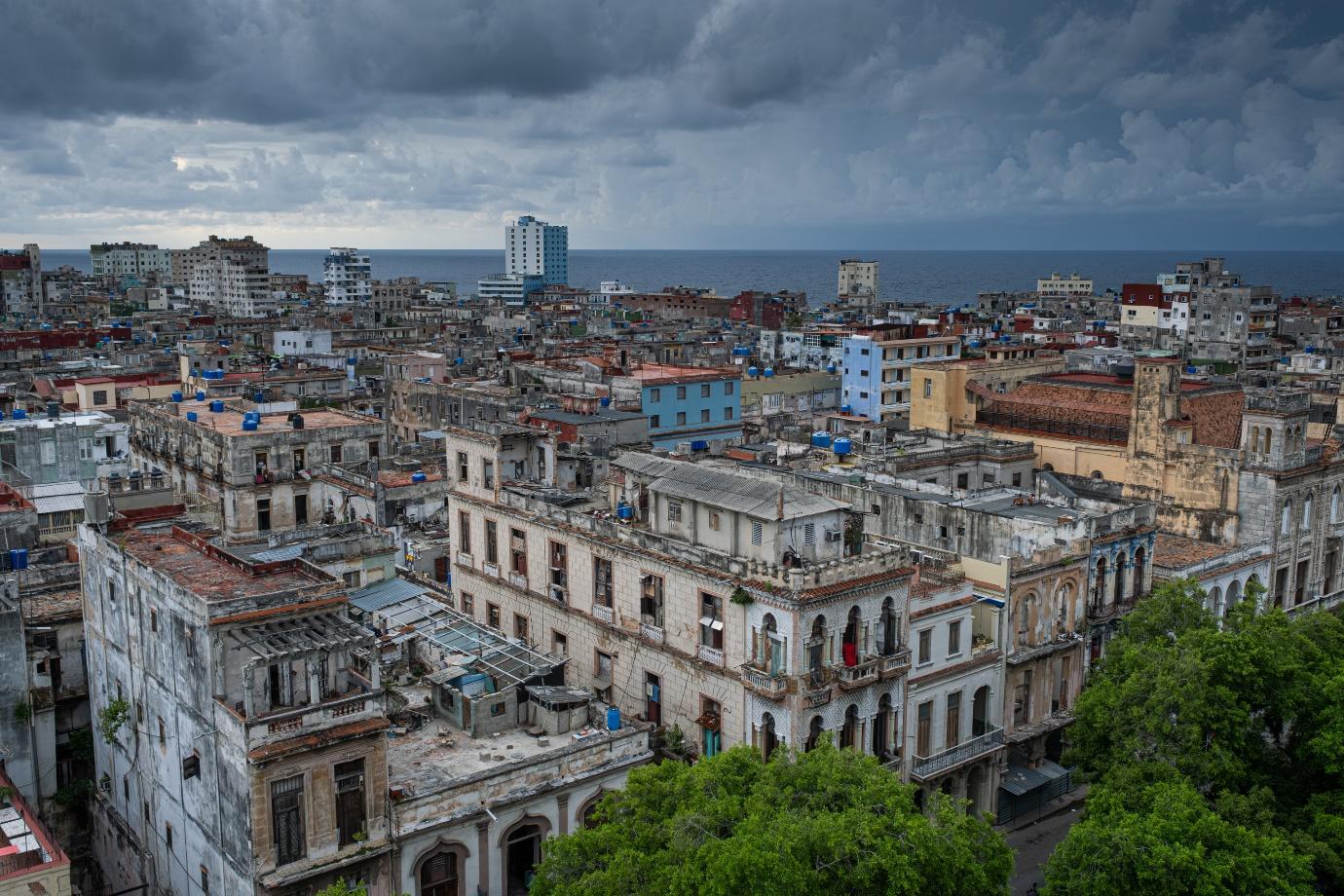
“Ironic, isn’t it? Socialism is supposed to take care of the poor. But here in Cuba, if you don’t have money, you don’t have rights. I assure you that if I had 1,000 dollars, I would give 500 to one bureaucrat, and 500 to another, and within 72 hours they would show up with a mansion to live in.” Maryanelli folds her arms. Her eyes spit fire. Barefoot she stands in the doorway of her usofructo,a small housing unit provided by the state, in the dilapidated neighbourhood of Habana Vieja. She is a hotel housekeeper. She tells how happy she is with the tips that tourists leave behind for her. Now Maryanelli tries to catch some air outside, because the heat is unbearable inside. The fan is not working due to power cuts which have become a daily occurrence in her block. Anger manifests in Maryanelli’s voice as she explains: “They summoned me to leave. The usofructo I am staying in will be demolished, because of the risk of collapse. It is the third time already, as my previous places have collapsed also. And now they send me to this cute patrimonial building, but I refuse to go. I will never get property papers there. As it is a patrimonial building it will always remain the property of the state, whereas I want a permanent place to stay with my two children.” She lights a cigarette and continues as she exhales: “You know what? The state promised us a house already in 1969, after my grandmothers’ house collapsed. They gave us this file, black on white. I inherited this right to a home from my grandmother, who was sent to a shelter. And here I am, nearly 60 years later, three collapses further, and still no house to live in…”
In Cuba, since the instalment of the Revolutionary regime in 1959 the state has promised to take care of housing for its citizens. The right to housing is enshrined in the constitution of the socialist country which is currently facing one of the most severe crises in its history due to external and internal factors (Boudreault-Fournier & Gauthier, 2024; Köhn, 2024). Challenges include post-covid recovery, monetary reforms, a bankrupt government and even stricter sanctions from the US than at any time in the last sixty years, the most recent consequence of which is the current oil embargo. These factors have led to hyperinflation, scarcity of food, electricity, gasoline and water, as well as social unrest. As always, both the state’s and peoples’ struggles are multiscalar (Kalb and Mollona, 2018; Mollona, 2014) and include those for housing (Acosta et al., 2020). Long before this most recent crisis it had already been difficult to find a decent and safe place to live in Havana (Carter 2008), but the state’s current obvious incapacity to address its housing problems engenders more and more criticism from the residents. People are increasingly openly blaming the government for its failure to manage basic needs such as housing, electricity or water (Derks, 2024). Under the current circumstances, neither the socialist state nor the impoverished residents have the means to maintain the city centre’s old colonial buildings. While the state blames the ongoing shortage of materials to the embargo imposed by the US (since the 1960s), many working-class residents have lost patience and now blame the socialist state for not providing the necessary services, materials or adequate salaries for housing maintenance that socialism has historically held out as a promise.
It is not easy to find official, reliable, statistics on housing collapses and the condition of buildings in the Cuban capital Havana. According to official figures, approximately 35% of buildings in Cuba are in poor condition (Leiva, 2024), and 850,000 residential structures need maintenance and repairs, but we expect these figures to be higher. An architect who works as a street-level bureaucrat in the Housing Department of Habana Vieja—we call him Pedro— estimates that as much as 70% of the houses in Havana Vieja need immediate repair or may collapse. A recent internal document with statistics on the housing stock for the city of Havana reports a total of 550,000 homes in the capital, of which 121,000 are in poor condition and 129,000 are in ‘regular’ condition, meaning they need maintenance to prevent further deterioration. This would imply that almost half of the buildings in the city are currently in need of repair.
Yearly, Havana faces 1,000 partial or full collapses. For decades the capital has had the largest number of collapses, deaths caused by collapse, and the largest housing deficit in Cuba. Only in the past half year, several deadly collapses were reported in Habana Vieja. Havana’s proximity to the sea, heavy rainfall, and hurricanes increase the need for proper and regular maintenance of its buildings. After hurricane San Rafael (2024) 460 collapses were registered. Havana is also dealing with a significant housing shortage. In 2017, Castellanos (2017) quoted the city’s Shelters Director, who said that 35,000 families, totalling 116,000 people, lived in shelters, and another 34,000 were in need of it. The average stay in shelters, the Director said, is no less than 20 years.
In Cuba, speaking about housing is speaking about the state. For her current research on state-resident relations in the field of housing in Havana, anthropologist and documentary photographer Derks has conducted fieldwork in Havana for 10 months since 2025. During this period, she took the photographs featured in this essay, visited working-class residents, and followed street-level bureaucrats responsible for monitoring the condition of buildings in Havana. Since 2005, she has stayed in Cuba regularly for different projects and has lived in Havana since 2023. Over these 20 years she has witnessed the city crumble. Koster visited Cuba three times between 2018 and 2025 for shorter periods in which he carried out fieldwork with Derks. Ketterer visited Cuba in 2025 and works closely with the others on this project.
For this blog, we build on Gupta’s (1995) approach to understanding the state as constructed through peoples’ imagination and their everyday practices. We further draw inspiration from Navaro-Yashin’s (2002) work on the faces of the state: the various forms in which state representatives present the state to the people through practices, discourses and institutions. We have studied the various faces and imaginaries of the state as they are given shape among residents who experience housing problems. We also analysed how street-level-bureaucrats working in the Housing Department of Habana Vieja come to embody the state in diverse and contradictory ways during their face-to-face encounters with residents.
Currently, most of the attention focused on Cuba centres on the geopolitical situation and the measures taken by the US government against Cuba and other countries in the region. In this essay, while we take this geopolitical context into account, we focus primarily on the daily reality as experienced by working-class residents and bureaucrats in Havana, and on their ambiguous views of the state. Residents, such as Maryanelli, blame the state for not providing housing—or, more generally, for not taking good care of them. At the same time, they clearly still expect the state to fulfil its socialist promises of housing and other basic necessities. Bureaucrats represent the state when they visit residents, explain policies and make promises. Yet, they also often distance themselves from the state, aware of its shortcomings in practice, often prompted by the housing problems they face in their own personal lives.
In addition to describing people’s ambiguous views and practices, we present a selection of Derks’ photos to visualize them. The photos show the material reality of buildings and people’s practices, while also capturing present-day imaginaries of a state that is increasingly contested and visibly crumbling. They “take us deeper into the sensory knowledge” (Crowder and Cartwright 2021:3) of housing and residents’ imaginaries of the state and “operate as a form of collage, with images being read individually and also within a wider visual narrative” (Sutherland 2016:115). As Squire (2016) suggests in her photo essay in Focaalblog, photography makes it possible to break through linear narratives in written texts and showcase heterogeneous, complex realities effectively. In addition, as we show in this essay, visualizing housing as a basic human need and a primary government responsibility, as claimed by Cuban socialism, may contribute to a deeper understanding of people’s imaginations of the state. Housing, as a convergence of matter and meaning, seems to coincide with peoples’ imaginaries of the state: instead of providing the promised shelter and care, things are collapsing.
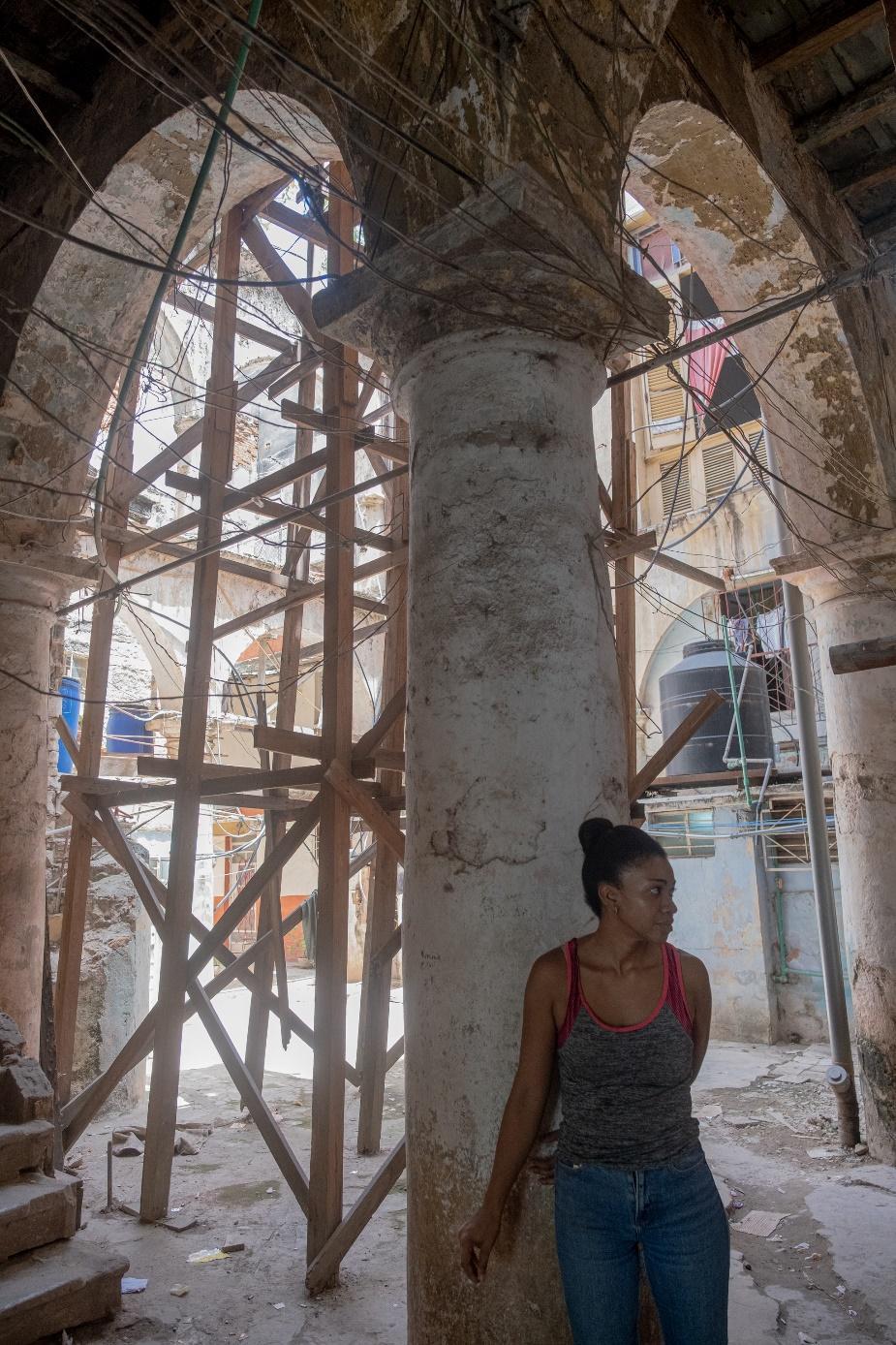
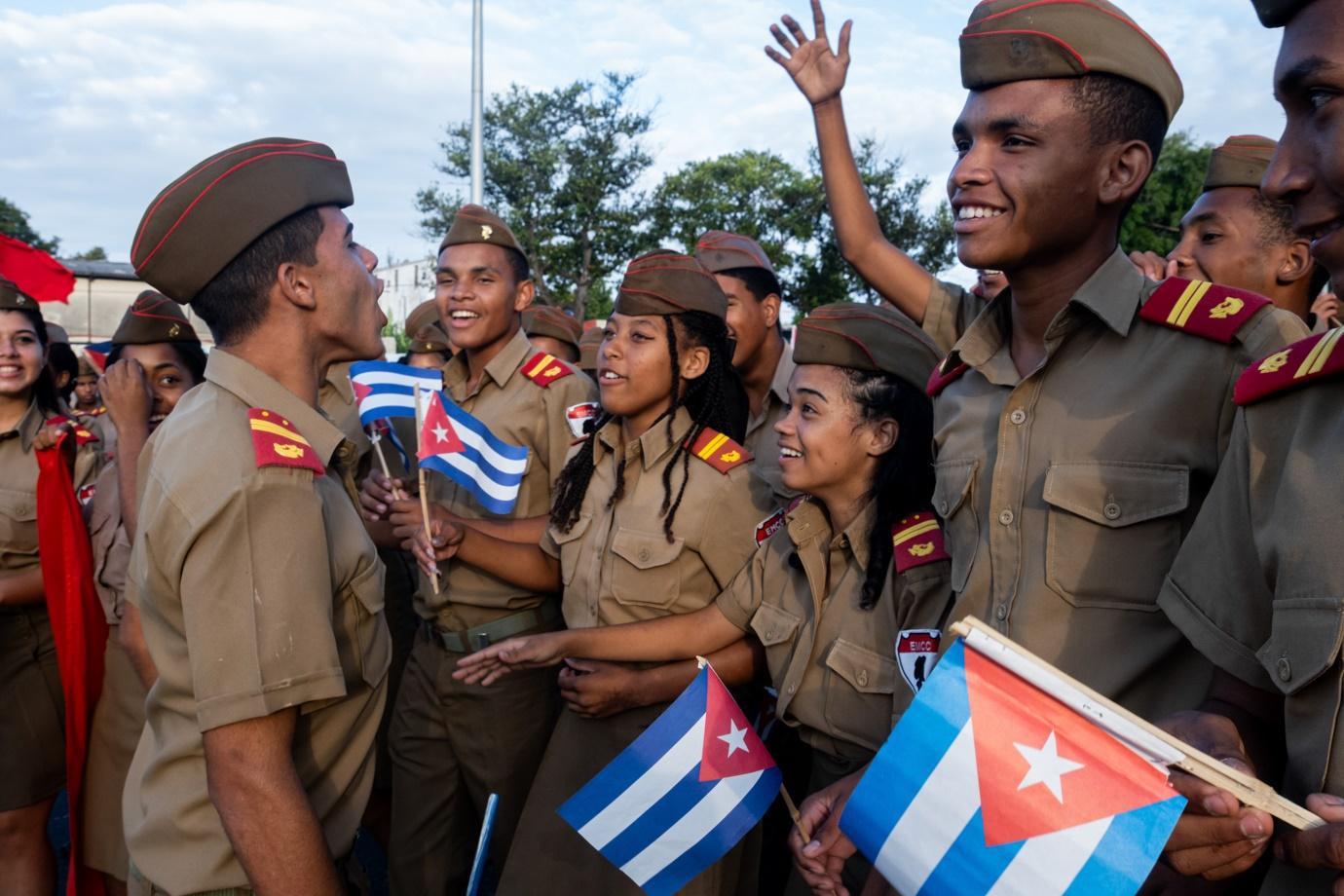
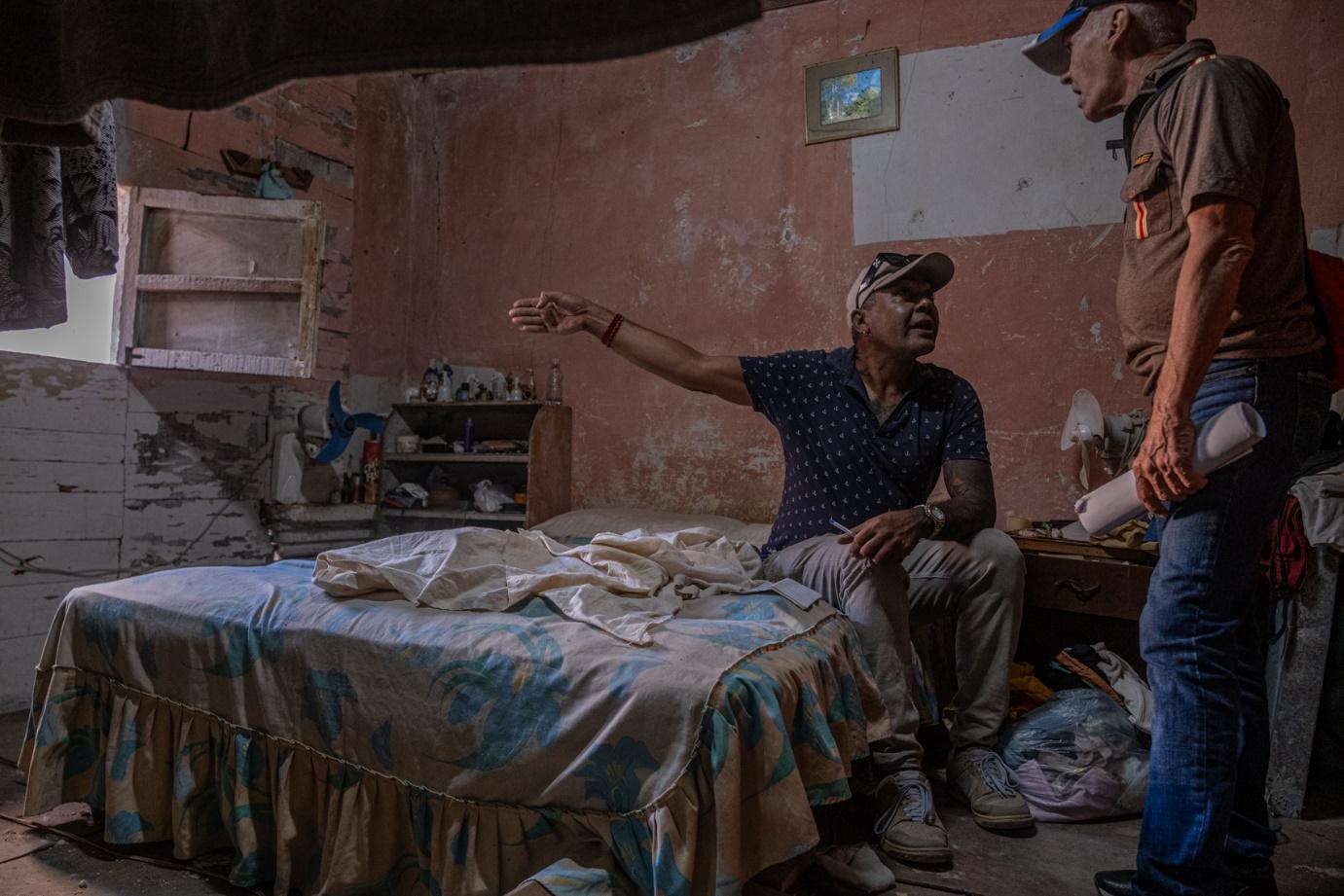
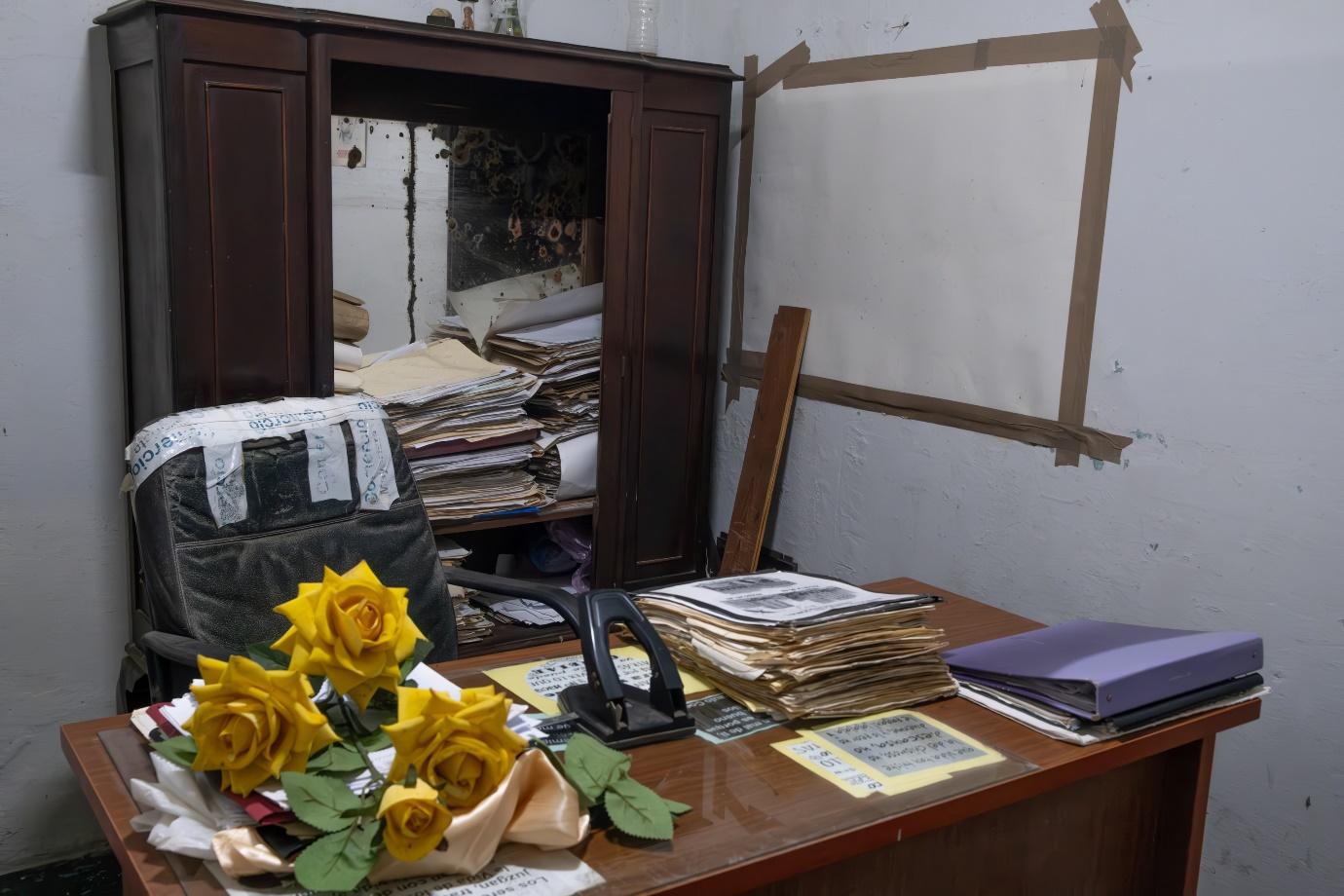
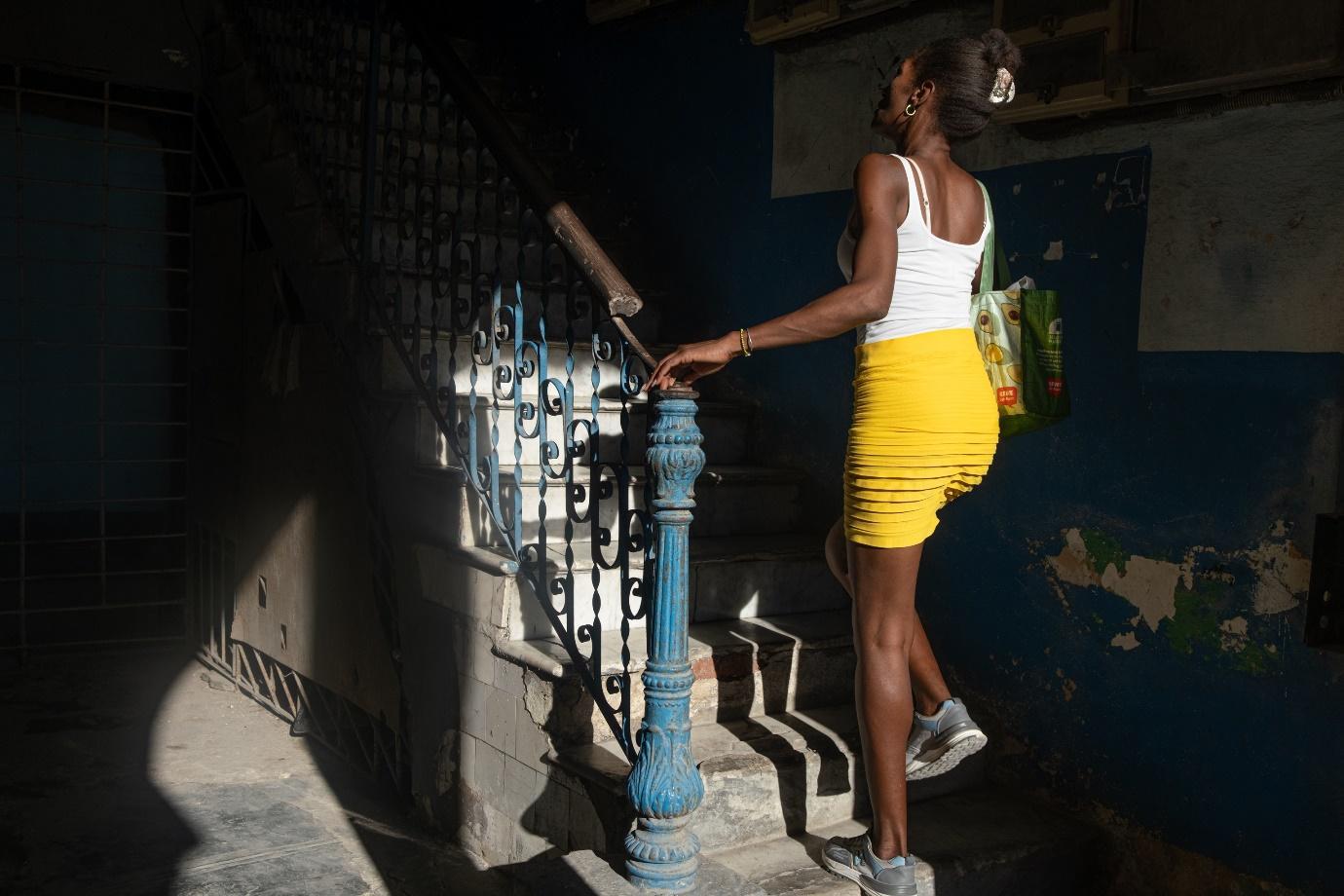
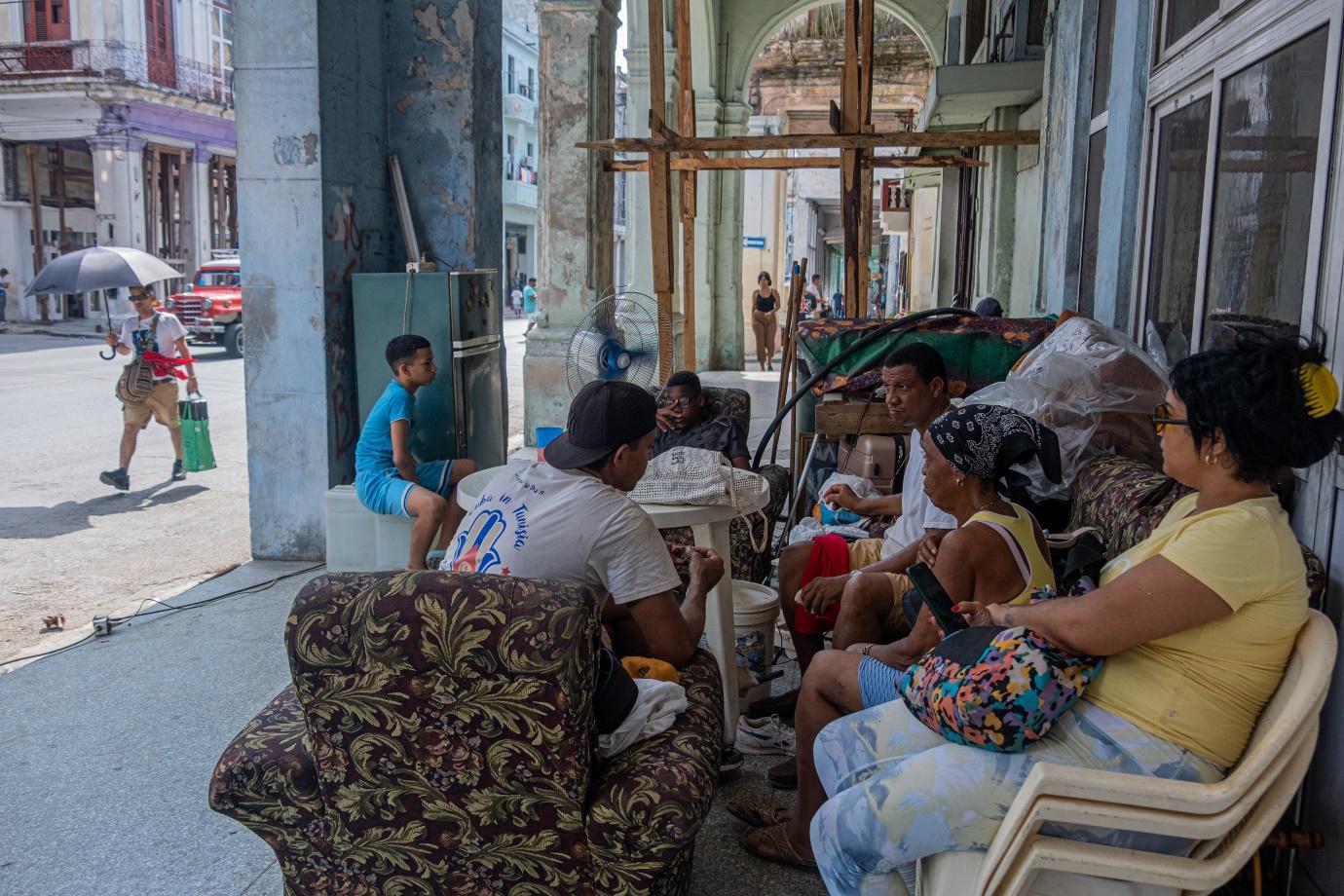
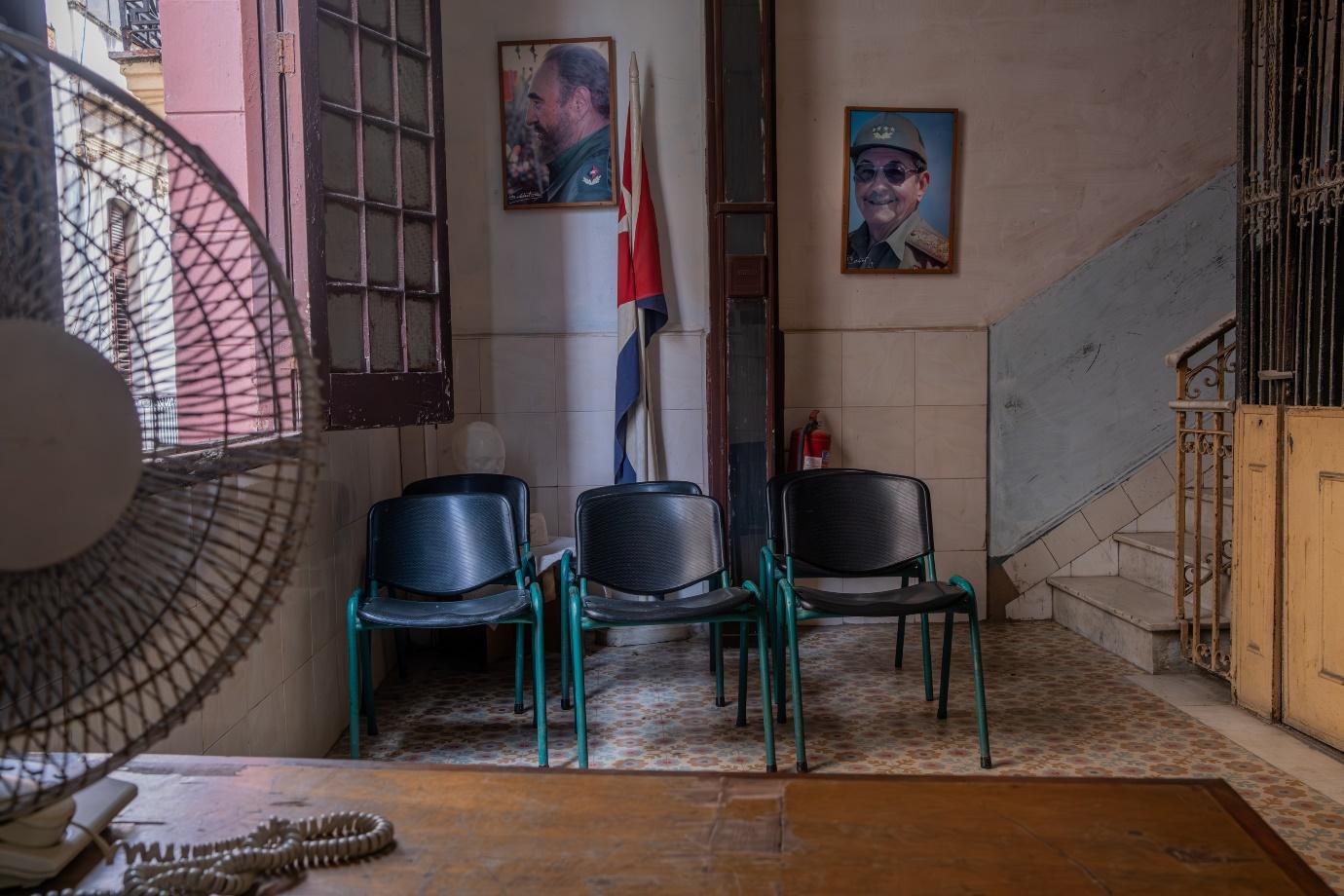
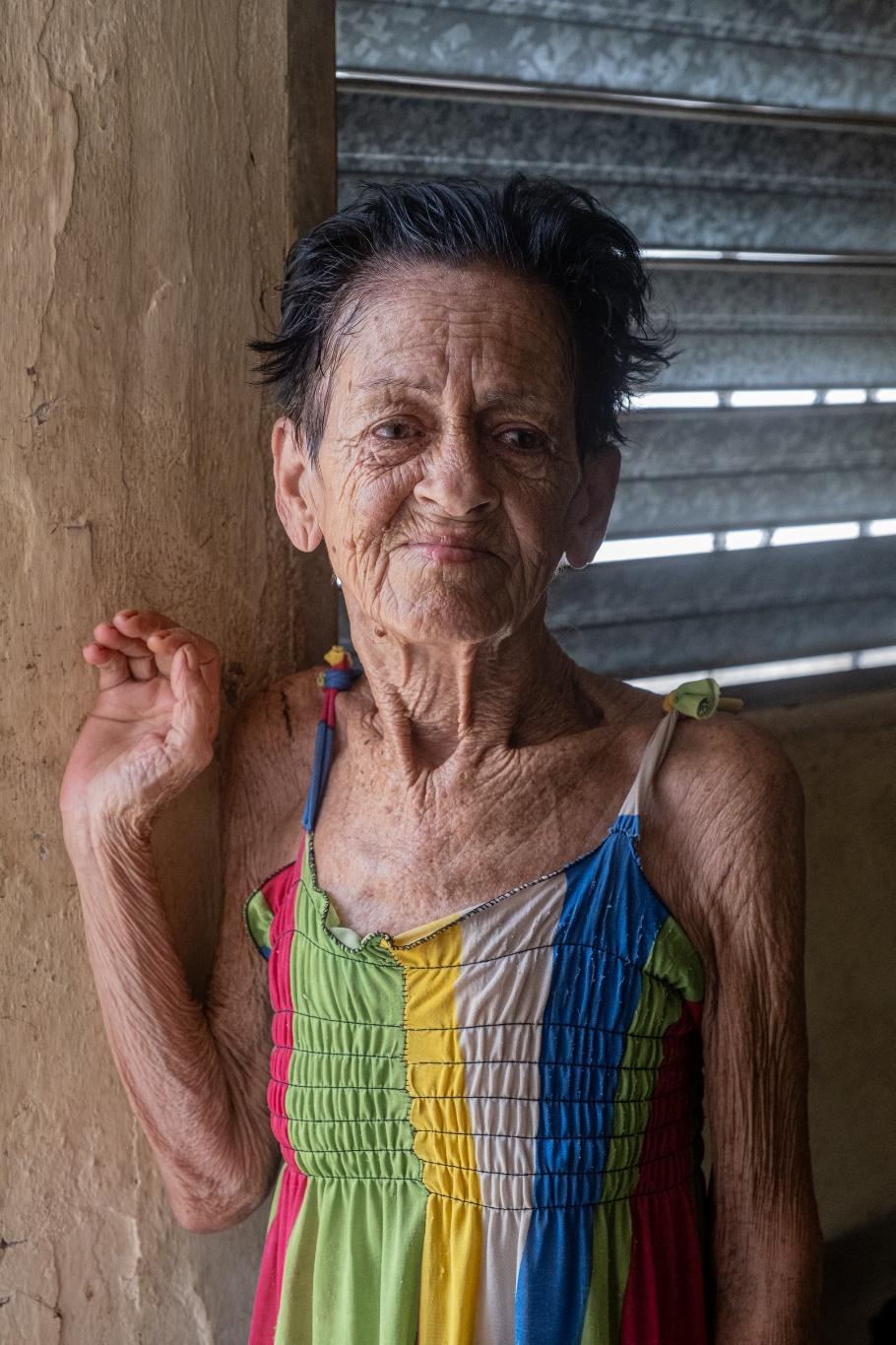
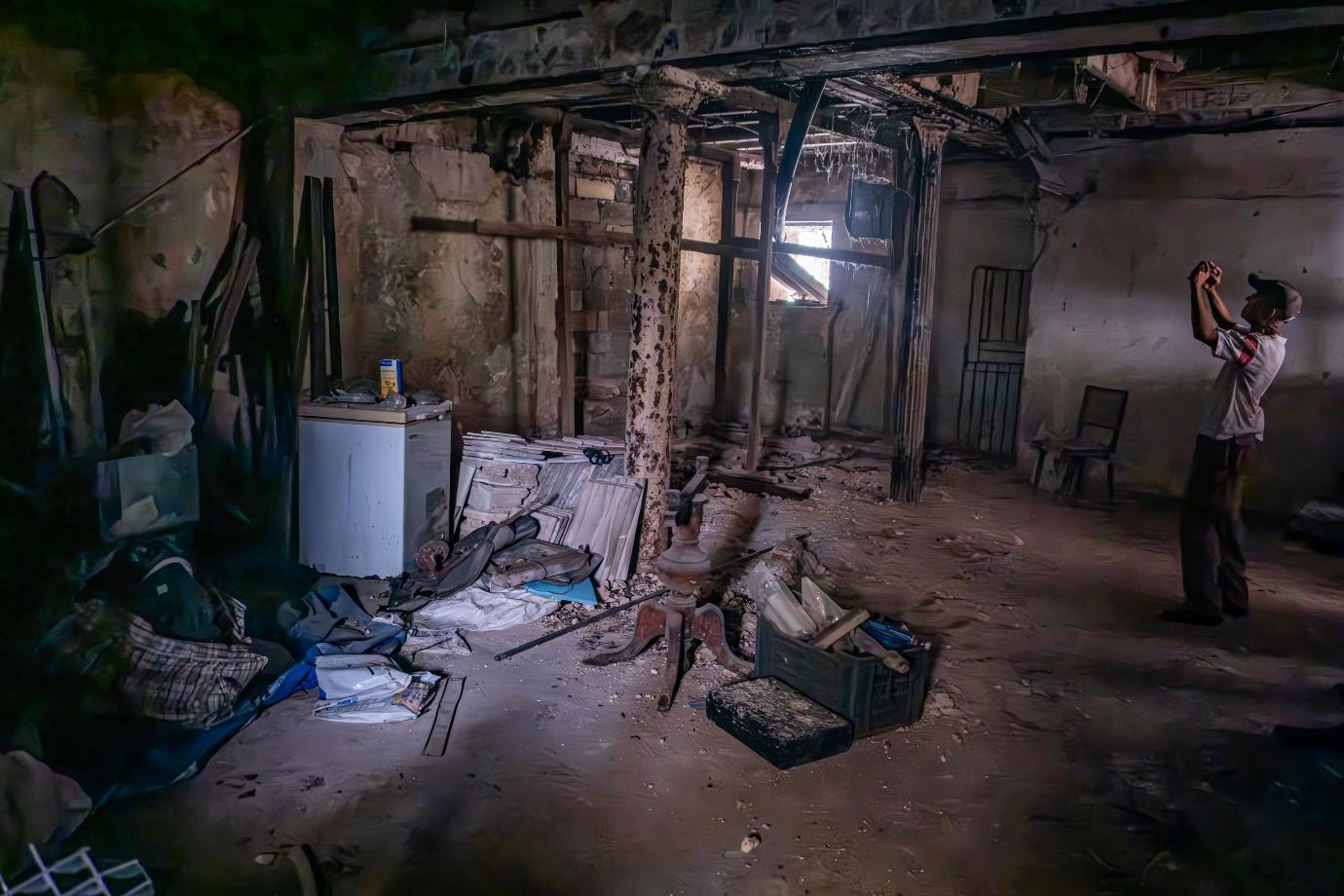
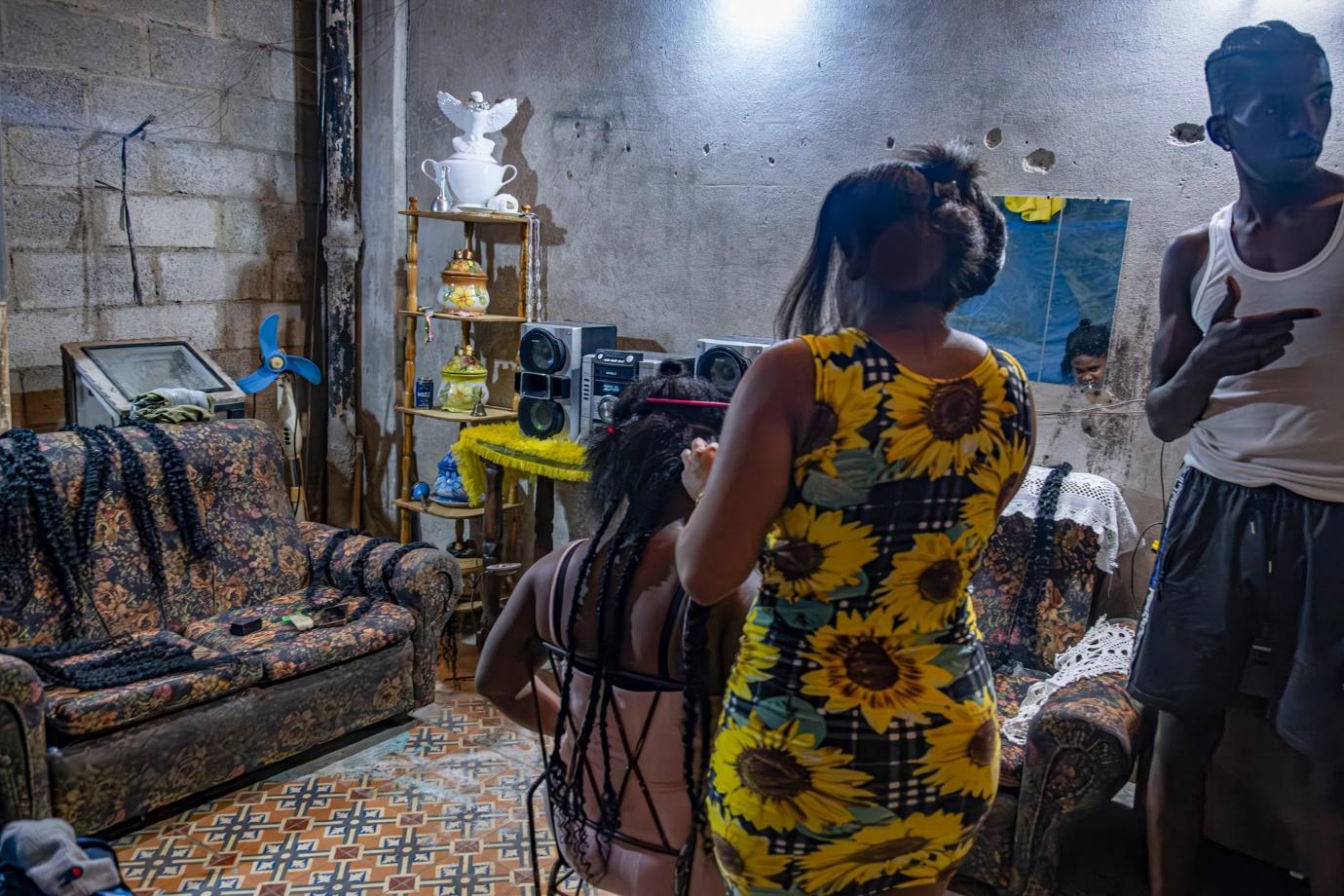
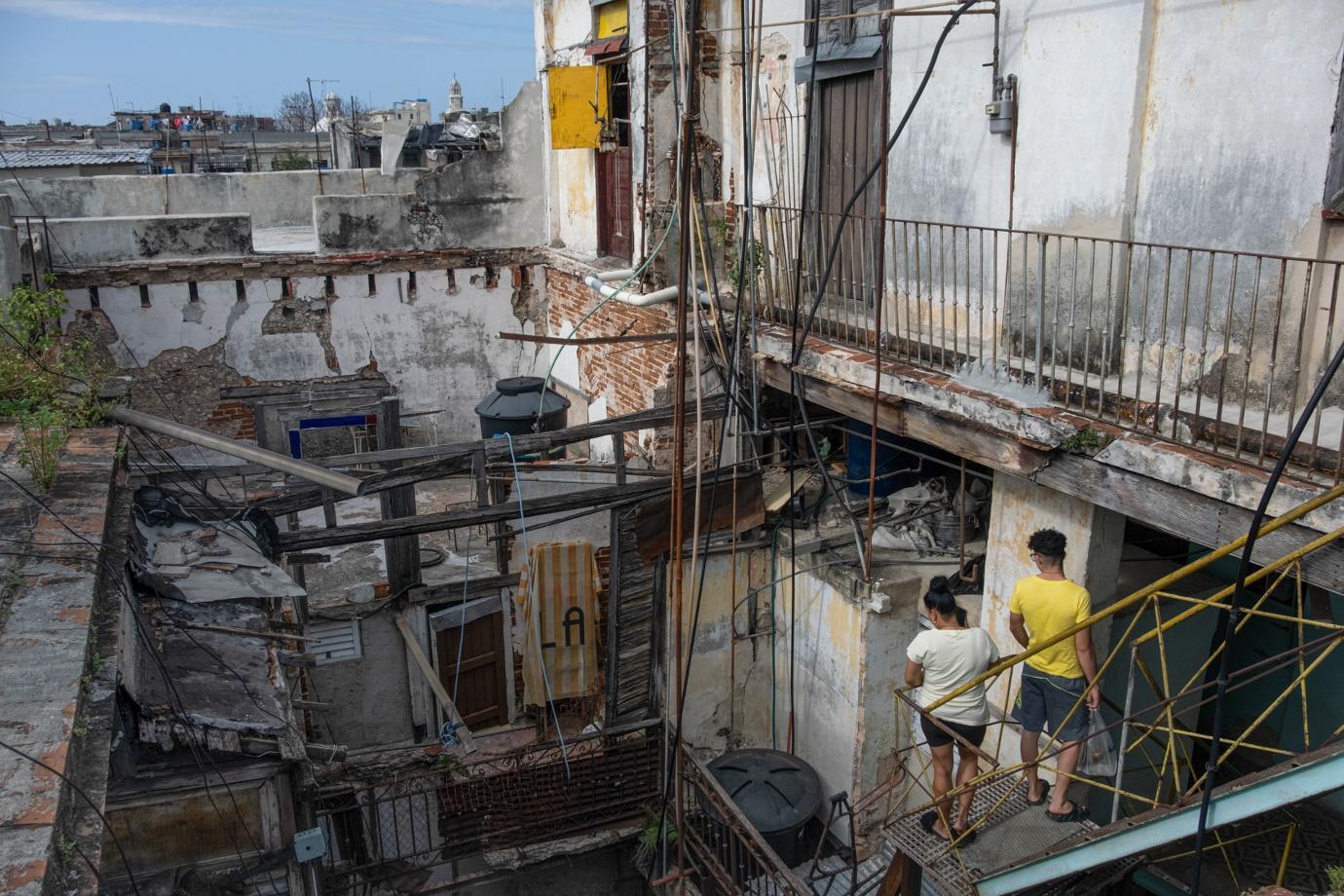
These photographs and our broader research on housing in Havana demonstrate how people experience and imagine the state during the current crisis. Facing the deteriorating housing conditions in the city, they give expression to their—largely very critical—ideas about the state. Even state employees openly criticize the state for not providing for the population, and for failing to pay a decent salary to civil servants. They also use this criticism to legitimize the bribes they receive. These bribes create an ambivalent relationship between residents and street-level bureaucrats. On the one hand, the bribes give residents (who can afford them) a certain degree of control over their situation and the opportunity to smoothen or expedite otherwise endless processes. On the other hand, they reinforce negative feelings about the state which obviously does not work unconditionally for everyone—contrary to its official socialist narrative and within a complex context of extremely limited resources.
As we have shown, the Cuban state at this point offers no or only make-shift solutions to housing issues. The houses in the photos in this essay embody this failure. Buildings collapse or are demolished, leaving less and less space to house people, while more and more of them are homeless or living in high-risk situations. At the same time, both working-class residents and street-level bureaucrats keep on claiming certain rights—to housing and other basic necessities—from the socialist state that they may not claim in other Caribbean countries. They (still) perceive the state as a possible and desired provider of goods and services—and the street-level bureaucrats also reproduce this ‘face’ of the state in their interactions with residents. At the same time, both residents and bureaucrats see the socialist state as an institution that falters with regard to housing as well as with the revolution in general.
The research, including the photography, for this essay are part of the POPULAR project, which is financed through the European Research Council (ERC) under the Horizon Europe research and innovation program (Consolidator Grant, agreement no. 101087109).
Sanne Derks is an anthropologist and documentary photographer, based in Havana, Cuba. Currently, she is a postdoctoral researcher at Wageningen University, the Netherlands, where she focuses on shifting imaginaries of the state around housing struggles in Havana. She holds a master’s in psychology (2003, Radboud University), a PhD in Anthropology (2009, Radboud University), and a master’s in Photojournalism (2016, Universidad Autónoma de Barcelona).
Martijn Koster is an Associate Professor in the Sociology of Development and Change Group, Wageningen University. His research interests include (in)formal resident-state relationships, politics, housing, and urban development. Currently, he is PI of POPULAR, a research project with ethnographic case studies in Havana (Cuba), Medellín (Colombia) and Recife (Brazil), financed through an ERC Consolidator Grant.
Stephanie Ketterer is a political anthropologist and Associate Professor with the Sociology of Development and Change Group, Wageningen University. Her research interests lie at the intersections of the anthropology of the state, infrastructures, and datafication. She just launched a new NWO-Vidi project on everyday politics surrounding rural data centers.
References
Acosta, R., F. Eiró, I. Koch & M. Koster (2020). Introduction: Urban struggles: governance, resistance, and solidarity. FocaalBlog, July 2. https://www.focaalblog.com/2020/07/02/raul-acosta-flavio-eiro-insa-koch-and-martijn-koster-introduction-urban-struggles-governance-resistance-and-solidarity/
Angulo Leiva, J. E. (2024). Señas y sombras del proceso de recuperación tras los recientes eventos naturales. Granma,December 18.
Boudreault-Fournier, A. & Gauthier, M. (2024). ‘Inflation as pressure: coping mechanisms from Eastern Cuba.’ Focaalblog, December 10. https://www.focaalblog.com/2024/12/10/alexandrine-boudreault-fournier-and-melissa-gauthier-inflation-as-pressure-coping-mechanisms-from-eastern-cuba/
Carter, T. F. (2008). Of spectacular phantasmal desire: Tourism and the Cuban state’s complicity in the commodification of its citizens. Leisure Studies, 27(3): 241–257.
Castellanos, D. (2017). Havana is collapsing. Diario de Cuba, May 4.
Crowder, J. W. & E. Cartwright (2021). Thinking through the photo essay: Observations for medical anthropology. Medicine Anthropology Theory, 8(1): 1-13.
Derks, S. (2024). Manifiesto del Agua. Beerse: Studio Another Day, Daneels.
Gupta, A. 1995. Blurred Boundaries: The discourse of corruption, the culture of politics, and the imagined state. American Ethnologist, 22(2): 375-402.
Kalb, D. & M. Mollona. (2018). Introductory thoughts on anthropology and urban insurrection. Kalb, D. & M. Mollona. (eds.) Worldwide mobilizations: Class struggles and urban commoning. New York and Oxford: Berghahn Books, 1-30.
Köhn, S. (2024). ‘Tokens of survival: the rise of crypto gaming in Cuba’s inflationary economy.’ FocaalBlog, December 10. https://www.focaalblog.com/2024/12/10/steffen-kohn-tokens-of-survival-the-rise-of-crypto-gaming-in-cubas-inflationary-economy/
Mollona, M. (2014). The Brazilian ‘June’ revolution: Urban struggles, composite articulations, and new class analysis. FocaalBlog, October 28. https://www.focaalblog.com/2014/10/28/massimiliano-mollona-the-brazilian-june-revolution-urban-struggles-composite-articulations-and-new-class-analysis/
Navaro-Yashin, Y. (2020). Faces of the state: Secularism and public life in Turkey. Princeton, NJ: Princeton University Press.
Sutherland, P. (2016). The photo essay. Visual Anthropology Review, 32(2): 115-121.
Squire, V. (2016). 12 days in Lampedusa: The potential and perils of a photo essay. FocaalBlog, 11 January https://www.focaalblog.com/2016/01/11/vicki-squire-12-days-in-lampedusa-the-potential-and-perils-of-a-photo-essay/
Cite as: Derks, S., Koster, M., and Ketterer, S. 2026. “Crumbling down: Visualizing housing and imagining the state in Havana” Focaalblog, May 25. https://www.focaalblog.com/2026/05/25/sanne-derks-martijn-koster-and-stephanie-ketterer-crumbling-down-visualizing-housing-and-imagining-the-state-in-havana/
Discover more from FocaalBlog
Subscribe to get the latest posts sent to your email.