Tag Archives: postsocialism

Don Kalb: Anthropological Use Value for an Anticapitalist Left

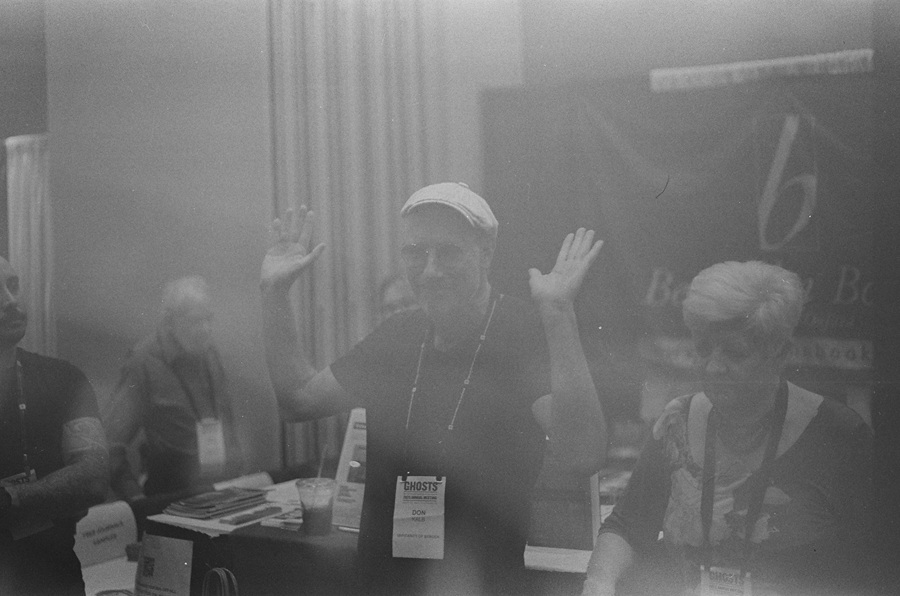
Image 1: Don Kalb and Marion Berghahn at the launch of Value and Worthlessness at the AAA annual meeting on November 21, 2025. Photo by Stefan Voicu

What a joy to be hugged, celebrated, and criticized by stellar colleagues who intimately know the stakes of invoking Marx in more than a fleeting way in anthropology; stakes that may be higher here than in other social disciplines. Theoretically and methodologically, anthropology is deeply imbricated in liberal and less liberal idealisms, with a stark belief in cultural contingency, and rather wild about the idiography of cultural difference, alterity, and autonomy. If the discipline moves Left, it naturally inclines towards anarchism, mutualism, ethics, radical versions of rights and humanitarianisms or posthumanitarianisms beyond the regular liberal offer, rather than to Marxism and political economy with all their system thinking. The anthropological desire is definitely for a human self that is autonomously thriving on ‘the outside to capital’.

This is largely how the discipline has fared during the worldwide political contestations of the 2000s. Hence the importance of a public anthropologist like David Graeber, who had the genius to catch the Left spirit of the time in the 2000s, before that time itself was fully aware of it. The soon to be coming counter revolution, however, was less noticed by David, or by our discipline at large, though the right wing backlash was smoldering already during the Left wing years. Anthropology only caught up with it, in shock, when the radical Right was already comfortably seated on the plush of Western governmental power, increasingly determining not just ‘policy’ but a full-fledged program of defensive-aggressive Western civilizational supremacy. Unpleasantly surprised, and aware of their own vulnerability, anthropologists at once realized they had long preferred to study ‘people like us’ (nice Left-wanting people) and had ignored questions about labor, class, right wing political anger, and fascism. The inside to capital was blowing back as a boomerang. Ten years later, this still describes our deeply worrying situation.

Admittedly, those of us who were located in, and working on postsocialist Eastern Europe (CEE) were somewhat better prepared than the Western and Southern liberal mainstream. We had seen the counter revolution of the illiberal Right taking shape in the late 1990s and early 2000s already. CEE, it turned out, possibly to our own surprise, was not the liberal laggard of Western imagination, but an illiberal avantgarde that would soon be followed by the West and many places of the South.

The political sociologist David Ost and myself were among the first to notice the deep class dynamics behind the process, dynamics that I later sought to succinctly capture with the concept of ‘double devaluation’, for which Jaume Franquesa salutes me. I love Jaume’s sudden observation that actually none of the concepts that are central to ‘Value and Worthlessness’ (Kalb 2025) are new, that the book is just an unapologetic argument for anthropological Marxism consistently worked out: class, labor, capital, dispossession, social reproduction…imperialism. These days I lay more emphasis than I used to on devaluation and on value, value regimes, and an anthropologically informed dialectical take on the law of value, what Voicu rightly calls my ‘huffing and puffing’. These concepts were less common in the anthropological structural marxisms of the 1970s (though I owe Jonathan Friedman, a survivor of structural Marxism 1970s style, for having pushed me along this path without him being much aware of it, I guess), but Jaume is so right: nothing new, really, just an update of an existing Marxist toolkit and a modest anthropological rethinking under new circumstances and with new problems at hand, within and against a drastically transformed capitalist totality of social relations as compared to the one that produced the 1970s Marxist upsurge. My categories and approach are tuned into that new reality and coined in order to help explain the radical right wing political backlash in CEE and anywhere, in anthropological ways, that is.

I want to emphasize that I have never felt much for the overt structuralisms of those days. At every turn I try to dip my approach to value (“value and values, value regimes”) in what I call relational realism: relations that can be studied, ‘life in and as action’ on worldwide, as well as regional, national, and intimate levels; levels that are dialectically imbued with each other as in multi-scalar relationships; relations with others on which we depend and that shape who we are and who we can and want to be. Hence the ‘structured totality’. Hence also Trotsky, not just for his combined and uneven development, which, as Stefan Voicu rightly notes, is essential, but also his early gesture towards multiscalar analysis as expressed in the distinctions he made between ‘algebraic, arithmetic, and molecular’ scales of analysis, a vision Eric Wolf would later set to work in his ‘faces of power’ (without ever citing Trotsky). There is a big and urgent anthropological project in bringing this multiscalar dialectical edifice of value, including the ‘systemic production of worthlessness’, to work ‘close on the skin’ in the biographies, actions and experiences of our key fieldwork interlocutors; helping to bring their hidden histories into view in ways that under normal circumstances are not usually revealed to them.

‘Intimate Marxism’, Sharryn Kasmir calls the result and she likes it; a profound observation plus a seductive name. Thank you, Sharryn. ‘Intimate Marxism’, almost an oxymoron given popular and anthropological prejudices against a Marxism believed to be preternaturally given to obscurantist or even violent abstractions. Marxist anthropology might want to embrace ‘Marxist intimacy’ as a key element of our mission as compared to other Marxisms, but also, and perhaps more importantly, in relation to liberal anthropologies, as Sharryn suggests. We are seeing avowedly ‘liberal’ anthropological approaches to fascism these days that thrive on and all but seem to fetishize what I am tempted to characterize as mere ‘spoken words’, utterances derived from interviews and social media content, without much of an effort to create a compelling understanding of the speaker’s whole, lived, emplaced social life as it unfolds in time and space, with all its contradictions, desires, fears, angers, disappointments, suffering, private victories. Intimate Marxism searches for the full human claim to a worthy and meaningful life beyond inevitably rather random moments of utterance, life with others, and within and against the ‘inside to capital’. This is an ambition that comes with a strong recommendation here, and with a sense of both urgency and patience, to get behind and beyond the facile fascist (etc.) surface. Words are so easily spoken and scribbled up these days, a massive social media – that is, digital capitalist – driven overproduction; a flow of half-digested fuzzy signifiers for people to just show they keep up with the socially necessary speed of circulation (and with their neighbors). But what the hell do they really mean when spoken?
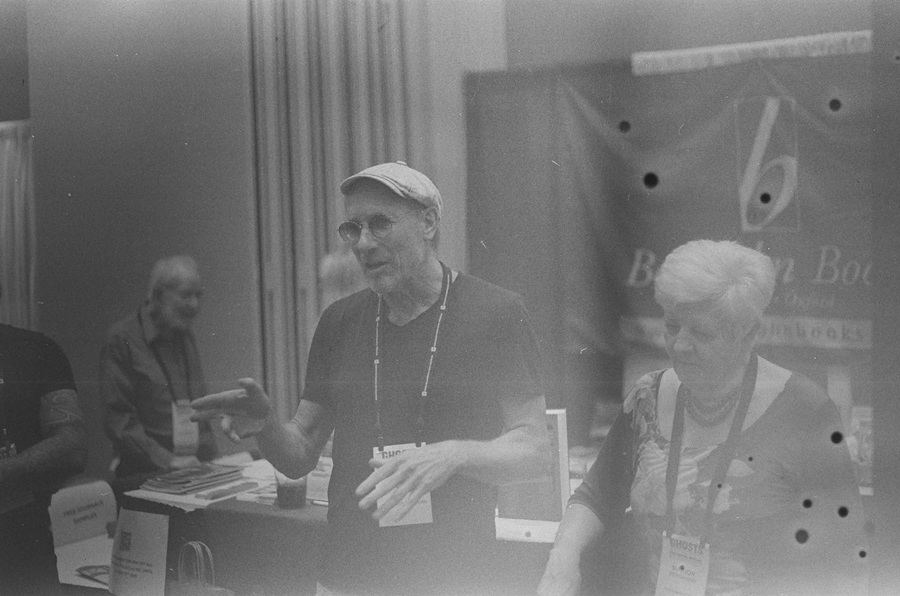
Image 2: Don Kalb and Marion Berghahn at the launch of Value and Worthlessness at the AAA annual meeting on November 21, 2025. Photo by Stefan Voicu

This brings me to the point where I must engage with Ida Susser’s critique that in Value and Worthlessness I am weak on Gramsci, commoning, counter hegemony, ‘Left wing culture’. First, I am puzzled that I have apparently failed to show that my key informant Zadrozny – a person around whom a much broader story is told in my work on Poland – was precisely that type of an outspoken and important organic intellectual that she wants me to look for and that she strangely thinks is missing in my approach. As far as I know that problematic is right there in the middle; it’s what the whole story is about. Zadrozny was a lifelong key actor and organizer within a broad and powerful commoning movement for worker self-management, comprising at various points tens to hundreds of thousands of people, first against the ‘really existing socialist’ state, then against the neoliberal state, both of which would dispossess local workers of their self-managed factory commons (which included much more than those factories: credit, family benefits, kindergartens, health clinics, holiday camps, media!!). All of this is described though perhaps not really studied, it is more a starting point for another type of study, one that helps explain the puzzle of why this all lands on the radical Right side of the political spectrum. I am puzzled that Ida thinks I am neglecting Gramsci, hegemony, counter hegemony, commoning, and organic intellectuals. Maybe it is this: Many of my Western and in particular American friends have always found it hard to understand that the East European illiberal right was not an authoritarian imposition by the state or capital but an actual mass organic counter movement Polanyi style, as well as a counter hegemonic movement Gramsci style, against respectively authoritarian socialist and neoliberal state impositions. It is true that I do not study Left wing culture in Poland in the 2000s, that is because Right wing culture was the big issue and for us Western as well as Eastern analysts the big puzzle.

In Poland worker-led Solidarnosc ended up on the radical Right, just like the mass protests against the privatizations of health and pensions in Hungary in the early 2000s ended up with Orban’s Civic Circles and, in the Northeast of the country, now with a racist twist, with Jobbik. Western Gramscians often find it difficult to understand that there is no automatic affinity between commoning and the Left. The Left is a possibility, not more than that. But what if a self-nominated so called Left in power is your enemy? Regional histories, national public legacies, and relations of power produce crucial differentiations here. In France, the Yellow Vests could have moved rightwards too but in the end, partly as a consequence of street-commoning, as Ida’s (2026) new book shows, they ended up in a Left coalition. That Left coalition may not be strong enough though to keep the radical Right out of power in France: kindred processes of double devaluation as the ones I have observed in CEE are playing themselves out in that nation too, as elsewhere. Populist Lefts and Rights and their organic intellectuals and commoning practices are trying to capture and articulate that popular experience of double devaluation, both attacking the liberal center. As in CEE, in France the Right often dominates in the provinces and the rural areas, in particular those that have long stagnated and have seen big out-migrations. In CEE whole states as such have seen massive outmigrations and have indeed generated dominant, even hegemonic, right wing illiberal regimes in power. In France, the Left can compete in the big cities and sometimes in the provincial centers, such as in the recent electoral victory in Roubaix. More broadly, we should not ignore the fact that Gramsci is entirely embraced by the illiberal international nationalist Right and alt-right.

Being located in and working on CEE, I had to confront the objective of explaining the rise of the radical Right from the deeper popular experiences from which it was assembled. That included the commoning practices, but my curiosity went beyond the overt political organizing, which was established long before I arrived in the late 1990s: what happened to these well-organized manufacturing workers who went from Trotskyism against ‘neoliberal-Stalinism’ in the early 80s to radical illiberal nationalism against neoliberalism in fifteen years’ time? What was the popular experience, the hidden history, that helped to explain this political journey? That is what my approach in the ethnographic chapters helps do. Though I firmly believe that political outcomes are in the end somewhat contingent, they do happen by definition in regionally inflected and embedded ways – as part of the regional insertion into global capital accumulation and class formation; that is, they happen in relation to identifiable and describable value regimes. In the CEE postsocialist peripheries, where a neoliberal Left was hegemonic in the 1990s and 2000s, it meant that they overwhelmingly ended up on the radical right, as part of a counter hegemonic illiberal nationalist alternative. In France, in the core of the EU, with one of the most extensive welfare states in the region, the Yellow Vests in the end moved Left, but whole working class areas in the North and the East of the country moved right too, as they have been doing elsewhere in Europe and much of the world. CEE turned out to be an illiberal avant-garde. But we now also know, with the recent developments in Hungary, that such illiberal regimes too can succumb under their own contradictions, as seems to be happening with Trump and MAGA already.

Local commoning and its outcomes are not determined locally. Nor are what Ida Susser calls ‘political cultures’. Capitalism is a fast moving multiscalar edifice, no outside to that, even though any location has its fundamental specificities as part of its spatiotemporal insertion in the whole, which includes the socio-political histories and ‘political cultures’ of that insertion. That was also true for the South African anti-apartheid fight that Ida invokes; an invocation that is much to the point here. Would Southern Africa have seen the end of the Apartheid state in 1994 without the Polish 1989? Without the Soviet Union having gone bust? With the Apartheid regime still being seen among the Western ruling class as the last bulwark against a violently spreading African communism supported by the Soviet Union (Angola, Mozambique…South Africa)? We cannot be sure but quite possibly not. With communism and the Soviet Union all but gone, de Klerk was encouraged by domestic and international capital and the West at large to negotiate with the ANC. And Poland had delivered the example of the Roundtable. Thus, Poland and South Africa were again linked at the hip as two of the most ideologically and geopolitically significant ‘peaceful democratic transitions’ within an ever more neoliberal US led globalizing capitalism; both of them officially declared successes, but both also failing as inclusive democratic capitalisms for the many; both, as a consequence, ultimately giving rise to strong illiberal populist counter formations, in South Africa the Zuma faction within the ANC, in Poland, populist Solidarnosc against its former dissident anti-communist intellectuals, now the political elite. That new neoliberal Polish state elite and its wider hegemonic public culture and civil society was hellbent on telling the working class that they were just ‘worthless Poles’ who deserved the whip of capital pure and simple. These workers didn’t willingly agree and the Law and Justice regime was the biting result; an illiberal nationalist Right that was very unfriendly against leading liberals but that did reduce poverty and did push up the whole national economy by setting up a natalist/familialist welfare state against the loud protestations of the so called Left that this could only be economic suicide.

The fight, here and there, preferably combined, continues. But for now, the Left, too liberal, too neoliberal, too bienpensant, and in its more radical versions too much tempted towards the outside of capital, has lost. Is this overdetermined, I hear my friend Ida Susser ask? I hesitate and would love to say no. I actually whisper it, but then I see myself jump up and hear me exclaim loudly that there are no voluntarist escapes. Just pulling ourselves up on our belts and start organizing and commoning? No. My hope for counter hegemony does not start by confirming the importance of existing Left wing cultures because that is, as far as it goes, self-evident. It starts with listening very carefully to our ‘lost’ interlocutors in the field and with getting to grips with why ‘we’ ended up beaten by a popular force that ‘we’ used to associate with outright darkness and that we had imagined to have died out well before this 21st century had even started. And here we are. And this while capital and empire are going completely off the leash. Our deeply troubled predicament requires us to move the new global populist Left well beyond the limits of the liberal, limits that are so powerfully inscribed into the system and that will certainly not be overthrown by the illiberals, that is the power of property as capital, a power that is beyond the reach of any constitutional national democracy, and at the same time reject the utopian escape towards the outside to capital. That is why we need a full out rethinking of capitalism and its liberal and illiberal guardians, preferably in anthropologically informed ways. The well-trodden paths of the Left are exhausted. Call what we need revolution please. Some of that is tried in my book. Much more is needed.


Don Kalb is Professor of Social Anthropology at the University of Bergen, founding editor of Focaal and Focaalblog. His latest books are Value and Worthlessness: The Rise of the Populist Right and Other Disruptions in the Anthropology of Capitalism (Berghahn Books, 2025), and, co-edited with Walden Bello, Backlash: The Global Rise of the Radical Right (Pluto Press, 2026).


References

Kalb, Don. 2025. Value and Worthlessness: The Rise of the Populist Right and Other Disruptions in the Anthropology of Capitalism. New York, Oxford: Berghahn Books.

Susser, Ida. 2026. The Yellow Vests and the Battle for Democracy. Taking to the Streets of Paris in the 21st Century. New York: Routledge.


Cite as: Kalb, D. 2026. “Anthropological Use Value for an Anticapitalist Left” Focaalblog May 5. https://www.focaalblog.com/2026/05/05/don-kalb-anthropological-use-value-for-an-anticapitalist-left/
Chris Hann: Humiliation, Hubris and Hamartia: the emotional history of the Ukraine war

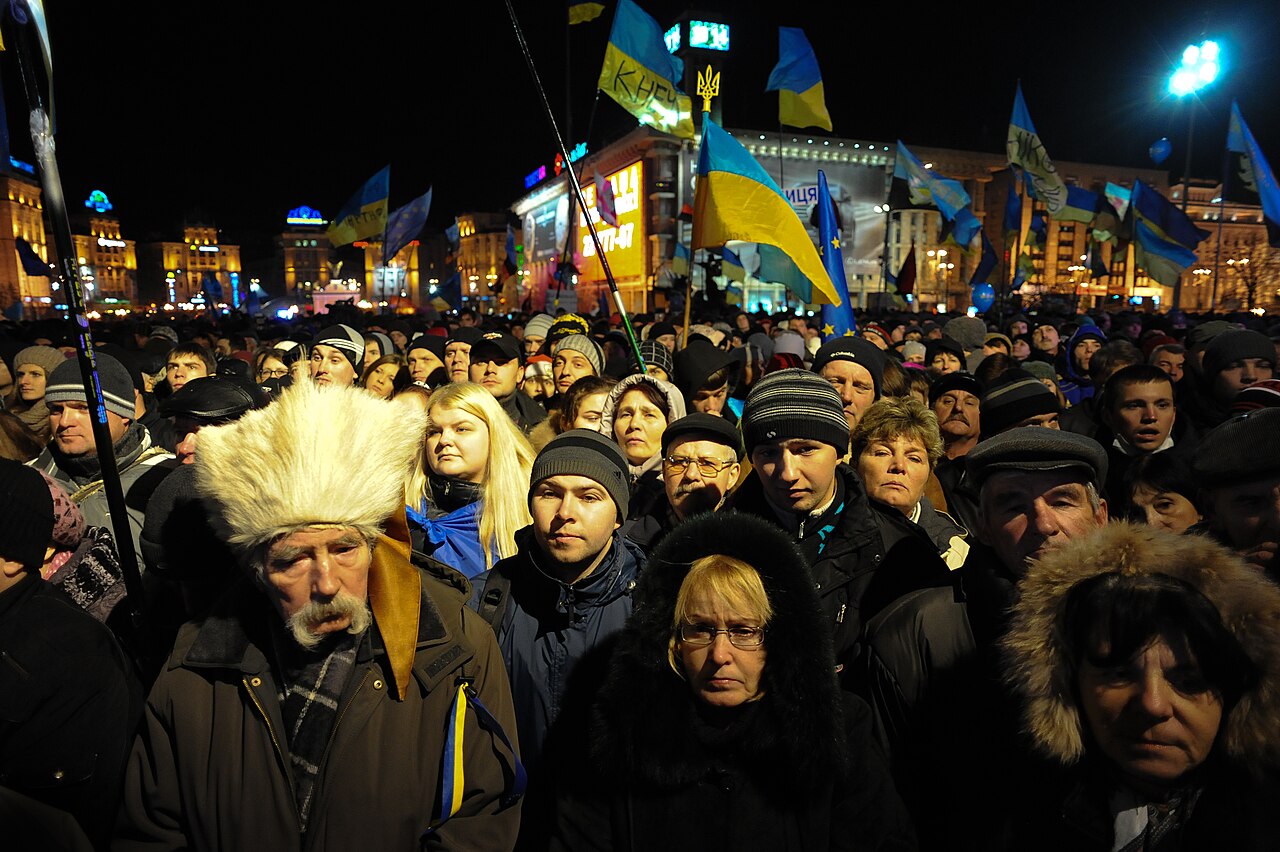
Image 1: Pro-European integration manifestation in Kyiv on 29 November 2013. Photo by Mstyslav Chernov

Introduction

Soon after the Russian invasion of Ukraine, in an earlier post on this blog (Hann 2022), I emphasized the geopolitical and economic interests of the west, especially US corporations. I extended my analysis in 2024 in the Focaal journal itself (Hann 2024a; 2024b), where my article benefited from the critical insights of Denys Gorbach (2024) and Volodymyr Ishchenko (2024).

But political outcomes are also shaped by emotions, moods and personalities. The world has recently witnessed dramatic tensions between the Ukrainian president, Volodymyr Zelensky, and the US president, Donald Trump. Sooner or later the Russian president, Vladimir Putin, will also move to centre stage. These leaders strive simultaneously to mobilize mass sentiment in their respective countries and to win the battle for the moral high ground internationally. While media coverage focuses on the traits of these individuals, anthropologists tend to be more interested in the subjectivities of larger communities.

At present, Trump’s efforts to initiate peace negotiations are widely perceived as a crude capitulation to Putin, sometimes as appeasement. These unprecedented frictions have generated an outpouring of moral outrage and intensified support for the Ukrainian cause in western Europe. The solidarity of the European Community (minus Hungary) and the demonising of Putin follow 30 years of the humiliation of Russia and western hubris after congratulating itself on having won the cold war. The best word to describe the role of Ukraine right now is perhaps hamartia – a “fatal flaw” that leads to the downfall of a tragic hero. I argue that Ukraine is the nationalist hamartia sealing the fate of post-cold war Europe.

Humiliation in Moscow (and elsewhere)

German historian Ute Frevert (2020) has shown that humiliation is an emotion deeply rooted in European society as well as a significant political force. The cold war preserved a semblance of equivalence between the two camps, but the disintegration of the Soviet Union became a humiliation for Russia. Mikhail Gorbachev’s vision of a “common European home” was forgotten as he himself disappeared from the political scene. By the time Putin replaced Boris Yeltsin as president at the end of 1999, the Russian Federation was on its knees both politically and economically. Three former Soviet republics were on course to join NATO, which had already admitted other former satellite states to full membership.

After three years of warfare, humiliation remains a powerful emotion as events unfold. Donald Trump humbles Zelensky at the White House, but he also humiliates his nominal allies in western Europe as they scramble to save the agenda they were dragged into by previous US presidents and to avoid a humiliating defeat for Ukraine.

Hubris in Washington

The obverse of Russia’s humiliation was the sentiment of hubris in the United States, accompanied (as Jeffrey Sachs has repeatedly argued) by a refusal to consider a pluralist geopolitical world order. As Jonathan Haslam (2024) has documented in detail, this hubris began in the 1990s and has continued to shape US foreign policy in the new century. An early flashpoint came in 2008 when the leaders of the US and the UK argued in support of Ukrainian (and Georgian) membership of NATO. Other European members, principally Germany and France, opted to respect Moscow’s emphatic opposition and further enlargement was put on hold. It is important to note that Atlanticist sympathies did not in this period enjoy mass support among Ukrainian voters, who in 2010 elected a president more oriented toward Moscow (Viktor Yanukovych, who was deposed in the course of the Euromaidan revolution of 2013-14).

Russia’s annexation of Crimea and occupation of significant territory in Donbas in 2014 threw a spanner in the works. But throughout the ensuing violence (never effectively curbed by the Minsk agreements, which were transgressed by both sides), the US continued to promote ever closer integration into NATO. Volodymyr Zelensky’s election in 2019 as a “peace president” did not reduce the pressure: the intention remained to yank the whole of Ukraine away from Moscow’s orbit.

Irritation in Brussels

As Russia stabilized under Putin, European leaders too had to decide how to handle the former superpower. With admission to NATO precluded very early on, they had to determine who would be eligible for full membership of the EU and who would be allowed to snuggle up alongside as partners. Under Italian (Romano Prodi) and Portuguese (José Manuel Barroso) leadership, EU diplomats found it much easier to spread liberal messages and support NGOs in Kyiv than in Moscow, where all approaches seemed to generate only obstruction and irritation. Ukraine was granted preferential partner status and Russia consigned to its familiar position of otherness.

This negligence of Russia was short-sighted. It gave Vladimir Putin the perfect excuse to ramp up his repressive regime. Having sought closer ties with the west in the early years of his presidency, successive NATO enlargements were interpreted by Putin as aggression. The mixture of hubris and irritation in the west has distorted politics in Russia, deepened the east-west division of Europe and hindered the eastwards expansion of liberalism in a deeper societal sense.

To be fair, the EU has also experienced considerable irritation in the other direction. It was well illustrated by Angela Merkel when responding to state department official Victoria Nuland’s vulgar criticism of EU diplomacy during the Euromaidan crisis. The EU (and also the UK) may currently feel it has been left in the lurch by the change of course in Washington; but subscription to the Biden principle of “fight to the last Ukrainian” and concomitant emotional solidarities left them with little choice.

Charisma and the moral high ground

In December 2021 Russia stipulated its conditions for resolving the latest escalating crisis. Putin again highlighted the “red line” precluding Ukrainian membership of NATO. But this attempt to enter into negotiations was ignored in the west. Nobody should have been surprised when Putin launched his “special military operation” in February 2022. Western media have not ceased to speak of an “unprovoked invasion” but the long-term structural provocation of NATO expansion could hardly be denied.

Despite winning his presidential mandate as a peace monger, Volodymyr Zelensky soon put all his charisma and media skills in the service of those factions seeking to purge the country of Russian influence and to join not only NATO but also the EU. For large sections of the population, Putin’s invasion served to strengthen a national identification not strongly felt hitherto. His leadership also made an emotional impact on western audiences. A colourful David to Putin’s ugly Goliath, he has appealed to left and right alike. He is a hero to legal scholars who make holy writ out of national sovereignty. And he appeals to idealist enthusiasts of human rights and to students of postcolonialism, who have been taught to see Russia as an empire in urgent need of dismantling. This perspective, which attributes the war entirely to Russian “neoimperialism”, is also popular within western anthropology (Dunn 2022).

Zelensky and the Ukrainian cause have come to enjoy a monopoly of the moral high ground in western Europe. Russia is once again the barbaric other and anyone questioning this narrative is accused of being Putin’s “useful idiot.” This highly emotional mood of moral superiority grows with the uneasy prospect of sordid deals brokered by Trump, in which the ethical causes of freedom and the preservation of human life are contaminated by calculations of the value of Ukraine’s mineral wealth. A deep well of angry moralizing emotion now exists in the UK and the EU, powerful enough to countenance previously inconceivable increases in military spending (Hungary’s Viktor Orbán is the only EU political leader brave enough to question this consensus).

Towards uncivil society in a monoethnic state

A few academics have dared to critique the consensus by showing the political and moral stakes to be more complex. Perhaps the best known is Jeffrey Sachs, who makes a case for the “Finlandization” of Ukraine. However persuasive in cold rational terms, this is incompatible with fierce national pride, which has reached new heights in light of sacrifices on the battlefields. Volodymyr Ishchenko (2023) offers penetrating analyses of Ukraine’s post-Soviet political economy, its regional patterns, and ongoing class struggles in both Ukraine and Russia; but he too perhaps underestimates the importance of emotions. American political scientist Nikolai Petro (2023) has drawn attention to long-term civil society deficits in Ukraine and continuing discrimination against those who wish to hold on to an ancient Russian cultural identity. Does the holy writ of national sovereignty entitle power holders to make a considerable proportion of their population second class citizens by constraining the use they make of their mother tongue?

One significant strand in the nationalizing policies of Zelensky’s government has been to detach eastern Christians from the Moscow patriarchy to which most of them have been affiliated for centuries. Millions of ordinary Orthodox believers have resisted these machinations. They resent having to shift their Christmas celebrations to conform to the foreign, western calendar.

Hamartia in the common European home

The nationalist objective is to force 40 million Ukrainians into a homogeneous container, as different as possible from the equivalent Russian container. This kind of homogeneity was the aspiration of 19th-century nation builders. It is hardly compatible with democratic flourishing in the 2020s.

Ukraine is the hamartia of post-cold war Europe. Whatever the eventual territorial compromises, this war has been a monstrous victory for nationalism, while cementing a modified east-west divide. It is tragic to observe western European leaders so caught up in this mood that they are prepared to undermine their own welfare states in order to produce more weapons and prolong violence in a remote location about which they know very little.

How many more east Slavs have to die on both sides? In the most optimistic scenario, it will take a very long time before the Ukrainian state qualifies for the EU. Is it not possible to return to the vision of Gorbachev and negotiate new pathways to a truly unified Europe, one that would allow military spending everywhere to be reduced?

An earlier version of this post was briefly published on 5th March by The Conversation. I thank Jonathan Este, Senior International Affairs Editor at The Conversation UK, for his help in shortening my original draft and changing the style to make it more accessible; of course, I alone am responsible for the final text. Jonathan was also helpful in locating some of the hyperlinks. He is not to blame for the fact that his more senior editors pulled the piece within hours.


Chris Hann is Emeritus Director of the Max Planck Institute for Social Anthropology and a Former Fellow of Corpus Christi College, Cambridge.


References

Dunn, Elizabeth Cullen. 2022. “When Western Anti-Imperialism Supports Imperialism.” FocaalBlog, 3 March. https://www.focaalblog.com/2022/03/03/elizabeth-cullen-dunn-when-western-anti-imperialism-supports-imperialism/

Frevert, Ute. 2020. The Politics of Humiliation. Oxford: Oxford University Press.

Gorbach, Denys. 2024. ‘Is civilizational primordialism any better than nationalist primordialism?’ Focaal 98: 114-116.

Hann, Chris. 2022. “The Agony of Ukraine.” FocaalBlog, 11 March. https://www.focaalblog.com/2022/03/11/chris-hann-the-agony-of-ukraine/

Hann, Chris. 2024a. ‘The proxy war in Ukraine. History, political economy, and representations’. Focaal 98: 100-109.

Hann, Chris. 2024b. ‘Rejoinder’. Focaal 98: 117-118.

Haslam, Jonathan. 2024. Hubris. The Origins of Russia’s War against Ukraine. London: Bloomsbury Publishing.

Ishchenko, Volodymyr. 2023. Towards the Abyss. Ukraine from Maidan to War. London: Verso.

Ishchenko, Volodymyr. 2024. ‘Class, values, and revolutions in the Russia-Ukraine war’. Focaal 98: 110-113.

Petro, Nikolai N. 2023. The Tragedy of Ukraine: What Classical Greek Tragedy Can Teach Us About Conflict Resolution. Boston: de Gruyter.


Cite as: Hann, Chris 2025. “Humiliation, Hubris and Hamartia: the emotional history of the Ukraine war” Focaalblog 13 March. https://www.focaalblog.com/2025/03/13/chris-hann-humiliation-hubris-and-hamartia-the-emotional-history-of-the-ukraine-war/

Julija Kekstaite, Soline Ballet, and Ava Zevop: Fabricating political imagination in contemporary art ‘peripheries’. Postcolonial and postsocialist encounters in Slovenia and Lithuania

The Eastern edges of the European Union stand as landscapes of transformation and socioeconomic and cultural flux, situated between shifting empires and layered histories. Their in-betweenness mirrors a duality of political imaginaries: remnants of collapsed past utopias colliding with the alluring yet hollow promises of contemporary global capitalism. These places also inhabit the peripheries of the contemporary art market, providing an infrastructure that feeds into neoliberal logics and fosters opportunities for some while relying on the precarity and exploitation of others (Malik, 2019). Yet, it is precisely this peripheral, liminal position that enables the Eastern edges of the European Union to cultivate specific types of localised knowledge, dialogue, and conversations that would resonate differently if held at the centre of the capitalist world system. Thus, in this blog post, we assess the fleeting potentiality of thinking ‘between the Posts’ (Chari & Verdery, 2009)—that is, examining both colonial and socialist histories–in possibly providing a richer, hybrid framework not only for intersectional critique but also for new political imaginations and coalitions to emerge.

We want to illustrate this with reference to the postcolonial and postsocialist encounters we came across at the Kaunas Biennial, Long-Distance Friendships, and the Ljubljana Biennial From the Void Came Gifts of the Cosmos, which took place in 2023. While in the fast-paced world of art critique with its immediate reporting, looking back at past cultural events a year or so later might seem unorthodox, we see value in slower forms of reflection.

Attending the two events, we were curious to see how the two art biennials realised their ambition to invite postsocialist subjects to reflect on coloniality. What are the benefits when postcolonial conversations are situated in geographical settings that have different histories of capitalism and anti-capitalism than world-leading biennials such as Venice? This text is a reflection of our ambivalent and interwoven positionalities spanning research, art, and activism in ‘Eastern’ and ‘Western’ Europe, and our life and work mobilities between Belgium, Slovenia, and Lithuania.

Image 1: The authors of this blog at the Cukrarna Gallery, Ljubljana (Julija Kekstaite, 4 January 2024)

We grappled with the discourses emerging in the frameworks of the biennials as anthropological artefacts, pondering how they travel, morph, germinate, and fade out. What are their political economy, impact, and historical reference points in a world region outside the capitalist bloc during the Cold War, for example? Who are the artists invited to work with and articulate these reference points, and under which conditions? For this project we took research trips to Kaunas and Ljubljana and conducted interviews with institutional representatives, curators, and artists.

From the void // came gifts

With the notion that ‘from the void came gifts of the cosmos,’ the artistic director, Ghanaian artist Ibrahim Mahama, and a group of curators were invited by the MGLC (Mednarodni grafični likovni center;transl: International Centre of Graphic Arts) for the 35th Graphic Biennial of Ljubljana (founded in 1955), to initiate an exchange among the works of 44 artists and 11 historical artworks from the biennial’s archives. The historical ties post-independence Ghana and former Yugoslavia as member-states of the Non-Aligned Movement (NAM, founded in 1961 as a forum of countries not aligned with either of the two major power blocs of the Cold War) were seen as legacies to build on for new solidarities between Slovenia (and Eastern Europe at large) and the Global South.

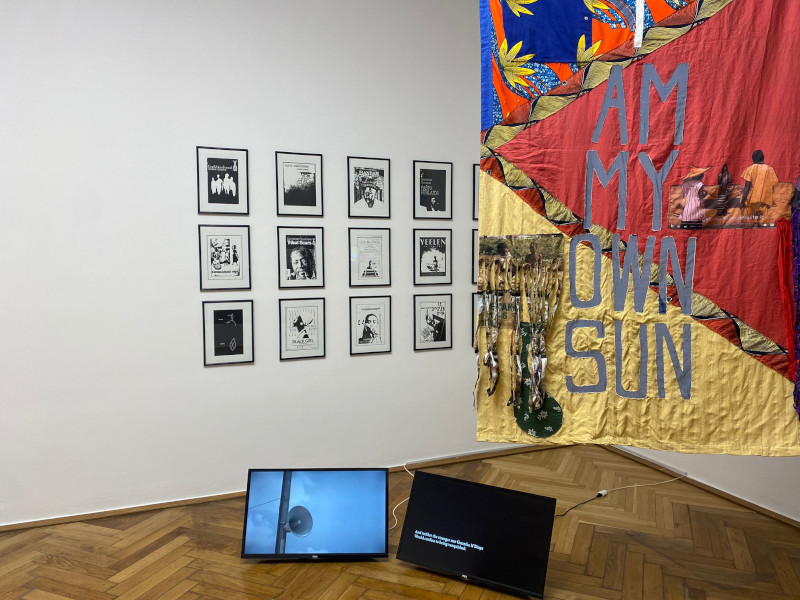
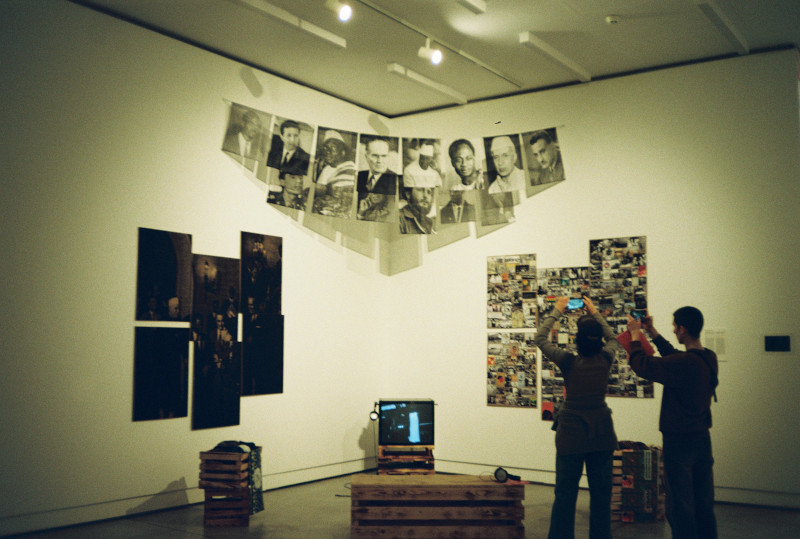
Image 2: I Am My Own Sun, School of Mutants, installation (2023) at the 35th Ljubljana Biennale of Graphic Arts (Soline Ballet, 5 January 2024)

Ibrahim and the curators took the expansive notion of ‘The Void’ as an uncontrolled space with inherent radical potential for equality as the point of departure for their work. Under circumstances where we need more conceptual tools to grasp emerging alliances at the interstices of global powers and common forms of dispossession—such as those related to the environment—the biennial’s departure from ‘The Void’ proved stimulating. Kwasi Ohene-Ayeh, a curator based in Kumasi, Ghana, explained in an interview how the notion of ‘The Void’ can unveil the promises and failures of post-independence politics and transnational friendships, such as the Non-Aligned Movement.

To transcend hegemonic binary logics and think through “universality from the periphery” means, in Kwasi’s words, “to take the poison, and out of it, generate something progressive”. The curators embraced the void as a means of reconciling with and affirming the role of the arts in constructing new imaginaries and alliances between the Global South and Global East beyond the monopoly of Western power (Ohene-Ayeh et al. 2023). With this, they echoed Ghanaian artist-intellectual kąrî’kạchä seid’ou’s vision of transforming art from commodity to gift as a way to challenge art’s capitalist underpinnings and to foster alternative forms of exchange.

An important aspect of the 2023 exhibition was therefore a reflection on the history of the Graphic Biennial as both a generator and a product of the Socialist Federal Republic of Yugoslavia’s cultural diplomacy. While the Ljubljana biennial convincingly linked post-independence, postcolonial, and socialist artworks and global alliances of the Cold War period to the question how political projects can fill ‘The Void’, it also left a void in addressing how artists can liberate themselves from the neoliberal regimes of contemporary art to connect with the material conditions of local struggles against rapid neoliberalisation. An immediate display of this project came from the local grassroots art scene in Ljubljana as the local Krater Collective contributed an artwork that showcased the negotiations over the material terms and conditions of the Graphic Biennial.

A place we call home”

The Ljubljana biennale showed many international artists, particularly from the Global South, but it is the participation of Tjaša Rener which unearths the unorthodox and less mediated mobilities from South-Eastern Europe to the Global South. Rener is a Slovenian-born artist who has been living in Ghana for over a decade. For the exhibition venue at Cukrarna she had prepared an installation called A Place we Call Home, which juxtaposed her own positionality with that of another Slovenian-born woman named Metoda. While both the artist as well as her subject are presented as outliers to the more common routes of the global mobility regime, their personal routes were four decades apart. In those four decades, the political system of their place of origin changed. For socialist Yugoslavia, which had no prior tradition of international education, cooperation with socialist countries in Africa brought an influx of international students to its nascent socialist education system (Dugonjic-Rodwin & Mladenovic, 2023). One of them was Metoda’s now deceased husband, who came to Yugoslavia as a student on the NAM’s programme of bilateral collaborations and with whom Metoda moved to Accra in 1974. A place she has made her home.

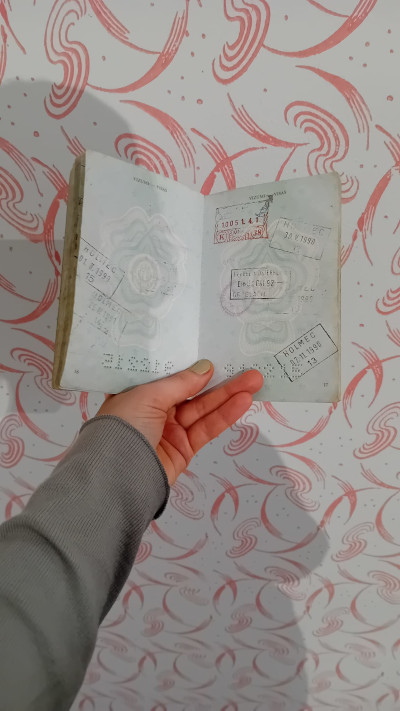
Metoda’s house in Accra is the central motif of Rener’s work for the Graphical Biennale. The installation combines archival photographs, historical objects, and a painting to evoke both Metoda’s home in Accra, memories of 1980s Slovenia, and the artist’s own childhood home, her mother’s house. In the corner, an old radio is playing excerpts from interview with Metoda, capturing the gradual, but enduring erasure she faced as socialist Yugoslavia collapsed and she was in Ghana as a citizen of a nation that was no more, while Ghana’s digitalization of national registers made it difficult to access her administrative and legal documents and rights. The artist compares Metoda’s experience with that of the so-called ‘Erased” in Slovenia, residents mainly from states of former Yugoslavia and of ethnic minority status with similar experiences.

Image 3: Yugoslav passport of Rener’s mother was one of the exhibited items in the installation A place we call home (Ava Zevop, 4 January 2024

The artwork compels us to think through complex mobilities and modes of identity construction of postsocialist subjects in a postcolonial space, in which the artist and Metoda interact through a shared language, the debris of historical ties and recent attention to relations between socialist Eastern Europe and postcolonial nations. While it is tempting to read non-alignment –- both in the work of Rener, as well as the larger framework of the biennial – as re-affirming the nation state as a point of reference and belonging, another reading highlights its internationalism and the internationalist outlook it offered to citizens of socialist Yugoslavia and others (Dugonjic-Rodwin & Mladenovic, 2023).

The artist evokes a gendered sensibility to read the historical (diplomatic) ties between former socialist and post-colonial countries, while using her own positionality between Ghana and Slovenia as a lens to explore the multiple articulations of identity and belonging, race and class, and the changing mobility regimes under non-alignment and neoliberal capitalism.

Fabricating resistance between the posts

The Kaunas Biennial centred on personal histories, relationships, and their potential. By bringing together artists from Lithuania, the African continent, and beyond—many of whom created works on the event site—the curators facilitated a space not only for an exhibition but also for collective thought and work. The main exhibition venue, a modernist post office building in Kaunas, served as both a space where artists created works on site and a nod to the historical ties of communication and exchange among countries under former Soviet and colonial rule, as well as present and possible future entanglements.

Often, the contemporary art scene in the Baltic states has adopted a Western postcolonial framework that reproduces the binary coloniser/colonised relationship by portraying itself in a victim role vis-à-vis Russia as a colonial empire. While this perspective was suitable for a certain period—especially when national liberation and independence were the primary frameworks available to resist imperialist domination—such readings have run their course, overlooking these spaces’ present-day relatedness to global capitalist infrastructures of domination and cultural exploitation. Thus, it is refreshing to see a critique that highlights the continuities between postcolonial and post-socialist conditions, where ‘post’ hints not only at a space for correspondence but also at a ‘critical standpoint’ recognising divergent and overlapping experiences and struggles (Chari and Verdery, 2019).

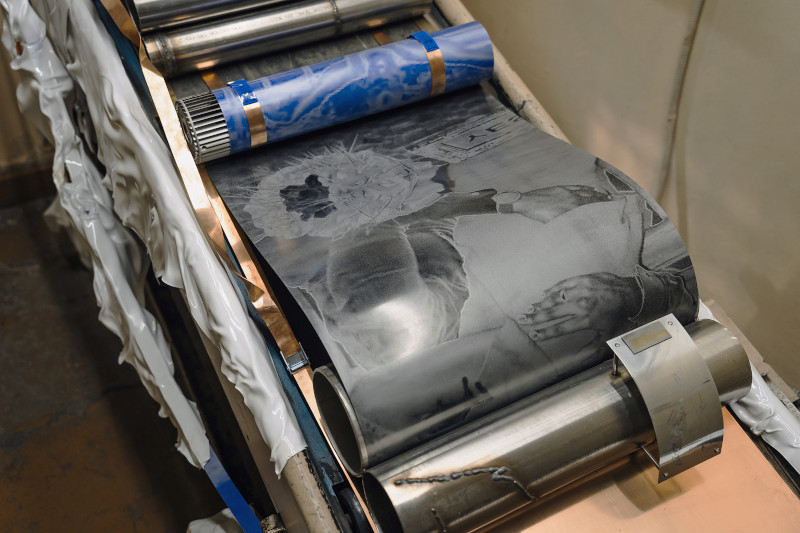
Images 4: Body of an Image, Anastasia Sosunova, 14th Kaunas Biennial (Martynas Plepys, 2023)
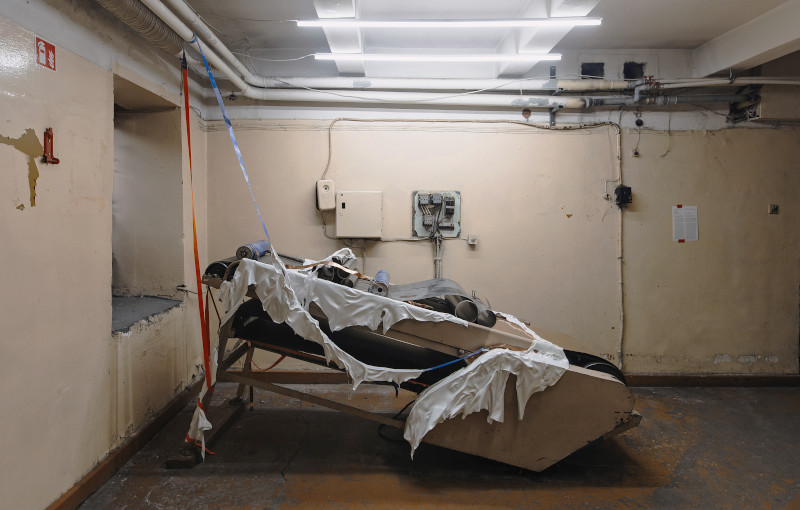
Images 5: Body of an Image, Anastasia Sosunova, 14th Kaunas Biennial (Martynas Plepys, 2023)

Anastasia Sosunova’s work epitomises an affirmative critique of the shared global condition without obscuring historical and geopolitical differences. Reflecting on the curation of the bienniale, Sosunova notes, “what I liked about the Kaunas Biennial or Riga’s Survival Kit [authors comment; the third biennial taking place in parallel to Kaunas and Ljubljana] is that their shared theme referred to this weird and complex ‘everywhere at the same time’ kind of context of the globalised world, while acknowledging that every place is like ‘nowhere else’”. Their installation, Body of an Image, conceived on-site during one of the guided tours organised by the curators, drew on both archival material and fictional tools to explore the ambivalence of postcolonial and postsocialist encounters and the productive frictions they can yield. The piece drew inspiration from and referenced Vytautas Andziulis, who dug out his basement to run a secret, oppositional underground publishing house during Soviet times. Adziulis constructed a printing press from discarded Soviet machinery parts to primarily print Christian and anti-Soviet material. He dubbed it Hell’s Machine. Sosunova, in contrast, constructs their own fictional resistance machine from scrap metal pieces devoid of any nationalist and religious sentiment, instead serving as a bridge between two contemporary resistance outlets: the 1990s Lithuanian gay magazine Naglis and Uganda’s contemporary queer magazine Bombastic. Though separated by time and space, the two magazines share the underground resistance of the gay and queer movement(s). In conversation with us, Sosunova reflects on how creating this fictional machine of resistance by linking it to queer oppression allowed them to reshape history as “a friendship concretised through the postcolonial liberation”. So, by interweaving nods to similar and contradictory expressions of resistance and bringing in elements of imagination, Sosunova’s work makes us question whether we can align our distant yet connected struggles while not only acknowledging differences in historical baggage but even drawing inspiration from that to remould it into something (a)new.

Where do we go from here?

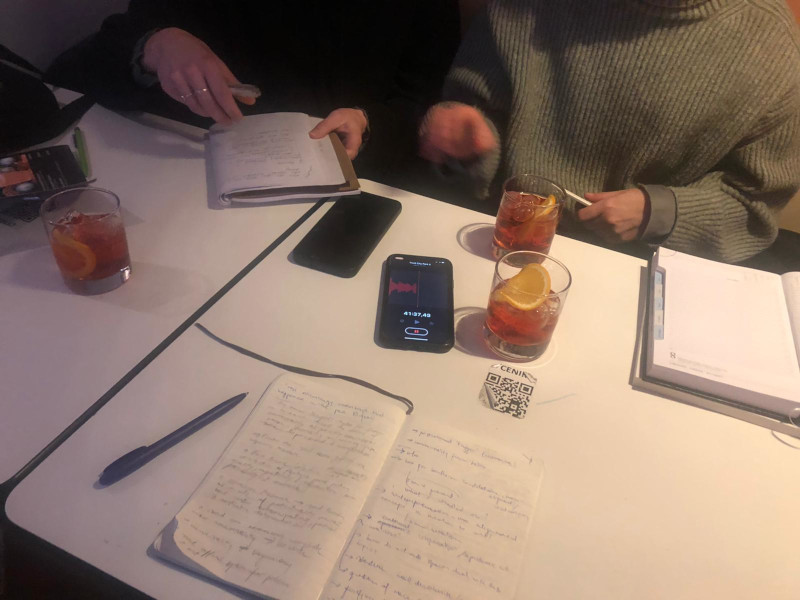
As we sipped on overpriced Negronis in the centre of Ljubljana after visiting the biennial, we had a strong sense that the edges of the capitalist world system have moved further East.Yet, the artworks at both biennials also highlight the continued power of peripheral political positions in Eastern Europe; those who navigate intersections of postcolonial and postsocialist transformations to elicit new political ideas and projects. However, two challenges remain. On the one hand, how to make those ideas actionable beyond the microcosm of the contemporary art field? And, on the other hand, how to balance the poignant quest for solidarity with productive (self)critique?

Image 6: The authors discussing their fieldwork in a Ljubljana bar (Julija Kekstaite, 7 January 2024)

In what concerns the first challenge, the tepid response from the Eastern European art establishment, with some notable exceptions, to ongoing genocides in Myanmar, Palestine, Sudan, and elsewhere shows a failure to move from aesthetics and poetics to political praxis. As for the latter challenge, future research on similar manifestations of the relational decolonial gaze in contemporary art must be wary of not painting postcolonial and postsocialist encounters in these contexts too much as ‘events’ (Badiou, 2005), radically new occurrences that can interrupt the status quo but are detached from any historical, socio-political or economic positioning. When yet another artist from Africa or the Middle East, whose works one gets to see in European galleries at the exhibitions on decolonial futures, again fails to obtain their travel visa we should be reminded that people from the Global East and the Global South are still differently situated within the structures of racial capitalism as well unequally subjected to the violence of the global mobility regime (Van Houtum 2010).

Nonetheless, what we tried to argue here through the examples of Kaunas and Ljubljana biennials is that bringing into dialogue postcolonial and postsocialist subjects and histories seem to excavate a space for a relational decolonial gaze that can offer intersectional and multiple critiques. Instead of binary readings of white and black, coloniser and colonised, resistance or existence, such a gaze embraces the ambivalence and messiness of intersecting oppressions and multiple resistances beyond the state within the global postcolonial condition. It can cultivate new threads of solidarity with the Global South, mindful of avoiding alliances that echo the relationships of imperialism and capitalist paternalism during the Cold War.

In times when alternatives seem to have vanished (Piškur, 2024), emphasising the potential of such a relational decolonial gaze for the creation of conditions and coalitions for political imagination is especially tempting, but is ‘at best gestural if not counterproductive’ (Malik 2019) if not coupled with a reflection on art infrastructures themselves.


Julija Kekstaite is a PhD researcher in Sociology at Ghent University, Belgium, and a researcher-activist with the grassroots group Sienos Grupė in Lithuania. Her interests encompass various strands of critical theory, focusing on border violence and resistance in the post-Soviet space.

Ava Zevop was born in Ljubljana, Yugoslavia and currently lives in Brussels, Belgium. She is a visual and media artist, and an independent researcher. In her practice, she concerns herself with technological degrowth from the position of intersectional struggle, and global justice.

Soline Ballet is a PhD researcher in Social Work and Social Pedagogy at Ghent University, Belgium focusing on social work initiatives with illegalised migrants. Their interests include solidarity, migration management and governance, and power/knowledge practices.


References

Badiou, A. (2005). Being and event (O. Feltham, Trans.). Continuum. (Original work published 1988)

Chari, S., & Verdery, K. (2009). Thinking between the posts: Postcolonialism, postsocialism, and ethnography after the Cold War. Comparative studies in society and history, 51(1), 6-34.

Dražil, G. (2023). Mohammad Omar Khalil and Some Highlights from the History of the Ljubljana Biennale of Graphic Arts. In Ohene-Ayeh, K., Haizel, K., Ankrah, P. N. O. & Kudije, S. (Eds.) (2023). From the void came gifts of the cosmos: a reader. The 35th Ljubljana Biennale of Graphic Arts. International Centre of Graphic Arts (MGLC)

Dugonjic-Rodwin, L., & Mladenovic, I. (2023). Transnational Educational Strategies during the Cold War: Students from the Global South in Socialist Yugoslavia, 1961-91. Socialist Yugoslavia and the Non-Aligned Movement, 331-360.

Ohene-Ayeh, K., Haizel, K., Ankrah, P. N. O. & Kudije, S. (Eds.) (2023). From the void came gifts of the cosmos: a reader. The 35th Ljubljana Biennale of Graphic Arts. International Centre of Graphic Arts (MGLC)

Malik, S (2019). Contemporary Art, Neoliberal Enforcer. Youtube https://www.youtube.com/watch?v=ivQjEBaJh5g. Accessed 19, October 2024.

Piškur, B. (2024). Troubles with the East(s). L’internazionale Online.https://archive-2014-2024.internationaleonline.org/opinions/1123_troubles_with_the_easts/

Povinelli, E. A. (2012). After the last man: Images and ethics of becoming otherwise. E-flux journal35.

Van Houtum, H. (2013). Human blacklisting: The global apartheid of the EU’s external border regime. In Geographies of privilege (pp. 161-187). Routledge.


Cite as: Kekstaite, Julija, Ballet, Soline, and Zevop, Ava 2024. “Fabricating political imagination in contemporary art ‘peripheries’. Postcolonial and postsocialist encounters in Slovenia and Lithuania” Focaalblog 3 December. https://www.focaalblog.com/2024/12/03/julija-kekstaite-soline-ballet-and-ava-zevop-fabricating-political-imagination-in-contemporary-art-peripheries-postcolonial-and-postsocialist-encounters-in-slovenia-and-lithuania/