Tag Archives: care

Maja Sisnowski: Gut Feeling, Adrenaline and Fried Onions: Sensing Aggression in German Health and Welfare Services

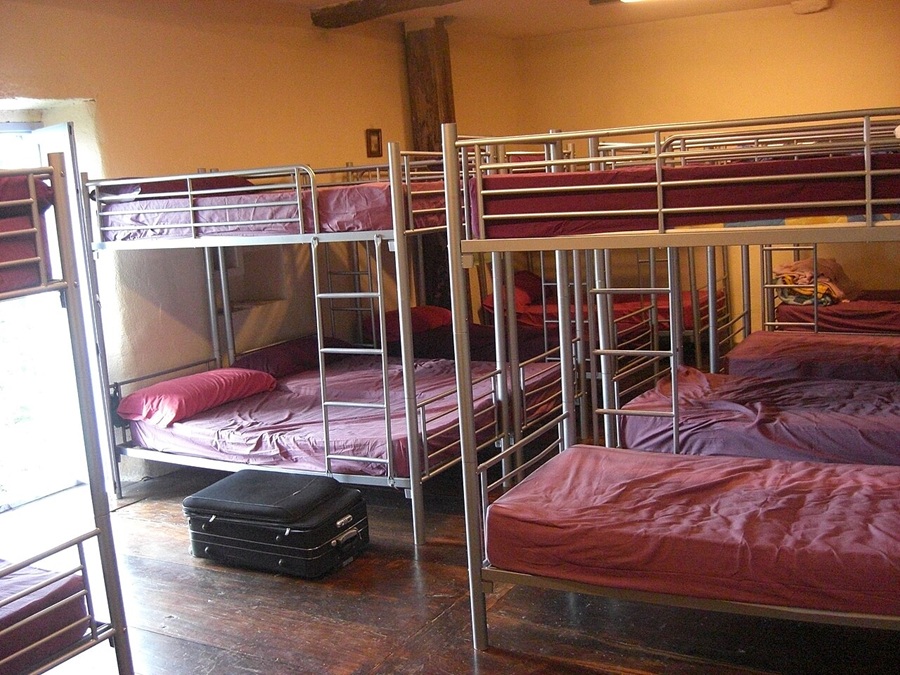
Image 1: Bunk beds in shared accommodation. Photo by Luistxo

“I don’t know how to explain it”, Caro told me in an interview, “but you develop a sense [Gespür] for when you can keep standing in front of the person, because you know: Okay, they are going to shout at you for ten minutes, and then they have used the valve that they needed. And then there are situations where you feel: Okay, I better take a step back, because it might not stay like that.”

Caro was working in one of several emergency shelters in which I observed, participated in daily tasks, and interviewed staff members as part of an ethnographic study on de-escalation practices in German health and welfare services. De-escalation is a common answer in health and welfare facilities to the question of how staff should react to aggressive behavior in a professional setting. My research project asks how de-escalation is promoted as a workplace safety measure, how it is learned and taught in de-escalation training, and how it is practiced on the ground – specifically in overnight emergency shelters for unhoused people in Berlin.

A remarkable aspect of de-escalation, especially in the context of health and welfare settings, is that it approaches aggression at a conflux of care and security practices. Many of my interlocutors, staff members in shelters and de-escalation trainers alike, understood aggression in health and welfare contexts as both potentially dangerous and as a stress response in need of caring intervention. This understanding appears even in the minute sensitivities, such as the awareness of interpersonal space, that Caro brought to situations with palpable tension: she considered both the potential needs of the other person to express frustration and the risk of the argument turning physical. For Caro as for other staff members, sensing aggression in the shelter environment was an integral part of their job. At the same time, their daily work was not in fact defined as security work, but revolved around issues such as organizing food, clothing, and access to places to sleep. In this blog post, I trace how aggression is sensed in the shelters to show how the sensing of in/security is entangled with institutional care and welfare provision.

Security, following Laufenberg and Thompson (2022) and the long line of feminist, anti-racist and abolitionist thinkers they draw on, is a powerful and expansive formation of governance, deeply intertwined with capitalist modes of producing crisis and insecurity. A critical analysis of security asks what versions of security and safety are being produced, whose safety is prioritized, and who is constructed as a threat. Such questions are integral to studying how aggression is sensed and encountered, given the uneven attribution of aggression in conjunction with the production of gendered, racialized, classed and dis/abled difference (Longino 2013; Metzl 2011; Rollins 2021; Chen 2023). In the context of health and social welfare services, the production of difference in relation to aggression is also enmeshed with the apprehension and management of aggression in institutional spaces, especially those designated for particular populations, such as homeless people. Tracing how emergency shelter staff senses aggression can help articulate how aggression is present in institutional spaces, and how it is apprehended in caring and securitizing registers.

A Situated Sensorium for Aggression

The shelters in my research formed part of a perpetually precarious and semi-professional emergency service meant to protect people from cold-related harm at night. They were usually sought out by people who could not access housing and were excluded from or rendered precarious within Germany’s regular social support system. Winter emergency shelters require people to eat and sleep in shared, crowded and regulated spaces that are usually only open during the winter months and during the night. Responsible for enforcing the rules of shelter space, shelter staff were also tasked with keeping the space “free of violence”. This entailed intervening in case of conflict and asking people who were violent to leave the premises. In many shelters, this was done in cooperation with externally hired security staff. In this context, many staff members told me that they were attentive to loud voices to detect a potentially escalating situation. Susanne shared:

When I sit in the office for example, or also at night when I sleep there, then I always listen a lot to what is happening. So I hear when people are having a conversation, and I really pay attention to whether someone is raising their voice, and then I always have to wait whether that is part of the conversation, because someone is telling a story, or whether that is because a conflict is happening.

Aggression, in other words, was not simply heard, it was actively listened for. This active sensing was not practiced in isolation, but in a particular spatial arrangement and within an institutional context where staff could not be everywhere all at once yet bore responsibility to intervene when someone showed aggressive behavior. Sensing aggression, this example shows, is a matter of practice, to be distinguished from the idea of sensing as a passive perception of a given object which comes to the senses. While people in my research certainly had different sensitivities and attunements to aggression, there were commonalities as well, shaped by institutional roles– one could call it a situated sensorium. Notably, as with the sensitivity for raised voices, this sensing of aggression amidst everyday interactions such as a loud conversation also constituted a form of low-tech surveillance in the shelters.

Sensing Stress, Constituting Risk

A situated sensorium encompasses multiple sensitivities, for sounds, touch, embodied states, and institutional routines and atmospheres. Another staff member, when I asked if escalating situations could be sensed beforehand, explained:

Yes, when an argument blows up a bit, then you can hear from the kitchen that it’s somehow getting louder in the eating area, then yes. Of course adrenaline enters into it as well: “Oh God, I’ll go check what is going on there.”

As “adrenaline enters into it”, this staff member’s description introduces a sense of her own embodied response. The sensorial repertoire of sensing aggression in the shelter importantly included such interoceptive sensitivities. Adrenaline was one shorthand way of describing physical sensations of stress (Roberts 2024) to be sensed in oneself, but potentially also in others. Interestingly, adrenaline itself is given agency in this description, causing an impulse to go and check out what the noise is about. Several staff members explained how being aware of their own stress was important for them to be effective de-escalators, and de-escalation training would usually sensitize participants to the signs that they themselves were under stress.

But even more central to staff members was the stress of others. They often described having an awareness for people’s moods as well as for more general atmospheres. They sensed risks of aggression in long waiting times in cold weather, cramped spaces, interrupted sleep, and the small violences of what Goffman has aptly called “batch living” (Goffman 1961 [2022], 10) remarking that certain experiences would make them angry and impatient, too. This sensitivity, I would argue, renders aggression palpable as material-semiotically constituted risk in the institutional space of the shelters, not simply monitored and managed, but also related to vital needs such as sleep, warmth and dignity.

Dis/orienting Gut Feelings

Another register of interoceptive sensing within staff’s situated sensorium, and one I encountered frequently in my research, was gut feeling. Like adrenaline and stress, gut feeling presents as an internal sensation, metaphorically sitting in the pit of the stomach. Akin to the sense [Gespür] that Caro described, gut feeling and related notions were used by research participants to describe modes of knowing that, being grounded in experience and context, resisted articulation in general terms. In the realm of police work, the use of neurobiological discourse (Keesman 2022), as well as reliance on experiential knowledge (Abdul-Rahman et al. 2020, 34) has been critically analyzed as to how it can function as a refusal of articulation and accountability (see also Elbek 2025). In my research, where staff had markedly different mandates and powers, gut feeling served to denote a sense of being oriented and secure in one’s fast and intuitive assessments. In this vein, for example, several staff members explained that they would tell new colleagues to rely on and follow their gut feeling, especially to sense whether a situation was dangerous.

For me as a researcher, gut feeling became especially tangible when I noticed my own senses of in/security morph and shift throughout my research. This happened for example when I moved from a small shelter where I had previously worked to larger shelters with more security staff, or when I noticed myself grow impractically sensitive to the risk of aggression after participant observation in a great number of de-escalation training sessions. Having prior work experience in a shelter, these small disorientations made me aware of how much I did rely in practice on a well-working gut feeling, but they also gave me an embodied notion of how senses of in/security are grounded in specific social arrangements.

Entanglements of Care and Security

Importantly, within the context of the shelter environment, as well as in de-escalation training, I also came across registers of sensing in/security that were not oriented towards sensing danger. When I asked Britta about whether escalating situations announced themselves beforehand, our conversation turned to food:

When [people] know good food is coming, they are looking forward to it. But when it’s announced that there is rice…or couscous…! (Laughter). We are not friends anymore then. […] The first time in my life, I was homesick because I was on a trip and the food was bad […] One time, I was frying onions for dinner, really a lot of onions. And onions always smell so incredibly delicious. And then, [X] came in, and said: (sniffing the air) Home, sweet Home. Polska. Or something like it, he signaled that it smells like home […] And that’s a good feeling, because I think everyone knows this, some smells are just familiar and the smell of fried onions brings humanity together. (Laughter)

Throughout my research, I came not only across sensitivities towards danger and risk, but also encountered sensitivities to smells, tastes, or touch, that feel safe or give a sense of home, connection or pleasure. Including such sensitivities in a sensorium for in/security sheds light on entanglements of care and security while also opening possibilities of thinking security beyond efforts of securitization and surveillance. Laufenberg and Thompson describe how abolitionist and care-ethical criticisms of contemporary security regimes attempt to redefine security: “In this vein, not more carceral security – and hence more police, more punishment, more surveillance and more sealing of borders – is the appropriate answer to (social) insecurity, but more care – and thus more resonance, connection, and responsivity, more care, responsibility and solidarity.” (Laufenberg and Thompson 2022, 32, my translation).

What, against this backdrop, does it mean to grow sensitive to loud voices, to prize gut feeling, sense adrenaline, and smell the fried onions?

For one, attending to staff’s situated sensorium for aggression in the shelters highlights the ambivalences and confluences of care and security within the asymmetrical power relations of institutional encounters. It shows subtle ways in which policing and securitization is present in spaces of care or welfare provision. At the same time, I suggest, this sensorium can be read as reaching – without being able to transcend its institutional context – for ways of feeling safe beyond carceral security.


Maja Sisnowski is a PhD candidate with the Health, Care and the Body research group at the University of Amsterdam. Her research interests move in the fields of feminist science and technology studies, critical disability studies, care and security.


References

Abdul-Rahman, Laila; Espín Grau, Hannah; Klaus, Luise and Tobias Singelnstein. 2020: Rassismus und Diskriminierungserfahrungen im Kontext polizeilicher Gewaltausübung. Zweiter Zwischenbericht zum Forschungsprojekt „Körperverletzung im Amt durch Poli-zeibeamt*innen“ (KviAPol). Ruhr-Universität Bochum, 11.11.2020, https://kviapol.rub.de.

Chen, Mel Y. 2023. Intoxicated: Race, Disability, and Chemical Intimacy across Empire. Anima: Critical Race Studies Otherwise. Durham: Duke University Press. doi:10.1215/9781478027447.

Elbek, Laust Lund. 2025. “Sniffing Out Trouble? What and How The ‘Police Nose’ Smells.” FocaalBlog, December 24 https://www.focaalblog.com/2025/12/24/laust-lund-elbek-sniffing-out-trouble-what-and-how-the-police-nose-smells/

Goffman, Erving. 1961 [2022]. Asylums: Essays on the Social Situation of Mental Patients and Other Inmates. Penguin Modern Classics. Penguin Books.

Keesman, Laura Danique. 2022. “Primordial Brains and Bodies: How Neurobiological Discourses Shape Policing Experiences.” Body & Society 28 (4): 80–105. doi:10.1177/1357034X221134440.

Laufenberg, Mike, and Vanessa Eileen Thompson, eds. 2022. Sicherheit: rassismuskritische und feministische Beiträge. 1. Auflage. Forum Frauen- und Geschlechterforschung, Band 49. Münster: Westfälisches Dampfboot.

Longino, Helen E. 2013. Studying Human Behavior: How Scientists Investigate Aggression and Sexuality. Chicago: The University of Chicago Press.

Metzl, Jonathan Michel. 2011. The Protest Psychosis: How Schizophrenia Became a Black Disease. Boston, Mass: Beacon.

Roberts, Celia. 2024. “Adrenaline.” In Hormonal Theory: A Rebellious Glossary, edited by Andrea Ford, Roslyn Malcom, Sonja Erikainen, Lisa Raeder, and Celia Roberts, 15–23. Bloomsbury UK.

Rollins, Oliver. 2021. Conviction: The Making and Unmaking of the Violent Brain. Stanford, California: Stanford University Press.


Cite as: Sisnowski, M. 2025. “Gut Feeling, Adrenaline and Fried Onions: Sensing Aggression in German Health and Welfare Services” Focaalblog January 24. https://www.focaalblog.com/2026/01/23/maja-sisnowski-gut-feeling-adrenaline-and-fried-onions-sensing-aggression-in-german-health-and-welfare-services/
Susana Durão and Tilmann Heil: Care, Cordiality, and Control. Multisensorial Encounters with More-than-Security in Urban Brazil

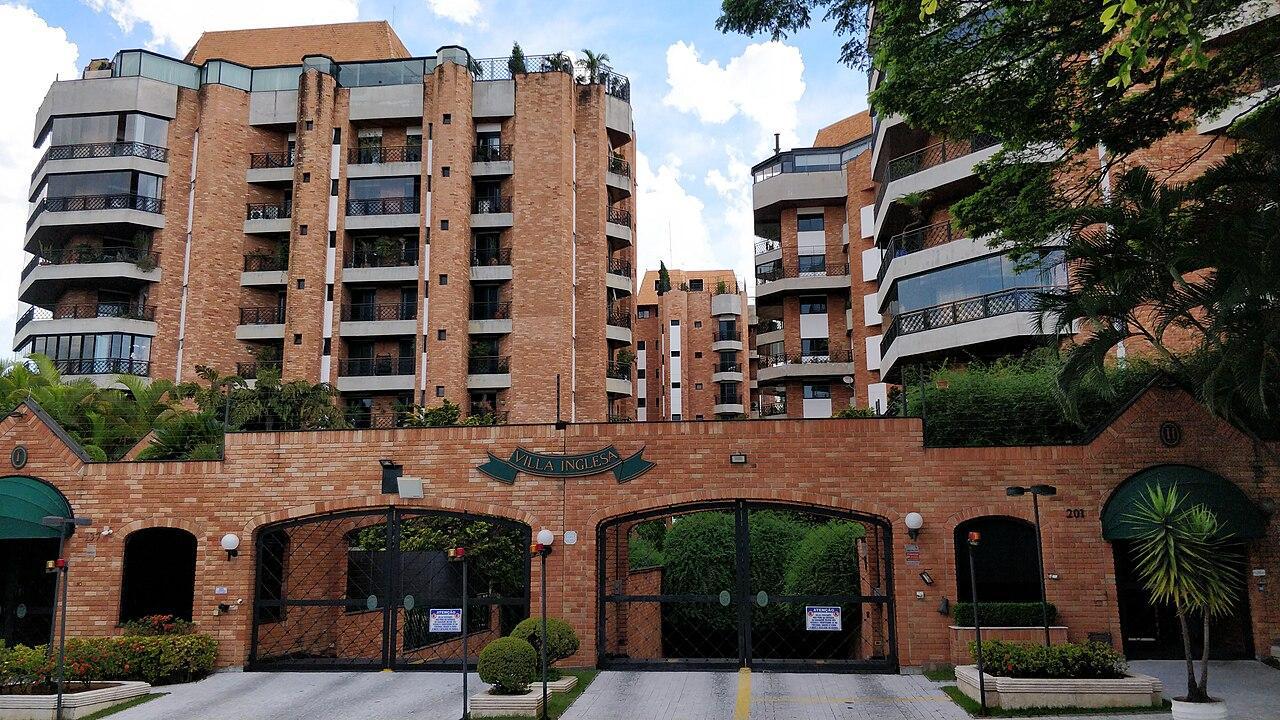
Image 1: Gated community ‘Vila Inglesa’ in São Paolo. Photo by Cornelius Kibelka

In urban Brazil, portarias–entry halls and porters lodges–and their staff absorb the circulation of people and goods as they pass between the streets and domestic spaces. In Rio de Janeiro’s and São Paulo’s middle-class neighbourhoods, the relative calm at the portaria turns into a hustle and bustle at certain times of the day. In a block of small apartments, the rhythm of movement picks up in the evenings, when domestic and maintenance workers leave the premises, residents return home from work to pick up their orders and mail, and deliveries from restaurants, shops, and pharmacies arrive in ever shorter intervals.

Doormen strike a delicate and demanding balance of control, cordiality, and care, attending to the routine coming and going as well as to specially tailored requests. For example, although building regulations often demand the residents to pick up their own orders, in many buildings, porters patiently pass on the codes to the delivery boys, carefully guard the goods until pick up, or even dispatch them in the elevator to the recipient. It is only late in the evening when the sensorial overload in the interstitial zone of the portaria dies down. Later at night, nothing remains but the quiet perseverance of the night porters who, struggling with their fatigue, attend to people returning home late and night time visitors, who arrive in the dark and leave before dawn.

In cities where private security workers like doormen and their equipment are part of the ordinary (White and Diphoorn 2024; Durão 2023), the doormen’s accounts of the world they inhabit disclose the density of the socio-techno-material relations in portarias. Often derived from brief and localized tasks and encounters, the sensory density builds up over time and enriches the socio-techno-material mediations of urban inequality (Heil et al. 2025).

As Northeastern migrants in the country’s richer Southeast, racialized men and women most often constitute the staff at portarias. Their stories unravel the material and sensorial making of more-than-security in the urban. Shaped by the interplay of care, cordiality, and control, we ask how more-than-security is constitutive of the social, racial, gender, and material hierarchies that grow out of colonial and neoliberal logics. We argue that the socio-material worlds of porters as well as their embodied and multisensorial engagements with this world reveal a subaltern archive of the making of (in)security in contemporary urban Brazil. While the infrastructure of portarias materially provides for the provision of hospitality and security, the multisensorial and embodied practice of porters foregrounds the intricate entanglements of care, cordiality, and control in these transit spaces and the interactions with the people who pass.

By engaging in dialogue with those who breathe life into portarias, we account for the subaltern registers of the urban that, according to Ananya Roy (2011), describe significant features of contemporary dynamics, which urban theory has been unable or unwilling to account for. We draw from our continuous long-term fieldwork on private security in São Paulo (Durão) and on social hierarchization and difference in Rio de Janeiro (Heil), starting in the 2010s. Attending to the logics of control, cordiality, and care in portarias in urban Brazil, anthropology can learn about the everyday layering of neoliberal and colonial logics as well as the material, sensory and embodied experiences that reproduce and reconfigure the social, racial, and gendered hierarchies at stake at the threshold from public to private.

To (not) care

At first glance, the infrastructure of portarias facilitates both hospitality and security. Providing for hospitality, it taps into a hotel aesthetic with shiny receptions and uniformed staff who greet hosts and guests, manage registration devices, and announce someone’s arrival. In contrast, special security devices disrupt the smooth material surface of hospitality. For example, double gates, fencing, and turnstiles interrupt the circuit of people and things, performing the securitization of buildings, their inhabitants, and their assets.

Workers who attend to the coming and going of people, services, and things are always (expected to be) already present at the entrance (Durão 2023). This holds for nearly any residential arrangement in urban Brazil, from social housing to the utmost luxury homes. While there are contemporary discussions about a complete virtualization of control in such spaces, especially among the middle class, such systems of remote doormen are far from comprehensive implementation. At best, more elaborate gadgets–from responders to biometric recognition and outsourced security cameras that are part of networked digital vigilance across the whole city–are added to existing security assemblages that porters are a part of. Porters themselves reproduce the discourse of those residents who believe that it is them–the cordial and caring staff –who are needed for it to feel right when arriving back home. As one doorman said: “Nothing compares to our presence at the front desk; no technology of a remote gatehouse takes care of the residents or the building itself when there is a problem” (emphasis added).

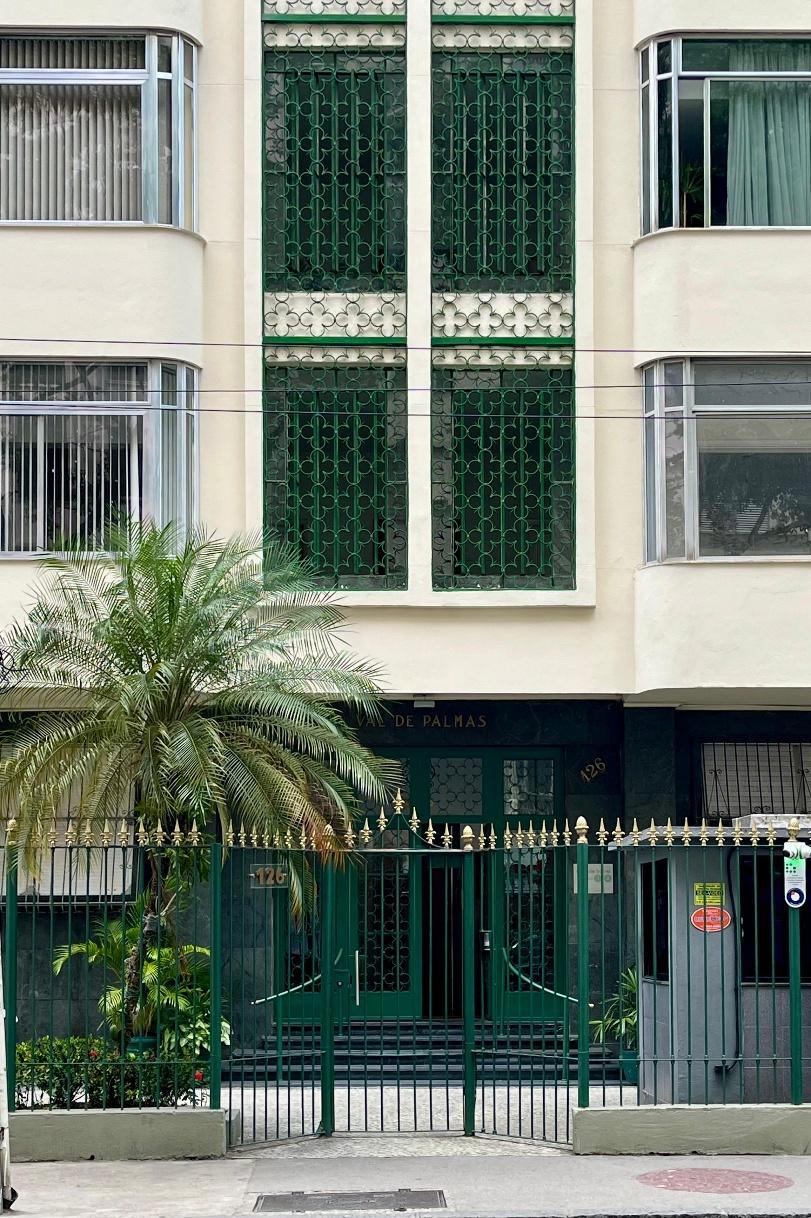
Image 2: Portaria of a vertical condominium. Photo by Tilmann Heil

A middle-aged man from the country’s Northeast, Junior, served the afternoon-evening shift at the portaria of a middle-class condominium in Rio de Janeiro’s privileged southern zone with some 100 small apartments. Every night, he was feeling exhausted from the swell of deliveries that arrived with vain motor boys. Their behaviour could be intimidating or simply unnerved but, for Junior, it did not amount to being offensive. Most of the time, Junior was light-hearted at work and cultivated decent relations with residents and everybody else who stopped by. Not only did he receive and dispatch deliveries for the recipients, but he also compensated for regular technological glitches and badly designed spatial setups to best attend to the inhabitants’ needs and sensibilities. Normally up for a joke to cheer people up, Junior also knew well when a calmer and more careful approach was appropriate or in his best interest. Like Junior, many doormen were convinced that attuning to the cordial routines of the coming and going was more important than technology. This also held true when they swiftly attended to the expectation of informal care and when unknown people and behaviour demanded vigilance and control.

Delivery boys were a case in point. To Junior, they were a security risk who, protected with helmets, could carry out a quick raid in the building. The owners’ assembly had debated whether to keep motor boys out of the building by making it mandatory for residents to receive their orders at the gate. However, the residents decided against it, letting convenience overrule the emergent sense of insecurity. Junior had adapted to the decision but in private left no doubt on his part: he would not risk his life for the residents in the event of an armed burglary. Keeping his views to himself, he avoided any unnecessary stress by maintaining a sense of cordial care.

While Junior was ready to frequently go out of his way, he could become irritable and upset when residents and visitors imposed their desire to have him serve them instead of doing his job. Having to wait in the rain for a moment while Junior attended to another immediate demand, Ligia, a resident, lashed out that the building’s standards left much to be desired. Why had Junior not rushed to the gate with an umbrella to protect her? Junior had jokingly asked where she had seen such service performed by an average doorman. He still found the expectation absurd and a breach of both common sense and respect for him and his work. For Junior, Ligia was among the two or three “crazy” residents with anachronistic expectations who seemed to be a rule of any apartment building. All that remained between Ligia and Junior were minimally cordial greetings.

While Junior was still directly employed by the building, Julia worked as an outsourced access controller (controladora de acesso) in a gated community of some 330 residents in São Paulo. Having moved to São Paulo as a young married woman, she had followed her sister-in-law’s advice and started to work at a portaria. She had timidly adopted the protocols and routines of politeness and control from her co-workers. She struggled with the feeling of being permanently compared with her sister-in-law who worked alternating shifts, was already known, and had more experience on the job.

If someone unknown arrived, Julia greeted and, in painstaking fashion, requested all key information – destination, purpose, full name, ID, previous visits. After completing a facial registration and announcing the visitor, she provided them with the information on how to leave later. While everything had been going well, Julia felt increasingly exposed to blackmail from one of the residents. The resident claimed to be dissatisfied with Julia’s lack of friendliness and her apparent inability or unwillingness to show more affection and attention whenever he entered or left the condominium. Julia felt she was being accused of failing to be welcoming, something she highly valued in her interactions with residents.

Increasingly under pressure, Julia began to fall ill, gain weight, and suffer from nervous breakdowns. The day she missed work to see a psychiatrist, without prior notice, she was fired “for just cause” by her service company. After the fact, she realized that her dismissal was due to the same resident, for whom Julia had never felt right. He had asked the condominium manager to make her redundant, which the service company used to end her contract with them. Julia assessed the work at portarias as follows: “Outsourcing is a cruel world because everyone considers themselves our bosses: the employer, the supervisors, the building manager, the caretaker, the residents, and even their children.” While she had initially found the role of providing hospitality as part of access control agreeable, she had come to develop a strong dislike of the system that had effectively rendered her a disposable resource.

Image 3: Portaria of a horizontal condominium. Photo by Susana Durão

A good-looking young black man, Zé was a janitor acting as a doorman in an upper middle-class building in Rio de Janeiro’s southern zone. During conversations, Zé had shared numerous stories of doing residents a favour as well as working extra hours and additional shifts. During a shift as a porter, a son of a resident ordered Zé to look after some belongings he had temporarily placed on the sidewalk for pickup. While generally feeling inclined to go out of his way, Zé had disliked the way the request had been posed, eventually halted the task, and returned to his actual duties. Zé was aware that his refusal to outperform for an ill-tempered son of an owner might get him into trouble. And so it happened. When the son returned, he verbally attacked Zé and almost physically assaulted him. This entire experience conflicted with Zé’s love for looking after the building and its inhabitants in the best way possible.

Yet, to care had to feel right. Young, gay and black, Zé had no illusions about the place in society to which the son had tried to forcefully assign him: racialized servitude, that is, a colonial fantasy of hierarchy prevalent among Brazilian middle-classes and elites. The portaria was one of the spaces in which they could try to subordinate people to feel authority, guarded and cared for. Those for whom Zé went out of his way at least maintained an appearance of basic respect and appreciation for the care he gave.

On the day, Zé sought the resident warden to relay his view of the incident. Rather than the lack of what Zé would normally judge to feel right based on a demonstration of respect and appreciation, he foregrounded the risk of physical violence after rejecting to deviate from his contractual tasks, namely, to deliver security-hospitality in the premises of the building. It clearly transpired that Zé knew his rights, so he obtained what he demanded: two weeks off with full pay.

When Zé returned to work, a lingering tension prevailed whenever the resident passed, yet it was buried under the performance of a rather cold hospitality. The incident inscribed itself into multiple layers of abusive behaviour in which society’s colonial dependence on servitude materialized. The worst behaviour emerged when contempt for the staff made residents behave as if anything was allowed. Such were the moments when Zé, acting as janitor, once more found himself ambushed: responding to complaints about a sickening smell, he eventually tracked down human faeces hung outside an open corridor window as the cause of the nuisance in an explicit attempt to humiliate Zé. It remained unclear who had played a trick on Zé, reinforcing the sense of how widespread the contempt was for Zé and other workers in precarious conditions like him.

Conclusions

From failing to be friendly enough behind a glass window or providing immediate shelter from rain, to fearing physical violence or deliberate humiliation, the stories of the workers of portarias like Julia, Junior and Zé are plenty. Their stories provide deep insights into the socio-material and sensorial logics of more-than-security in urban Brazil. The porters’ embodied experiences and sensory memories linked to the portaria, its devices, and types of encounters reveal how they experience the pleasures and discontents of cordially providing a sense of security and hospitality as well as informal care. The entanglements of acts of cordiality, care, and control performed by doormen in portarias show the confluence of the effects of neoliberal outsourcing and the country’s colonial past that establish a net of unequal interdependence and servitude. Their interplay specifies the multiple tensions in which the hierarchies of class, race, region of origin, and gender continuously co-constitute one another.

A first contradiction emerges from the ever-more widespread material security infrastructure and the confident affirmations of doormen that they are effectively and affectively indispensable at the portarias. In contrast to security personnel trained to defend while providing hospitality (Robb Larkins 2023), the porters are aware that the care work they perform for the people is vital for the coming and going in portarias precisely because it extends beyond a narrow provision of security.

Yet far from simply feeling appreciated, let alone recognised for the complex and multiple duties performed, doormen put up with the local effects of the multi-layered history of service and servitude in Brazil and their colonial and neoliberal roots. Junior, Julia and Zé were all from the country’s Northeastern states and had come through family networks to work in the Southeastern metropoles. While unobtrusive routine prevailed, specific encounters made them easily feel the logics of racist subordination in which the aspiring and traditional middle classes of Rio de Janeiro and São Paulo engaged, also – but not only – when faced with the hard-working Northeastern “Others” (Schucman 2012). Such subordination showed the violent effects of the intersections of class, gender, region of origin, and race. For Julia, the exigencies to be overly nice and pleasing were distinct from the risk of physical abuse, as in the case of Zé.

Given specific visceral reminders, porters could hardly forget the multiple hierarchies into which they were placed. The enduring impact of the colonial past was particularly evident in how workers of portarias navigated the provision or denial of care in spaces that were otherwise characterised by a calming sensation of hospitality-security. For doormen, all they expected was to treat (and be treated) well, based on a bare minimum of reciprocity and respect. Yet too often service was demanded on the terms of servitude. However, the conflicting influence of growing neoliberal outsourcing and formal workers’ rights could alter the course of events. Those directly employed, such as Junior and Zé, were able to voice their dissatisfaction and give space to their emotional push back against what seemed to be utter abuse. They firmly believed that the more-than-security they provided was not easily outsourced. In contrast, Julia was already employed through a service provider, which enhanced her precarity. Still affectively abused, she was simply made redundant, with no opportunity to push back.

The ensuing effects are perverse: on the one hand, the subaltern multisensorial archives of portarias reveal the increased vulnerability of workers when neoliberal logics intersect with colonial social and (infra)structures. On the other hand, the limits of neoliberal profit maximization become apparent in the thorough investment of residents in the personal and potentially abusive touch of relations of care, cordiality, and control that still define the circulation of people and other things in the entry halls and porters’ lodges of urban Brazil.


Susana Durão is Professor and Researcher in Anthropology at the State University of Campinas in Sao Paulo, Brazil.

Tilmann Heil is a Visiting Professor in Anthropology at the University of Leuven and Principal Investigator of the Global South Studies at the University of Cologne.


References

Durão, Susana 2023. Conviviality in Inequality. Security in the City (São Paulo). Mecila Working Paper Series 62.

Heil, Tilmann, Fran Meissner, and Nikolaus Vertovec 2025. Techno-Material Entanglements and the Social Organisation of Difference. Ethnic and Racial Studies: 1–17. doi: 10.1080/01419870.2025.2469694.

Robb Larkins, Erika 2023. The Sensation of Security. Private Guards and Social Order in Brazil. Police/Worlds. Ithaca: Cornell University Press.

Roy, Ananya 2011. Slumdog Cities. Rethinking Subaltern Urbanism. International Journal of Urban and Regional Research 35 (2): 223–238. doi: 10.1111/j.1468-2427.2011.01051.x.

Schucman, Lia Vainer 2012. Entre O “Encardido”, O “Branco” E O “Branquíssimo”. Raça, Hierarquia E Poder Na Construção Da Branquitude Paulistana. Doctoral Thesis, Social Psychology, Universidade de São Paulo, São Paulo.

White, Adam, and Tessa Diphoorn 2024. The Everyday Political Economy of Private Security. Policing and Society 34 (1-2): 1–9. doi: 10.1080/10439463.2023.2268256.


Cite as: Durão, S. & Heil, T. 2025. “Care, Cordiality, and Control. Multisensorial Encounters with More-than-Security in Urban Brazil” Focaalblog December 24. https://www.focaalblog.com/2025/12/24/susana-durao-and-tilmann-heil-care-cordiality-and-control-multisensorial-encounters-with-more-than-security-in-urban-brazil/

Prem Kumar Rajaram: The Moral Economy of Precarity

This post is part of a feature on “Debating the EASA/PreAnthro Precarity Report,” moderated and edited by Stefan Voicu (CEU) and Don Kalb (University of Bergen).

The authors of The Anthropological Career in Europe (Fotta, Ivancheva and Pernes 2020) have made visible the inequality and hierarchy that has become increasingly normalized in higher education in Europe. The impact of the report lies far beyond anthropology, and my reflections here build on the report’s key findings and consider the impact of precaritization on the university and academia as a whole.

Continue reading

Jan Newberry: Restating the case: The social reproduction of care labor

Ever felt like the best conversation at the party is happening in the next room? When I did my field research in an urban neighborhood in Java some twenty years ago, it was at a time when we were “bringing the state back in” (Evans et al. 1985). I was deeply influenced by Philip Abrams’s “Notes on the Difficulty of Studying the State” ([1977] 1988) Corrigan and Sayer’s The Great Arch: English State Formation as Cultural Revolution (1985), and Everyday Forms of State Formation: Revolution and the Negotiation of Rule in Rural Mexico (Joseph and Nugent 1994) through my supervisor, the late Daniel Nugent. In my own work, I found “everyday forms of state formation” to be more than a great title; it provided a perspective on understanding how relations of production (and crucially reproduction) were entangled with culture, community, and forms of rule.
Continue reading

Jonah Lipton: Intimacy, transformation, and danger in Sierra Leone

During my fieldwork in Freetown, Sierra Leone, in 2013–14, I witnessed the unfolding of the current Ebola crisis that is so heavily affecting the region today. I saw how the regulations put in place to stop the spread of the virus impacted livelihoods, restricting transport and closing businesses, schools, and borders. It is no exaggeration to say that the Ebola outbreak affected every single person I know there. I experienced an unsettling atmosphere of uncertainty: personal plans were put on hold as each day became a struggle to make ends meet. And then there were the fears about Ebola itself, which intensified as the virus spread to the capital. Broadly speaking, people I know became more reliant on those “close” to them in the wake of the Ebola crisis, particularly family members, the providers of financial and practical support and care. However, this approach to support and care runs the risk of transmitting the virus, transforming an intimate relative or friend into an “enemy.” In this piece, I suggest that the Ebola crisis exposes deep-rooted tensions surrounding intimacy in Sierra Leone. Experiences and understandings of the “enemy within,” along with broader notions of transformation, in turn color responses and attitudes toward the crisis itself.

Continue reading