Tag Archives: Indonesia

Iqra Anugrah and Rachma Lutfiny Putri: A Revolt that never was? On the aftermath of the 2025 Indonesian protests

Image 1: 2025 Indonesian student protests in Central Jakarta. Photo by David Wadie Fisher-Freberg

Political upheavals can feel like riding a roller coaster – exhilarating at the beginning, full of adrenaline rush, until it suddenly stops. This is what happened to the biggest protests against Prabowo administration and its erratic policies in late August-early September last year (Anugrah and Putri 2025). Mass arrests of protesters (including dissenting netizens), declining momentum of the protest demands, and deadly floods in Sumatra due to extractivist deforestation (Syaifullah and Adawiah 2026) virtually put major demonstration activities on halt. Compounding these structural hurdles was the lackluster move of liberal influencers and public figures whose naive political steps – such as overreliance on fanbase mobilization and engagement in an appeasement dialogue with a few members of parliament (MPs) – effectively contributed to the moderation of an otherwise brewing struggle.

As the basic reformist demands of the protests – cancellation of proposed raise of allowances for the MPS, end to police violence, and people’s welfare and labor rights – remain unmet, people continue to struggle for their livelihood. Repression made post-protest mobilization riskier, but certainly the mute compulsion of capital (Mau 2023) was another major factor that kept people away from the streets. When the brief possibility of political shake-ups subsided, it made sense to focus on one’s livelihood amid growing socio-economic precariousness (Subianto 2025).

What happened then in these “morning after” moments? During our field observations we noticed that: 1) post-August mobilization and activism exist, albeit in more moderate forms and intensity, 2) the prevalence of liberal activism and its vacuous impacts reveals its limits, and 3) the movement’s losing momentum suggests the need to be aware of the material conditions of activists and the broader public as a prerequisite for future mobilization.

Post-August activism: resilient, yet defensive

A major reason behind the decline of the movement was the mass arrests and criminalization of the protestors by the state. Comprehensive data on arrests across Indonesian cities was difficult to access, but in one key case six people, including three activists and two ordinary citizens, were arrested and charged for “inciting riots” by uploading images and narratives from the protests on their social media. In fact, they were simply expressing their opinions and frustration – in other words, their constitutional rights – concerning corrupt practices by political elites and state institutions. Initially, the six individuals were denied access to legal assistance or contact with their lawyers; some of them were even arrested violently by the police.

A joint report by three human rights/legal aid organizations showed that this repression was the biggest crackdown on youth activism since the downfall of the New Order dictatorship in 1998, with thousands arrested (later mostly released) and more than 700 arrestees unjustly brought to the court (KontraS, YLBHI, LBH 2026)

However, many others who were arrested by the police did not receive significant public attention. Several factors may have contributed to this lack of visibility, including difficulty in reporting the case, their lack of “shiny” credentials compared to more established activists, or the fact that they reside in smaller cities or regions distant from major cities.

Amid this criminalization of dissent, other activists, CSOs, legal aid lawyers, and scholar-activists have focused on online public campaigning, organizing small-scale protests demanding the release of detained activists and protestors and showing moral support through prison visits. Notably, legal aid lawyers have worked hard to provide legal assistance to release the detained activists. Legal scholar Eryanto Nugroho (2025) describes these initiatives as a sign of resilience by progressive civil society groups and activists in the face of state crackdown. While we agree with certain parts of his analysis, the idea of resilient activism should be contextualized and qualified.

Drawing insights from geographers Danny McKinnon and Kate Driscoll Derickson (2012), we conceptualize resilient activism as the potential and capacity of the collective to anticipate and recover from challenging situations. In the aftermath of protests, it is important not to glorify this resilience. Then, take a step back and investigate resourcefulness, that is, the possibilities of communal actions with an attention to uneven distribution of resources within the movement. To this, we would also add that Indonesian social movements and activists should (re)start the discussion on building collective self-defense under growing state surveillance and repression.

What else can we and other people do in this time of intensified repression and precarity? How could we act within (and hopefully beyond) our means? As the political momentum declined, we noticed that most of our activist comrades focused on other tasks, such as organizing public discussions and taking the role of trainers in popular education activities. Moreover, in response to the government’s denial of responsibility and lack of response to Sumatra’s socio-ecological catastrophe, environmental movements and activists have underlined the political nature of the disaster that is rooted in state-sponsored and corporate-led extractivism and campaigned for structural policy changes (see also Syaifullah and Adawiah 2026).

This situation shows that resilient activism is essentially a survival mechanism during times of limited options, an ongoing struggle amid the repression, precarity, and uncertainty. It is both a sign of potential longevity and desperation.

Liberal Activism: A Stumbling Block

The decline of the movement requires us to look at the political economy of activism during and after the protests. One analysis correctly points out differences in material conditions and cultural capital among protesting groups: while student groups and civil society organizations (CSOs) – not to mention unions and other grassroots movements – did the heavy lifting of “street fighting” and actual organizing, it was the influencers who reached the broader audience, gained oppositional credentials, and had the privilege to meet the MPs (Damayana 2025).

Some activist and organizer friends whom we talked with lamented this fact, especially when the national parliament preferred to engage with the influencers rather than labor unions and representatives.

This means those who worked the hardest and sacrificed the most during the protests – and arguably had the most effective street mobilizational power – were sidelined by the most media-savvy, celebrity-like figures. This also means the more radical challenge to the existing power structure was effectively eclipsed by much more moderate demands.

The curious rise of influencers as liberal commentariat is emblematic of development processes in peripheral capitalist countries such as Indonesia, where the neoliberalization of universities, research institutes, and the civil society sector has intensified class differentiation among cognitive workers (Anugrah 2025). In this context, liberal influencers, who hoarded – in other words, accumulated – knowledge and cultural capital became successful members of the professional managerial class (PMC) (Liu 2021) who labor in online content creation as “critical” commentators.

Amid fragmentation of social movements, cooptation of student activists by bourgeois political elites, low union density, and yet simultaneously rising political consciousness among the broader student population (Aminuddin and Ramadlan 2022), it is unsurprising that liberal influencers found a captive audience. In the marketplace of ideas and influence, they rule and win followers though they remain “fleeting,” divorced from concrete social forces and bases and lack any strategic materialist analysis, let alone political tactics.

A closer look at their profile and politics confirms such observation. For example, Malaka Project, a media platform of liberal influencers, is a business project with links to corporate sponsors. Other liberal influencers have their own vehicles such as consultancy firm Think Policy and English-based media channel What Is Up Indonesia (WIUI), two platforms with neoliberal economists and policy consultants among their board.

Politically, they zigzag between approaching the government when it was deemed as “reformist” particularly during the Joko Widodo (Jokowi) presidency and supporting anti-government protests when they were dissatisfied with it. As of now, their attention seems to have shifted to launching their publishing initiative at a Jakarta-based shopping mall, winning “40 under 40” award from the Indonesian branch of Fortune Magazine, and commenting on current affairs.

Of course, this can be seen as a public relations strategy to make activism palatable for the (petit)-bourgeois polite society, presumably from a place of good heart. But it is also reasonable to ask whether such strategies will a) broaden the pro-democratic coalition against hazardous government policies or b) force the elites to give some concessions to the public – the answers to which, in our view, are highly questionable.

To be fair, the Indonesian CSO sector is also donor-dependent and sometimes complicit in the moderation of movement agenda, such as in the context of anti-corruption advocacy during the Jokowi Presidency (Mudhoffir 2023). However, it is still deeply connected with grassroots social movements and bases and altogether they operate in the same social milieus. Unfortunately, this is not the case with liberal influencers.

In this context, the call for broad civil society unity should be qualified. Campaigners, including influencers, have a role in raising political awareness or even fundraising for disaster relief, but as we have argued previously (Anugrah and Putri 2025) the command for collective actions should remain in the hands of grassroots and working-class movements and actors for a meaningful change – redistributive concessions and restoration of basic democratic rights – to happen. Influencers are neither organic thinkers nor vanguard activists – it is social movements and the working people who should control them and not the other way around.
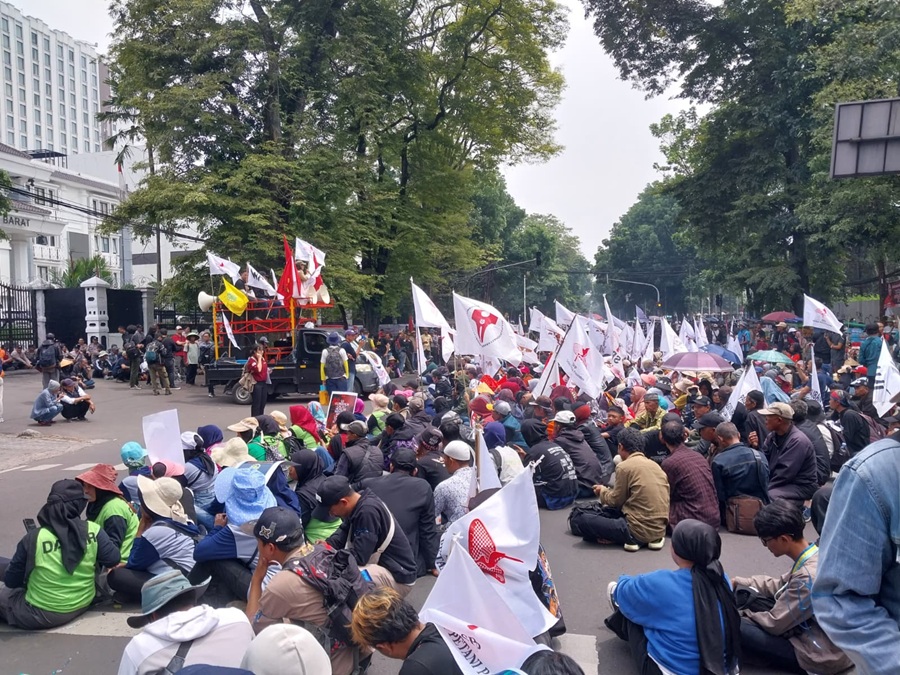
Image 2: 2025 Local farmers’ protest in front of West Java provincial parliament in Badung. Photo by Iqra Anugrah

Wither Political Momentum?

What remains of the August protests? Is it now the time to conduct a “post-mortem” analysis of the movements? Much of the massive protest activities had indeed ended and the public attention had shifted to other pressing issues, especially post-disaster recovery in Sumatra and Indonesia’s controversial participation in the Trumpist Board of Peace. However, this is not the end of it.

This current protest cycle might end, but this will not be the last one. Seen from a longer perspective, it is the last iteration of recent mass movements since the 2019 protests. Though organizers and the working people are currently on retreat, it is not far-fetched to speculate that another movement might erupt in the (near) future. Ongoing structural impoverishment of average Indonesians and erratic policies of the ruling class will keep triggering mass demonstrations.

Here we reiterate the need to be cognizant of the material basis of activism. Liberal activism has its own limits and, dare we say, cul-de-sac. We also have to admit that this tendency sadly is also embraced by the more progressive sections of civil society. Celebrity culture, which can be self-serving, remains practiced by chronically-online activists and self-styled progressive influencers. Another liberal tendency for unnecessary moderation can be seen in the decision of a senior cultural activist-turned-bureaucrat to take the helm of the directorship of Megawati Institute, a think-tank named after Megawati, the matriarch-for-life of the Indonesian Democratic Party and, as political scientist Jeffrey Winters (2013) puts it, a hidden oligarch. It is difficult to see how exactly such a decision will help the advancement of democratic class struggle.

Therefore, any conversation on “strategic alliance” between broad civil society elements should start from recognizing the fact that in the current context, most grassroots activists and mass bases are precarious in terms of their livelihood and socio-cultural/political capital. Further, there should be a serious discussion on curbing (petit-bourgeois) celebrity tendencies in the so-called “progressive” circles.

For now, major protest activities are indeed on decline, but other activist initiatives continue. This includes not only advocacy for the unjustly arrested, but also a whole range of activist works – movement meetings and gatherings, smaller-scale protests, public discussions on today’s pressing issues and progressive/radical literature, and popular education initiatives.

These activities have their own limitations. For example, a local farmers’ protest in front of the West Java provincial government and parliament that one of us (Iqra) observed on 9 December 2025 remained centered on local land rights issues. While this was clearly important, it missed the opportunity to link local issues with broader, more expansive national-level demands.

Nevertheless, this type of work helps social movements to keep going and build up their momentum. In one instance, we participated in a critical agrarian studies training as facilitators and found it to be an engaging forum connecting young activists and researchers across regions to reflect on their advocacy and research experience. Such initiatives can serve as seeds for further mobilization.

Recent policy blunders of the populist Prabowo administration and elite repression of popular activism might intensify the growth of such seeds. Hundreds of protesters representing student groups, social movements, and CSOs protested Indonesia’s participation in the Board of Peace and called for international solidarity for the Palestinians and against imperialism. The horrific acid attack against the young human rights advocate Andrie Yunus toward the end of Ramadhan (Hermawan and Hamid 2026) also prompted a number of national and international solidarity campaigns and protests for Yunus and democratic rights in Indonesia. At the very least, these realities convinced the public that they are right to be skeptical of the false promises of the state and the ruling class.

As we had witnessed directly, the longevity of protest movements depends on the hidden labor of ordinary citizens, precarious activists, and the most exploited and marginalized strata of society. They will, once again, launch and hopefully lead future struggles.

Acknowledgements: We would like to thank the Agrarian Resource Center (ARC) which hosted us during our recent fieldwork in Indonesia and our comrades at Forum Islam Progresif (FIP) for their insights.


Iqra Anugrah is a Trapezio MSCA Seal of Excellence Fellow at the Department of Foreign Languages, Literatures and Modern Cultures at the University of Turin. He holds affiliate positions at the International Institute for Asian Studies (IIAS) in Leiden and the Institute for Economic and Social Research, Education, and Information (LP3ES) in Jakarta. An interdisciplinary political theorist, his current project on multi-strand conservatism in Indonesia is funded by Fondazione Compagnia di San Paolo.

Rachma Lutfiny Putri is a Wenner-Gren Wadsworth International Fellow and a PhD candidate at the Department of Social and Cultural Anthropology at Vrije Universiteit (VU) Amsterdam. She is also a Visiting Fellow at Populi Center. Her dissertation project examines the question of value in the waste recycle chain in Bandung, Indonesia.


References

Aminuddin, M. Faishal, and M. Fajar Shodiq Ramadlan. 2022. ‘Aktivisme mahasiswa 10 tahun terakhir: banyak golput, menjaga jarak dari politik praktis, tapi peka isu demokrasi dan HAM.’ The Conversation, April 22. Accessed March 23, 2026.https://theconversation.com/aktivisme-mahasiswa-10-tahun-terakhir-banyak-golput-menjaga-jarak-dari-politik-praktis-tapi-peka-isu-demokrasi-dan-ham-174409.

Anugrah, Iqra, and Rachma Lutfiny Putri. 2025. ‘The Ruling Elites Put Democracy under Duress in Indonesia – and the People are Fighting Back.’ BLISS, September 16. Accessed January 26, 2026. https://issblog.nl/2025/09/16/the-ruling-elites-put-democracy-under-duress-in-indonesia-and-the-people-are-fighting-back/.

Anugrah, Iqra. 2025. “Critical Scholars as Professional Managerial Class: A Structural and Personal Reflection from Indonesia and Beyond.” TRaNS: Trans -Regional and -National Studies of Southeast Asia 13 (2): 224-246.

Damayana, Gita Putri. 2025. ‘Influencers vs CSOs in a backsliding democracy: insights from the August protests.Indonesia at Melbourne, September 30. Accessed March 23, 2026. https://indonesiaatmelbourne.unimelb.edu.au/influencers-vs-csos-in-a-backsliding-democracy-insights-from-the-august-protests/.

Hermawan, Ary, and Usman Hamid. 2026. ‘Acid attack on KontraS activist signals resurgence of New Order-style fascism.’ Indonesia at Melbourne March 16. Accessed March 23 2026. https://indonesiaatmelbourne.unimelb.edu.au/acid-attack-on-kontras-activist-signals-resurgence-of-new-order-style-fascism/.

KontraS, YLBHI, LBH. 2026. Laporan Komisi Pencari Fakta (KPF): Operasi Pembungkaman Kaum Muda Terbesar Sejak Reformasi. Jakarta: Komisi Pencari Fakta.

Liu, Catherine. 2021. Virtue Hoarders: The Case against the Professional Managerial Class. Minneapolis: University of Minnesota Press.

MacKinnon, Danny, and Kate Driscoll Derickson. 2012. “From Resilience to Resourcefulness: A Critique of Resilience Policy and Activism.” Progress in Human Geography 37 (2): 253-270.

Mau, Søren. 2023. Mute Compulsion: A Marxist Theory of the Economic Power of Capital. New York and London: Verso Books.

Mudhoffir, Abdil Mughis. 2023. “The Limits of Civil Society Activism in Indonesia: The Case of the Weakening of the KPK.” Critical Asian Studies 55 (1): 62-82.

Nugroho, Eryanto. 2025. ‘Indonesian civil society shows resilience in the face of ‘activist hunt’ crackdown.’ Indonesia at Melbourne, November 11. Accessed March 23, 2026. https://indonesiaatmelbourne.unimelb.edu.au/indonesian-civil-society-shows-resilience-in-the-face-of-activist-hunt-crackdown/

Subianto, Benny. 2025. ‘Indonesia’s precariat protests call for stability.’ East Asia Forum, October 29. Accessed March 23, 2026. https://eastasiaforum.org/2025/10/29/indonesias-precariat-protests-call-for-stability/.

Syaifullah, Khalid, and Wardatul Adawiah. 2026. ‘Asking, and Asking Again: Understanding the Roots of Ecological Disasters in Sumatra.FocaalBlog, March 11. Accessed March 23, 2026. https://www.focaalblog.com/2026/03/11/khalid-syaifullah-wardatul-adawiah-asking-and-asking-again-understanding-the-roots-of-ecological-disasters-in-sumatra/.

Winters, Jeffrey. 2013. “Oligarchy and Democracy in Indonesia.” Indonesia 96: 11-33.


Cite as: Anugrah, I. and Lutfiny Putri, R. 2026. “A Revolt that never was? On the aftermath of the 2025 Indonesian protests” Focaalblog April 2. https://www.focaalblog.com/2026/04/02/iqra-anugrah-and-rachma-lutfiny-putri-a-revolt-that-never-was-on-the-aftermath-of-the-2025-indonesian-protests/

Khalid Syaifullah & Wardatul Adawiah: Asking, and Asking Again: Understanding the Roots of Ecological Disasters in Sumatra

Image 1: Areas affected by floods in West Sumatra in 2025. Photo by Indonesian Air Force

Amid the outpouring of public solidarity for the victims of floods and landslides in Sumatra, one development deserves close attention. The term “natural disaster,” long used to describe such events, is increasingly being questioned and replaced with a more political framing. This shift has gained significant traction on social media. Rather than calling these events natural disasters, the Indonesian Forum for the Environment (WALHI) has adopted the term “ecological disaster,” emphasising that the tragedy is not merely the result of extreme rainfall, but the outcome of reckless forest governance policies.

Logs swept away by flash floods, landslides occurring across multiple locations, and the destruction of residential areas are clear indicators of massive landscape transformations. Changes of this scale do not occur without political decisions that open space for exploitation, followed by business activities that take advantage of it. In other words, ecological disasters are the result of a series of political choices—not simply acts of nature.

When such disasters strike, the state and corporations are often the primary targets of blame. These accusations are not unfounded. Yet a more important question must be asked: why does collaboration between the state and corporations in environmental destruction recur so persistently? Is this merely the result of individual greed, or is there a development logic that systematically drives limitless exploitation?

Data from Global Forest Watch shows that between 2001 and 2024, North Sumatra lost approximately 1.6 million hectares of forest cover, with 84 per cent closely linked to deforestation. Mining, oil palm plantations, logging, and energy projects are frequently cited as the main drivers. But if these business activities consistently lead to environmental damage, why does the state continue to issue concession permits? This question points us toward a more fundamental critique of the development model itself.

Many observers identify extractive business models as the main engine behind deforestation, reckless licensing regimes, and ultimately ecological disasters. Large-scale resource extraction in Indonesia has indeed been underway for decades. Paul K. Gellert (2010) shows that the extraction of natural resources—land, minerals, timber, and marine products—has formed the backbone of Indonesia’s development strategy since the mid-1960s. This pattern did not end with the New Order but continued into the era of decentralisation (Gellert, 2019), now wrapped in new slogans such as “economic growth” and “poverty alleviation.” The key question, then, is not only what is extracted, but why development remains dependent on destructive extraction. Why has development failed to take more environmentally sustainable forms? In the broader Southeast Asian context, similar critiques have emerged. Annika Reynolds (2022) notes that although many countries in the region—including Indonesia—have formally recognised the right to a healthy environment, extractivism in practice continues to erode that very right.

In this context, Ann L. Stoler’s (1985) classic research on plantations in North Sumatra (1870–1979) offers critical insight. Stoler introduces what she calls “plantation perspectives”—a way of seeing plantations not merely as sites of production or economic units, but as a logic of power that governs nearly all aspects of surrounding life. Plantations functioned as colonial “command centres”: determining who worked where, who lived where, how far people could move, and even how they were socially classified. Through the plantation system, Dutch colonialism did not simply extract land and labour, but reorganised entire living spaces—separating labour barracks from European settlements, redrawing village boundaries, classifying populations by race and origin, and dividing nature into production zones fully subordinated to commodity needs. In this way, forests, land, and people were treated as components of a single production landscape that had to be disciplined, measured, and controlled. From here, Stoler invites us to reconsider the analytical units we use to understand development and its consequences—from poverty and ecological disasters to resistance and alternative responses.

Most importantly, Stoler shows that the root of the problem does not lie solely in state policies or corrupt officials, but in the underlying logic governing how natural wealth is extracted and circulated. Rather than beginning with chaotic licensing regimes or collusion between officials and business elites, Stoler urges us to ask how the logic of dispossession—embedded in the plantation system—became the foundational way colonial powers imagined and built their civilisation. Plantations were the heart of colonial civilisation, and North Sumatra served as one of its primary laboratories. State political policies were only a small (though significant) part of this plantation logic. In short, plantation perspectives push us to understand social problems by asking what is produced, why it is produced, how it is produced, who controls production, who benefits, who loses, and how the consequences of this regulatory logic are distributed.

Another crucial insight from Stoler’s work is that although formal colonialism ended, its underlying logic did not disappear. The New Order regime instead modified the plantation system using more modern instruments. Concessions were returned to foreign companies after earlier attempts at nationalisation; labour was tightly controlled with military backing; and independent unions were dismantled and replaced with regime-sponsored “puppet” unions. Colonial legacies were not dismantled, but recalibrated to suit new development designs.

Contemporary ecological disasters, therefore, can be traced back to a development logic that prioritises corporate accumulation over public welfare—especially for communities living near production zones. The devastating disasters that emerge as the endpoint of this logic are rooted in a colonial legacy that has never been fundamentally transformed, but rather preserved and repeatedly reconfigured over time.

This leads to the next question: why has this colonial development pattern been continuously maintained—and even refined? Has Indonesia not been independent for decades?

Drawing on world-systems thinking, Gellert (2010) offers a key insight often overlooked: development patterns inherited from colonialism must be understood within global political-economic formations. Indonesia is not a self-contained unit able to freely determine its development trajectory, particularly in managing natural resources. Since independence, the Republic has confronted an international system characterised by hierarchy and imperialism. When, during the 1950s and 1960s, Indonesia leaned left and President Sukarno sought to challenge this global order through populist politics, major powers perceived a threat and responded with a violent political coup (Scott, 2015). Suharto’s rise restored colonial-style relations, repositioning Indonesia as a peripheral frontier (Farid, 2015) supplying cheap labour and raw materials to Europe and the United States—the core.

During this period, the New Order was deemed successful—economic growth increased and industrialisation advanced—because it was supported by exports of extractive commodities such as oil, gas, timber, and minerals to core countries, aligned with global prices and demand. The regime succeeded precisely because it linked domestic extraction to capital accumulation in the core. Corruption, cronyism, reckless licensing, and aggressive business expansion were not aberrations but reflections of how global capitalism operates in peripheral regions, legitimised by the international system. Colonial-style development was repackaged under slogans such as “stability” and “development.”

After the fall of the New Order, hopes for a new development trajectory briefly emerged. Yet the global formation remained unchanged. Indonesia continues to occupy a frontier position where natural resources are extracted to sustain capital accumulation elsewhere. Intan Suwandi (2019) describes this as “new imperialism,” in which domination no longer takes the form of direct colonial rule but operates through global value chains and multinational corporate control. Using this perspective, Suwandi shows that the greatest profits from the Global South continue to flow to the Global North, despite claims that globalisation levels the playing field for developing countries.

This new imperial mechanism operates through multinational control over domestic suppliers—via delivery-on-demand strategies, international certification, and open-costing systems—and labour discipline through lean and flexible production. The system rests on international hierarchies established in the twentieth century, particularly after the Cold War. Multinational firms outsource production responsibilities to domestic companies or governments, while retaining control over standards, pricing, and wages. These dynamics are evident in mining, oil palm, and timber operations across Sumatra.

Seen more closely, gold mining, logging, and oil palm plantations in North Sumatra—particularly in the Batang Toru/Tapanuli landscape—are not merely domestic concerns, but nodes within transnational value chains. Following recent disasters, government investigations and temporary suspensions targeted companies frequently cited in media reports, including PT Agincourt Resources (Martabe gold mine), PT North Sumatra Hydro Energy (Batang Toru hydropower), and PT Perkebunan Nusantara III (PTPN III), with land clearing near Batang Toru identified as a factor exacerbating flood and landslide risks. In value-chain terms, gold extracted from fragile upstream ecosystems does not remain in North Sumatra: Reuters notes that Indonesian gold exports, including dore, flow to global trading and refining hubs such as Singapore, Switzerland, and Hong Kong—key nodes linking extraction sites to financial and industrial markets downstream.

For palm oil, Reuters explains that Indonesia’s core production zones lie in Sumatra and Kalimantan, feeding global supply chains for processed foods, cosmetics, and biofuels. Domestic biodiesel policies further illustrate how energy strategies function as demand engines within broader commodity chains. Meanwhile, the timber appearing as a symbol of disaster—logs swept away by floods—is under investigation, including possible links to illegal logging or land clearing for plantations and mining, tied to transnational timber trade networks. Across these chains, ecological and social risks—flash floods, landslides, habitat loss—remain concentrated in production areas, while added value moves along trade and industrial routes far from disaster zones.

Within this framework, the state does not act as a neutral guardian of public interest, but as a mediator aligning regulation, spatial planning, and licensing regimes with global market demands. Collusion between political elites, bureaucrats, and business actors is not an anomaly, but the normal functioning of an economy oriented toward extraction and raw commodity exports. When environmental regulations are weakened, concessions expanded, and forests opened in the name of development, what is actually being protected is Indonesia’s position within global production chains—not ecological sustainability or citizen safety.

In such conditions, public responses often turn quickly toward practical solutions: moratoria on permits, concession reviews, law enforcement, or even crowdfunding (patungan) to buy forests. These measures matter, but they risk remaining superficial if they fail to address deeper structural causes. Without understanding how disasters are produced by broader political-economic structures, proposed solutions easily become short-term fixes—managing symptoms without addressing roots. Critical reflection is therefore essential—not to delay action, but to ensure that responses do not reproduce the same extractive logic in greener, more technocratic packaging.

Conclusion

Recurring disasters in Sumatra can no longer be understood as natural events alone. Yet neither can they be explained simply by poor forest governance or the greed of a few business actors. These ecological disasters are products of a global political-economic formation rooted in colonialism, transmitted across regimes, and continually reproduced in modern forms. They result from how the world organises production, distribution, and accumulation—with regions like Sumatra positioned as zones of extraction rather than spaces of life.

Public criticism often stops at concession permits, governance failures, or state–corporate collusion. These critiques are necessary but insufficient. If they go no further, we risk repeating the same explanations after every disaster without confronting underlying causes. What must shift is the analytical lens—from policies and actors to the structures of production and commodity circulation shaping ecological and social landscapes.

In the colonial era, as Ann L. Stoler shows, plantations functioned as core machines defining how land, forests, labour, and villages were imagined and governed. Today, that logic has not vanished—it has expanded. Plantations now intertwine with mining, timber, energy, and global value chains controlled by multinational corporations. These global production structures determine how forests are converted, how disasters are framed as “risks,” and how solutions are packaged—often as technocratic patches that leave extractive logic intact.

Understanding ecological disasters in Sumatra therefore requires us to keep asking—and to ask further: not only who issued permits or who caused damage, but how the global economic system produces the demand for destruction in the first place. Without the courage to shift this perspective, disasters will continue to occur—not as anomalies, but as near-inevitable consequences of a system that treats nature as a resource and peripheral regions as recurring casualties.


Khalid Syaifullah is a sociology lecturer at the Faculty of Social and Political Sciences, State University of Surabaya, and a researcher at Yayasan Daulat Umat.

Wardatul Adawiah is a sociology lecturer at the Faculty of Social and Political Sciences, State University of Surabaya, and a research consultant at the Center for Forestry Organizational Capacity and Institutional Studies (FORCI), IPB University.


References

Farid, H. (2015). ‘Indonesia’s original sin: mass killings and capitalist expansion, 1965–66.’ In The Inter-Asia Cultural Studies Reader (pp. 207-222). Routledge.

Gellert, P. K. (2010). ‘Extractive regimes: Toward a better understanding of Indonesian development.’ Rural sociology, 75(1), 28-57.

Gellert, P. K. (2019). ‘Neoliberalism and altered state developmentalism in the twenty-first century extractive regime of Indonesia.’ Globalizations, 16(6), 894-918.

Reynolds, A. (2022). Human rights in the age of Southeast Asian extractivism. New Mandala. https://www.newmandala.org/human-rights-in-the-age-of-southeast-asian-extractivism/

Scott, P.D. (2015). ‘Still Uninvestigated After 50 Years: Did the U.S. Help Incite the 1965 Indonesia Massacre?’ Asia-Pacific Journal, 13(31):e2, 1-17.

Stoler, A. L. (1985). Capitalism and Confrontation in Sumatra’s Plantation Belt, 1870-1979. New Haven: Yale University Press.

Suwandi, I. (2019). Labor-value commodity chains. Monthly Review, 71(3), 46-69.


Cite as: Syaifullah, K. & Adawiah, W. 2026. “Asking, and Asking Again: Understanding the Roots of Ecological Disasters in Sumatra” Focaalblog March 11. https://www.focaalblog.com/2026/03/11/khalid-syaifullah-wardatul-adawiah-asking-and-asking-again-understanding-the-roots-of-ecological-disasters-in-sumatra/

Nicole Weydmann, Kristina Großmann, Maribeth Erb, Novia Tirta Rahayu Tijaja: Healing in context: Traditional medicine has an important role to play in Indonesia’s fight against the coronavirus

The first two cases of COVID-19 in Indonesia were announced on 2 March 2020, quite late compared to other countries. The first patient was a 31-year-old woman who came into contact with a Japanese citizen – who later tested positive – at a dance event in South Jakarta. She then passed it on to her mother. Both women were hospitalized in North Jakarta, which later became one of the referral hospitals for COVID-19 cases in the city. By early May, the number of confirmed cases nationwide had reached 9800, including 800 deaths. While elsewhere around the world governments are easing lockdown restrictions, in Indonesia there is still minimal testing being undertaken and the COVID-19 pandemic is showing little sign of decline.

As in many other nations, Indonesian politicians have been accused of not recognizing the seriousness of the situation early enough, and some eventually admitted to misinforming the public. Sophia Hornbacher (2020) only recently highlighted the populist rhetoric and neo-liberal policy of the Indonesian government, which once more illustrates the country’s problems of social injustice and welfare. In a statement made in early March, the health minister Terawan Agus Putranto said he was surprised by the commotion arising from the spread of COVID-19, as in his perspective “flu is more dangerous than the corona virus”.

In mid-April, 46 health workers at a hospital in Semarang were infected after patients had not revealed their travel history from areas with a high number of infections, or coronavirus red zones. Six weeks after the first case of COVID-19 was announced and in the face of what looked like becoming an uncontrollable pandemic in Indonesia, Lindsey and Mann summed up what many Indonesia watchers around the world and indeed Indonesians were feeling – that the government had been in denial of the health threat for too long and a clearly structured approach on how to handle infections and sources of these infections was still missing.

Crisis in healthcare

For some time there has been rising criticism of Indonesia’s public healthcare, including the closeness of pharmaceutical industries to medical practitioners and related “unhealthy practices” of corporate theft with government backing. Now, the existing structural and personnel shortage in the public health system has become glaringly stark due to the pandemic. The latest World Health Organisation (WHO) data shows that Indonesia’s ratio of doctors per 10,000 people is 3.8, and it has 24 nurses and midwives per 10,000 people. This is well below Malaysia’s 15 doctors per 10,000 people and Thailand and Vietnam’s eight. Besides this, questions about pharmaceutical monopolies and cartel practices in the medical sector, and cases of malpractice and fraud at the expense of patients, are mounting. Underlying this mood is a latent mistrust not only of the pharmaceutical industries, the medical profession, and the medical structures of hospitals, but of the national elites in general and the civil servants of health-related authorities in particular (Weydmann 2019: 60).

Recent history offers some good reasons for why medical professionals, patients and those watching Indonesia’s health sector are wary. In 2006, during the H5N1 pandemic crisis, or bird flu as it was commonly known, Indonesia claimed “viral sovereignty” and refused to cooperate with the WHO, going against a 2005 international health regulation on responsibilities and rights of national governments when dealing with a public health emergency. The contentious issue was around samples of H5N1, which were collected within Indonesia’s borders. In their analysis of this debate, Relman, Choffnes and Mack observed that the government declared “it would not share them until the WHO and high-income countries established an equitable means of sharing the benefits (particularly, the vaccine) of the sample collection” (Mack, Choffnes & Relman 2010: 27). Against this background many have reservations about the level of cooperation that can be reached between the WHO and Indonesia’s government in handling the current pandemic.

Many parties in the weeks and months to come have already criticized the emergency strategy of the government and the national health care system. We want to shed light on another issue raised by the COVID-19 pandemic, that of medical pluralism in Indonesia and different approaches to illness and health, as the medical context is critical for understanding the government’s response..

Jamu will do?

During the initial phase of the pandemic, some Indonesian policy makers claimed publicly that COVID-19 infections could heal without intervention, as long as a person’s body had a strong resistance to disease. For this reason, they reminded the public to maintain or boost levels of body immunity. President Joko Widodo supported this assessment and recommended that citizens drink traditional herbal jamu remedies to prevent infections.

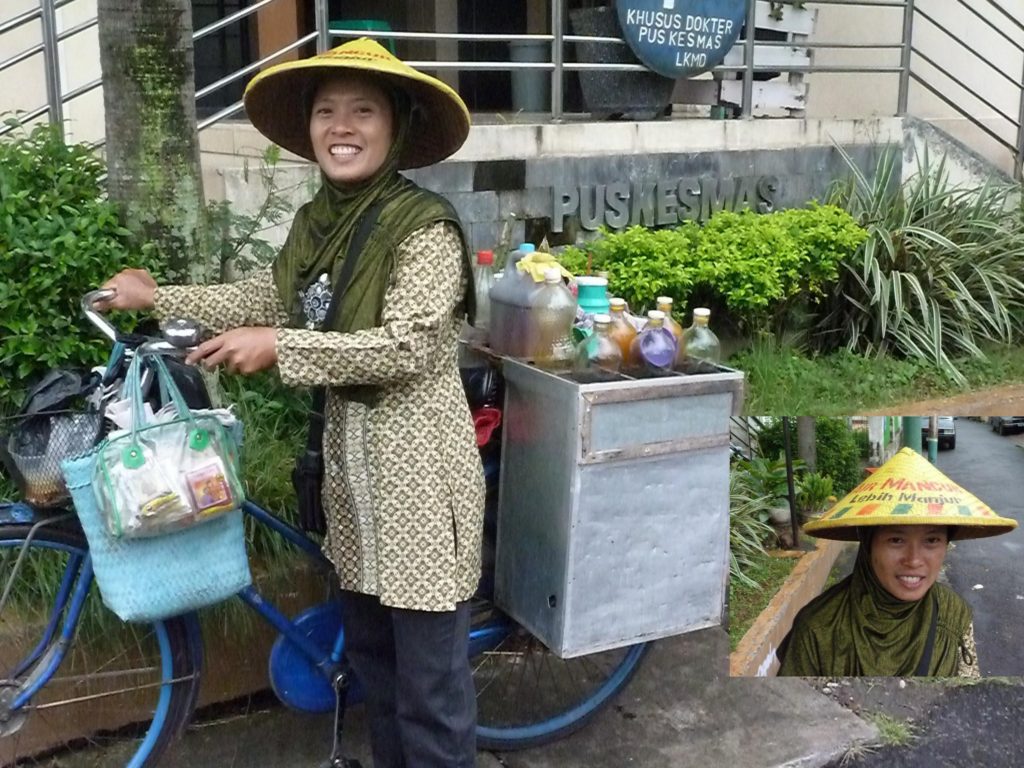
In order to understand the political play on the role of jamu during the pandemic, it is important to know that the consumption of herbal plants as medicine has been part of Indonesian culture for thousands of years (Beers 2001), mainly based on oral traditions and without systematic canonization. Jamu isoften produced by households of jamu gendong sellers, who carry bottled remedies in baskets or via bicycles or motorbikes to customers.

Today, however, jamu is no longer the medicine of the poor but an economic sector with large international companies such as Air Mancur, Djamu Djago or Nyonya Meneer producing a variety of jamu remedies sold as instant powders, tablets or capsules. Street vendors compete with big drugstores over jamu sales and the Indonesian government campaign for jamu as a remedy against Covid-19 supported an important “economic pillar for the nation” (Prabawani 2017: 81) that generated IDR 21.5 trillion (US$1.38 billion) in 2019; up 13.1 percent from Rp 19 trillion in 2018.


Image 1: Jamu Gendong with trademark label on her Caping Gunung (traditional hat) (Erny Mardhani, 2020)

As early as mid-March, the Singapore-based newspaper The Straits Times reported that the President posted a statement on a government website saying that he started drinking a mixture of red ginger, lemongrass and turmeric three times a day since the spread of the virus and was sharing it with his family and colleagues. He claimed he was convinced “that a herb concoction can ward against being infected with the coronavirus”. His statements on the use of jamu medicine contributed to a rapid price increase so that prices of red ginger, turmeric and curcuma multiplied.

Like Jokowi, other politicians have pointed to the benefits of traditional medicine in the current crisis. The district health office of Situbondo in East Java invited members of his community to a public event to drink jamu medicine. He also involved hundreds of school students to further promote the benefits of the traditional medicine for strengthening the immune system. The minister for health also handed over jamu remedies to the first three recovered COVID-19 patients.

The WHO has issued a list of recommendations for handling the current pandemic, including handwashing, following general hygiene and maintaining social distancing. The early suggestions of Indonesian politicians to use herbal Jamu remedies as well as their general assessment of COVID-19 as a harmless virus, has been in clear contrast to the WHO assessment.

This approach has led to public criticism and questioning of whether politicians are intentionally withholding important information in order to avoid panic. In late March, mixed messaging from the government triggered the formation of a coalition of civil society organisations, including Amnesty International Indonesia, Transparency International Indonesia and the Jakarta Legal Aid Institute. The group urged the House of Representatives “to perform its checks and balances function during the COVID-19 pandemic to ensure the government’s policies are on the right track”.

However, “healthcare” is not a singular process but consists of a complexity of different medical traditions, external influences and dynamics. As such, the ongoing COVID-19 challenge may call on different medical approaches, which are not exclusive from one another. So, whilst the WHO uses a biomedical understanding as the basis for assessing the current pandemic, Indonesia’s politicians and many citizens are turning to traditional Javanese medical paradigms. Rather than dismissing outright the calls from Jokowi and others to use traditional medicine during the pandemic, it is necessary to contextualize their calls within Indonesia’s corporate health care market as much as within the nation’s medical pluralism and the concept of traditional Javanese jamu medicine in particular.

Traditional Javanese medicine and the pandemic

The public provision of healthcare in Indonesia is almost exclusively based on biomedical treatment approaches and corresponding ways of defining health and disease. Each sub-district in Indonesia is expected to facilitate one community health center (“Pusat Kesehatan Masyarakat”, acronym: puskesmas) in order to focus on preventing diseases and promoting health. In the present COVID-19 outbreak, this has meant that puskesmas are key institutions for public health treatment and also surveillance. It is expected that each center will trace and monitor infections locally. However, puskesmas are mostly small medical units with perhaps only one medical doctor on staff. In the current crisis, these small local centers are now required to split their limited teams in order to provide public education about the pandemic, contact tracing of infected persons, and treatment of COVID-19 patients in isolation from patients with other diseases.

Indonesia, like any other nation in the world, consists of an ethnically diverse society and this social diversity is reflected in a pluralistic medical system. Large parts of Indonesian society rely on traditional medical approaches. The use of “traditional” medicine or a combination of biomedical treatment and “traditional” medicine, is a common phenomenon all over Indonesia (Ferzacca 2001; Woodward 2011, among others). Relatively recently, more educated urban households have also been found likely to use “traditional” rather than biomedical healthcare. This vivid diversity of medical traditions is represented not only in the supermarket shelves stacked with the jamu-style soft drinks promoted by the government, but also in a large informal medical market, though not in the national primary health care system.

Despite the dominance of biomedical approaches in primary health care and the accompanying skepticism towards other health etiologies, over the past 30 years the market for traditional and complementary medicine in Indonesia has experienced a veritable boom. The use of a whole range of over-the-counter (that is, non-prescription) medications, pharmaceuticals, tonics and new forms of herbal or other mixtures has sprung up, with a wide spectrum of herbal products and stamina remedies (Lyon 2005: 14).

As the COVID-19 crisis deepened, a new market emerged offering “Corona Jamu” that contains turmeric, ginger and other ingredients, in order to strengthen the body’s immune system against viruses. An existing traditional remedy, Wedang Uwuh – a herbal specialty in the region of Yogyakarta – is also being promoted, as it is used to prevent colds, warm the body and boost immunity. The remedy is composed of secang wood, cinnamon, ginger, cloves, nutmeg leaves, lemon grass roots and cardamom. The Jakarta Post summarized several reports from marketing and consumer research agencies, e.g. McKinsey, and emphasized that a number of jamu producers have seen an increase in revenue of up to 50 per cent and predicted that the habit of drinking jamu will be “a new normal”, claiming jamu as “the new espresso”. (However, no data on current market shares of small-traders and corporations in the sector is available.)

Image 2: Homemade Corona jamu sold at the Beringharjo Market in Yogyakarta (Erny Mardhani, 2020)

Yet, from a medical anthropology perspective, jamu consumption and prescriptions are based on the principles of humoral medicine, which has a long and sophisticated tradition. It identifies bodies as having four important fluids which are characterized as hot/cold and wet/dry, and is based on the belief that a balance of these bodily fluids is fundamental to good health. According to this understanding, a balanced unity of body, mind and spirit are essential to withstand outside influences such as viruses, evil spirits or social discrepancies (Weydmann 2019: 213ff.).

It is a long way to go for anyone to provide academic evidence that jamu medicine helps against Covid-19. And yet, some scientists now claim that the more-established traditional Chinese medicine (TCM), both traditional and modern remedies, strengthens the body’s immune system in ways that reduce viral pathogenic factors (Zhou et al., 2020). As has been demonstrated by Hartanti et al. (2020), jamu remedies promoted as Covid-19 prevention in Indonesia are adaptations of the TCM formula which has been officiated in the Chinese National Clinical Guideline as a means to prevent Covid-19 or treatment during severe and recovery stages.

While such trials and debates continue, one thing is certain. The current crisis of Covid-19 seems to be a big chance for the jamu industries. Recently, the head of the Indonesian National Agency of Drug and Food Control BPOM (Badan Pengawas Obat dan Makanan) declared that from January to July 2020 new permits have been distributed for 178 traditional medical remedies, 3 phytopharmaca, and 149 local health supplements with properties to help strengthen the immune system. BPOM also supports research on eight herbal products to combat symptoms of Covid-19. And, as the Jakarta Post recently wrote that there will be “a bright, post-pandemic future for Indonesian ‘jamu’” (Susanty 2020), it comes as no surprise that the Indonesian herbal products manufacturer Sido Muncul is expanding into the Saudi Arabian market as “an opportunity amid the COVID-19 pandemic”.

However, besides the economic opportunities, we also need to consider that the pandemic negatively impacts the poorest sectors of the population. Even though the Indonesian Supreme Court on the one hand annulled the increase of premiums for the National Health Insurance System (BPJS Kesehatan), Indonesian politicians are now asking the poor to spend money for jamu medications or ingredients in order to cope with Covid-19.

Against this background, the current pandemic and emerging practices of healthcare are an economic question. In short, the Covid-19 crisis “turned out to be a capitalist thing” in Indonesia as much as elsewhere (see earlier blog contribution by Don Kalb). Herbal medicine offers economic opportunities in times of crisis and even though we may dream of a system that enables health seekers to freely decide on their healthcare – independent of their economical background – we realize the many obstacles that need to be overcome before such a system can become reality for everyone.


Nicole Weydmann is postdoctoral researcher at the chair of Comparative Development and Cultural Studies with a focus on Southeast Asia at the University of Passau, Germany and works on the use of traditional and alternative medicine in Southeast Asia and Europe.

Kristina Großmann is professor at the anthropology of southeast Asia at the University of Bonn, Germany.

Maribeth Erb is an associate professor at the Department of Sociology at the National University of Singapore (NUS). Originally from the US, she has worked and lived in Singapore since 1989.

Novia Tirta Rahayu Tijaja completed her MA degree in Southeast Asian Studies at the University of Passau and currently lives in her hometown, Jakarta.


Bibliography

Beatty, A. 2002. Changing Places: Relatives and Relativism in Java. In: Journal of the Royal Anthropological Institute, 8(3), 469-491.

Ferzacca, S. 2001. Healing the Modern in a Central Javanese City. Durham: Carolina Academic Press.

Hartanti, D., Dhiani, B. A., Charisma, S. L., & Wahyuningrum, R. (2020). The Potential Roles of Jamu for COVID-19: A Learn from the Traditional Chinese Medicine. Pharmaceutical Sciences & Research, 7(4), 2.

Hornbacher-Schönleber, Sophia 2020. “A Matter of Priority”: The Covid-19 Crisis in Indonesia.  http://www.focaalblog.com/2020/05/11/sophia-hornbacher-schonleber-a-matter-of-priority-the-covid-19-crisis-in-indonesia/. Last Access:12/08/2020.

Lyon, M.L. 2005. Technologies of feeling and being: medicines in contemporary Indonesia. In: International Institute for Asian Studies Newsletter 37, 14.

Mack, A., Choffnes, E. R., & Relman, D. A. (Eds.). 2010. Infectious disease movement in a borderless world: workshop summary. Washington, D.C.: National Academies Press.

Prescott, S. 2018. InVivo, Planetary Health: https://www.invivoplanet.com/

Susanty, F. 2020. Market reports paint a bright, post-pandemic future for Indonesian ‘jamu’. https://www.thejakartapost.com/news/2020/04/29/market-reports-paint-a-bright-post-pandemic-future-for-indonesian-jamu.html. Last Access:12/08/2020.

Weydmann, Nicole 2019. ‘Healing is not just dealing with your body‘: A Reflexive Grounded Theory Study Exploring Women’s Concepts and Approaches Underlying the Use of Traditional and Complementary Medicine in Indonesia. Berlin: Regiospectra.

Woodward, M. 2011. Java, Indonesia and Islam. Dordrecht: Springer.

Zhou, Z., Zhu, C. S., & Zhang, B. 2020. Study on medication regularity of traditional Chinese medicine in treatment of COVID-19 based on data mining. China Journal of Chinese Materia Medica, 45(6), 1248–1252.


Cite as: Weydmann, Nicole, Kristina Großmann, Maribeth Erb, Novia Tirta Rahayu Tijaja. 2020. “Healing in context: Traditional medicine has an important role to play in Indonesia’s fight against the coronavirus.” FocaalBlog, 8 September. http://www.focaalblog.com/2020/09/08/nicole-weydmann-kristina-grosmann-maribeth-erb-novia-tirta-rahayu-tijaja-healing-in-context-traditional-medicine-has-an-important-role-to-play-in-indonesias-fight-against-the-coronaviru/

Sophia Hornbacher-Schönleber: “A Matter of Priority”: The Covid-19 Crisis in Indonesia

Sophia Hornbacher-Schönleber, University of Cambridge

COVID-19 is wreaking havoc in Indonesia. The government ignored the crisis for too long, relying on a dubious religious discourse of divine protection. When it finally reacted, its response was unsystematic and favored economic stability over health and welfare measures. Although the government has neither imposed a strict lockdown nor the state of emergency, it is clamping down on critics during the crisis.

Continue reading

Jan Newberry: Restating the case: The social reproduction of care labor

Ever felt like the best conversation at the party is happening in the next room? When I did my field research in an urban neighborhood in Java some twenty years ago, it was at a time when we were “bringing the state back in” (Evans et al. 1985). I was deeply influenced by Philip Abrams’s “Notes on the Difficulty of Studying the State” ([1977] 1988) Corrigan and Sayer’s The Great Arch: English State Formation as Cultural Revolution (1985), and Everyday Forms of State Formation: Revolution and the Negotiation of Rule in Rural Mexico (Joseph and Nugent 1994) through my supervisor, the late Daniel Nugent. In my own work, I found “everyday forms of state formation” to be more than a great title; it provided a perspective on understanding how relations of production (and crucially reproduction) were entangled with culture, community, and forms of rule.
Continue reading