Tag Archives: Cuba

Sanne Derks, Martijn Koster and Stephanie Ketterer: Crumbling down: Visualizing housing and imagining the state in Havana

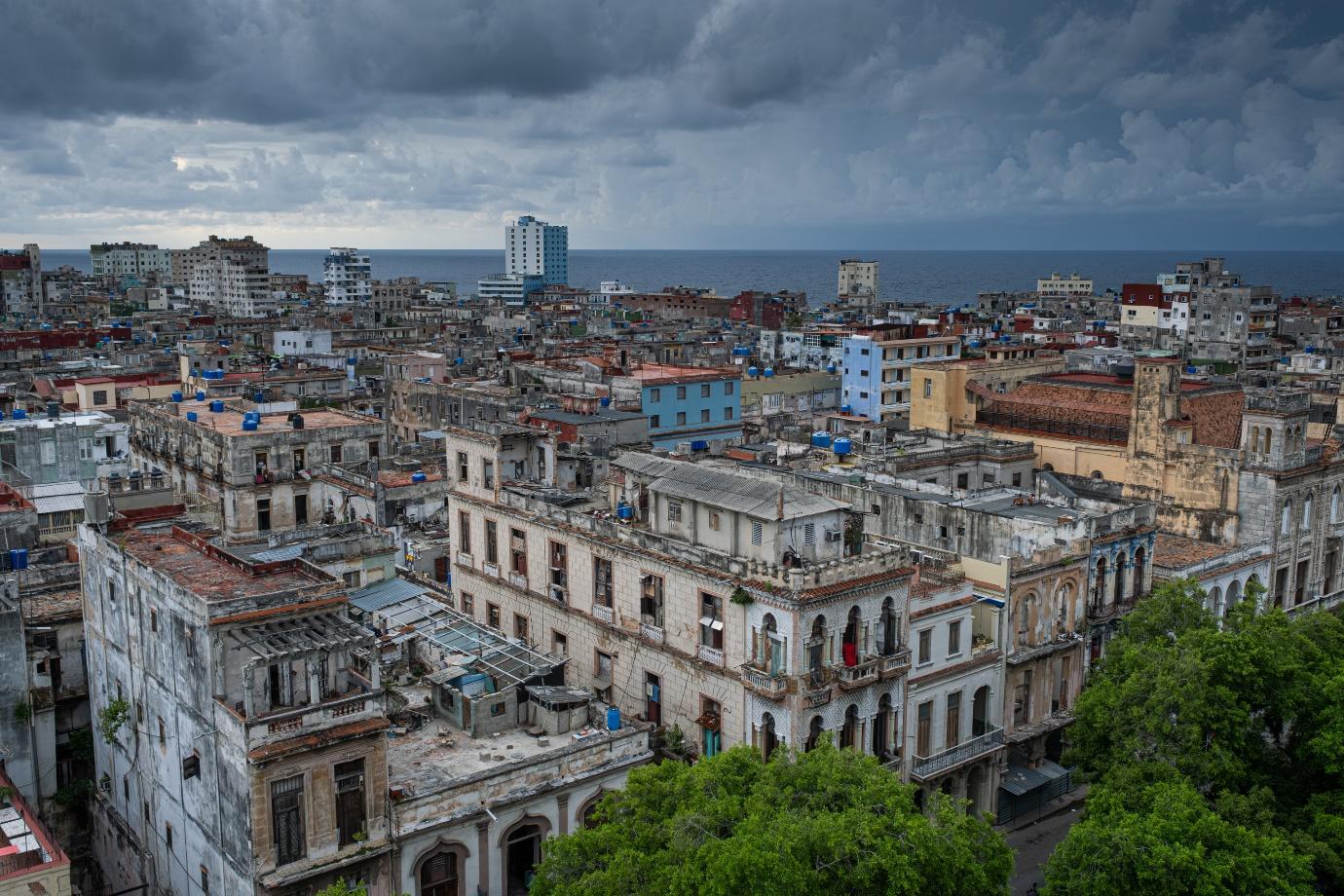
Image 1: View over Habana Vieja. Photo by Sanne Derks

“Ironic, isn’t it? Socialism is supposed to take care of the poor. But here in Cuba, if you don’t have money, you don’t have rights. I assure you that if I had 1,000 dollars, I would give 500 to one bureaucrat, and 500 to another, and within 72 hours they would show up with a mansion to live in.” Maryanelli folds her arms. Her eyes spit fire. Barefoot she stands in the doorway of her usofructo,a small housing unit provided by the state, in the dilapidated neighbourhood of Habana Vieja. She is a hotel housekeeper. She tells how happy she is with the tips that tourists leave behind for her. Now Maryanelli tries to catch some air outside, because the heat is unbearable inside. The fan is not working due to power cuts which have become a daily occurrence in her block. Anger manifests in Maryanelli’s voice as she explains: “They summoned me to leave. The usofructo I am staying in will be demolished, because of the risk of collapse. It is the third time already, as my previous places have collapsed also. And now they send me to this cute patrimonial building, but I refuse to go. I will never get property papers there. As it is a patrimonial building it will always remain the property of the state, whereas I want a permanent place to stay with my two children.” She lights a cigarette and continues as she exhales: “You know what? The state promised us a house already in 1969, after my grandmothers’ house collapsed. They gave us this file, black on white. I inherited this right to a home from my grandmother, who was sent to a shelter. And here I am, nearly 60 years later, three collapses further, and still no house to live in…”

In Cuba, since the instalment of the Revolutionary regime in 1959 the state has promised to take care of housing for its citizens. The right to housing is enshrined in the constitution of the socialist country which is currently facing one of the most severe crises in its history due to external and internal factors (Boudreault-Fournier & Gauthier, 2024; Köhn, 2024). Challenges include post-covid recovery, monetary reforms, a bankrupt government and even stricter sanctions from the US than at any time in the last sixty years, the most recent consequence of which is the current oil embargo. These factors have led to hyperinflation, scarcity of food, electricity, gasoline and water, as well as social unrest. As always, both the state’s and peoples’ struggles are multiscalar (Kalb and Mollona, 2018; Mollona, 2014) and include those for housing (Acosta et al., 2020). Long before this most recent crisis it had already been difficult to find a decent and safe place to live in Havana (Carter 2008), but the state’s current obvious incapacity to address its housing problems engenders more and more criticism from the residents. People are increasingly openly blaming the government for its failure to manage basic needs such as housing, electricity or water (Derks, 2024). Under the current circumstances, neither the socialist state nor the impoverished residents have the means to maintain the city centre’s old colonial buildings. While the state blames the ongoing shortage of materials to the embargo imposed by the US (since the 1960s), many working-class residents have lost patience and now blame the socialist state for not providing the necessary services, materials or adequate salaries for housing maintenance that socialism has historically held out as a promise.

It is not easy to find official, reliable, statistics on housing collapses and the condition of buildings in the Cuban capital Havana. According to official figures, approximately 35% of buildings in Cuba are in poor condition (Leiva, 2024), and 850,000 residential structures need maintenance and repairs, but we expect these figures to be higher. An architect who works as a street-level bureaucrat in the Housing Department of Habana Vieja—we call him Pedro— estimates that as much as 70% of the houses in Havana Vieja need immediate repair or may collapse. A recent internal document with statistics on the housing stock for the city of Havana reports a total of 550,000 homes in the capital, of which 121,000 are in poor condition and 129,000 are in ‘regular’ condition, meaning they need maintenance to prevent further deterioration. This would imply that almost half of the buildings in the city are currently in need of repair.

Yearly, Havana faces 1,000 partial or full collapses. For decades the capital has had the largest number of collapses, deaths caused by collapse, and the largest housing deficit in Cuba. Only in the past half year, several deadly collapses were reported in Habana Vieja. Havana’s proximity to the sea, heavy rainfall, and hurricanes increase the need for proper and regular maintenance of its buildings. After hurricane San Rafael (2024) 460 collapses were registered. Havana is also dealing with a significant housing shortage. In 2017, Castellanos (2017) quoted the city’s Shelters Director, who said that 35,000 families, totalling 116,000 people, lived in shelters, and another 34,000 were in need of it. The average stay in shelters, the Director said, is no less than 20 years.

In Cuba, speaking about housing is speaking about the state. For her current research on state-resident relations in the field of housing in Havana, anthropologist and documentary photographer Derks has conducted fieldwork in Havana for 10 months since 2025. During this period, she took the photographs featured in this essay, visited working-class residents, and followed street-level bureaucrats responsible for monitoring the condition of buildings in Havana. Since 2005, she has stayed in Cuba regularly for different projects and has lived in Havana since 2023. Over these 20 years she has witnessed the city crumble. Koster visited Cuba three times between 2018 and 2025 for shorter periods in which he carried out fieldwork with Derks. Ketterer visited Cuba in 2025 and works closely with the others on this project.

For this blog, we build on Gupta’s (1995) approach to understanding the state as constructed through peoples’ imagination and their everyday practices. We further draw inspiration from Navaro-Yashin’s (2002) work on the faces of the state: the various forms in which state representatives present the state to the people through practices, discourses and institutions. We have studied the various faces and imaginaries of the state as they are given shape among residents who experience housing problems. We also analysed how street-level-bureaucrats working in the Housing Department of Habana Vieja come to embody the state in diverse and contradictory ways during their face-to-face encounters with residents.

Currently, most of the attention focused on Cuba centres on the geopolitical situation and the measures taken by the US government against Cuba and other countries in the region. In this essay, while we take this geopolitical context into account, we focus primarily on the daily reality as experienced by working-class residents and bureaucrats in Havana, and on their ambiguous views of the state. Residents, such as Maryanelli, blame the state for not providing housing—or, more generally, for not taking good care of them. At the same time, they clearly still expect the state to fulfil its socialist promises of housing and other basic necessities. Bureaucrats represent the state when they visit residents, explain policies and make promises. Yet, they also often distance themselves from the state, aware of its shortcomings in practice, often prompted by the housing problems they face in their own personal lives.

In addition to describing people’s ambiguous views and practices, we present a selection of Derks’ photos to visualize them. The photos show the material reality of buildings and people’s practices, while also capturing present-day imaginaries of a state that is increasingly contested and visibly crumbling. They “take us deeper into the sensory knowledge” (Crowder and Cartwright 2021:3) of housing and residents’ imaginaries of the state and “operate as a form of collage, with images being read individually and also within a wider visual narrative” (Sutherland 2016:115). As Squire (2016) suggests in her photo essay in Focaalblog, photography makes it possible to break through linear narratives in written texts and showcase heterogeneous, complex realities effectively. In addition, as we show in this essay, visualizing housing as a basic human need and a primary government responsibility, as claimed by Cuban socialism, may contribute to a deeper understanding of people’s imaginations of the state. Housing, as a convergence of matter and meaning, seems to coincide with peoples’ imaginaries of the state: instead of providing the promised shelter and care, things are collapsing.
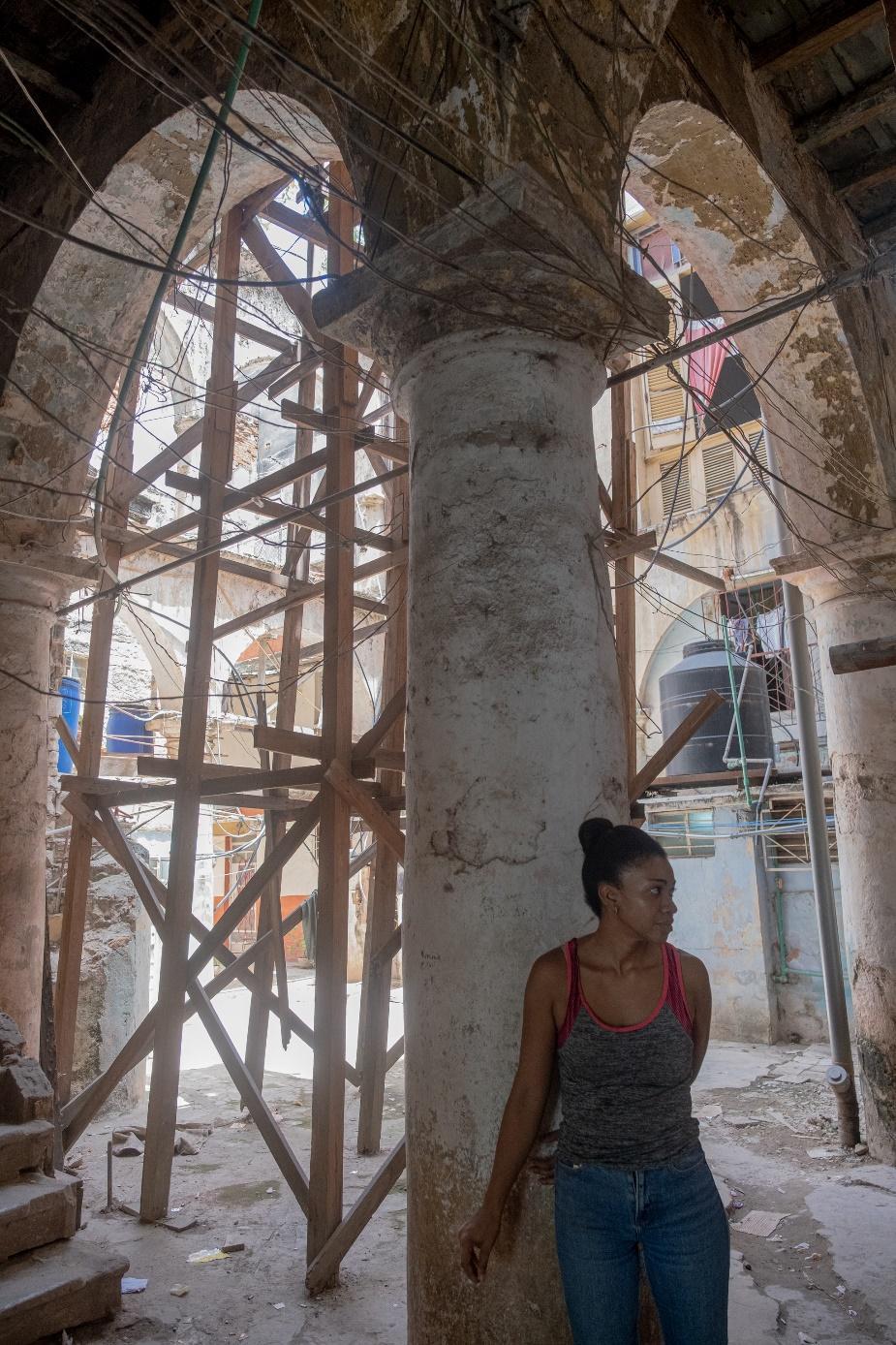
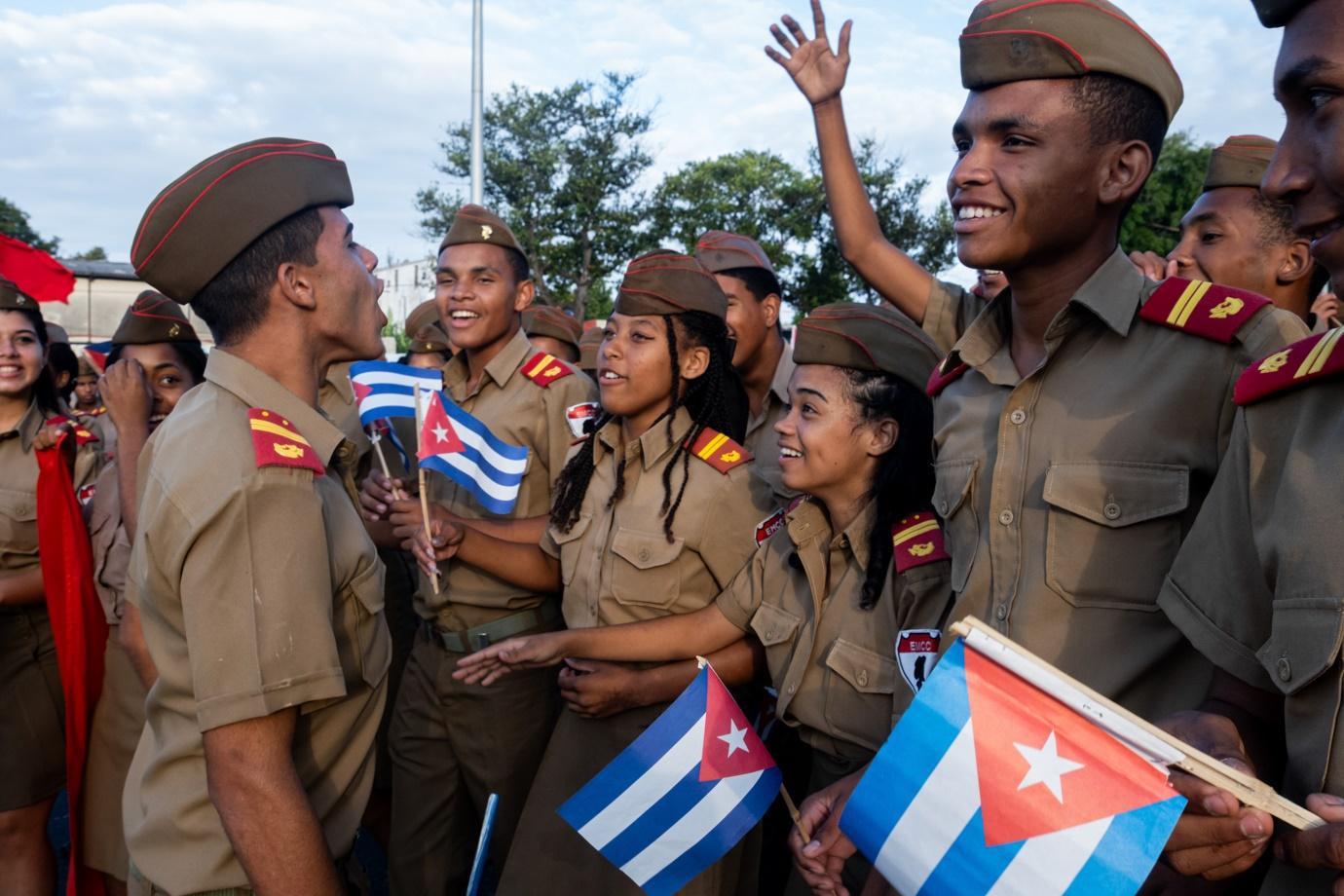
Image 2: A resident stands in the patio of a precarious solar, an old colonial building in which several families reside. This one is at high risk of collapsing. In an attempt to find a temporary solution, the state decided to strut the space to delay collapse and prevent immediate eviction. This photo viscerally illustrates how, under current circumstances, the Cuban state is no longer able to fulfil one of its core promises: the right to decent, affordable and safe housing. Photo by Sanne Derks
Image 3: Cadets sing and shout during the 1st of May Parade in Havana in 2025. The imaginary of the state expressed during this national celebration exudes revolutionary values such as solidarity and unity, and pays tribute to the workers. The celebration’s coherent, unifying and optimistic discourse is a world apart from the material conditions of the houses Derks photographed and the experiences of the residents we talked to, most of whom live under precarious circumstances, lacking safe homes, water, electricity and the resources to obtain sufficient and healthy food. Photo by Sanne Derks
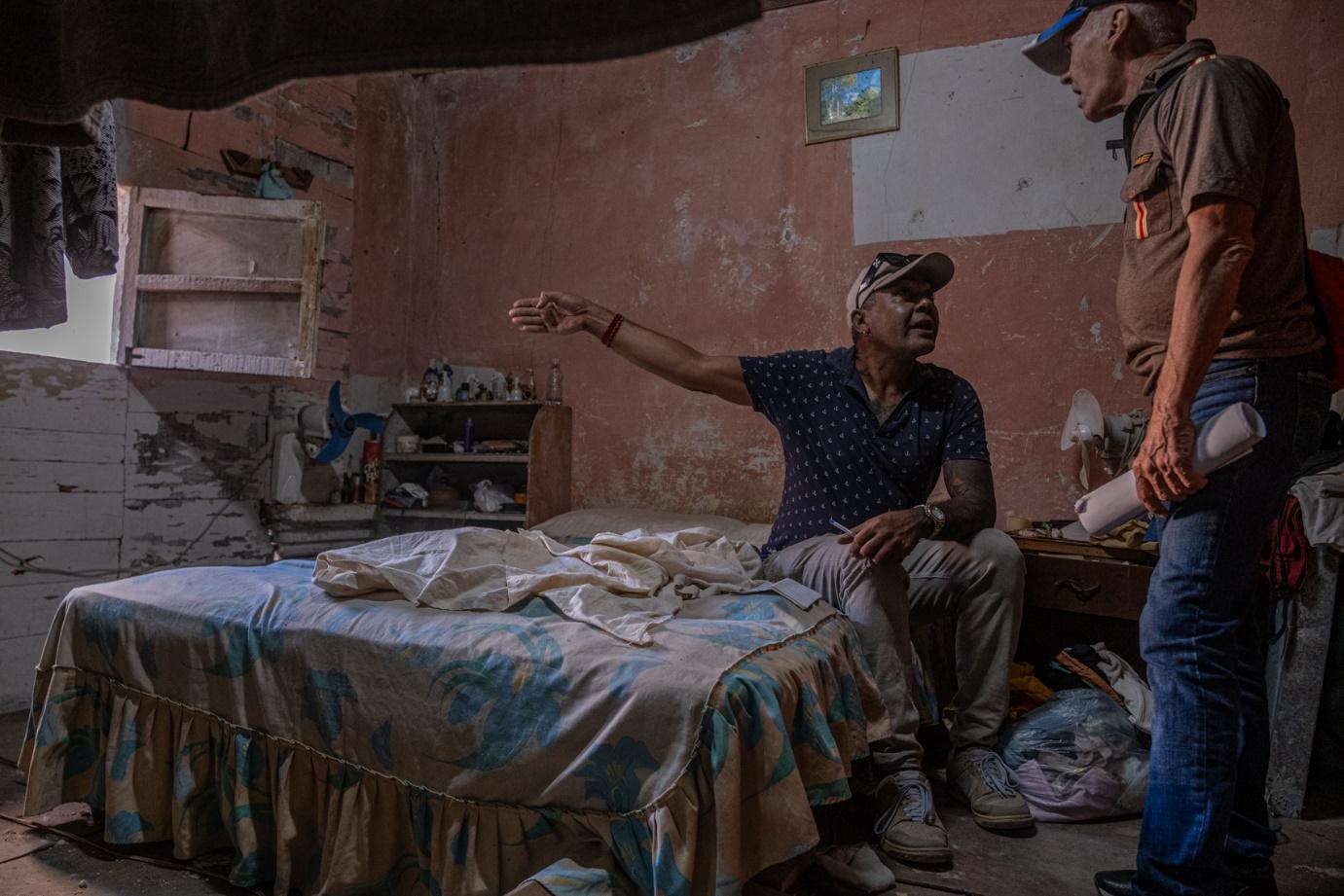
Image 4: Pedro, whom we introduced above, is a 65-old street-level bureaucrat who works for the Housing Department in Habana Vieja as an arquitecto de emergencia, an emergency architect. When houses collapse, or are in danger of collapsing, he is immediately sent to the site to draw up a technical report on the condition of the building. He can issue a repair order or a complete or partial demolition order. At present, however, the former almost never happens, because houses are in such poor condition. After a demolition order, he also notifies the Housing Department that the residents must be sent to a shelter, although there are hardly any places available. Ironically, Pedro’s own house is in a generally precarious state and has a leaking roof. He cannot afford a mattress for the folding bed on which he sleeps. Many street-level bureaucrats live under similar circumstances. While they represent the socialist state as bureaucrats in their visits to residents, in our interviews they often present themselves as disconnected from—and even abandoned by—the state. One of them told us: “I feel betrayed. I have worked for the Housing Department my entire life, but I do not have a solid roof over my head. There is nothing social about socialism.” Photo by Sanne Derks
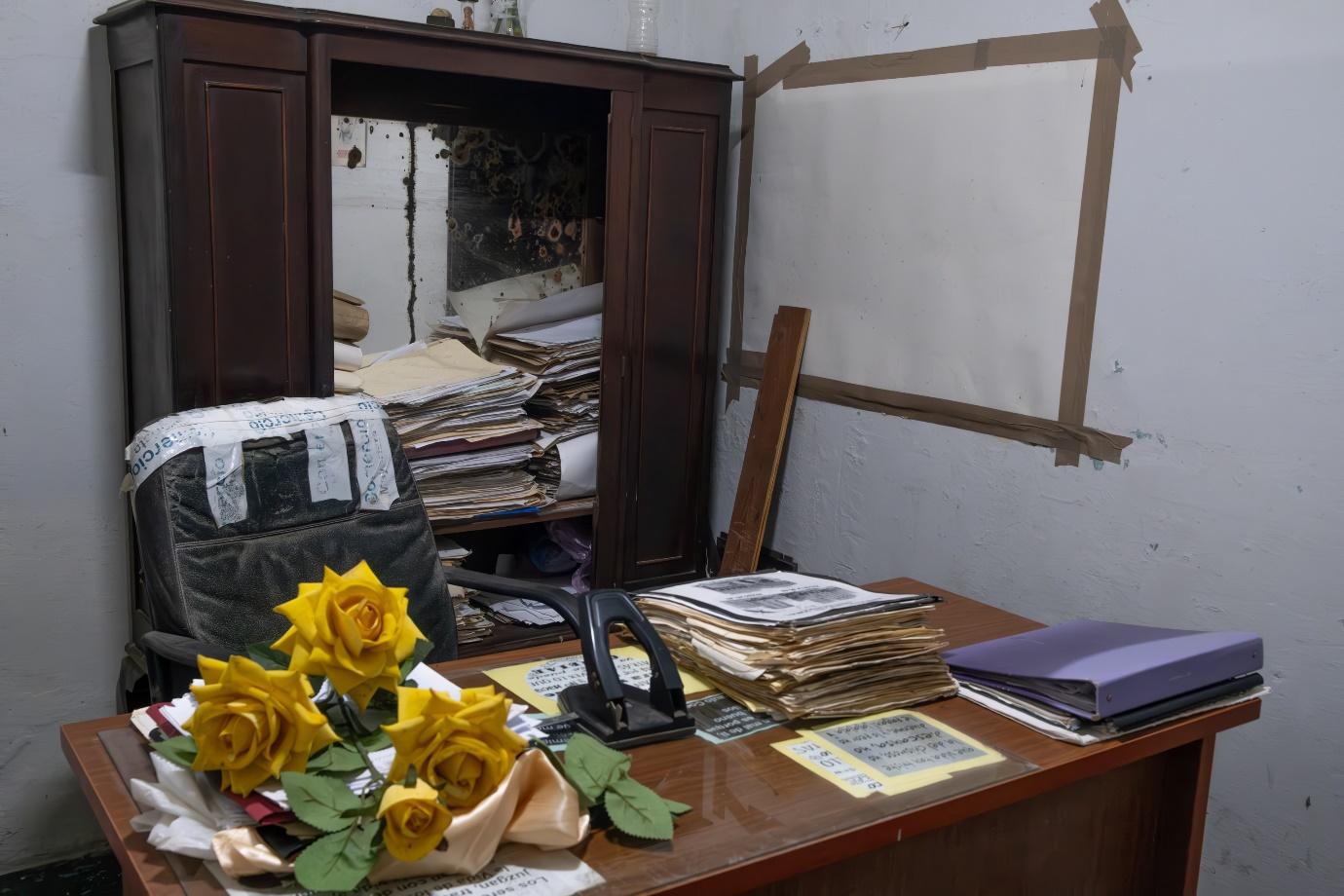
Image 5: In the Housing Department of Habana Vieja, bureaucrats often complain about the bad working conditions: There are frequent power outages, no computers, no ventilation and no daylight. An endless chain of paperwork dictates lengthy and often never-ending procedures. Working-class residents tell us that they have lost their trust in Cuban bureaucracy. Reasons they mention for their discontent are corruption—bureaucrats often try to earn extra money a la izquierda (under the table)—the long time to process complaints and requests, and the general inefficiency of the system. Photo by Sanne Derks
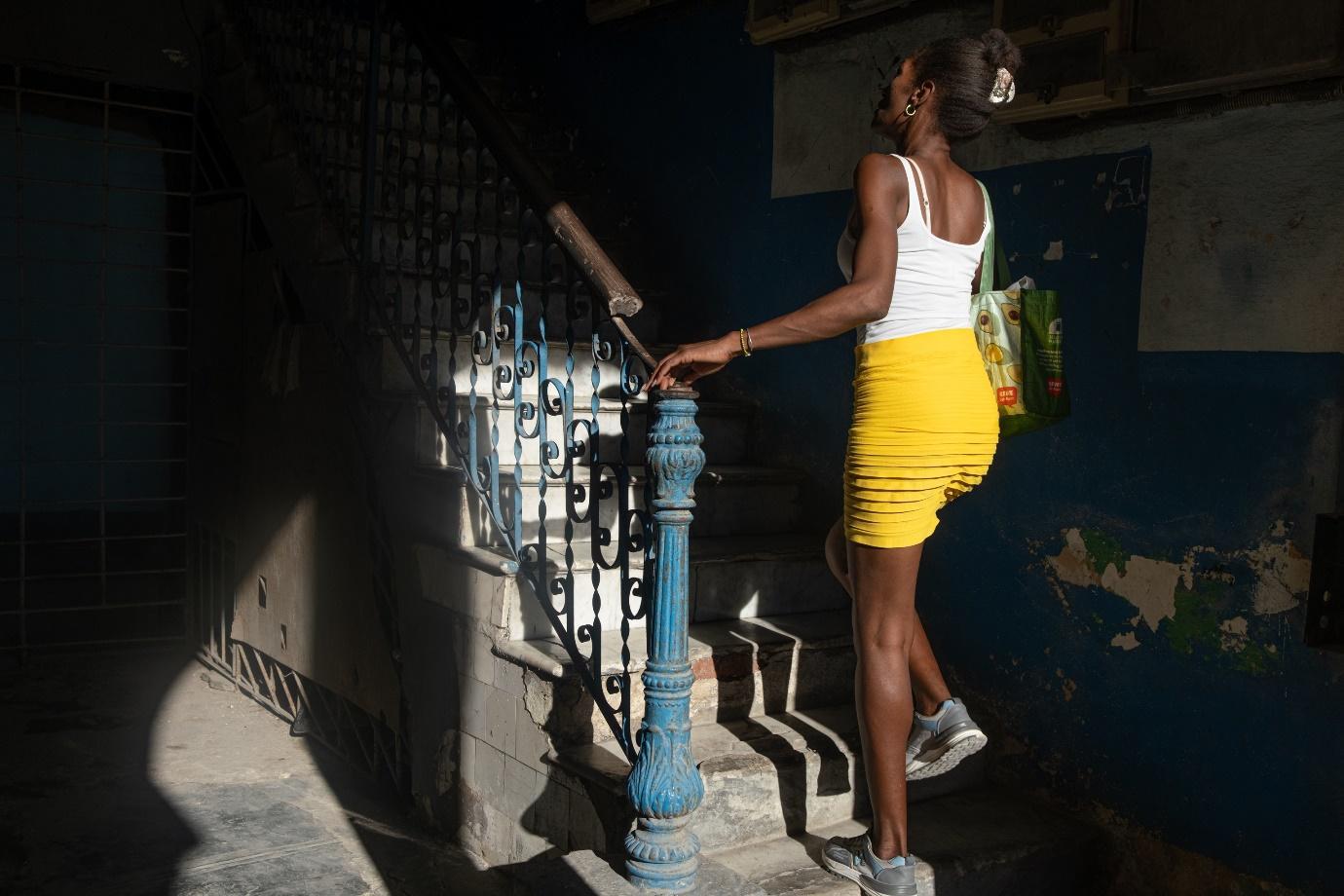
Image 6: A street-level bureaucrat we call Claudia, who also works for the Housing Department of Havana Vieja, climbs the old staircase of a multi-family building at the emblematic Prado Street in Habana Vieja to visit the residents. She visits residents who are experiencing conflicts related to cohabitation. She listens to peoples’ complaints, collects testimonies and tries to mediate in housing-related disputes. When people get angry with her—which frequently happens—she uses her position as a state representative and says: “Shouting at a state functionary is a crime under the Cuban constitution, and if you continue to shout, you will end up in prison.” In more private conversations, she describes herself as dissociated from the state. She says she feels “enslaved by the state.” Recently, she confronted her superiors and told them: “I haven’t had gas for several days. You have the contacts and the position to solve this, but none of you care. And I am supposed to care about other residents’ problems when I can’t even cook a meal in my own home?” Photo by Sanne Derks
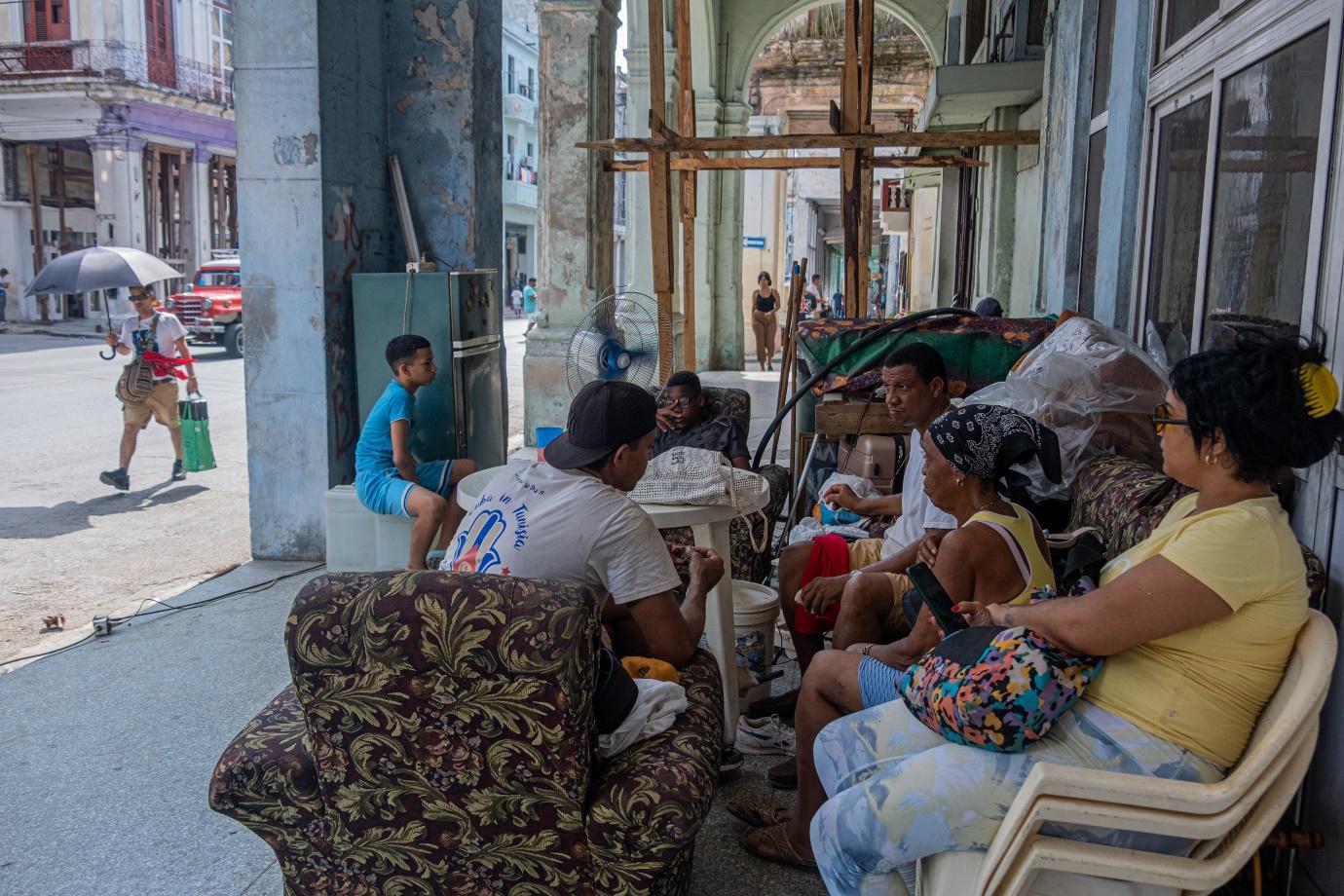
Image 7: A family sits with all their belongings in the colonnade in front of their collapsed house in Habana Centro. They tell us they live here on the street to pressure the government to take care of them. They waited for three days for the bureaucrats to take them to another place. The fridge is connected to an extension cord that they installed themselves. Their situation illustrates how people, on the one hand, continue to make claims on the socialist state and, on the other hand, take matters into their own hands—how they still relate to the idea of socialism, yet at the same time feel deeply frustrated by it. Photo by Sanne Derks
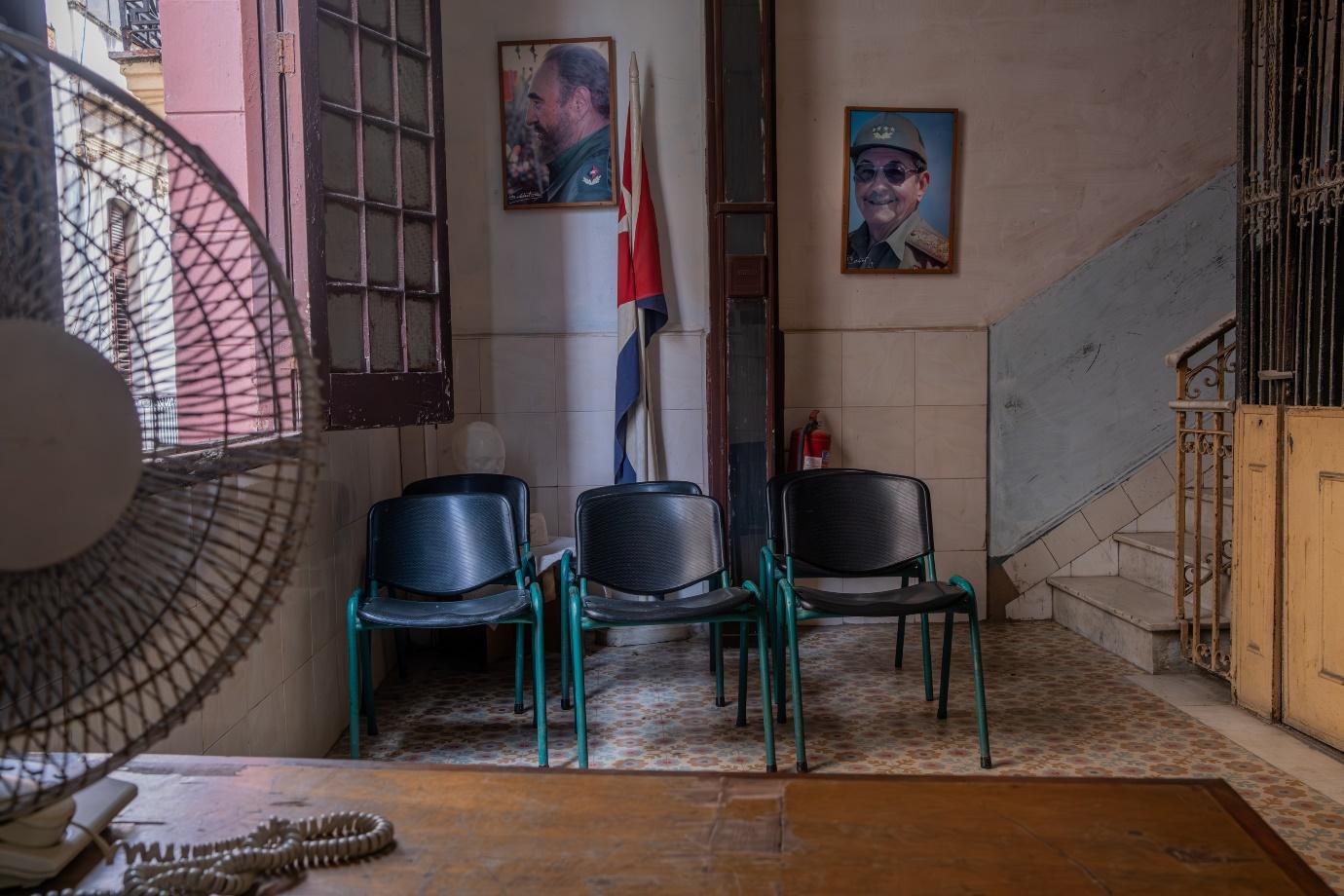
Image 8: The Urban Planning Department of Habana Vieja monitors compliance with building regulations. It has a waiting room where waiting can take forever. Habana Vieja is an overpopulated municipality. Overpopulation has forced residents to build creatively inside and outside their homes in search of more living space. Residents come to the Urban Planning Department when they require legal approval of construction work they wish to carry out. However, as bureaucratic processes are cumbersome, many people prefer to build illegally and pay a fine, or bribe a bureaucrat afterwards, rather than go through the time-consuming legal procedures necessary for obtaining a permit. Photo by Sanne Derks
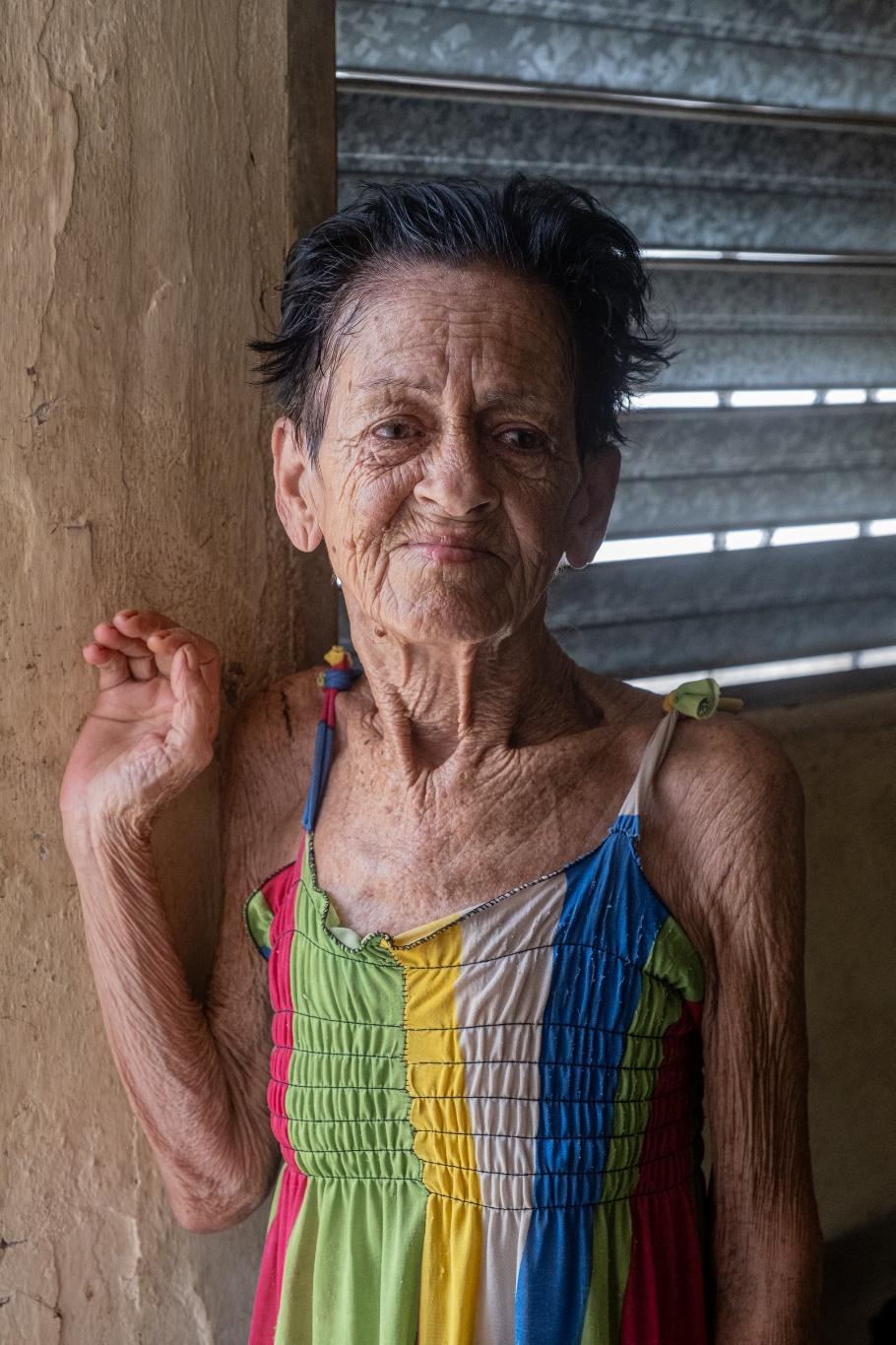
Image 9: Retired Yolanda lives in a shelter in Havana’s periphery about 10 km from Habana Vieja. When her house collapsed more than 11 years ago, the Housing Department promised to find her a new home within 6 months. After 11 years, she has lost hope. The roof of her shelter is made of fibre cement, which means it is extraordinarily hot in her house. “If I could say something to the bureaucrats of the Housing Department,” she says, “I would invite them to my house and stay in the unbearable heat for 20 minutes. So they can experience what I have to go through day by day.” Photo by Sanne Derks
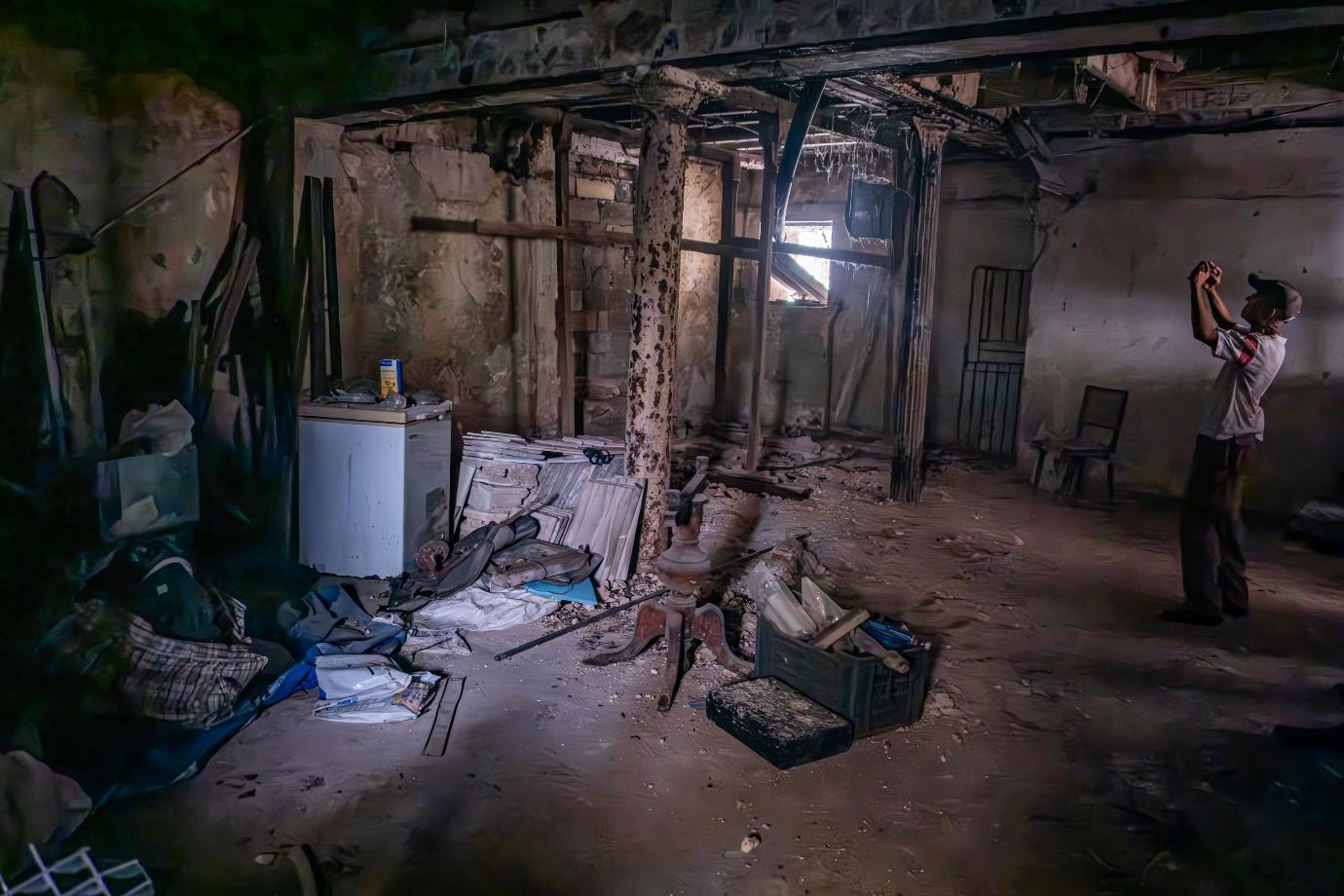
Image 10: For a technical report, Pedro takes a picture of a floor that needs to be demolished. Bureaucrats find creative ways to increase their side incomes from such assessments. One bureaucrat told us how he collaborates with a private construction company and a private demolition company at the same time. If the building is ‘repairable’ he tries to convince his superiors to work with the construction company and takes a percentage. “But it has to be credible. And if I need money urgently, I sometimes give a demolition order. They [the demolition company] give me less, but it is quick and at least it’s something.” Pedro also says that bureaucrats nowadays give more demolition orders than necessary, just to get money quickly and survive on a daily basis. Photo by Sanne Derks
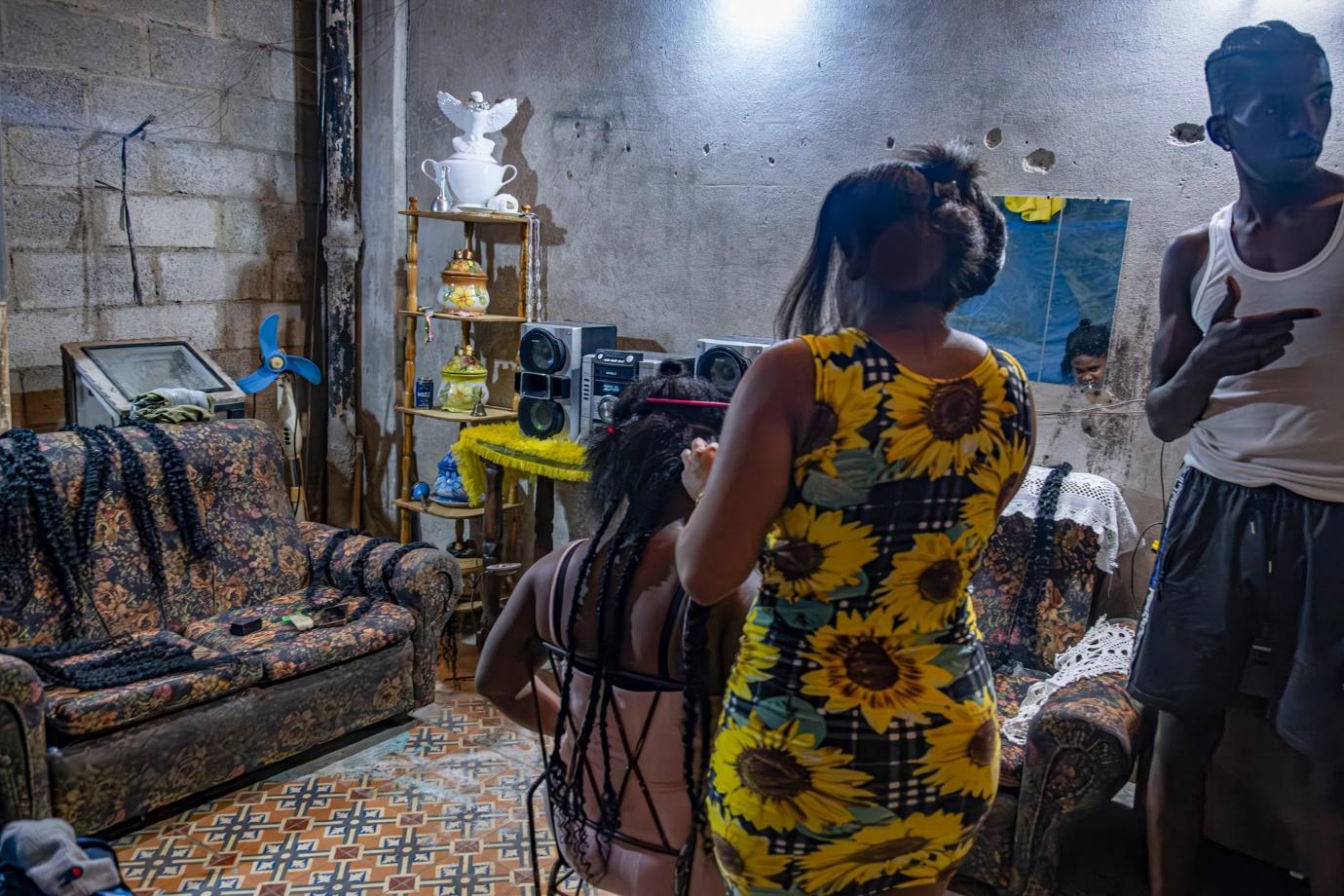
Image 11: The people in this shelter live in Monte street, which used to be a commercial area. By law, it is forbidden to use commercial areas for housing, but the state does it anyway, because of lack of space for the number of people needing shelter. These buildings often lack adequate living conditions such as toilets or kitchens. In 2019, the state introduced a law encouraging people to create basic amenities at their own expense, in exchange for property rights. The conditions for this were extended and simplified in 2025. Several residents told us, realistically, that they see this as a way for the state to gradually transfer responsibility to the residents, because it acknowledges that it no longer has the resources to provide for their housing. At the same time, they see it as an opportunity to get ownership, become more independent from the state, and maybe have more opportunities in life. Photo by Sanne Derks
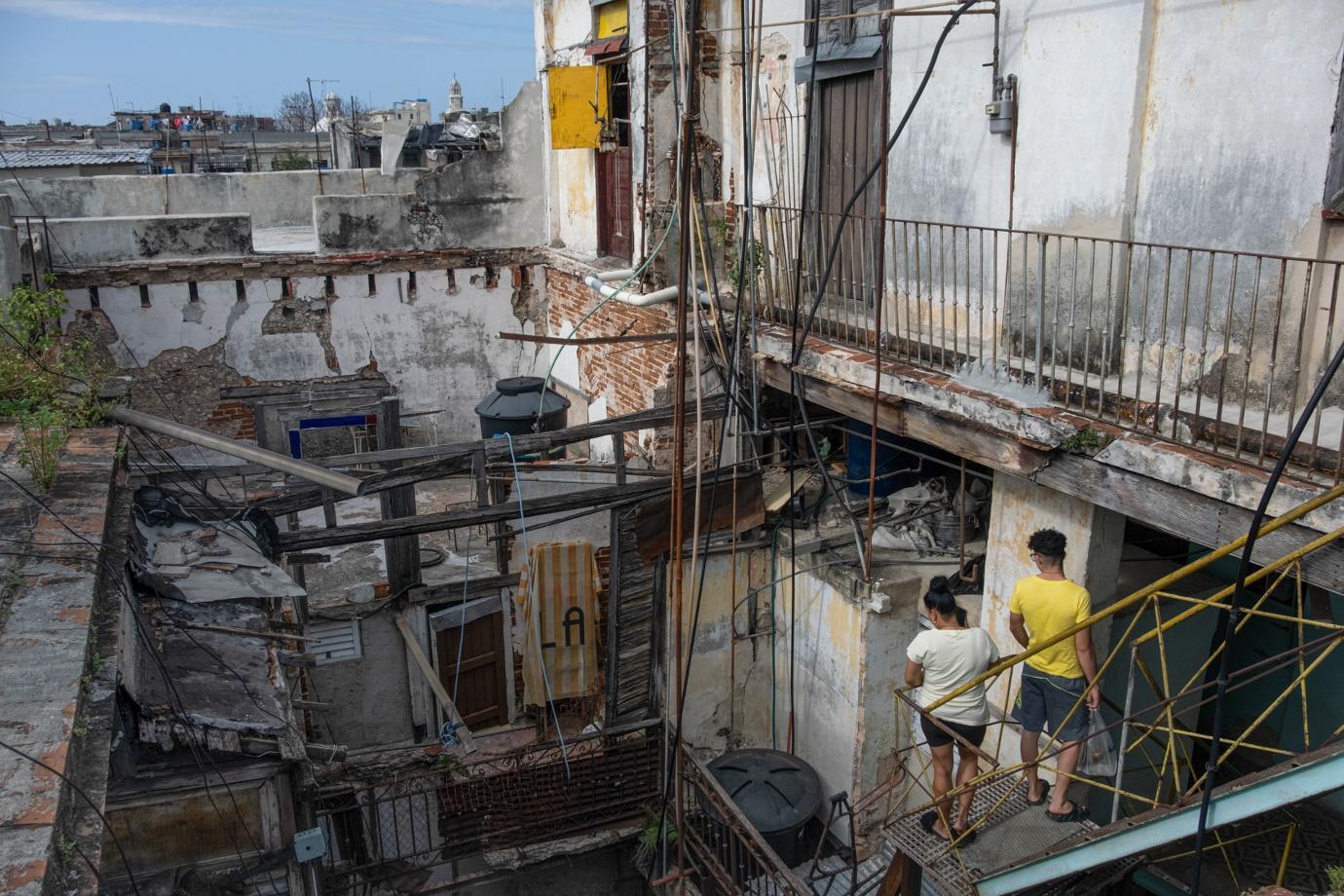
Image 12: A couple descends from a makeshift staircase in a crumbling building in Habana Vieja. Although the socialist state promises housing for all, the realistic possibility of having a decent home is increasingly becoming a privilege solely for people with money. The current crisis condemns the growing group who have nothing to offer or bribe, whether it be money or social networks, to wait it out, often until their homes collapse. Photo by Sanne Derks

These photographs and our broader research on housing in Havana demonstrate how people experience and imagine the state during the current crisis. Facing the deteriorating housing conditions in the city, they give expression to their—largely very critical—ideas about the state. Even state employees openly criticize the state for not providing for the population, and for failing to pay a decent salary to civil servants. They also use this criticism to legitimize the bribes they receive. These bribes create an ambivalent relationship between residents and street-level bureaucrats. On the one hand, the bribes give residents (who can afford them) a certain degree of control over their situation and the opportunity to smoothen or expedite otherwise endless processes. On the other hand, they reinforce negative feelings about the state which obviously does not work unconditionally for everyone—contrary to its official socialist narrative and within a complex context of extremely limited resources.

As we have shown, the Cuban state at this point offers no or only make-shift solutions to housing issues. The houses in the photos in this essay embody this failure. Buildings collapse or are demolished, leaving less and less space to house people, while more and more of them are homeless or living in high-risk situations. At the same time, both working-class residents and street-level bureaucrats keep on claiming certain rights—to housing and other basic necessities—from the socialist state that they may not claim in other Caribbean countries. They (still) perceive the state as a possible and desired provider of goods and services—and the street-level bureaucrats also reproduce this ‘face’ of the state in their interactions with residents. At the same time, both residents and bureaucrats see the socialist state as an institution that falters with regard to housing as well as with the revolution in general.

The research, including the photography, for this essay are part of the POPULAR project, which is financed through the European Research Council (ERC) under the Horizon Europe research and innovation program (Consolidator Grant, agreement no. 101087109).


Sanne Derks is an anthropologist and documentary photographer, based in Havana, Cuba. Currently, she is a postdoctoral researcher at Wageningen University, the Netherlands, where she focuses on shifting imaginaries of the state around housing struggles in Havana. She holds a master’s in psychology (2003, Radboud University), a PhD in Anthropology (2009, Radboud University), and a master’s in Photojournalism (2016, Universidad Autónoma de Barcelona).

Martijn Koster is an Associate Professor in the Sociology of Development and Change Group, Wageningen University. His research interests include (in)formal resident-state relationships, politics, housing, and urban development. Currently, he is PI of POPULAR, a research project with ethnographic case studies in Havana (Cuba), Medellín (Colombia) and Recife (Brazil), financed through an ERC Consolidator Grant.

Stephanie Ketterer is a political anthropologist and Associate Professor with the Sociology of Development and Change Group, Wageningen University. Her research interests lie at the intersections of the anthropology of the state, infrastructures, and datafication. She just launched a new NWO-Vidi project on everyday politics surrounding rural data centers.


References

Acosta, R., F. Eiró, I. Koch & M. Koster (2020). Introduction: Urban struggles: governance, resistance, and solidarity. FocaalBlog, July 2. https://www.focaalblog.com/2020/07/02/raul-acosta-flavio-eiro-insa-koch-and-martijn-koster-introduction-urban-struggles-governance-resistance-and-solidarity/

Angulo Leiva, J. E. (2024). Señas y sombras del proceso de recuperación tras los recientes eventos naturales. Granma,December 18.

Boudreault-Fournier, A. & Gauthier, M. (2024). ‘Inflation as pressure: coping mechanisms from Eastern Cuba.’ Focaalblog, December 10. https://www.focaalblog.com/2024/12/10/alexandrine-boudreault-fournier-and-melissa-gauthier-inflation-as-pressure-coping-mechanisms-from-eastern-cuba/

Carter, T. F. (2008). Of spectacular phantasmal desire: Tourism and the Cuban state’s complicity in the commodification of its citizens. Leisure Studies, 27(3): 241–257.

Castellanos, D. (2017). Havana is collapsing. Diario de Cuba, May 4.

Crowder, J. W. & E. Cartwright (2021). Thinking through the photo essay: Observations for medical anthropology. Medicine Anthropology Theory, 8(1): 1-13.

Derks, S. (2024). Manifiesto del Agua. Beerse: Studio Another Day, Daneels.

Gupta, A. 1995. Blurred Boundaries: The discourse of corruption, the culture of politics, and the imagined state. American Ethnologist, 22(2): 375-402.

Kalb, D. & M. Mollona. (2018). Introductory thoughts on anthropology and urban insurrection. Kalb, D. & M. Mollona. (eds.) Worldwide mobilizations: Class struggles and urban commoning. New York and Oxford: Berghahn Books, 1-30.

Köhn, S. (2024). ‘Tokens of survival: the rise of crypto gaming in Cuba’s inflationary economy.’ FocaalBlog, December 10. https://www.focaalblog.com/2024/12/10/steffen-kohn-tokens-of-survival-the-rise-of-crypto-gaming-in-cubas-inflationary-economy/

Mollona, M. (2014). The Brazilian ‘June’ revolution: Urban struggles, composite articulations, and new class analysis. FocaalBlog, October 28. https://www.focaalblog.com/2014/10/28/massimiliano-mollona-the-brazilian-june-revolution-urban-struggles-composite-articulations-and-new-class-analysis/

Navaro-Yashin, Y. (2020). Faces of the state: Secularism and public life in Turkey. Princeton, NJ: Princeton University Press.

Sutherland, P. (2016). The photo essay. Visual Anthropology Review, 32(2): 115-121.

Squire, V. (2016). 12 days in Lampedusa: The potential and perils of a photo essay. FocaalBlog, 11 January https://www.focaalblog.com/2016/01/11/vicki-squire-12-days-in-lampedusa-the-potential-and-perils-of-a-photo-essay/


Cite as: Derks, S., Koster, M., and Ketterer, S. 2026. “Crumbling down: Visualizing housing and imagining the state in Havana” Focaalblog, May 25. https://www.focaalblog.com/2026/05/25/sanne-derks-martijn-koster-and-stephanie-ketterer-crumbling-down-visualizing-housing-and-imagining-the-state-in-havana/
Alexandrine Boudreault-Fournier and Mélissa Gauthier: Inflation as pressure: coping mechanisms from Eastern Cuba

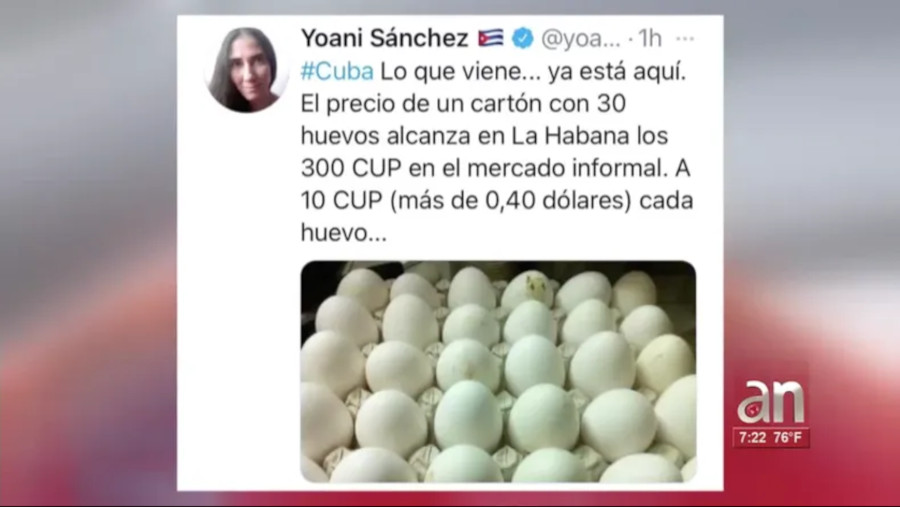
Image 1: Snapshot of Yoani Sanchez’s Twitter post, December 16, 2020. Source: “Mecardo negro en Cuba ya da señales de inflación: un carton de huevos a 300 pesos cubanos” by Rolando Nápoles

When the daily Miami-Santiago de Cuba flight landed in Cuba in May 2024, a passenger at the back of the plane shouted in Spanish: !Ya llegaron los dolares! “The dollars have arrived!” Everyone on board started laughing and clapping. In making that announcement, the Cuban passenger referred to the fact that visitors to Cuba were the main suppliers of hard currency on the island. It is extremely cumbersome, if not impossible for Cubans to exchange Cuban pesos to US dollars in official banks or in exchange offices. As a result, US dollars are effectively accessible only through the illicit market, fueled by foreign currencies entering the island thanks to travellers. In shouting that “the dollars” had arrived on the tarmac, the passenger also pointed to how everyone is looking for dollars in the hope of better life conditions. This vignette further speaks to the recent inflation phenomenon in Cuba, since the increased demand for foreign currency in the illicit market, caused by recent internal economic reforms, has created more inflation, subsequently deteriorating the value of the national currency (Truebas Acosta 2023).

We experienced this anecdote and many others similar to it while conducting fieldwork and teaching two ethnographic field schools during Summer 2023 and Spring 2024 in Santiago de Cuba. These stories, often full of sarcasm and humour, describe what the anthropologist Myriam Amri calls “inflation talk”, which she defines as “a mode of small talk that operates as critique and affect” (2023:29). “Inflation talk” further refers to anecdotes, jokes, conversations but also, as Amri shows, the sensorial experiences that relate to how inflation is lived every day. Stories also express how people cope with an “inflation bomb”, a term suggested by national economists to characterize the recent and ongoing inflation in Cuba.

The extreme escalation of prices in Cuba since 2021 is on everybody’s lips, generating anxiety and despair. In this blog, we engage with the following questions: how are Cubans responding to the current economic crisis? and, how do they respond to inflation rates while facing a complex economic system that is failing them? We use the increase of the price of eggs as a case study to explore how inflation is lived and dealt with every day. We investigate the phenomenon of inflation through the lense of pressure. Wiegratz, Dolan, Kimari, and Schmidt (2020) argue that pressure emerges at the convergence of “overarching ideology, economic structures, social webs of exchange, and the dynamics of capitalism,” and that pressure is the result of a disbalance between the reality of what people imagined being able to fulfill and the real economic burdens of their daily life. We argue that pressure allows for an in-depth understanding of the connections between how people live and how they strive to develop coping mechanisms to face pressure.

Inflation a lo Cubano

Based on their own data, the Cuban government reported an inflation of 77 per cent in 2021 and 39 per cent in 2022 (Estudios Economico de América Latina y el Caribe 2023). Other sources show more drastic figures. Cuban economists Pavel Vidal and Luis R. Luis (2024) report a “big-bang devaluation of the peso in 2021” with inflation rates ranging from 174 per cent to 700 per cent that same year. Such extreme figures reflect more accurately the increase of prices that were reported to us by Cubans. Inflation in Cuba is not characterized by a steady increase observed over a certain period. It corresponds to sudden inflation, and monetary instability, caused by a long stagnant economy, Donald Trump’s strict sanctions towards Cuba, the Covid-19 pandemic, and a failed economic reform (referred to as ordenamiento económico: money ordering). As a result, Cuba is undergoing its worst economic crisis in contemporary history; more than one million Cubans have left the island since 2021 in what is known as an unprecedented exodus.

In Cuba, the exchange rates between the Cuban pesos and the US dollar follow the rules of the informal sector. Rates are shared through internet communication technologies, mainly WhatsApp. Since 2022, the Cuban government exchanges Cuban pesos for US dollar at the fixed rate of 120 pesos to 1 US dollar. On the informal market, rates oscillate responding to supply and demand. As we write these lines, the exchange rate is approximately 310 pesos to 1 US dollar in Santiago de Cuba, and 320 pesos to 1 US dollar in Havana, according to local sources. In short, and as suggested by our opening vignette, nobody exchanges US dollars at the bank except tourists. To know the current informal exchange rate, Cubans join WhatsApp groups in which sellers and venders share their rate and how much money they wish to exchange.

In addition to accessing information about exchange rate tendencies on WhatsApp, Cubans also consult elTOQUE, an online platform which provides information about a broad range of topics, from music and literature to the oropouche epidemic ravaging Cuba. elTOQUE is associated with the Observatorio de Monedas y Finanzas de Cuba (OMFi: The Cuban Currency and Finance Observatory) led by Pavel Vidal, an economist who worked for the Cuban Central Bank but who now resides in Colombia, and Abraham Calás, the director of development of elTOQUE website. The site provides the daily exchange rate in the informal sector as well as analysis about the evolution of economic and financial indicators. As explained on the site, the OMFi monitors prices and other data related to remittances, using algorithms that they collect through online sales of currency. elTOQUE has become the reference for Cubans on the island and in the diaspora who wish to get the pulse of the daily exchange rate in Cuba (note that elTOQUE figures do not account for local variations). The site is not based in Cuba and is not approved by official Cuban authorities.

Eggs as indicator of inflation

In Cuba, the popular saying “Aqui todo cuesta un huevo” (Here everything costs an egg) is a way of criticizing the exorbitant prices of consumption products. Eggs are scarce, and when Cubans can find some, they are inaccessible because of their prices. In Fall 2024, the price of a carton of 30 eggs is oscillating between 3,000-4,000 Cuban pesos, close to the 5,000 pesos basic monthly salary of a family medical doctor. In recent years, complaining about the escalating price of eggs has become a reference point to discuss inflation and the harshness of life. For instance, the famous blogger Yoani Sánchez complained on Twitter that the price of a box of a carton of 30 eggs was 300 Cuban pesos. That was in 2021 (see image 1).

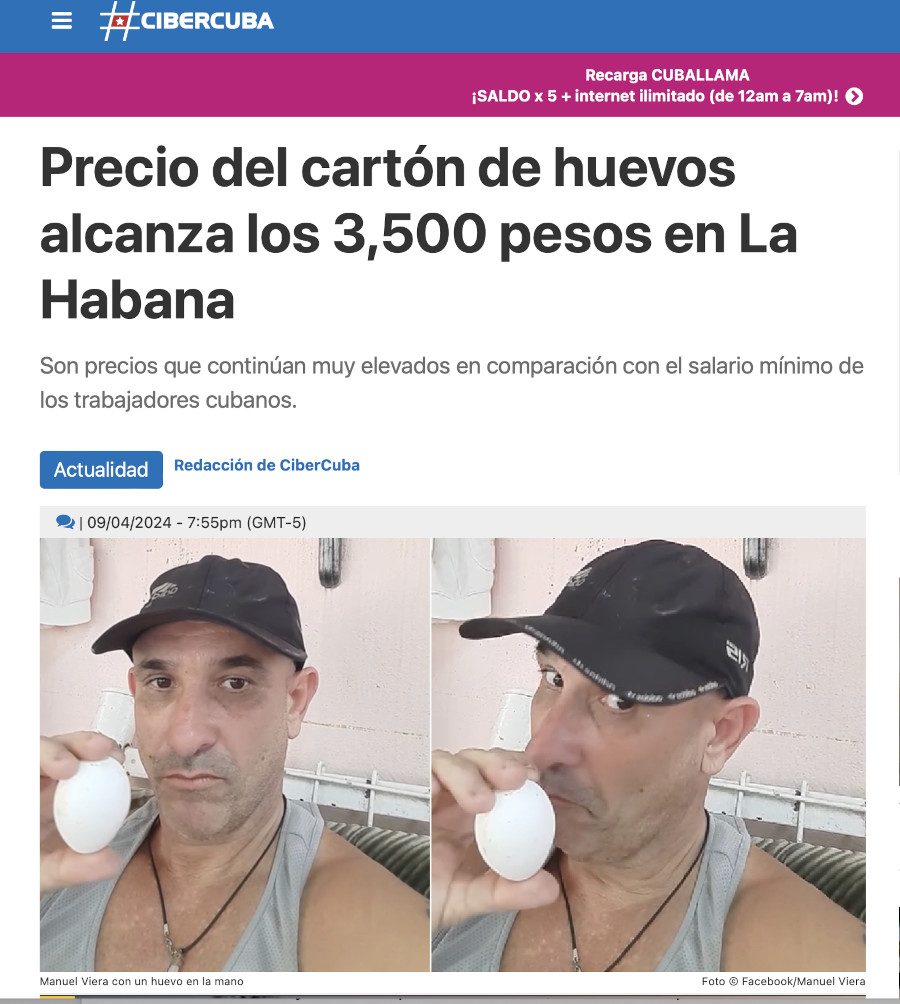
In April 2024, the price of the same carton reached 3,500 Cuban pesos, a monthly salary for a state worker (see image 2). These figures are hard to imagine for people living outside Cuba. How can a monthly salary cover only the price of a 30 eggs carton! When the monetary re-structuring was implemented in January 2021, the government adjusted positively the salaries in the state sector (covering a large portion of the population), pensions and social assistance. However, wage increases without adequate supply of goods provoked inflationary pressures (Truebas Acosta 2023).

In addition to the eggs, other proteins are often used as reference to inflation. The price of chicken often comes up in casual conversation. Queli, a cultural worker with a BA degree, is paid 4,5000 Cuban pesos per month. She told us that the day she received her monthly salary, she went to a local mipyme (a small grocery store privately owned) to buy 4 pounds of chicken which cost her exact salary. “We are going to eat chicken for a few days,” she shared with us, “but what about the rest!” she laughed sarcastically. Eggs and other protein products often serve to express the sense of despair associated with the current economic crisis. To collect the most up to date figure of the price of eggs in Cuba to write this blog entry, we sent a message on WhatsApp to a friend in Santiago de Cuba. He quickly responded: “Prices are crazy, easily 3,000 pesos for an egg carton, if you are lucky enough to find one. […] It’s so bad right now, I didn’t eat today, and I had to send my two daughters to the neighbour’s house [who could give them something to eat], it’s so painful.”

Screenshot

Until recently, the Cuban food rationing system sold 5 eggs per month to each Cuban. The price of eggs in the official ratio system remains stable and affordable. According to our data, the price of eggs increased by less than 0.01 US dollars between 2019 and 2024, a huge contrast with the informal economy sector, on which Cubans must rely in order to survive. The problem on the official and subsidized market is not cost, but scarcity. At the time of writing this blog entry, Cubans in Santiago de Cuba had not received any eggs through the official rationing system for the last 8 months. And the scarcity of eggs, and other products distributed through the official system is rampant all over Cuba; it is not a local problem.

Inflation as pressure

In 2005, Fidel Castro distributed 100,000 pressure cookers to Cubans as a response to the growing energy crisis, and to “reassert control over the nation’s economy.” The image of Cubans receiving pressure cookers offers a telling metaphor. Valves of pressure allow tensions to escape, at least momentarily, as frustrations towards periods of shortages grow. Cubans have lived under pressure almost permanently, or as Kapcia (2008) would argue, in a “permanent cycle of crises.” They have learned to luchar (struggle), to resolver (resolve), and to inventar (invent) ways to cope with the shortage of products and information, among other things. Inflation talk Amri argues “bring(s) together atmosphere and affect” or a “sense that something is in the air” (2023:39). In Cuba, economic tensions weight heavy in the air.

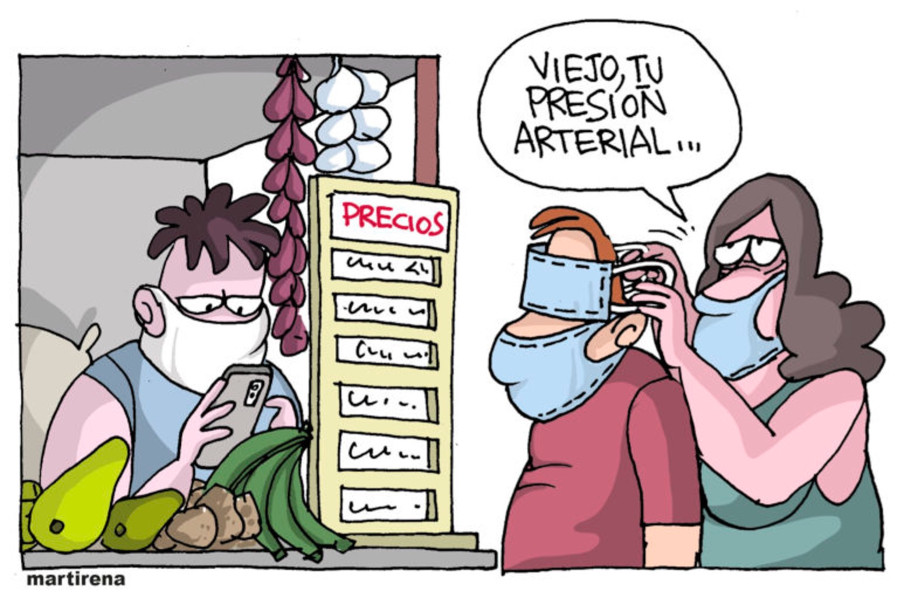
Image 3: “Old man, your blood pressure,” says a lady who hides the eyes of a man with a COVID mask who looking at prices of vegetables. Source: Martirena in “Con Filo: Sin desorden antes del ordenamiento,” written by Francisco Rodríguez. Trabajadores, 27 October 2020.

As mentioned, Cubans respond to inflation in various ways, sometimes in telling stories and jokes. But tensions are also embodied. Elsewhere, we argue that different forms of pressure (air, atmosphere, and economic) allow for grassroots (i.e. ethnographic), spontaneous and nuanced understanding of how an accumulation of tensions shapes bodies in moments of crisis (Boudreault-Fournier 2023). Inflation generates anxieties as people face serious material constraints and pressure provides an opportunity for exploring the ways in which people cope, deflect and deal with signs of pressure. Stress and anxiety caused by high pressure (systemic, economic and political) bend bodies in painful ways until they escape, they morph into another shape, or until they explode. To decompress, some Cubans take medical drugs, while others adopt meditative practices, cultivate medicinal plants or join religious groups. Hypertension caused by stress and lifestyle (i.e too much pressure), remains undertreated in Cuba, because of medication shortages (Rojas et al. 2019). This unbearable pressure pushed more than one million Cubans to leave the island in less than three years.

The current economic crisis leads to an increase of pressure. The current situation is worse than the Special Period in the 1990s, an economic crisis caused by the collapse of the Soviet Union, that left older generations traumatized. Cubans face unprecedented shortages of fuel and daily long blackouts, in addition to lack of food. The recent economic reforms implemented at the beginning of 2021 combined with other measures adopted by the government to attempt to stabilize the economy, to face serious problems of shortages and to respond to an infrastructural and energy crisis contribute to deteriorating health and life conditions for the Cuban population.

Conclusion

We have conducted fieldwork in Cuba since the year 2000. During our recent trips in 2023 and 2024, we observed a striking loss of confidence towards the government and an unprecedented level of dissatisfaction in comparison to pre-Covid time. The participation of Cubans in the illicit market which dictates the exchange rate suggests a clear transfer of confidence to the informal economy. Conversations about inflation in the street, on social media and through communications technologies show how Cubans have found a space in which they can more actively participate in the Cuban economy, reminding us of the agency of the public in monetary affairs (Holmes 2023). Even if the situation is extremely harsh, and even if many have lost hopes for a better future in Cuba, the informal economy offers Cubans a pressure valve to cope with difficult life conditions and to take action. That is, until the pressure goes up again.


This text is part of the feature The Social Life of Inflation edited by Sian Lazar, Evan van Roeckel, and Ståle Wig. 


Alexandrine Boudreault-Fournier is an Associate Professor at the University of Victoria. Her research interests include media infrastructure, sound, electronic music, digital data consumption and circulation in Cuba. She wrote the book Aerial Imagination in Cuba: Stories from Above the Rooftops (2020), and co-edited the volume Audible Infrastructures: Music, Sound, Media (2021).

Mélissa Gauthier is based at the University of Victoria. She specializes in economic anthropology and border studies with particular attention to the interplay between state and society occurring via informal markets. Her work is based primarily along the Mexico-United States border and in Yucatán, Mexico.


References

Amri, M. 2023. Inflation as Talk, Economy as Feel: Notes Towards an Anthropology of Inflation. Anthropology of the Middle East18(2), 27–45.

Boudreault-Fournier, Alexandrine. 2023. “Under Pressure: Catching the Pulse of a Cuban Crisis.” Environment and Planning D: Society and Space 41(3): 392-412.

Estudios Economico de América Latina y el Caribe. 2023. Cuba. Cepal org. https://repositorio.cepal.org/server/api/core/bitstreams/3392278d-b1b7-46de-b047-b0c0d6aa11a9/content

Holmes, D.R. 2023. “Quelling inflation: The role of the public.” Anthropology Today 39: 6-11.

Kapcia, A (2008) Cuba in Revolution: A History Since the Fifties. London: Reaktion Books.

Rojas, N A et al. 2019. “Burden of Hypertension and Associated Risks for Cardiovascular Mortality in Cuba: A Prospective Cohort Study.” Lancet Public Health 4(2): E107-E115.

Truebas Acosta, Sergio. “Inflation in Cuba: An Analysis from the Perspective of the Main Nominal Anchors of Monetary Policy.” International Journal of Cuban Studies. 2023. Vol. 15(2):175-202.

Vidal P, Luis LR. 2024. “Cuba’s Monetary Reform and Triple-Digit Inflation.” Latin American Research Review. 59(2):274-291. doi:10.1017/lar.2023.59

Wiegratz J, Dessie E, Dolan C, Kimari W. M. Schmidt. 2020. “Pressure in the City.” Development Economics Blog. Available at: https://developingeconomics.org/2020/08/17/blog-series-pressure-in-the-global-south-stress-worry-and-anxiety-in-times-of-economic-crisis/


Cite as: Boudreault-Fournier, Alexandrine and Gauthier, Mélissa 2024. “Inflation as pressure: coping mechanisms from Eastern Cuba” Focaalblog 10 December. https://www.focaalblog.com/2024/12/10/alexandrine-boudreault-fournier-and-melissa-gauthier-inflation-as-pressure-coping-mechanisms-from-eastern-cuba/

Steffen Köhn: Tokens of survival: the rise of crypto gaming in Cuba’s inflationary economy

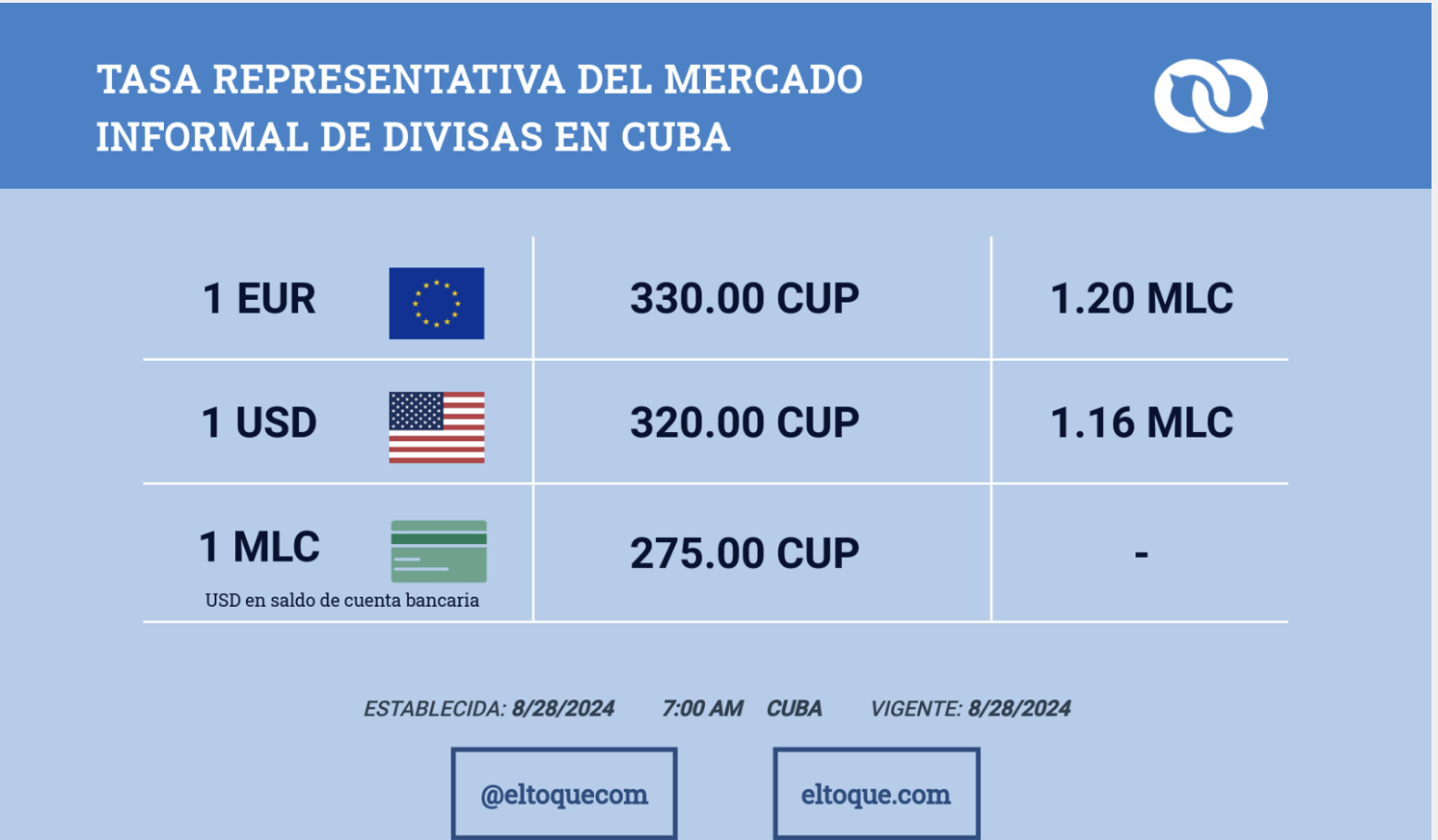
Image 1: Screenshot of elTOQUE’s daily listing of average exchange rates for various currencies and cryptocurrencies on the informal market as of August 28th, 2024

Cuba is currently facing one of its most severe economic crises in decades. The island nation is contending with the compounded effects of a global pandemic, tightening U.S. sanctions, and its own mismanaged monetary reforms, all of which have created a perfect storm of high inflation, scarcity, and social unrest. As the Cuban peso (CUP) loses value at a rapid pace, Cubans are increasingly turning to alternative currencies and unconventional economic activities to survive. Among these, play-to-earn crypto games like Axie Infinity have emerged as an unexpected source of income, offering a connection to the global digital economy for those who do not have access to remittances from abroad. However, the game’s economic model, which requires significant initial investment and relies heavily on exploitative “scholarship” arrangements, ended up reinforcing pre-existing social inequalities rather than addressing them. Moreover, Axie Infinity faced severe inflation issues itself, with the in-game currency devaluing rapidly due to an oversupply. Over time, its structure began to resemble the characteristics of a Ponzi scheme, where new investments were needed to sustain returns for existing players. This forced players to navigate an increasingly unstable digital economy, where opportunities for profit were outweighed by rising risks.

To understand the emergence of play-to-earn games as a significant economic practice in Cuba, we must first grasp the current economic landscape. Cuba’s economy has been hit hard by several overlapping crises. The Covid-19 pandemic brought tourism—the country’s economic backbone—to a near standstill. Concurrently, U.S. sanctions, particularly those tightened under the Trump administration, restricted remittances, cut off access to international financial systems, and further isolated Cuba from global financial flows.

Internally, the Cuban government’s decision to implement the Ordenamiento Monetario in January 2021—intended as a comprehensive monetary reform—eliminated the longstanding dual currency system that had kept the economy afloat. Before this reform, the Cuban peso (CUP) was used for domestic transactions and salaries, while the dollar-pegged convertible peso (CUC) was used for tourism, luxury goods, and international trade, which allowed the government to control access to foreign currency and manage economic disparities. By making the CUP the sole legal tender and devaluing it against the U.S. dollar, the reform triggered runaway inflation. The artificially low exchange rate of the CUP against the dollar could not be sustained, leading to a spiraling devaluation of the national currency.

Amid the financial turmoil, many Cubans are turning to alternative currencies to protect their savings in more stable forms and to manage everyday transactions. Cryptocurrencies, particularly USDT, a stablecoin pegged to the U.S. dollar and (theoretically) backed by dollar reserves, have gained significant popularity as a tool for receiving remittances and facilitating cross-border payments. Meanwhile, digital credits—ranging from balances on apps like Zelle and Tropipay to phone credits—emerged as vital tools within Cuba’s expanding informal economy. During the pandemic, the Cuban government introduced its own digital currency, the moneda libremente convertible (MLC), pegged to the dollar and meant to serve as a substitute for foreign currency in state-run stores selling essential goods. The MLC was specifically designed to capture hard currency for the state, as it could only be acquired through foreign currency deposits or remittances. However, as its acceptance became limited to a shrinking number of outlets and a thriving black market developed for exchanging MLC into other currencies, its value eroded, declining sharply against both the U.S. dollar and digital credits denominated in dollars on payment apps.

The Currency Black Market: A Disorderly Landscape

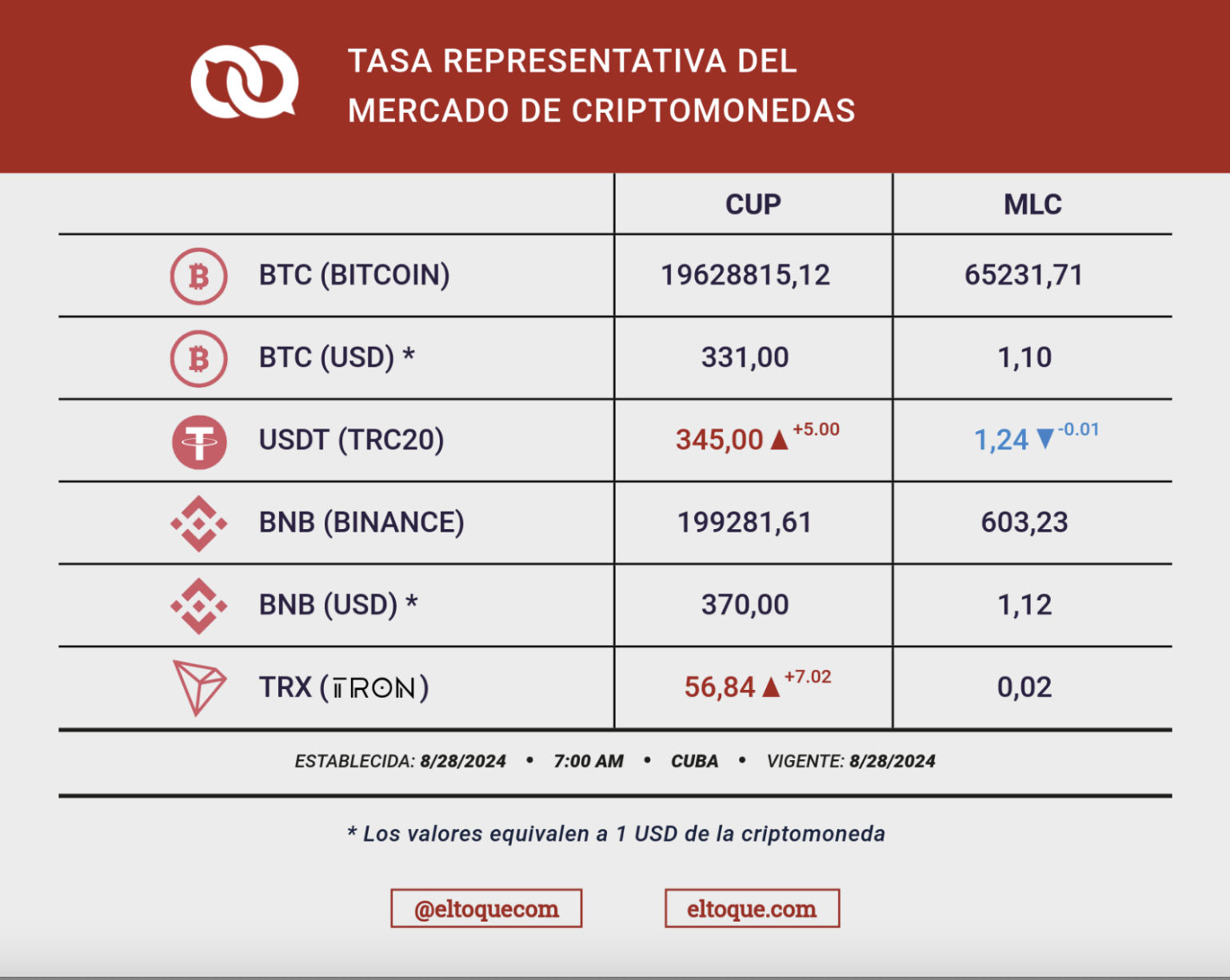
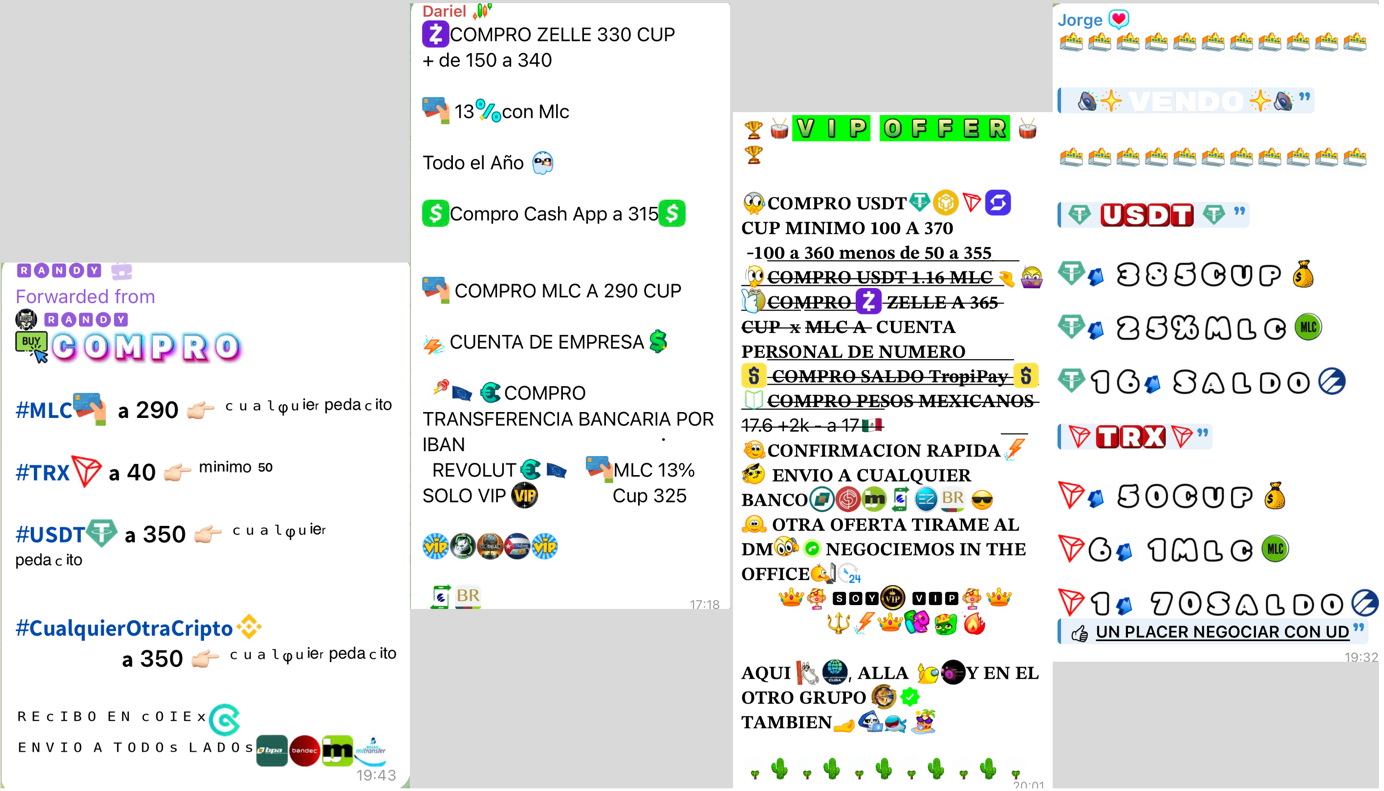
This monetary disorder has led to a burgeoning informal market for currency exchange, which operates largely through digital platforms like Telegram and WhatsApp. Here, Cubans negotiate the value of dollars, euros, MLC credits, and various cryptocurrencies, often using intermediaries to facilitate exchanges. elTOQUE, an independent news outlet based in Miami, has become a key player by publishing the informal exchange rates of these currencies daily. These rates are determined by bots scraping buy and sell offers from major Telegram groups, yet they remain contentious, with frequent accusations of manipulation, particularly from the Cuban government.

Image 2 : Screenshots of elTOQUE’s daily listing of average exchange rates for various currencies and cryptocurrencies on the informal market as of August 28th, 2024.

In this chaotic environment, cryptocurrencies offer another refuge from the collapsing Cuban peso, but they also introduce new complexities, particularly in converting digital assets into usable cash. Many Cubans now use stablecoins like USDT to preserve value and facilitate international payments, while digital platforms have become essential tools for managing remittances and cross-border transactions. However, the real challenge lies in bridging the gap between these digital currencies and local cash. On platforms like Telegram and Revolico, brokers facilitate exchanges from digital tokens to cash, often charging high fees and adding another layer of volatility and risk to an already unstable financial landscape.

Image 3: Listings of currency exchange offers posted in various Telegram groups

Gaming the System: How Axie Infinity Became an Economic Lifeline

Amid Cuba’s ongoing inflationary crisis, an unexpected means of accessing digital tokens emerged: play-to-earn crypto video games like Axie Infinity. Developed by the Vietnamese company Sky Mavis, Axie Infinity allows players to breed, battle, and trade digital pets known as Axies, which are unique digital assets or non-fungible tokens (NFTs) stored on the blockchain, enabling players to own, trade, and speculate with their in-game holdings. The game broke into the mainstream in many low- and lower-middle-income countries in the summer of 2021, at the height of the COVID-19 pandemic. It became a widespread phenomenon across much of the Global South, permitting players to earn substantial income in the game’s cryptocurrency, Smooth Love Potion (SLP). As global lockdowns cut off traditional jobs and informal income opportunities, the game (at least for a while) enabled players in countries like the Philippines, Venezuela, and Indonesia to earn hundreds of dollars per month—often well above their local median wage—and offering economic opportunities that their physical economies could not.

Image 4: Screenshot of a battle in Axie Infinity’s arena mode, where players from around the world compete using their Axies.

For thousands of Cubans, especially those without access to remittances, Axie Infinity quickly became a potential economic fallback. With traditional income sources disrupted by the pandemic and ongoing inflation, the game offers a rare opportunity to earn cryptocurrency, which can then be traded on the black market for pesos or other more stable currencies. However, participating in Axie Infinity is not without its challenges, and many Cuban players have had to navigate a complex landscape of intermediaries, scams, and volatile markets to turn their virtual earnings into real-world value.

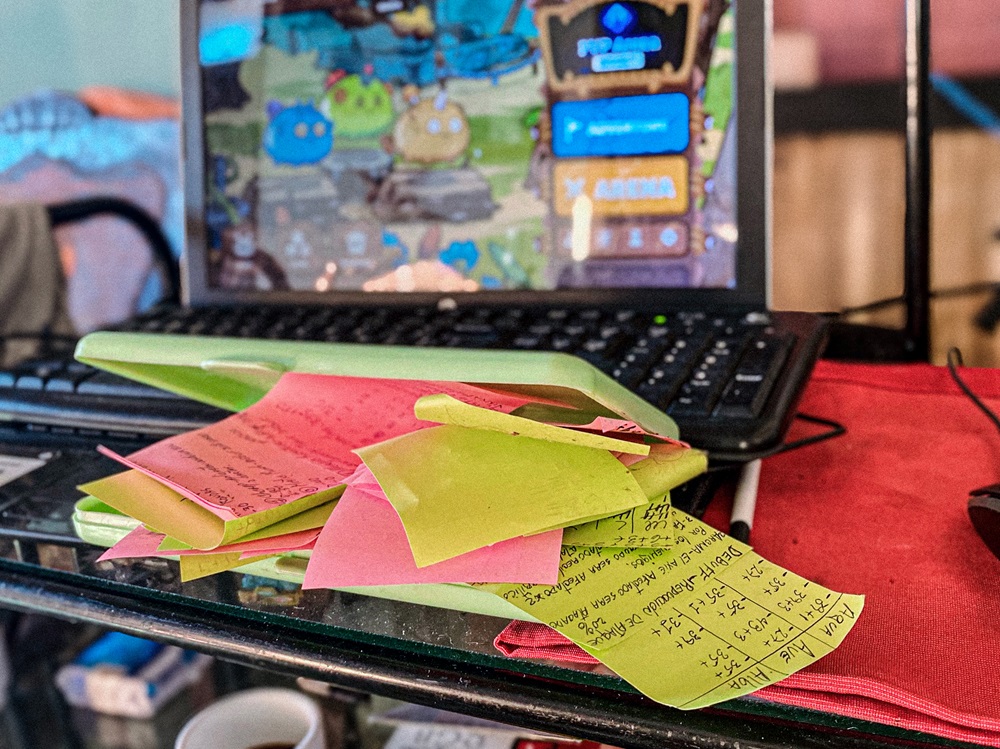
Image 5: The study notes of an Axie Infinity scholarship holder

The entry barrier to Axie Infinity is steep. At its peak, in July 2021, even the cheapest team of three Axies required to start playing cost around $1,000—an impossible sum for most Cubans. This led to the emergence of a parallel economy where affluent players and companies, often based in wealthier countries, granted “scholarships” to aspiring players. Gaming guilds emerged on Telegram, offering training sessions and conducting entrance exams for those seeking scholarships. These scholarships involved lending Axies to players who couldn’t afford them in exchange for a share of their earnings, often up to 70 per cent. This system allowed Cuban players to participate in the game, but it also mirrored exploitative labor practices, with the scholars—typically from the Global South—bearing the brunt of the risk while the asset owners in more developed nations took the lion’s share of the profits.

Scholars were required to play for several hours every day, with their performance closely monitored—either by coaches hired by NFT owners to provide training but also to surveil them, or through surveillance software that tracked their activity. In my friend Juan’s guild, there were even two competitive leagues, and members could be relegated like football teams. Those who failed to meet performance targets were quickly replaced by other aspiring players, reinforcing a precarious labor market marked by a harsh hire-and-fire culture. In this context, Axie Infinity’s promise of decentralized and equitable opportunities increasingly resembled a new form of digital serfdom, perpetuating existing inequalities rather than alleviating them.

Trust and Mistrust in the Cuban Crypto Economy

Beyond the game itself, Cuban players encountered significant challenges when trying to convert their in-game earnings into usable currency. Due to U.S. sanctions, centralized cryptocurrency exchanges like Binance and Coinbase block users from Cuba, forcing players to depend on informal and often opaque networks for transactions. In the Telegram currency exchange groups where Cubans from across the country participate, the primary challenge was establishing trust, as no one wanted to be the first to send cryptocurrency or fiat money and risk relying on the trading partner to follow through. This led to the development of new intermediaries and trust mechanisms. To mitigate the risk of fraud, some Telegram groups set up their own escrow systems, where admins held funds from both parties for a fee until the exchange was finalized. Other groups introduced a VIP system, granting trusted status to users with multiple successful transactions who provided personal information to the group’s administrator and paid a monthly fee. While these systems offered a semblance of security, they also underscored the inherent contradictions of a supposedly “trustless” blockchain-based economy that, in reality, relied heavily on middlemen and trust-based social networks to work.

Despite the often exploitative working conditions and the complicated process of cashing out game tokens, Cuban Axie Infinity players demonstrated considerable agency in navigating these challenges. They used platforms like Discord or Telegram to create grassroots solidarity networks, actively sharing information about scholarship opportunities and educating others on gaming strategies. This sense of community and mutual support became a crucial resource for many players striving to make the most of the game’s economic opportunities.

For many Cubans, Axie Infinity also represented a rare chance to engage in the global digital economy at a time when Cuban society had only recently come online. It enabled some players to transition from mere participants to asset owners and investors by purchasing their own Axies. Many of the players I interviewed had eventually invested in the game, buying their own digital pets and exploring the speculative potential of this virtual economy. For these players, the game marked their first encounter with a global financial market, pushing them toward speculative behavior and exposing them to its inherent risks. The SLP token—like many cryptocurrencies—proved to be even more volatile than the Cuban peso, making it a highly unpredictable asset. Nevertheless, this volatility did not deter them from hoping to strike it big; rather, it underscored the precarious yet captivating nature of their engagement with digital economies.

Precarious Play

The experience of Cuban Axie Infinity players sheds light on a broader trend in the digital economy: the merging of play, work, and investment in ways that challenge traditional definitions of labor. Concepts like “gamification” (Robson 2015) and “playbor” (Kücklich 2005) have been used to describe how game-like elements are incorporated into non-game contexts to enhance engagement or extract value. However, play-to-earn games like Axie Infinity take this a step further by directly integrating financial incentives into gameplay, creating a highly speculative and precarious form of digital work.

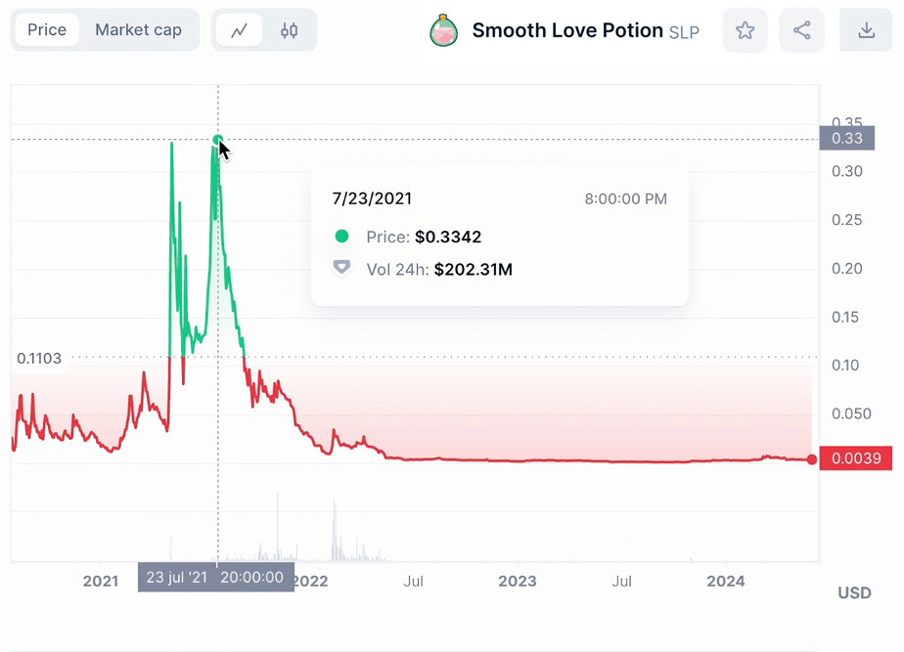
Image 6: Screenshot from the website CoinMarketCap, showing the market trend of Axie’s highly volatile in-game cryptocurrency Smooth Love Potion (SLP).

For Cuban players, the volatility of the SLP token added another layer of uncertainty. In the early days, some players earned substantial sums, far exceeding local wages. But as new player growth slowed after the hype in the summer of 2021, the game’s revenue—and thus the value of in-game assets—plummeted. The in-game inflation began to mirror real-world inflation: the more players sought to extract value from the game without reinvesting, the faster the currency’s value declined. When North Korean hackers stole $620 million from the game’s blockchain in March 2022, the already fragile Axie economy collapsed further, leaving many players with worthless tokens (Harwell 2022).

The Fragile Promise of Blockchain

The case of Axie Infinity in Cuba exposes the limits of the promises made by blockchain evangelists (e.g. Tapscott and Tapscott 2016, Domjan et al. 2021, Kshetri 2023). Far from bringing financial inclusion and economic empowerment to the Global South, the game’s ecosystem often reproduced existing inequalities and inflationary dynamics. In theory, blockchain technology is supposed to offer a decentralized, transparent alternative to traditional financial systems. Yet, in practice, Cuban players found themselves entangled in a web of intermediaries, trust-based networks, and volatile markets, which reinforced rather than dismantled power imbalances.

The rise and fall of Axie Infinity in Cuba provides a stark reminder of the limitations and risks inherent in new digital economies. This became especially evident when Axie Infinity’s in-game inflation eventually surpassed the inflation in Cuba’s real economy that had driven many players to the game in the first place. While the game initially offered a lifeline to some, it also exposed the precarious nature of digital work, where players are subject to volatile earnings, insecure contracts, and exploitative conditions. The experience of Cuban players thus challenges the narrative that blockchain technology will bring about a more equitable global economy. Instead, these systems can easily replicate and even exacerbate existing inequalities, creating new forms of digital labor exploitation and financial speculation.


This text is part of the feature The Social Life of Inflation edited by Sian Lazar, Evan van Roeckel, and Ståle Wig.


Steffen Köhn is a filmmaker and associate professor of visual and multimodal anthropology at Aarhus University. He is the author of: Island In the Net. Emergent Digital Culture and its Social Consequences in Post-Castro Cuba (forthcoming with Princeton University Press) as well as Mediating Mobility. Visual Anthropology in the Age of Migration (Wallflower/Columbia University Press 2016). His films have been screened at the Berlinale, Slamdance, Rotterdam International Film Festival, BFI Film Festival London, and the Word Film Festival Montreal, among others.


References

Domjan, Paul, Gavin Serkin, Brandon Thomas, John Toshack. 2021. Chain Reaction: How Blockchain Will Transform the Developing World. Basel:Springer International Publishing.

Harwell, Drew. “U.S. Links Axie Infinity Crypto Heist to North Korean Hackers.” The Washington Post, April 14, 2022. https://www.washingtonpost.com/technology/2022/04/14/us-links-axie-crypto-heist-north-korea/.

Kshetri, Nir. 2023. Blockchain in the Global South: Opportunities and Challenges for Businesses and Societies. London: Palgrave Macmillan.

Kücklich, Julian 2005. Precarious playbour: Modders and the digital games industry. fibreculture 5 (1): 1-5.

Robson, Karen Kirk Plangger, Jan H. Kietzmann, Ian McCarthy,and Leyland Pitt. 2015. Is it all a game? Understanding the principles of gamification. Business Horizons 58 (4): 411-420.

Tapscott, Don and Alex Tapscott. 2016. Blockchain Revolution: How the Technology behind Bitcoin Is Changing Money, Business, and the World. New York: Penguin.


Cite as: Köhn, Steffen 2024 “Tokens of survival: the rise of crypto gaming in Cuba’s inflationary economy” Focaalblog 10 December. https://www.focaalblog.com/2024/12/10/steffen-kohn-tokens-of-survival-the-rise-of-crypto-gaming-in-cubas-inflationary-economy/

Marina Gold: The end of the pink tide: Cuba

This post is part of a series on the Latin American pink tide, moderated and edited by Massimiliano Mollona (Goldsmiths, University of London).

Does Obama’s visit herald the end of the Cuban Revolution?
On Thursday, 18 December 2014, I received an urgent WhatsApp message from a Cuban friend, who was then in Spain with his Spanish girlfriend.[1]

“Pon CNN ahora mismo! Se acaba el bloqueo.” (Turn on CNN now! The blockade is over.)

Continue reading