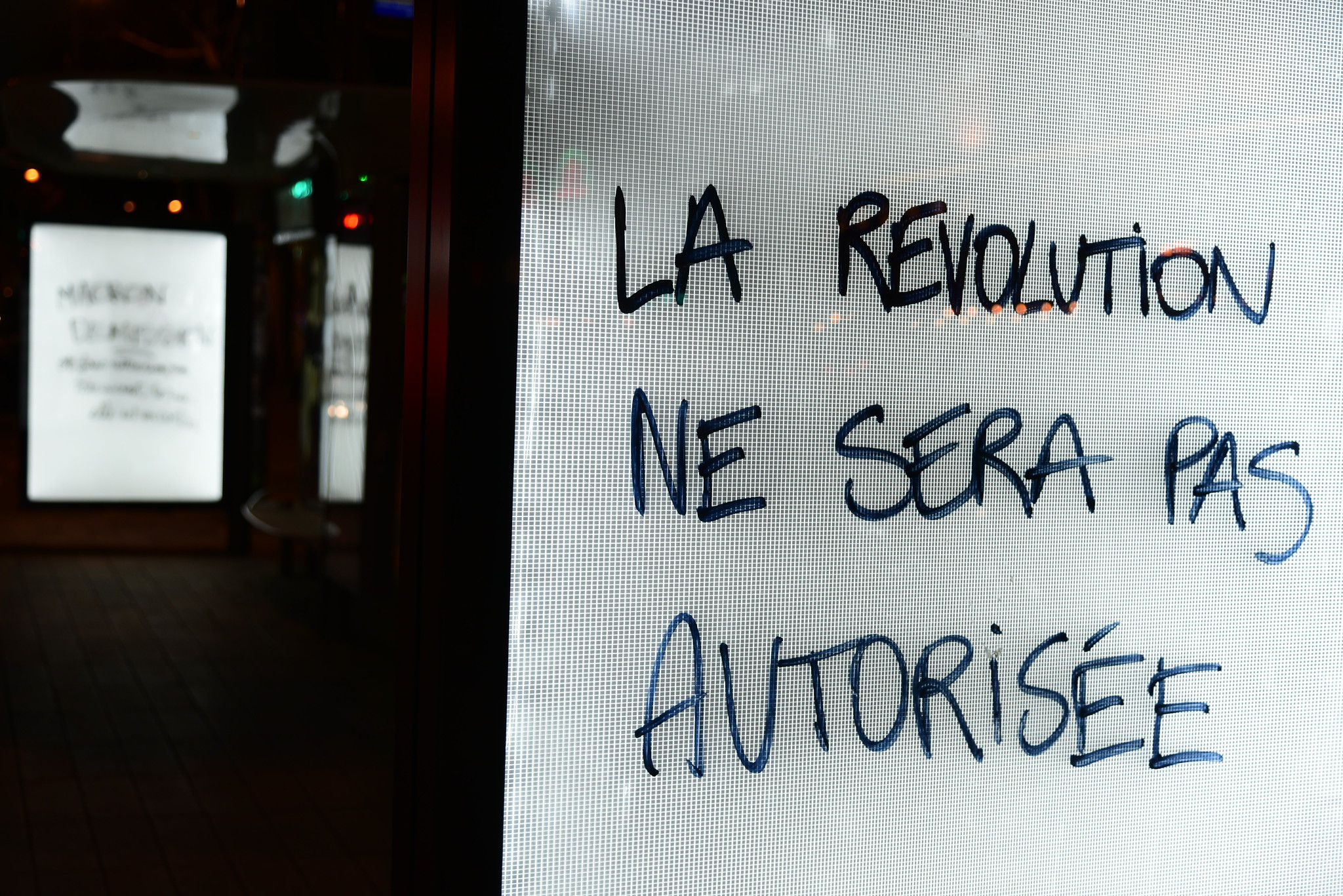
The Yellow Vests and the Battle for Democracy. Taking to the Streets of Paris in the 21st Century (Susser 2026) is a fantastic book. It offers a gripping, on-the-ground ethnographic account of popular politics in contemporary France. In this story of popular protest against authoritarianism, neoliberal austerity, and state abandonment, Ida takes us directly into the roundabouts, banlieues, and street occupations of Paris. She drops us right into the heart of Nuit debout and the Gilets Jaunes to show us something vital: not just how people mobilize against austerity, but how wildly different groups navigate messy, contradictory politics to forge “common cause”—uniting in pursuit of a more just, emancipatory future for France and the world.
Ida’s obsession with social movements isn’t new—it’s been her superpower from day one. Her groundbreaking study Norman Street ushered in a new era of critical US research, standing as the very first ethnography to map working-class resistance to fiscal austerity right here in New York City ([1982] 2012). Later, in her seminal work on gender and global health, AIDS, Sex, and Culture (2009), she showed us again how ordinary people—or “commoners,” as she calls them in her new book—form collectivities to demand resources from states that would really rather not give them up due to their uniquely pro-capitalist but anticolonial dispositions.
Across all her solo work and her many edited volumes—like Wounded Cities (2003), The Tumultuous Politics of Scale (2020), and Rethinking America (2009), the latter of which we co-edited together—Ida centers social movements as the true catalysts for transformation. Fun fact about Rethinking America: back in the mid-2000s, while everyone else was floating on optimistic clouds about a bright political future in part because of the election of Barak Obama, that book predicted the rise of American authoritarianism.
But please don’t mistake Ida for a prophet of doom! She is a radical optimist—someone who possesses a rare ability for spotting political possibility in the most unlikely places. And she’s doing it again in The Yellow Vests. While most pundits wrote off the Yellow Vests as merely reactionary or right-wing populist, Ida used ethnography to pull back the curtain. She reveals the full spectrum of stances animating the movement—some right, some left, some racist, and some standing in radical solidarity with anti-racist and pro-immigrant groups.
By centering two key concepts—commoning (sharing resources, spaces, and ideas outside the market or state) and thresholding (the messy, sometimes beautiful, sometimes ugly process where grassroots groups cross lines and build solidarity across differences)—Ida gives us a fresh lens to rethink collective action in these deeply weird, increasingly authoritarian times.
For me, the single most novel, outstanding contribution this book makes is its focus on what social movements actually do during what Antonio Gramsci famously called the “interregnum.” You all know the famous Gramsci line that everyone—Ida included—loves to quote: “The crisis consists precisely in the fact that the old is dying and the new cannot be born; in this interregnum a great variety of morbid symptoms appear.”
Now, plenty of scholars have noticed that we’re stuck in an interregnum. The standard story goes like this: Neoliberalism has lost its mojo. It can’t persuade anyone anymore, but it staggers on like a zombie. The 1990s optimism about “a rising tide lifting all boats” is dead and buried. In its place, we get morbid symptoms: deep cynicism toward political elites, the rise of China reshaping global power, and angry publics embracing illiberalism, cruelty, and right-wing populism—from Donald Trump to Marine Le Pen’s National Rally. Meanwhile, figures like Macron offer the “respectable” alternative: a slick, finance-driven austerity program wrapped in a suit.
Most analysts diagnose this interregnum from 30,000 feet up, focusing on institutional decay and global capital. Ida’s genius is that she drops us right onto the asphalt. She puts ground-level social movements at the very center of the story, showing us how popular grievances are cooked up, debated, and amplified at the grassroots when the future is up for grabs. Is worldwide right-wing ethnic nationalism just a knee-jerk reaction to the global devaluation of labor? Ida says no. For her, social movements—and the transformations they unleash—can only be understood when we look at how they are deeply embedded in complex historical forces.
This ground-level view leads to several brilliant insights—and, naturally, a few burning questions for Ida that the book leaves unanswered.
On Commoning vs. Public Resources
Ida breaks commoning down into three modes: commoning of resources, of spaces, and of ideas (like building common cause). I want to zero in on that first one—shared resources. In the book, when Ida talks about the urban commons, she mostly focuses on spatial occupations—roundabouts, squares, protest cabins and the making of common causes as when the Yellow Vests joined anti-police demonstrations inspired by Black Lives Matter in the US. But when it comes to shared resources, the Yellow Vests were largely mobilizing to defend public state services.
Now, as many theorists of the commons point out, public resources and common resources aren’t the same thing. “Public” usually implies a state-owned legal status managed by bureaucracies, where people act as passive taxpayers or clients. “Commoning,” on the other hand, is an active, bottom-up social practice built on direct self-governance and community stewardship.
However, under this definition, what exactly were the Yellow Vests trying to “common”? And even more intriguing, at least to me: what were their attitudes toward private property? Were they fighting for state resources just to preserve their existing privatized lifestyles, or to preserve their privileged position viz. the French state in comparison to France’s racialized colonial others, or did the movement actively inspire them to unsettle the very tied together ideas of private property and white supremacy in their daily lives?
“Stealing the State” & Communal Nostalgia
Ida shows how the Yellow Vests felt that the state belonged to them, and that Macron was essentially stealing it—robbing their pensions and pushing back retirement. To counter this, Ida connects their vision to the radical abundance of the 1871 Paris Commune.
My question is: what does “communal luxury” look like to a 21st-century Yellow Vest? Is this vision a forward-looking, emancipatory project? Or is it partly a nostalgia for a distinctly French communal form of the past? I ask because invoking “the people’s France” can lean toward radical internationalism, but it can also dangerously overlap with the National Rally’s “France for the French” nativism. How do the Yellow Vests navigate that razor-thin edge?
The Big Interregnum Question
Finally, I must ask the million-dollar question. If the old neoliberal order is dying and the new one hasn’t been born yet, where is all this Yellow Vest energy heading?
In France today, Macron is deeply unpopular, and his maneuverings have cleared a massive runway for the far-right National Rally, which is poised for major power. What is the ultimate legacy of grassroots movements like the Yellow Vests here? Did they unintentionally crack open the door for the far right, or have they built the muscle memory for a powerful counter-mobilization against rising authoritarianism, as their recent alliance with protesting students might suggest?
Jeff Maskovsky is Professor and Executive Officer (Chair) of the Ph.D. Program in Anthropology at the CUNY Graduate Center, Professor of Urban Studies at Queens College, and president-elect of the American Anthropological Association. He is currently engaged in two justice- and equality-oriented research projects on the future of commoning, the messy work of cooperating, being together, and sharing resources to defend vulnerable forms of life and to reimagine the world.
References
Maskovsky, Jeff, and Ida Susser. 2009. Rethinking America: The Imperial Homeland in the 21st Century. Routledge.
Nonini, Don, and Ida Susser. 2020. The Tumultuous Politics of Scale: Unsettled States, Migrants and Movements in Flux. Routledge.
Schneider, Jane, and Ida Susser. 2003.Wounded Cities: Destruction and Reconstruction in a Globalized World. Routledge.
Susser, Ida. [1982] 2012. Norman Street. Poverty and Politics in an Urban Neighbourhood. Oxford University Press.
Susser, Ida. 2009. AIDS, Sex, and Culture: Global Politics and Survival in Southern Africa. Oxford: Wiley-Blackwell.
Susser, Ida. 2026. The Yellow Vests and the Battle for Democracy. Taking to the Streets of Paris in the 21st Century. New York: Routledge.
Cite as: Maskovsky, J. 2026. “Commoning in the Interregnum” Focaalblog November 23. https://www.focaalblog.com/2026/11/23/jeff-maskovsky-commoning-in-the-interregnum/