
What happens when warfare becomes cheaper, faster, and increasingly automated? And what happens when the companies developing these technologies are also seeking to reshape society on behalf of their accumulation imperatives? At a seminar organized by the SIAA (Italian Society of Applied Anthropology) Commission on the Militarization of Knowledge and Society, anthropologists Hugh Gusterson and Roberto González explored two sides of the same transformation: the changing technologies of war and the growing entanglement between Silicon Valley, artificial intelligence, and the military-industrial complex.
From Reapers to Shaheds: the changing face of drone warfare
Hugh Gusterson distinguishes between two generations of military drones. Drones 1.0 is represented by the American MQ-9 Reaper, usually associated with the wars in Afghanistan and Iraq. Operated remotely by crews based thousands of kilometers away, often in the United States, these aircraft can linger in the sky for hours, surveilling territories and tracking people identified as potential threats (insurgents, or people who look like they might be). Their use has raised profound questions about targeted killing, accountability, and the distance separating those who operate weapons from those who experience their violence.
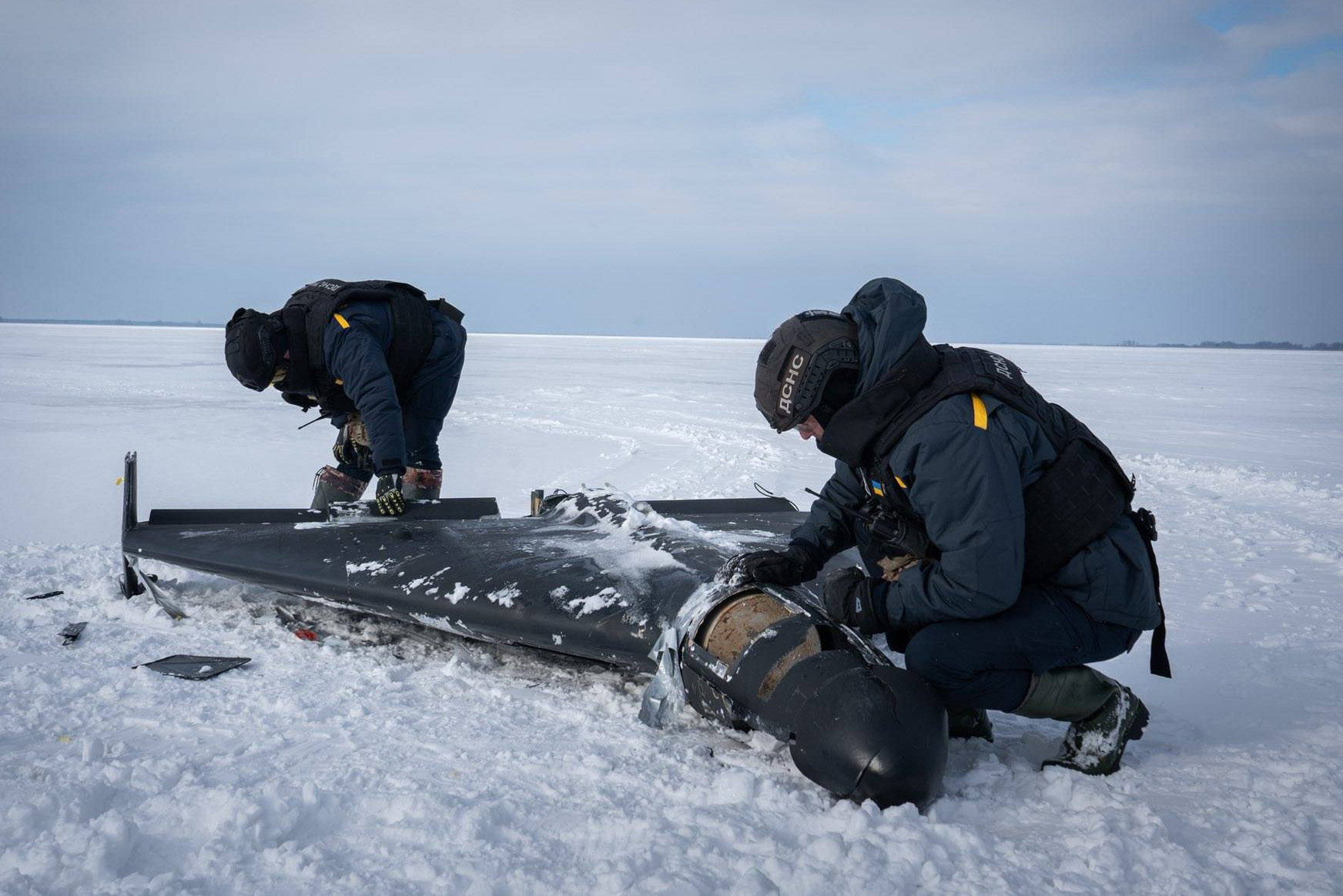
Drones 2.0, including the Iranian-designed Shaheds, now used extensively by Russia against Ukraine and designed for Iranian responses against US-Israeli aggression, represent a novelty because of their affordability and scalability. These inexpensive, long-range weapons can be produced and adapted at a fraction of the cost of conventional military aircraft. Unlike the Reaper, the Shahed is not designed to linger over a target and conduct surveillance. It is designed to attack infrastructures.
Ukraine has responded with its own expanding drone industry, such as the Liutyi, developing systems that can be modified rapidly, almost in real time, in response to battlefield experience. Some designs initially conceived as “suicide drones” have been adapted for reuse. Drone boats, aerial interceptors, and other remotely operated or increasingly autonomous systems are also changing the battlefield.
Yet the transformation is not only technological. Drones also change how war is perceived and experienced. They can distance those operating weapons from the physical risks and immediate horrors of combat, even when a human operator remains directly involved. At the same time, their presence can be intensely felt by those living beneath them. The persistent buzzing of drones has become part of the soundscape of the war in Ukraine, where detecting an approaching drone can be a matter of survival. Soldiers must listen carefully for the sounds, sometimes requiring near-total silence to identify incoming threats. Drones therefore distance soldiers from the experience of war but at the same time create new violent intimacies.
As artificial intelligence is increasingly integrated into these systems, the prospect of autonomy raises further questions about human judgement and responsibility. Who, or what, ultimately makes the decision to strike? And who is to be held accountable? And beyond the ethical problems of probability-based targeting, there is also a risk of deskilling, as human operators increasingly defer to machine-generated assessments rather than critically examining them.
Gusterson discussed Lavender, an AI-assisted system used by the Israeli military to identify people suspected of affiliation with Hamas and assign them scores indicating the likelihood of such affiliation. Investigative reporting in 2024 raised concerns about the scale of its use and the extent of human oversight, although the Israeli military disputed aspects of those accounts. Naza, the documentary directed by Yuval Abraham and Rachel Szor (Special Jury Prize at the Venice International Film Festival 2026), further inquired into the use of AI-assisted technologies through first-hand accounts by Israeli military intelligence officers.
Big Tech goes to war
Roberto González shifted the discussion from the technologies themselves to the political economy behind them. Big Tech’s growing involvement in the military sector is often justified through the language of strategic competition, particularly the supposed need to counter China. An AI arms race is taking shape, with private companies developing systems for surveillance, targeting, battlefield coordination, and augmented reality, while the public debate keeps being stuck on whether AI should be regulated at all.
Will Palantir and Anduril become the new Raytheon and Lockheed Martin? The comparison captures a significant shift in the military-industrial complex. Traditional defense contractors are no longer the only major players: technology firms and start-ups backed by Silicon Valley venture capital are seeking a growing share of military contracts. A new revolving door is emerging between the government, the Pentagon, technology companies, and venture capital, as investors increasingly seek opportunities in military AI and ex Pentagon officials invest in venture capital technologies. The result is a military-industrial landscape in which private investors and technology executives increasingly influence the direction of military research and spending.
Yet the Silicon Valley-Pentagon relationship is not new. Its roots extend back to the Second World War and the postwar development of the American military-industrial complex. What is changing is the growing centrality of AI and private investments. The consequences are not merely financial. They include environmental costs, the effects of new technologies on military personnel, and the burdens imposed on communities affected by military operations and infrastructure, including data centers. From the citizens’ point of view, these investments also raise a question of public priorities in a period of ‘affordability crisis’ and inflation: what other social needs could be served by resources directed toward militarization and military innovation?
The discussion also touched on Big Tech’s growing enthusiasm for small modular nuclear reactors, presented as a possible energy source for power-hungry data centers and AI infrastructure. This illustrates how the militarization of technology is intertwined with wider transformations in energy, investment, and the social and material infrastructures sustaining the digital economy.
Techno-utopias, masculinity and the perversion of freedom
The conversation then moved beyond military applications to the political imaginaries of techno-capitalism. What kinds of worlds do technology entrepreneurs want to build, and what kinds of societies do they hope to leave behind?
Frontier imagery is central to this imaginary: the idea that new worlds can be founded, territories conquered, and existing political constraints overcome through technological innovation and private enterprise. Projects such as ‘seasteading’ in French Polynesia and ‘network cities’, envisioning autonomous high tech communities established on floating platforms or territories carved out from national states, illustrate the ambition to create alternative deregulated political spaces outside established democratic systems of government. They express a wider techno-utopian desire to escape the constraints of liberal democracy and imagine new forms of social order. At its more authoritarian edges, this imaginary can intersect with what critics describe as technofascism: the contraction of technological and economic power in the hands of a privileged few, combined with hostility toward democratic accountability (González 2026). Such tendencies also have affinities with the “dark enlightenment”, whose proponents reject egalitarian democracy in favor of authoritarian political arrangements. Masculinity is another important part of this. The leading figures of techno-capitalism are overwhelmingly wealthy white men, but the masculinity they embody does not tend to resemble traditional machismo. It is often presented as nerdy, intellectual, and ostensibly associated with superior intelligence, and indeed eugenics; a masculinity built around natural hierarchy, domination, competition, control and the Uebermensch fantasy of transcending human limitations.
There is also a paradox at the heart of Silicon Valley’s celebrated commitment to freedom. Its leaders present themselves as independent innovators, unwilling to accept institutional constraints or simply follow market demands. Their wealth and privilege give them considerable freedom to experiment but also the power to shape what others come to need, desire, and depend on. The freedom to invent new worlds is therefore inseparable from the power to impose their consequences on others. Time is part of this political imaginary, too. “Move fast and break things” and “fail fast, fail often” express a culture in which speed is celebrated and disruption becomes a virtue. Applied to military systems, however, this logic has potentially irreversible consequences. AI can accelerate decision-making beyond the pace at which people can fully comprehend, deliberate, or intervene.
The discussion ended with questions about both the experience of technological warfare and the methods available for studying it. Does remote warfare create greater distance from death, or does it simply redistribute the ways in which death is experienced? The operator may be physically removed from the battlefield, but people living under drones encounter their presence through sound, anticipation, fear, and the constant need to remain alert. These sonic landscapes remind us that war–even if technological–is not experienced only through images, targets, and data, but also through the senses and the transformation of everyday environments.
The audience also asked how anthropologists can study institutions that are powerful, distant, secretive and often inaccessible. Gusterson proposed the idea of polymorphous engagement (Gusterson 1997): rather than relying exclusively on conventional, long-term participant observation in a single field site, researchers can follow their subjects across multiple settings and sources, combining interviews, documents, public statements, media reports, and other forms of evidence.
Rebecca Solnit wrote that “we are both more isolated and less private than we’ve ever been” (2025:100). The paradox captures something essential about the age of AI. We feel increasingly isolated from one another even as our lives become more exposed to aggregated but at the same time personalized systems of data collection, prediction and surveillance that keep us apart while reassembling us as niches or bubbles on behalf of capital.
From the drone buzzing over a battlefield to the algorithm quietly sorting information about our lives, technologies promising greater freedom and autonomy make us also more visible, more measurable, and more vulnerable to forms of power we cannot easily see. The question is not only what technology makes possible, but who controls it, whose worlds it serves, and what forms of freedom remain when the systems shaping our lives become increasingly difficult to escape.
The recording of the seminar can be accessed here using the password !?d&j$3p
Claudia Ledderucci works in critical militarization studies, with particular attention to coloniality. Her paper “From Nuclear Colonialism to COVID-19 Scepticism” (in The Asia-Pacific Journal of Anthropology) won the 2025 Nadel Essay Prize.
Hugh Gusterson is a former editor of American Ethnologist, and teaches at the University of British Columbia. He is a prolific editor and author, among others of Drone (2017; winner of the Roy Palmer Civil Liberties Prize).
Roberto J. González is Professor of Anthropology at San José State University. His most recent book is War Virtually: The Quest to Automate Conflict, Militarize Data, and Predict the Future (2022). He researches Silicon Valley’s relationship with the Pentagon and is completing a book on AI-powered policing and surveillance technologies in the US.
References
González R. J., (2026). American technofascism, Human Organization, 85:1, 3-7, DOI: 10.1080/00187259.2025.2585410
Gusterson, H., (1997). Studying Up Revisited. Political and Legal Anthropology Review
Vol. 20, No. 1 (May, 1997), pp. 114-119
Solnit R., (2025). No Straight Roads Takes You There, Granta, London
Cite as: Ledderucci, C., Gusterson, H. and González, R., 2026. “Drone 2.0: How Big Tech is Transforming the Military-Industrial Complex” Focaalblog November 19. https://www.focaalblog.com/2026/11/19/claudia-ledderucci-hugh-gusterson-and-roberto-gonzalez-drone-2-0-how-big-tech-is-transforming-the-military-industrial-complex/