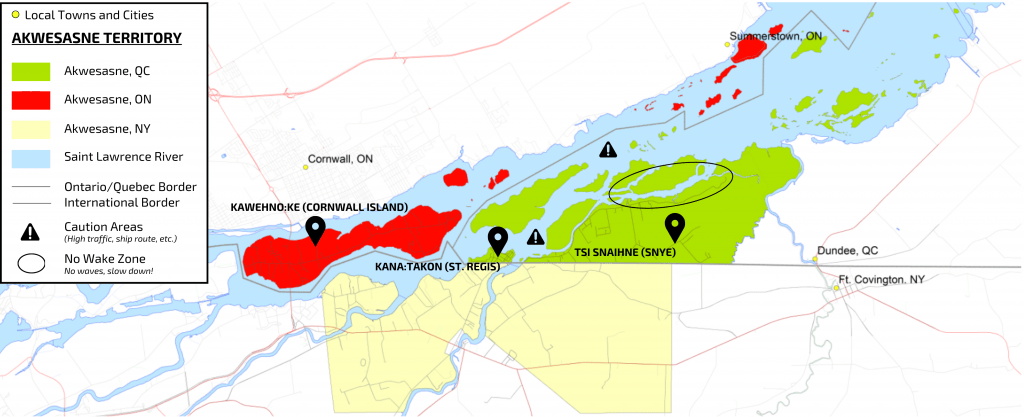
Image 1: Akwesasne territory. Source: Mohawk Council of Akwesasne
Born on US soil to citizen parents, I applied for my first passport at age 12, when my grandma took me with her to visit Italy and Greece for two weeks. My biggest concern then was packing my best clothes and how the passport picture unfortunately highlighted my crooked teeth and frizzy hair. Ten years later, I renewed the passport to make my second trip overseas, this time to go to India to do independent student research on a grant from my university. Imagine my awe and confusion when—thanks to a letter of introduction by an Indian government official whom I met through a professor—I was able to bypass the customs and immigration lines with a police escort at the airport in New Delhi and get my passport stamped without question in a back office before being shuttled into a gleaming white ambassador car to meet with a senior police officer. These early experiences crossing international borders were therefore smooth. They contrast dramatically with experiences shared by people who have long been Othered and constructed as suspect in various ways. Precisely this sensory experience has become more salient for me recently.
On an episode of The Chris Hedges Report podcast, Canadian writer Omar El Akkad talks about growing up with a “cultural survival kit” that (in large part) traces back to his witnessing a soldier interrogating his father at a checkpoint in Egypt. He says he is always anxious to go through airport border security, and points to how so many people more or less like him (i.e., brown skinned and/or naturalized citizens, with names indexing certain national or religious identities, perhaps with different accents to their spoken English) are “regularly dragged into secondary” inspection at US (or other) border crossings. El Akkad shares that this pervasive experience involves things like “pre-emptively preparing” for interactions with government agents “and trying to put them at ease” so as to suggest to them “don’t be scared” of me. He notes how over time he realized that it would behoove him to behave less “yes, sir, no sir” formally with border security officers, and instead act “more casual because that’s how people who are from here are behaving”. He remarks how only some feel “the cumulative effect” of how border securitization intersects with racism and other forms of discrimination. This is just one account of ways that marginalized peoples sense and embody insecurity at official border crossings globally through consciously altered comportment—never mind the millions who annually attempt to migrate unofficially or illegally, often risking or losing their lives.
I moved to Toronto for work over a decade ago and am now a dual citizen of both Canada and the US. Until recently, crossing between these countries felt easy, oiled by trusted traveler programs and historically friendly political economic relations. The only thing that ever “detained” me was a lonely border agent posted at a remote intersection of western Quebec/upstate New York, who was thinking of going back to school and wanted to chit-chat when he asked about my business and I told him about my scholarly research and teaching on police. He got an impromptu 20 minutes “office hours” session, and it was mildly endearing since that afternoon I was not in a rush while returning to Akwesasne from doing some fieldwork with members of their sister community in Kahnawà:ke, which is a Kanien’kehá:ke (Mohawk) territory near Tiohtià:ke (Montreal). The first time I felt significant anxiety about crossing this complex international boundary was a few days later, when I was informed by Canadian border agents that I could be fined thousands of dollars and my car seized because I had inadvertently not followed proper reporting procedures while conducting research in Akwesasne, a territory that straddles both the US-Canada border, and also the provincial border between Ontario and Quebec.
Akwesasne’ronon (the Kanien’ké:ha word for members of this Indigenous community) experience the insecurity, jurisdictional confusion, and exclusionary power of international border enforcement every day, since boundary lines zigzag irregularly through their land (Image 1). People joke about homes where the kitchen is in Canada and the living room is in the US, and relate far less amusing struggles over which problematic governing agreements dictate action on everything from commercial licenses to speeding tickets and the illegal trafficking of drugs, firearms, and human beings through the territory. As members of a sovereign First Nation recognized by both Canadian and US federal governments, Akwesasne’rono have special rights to move around their territory as needed without incident or incrimination. Unlike US or Canadian citizens—and with the exception of several designated crossings where there are special “express” lanes only accessible to Indigenous people with “native status” cards—Akwesasne’rono are not required to “check in” with officials when they traverse the border, not least since it would be impractical, often impossible to do so. But even people with all of their status documents in order have shared countless stories about being routinely questioned, detained, investigated, or otherwise inconvenienced—and reminded of their colonized Other-ness—by government agents on all sides. One community member with a status card even reported that he had to sit for several hours at a checkpoint one weekday after getting a medical X-ray, since agents detected radiation on him and classified it as suspicious and indicative of a potential security threat.
It is hardly news that even some of the most supposedly “friendly” and “porous” borders for some—especially persons privileged to have passports from globally powerful countries or other types of legitimating documentation—have long been places of anxiety, uncertainty, frustration, fear, paranoia, and terror for others, particularly people identified with groups facing prejudice and discrimination on the basis of indigeneity, nationality, race, religion, and other markers of cultural difference. Many in this latter category have become used to embodied experiences of sensing insecurity in a liminal space of exceptional, arbitrary, and mostly unchecked power meted out by state authority figures.
Recently however, and increasingly so, persons in the former (privileged) category, including myself, have begun sensing insecurity in borderlands as well. A stark case followed the re-election of Donald Trump as US President on a platform that included hard-line anti-immigrant and blatantly racist ideologies. Many have watched with horror as these ideologies play out in constant news streams about ICE (Immigration and Customs Enforcement) raids leading to the kidnapping and deportation of thousands of people across the US. Simultaneously, there are many stories circulating more or less publicly about increasingly arbitrary allegations of “anti-Americanism” and “national security threats” suspicions against persons who express dissent against or negative evaluations of some of the regime’s destructive and incoherent policies.
There are now many news accounts of foreign nationals getting caught up in the US immigration-detention dragnet since the beginning of 2025, sometimes allegedly due to procedural errors or miscommunications. Governments, NGOs, universities, business corporations, and others have been issuing travel warnings to their constituents, advising on how to respond to increased surveillance, search and seizure of electronic devices, denial of entry, and possible detention depending on one’s citizenship status. Stories have been circulating about people having their passports marked with a five-year ban from entering the US simply for being critical of the Trump regime. All of this is of course alarming for millions of people who have any sort of relationship with or reason to travel to the US. And it has dramatically shifted my own sense of in/security, even as someone with all of the (supposed) rights of US citizenship, and the privileges associated with being a well-educated descendent of white European settlers with no criminal record. Before traveling to the US, I now always anticipate interrogation. I carefully review the content of all of my devices; rehearse what I might say if questioned; and even give my children instructions on what (not) to say and do when we travel together. I have never been so anxious when passing through Canada-US border checkpoints, sometimes to the point of feeling physically ill, or unable to eat, bordering on panic attacks, even though I know “rationally” that I have done nothing wrong or anything that should warrant increased scrutiny or sanction.
My exponential increase in anxiety around crossing into the US is not simply speculative paranoia based on distant doomster social media stories and second-hand rumors. It emerges out of two specific circumstances related to expressed recognition of state violence. Foremost is a history of speaking out against occupation, apartheid, and genocide in Palestine/Israel (Bangstad 2025), to the extent that I have been profiled alongside thousands of others on the defamatory Canary Mission website with false charges of being antisemitic and pro-Hamas, and of allegedly supporting “terrorism”. I have viewed documented evidence of persons listed on this untrustworthy propaganda website being interrogated about it explicitly in secondary inspections at the US border; and in some cases, if someone was not a US citizen, they were reportedly banned and denied entry to the US. This is part of a larger pattern of the current US government’s weaponization of antisemitism as a smoke screen to try to bring universities and other institutions to heel with threats of rescinding of federal funding, canceling of work and study visas, and banning international student admissions as punishments or “warnings” for not falling in line with regime policies or allowing open protest of war crimes and atrocities. I admit to feeling afraid even now as I write this, and hope this will not cause harm in the future.
The other key factor that has amplified my sense of anticipatory insecurity about border crossings more generally relates back to my decades of research in India on police and security infrastructure. After some critical comments I made in independent media about harmful discriminatory policies and practices of the Hindutva (Hindu nationalist) government that has now been in power there for more than a decade, representatives from the Indian consulate came to my house in Toronto and issued me a “show cause notice”, criminalizing me for alleged “anti-national” activities that violate “the sovereignty and integrity of India”, and accusing me of “clandestine activities” in relation to my research. The charges are as absurd as they are baseless, and a Delhi-based lawyer has done their best to set me up well to fight these allegations in court as needed. But the government’s strategy of harassment and intimidation has compelled me to self-censor. While I still write candidly in scholarly sources about my research, I am more hesitant to respond to inquiries from journalists requesting comments on politically sensitive matters. And while many friends and colleagues already know about this old “news” of my essentially being blacklisted from a place I have considered another home for decades, this is the first time that I’m sharing it publicly in writing, more than three years after state officials first darkened my doorstep. Meanwhile, I have not attempted to return to India, even though I technically still have what is known as OCI (Overseas Citizenship of India) status. I have read and heard about many stories of other persons with this status having their cards revoked, and I fear arriving at that airport—where, recall, I was once able to bypass the long lines of foreign passport holders even though I had never before set foot in the country—only to be deported immediately, like other colleagues who have been unfortunately caught up in the Indian government’s dragnet of nationalistic hyper-securitization.
This is how state harassment and repression of dissent have always worked, of course; through instilling generalized suspicion along ideological divides, engendering amorphous anxiety that accumulates like moss, and shapeshifts into intensified fear and paranoia that spreads like a contagion. Rapidly changing technological capacities aside, most of the routine and exceptional tactics, strategies, and outcomes of potential and actual state violence are not new. But their sensory impact on new populations, and in relation to US power specifically, indicates substantive and seismic shifts. One key feature of these shifts is the increasingly blurry “border” between a palpable fear of mere “inconvenience” (perhaps I’ll miss a flight, or my phone will be seized at the border and I won’t ever get it back) versus the probability of a seriously harmful impact on peoples’ lives (perhaps I’ll be detained indefinitely, or they’ll do a full forensic image of my seized device that will lead to serious legal or financial complications, never mind the violations of privacy). Scaling up and out, it also seems that we are witnessing significant realignments and sea changes in the global order of political economic power, heretofore dominated by the US through what some have called “empire” in the post 1945-era.
Returning to El Akkad’s reflections, he acknowledges that as someone with the privilege of Canadian citizenship, his border-crossing fears have been, if not “silly” (his word), then still mostly about trying to ensure “as few headaches as possible” and to prevent the potential hassle of losing time, money, or equipment. For me as a dual citizen, I would like to continue to feel that the worst I might suffer at the Canada-US border is a short period of detention until I could obtain legal representation. But there is a growing sense that what appears to be intensified and unpredictable border interrogations of anyone and everyone—not just the “usual suspects”, which of course has always been “unjust”—may only get worse, and that the “normal” national and international legal protections may not hold, such that even citizens who don’t protest too much may be subject to extraordinary rendition. It feels like I now know more people than not who express some version of this fear on a regular basis, and especially in the lead up to a trip crossing the US border—or in a decision to avoid going to the US altogether, which also now seems far more common. The boundary between nuisance and violence has become more than a little insecure.
The (again) not new or unique, and yet intensified and arguably more-prevalent-than-ever, sense of insecurity around crossing borders into the US is also indicative of concerns well beyond just mobility and migration. It indexes the decline and fall of political economic forms and cultural ways of life that many people, including some of the wealthiest and heretofore well-protected and well-served by the US-led global order, have long enjoyed and don’t want to let go. Among other touchstones of security, it seems that US-based global and national governing institutions, free speech, legal and regulatory bodies, human and civil rights, social services, educational opportunities, and trust in mediated knowledge production are disintegrating across the board. Many try to go on as before, hoping for a savior in litigation, legislation, or perhaps a new leader, assuming the next US national election occurs on schedule. This mass tendency to “keep calm and carry on” seems to have a deeper sensory structure than mere maintenance of morale in the face of widespread and ongoing degeneration. Perhaps it exhibits something more akin to what Alexei Yurchak (2005) has called “hypernormalization” in the context of the end of Soviet Russia, wherein people expressed a strong sense that things would always continue as they had, even as their world was falling apart around them. I cannot predict with any precision the long-term or even immediate future of the US-led Global Order. But the fluctuations and increasing sense of creeping dread and acute terror that I now feel every time I approach the border of the country of my birth signify the insecurity, if not the complete implosion, of so much that so many of us have always thought to be true and trusted.
Beatrice Jauregui is Associate Professor at the University of Toronto Centre for Criminology and Sociolegal Studies. She is author of Provisional Authority: Police, Order, and Security in India and co-editor of the Sage Handbook of Global Policing and Anthropology and Global Counterinsurgency.
Yurchak, Alexei. 2005. Everything Was Forever Until It Was No More. The Last Soviet Generation. Princeton University Press.
Cite as: Jauregui, B. 2025. “Anxious Anticipations: Border-crossing In/security and the Implosion of the US-led Global Order” Focaalblog December 22. https://www.focaalblog.com/2025/12/22/beatrice-jauregui-anxious-anticipations-border-crossing-in-security-and-the-implosion-of-the-us-led-global-order/
‘Blue lives matter,’ says the mantra of police fragility.
The mythology about defenseless officers being hunted and killed by criminals
is indeed a powerful one, mobilized by right-wing politicians endorsed by
police unions in countries such as Brazil and the United States. In the case of
Brazil, a global reference in police terror, the narrative of police victimization
helped president Jair Bolsonaro to galvanize popular support around the
fictional image of patriotic officers (or soldiers like himself), ready to put
their lives on the line to protect citizens and save the country.
Certainly, police officers are killed in Brazil at a rate
that supersedes any other country in the hemisphere. According to the Brazilian
Forum of Public Safety, 343 officers were killed in 2018 alone, 75% of them
off-duty (FBS 2019). Although the numbers are extremely high when compared with
the United States, for instance, where 181 law enforcement agents were killed
in 2019 (NLEOMF 2020), this is a profession that, contrary to popular belief, has
very low lethality rates worldwide. Yet, even in Brazil, with astonishing
levels of officers killed on and off-duty, homicide is not the leading cause of
police death. In what seems to be a trend in Brazil and the US, the leading
cause of officers’ death is suicide (Bureau of Labor Statistics 2018; Exame
2019; see also Miranda and Guimarães 2016).
While assault and killings of law enforcement officers do
occur, this real risk is part and parcel of the work they perform. In fact, it
is common-sensical that their work grants them special protection not enjoyed
by any other civilian occupation. To raise a hand against a police officer is
not only a serious felony offense, but is also quite often a lethal one. In
Brazil, when an officer is killed, dozens of poor and predominantly black youths
are killed in revenge raids such as the infamous 2006 massacre, when at least 600
youth were killed within the span of one week in response to gangs’ lethal attacks
against police stations (Mães de Maio 2018). Police even deploy assassinations in
order to pressure politicians to grant them better labor conditions.
Indeed, spreading terror has been an ‘efficient’ police strategy to gain political leverage. For instance, in February 2020, days before carnival, the Military Police of Ceará went on strike. Although the direct involvement of striking officers in the slaughter is the object of an ongoing investigation, there were several denunciations of police-linked death squads and hooded men in police patrols terrorizing the population. Coincidently or not, and repeating a pattern seen in other Brazilian contexts (see De Souza, 2016), at least two hundred individuals were killed within the span of one week (Jucá 2020; Adorno 2020). To no avail, the leftist governor Camilo Santana denounced these uses of terror as a tactic to bring the government to its knees. Widespread denunciations of human rights violations, from torture to assassinations, are consistently met with impunity in a country where at least 6,200 individuals were killed by the police in 2018 (17 deaths each day!), of which 99% were young male, favela residents and 75% were blacks (FBSP 2019).
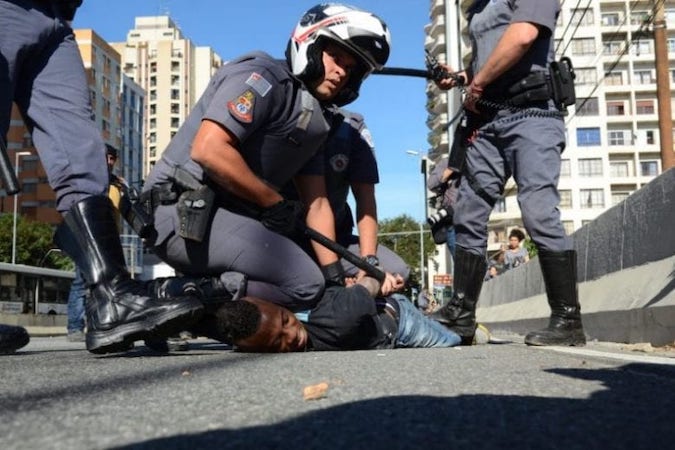
Image 1: While the US is the leading country in incarceration rates, Brazil leads the way in the killing of Black individuals by law enforcement policies. According to the Brazilian Forum of Public Safety, within six years (2015-2020) 29, 952 civilians were killed by the Brazilian police force. Black youth account for 8 in 10 individuals killed by the police. Click here for geo-reference on the lethality of policing in Brazil.
In this following, I focus not so much on the
paradigmatic victims of police terror in societies of the African Diaspora such
as Brazil and the United States, but rather on the critical role urban
ethnographers can play in demystifying the ‘war on police’ and in advancing an insurgent
movement pushing toward police abolition in the contemporary world. Brazil is
the departure point of analysis for obvious reasons. As the country with the
highest rates of civilians killed by the police, it has, within the last few
decades, seen a proliferation of socio-anthropological studies on police
violence and police culture. Not only have anthropologists dedicated increasing
attention to the challenges and possibilities of democratic policing, but
officers themselves have become ethnographers – or at least relied on some of
its techniques – in their attempts to provide ‘privileged’ accounts of police
praxis (e.g., França 2019; Muniz and Silva 2010; Storani 2008).
This article should be understood neither as a literature
review of the burgeoning field of police studies in Brazil (for an overview
see, Muniz et., all, 2018) nor an overview of global anthropology of policing. Instead,
I call attention to new directions in the study of policing as a colonial regime
of control that exists in urban contexts in Brazil and the USA, but is hardly unique
to those societies. Crucially, as a global project, the practice of anthropology – and police fieldwork in particular (Steinberg
2020) – cannot be dissociated from the geopolitics of empire and global
antiblackness. Enduring global
colonialism is configured and continuously reinforced by Europe/US-led regimes
of security and knowledge production. And yet, racial apartheid enforced by police
terror –homeland security? — blurs geo-ontological boundaries between global
north and global south and reasserts the afterlife of colonialism (Susser 2020;
Nonini 2020; Beaman, 2020).
How should anthropologists objectively treat police innocence
and victimhood narratives without participating in this ongoing coloniality? If,
as Anna Souhami forcefully argues, ‘the dynamics of police culture [ethnographers]
so powerfully criticis[e] are reflected in the construction of the ethnographic
process’ (2019: 207), how should we ethically write about police victimization
without (even if involuntarily) endorsing the trope of cops’ fragility? What
does the narrative of victimization engender? Finally, what should be the place
of anthropology of policing in the urgent call of black activists and black
studies to defend the dead? While studying the police (and any mainstream
institution) does not necessarily lead to uncritical alignment to power, the
antiblack animus of policing makes it extraordinarily challenging and politically
compromising for anthropologists to work with the police in the name of
ethnographic complexity and simultaneously engage with social movement’s
critique of policing-as-antiblackness (Hale, personal communication). That is
to say, the anthropology of policing, even when highly critical of policing
structure, seems to underscore a liberal reform paradigm that goes against what
the paradigmatic victims of police terror demand: defunding, dismantling and
abolishing the police state.
The Myth of Police
Fragility
There is a scene in Melina Matsoukas and Lena Waithe’s 2019 movie, Queen and Slim,
that is worth recuperating here. The young couple is going on their first date
when a white cop pulls them over. The minor traffic violation ends with Slim (Daniel
Kaluuya) taking the cop’s gun and shooting him dead in self-defense when the
officer fires his gun against Queen (Jodie Tuner). Slim wants to turn himself
in, but Queen (who is a lawyer) reminds him that their blackness has already
sealed their destiny. The ‘cop-killers’ go on the run through the deep South,
hoping to reach Cuba. As the video of the killing goes viral, Queen and Slim’s
story mobilizes other African Americans and images of Black Lives Matter
protests are merged with their fugitive endeavor. The scene that strikes me
features Junior, a black boy in the foreground leading a demonstration. With
fists in the air he shouts, ‘Let them go!’ When an officer tries to stop him,
he pulls the officer’s gun and shoots the officer dead.
One may speculate: What led him to such an
expected act of violence? Perhaps the painful consciousness of his blackness? Perhaps
the limited options available, within the context of ‘fugitive justice,” to stop
the “grinding machine of human flesh” policing represents? The film and the scene in particular aroused
heated debate on the nature and scope of Black resistance against police
violence in the Black Lives Matter era. Lena Waithe has called the movie ‘a
meditation on black life in America’ (King 2019). However, where the filmmakers
gave cinematic representation to an all too familiar “state of captivity”
(Wilderson 2018:58), some received the movie as a ‘war on cops’ while others
blamed it for ‘going too far left in its
implications in that black people condone, protect and are inspired by
reciprocating violence against police as a result of their experiences with law
enforcement’ (Vaughn 2019).
The “war-on-cops” rhetoric and
its attending practices in the ‘Blue Lives Matter’ movement in the United
States and its parallel (albeit diffuse) pro-cops movement in Brazil can be
read as what legal scholar Frank Rudy Cooper calls “the myth of cop fragility”.
Hecontends that such mythology draws a false equivalence between ‘blue
lives’ and ‘black lives’ by ‘reposition[ing] police officers, and whites in
general, as the new victims’ of racism (Cooper 2020: 654). In that sense, ‘white backlash better
explains Blue Lives Matter’s self-defense perspective than does the
vulnerability of police officers to attack’ (2020: 655).
By hijacking the
meanings of the black struggle for life, the police also cannibalize the terms
of the debate. This, in turn, seems to resonate in the academia’s ambivalence (unwillingness?)
in dealing with the cruelty of police power. Whereas radical social movements
and scholars lay bare the impossibility of freeing justice from its coloniality
(e.g., Best and Hartman 2005; Segato 2007; McDowell
and Fernandez 2018; Flauzina and Pires 2020), we see a proliferation of
works on police reform, or, in the case of anthropology, an investment in cops
as a new subject of inquiry whose violent work must be understood in relation
to broad social norms and power dynamics. I have nothing against the election
of cops as ethnographic subjects and indeed, such an election has been crucial
to illuminate social processes that otherwise would continue to remain obscure.
Though in a fragmented form, I take this very path in my own ethnographic work
on police brutality in São Paulo, Brazil and Cali, Colombia.
Likewise, recent groundbreaking ethnographies of policing
(I am consciously grouping scholars from distinct disciplines whose work
employs ethnography as its main methodology) have shed light on the ways in
which officers justify their work as habitus – ‘just doing their job’ – which
reflects a socially shared belief in torture and killings as a form of ordering
the chaotic social world. In racialized geographies such as the Paris’ ‘banlieues,’ Los Angeles’ ‘ghettos’ or Brazil’s
‘favelas,’ these critical ethnographies show that officers enforce sociospatial
imaginaries of belonging, entitlement and justice (Fassin 2013; Denyer-Willis 2015;
Roussell 2015). Officers also perform a peculiar form of order-making in
contested regimes of urban governance by competing local authorities such as
drug-traffickers, paramilitarism, power-brokers and so on (e.g., Salem and
Bertelsen 2020; Larkins 2013; Penglase 2012; Arias 2006). Other interventions
have accounted for the ways in which police negotiate their everyday encounters
with institutional violence and public discredit. Officers are forcefully
portrayed as political actors whose practices, emotions and subjectivities echo
broader systems of morals (Pauschinger 2020; see
also Jauregui 2014). Police and policing produce a mode of “sociability,”
an ethos, and a political rationale of governance (Karpiak 2010; Sclofsky 2016; Muniz and Albernaz 2017). Finally,
there is the call for ‘publicity, practicality and epistemic solidarity’ among
anthropologists, law enforcement agencies and larger publics to respond to the
disciplinary invitation for political engagement with pressing problems of
corruption and violence (Mutsaers et al. 2015: 788).
These and many other works (too many to be listed in a
commentary note) reflect an important anthropological contribution to demystifying
this troubling institution and the subjectivity of its agents. In the last
decade or so, it has become a consensus in the field – regardless of one’s
theoretical perspective – that policing is much more than uniformed personnel
patrolling the streets. By making
ethnographically visible what policing does and produces, ethnographers have
provided insightful understandings of mundane forms of order-making,
statecrafts and rationales of government (see Karpiak and Garriott 2018, Martin
2018, Steinberg 2020 for an overview).
My
intervention does not go against these contributions that I loosely locate
within the field of ethnographies of police. My concern here is with what
anthropology does and what anthropology produces when giving cops more voice
and space in these critical times when cities are on fire. In their edited
volume, The Anthropology of Police, editors Kevin Karpiack and Willian
Garriott ask the important questions: ‘What are the ethical and political
stakes of trying to humanize the police? Are there any grounds on which one
could even justify an approach that took up such a project of humanization over
and against one centered on cataloguing, critiquing, and decrying
police-perpetuated harms?’ (2018: 6-7). The authors answer this crucial question
by calling for the study of police as a way to challenge the discipline’s trend
to “study up” and as an attempt to understand contemporary notions of humanness
embedded in policing and security practices. To them, one cannot understand the
world and what it means to be human without understanding the work of police
(2018: 8).
In
this sense, it is argued, the risk pays-off: when attentive to one’s own
positionality, critical ethnographies of policing can shed light on important issues
such as the culture of militarism, the corrosion of democracy and the
normalization of gendered violence (Kraska 1996; Denyer-Willis 2016). I can relate
to that. My fragmented ethnographic encounters with police officers (usually
themselves from the lowest social stratum of the society they supposedly serve
and protect) gave me a first-hand understanding of how officers negotiate
apparently contradictory approaches of defending the killings of ‘criminals,’ enthusiastically
supporting a ‘new’ human rights-oriented community police, energetically detaching
themselves from the “bad cops,” and embracing a hyper-militaristic crusade to ‘save’
family and Christian values (Alves 2018).
While doing ethnography with/of police does not necessarily stand in contradiction to the ethics and promises of anthropology in solving human problems, something I have no doubt my colleagues genuinely embrace as a political project, and while we should suspend assumptions that all anthropologists must adhere to the militant/activist theoretical-methodological orientation (Harrison 1992; Hale 2008, Hale personal communication), studying the police requires one to face tough ethical questions on the troubling position of witnessing the perpetration of violence, the unintended normalization of police culture (see Souhami 2019), and the dangerous humanization of police work.
My analysis (and that of many of my
colleagues), was politically aligned with activists and empathic with
individuals embracing outlawed forms of resistance against police terror.
Still, I was constantly asked which side I was on. For instance, a black young
man, who by the time of my research in the favelas of São Paulo was making a
living in what he refers as ‘the world of crime,’ unapologetically told me I
was an asshole for being ‘too straight, too naïve, too afraid to die.’ In Cali,
Colombia, although I was considered “not kidnappable” — as the member of a
local gang laughed and joked around, perhaps demarking the difference between
my physical appearance and those of other foreign researchers usually from the
global north — I was awkwardly enough associated with the mestizo middle
class and its regime of morality that called for state violence against black
youth seen as the scapegoat of the city’s astonishing levels of violence.
Thus, my contention here is not so much to
stop studying police, but rather, to disengage from a seductive analysis of
power that, while compelling in scholarly terms and in-depth ethnographic description,
may involuntarily give voice to unethical power structures personified by the
police. Following Frank Wilderson’s assertion that police terror ‘is an ongoing
tactic of human renewal…a tactic to secure humanity’s place’ (2018:48), one
should ask what such an anthropological project of humanization entails. If we do not want our work to end up fueling
and corroborating the skepticism over a discipline with an ugly history of complicity
with oppressive power, then it is about time for an unapologetic ‘f*ck the
police!’ in studies of policing.
Maroon Anthropology
In Progressive dystopia, abolition, antiblackness and schooling in San Francisco, anthropologist Savannah Shange urges anthropologists to apply ‘the tools of our trade to the pursuit of liberation, and [to enact] the practice of willful defiance in the afterlife of slavery’ (Shange 2019: 159). Abolitionist anthropology responds to scholars law-abiding investment in policing – what she calls carceral progressivism – by refusing the promises of the liberal state and liberal academia (39-42). The imperative ‘F*ck the Police!’ could be another way of engaging with Shange’s invitation to make space for freedom in our writing and our practices. The urgency of the moment asks anthropologists to work against the police, not with the police. If nothing else, the recent urban ‘riots’ in response to the lynching of black individuals in the United States and in Brazil support my call. Individuals strangulated with knee-to-neck asphyxia, skulls broken by police boots, wounded bodies calculatedly left agonizing in the streets or tied to the police patrol and dragged through the streets, rapes, disappearances and continued extortion are some of the mundane practices of police terror that should make us pause and reflect.
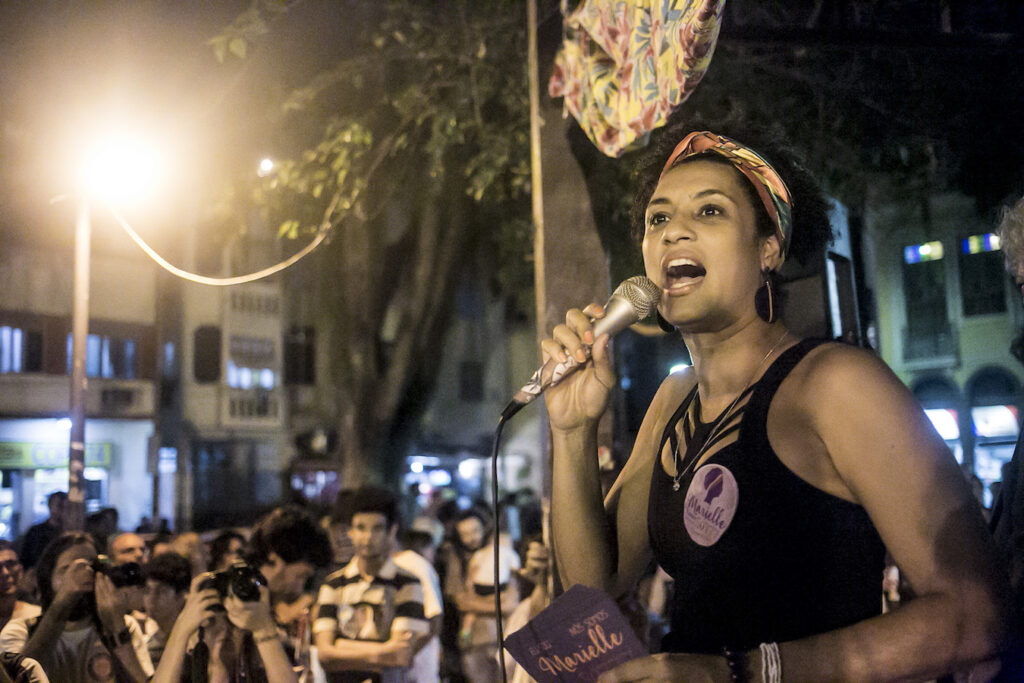
Image 2: On March 14, Marielle Franco, a black feminist, human rights defender and city councilperson from the socialist party, was murdered. She was also leading the Human Rights Commission to monitor police and military abuse during the military intervention decreed by then president Michel Temer and she was vocal against paramilitary groups that control Rio’s political system. Two years after her death, the question remains: “Who ordered the killing of Marielle?” (Source: Workers Party. https://pt.org.br/caso-marielle-franco-um-ano-sem-solucao/)
Let’s be honest, as a discipline, we have failed to side significantly
with the victims of police terrorism beyond sit-in moments at conferences, open
letters, creatively designed syllabi or academic journal articles such as this
very one. Anthropologists seem to be too invested in the economy of
respectability that grants us access to institutional power ‘to engage
anthropology as a practice of abolition’ (Shange 2019: 10). Nothing can be more
illustrative of such an abysmal dissonance with this call than the political
lexicon we use to describe police terrorism itself – it is telling that the
word terror is barely articulated in the field of anthropology of police
– and people’s call to ‘burn it down’ and ‘end the f*cking world’. With one fist
in the air and a rocket in the other hand, demonstrators have denounced again
and again that ‘Brazil is a graveyard,’ ‘the US is a plantation,’ ‘police are
the new slave-catcher.’ Cities turned into a
smoking battleground, police stations stormed, patrols set on fire. What
has anthropology got to offer beyond well-crafted texts, sanitized analyses of
the moment and good intentions to decolonize the discipline? We lack rage!
Like police, and unlike workers in general, tenured
scholars (including anthropologists) have very low risk in performing their
work. Police perform what Micol Siegel forcefully calls ‘violence work’ (Siegel
2018). They are professionals that essentially deliver violence represented as a
public good. Anthropologists, I would argue, are ‘violence workers’ not only in
performing the enduring colonial project of othering, but also when taking a ‘reformist’,
‘neutral’ or distant stance on social movements that demand radical changes.
Even worse, in giving voice to police based on a pretentious technicality of
‘just’ collecting data, anthropology ends up helping to quell that struggle (see
Bedecarré 2018 for groundbreaking work on the role of white scholars in
promoting vigilante justice against Black anger). That is to say, the nature of
the violence performed by ethnographers of policing may differ in degree and
scope from police terror but, as Hortense Spillers reminds us, “we might concede, at the very least, that sticks and bricks might break our bones, but words will most certainly kill us”
(Spillers 1987: 68).
If
the subfield of anthropology of police wants to be coherent to the discipline’s
(incomplete) decolonizing turn, it should have no ambiguity in regarding police
‘violence’ as terror, have no doubts as to which lives are in peril in these terroristic
policing practices and refuse the false promises of reforming this colonial
institution. For ethnographers, refusing to performing ‘violence work’ may
require disloyalty to the state – including rejecting the self-policing
required by corporate academia – and instead unapologetically embrace the
position of an insurgent subject whose ‘coherence [is] shaped by political
literacy emanating from communities confronting crisis and conflict’ (see James
and Gordon 208:371).
I am
not completely sure how an insurgent anthropology of police would look (Ralph,
2020 is a powerful example of how anthropologists can use the discipline’s
tools to mobilize larger audiences against police terror). A departure point
for discussion, however, would be the intellectual humbleness to learn from the
wretched of the earth’s refusal to legitimize, ‘humanize’ and promote the
reforming of the police, not to mention the temptation to equate cop’s (real)
vulnerability to violence with the (mundane) killing of civilians. Ultimately,
those of us doing ethnography in collaboration with men and women in uniform ought
to ask ourselves how to express empathy with and mourn blue lives – since as
ethnographers we develop emotional bonds to our interlocutors even if critical
of their behaviors– and still remain critical of the regime of law that
necessitates and legitimizes the evisceration of black lives. How do we attend
to the ethical demand for all (blue) lives’ grievability while also attentive
to the ways, as some anthropologists have shown (Kurtz 2006; and Vianna et
al., 2011), the state is anthropomorphized and performed by
political agents? Are not cops’ lives, insofar as their identity are attached
to the (state) terrorism they perform, an expression of state livingness? That
is to say, blue lives are not the same as black lives because blue lives are
state lives (albeit not the only ones, a peculiar performance of state
sovereignty). There is no space for a theorization on the multiple ways the
state comes into being as a mundane practice of domination. It is enough to say
that at least in the USA and Brazil, statecraft is antiblackcraft. Indeed, the
military labor performed by the police in postcolonial contexts such as Brazil
and the United States is only made possible by the ‘politics of enmity’ (Mbembe
2003) that informs contemporary regimes of urban security. It is in the terrain
of sovereignty, thus, that one has to situate the work of policing. As Siegel and others have shown, one of the
most important realizations of state violence is the mystification of police
work as civilian as opposed to military labor. The police, the myth goes, works
under the register of citizenship to protect and serve civil society. Still,
both police and the military are one and same. The field in which police
operates is a military one, which works effectively and precisely to deploy
terror in a sanitized and legitimate way (Wooten 2020; Siegel 2018; see also Kraska
2007).
This is not a peripheral point. One has only
to consider the ways black people encounter officers in the streets as soldier
and experience policing as terror (again, asphyxiated with the knee on the
neck, dragged in the streets, dismembered and disappeared) in opposition to the
contingent violence experienced by white victims of cops’ aggression (Wilderson
2018; Alves and Vargas 2017) or by cops’ vulnerability inherent to their
profession. And yet, if the logic of enmity is what sustains the enduring
antiblack regime of terror enforced by policing, from the point of view of its
paradigmatic enemy reforming the police is absurd and praising blue lives is
insane.
How might anthropologists challenge the
asymmetric positionality of terrified police lives and always already terrifying
black beings? When one officer dies, it
is a labor accident. When an officer kills, it is part of his or her labor in
performing the state. The degrees, causality and likelihood matter here. Even
in societies such as Brazil, where the number of officers killed is extremely
high, police lives are not as in peril as conservative pundits want us to
believe. The lives of those cops eventually killed ‘in service’ are weaponized
forms of life that predict the death of black enemies. Thus, police and their
victims belong to two different registers, and if there is an ethical issue in
relativizing any death—an approach I firmly refuse –, there is equal or
even greater risk in lumping together state delinquency and retaliatory
violence by its victims.
There is no equivalence between blue lives
and black lives, and even if the call for equivalence is the order of the day in
the liberal sensibility that ‘all lives matter,’ this is not the job of
anthropology to reconcile these two positions. It is in the spirit of
anthropology’s moral and political commitment to the oppressed – a commitment that
while empathic with the powerless is also highly critical of the uses of violence
as liberatory tool — that we should insurge against this false
equivalency.
Based on her work with activists in the South
African liberation movement, Nancy Scheper-Hughes
asks, “what makes anthropology and anthropologists exempt from the human responsibility
to take an ethical (and even a political) stand on the working out of
historical events as we are privileged to witness them?” (1995:411). The author
deals with this question by highlighting the complexity of not relativizing
violence of the oppressed or taking a neutral distance from the cruelty of the
oppressor and yet, positioning one’s fieldwork as a site of struggle. She
opposes the anthropologist as a “fearless spectator” (a neutral and objective
eye) and the witness (the anthropologist as a “companheira”). The later is
positioned “inside human events as a responsive, reflexive, and morally
committed being” and “accountable for what they see and what they fail to see,
how they act and how they fail to act in critical situations” (1995: 419).
If we consider current waves of demonstrations
against police terror as a historical moment that scholars committed to human
liberation cannot refuse to attend, how do we respond to this call without been
misunderstood as inciters of violenceagainst the police? Although an insurgent
anthropology should learn from different historical and ethnographic contexts
where retaliatory violence has been deployed as one legitimate tool to
counteract the brutality of power (Abufarha 2009; Cobb 2014; Umoja 2013), my
critique here is obviously not an argument for embracing
violence against cops as the way out of the current crisis of policing. I am
also not turning a blind eye to a range of political possibilities militant and
activist anthropologists already embrace in favor of empowering victims of
state-sanctioned violence as “negative-workers”, public intellectuals, or
member of advocacy groups (e.g., Scheper-Hughes 1995; Mullings 2015). Rather, informed
by a black radical tradition, I am inviting anthropologists to rebel and change
the terms of engagement with the police by questioning our (and our
discipline’s) loyalty to the carceral state.
Thus, f*ck the police! is
not a rhetorical device, but rather an ethical imperative and moral obligations
to the eviscerating lives lost by state delinquency. It is indeed an invitation
to seriously engage with the desperate call from the streets for making Black Lives
Matter. Attending to their call, on their terms, would require a deep scrutiny
on how anthropology participate in antiblackness as a socially shared practice.
It also requires us to consider how antiblackness renders legal claims for
redressing police terror quite often of little account, and what resisting
police terror means to those whose pained bodies resist legibility as victims. What
does the anthropological project of humanizing the police mean to those ontologically
placed outside Humanity? For those whose marked bodies make Queen and
Slim’s subject position – as new runaway slaves – very familiar and intimate, the
answer is quite straightforward. Fuck the police!
Acknowledgments: This
paper has benefited from generous comments from Charlie Hale, Micol Siegel,
Graham Denyer-Willis, João Vargas and Tathagatan Ravindran, as well as from
engaging audiences at the University of Colorado/ IBS Speaker Series,
University of London / Race Policing and the City Seminar, and the University
of Massachusetts/Anthropology Colloquium. I also thank Terrance Wooten and
Amanda Pinheiro for a joint-conversation on police terror during the Cities
Under Fire forum at the University of California, Santa Barbara. Don Kalb,
Patrick Neveling and Lillie Gordon provided invaluable editorial assistance. Errors
and omissions are of course mine.
Jaime A Alves teaches Black Studies at the University of California, Santa Barbara. His academic interest includes urban coloniality and black spatial insurgency in Brazil and Colombia. He is the author of “The Anti-Black City: Police Terror and Black Urban Life in Brazil (University of Minesotta Press, 2018). His publications can be found at https://jaimeamparoalves.weebly.com
References
Abufarha, Nasser. 2009. The making of a human bomb: An
ethnography of Palestinian resistance. DUhan: Duke University Press.
Arias, Desmond 2006. The dynamics of criminal governance: networks and social order in Rio de Janeiro. Journal of Latin American Studies 24(3): 293-325.
Alves, Jaime & João
Vargas 2017. On deaf ears: Anti-black police terror, multiracial protest and
white loyalty to the state. Identities, 24(3): 254-274.
Beaman, Jean. 2020. Underlying Conditions: Global
Anti–Blackness amid COVID–19.
Bedecarré, Kathryn 2018. Doing the work: the Black Lives Matter Movement in Austin. Ph.D Dissertation. U of Texas, Austin.
Cobb, Charles E. 2014. This
nonviolent stuff’ll get you killed: How guns made the civil rights movement
possible. Tuzcon: Basic Books.
Cooper, Frank Rudy 2020. Cop
fragility and blue lives matter. University of Illinois Law Review, 2: 621-662.
De Souza, Raquel. 2016. “Cruel coexistence: Police violence and black disposability in Salvador/Bahia.” PhD dissertation. University of Texas, Austin.
DiAngelo, Robin 2018. White fragility: Why it’s so hard for white people to talk about racism. New York: Beacon Press.
Exame 2019. No Brasil, mais policiais se suicidam do que
morrem em confrontos. Revista Exame, 26 August, https://exame.com/brasil/no-brasil-mais-policiais-se-suicidam-do-que-morrem-em-confrontos/
Fassin, Didier 2013. Enforcing
order: An ethnography of urban policing.
London: Polity.
FBSP 2019. Anuário brasileiro
da segurança pública. FBS, 1 December.
Flauzina, Ana & Thula Pires 2020.
STF e a naturalização da barbárie. Revista Direito e Práxis, 11(2): 1211-1237.
França, Fábio Gomez de 2019. “O soldado é algo que se
fabrica”: Notas etnográficas sobre um curso de formação policial militar. Revista Tomo, 2(34): 359-392.
Hale, Charles R. 2008. Engaging
contradictions: Theory, politics, and methods of activist scholarship. Berkeley: University of California Press.
Harrison, Faye V. 1992. Decolonizing anthropology:
Moving further toward and anthropology for liberation. Anthropology News,33(1): 24-24.
Kurtz, Donald. 2006. Political power and
government: negating the anthropomorphized state. Social Evolution and History, 5(2): 91-111.
James, Joy & Edmund T.
Gordon 2008. Afterword. In Charlie Hale, Engaging
contradictions: Theory, politics, and methods of activist scholarship,
371-382. Berkeley: University of California
Press.
Jauregui, Beatrice 2014.
Provisional agency in India: Jugaad and legitimation of corruption. American
Ethnologist, 41(1):
76-91.
Jucá, Beatriz 2020. Policiais amotinados aceitam proposta. El País,
1 March, https://brasil.elpais.com/brasil/2020-03-02/policiais-militares-amotinados-aceitam-proposta-do-governo-e-encerram-greve-no-ceara.html
Karpiak, Kevin G. 2010. Of heroes and
polemics: ‘The policeman’ in urban ethnography. Political and Legal
Anthropology Review 33:7–31.
Karpiak, Kevin G. &
William Garriott (eds.) 2018. The anthropology of police. London and New
York: Routledge.
King. Noel 2019. Lena Waithe’s ‘Queen & Slim’ is an odyssey for the
black lives matter era. NPR, 27 November, https://www.npr.org/2019/11/27/783223371/waithes-queen-slim-is-an-odyssey-set-in-the-era-of-black-lives-matter
Kraska, Peter B. 2007. Militarization
and policing—Its relevance to 21st century police. Policing: a journal of policy and practice, 1(4): 501-513.
Kraska, Peter B. 1996. Enjoying militarism:
Political/personal dilemmas in studying US police paramilitary units. Justice quarterly, 13(3): 405-429.
Larkins, Erika Robb 2013.
Performances of police legitimacy in Rio’s hyper favela. Law
& Social Inquiry, 38(3):
553-575.
Mães de Maio 2019. Memórial
dos nossos filhos. São Paulo: Editora NósporNós.
Mbembe, Achille
Necropolitics. Public culture, 15(1): 11-40.
McDowell, Meghan G. &
Luis A. Fernandez 2018. ‘Disband, disempower, and disarm’: Amplifying the theory
and practice of police abolition. Critical Criminology, 26(3): 373-391.
Miranda, Dayse & Tatiana
Guimarães 2016. O suicídio policial: O que sabemos? Dilemas-Revista
de Estudos de Conflito e Controle Social, 9(1): 1-18.
Mullings, Leith 2015.
Anthropology matters. American
Anthropologist, 117(1): 4-16.
Muniz, Jacqueline de Oliveira &
Washington França da Silva 2010. Mandato policial na prática: Tomando decisões
nas ruas de João Pessoa. Caderno
CRH, 23(60): 449-473.
Muniz, Jacqueline, Haydee
Caruso, & Felipe Freitas 2018. Os estudos policiais nas ciências sociais:
Um balanço sobre a produção brasileira a partir dos anos 2000. Revista Brasileira de
Informacao Bibliografica, 1(2):148-187.
Muniz, Jacqueline de Oliveria & Elizabete
Albernaz 2017. “Moralidades entrecruzadas nas UPPs: Uma narrativa policial.” Cadernos
Ciências Sociais, 3(2): 115–151.
Nonini. Don. 2020. Black Enslavement and Agro-industrial
Capital, FocaalBlog, Jan 20, http://www.focaalblog.com/2020/07/03/don-nonini-black-enslavement-and-agro-industrial-capital/
Pauschinger, Dennis 2020.
Working at the edge: Police, emotions and space in Rio de Janeiro. Environment and
Planning D: Society and Space, 38(3):
510-527.
Ralph, Laurence 2020. The torture letters:
Reckoning with police violence. Chicago: University of Chicago Press.
Scheper-Hughes, Nancy 1995.
The primacy of the ethical: Propositions for a militant anthropology. Current Anthropology,36(3): 409-440.
Sclofsky, Sebastián 2016. “Policing
race in two cities: From necropolitcal governance to imagined
communities.” Social Justice, 6
(2): 1-14.
Segato, Rita Laura 2007. El color de la cárcel en América Latina. Nueva Sociedad, 3(208): 142-161.
Seigel, Micol. 2018. Violence work: State power and the limits of police. Duhan: Duke University Press.
Shange, Savannah 2019. Progressive dystopia:
Abolition, antiblackness, and schooling in San Francisco. Durham: Duke University Press.
Salem, Tomas & Bjørn Enge Bertelsen.
2020. “Emergent Police States: Racialized Pacification and Police Moralism
from Rio’s Favelas to Bolsonaro.” Conflict and Society 6(1):
86-107.
Souhami, Anna 2020. Constructing tales of the
field: Uncovering the culture of fieldwork in police ethnography. Policing
and Society, 30(2): 206-223.
Spillers, Hortense. 1987. “Mama’s
baby, papa’s maybe: An American grammar book.” Diacritics 17(2): 65-81.
Storani, Paulo. 2008. Vitória sobre a morte: a glória
prometida: O ‘rito de passagem’ na construção da identidade dos operações
especiais do BOPE. Niterói: Universidade Federal Fluminense.
Umoja, Akinyele Omuja 2013. We
will shoot back: Armed resistance in the Mississippi freedom movement. New York: NYU Press.
Vaughn, Kenya 2019. Queen
& Slim, a well-acted interpretation of a tragically flawed story. The
St. Louis American, 27 November.
Vianna, Adriana, and Juliana Farias. 2011.
“A guerra das mães: dor e política em situações de violência
institucional.” Cadernos Pagu (37): 79-116
Wilderson, Frank B. 2018.
‘We’re trying to destroy the world’: Anti-blackness and police violence after
Ferguson. In Marina Gržinić Aneta Stojnić (eds), Shifting
Corporealities in Contemporary Performance, 45-59. New York: Palgrave Macmillan.
Willis, Graham Denyer 2015. The
killing consensus: Police, organized crime, and the regulation of life and
death in urban Brazil. Berkeley: University of
California Press.
Wooten, Terrance. 2020. Cities Under Fire: a public Forum. Santa Barbara: University of California.
Cite as: Alves, Jaime A. 2021. “F*ck the Police! Murderous cops, the myth of police fragility and the case for an insurgent anthropology.” FocaalBlog, 27 April. https://www.focaalblog.com/2021/04/27/jaime-a-alves-fck-the-police-murderous-cops-the-myth-of-police-fragility-and-the-case-for-an-insurgent-anthropology/