Tag Archives: resistance

Ezgi Güler: Trans Sex Workers’ Collective Struggle in Urban Turkey

This post is part of a feature on “Urban Struggles,” moderated and edited by Raúl Acosta (LMU Munich), Flávio Eiró (Radboud University Nijmegen), Insa Koch (LSE) and Martijn Koster (Radboud University Nijmegen).

Facing family rejection and domestic violence, many transgender (trans) people leave their hometowns especially for large cities in search for greater acceptance and opportunities (Engin 2018). Due to a lack of viable financial means to support themselves and a lack of social acceptance by society, these individuals typically take shelter with urban trans communities (Zengin 2014). In the recent decades, trans communities working in the sex economy have become particularly visible in urban spaces (Çokar and Kayar 2011). However, stigma and hostility towards their gender identity, criminalization and the precarious nature of street-based sex work, punitive institutional practices, and neoliberal urban restructuring have exacerbated their marginalization. In response, trans sex workers have developed various coping and resistance strategies. However, their care networks and practices of resistance are often precarious. Although solidarity persists, violent structural forces produce tensions in their relationships, and hinder the emergence of their collective resistance. This post communicates an ethnographic research that investigates the processes through which the wider forces undermine sex workers’ collective struggles in urban Turkey.

The case study presented here is based on participant-observation and 30 in-depth interviews in an urban neighborhood of a major Turkish city. I collected data from August 2017 to August 2019, during which time I spent an average of six hours a day for six months with sex workers in the streets as they solicited clients and engaged in other everyday activities. In this context, a wide range of identities coexist under the category of “trans.” As used here, the term broadly signifies a person whose assigned sex at birth is male, and who cross-dresses or self-identifies as a woman or with a local or transnational gender-variant term. Most of my research participants self-identify either as a woman or as travesti, lubunya, trans, transseksüel, gacı, or cross-dresser.

Structural violence: Transgender lives in urban Turkey

Sevda, who self-identifies as a travesti, experienced estrangement and ostracism when she first revealed her gender identity to her family. She left her parental home and cut ties with her family members for many years. Struggling with poverty and homelessness, she moved to a larger city that offered her anonymity and enabled her to earn a living in the underground sex economy. Unable to find other employment, she had engaged in street-based sex work for 15 years when I first spoke with her. However, her labor has always been criminalized. The fines she has received for seeking clients in the street have accumulated. And since she has not had funds to pay these fines, her debt has gradually multiplied, reaching the equivalent of two-years rent. On occasion, when Sevda has been unable to earn a sufficient income in inner-city neighborhoods, where she is policed and punished, she has worked in peripheral areas, either along the highway, at bus terminals, or in industrial zones. Without peer support networks in these unsafe and isolated locations, she has faced violence, street harassment, and extortion. On several times, she has been targeted with bottles, stones, lit cigarettes, or water thrown out of car windows. When I first met Sevda, though strong and persistent, she seemed emotionally exhausted from the everyday hassles of her life.

The rights group Transgender Europe notes that “there is no safe country for transgender people.” The statistics from Turkey are particularly worrisome. According to their 2019 report, between October 2018 and October 2019, 331 trans and gender-diverse people were murdered around the world. In Europe, 33 per cent of all murders of trans people occurred in Turkey, with nearly all victims being sex workers. Trans sex workers are especially vulnerable due to the criminalization of sex work and societal transphobia. The violence they experience in Turkey is therefore a manifestation of structural violence (see Galtung 1990).

As in the case of Sevda, the overwhelming majority of trans women in Turkey pursue a livelihood in the sex economy. This is most often due to gender discrimination in the labor market—a fact that distinguishes this group from most other sex workers. In addition, although sex work is legal in Turkey, most trans individuals are excluded from selling sex legally. This is primarily due to their gender identity, but also their citizenship status and age in some cases. While Turkish law does not define prostitution as a crime, all actions required to conduct sex work outside of registered brothels are criminalized, and subject to administrative punishments (Çokar and Kayar 2011). In recent years, there have been rigorous efforts to restrict prostitution by closing down legal brothels, and pushing unregistered prostitutes out into urban peripheries, thereby reducing their visibility. These prohibitive and restrictive measures not only deprive them of safe working environments and economic and social security, but also compromise their access to formal protection channels. For example, the majority of unregistered sex workers do not hold any social security. The most vulnerable trans sex workers are those who work on the streets, or who struggle with poverty, homelessness, or health problems. These are the individuals most likely to get harmed by institutional practices, such as the criminal and administrative sanctions and policing, since many of them engage in “survival sex” (selling sex to meet subsistence needs).

Over the decades, trans communities in large cities have been targeted in collective assaults—often in the form of forced evictions—which have been supported by multiple actors, including extremist nationalist groups, the police, non-trans residents, neighborhood associations, the media, and various state institutions (Bayramoğlu 2013). On the one hand, such evictions have aimed to “cleanse” an area of nonconforming gender and sexual identities (Zengin 2014). On the other hand, they have served to remove marginalized populations, such as trans individuals, sex workers, and migrants, in order to transform low-income areas into profitable neighborhoods through the renewal and gentrification projects (Bayramoğlu 2013). For trans individuals who sell sex and live in these neighborhoods, such evictions have been a process of dispossession (Bayramoğlu 2013) and have devastated their livelihoods, social relationships, and spatial belongingness (Unsal 2015).

From structural violence to interpersonal violence

According to Masse (2014), what brings individuals together in present-day urban social movements is the struggle against precariousness, at work and in the life.  Participants in such struggles not only mobilize against economic exploitation, unemployment, and poverty, but also stigmatization, marginalization, criminalization, and exclusion. At the same time, however, the very conditions of precarity, around which people at times collectively mobilize, also generate interpersonal conflicts that undermine their collective struggles. Such is the case with trans sex workers.
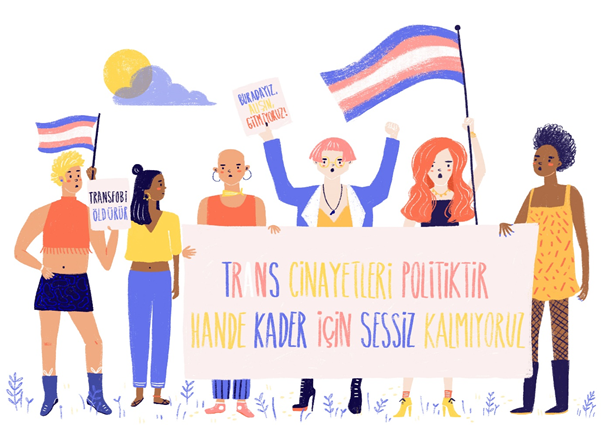

Picture 1. Protests were organized over the murder of a trans woman and activist, Hande Kader in 2016 (Illustrated by ttillustrations, 11.06.2020)

Anthropologists have long documented how structural violence translates into interpersonal violence in the lives of socially and economically vulnerable populations (see Auyero 2000; Bourgois 2001). According to their accounts, wider forces, such as political oppression, economic marginalization, and social inequality, produce interpersonal conflicts within marginalized populations (see Bourdieu 1998). During my fieldwork, I often witnessed sex workers quarrelling, criticizing their peers’ appearances, spreading rumors, and on rare occasions, physically assaulting each other. The reproduction of violence in one’s intimate life against oneself or one’s kin, friends, neighbors, and community may follow several paths. For instance, interpersonal violence may be a practical necessity in volatile and illegal street economies that cannot rely on law enforcement for regulation (Karandinos, Hart, Castrillo, and Bourgois 2014). Such is the case in this underground sex economy, where physical and verbal violence in part serves as a mean for social control.

A great deal of the quarrels, ingrained in the language and the culture of the larger queer population in Turkey, are taken as interactional codes among trans people. The contentious nature of these social interactions help them to bond, release tensions, and form alliances. In some cases, however, hostile comments and practices turn self-destructive, harm relationships, and undermine solidarity. A considerable number of ethnographic studies have documented the integration of violence into the moral logics of people’s everyday lives (see Anderson 1999; Bourgois 1995). Accordingly, daily practices and expressions of violence on a micro-interactional level can become normalized in public and private spheres and accepted as a commonsense way to address everyday anxieties (see Bourgois 2001). Interpersonal violence may also arise from a sense of inferiority and powerlessness, intensely experienced during daily struggles for sustenance and self-respect in a hostile world, which may in turn exert a demobilizing effect on vulnerable populations (Bourgois 2001).

Weakening of solidarities and collective resistance

Informal support networks of trans sex workers are not always available to help cope with and counter risks. Even though some sex workers are in deep financial difficulties, money and other material assistance is usually shared only within small and intimate social circles. Social fragmentation, by contrast, is visible even to an outsider. For example, having suffered from severe economic hardship and financial distress for several months, Gamze once voiced her disappointment about her considerably wealthier peers, who worked next-door, “They see my situation. Why don’t they offer any support?” On the contrary, workers commonly express distrust toward their peers. Don Kulick (1998) documented similar patterns of conflicts and distrust among travestis in Brazil. Furthermore, individuals struggling financially are sometimes blamed for their circumstances by their peers—a practice that works to legitimize the social order. In other words, members of marginalized groups may hold themselves and each other responsible for the material effects of structural violence (Bourdieu and Wacquant 1992), thereby hindering solidarity and collective resistance in their communities.

Among the structural elements engendering conflicts and undermining solidarity are the material pressures and tensions arising from precarious labor. In the absence of social security net and other employment, a decline in the number of clients immediately creates financial distress in the lives of many sex workers. In addition, along with a shared residential space, and the friendship and community relations that this entails, trans sex workers also share a work space in the informal sex market that they depend on for their livelihoods. However, the organization of sex labor induces competition in concentrated urban spaces, where everyone must find their own clients. At times, competition may lead to fights over “stealing” others’ clients or working spots. Especially when business is slow, the workers often take note of others’ earnings, which can give rise to heated arguments. There are also vast economic disparities among trans sex workers (Zengin 2014). For this reason, financial struggles are not typically identified as a common challenge that needs to be dealt with collectively.

The divisive and hindering effects of material pressures and competition on workers’ collective struggles have been observed in many labor settings. Significantly, in the lives of trans sex workers, financial pressures are coupled with social and political marginalization.  A sense of insecurity resulting from precarious living conditions constrains community mobilization. For instance, trans communities in several neighborhoods in Turkey experienced evictions and attempts at lynching. Furthermore, due to criminalization, the threat and reality of police harassment may disrupt their lives. Given these threats, most sex workers in this neighborhood have restricted their participation especially in visible, confrontational or organized forms of resistance, including political demonstrations and physical resistance to repel the police in the neighborhood. In some cases, sex workers may even disapprove of their colleagues who are involved in contentious collective action, such as protesting a hate crime targeting their peers. Such individuals fear that organizing community mobilization could result in a decline in the number of clients or an increase in policing, thereby negatively impacting their livelihood and placing their lives at risk.

Support networks and community mobilization

In spite of being strained and ridden with contradictions, the informal networks of trans sex workers still provide support, care, and assistance, given that legal protection is limited for many of these workers (Güler 2020). As with working-class women and mothers in marginalized neighborhoods (see Edin and Lein 1997; Koch 2015; Stack 1974), relying on fictive kin for mutual aid and reciprocal exchange remains a central coping mechanism for trans people ostracized from their families of origin for reasons of gender and sexuality (see Weston 1997). In particular, those who have shared housing for many years develop intimate relationships through which they assist each other in difficult times (see Bourdieu 1996; Mauss 1954; Stack 1974).

Likewise, community-based mobilization has been an effective form of resistance against physical violence. In other words, trans sex workers heavily rely on their community for safety. For example, they stay in close contact and stand in the street in groups, warn each other about dangerous clients, coach inexperienced peers, fight back in violent attacks, and at times protest at police stations to save friends (Güler 2020). Safety is thus a pressing concern for many workers and treated as a collective responsibility.

Concluding thoughts

Transgender sex workers in Turkey live and work under difficult circumstances, including pervasive violence, punitive institutional practices, coercive policing, societal stigma and exclusion, and material pressures. On the other hand, powerful organizations promoting trans rights have emerged in recent years at a local and an international level. And trans individuals and sex workers are now more visible and vocal than ever in the streets, at universities, in formal political arenas, and in social and traditional media. In fact, this research was inspired by my admiration for their tenacious resistance to their conditions of marginality, their sense of community, and their willingness to support one another.

However, during my fieldwork, I was repeatedly made aware of rivalries and distrust, failing solidarities, and harm received from fellow peers. Although informal support systems remain crucial resources for coping with and providing a bulwark against risks, the marginalization of trans sex workers continues to constrain their collective efforts while weakening the integrity and solidarity of their communities. Moreover, despite a strong sense of shared identity, dense interpersonal networks, and close attachments among these workers, violent structural forces continue to engender interpersonal conflicts.

Similar challenges have been observed among other stigmatized populations, such as migrants, underground traders, and homeless people, whose lives often depend on the informal economy at the margins of society (see Koch 2018; Menjívar 2000). Ethnographic methods offer opportunities to explore the ways in which precarious, violent, and exclusionary structural forces condition the circumstances of socially and economically marginalized subjects while also rendering their informal networks and collective efforts precarious. To intervene and contest these economic, political, and social forces, we first need to understand the lived experiences of affected individuals.


Ezgi Güler is a PhD researcher in Social Sciences at the European University Institute. She is an urban sociologist who works on social support networks, mobilization, and resistance of sex workers.


Refererences

Anderson, Elijah. 1999. Code of the street: Decency, violence, and the moral Life of the inner city. New York: Norton

Auyero, Javier. 2000. The hyper-shantytown: Neo-liberal violence(s) in the Argentine Slum. Ethnography 1(1): 93–116.

Bayramoğlu, Yener. 2013. Media discourse on transgender people as subjects of gentrification in Istanbul. In Vikki Fraser,eds., Queer sexualities: Diversifying queer, queering diversity, pp. 41-48. Leiden: Brill.

Bourdieu, Pierre. 1996. Unwrapping the gift: On interest and generosity in social life. Colloquium delivered to the Anthropology Department, University of California, Berkeley, April 8.

Bourdieu, Pierre. 1998. Acts of Resistance: Against the tyranny of the market. New York: The New Press.

Bourdieu, Pierre and Loïc Wacquant. 1992. An Invitation to Reflexive Sociology. Chicago, IL: University of Chicago Press.

Bourgois, Philippe. 1995. In search of respect: Selling crack in El Barrio. New York: Cambridge University Press.

Bourgois, Philippe. 2001. The power of violence in war and peace: Post-Cold War lessons from El Salvador. Ethnography 2(1): 5-34.

Çokar, Muhtar, and Habibe Yılmaz Kayar. 2011. Seks işçileri ve yasalar: Türkiye’de yasaların seks işçilerine etkileri ve öneriler. İstanbul: İnsan Kaynağını Geliştirme Vakfı.

Edin, Kathryn, and Laura Lein. 1997. Making ends meet: How single mothers survive welfare and low-wage work. New York: Russell Sage Foundation.

Engin, Ceylan. 2018. Sex work in Turkey: Experiences of transwomen. In Larry Nuttbrock, eds., Transgender sex work and society, pp. 196-213. New York: Harrington Park Press.

Galtung, Johan. 1990. Cultural violence. Journal of Peace Research 27:291–305.

Güler, Ezgi. 2020. A divided sisterhood: Support networks of trans sex workers in urban Turkey. The ANNALS of the American Academy of Political and Social Science 689(1): 149-167.

Karandinos, George, Laurie K. Hart, Fernando M. Castrillo, and Philippe Bourgois. 2014. The moral economy of violence in the US inner city. Current Anthropology, 55(1): 1-22.

Koch, Insa L. 2015. “The state has replaced the man”: Women, family homes, and the benefit system on a council estate in England. Focaal 73: 84-96.

Koch, Insa L. 2018. Personalizing the State: An Anthropology of Law, Politics, and Welfare in Austerity Britain. Oxford University Press.

Kulick, Don. 1998. Travesti: Sex, gender, and culture among Brazilian transgendered prostitutes. Chicago: University of Chicago Press.

Masse, Cédric. 2014. Identities of Portuguese urban social movements: Universality and class heterogeneity, FocaalBlog, October 23.

Mauss, Marcel. 1954. The gift: The form and reason for exchange in archaic societies. London: Cohen and West.

Menjívar, Cecilia. 2000. Fragmented ties: Salvadoran immigrant networks in America. University of California Press.

Stack, Carol. 1975. All our kin: Strategies for survival in a black community. Basic Books.

UNFPA. 2014. Türkiye’de seks işçilerinin cinsel sağlık ve üreme sağlığı durumu: İhtiyaçlar ve öneriler. Available from http://www.kirmizisemsiye.org/SourceFiles/pdf-201852514943.pdf.

Ünsal, Öktem. 2015. Impacts of the Tarlabaşı urban renewal project: (Forced) eviction, dispossession and deepening poverty. In Ö. Öçevik; C.A. Brebbia; S.M. Şener, eds., Sustainable Development and Planning, pp. 45-56. Southampton: WIT Press.

Weston, Kath. 1997. Families we choose: Lesbians, gays, kinship. New York: Columbia University Press.

Zengin, Asli. 2014. Sex under intimate siege: Transgender lives, law and state violence in contemporary Turkey. PhD diss. University of Toronto.


Cite as: Güler, Ezgi. 2020. “Trans Sex Workers’Collective Struggle in Urban Turkey.” FocaalBlog, 27 July. www.focaalblog.com/2020/07/27/ezgi-guler-trans-sex-workers-collective-struggle-in-urban-turkey/
Don Nonini: Black Enslavement and Agro-industrial Capital

Don Nonini, University of North Carolina at Chapel Hill

Insa Koch’s recent (2020) FOCAAL blog, “The Making of Modern Slavery in Austerity Britain,” reminds us that enslavement and the bodies of black people are profoundly interconnected, and the link to challenges to “the punitive turn” and police abuse in the UK by the Black Lives Matter movement protests are all but explicit in her piece. At the same time, other recent FOCAAL blogs have dealt with the connections between the Covid-19 pandemic and contemporary global capitalism.

Black enslavement and Covid-19 are intimately intertwined. The insurgency of Black Lives Matter during the months of May-June 2020 has its own dynamics. That said, the wide turning out of protests supporting Black Lives Matter in the streets of European cities and towns (London, Paris, Berlin, Stockholm, Amsterdam, Antwerp, Brussels, Milan, Kraków, Dublin, Manchester, Munich…) demonstrates that the European left has strongly shown its ongoing antiracist solidarity with African-American struggles, seeking to come to terms with Europe’s own troubled imperial history of enslavements, and challenging its current neo-nationalist or fascist resurgence under declining neoliberal capitalism (Kalb 2020).

The links between black enslavement and Covid-19 start – and continue with – the formation of agro-industrial capitalism and its relations to transnational finance capital.

The Lash, Degraded Ecologies, Finance

There is a clear relationship between the emergence of modern enslavement and the history of a full-blown agro-industrial capitalism. The close connections between fully rationalized capitalist agrarian production, finance, and slavery are only recently becoming clear.

New research on the North American southern plantation economies shows just how advanced rationalized capitalist production was under the conditions of slavery (Baptist 2014). Beyond its monocropping ecology, “many of agribusinesses’ key innovations, in both technology and organization, originated in slavery” (Wallace 2016: 261). Slaveholders measured land only against the capacity of slave labor to transform it, setting the cotton production line in terms of “bales per hand,” with enslaved African men being “hands,” nursing mothers “half hands” and children “quarter hands.” The labor process of picking cotton was measured and held to a standard by another unit of measurement – the “lash.”

“Enslavers used measurement to calibrate torture in order to force cotton pickers to increase their own productivity and thus push through the picking bottleneck” (Baptist 2014: 130). As Baptist further points out, “on the nineteenth century cotton frontier… enslavers extracted more production from each enslaved person every year. . . the business end of the new cotton technology was a whip” (2014: 112). Planters managed a refined rationality based on the application of the whip measured out in lashes to the backs of a slave calculated relative to their infraction – how many pounds of cotton his basket fell short of making a bale, whether or not there were impurities in it, whether one slave helped another pick her quota – in which case the former received extra lashes. Under the circumstances, the rationality of increased “labor productivity” so vaunted by economists depended straightforwardly on graduated torture – with little contribution (the cotton gin aside) from “technological innovation.”

The Indian Removal Act of 1830 culminated the violent displacement of Indian nations from the Mississippi Gulf region and transformation of their territories into “new lands” of thousands of acres ready for slave-based production (Baptist 2014: 228-229). Cotton monoculture quickly exhausted the rich soils of the South, exposed the crops to rust, rot, and worms, while plowing rows of cotton aligned to the day’s sunlight to maximize yield eroded the land and exhausted aquifers within 10 to 15 years after clearing (Wallace 2016: 266).

Due to the lack of food self-sufficiency and the seasonality of cotton harvests, indebtedness by plantation owners to Northern financiers and cotton brokers became increasingly common. By the 1830s, the cotton plantations of Mississippi, Alabama and Eastern Louisiana had adopted new forms of finance and indebtedness, when the Consolidated Association of Planters of Louisiana was established to allow their member planters to mortgage their slaves as collateral for loans from international financiers, led by the Baring Brothers and the Bank of England, that pooled investments from Europe’s finest old and new upper classes to buy the lucrative bonds issued by the Association (Baptist 2014: 245-8).

Monocropping of plants and animals, the simplification and degradation of local and regional ecologies, rapid expansion of logistics over space, reliance on finance capital for loans to expand production, and the use of enslaved degraded labor – these design features of agro-industrial capitalism have remained in effect to the present.

Meat Markets, Neo-Slave Markets

The coerced use of black labor continued after the Civil War in the cotton sharecropping economy until its decline in the 1930s. At the same time, the new agro-industrial complex of livestock production in the U.S. South – again based on the hyper-exploitation of black labor – got underway. By the 1970s, the livestock industries of intensive hog, poultry, and beef production had become thoroughly institutionalized – through vertical integration (Heffernan and Constance 1994; Stiffler 2005), increases in slaughterhouse assembly-line tempos, and incorporation of meat eating as a universal practice within the diets of the U.S. population (Schlosser 2001, 2012; Stiffler 2005). Since the 1990s the meat industries have globalized to penetrate the BRICS economies, a process facilitated by the lubrication of capital provided by hedge funds and investment banks, such as Goldman Sachs’ deal-making in the sale of Smithfield Foods to Shuanghui in China (Wallace 2016: 269-271).

Subjugated and coerced black labor has anchored and offered up surplus value through U.S. agro-industrial cotton and meat production since the end of legal slavery. Since the 1960s, rural poor African-Americans, especially women, have worked in the meat processing plants of the Midwest, Mississippi delta and Carolinas regions experiencing intensified exploitation, sexual harassment and brutalized and unsafe working conditions. By the 1990s, they were joined by immigrant Mexican and Central American workers (Nonini 2003; Stiffler 2005; Stuesse 2016), with whom white plant managers sought to set them in competition.

The Great Migration of 6 million African-Americans from 1915-1970 from the South to cities in the northern and midwestern U.S. was a form of flight from re-legalized enslavement at the hands of Jim Crow whites. Migration to the Midwest and Northeast placed large numbers of blacks at the factory doors of the Fordist industries of the North. Relegated to secondary labor markets by discrimination from white industrial labor unions during the 1950s-1970s (Cowie 2010: 236-244), black industrial workers by the 1990s, like their white counterparts, were thrown out of work by the globalization of industrial production. The only exceptions were the neo-slavery of hyper-sweated meat processing and related industrial food labor.

“Broken Windows Policing” and the Expropriation of Black Lives

The grown children and grandchildren of these laid-off black industrial workers, with more recent Latinx immigrant workers, now form both the hyper-exploited workers in the food industries (meat processing, fast foods, farm work) and situated in the cities and small towns of the South, Midwest and the Northeast, and those who are chronically unemployed and underemployed, doubly discriminated against due to their poverty (forcing them to leave school before high school graduation), and their race. Those African-Americans who have more or less steady employment also show disproportionate levels of consumer debt – from credit cards, student loans, and medically -related debt. Whether steadily employed or not, a key insight is that by and large both groups draw on the same population of urban African-Americans.

The population of urban African-Americans has the profound misfortune of living in cities recurrently subject to gentrification at the new “urban scale” of globalized real estate and finance-rentier capital (Smith 2008: 239-266). Their residence in spaces made newly desirable by gentrification by the 2000s is the obverse of the fact that up to the 1990s whites fled inner cities in large numbers for segregated suburbs, while African-Americans found themselves only able to afford to live, and only allowed to live within, housing in these redlined inner-city districts.

By the 2000s, however, real estate in these districts had become “hot properties” for global finance capital seeking new sites for safe but extraordinarily profitable rent collection and property speculation in realizing value. This trend by the 1990s was both shaped by and reinforced through the “broken window policing” that targeted unemployed and underemployed African-Americans and Latinx populations (Camp et al. 2016).

What precisely is the role of broken windows policing in the gentrification process? Put non-too-subtly, even one broken window indicates the existence of a “criminal” – an undesirable element in a neighborhood. The role of such policing is the physical removal to jails or prison, or, if that is impossible, the destruction of African-Americans whose very presence threatens the “real estate values” that the finance industry and its local allies hold dear. This goes far to explain the more than 1000 people killed by local police every year in the US, of whom more than one fourth are African-American; the one third of African-American men between ages 19-35 who are “justice involved” – in jail awaiting trial, on bail, undergoing trial, in prison, on probation or parole; and their disproportionate representation in the US’s incarcerated population, the largest per capita in the world.

Nancy Fraser (2016) observes that there is an historical dialectic between the conditions that set out “normal” exploitation of the working force, and the conditions of expropriation of the lives, labor, and property of racialized and vulnerable (e.g. immigrant) populations — as two complementary means through which the accumulation of capital can and does take place under capitalism. Fraser argues that that the new being of neoliberal global capitalism is “the expropriable-and-exploitable citizen-worker,” and that “the racialized subjection of those whom capital expropriates is a condition of possibility for the freedom of those whom it exploits” (Fraser 2016:163).

A group of people holding a sign

Description automatically generated
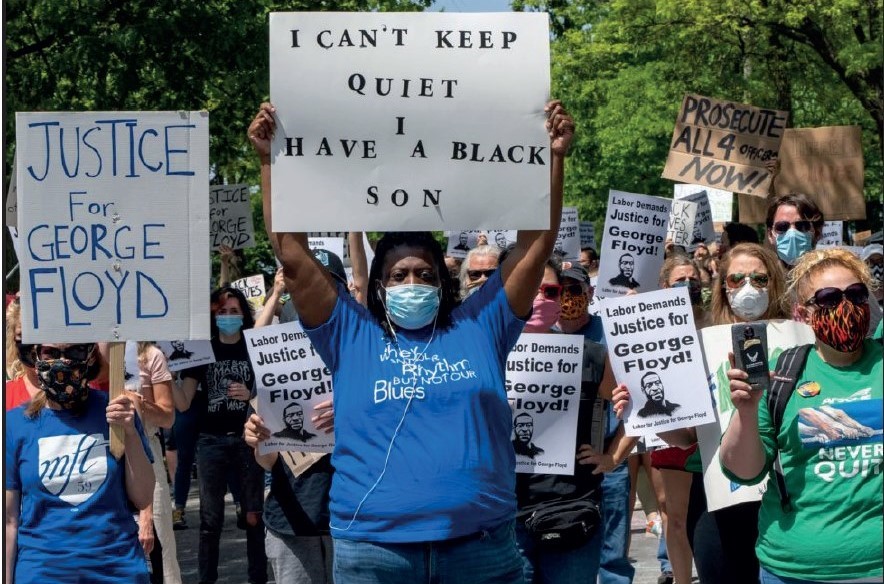
Image 1: Black Lives Matters Protests in Durham, U.S. (Credit: Durham Workers Assembly Durham, North Carolina, with kind permission) 

We can see these two modes of appropriation of surplus value in the tense interconnections between whites and the African-American population in the United States through the latter’s vexed history with respect to agro-industrial and finance capitalism. These interconnections are potentially the point of class differentiation between the increasingly precarious white “middle class” and urban African-Americans, who straddle a black employed working-class subjected to intensified exploitation on one hand, and a lumpen-proletariat subjected to police-impelled expropriation and dispossession, on the other. 

Ongoing criminalization and the indebtedness of black people (the latter a tool of finance capital’s domination) are the instruments driving large numbers of urban black workers disproportionately employed in the agro-industrial food sector toward the toxic mix of indebtedness, unemployment (where employers often refuse to hire blacks holding consumer debt), bankruptcy, evictions from shelter, police “stop and frisk” harassment, enforced fines and fees levied (via police and private firms working for straitened municipalities),  assault, imprisonment, and death (Wang 2018:99-192).  


Don Nonini is Professor of Anthropology at University of North Carolina at Chapel Hill. His most recent books are “Getting by”: Class and State Formation among Chinese in Malaysia (Cornell, 2015), and The Tumultuous Politics of Scale: Unsettled States, Migrants, Movements in Flux, co-edited (Routledge, 2020). His most recent publication in FOCAAL is “Theorizing the Urban Housing Commons” (2017). 


References 

Baptist, E. E. (2014). The half has never been told : slavery and the making of American capitalism

Camp, J. T. and C. Heatherton (2016). Policing the planet : why the policing crisis led to black lives matter

Cowie, J. (2010). Stayin’ alive : the 1970s and the last days of the working class. New York, New Press : Distributed by Perseus Distribution. 

Fraser, N. (2016). “Expropriation and exploitation in racialized capitalism: A reply to Michael Dawson.” Critical Historical Studies 3(1): 163-178. 

Harvey, D. (2018). Marx, Capital and the Madness of Economic Reason. New York, Oxford University Press. 

Heffernan, W. and D. H. Constance (1994). Transnational corporations and the globalization of the food system. From Columbus to ConAgra: The Globalization of Agriculture and Food. A. Bonanno, L. Busch and e. al. Lawrence, KA, University Press of Kansas Press29-51. 

Kalb, D. 2020. “Covid, Crisis, and the Coming Contestations”, FocaalBlog, June 1st, http://www.focaalblog.com/2020/06/01/don-kalb-covid-crisis-and-the-coming-contestations/.

Nonini, D. M. (2003). American neoliberalism, ‘globalization,’ and violence: Reflections from the United States and Southeast Asia. Globalization, The State, and Violence. J. Friedman. Walnut Creek, CA, Altamira Press (Rowman & Littlefield)163-202. 

Schlosser, E. ((2001), 2012). Fast food nation : the dark side of the all-American meal, with a New Afterword. Boston, MA, Mariner books (Houghton Mifflin Harcourt). 

Smith, N. and D. Harvey (2008). Uneven development: nature, capital, and the production of space. Athens, University of Georgia Press. 

Striffler, S. (2005). Chicken : the dangerous transformation of America’s favorite food. New Haven, Yale University Press. 

Stuesse, A. Scratching out a living : Latinos, race, and work in the Deep South. 

Wallace, R. (2016). Big Farms Make Big Flue: Dispatches on infectious disease, agribusiness, and the nature of science. New York, Monthly Review Press. 

Wang, J. (2018). Carceral capitalism.  Semiotext(e) Interventions, 21. South Pasadena, CA: Semiotext(e).


Cite as: Nonini, Don. 2020. “Black Enslavement and Agro-industrial Capital.” FocaalBlog, 3 July. http://www.focaalblog.com/2020/07/03/don-nonini-black-enslavement-and-agro-industrial-capital/

Raúl Acosta, Flávio Eiró, Insa Koch and Martijn Koster: Introduction: Urban struggles: governance, resistance, and solidarity

This post is part of a feature on “Urban Struggles,” moderated and edited by Raúl Acosta (LMU Munich), Flávio Eiró (Radboud University Nijmegen), Insa Koch (LSE) and Martijn Koster (Radboud University Nijmegen).

The global trend away from rural living and towards urbanization continues unabated. This is so despite high levels of inequality, poverty and forms of exclusion that are part and parcel of city life for the many. Indeed, across the globe, growing numbers of urban dwellers struggle to meet even the most basic needs for housing, security, and income. In response to these challenges, governments have attempted to present solutions that are too often palliative, addressing merely the symptoms of inequalities rather than their causes. In a similar vein, highly mobile policies are frequently implemented under the banner of terms like “good governance,” “participation” or “crisis management” that reinforce the social exclusion of the most marginalized, often contrary to their stated intentions (Peck and Theodore 2015). Cases of such exclusion include mass evictions, the rise of gated communities, the securitization of urban spaces, shifts towards austerity measures, punitive policies of migrant populations, and the regulation of the informal sector.  

As such, cities are places of multiscale struggle (Mollona 2014) where a variety of different actors, from (inter)national and local government bodies to charities, corporations, grassroots movements and citizens make competing claims of legitimacy and express visions for future living (Harvey 2003, Susser and Tonnelat 2013, Lazar 2017). Indeed, cities have become focal points for various class struggles.  

Based on a panel held at the IUAES conference in Poznań, Poland, in August 2019, this collection of papers addresses both the various forms of resistance to, and the reproduction of, exclusionary urban policies. Our main ambition is to expand important conversations in anthropology on urban mobilizations emerging from Henry Lefebvre’s “right to the city” and the “production of space” via a focus on the character and persistence of urban struggles (Lefebvre 1991, Banerjee-Guha 2010, Kalb and Mollona 2018, Koster and Kolling 2019). In this post and the contributions to this feature blog, we understand the study of urban struggles as a collection of productive tensions where governance, resistance and solidarity play out in plural and often unexpected ways within global frameworks of highly unequal regimes of accumulation (Susser 2014).   

Urban governance: facing challenges and reproducing inequality  

Cities grow by layers of time. This is related to both population growth and changes to the built environment. The number of urban dwellers grows not merely through the reproduction of those already living in urban spaces, but through constant immigration that originates in the countryside from surrounding areas and often from much further afield (Davis 2006). Many migrants who are attracted to urban life consider the city to be full of opportunities that cannot be found elsewhere, even as they find upon arrival that their status and rights to the city are often less recognized and sometimes actively suppressed compared to those of more established populations. The steady growth of cities across the planet has created, in turn, new pressures on local government bodies to keep up with the provision of infrastructure, public goods and employment opportunities needed to meet even the most basic demands for living (Caglar and Schiller 2018). 

To respond to the challenges faced by urban dwellers and the risk of social turmoil these entail, governments have come to implement a range of policies aimed at improving the urban lived environment. Governments thus tend to see larger cities both as centers where political legitimacy is built and where their ideologies and visions of the future take shape. Because of this combination, cities have also become sites of experimentation for states, where policies are tested before being rolled out more broadly. Often sold under the banner of buzzwords like “civilizing cities”, promoting “active participation”, “community building” or embarking on “crisis management”, these policies promise to improve the quality of life and built environment of the most vulnerable (Nuijten 2013, Schinkel 2010, Masco 2017). To do so, many come to rely on new forms of technocratic governance that uses the matrix of statistics and quantitative science in implementing various political and legal projects, ranging from social housing provisions to environmental policies to regeneration projects (Koch 2018). 

While these various initiatives may have ostensibly democratic goals, their implementation all too often reproduces the structural conditions of exclusion that they are meant to address (Alexander, Bruun and Koch 2018). The objective or neutral language of urban initiatives disguises the complex ways in which these policies are embedded in, and further promote, capitalism’s circuits of value and accumulation. Decisions by government policy makers usually favor the segments of the population who already hold most capital in the city. Meanwhile, urban infrastructure projects and regeneration initiatives attract real estate developers and to gentrify neighborhoods (Evans 2016). Both processes are aggravated when budget cuts and austerity measures fuel the outsourcing of urban governance to third-party actors – private companies and non-governmental organizations alike – that are often unwilling and sometimes unable to adequately provide public goods.  

Urban struggles as resistance and solidarity 

Cities, as sites where different actors compete for legitimacy, are the locus of productive urban struggles. We use the term urban struggle to refer to the complex and varied sets of negotiations through which city dwellers, grassroots movements, activist groups and political and development brokers critically engage with the claims to legitimacy and visions for the future that are promoted by official channels. As these groups face a wide variety of problems from insufficient housing (Cohen 2014) and infrastructure to environmental hazards, they develop an equally vast repertoire of resistance strategies, tactics and responses. These include, as the contributions to this feature show, amongst others, squatting initiatives, land occupations, grassroots art exhibitions, and the expansion of informal ties that are often viewed with suspicion by the state. There is thus a constant push and pull between dispossession and resistance, austerity and solidarity, exclusion, and inclusion unfolding in urban spaces.  

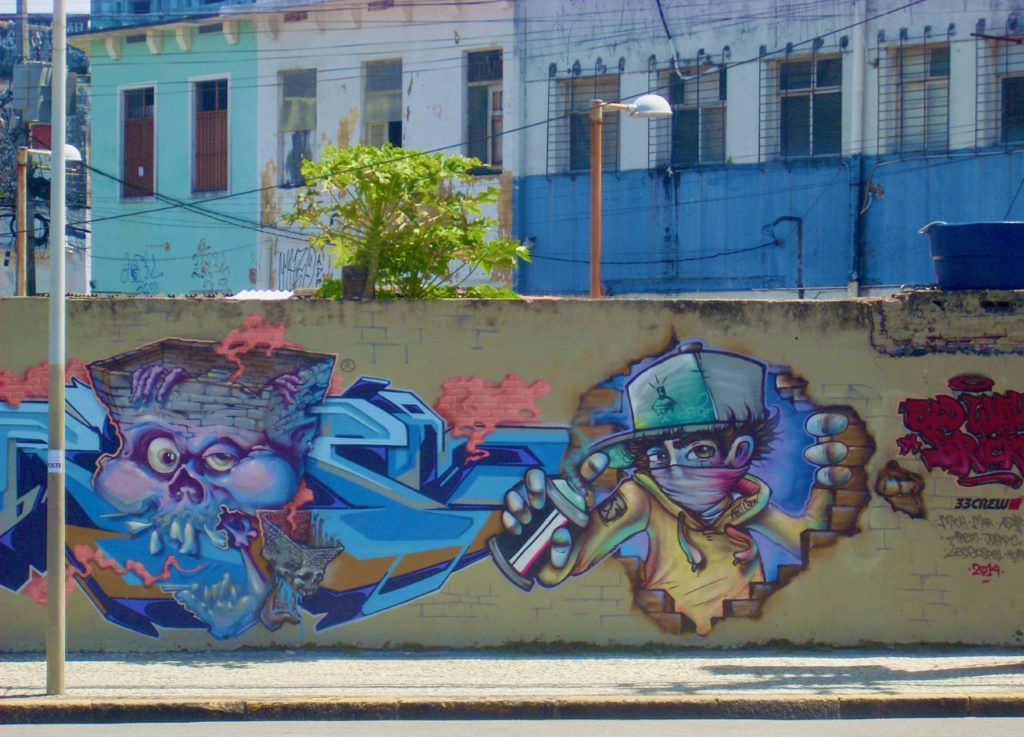
Image 1: Street graffiti in Recife, Brazil  (Photo: Martijn Koster, 18  August 2015) 

Yet, creative engagements seemingly opposed to neoliberal urban policies do not produce unequivocal forms of resistance, less even a singular anti-capitalist stance against structures of oppression (Kalb and Mollona 2018). On the contrary, ambiguities and contradictions prevail as citizens move within the same unequal processes of accumulation that frame official policies (James and Koch 2020). One example of this concerns the case of slum dwellers who aspire, above all, to become landlords and rent out rooms to even poorer slum dwellers under extractive conditions. Hence, the practices of the poor are not necessarily expressions of unequivocal solidarity and care (Palomera 2014). Likewise, social movements and grassroots initiatives, while often deploying a universal language of humanitarianism, may only benefit particular groups of urban dwellers, thus generating resentment and jealousy amongst those excluded (Wilde 2020). Urban struggles do not necessarily produce a better city, even as their spokespersons claim to speak on behalf of the most vulnerable and excluded (Gutierrez-Garza 2020).  

Acknowledging the contradictions that are at the heart of urban struggles opens the space for a particular analytical lens: one that conceptualizes cities as assemblages of productive tensions where a variety of actors, groups, movements and policy makers define, and continuously compete over, the meanings of urban citizenship, “rights to the city”, and democratizing access to infrastructures and public goods. This, in turn, can help us see how social responses, including those of social movements, grassroots initiatives, and local care networks, should not be romanticized as simple expressions of political resistance. Neither, however, does such a lens lend itself to a dystopian view in which capitalism erases all alternatives. Instead, cities emerge as places of ongoing, open-ended power struggles. Ethnography, with its focus on the lived experiences of urban dwellers, is particularly well placed to capture both the moments of solidarity that continue to exist and the wider forces disabling them. The papers in this feature seek to do precisely this.  

Ethnographies of urban struggles 

Our blog contributions highlight urban struggles and their complicated politics in a range of settings, taking the reader from Latin American’s mega-cities to European urban centers to recent urban developments in Asia. In Mexico City, Raúl Acosta analyses how cycling activists, intent on improving the infrastructure of the city, engage in a project that uses technical expertise to put forward a moral project of improving life in the city. However, the capacity to claim such moral projects is not evenly distributed, as activists on the “periphery” – both in the spatial and the social sense of the word – find that they lack the economic and cultural capital to be heard by power holders. In Brazil, questions of resistance and power are also at the center of the urban activism practiced by the poor. Sven da Silva explores how occupancy urbanism of the poor is negotiated in the context of development projects in the fast-growing Recife, in Brazil. Here, community leaders engage in political activities to resist real state pressure and in favor of what they view as community interests. Adam Moore’s contribution presents the hopes and dreams of victims of development in Medellín, Colombia. Looking at practices of autoconstruction, he explores the ‘human cost’ of ‘urban renovations’ and challenges the hegemonic narrative about urban transformation in Medellín, which heralds the local government as exemplary in its commitment to equitable and pro-poor urban development interventions. 

In Europe, struggles over governing urban populations and spaces similarly abound, bringing together a complex network of third sector organizations, private actors, Universities and state bodies. In the “policy laboratory city” of Rotterdam, frequently celebrated for its allegedly inclusive and innovative social policies, conflicting views over how to govern migrant populations have opened the space for new technologies of control. Here, Lieke van de Veer shows that the effort on the part of local groups claiming a role on the reception infrastructure of migrants often become riddled with internal tensions over funding and resources as different groups are unequally positioned to access these competitive funds. Meanwhile, in the UK, two of our blog contributions focus in more closely on questions of inequality in the city. Sarah Winkler-Reid’s work on Newcastle-Upon-Tyrne focuses on the university’s role in the network of actors influencing urban development proclaiming to create the “good city”. Here, the rapid growth of privately owned, mostly purpose-built student accommodation, create new forms of inequality in the city’s historical centre. In her contribution on the voluntarization of welfare advice in Manchester, Janne Heederik demonstrates how a withdrawal of state funding and a shift of tasks and responsibilities from government officials to citizens have transformed the landscape of welfare provision. If solidarity is the basis of the relationships between claimants and non-state advisers, they are also marked by tensions that are the result of the structural shifts austerity has imposed on the welfare system. 

In all of the contributions considered thus far, concessions and gains experienced by one urban group can simultaneously constitute a loss or betrayal for another. Indeed, this insight is also key to Anne-Christine Trémon’s ethnography of the city of Shenzhen in the People’s Republic of China (PRC), where the authorities’ attempts to gain the status of a “national civilized city” – a status bestowed by the PRC government in recognition of “quality of life and a higher degree of urban civilization” – have introduced new forms of inequality for migrant populations vis a vis the typically much wealthier natives. Trémon makes use of the concept of “variegated governance” to make sense of how cohabiting residents in the same territorial unit receive differential treatment depending on their respective economic valorization and the political acknowledgement of their social worth. Finally, in Ezgi Guler’s contribution on urban Turkey, we move closer to questions about the possibility of collective resistance to oppressive urban structures and policies. Yet, once more, while the transgender sex workers with whom she carried out fieldwork rely on dense networks of mutual support and care, these rarely translate into collective political action as material pressures, including financial stress, inequality, competition and stigma also make workers deeply suspicious of one another.


This project has received funding from the European Research Council (ERC) under the European Union’s Horizon 2020 research and innovation programme (grant agreement No. 679614).


Raúl Acosta is a postdoctoral researcher at the Ludwig Maximilian University in Munich. He currently carries out research on urban activism in Mexico City in a sub-project of the German Research Foundation (DFG) funded Urban Ethics Research Group. His monograph “Civil Becomings: Performative Politics in the Brazilian Amazon and the Mediterranean” examines activist and advocacy networks. 

Flávio Eiró is a postdoctoral researcher at the Department of Anthropology and Dvelopment Studies at Radboud University, Nijmegen. He has conducted ethnographic research on electoral politics and conditional cash transfers in Northeast Brazil, and currently works in the ERC funded project “Participatory urban governance between democracy and clientelism: Brokers and (in)formal politics”.  

Insa Koch is Associate Professor in Law and Anthropology at the London School of Economics. Her recently published monograph “Personalizing the State: an Anthropology of Law, Politics and Welfare in Austerity Britain” offers an ethnographic study of the crisis of democracy and urban citizenship in Britain.  

Martijn Koster is Associate Professor at the Department of Anthropology and Development Studies at Radboud University, Nijmegen. Currently, he leads the ERC funded project “Participatory urban governance between democracy and clientelism: Brokers and (in)formal politics”. 


References 

Alexander, C; M Hojer Bruun; I Koch. 2018. Political economy comes home: on the moral economies of housing. Critique of Anthropology 38(2): 121–139 

Banerjee-Guha, S. (Ed.). 2010. Accumulation by dispossession: Transformative cities in the new global order. SAGE Publications India. 

Caglar, A. S. and N. G. Schiller. 2018. Migrants & city-making: dispossession, displacement, and urban regeneration. Durham, Duke University Press. 

Cohen, Yves. 2014. “Crowds without a master: A transnational approach between past and present,” FocaalBlog, November 10, www.focaalblog.com/2014/11/10/yves-cohen-crowds-without-a-master-a-transnational-approach-between-past-and-present. 

Davis, M. 2006. Planet of slums. London, New York, Verso. 

Evans, G. 2018. London’s Olympic Legacy: The Inside Track. London, Palgrave MacMillan. 

Gutierrez Garza, Ana. 2020. “Te lo tienes que currar”: enacting an ethics of care in times of austerity. Ethnos, Published online. 

Harvey, D. 2003. The right to the city. International journal of urban and regional research, 27(4), 939–941. 

Kalb, D. and M. Mollona. 2018. Worldwide mobilizations: class struggles and urban commoning. New York, Oxford, Berghahn Books. 

Koch, I. 2018. Personalizing the state. An anthropology of law, politics, and welfare in austerity Britain. Oxford, Oxford University Press. 

Koch, I. and D. James. 2020. The state of the welfare state: advice, governance and care in settings of austerity. EthnosPublished online. 

Koster, M. & M. Kolling (eds). 2019. Betrayal in the city: Urban development across the globe [Special Issue]. City & Society 31(3). 

Lazar, S. 2017. The social life of politics: Ethics, kinship, and union activism in Argentina. Redwood City, Stanford University Press.  

Lefebvre, H. 1991. The production of space. Oxford, Basil Blackwell. 

Masco, J. 2017. The crisis in crisis. Current Anthropology, 58(S15), S65-S76. 

Mollona, Massimiliano. 2014. “The Brazilian ‘June’ revolution: Urban struggles, composite articulations, and new class analysis,” FocaalBlog, October 28, www.focaalblog.com/2014/10/28/massimiliano-mollona-the-brazilian-june-revolution-urban-struggles-composite-articulations-and-new-class-analysis.  

Nuijten, M. 2013. The perversity of the “Citizenship Game”: Slum-upgrading in the urban periphery of Recife, Brazil. Critique of Anthropology, 33(1), 8–25. 

Palomera, J. 2014. Reciprocity, commodification, and poverty in the era of financialization. Current Anthropology 55(S9): S105-S115. 

Peck, J., & Theodore, N. 2015. Fast policy: Experimental statecraft at the thresholds of neoliberalism. Minneapolis, University of Minnesota Press. 

Susser, I., & Tonnelat, S. 2013. Transformative cities: the three urban commons. Focaal, 2013(66), 105–121. 

Susser, Ida. 2014. “Re-envisioning social movements in the Global City,” FocaalBlog, 12 November, www.focaalblog.com/2014/11/12/ida-susser-re-envisioning-social-movements-in-the-global-city

Wilde, M. 2020. Eviction, Gatekeeping and Militant Care: Moral Economies of Housing in Austerity London. EthnosPublished online. 


Cite as: Acosta, Raúl, Flávio Eiró, Insa Koch and Martijn Koster. 2020. “Introduction: Urban struggles: governance, resistance, and solidarity.” FocaalBlog, 2 July. http://www.focaalblog.com/2020/07/02/raul-acosta-flavio-eiro-insa-koch-and-martijn-koster-introduction-urban-struggles-governance-resistance-and-solidarity/

Sharryn Kasmir: Prospects for Left Politics in the United States amid Coronavirus and Capitalist Crisis

Sharryn Kasmir, Hofstra University & University of Bergen

Several weeks into the global pandemic, the gravity of the COVID-19-triggered economic crisis in the United States is coming into focus. As of this writing, some 22 million people were put out of work, one in four small businesses face permanent closure, and a third of renters were unable to pay rent in the month of April.

Continue reading

Sandro Mezzadra: Politics of struggles in the time of pandemic

A prolonged wait at the pharmacy, a long queue before entering a supermarket. Experiences like this, today increasingly common, can help us to see how the spreading of Coronavirus is transforming our society. Yet, more precisely, the global pandemic, and the measures put in place by the Italian government to attempt to counteract it, are in fact merely exacerbating tendencies that have already existed for a while. Recent decades, dominated by the politics of fear, have left their mark. This can be seen in the current fear of physical contact, or in the suspicious looks that guard over the “security distance” between people. Undoubtedly, such an anxiety of control strengthens the powers dominating our lives, and it is worth remembering that once governmental measures such as these are taken they become part of the arsenal of political possibility. Yet, other images have emerged as well, ones with profoundly different connotations. People on the street smile at each other, music is played from balconies, and a sense of solidarity surrounds not only doctors and nurses, but also factory workers on strike to defend the health security offered via their working conditions.

Continue reading

Victor Albert: Brazil’s Homeless Workers’ Movement is an assertive social work organization

On 21 October, Jair Bolsonaro, the now president-elect of Brazil, made an announcement via his smartphone that was transmitted to crowds of supporters gathered in São Paulo: “Criminals of the MST [Landless Workers’ Movement], criminals of the MTST [Homeless Workers’ Movement], your actions will be classified as terrorism.” This was delivered as part of a broader threat made to the Left (Mollona 2018)—singling out Fernando Haddad, his Workers’ Party (Partido dos Trabalhadores) opponent in the presidential race, who he promised could “rot in jail” together with the currently imprisoned former President Luiz Inácio “Lula” da Silva—which would be “cleansed” after he assumed presidential office.

Continue reading

Flávio Eiró: On Bolsonaro: Brazilian democracy at risk

Picture a street handcraft market in a touristic village called Porto de Galinhas in Pernambuco, Northeast Region of Brazil. A few days before the second round of the 2018 presidential elections on 28 October, I observed the following conversation on the market.

“You can vote for him, don’t worry, he won’t kill gay people,” says a local 50-year-old addressing a couple of openly gay, young, black men wearing tight shorts and colorful shirts. They reply: “Yes, he will, Bolsonaro will kill gay people.” While the young men walk away, the Bolsonaro supporter keeps trying to convince them, half-laughing, half-serious, stating that his candidate is not as bad as some people have been arguing. “No, he won’t . . .” he says, “and don’t worry, because if he does kill gays, the environmental agency will come after him—after all, they are animals under risk of extinction!”

Continue reading

Ruy Llera Blanes: Revolutionary states in Luanda: “Events” and political strife in Angola

Last 11 November, Angola celebrated forty years of independence—a memorable date. However, these celebrations have been overshadowed by a movement of contestation that has turned a spotlight on the local regime’s antidemocratic governing tactics. This text explores some intricacies of this process, using an “anthropology of events” as a device to account for the increasingly tense political environment in this country.
Continue reading

Leah O’Brien Bernini: Capitalism and resistance in professional Irish music

Professional musical artists continually respond to and interact with the neoliberal social formation through the hegemony of the commercial music industry.1 This post presents findings from my doctoral study investigating the complex, entwined relationship between commercialized traditional music and neoliberalism in Ireland, the United Kingdom, and the United States. The four-year ethnographic study engages over eighty prominent professional Irish traditional and Celtic musical artists and related industry personnel. This post suggests domination in the music industry is primarily achieved and reinforced through exclusion. This is accomplished by restricting access to three forms of capital identified by Bourdieu (1986): cultural, economic, and social, which correspond with the three modes of domination: ideological, material, and status. This work explores how, when, and why professional artists may utilize acts of resistance2 against different forms of domination when attempting to improve their relative social position.
Continue reading

Anna Morcom: Music and capitalism – an introduction

Capitalism originated first in the city-states of Renaissance Italy and grew to become a world system with trade, industrialization, and colonialism (Braudel 1982; Arrighi [1994] 2010). Thus, capitalism encompasses core centuries of the development of Western classical music and the transformation of classical and folk musics across the world under colonialism and modernity. However, research on music and its relationship to capitalism remains limited and focuses more on popular music and cultural industries. This is due to deeply rooted notions about “high” and “low” arts and “art” versus “commercial” music. The 1938 searing indictment of mass culture as an instrument of capitalist oppression by the musicologist, composer, and leading Frankfurt theorist Theodor Adorno also carries a strong responsibility (indeed, it was Adorno who coined the term “cultural industries,” giving it a strongly pejorative meaning [1978]).
Continue reading