Tag Archives: policing

Ana Ivasiuc: ‘I can’t explain, you need to see for yourself’: Matters and senses of insecurity in the campi nomadi of Rome

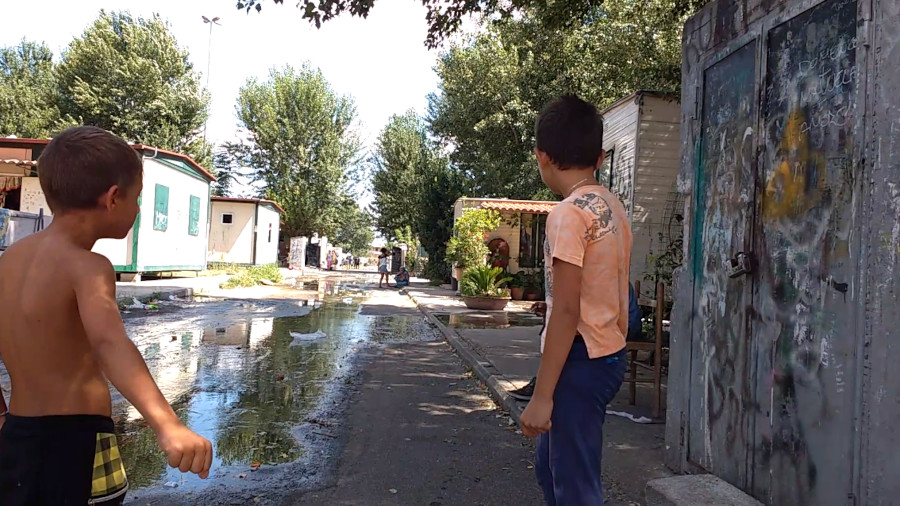
Image 1: Salone camp 2017. Photo by author

‘What is it like to work with Roma?’ I asked the police officer. He gestured widely, shaking his head and raising his arms and shoulders, suggesting that words could not describe what he was trying to convey. ‘You would have to seefor yourself. Once you see how they live, how they smell, what the camp looks like, you will understand everything about the Gypsies. I can’t tell you more. You just have to see yourself, that’s it’. Other officers at the police precinct nodded in agreement. They were all part of a special police unit set up in 2010 by far-right mayor Gianni Alemanno to police Roma encampments in Rome.

The officer’s suggestion that I have to see – and smell – for myself what it was like to work as a police officer in Roma camps dovetails with insights informed by a Latourian approach to materiality and literature subsumed under the umbrella of new materialisms. The securitization of the Roma across Europe is rarely only a mental construct. Rather, material infrastructures and sensorial experiences effectively co-produce (in)security beyond mere representations of danger. Matter and its sensorial perceptions quietly fabricate (in)security, rendering the Roma as dangerous subjects to be perpetually governed through exceptional and ever-multiplying security measures, among which the racial policing that I witnessed in my ethnographic work.

Nomad emergency

In April 2008, the newly elected Berlusconi government triggered the state of emergency in an episode that would be known as the emergenza nomadi (nomad emergency), motivating its decision by the ‘social alarm’ produced by the presence of informal camps of migrant Roma settled in the peripheries of Italy’s largest conurbations. Following the declaration of the state of exception, local authorities received power and resources to set up urban security measures as they saw fit. In Rome, this amounted, among other measures, to the establishment of the special police unit within which I carried out part of my research on the securitization of the Roma in Italy.

In its beginnings, the unit was tasked with policing Roma camps – the authorized encampments set up by the state, but also new informal camps and old, ‘tolerated’ settlements that the authorities let be in the interstices of Rome. Initially, the title of the unit contained the word ‘nomadi’ – the term generally, though erroneously used to refer to Roma in Italy, despite activists’ efforts to debunk the myth that Roma continue to be a nomadic people. The initial title suggests that the unit was set up as a racial police; however, in 2011 its title was changed to ‘Public Security and Emergency-related unit’, and new tasks were added to its mandate. Notably, its portfolio included policing related to unaccompanied minor migrants, as well as the task of carrying out squat evictions.

The unit is composed of about 60 police officers, some of whom have longstanding experience in policing Roma. Consider, for instance, the commander of the unit at the time of my research, Antonio Di Maggio. In an interview he granted me in 2015, he mentioned his 25-year long experience of dealing with Roma encampments. As several officers explained, the setup of the unit in 2010 allowed the commander to gather ‘his men’ up: police from other units with whom he had previously worked, some of whom had also been involved in specific actions of policing the Roma. The officers of the unit are known among Roma in camps; they refer to them as ‘Di Maggio’s men’.

Salone

The camp of Salone sits in isolation beyond the city’s ring road. The nearby train station of Salone is almost always deserted, and only two trains stop – one in the morning, on the way to Rome, one in the evening, returning from the capital. In one of the trains that did not stop in Salone, I overheard someone explain to their friend that the train does not make a halt ‘because of the Gypsies’ (zingari): it isn’t safe. The materiality of a desolate train station where trains do not stop conveys to thousands of commuters daily that Salone is a dangerous place.

Originally designed to host 600 people temporarily, the camp saw its numbers swell to nearly 900 following the aggressive eviction policies around the mid-aughts that gentrified Rome and sanitised the capital’s space of the presence of undesirables. The camp housed diverse and often rival Roma groups, from Serbian and Bosnian families arrived as early as the 1970s, to those from Kosovo and Montenegro who fled the violence that marked the dissolution of Yugoslavia, and more recent arrivals from Romania following its accession to the EU. Metal and PVC boxes arranged in equally spaced rows, resembling shipping containers, serve as housing units. In fact, that is the name of the ‘houses’: container. Most of them display graffiti, and some bear marks of violence: overcrowding and conflicts over the use of space sometimes result in feuds that leave material traces. Streams from broken water pipes traverse the main alleyway, forcing people to zigzag over puddles and mud. At the entrance of the camp, on the right side, overfilled rubbish dumpsters greet the rare visitors.

Sensorial Securitization

The accumulation of waste surrounding camps – broken objects, car carcasses, construction debris – is a complex phenomenon resulting from neglect, refuse dumping practices, and cost-reducing strategies by non-Roma firms and individuals. Yet, this waste is frequently conceptualized as a cultural marker for Roma, reifying them as abject and connecting them to epithets like ‘peoples of landfills’ (Piasere 1991). The subsequent combustion of this waste, often generating toxic smoke (roghi tossici), becomes the centerpiece of a securitarian discourse in Rome that overtakes concerns of petty criminality. Smoke is infused with meaning through the powerful mediator of dioxin, ingrained in collective memory through the 1976 Seveso industrial accident. Dioxin is a dangerous substance that can be inhaled to one’s unbeknownst. Vigilantes and neighbourhood committees from areas in the proximity of campi nomadi post on social media visualizations of rising smoke – often describing their neighborhood as ‘under siege’ or a ‘zone of war’ where ‘chemical weapons’ are being deployed. Such photos and the accompanying comments generate intense social alarm and fears. They provide fuel for incitement to violence, including exhortations to ‘burn down the camps with everyone inside’, as a comment on Facebook suggested. The powerful connection of fear to sensorial regimes of securitization led authorities to institute fixed surveillance services and police patrols specifically to control the fires.

This racialized landscape is always paired with a smell. The olfactory connects the Roma body, space, and materiality to an inferiority that ‘does not belong in and to Europe’ (Racleș and Ivasiuc 2019). Non-Roma interlocutors routinely distinguish Roma by a specific ‘gypsy’ smell (Racleș 2021) as an olfactory distinction that they cannot explain nor describe, but that allegedly ‘everyone knows’.

During police patrols around campi nomadi, officers engage in a ritual of repulsion involving grimaces, covering their noses, and making comments regarding the “puzza” (stench) that they discern upon approaching the camp. This olfactory disgust finds anchors in the materiality of the camp: heaps of waste, overflowing rubbish dumpsters, rats. The officers interpret this squalor as proof that inhabitants are uncivilized and that ‘living like this’ must be a cultural trait. The fear of contamination is visceral: after incursions in camps, police officers half-jokingly invoke the need for ‘epidemiologic checkups’ and the need for disinfection.

In an incident that I recount in more detail elsewhere (Racleș and Ivasiuc 2019), a policewoman, hastening to use disinfectant gel after strip-searching a Roma woman, suggested that the smell ‘stays with you regardless of how much you wash your hands’. The sensorial-material nexus ensures that the spatial segregation and policing of the Roma are repeatedly justified and reified as necessary measures against an inherently abject and dangerous threat at the most intimate, molecular level.

The inhabitants of the camp deplore its material conditions too. They complain about the waste and the irregularity of public services in removing it from the camp and repairing faulty pipelines and sewage. The rats, the foul smells rising up in the hot Roman summers from waste heaps and broken sewage, all of these material conditions are not of their own making and they develop strategies to combat them. One of the women in the camp explained that to combat foul smells and discourage rats from approaching her container, she uses large quantities of bleach on a daily basis: ‘I use a bottle of chlorine a day to clean, it’s so clean you can eat off the floor’. Yet camp inhabitants are painfully aware that their living conditions are leveraged against them to solidify racial stereotypes of uncleanliness and ‘uncivilisedness’.

Conclusion

Processes of securitization are deeply entangled with the sensorial realm. More specifically, sight and olfaction, as expressed by the police officer quoted in the opening vignette, serve as mediators reassembling the Roma in specifically racialized ways. Leonardo Piasere (1991) invokes sensorial perceptions of Roma as ‘antigypsy senses’ (sensi antizingari): racialization patterns where senses are involved in the production of racist tropes of nuisance that must be contained. In Rome, sight and smell quietly fabricate insecurity by linking the Roma body and inhabited space to fears of contamination and pollution. While such fears have been examined in relation to the racialization of the Roma on the symbolic realm, elsewhere I show how contamination and pollution constitute fears that cannot be disentangled from the material realm (Ivasiuc 2019).

As this piece has shown, the materiality of the camp and the sensorial registers used to apprehend it act to embody the Roma as ontologically dangerous. Human and non-human actors (waste, dioxin, vigilantes, police, social media platforms. etc.) are continuously drawn into chains of association, re-assembling the Roma as inherently dangerous, uncontainable, and ungovernable, and producing insecurity in a processual and self-perpetuating way. This quiet fabrication ensures that the politics of policing and exceptionality multiply, requiring constant security measures against a threat that is simultaneously material, sensorial, and ontological.


Ana Ivasiuc is a Teaching Fellow at University College Dublin and a Researcher at the University of Ostrava. She carried out an ethnography of formal and informal policing of Roma migrants in the peripheries of Rome.


References

Ivasiuc, Ana. 2019. “Reassembling (In)security: The Power of Materiality.” In Regina Kreide and Andreas Langenohl (eds.). Conceptualizing Power in Dynamics of Securitization: Beyond State and International System. Baden Baden: Nomos, pp. 367–94.

Piasere, Leonardo. 1991. Popoli delle discariche: Saggi di Antropologia zingara [Peoples of the Landfills: Essays of Gypsy Anthropology]. Rome: CISU.

Racleș, Andreea, and Ana Ivasiuc. 2019. Emplacing Smells: Spatialities and Materialities of ‘Gypsiness’. Anthropological Journal of European Cultures 28 (1): 19–38. https://doi.org/10.3167/ajec.2019.280105.


Cite as: Ivasiuc, A. 2026. “‘I can’t explain, you need to see for yourself’: Matters and senses of insecurity in the campi nomadi of Rome” Focaalblog March 3. https://www.focaalblog.com/2026/03/03/ana-ivasiuc-i-cant-explain-you-need-to-see-for-yourself-matters-and-senses-of-insecurity-in-the-campi-nomadi-of-rome/
Laust Lund Elbek: Sniffing Out Trouble? What and how the ‘Police Nose’ Smells

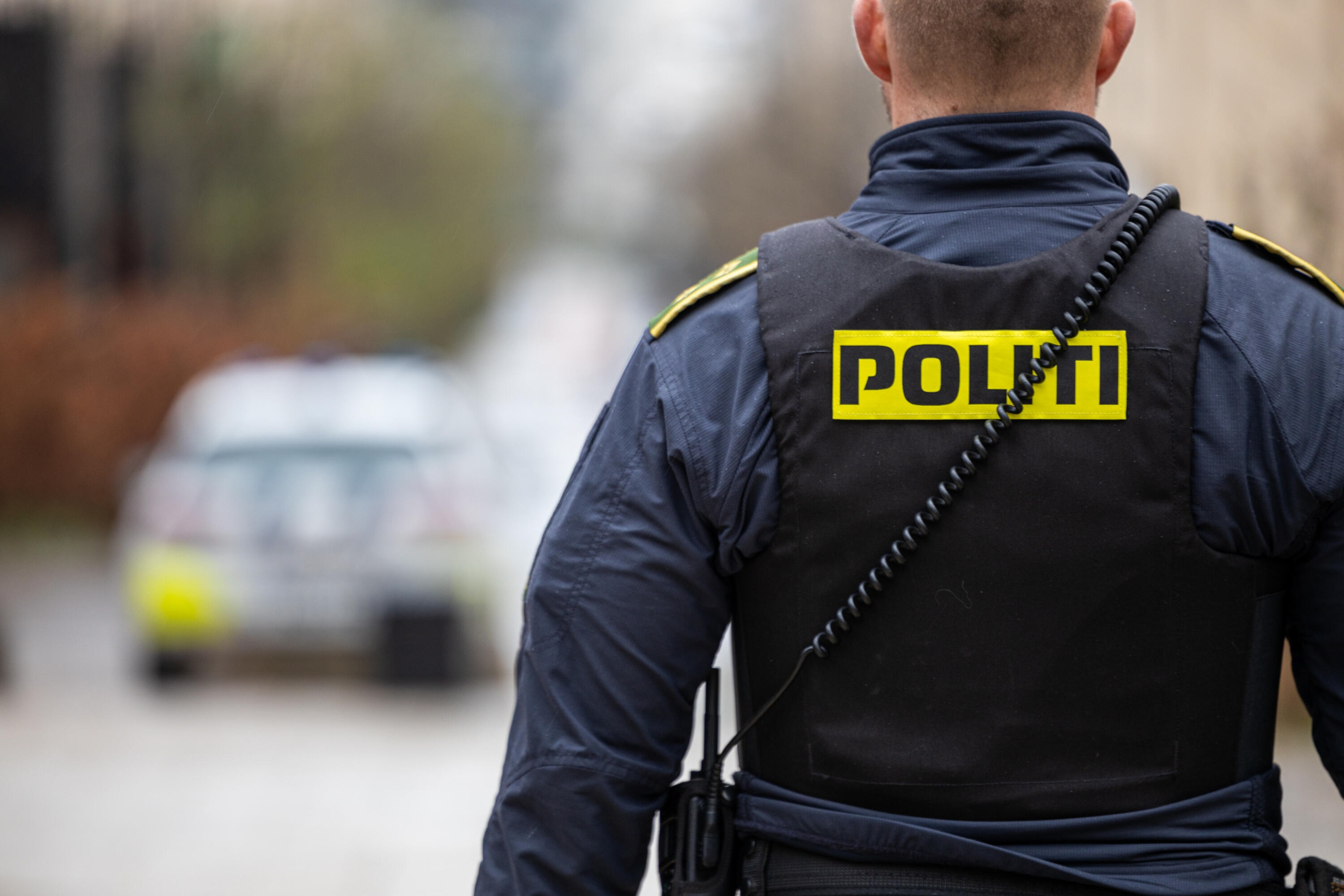
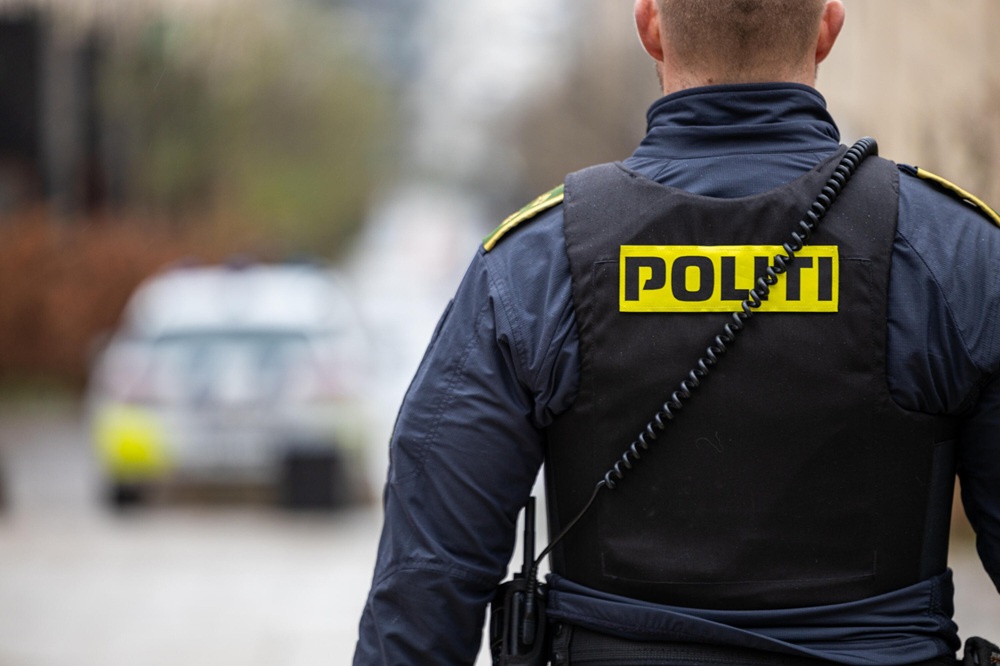
Image 1: Police officer in residential area. Photo by Rigspolitiet

Suspicion appears to sit largely in the nose: we might say that something ‘stinks,’ ‘smells off,’ that we ‘smell a rat,’ or perhaps ‘something fishy.’ Such suspicious smells may, in turn, compel us to ‘sniff out trouble’—at least until we ‘lose the scent.’

While these metaphors can seem curious or quirky at first sight, they do map onto two domains of meaning directly related to suspicion: universal perceptions of danger (decay or spoiled food) and images of searching and tracking (a dog on a trail). The association between the sense of smell and suspicion is further reflected in the olfactory system’s function as a bodily warning system triggered by smoke, bad food, leaking gas, and so on (Ramšak 2024).

It is from this general metaphorical terrain of olfactory suspicion that I take my cue. Based on fieldwork with Danish police officers, I reflect on what is colloquially known as the police nose (“politinæse”)—a ubiquitous term in Danish police lingo that refers to officers’ ostensible unique ability to “catch a whiff” of something suspicious on their beats.

I suggest that while the police nose can be understood as a particular kind of ‘craft’ rooted in accumulated sensory experience, it also connects to wider public and scholarly debates regarding the dilemmas of the police’s discretionary powers. To anchor these thoughts,I begin with a brief ethnographic trip to Hill Park, a marginalized housing project in the suburbs of Copenhagen, to take a closer look at one specific police nose in practice.

‘The Nose’ In Action

In the early spring of 2024, I joined Detective Jensen, a calm and friendly man in his early forties, on a routine patrol around the estate. Around 10 am, the skies on the fringes of the city were as grey as the concrete blocks themselves. The estate, which is home to roughly 5,000 residents, most of whom come from immigrant and/or working-class backgrounds, had not quite awoken from its winter slumber yet.

As we rolled slowly past a kindergarten, Jensen smoothly brought the patrol car to a halt. “What’s that over there?” he said, narrowing his eyes. He had spotted an inconspicuous, grey car parked partly out of sight behind a shrubbery. “It’s just, you know, why is it parked there?” he asked, staring firmly in the direction of the vehicle. He motioned for me to follow him as he opened the door, got out, and walked toward the grey car. When I caught up, he explained: “After a while, you develop a police nose, you know, a kind of sixth sense. When you’ve pulled over so many cars or seen them parked in funny places, it triggers your attention. Why is it parked here? Has it been deliberately hidden? Has it been stolen? What’s up with it?” “Have you seen that car before?” I asked. “No,” Jensen said, walking around the car and reaching for a door handle to check if it had been left unlocked. “I haven’t seen it before, and we know the area well. So, I’m just having a look around now, you know—checking what’s on the ground, what’s on the floor, is it unlocked, does it have something to do with some of the familiar kids from the estate, yes, no…”

Jensen reached for his phone to scan the car’s license plate. “I’m just checking who owns the car,” he explained. “And then I’ll check what we know about that person. It’s 10 o’clock now, right? Is it someone who lives in the area, or someone who comes from the outside? That’s the sort of thing I want to know. Right now, things look peaceful enough, sure. But we always take a look around.”

He took another inspection round and then got down on one knee to have a look underneath the car. “What do we have here? Is that an unpaid parking ticket? And this right here definitely looks like a mixing tray of some kind,” he said in a slightly triumphant tone. Pointing to the shrubbery surrounding the car, he said, “If it had been dark out, this place would have been completely out of sight, right?”

The ‘Police Nose’ as Embodied Skill

Jensen’s discovery of drug paraphernalia in Hill Park was itself an unspectacular event, yet his explanation of the process behind it—that he had followed his police nose—opens an ethnographic window onto the importance of sensory inference and the ability to detect subtle environmental cues in everyday policing.

Indeed, the notion of the ‘police nose’ is no idiosyncrasy of Jensen’s, but a familiar phenomenon among Danish police officers that has also been noted by other ethnographers (e.g. Sausdal 2018). Police representatives themselves also assert that “everyone in the Danish police knows what the police nose is.” In the British context, a direct parallel exists in the form of the copper’s nose, which refers to officers’ allegedly unique ability “to sense when something doesn’t feel right” (Quin 2025, 11–12). Related sensory idioms of police officers acting on gut feelings or a ‘sixth sense’ (a term that Jensen also used) abound across the world.

Now, because of its vague and arguably somewhat self-elevating character, one could be tempted to dismiss talk of a unique ‘police nose’ as mere occupational folklore and mystique. I suggest, however, that it also points to a rather less arcane skill; namely, a developed capacity for decoding environments in a distinctly ‘police-like’ way. As Jensen put it, the police nose materialises once “you’ve pulled over so many cars, or seen them parked in funny places”—an observation that also implicitly invokes the well-known ability of smells to awaken past experiences(Ramšak 2024). And certainly, to an outside observer such as myself, the car parked in Hill Park would, if registered at all, probably index “someone left their car here.” But to Detective Jensen, it also indexed the possibility that “someone tried to hide their vehicle—let’s investigate.”

From this perspective, the idea of the police nose (like its various cognates) invokes what Tim Ingold has referred to as a process of enskilment, which denotes the gradual and practical “embodiment of capacities of awareness and response by environmentally situated agents” (2002, 5). Not at all unlike the Arctic hunters that originally inspired Ingold’s concept—hunters whose “perceptual system […] is attuned to picking up information, critical to the practical conduct of [their] hunting, to which the unskilled observer simply fails to attend” (Ingold 2002, 55)—Jensen and his colleagues gradually learn to sense subtle cues in their surroundings that may, or may not, refer to something of police interest. The police nose, from this perspective, could be understood not as a mysterious ability magically conferred by the badge or uniform, but as an occupational shorthand for an ‘enskilled’semiotic process of quickly scanning the environment for signs.

Pride and Prejudice?

The police nose, however, is more than just a skill; it is also a source of professional pride and identity. As Jensen’s remarks on its development also seemed to suggest, ‘having a nose’ for detecting trouble is closely tied to understandings of what it means to be a good officer. From this perspective, the semantic link between ‘smelling’ and ‘suspicion’ speaks not only to a generalized imagery of danger and detection, but also to a vocational ideology among police officers that values intuition, fine-tuned senses, and personal experience. Yet, the reading and interpretation of signs and cues in one’s surroundings—arguably the key ‘task’ of the police nose—is never a neutral endeavour but is always-already embedded in social-political contexts (Eco 1979). To illustrate this, let us briefly return to Hill Park and the car half-concealed by a shrubbery.

As Jensen finished his inspection of the vehicle and its surroundings, we got back into the police car, and he continued his reflections: “It’s broad daylight now, of course. And early in the morning. So, the person in question may be asleep, or perhaps at work or something.” “It’s not that early, though, is it?” I said (it was approaching 11 am by now). “Yes, yes, to some it is, it depends on who you ask. To you and me, it’s not very early, of course,” Jensen replied. “But to some of the citizens we encounter often, 11 o’clock is very, very early. These are people we typically only see after 3 pm. If they don’t have anything to do—no school, work, or education—then we see them in the streets at 3, and then they’re probably awake until, I don’t know, 1, 2, or 3 am, no matter what day it is.”

Jensen’s remarks reveal an acute awareness of the temporal and social rhythms of the neighbourhood, which is part of his regular beat, as well as of those well-known residents he deems to be of immediate ‘interest.’ And while it is precisely such contextual familiarity that renders the police nose useful in practice, it also follows that its inferences are often situated in a social field shaped by unequal relations of power. Put somewhat bluntly, to most police officers, a car parked in an affluent neighbourhood would be unlikely to index the same thing as it would in Hill Park. And so, regardless of its accuracy in specific situations, the ‘police nose’ thus also speaks to long-standing debates concerning the classed nature of suspicion and its broader implications regarding the trade-offs between discretion and accountability in policing.

I should interject here that this is not to suggest that Detective Jensen or any of his colleagues operate on prejudice—I have no indication to that effect whatsoever. My intention here is simply to leverage Jensen’s reflections to illustrate how what the police nose ‘smells’ is inevitably embedded both within broader structures of meaning and power as well as individual officers’ accumulated sensory experiences.

This tension has not gone unnoticed in Danish public debate, either. During the 2011 Roskilde Festival, for example, police requested that 25 Romani individuals identify themselves, and when questioned critically by a newspaper journalist, the on-duty officer explained: “It is our police nose that compels us to check up on the Roma bunch.” The reportage does not mention whether officers managed to ‘sniff out’ any illegal behaviour, but it stands to reason that few ethnic stereotypes are more tenacious than the one linking ‘Gypsies’ to petty crime and delinquency.

Eleven years later, Amnesty International explicitly flagged the possible association between the ‘police nose’ and the phenomenon of ‘ethnic profiling’ in Danish cities (Amnesty International Denmark 2022), following a publication documenting that “the risk of being charged without a subsequent conviction is 27% higher for immigrants than people of Danish origin. For descendants of immigrants, the risk of being charged without a subsequent conviction is 45% higher than it is for people of Danish origin” (Søndergaard and Hussein 2022, 3). The publication also led to this potential ‘dark side’ of the police nose being discussed by national politicians and police chiefs at the high-profile political festival on the island of Bornholm.

The smell of (ir)rational bureaucracy?

References to a ‘police nose’—or what is variously referred to in other contexts as a “sixth sense,” “gut feelings,” “hunches,” or even “intuition”—circulate among police officers as a shorthand for an almost instinctive ability to read and respond to subtle environmental cues in a distinctly ‘police-like’ way. The olfactory character of the metaphor, in turn, does not appear semantically incidental, as it evokes suspicion, vigilance, and an intuitive mode of noticing that something is ‘off’ before it is consciously articulated as such. This contrasts with visual and auditory metaphors, which often seem to signal rational processes—“I see” can mean “I understand,” for example—and resonates with the idea that “the sense of smell has fewer and less deep metaphorical connections with the mental domain” (Sweetser 1990, 43). The ‘police nose,’ indeed, seems to denote a pre-reflective rather than purely rationalistic mode of knowing and engaging with the world.

On the one hand, the ability to act on a fleeting je-ne-sais-quoi is a crucial part of the craft of everyday policing and is a skill that officers hone in practice as they immerse themselves in the rhythms, histories, and social makeup of their daily beats. On the other hand, the police nose is clearly not a neutral bureaucratic instrument, but rather a visceral pattern recognition tool that operates within structures of power and experience that co-condition what counts as ‘suspicious’ in the first place. As public and scholarly debate has highlighted, references to a police nose may thus run the risk of concealing implicit bias in discretionary policing behind a linguistic veil of vaguely defined expertise.

The police nose thus presents itself as a double-edged sword. As a professional ideal and sensory skill, it highlights the real importance of officers’ heightened situational awareness and responsiveness. At the same time, some contexts may be automatically assumed to “smell” more than others—and what smells, and to whom, is to a considerable extent shaped by a politics of inequality. And while no obvious silver bullet is available for resolving this tension, it remains something to be mindful of, as even the sharpest nose may lead us down a path that does not quite pass the sniff test.


Laust Lund Elbek is assistant professor at the University of Southern Denmark. His research lies at the intersection of social anthropology and political science, with a focus on state-citizen relations in highly securitized contexts.


References

Amnesty International Denmark. 2022. ”Det er jo en offentlig gabestok, og jeg ved godt, hvad Hr. og Fru Jensen, der kører forbi, tænker”. Copenhagen.

Eco, Umberto. 1979. A Theory of Semiotics. Bloomington: Indiana University Press.

Ingold, Tim. 2002. The perception of the Environment: Essays on Livelihood, Dwelling and Skill. London: Routledge.

Quin, Emily. 2025. ‘The Copper’s Nose’: A Grounded Theory of a Policing Phenomenon, Institute of Criminology, University of Cambridge.

Ramšak, Mojca. 2024. The Anthropology of Smell. New York: Springer.

Sausdal, David. 2018. Everyday Deficiencies of Police Surveillance: A Quotidian Approach to Surveillance Studies. Policing and Society 30(4):462-478.

Sweetser, Eve. 1990. From Etymology to Pragmatics. Metaphorical and CulturalAspects of Semantic Structure. Cambridge: Cambridge University Press.

Søndergaard, Jeppe Kirkelund, and Tarek Hussein. 2022. Etnisk Profilering: Hovedresultater fra tre undersøgelser. Danish Institute for Human Rights.


Cite as: Elbek, L. L. 2025. “Sniffing Out Trouble? What and how the ‘Police Nose’ Smells” Focaalblog December 24. https://www.focaalblog.com/2025/12/24/laust-lund-elbek-sniffing-out-trouble-what-and-how-the-police-nose-smells/

Beatrice Jauregui: Anxious Anticipations: Border-crossing In/security and the Implosion of the US-led Global Order

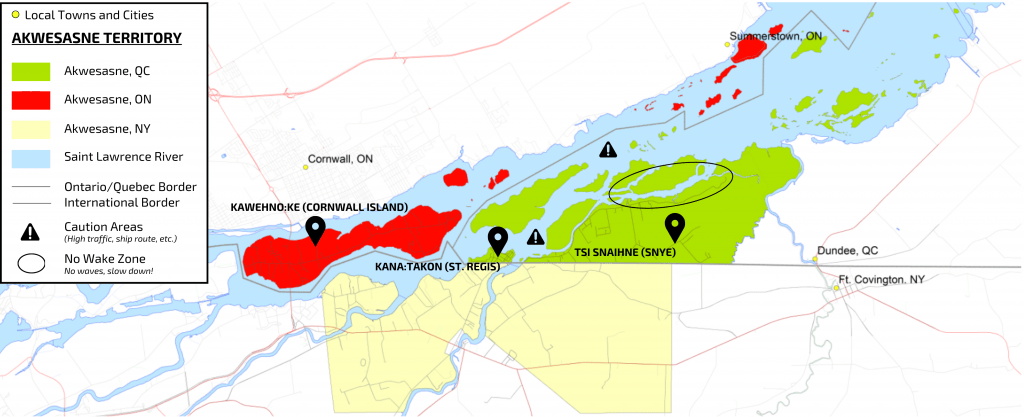
Image 1: Akwesasne territory. Source: Mohawk Council of Akwesasne

Born on US soil to citizen parents, I applied for my first passport at age 12, when my grandma took me with her to visit Italy and Greece for two weeks. My biggest concern then was packing my best clothes and how the passport picture unfortunately highlighted my crooked teeth and frizzy hair. Ten years later, I renewed the passport to make my second trip overseas, this time to go to India to do independent student research on a grant from my university. Imagine my awe and confusion when—thanks to a letter of introduction by an Indian government official whom I met through a professor—I was able to bypass the customs and immigration lines with a police escort at the airport in New Delhi and get my passport stamped without question in a back office before being shuttled into a gleaming white ambassador car to meet with a senior police officer. These early experiences crossing international borders were therefore smooth. They contrast dramatically with experiences shared by people who have long been Othered and constructed as suspect in various ways. Precisely this sensory experience has become more salient for me recently.

On an episode of The Chris Hedges Report podcast, Canadian writer Omar El Akkad talks about growing up with a “cultural survival kit” that (in large part) traces back to his witnessing a soldier interrogating his father at a checkpoint in Egypt. He says he is always anxious to go through airport border security, and points to how so many people more or less like him (i.e., brown skinned and/or naturalized citizens, with names indexing certain national or religious identities, perhaps with different accents to their spoken English) are “regularly dragged into secondary” inspection at US (or other) border crossings. El Akkad shares that this pervasive experience involves things like “pre-emptively preparing” for interactions with government agents “and trying to put them at ease” so as to suggest to them “don’t be scared” of me. He notes how over time he realized that it would behoove him to behave less “yes, sir, no sir” formally with border security officers, and instead act “more casual because that’s how people who are from here are behaving”. He remarks how only some feel “the cumulative effect” of how border securitization intersects with racism and other forms of discrimination. This is just one account of ways that marginalized peoples sense and embody insecurity at official border crossings globally through consciously altered comportment—never mind the millions who annually attempt to migrate unofficially or illegally, often risking or losing their lives.

I moved to Toronto for work over a decade ago and am now a dual citizen of both Canada and the US. Until recently, crossing between these countries felt easy, oiled by trusted traveler programs and historically friendly political economic relations. The only thing that ever “detained” me was a lonely border agent posted at a remote intersection of western Quebec/upstate New York, who was thinking of going back to school and wanted to chit-chat when he asked about my business and I told him about my scholarly research and teaching on police. He got an impromptu 20 minutes “office hours” session, and it was mildly endearing since that afternoon I was not in a rush while returning to Akwesasne from doing some fieldwork with members of their sister community in Kahnawà:ke, which is a Kanien’kehá:ke (Mohawk) territory near Tiohtià:ke (Montreal). The first time I felt significant anxiety about crossing this complex international boundary was a few days later, when I was informed by Canadian border agents that I could be fined thousands of dollars and my car seized because I had inadvertently not followed proper reporting procedures while conducting research in Akwesasne, a territory that straddles both the US-Canada border, and also the provincial border between Ontario and Quebec.

Akwesasne’ronon (the Kanien’ké:ha word for members of this Indigenous community) experience the insecurity, jurisdictional confusion, and exclusionary power of international border enforcement every day, since boundary lines zigzag irregularly through their land (Image 1). People joke about homes where the kitchen is in Canada and the living room is in the US, and relate far less amusing struggles over which problematic governing agreements dictate action on everything from commercial licenses to speeding tickets and the illegal trafficking of drugs, firearms, and human beings through the territory. As members of a sovereign First Nation recognized by both Canadian and US federal governments, Akwesasne’rono have special rights to move around their territory as needed without incident or incrimination. Unlike US or Canadian citizens—and with the exception of several designated crossings where there are special “express” lanes only accessible to Indigenous people with “native status” cards—Akwesasne’rono are not required to “check in” with officials when they traverse the border, not least since it would be impractical, often impossible to do so. But even people with all of their status documents in order have shared countless stories about being routinely questioned, detained, investigated, or otherwise inconvenienced—and reminded of their colonized Other-ness—by government agents on all sides. One community member with a status card even reported that he had to sit for several hours at a checkpoint one weekday after getting a medical X-ray, since agents detected radiation on him and classified it as suspicious and indicative of a potential security threat.

It is hardly news that even some of the most supposedly “friendly” and “porous” borders for some—especially persons privileged to have passports from globally powerful countries or other types of legitimating documentation—have long been places of anxiety, uncertainty, frustration, fear, paranoia, and terror for others, particularly people identified with groups facing prejudice and discrimination on the basis of indigeneity, nationality, race, religion, and other markers of cultural difference. Many in this latter category have become used to embodied experiences of sensing insecurity in a liminal space of exceptional, arbitrary, and mostly unchecked power meted out by state authority figures.

Recently however, and increasingly so, persons in the former (privileged) category, including myself, have begun sensing insecurity in borderlands as well. A stark case followed the re-election of Donald Trump as US President on a platform that included hard-line anti-immigrant and blatantly racist ideologies. Many have watched with horror as these ideologies play out in constant news streams about ICE (Immigration and Customs Enforcement) raids leading to the kidnapping and deportation of thousands of people across the US. Simultaneously, there are many stories circulating more or less publicly about increasingly arbitrary allegations of “anti-Americanism” and “national security threats” suspicions against persons who express dissent against or negative evaluations of some of the regime’s destructive and incoherent policies.

There are now many news accounts of foreign nationals getting caught up in the US immigration-detention dragnet since the beginning of 2025, sometimes allegedly due to procedural errors or miscommunications. Governments, NGOs, universities, business corporations, and others have been issuing travel warnings to their constituents, advising on how to respond to increased surveillance, search and seizure of electronic devices, denial of entry, and possible detention depending on one’s citizenship status. Stories have been circulating about people having their passports marked with a five-year ban from entering the US simply for being critical of the Trump regime. All of this is of course alarming for millions of people who have any sort of relationship with or reason to travel to the US. And it has dramatically shifted my own sense of in/security, even as someone with all of the (supposed) rights of US citizenship, and the privileges associated with being a well-educated descendent of white European settlers with no criminal record. Before traveling to the US, I now always anticipate interrogation. I carefully review the content of all of my devices; rehearse what I might say if questioned; and even give my children instructions on what (not) to say and do when we travel together. I have never been so anxious when passing through Canada-US border checkpoints, sometimes to the point of feeling physically ill, or unable to eat, bordering on panic attacks, even though I know “rationally” that I have done nothing wrong or anything that should warrant increased scrutiny or sanction.

My exponential increase in anxiety around crossing into the US is not simply speculative paranoia based on distant doomster social media stories and second-hand rumors. It emerges out of two specific circumstances related to expressed recognition of state violence. Foremost is a history of speaking out against occupation, apartheid, and genocide in Palestine/Israel (Bangstad 2025), to the extent that I have been profiled alongside thousands of others on the defamatory Canary Mission website with false charges of being antisemitic and pro-Hamas, and of allegedly supporting “terrorism”. I have viewed documented evidence of persons listed on this untrustworthy propaganda website being interrogated about it explicitly in secondary inspections at the US border; and in some cases, if someone was not a US citizen, they were reportedly banned and denied entry to the US. This is part of a larger pattern of the current US government’s weaponization of antisemitism as a smoke screen to try to bring universities and other institutions to heel with threats of rescinding of federal funding, canceling of work and study visas, and banning international student admissions as punishments or “warnings” for not falling in line with regime policies or allowing open protest of war crimes and atrocities. I admit to feeling afraid even now as I write this, and hope this will not cause harm in the future.

The other key factor that has amplified my sense of anticipatory insecurity about border crossings more generally relates back to my decades of research in India on police and security infrastructure. After some critical comments I made in independent media about harmful discriminatory policies and practices of the Hindutva (Hindu nationalist) government that has now been in power there for more than a decade, representatives from the Indian consulate came to my house in Toronto and issued me a “show cause notice”, criminalizing me for alleged “anti-national” activities that violate “the sovereignty and integrity of India”, and accusing me of “clandestine activities” in relation to my research. The charges are as absurd as they are baseless, and a Delhi-based lawyer has done their best to set me up well to fight these allegations in court as needed. But the government’s strategy of harassment and intimidation has compelled me to self-censor. While I still write candidly in scholarly sources about my research, I am more hesitant to respond to inquiries from journalists requesting comments on politically sensitive matters. And while many friends and colleagues already know about this old “news” of my essentially being blacklisted from a place I have considered another home for decades, this is the first time that I’m sharing it publicly in writing, more than three years after state officials first darkened my doorstep. Meanwhile, I have not attempted to return to India, even though I technically still have what is known as OCI (Overseas Citizenship of India) status. I have read and heard about many stories of other persons with this status having their cards revoked, and I fear arriving at that airport—where, recall, I was once able to bypass the long lines of foreign passport holders even though I had never before set foot in the country—only to be deported immediately, like other colleagues who have been unfortunately caught up in the Indian government’s dragnet of nationalistic hyper-securitization.

This is how state harassment and repression of dissent have always worked, of course; through instilling generalized suspicion along ideological divides, engendering amorphous anxiety that accumulates like moss, and shapeshifts into intensified fear and paranoia that spreads like a contagion. Rapidly changing technological capacities aside, most of the routine and exceptional tactics, strategies, and outcomes of potential and actual state violence are not new. But their sensory impact on new populations, and in relation to US power specifically, indicates substantive and seismic shifts. One key feature of these shifts is the increasingly blurry “border” between a palpable fear of mere “inconvenience” (perhaps I’ll miss a flight, or my phone will be seized at the border and I won’t ever get it back) versus the probability of a seriously harmful impact on peoples’ lives (perhaps I’ll be detained indefinitely, or they’ll do a full forensic image of my seized device that will lead to serious legal or financial complications, never mind the violations of privacy). Scaling up and out, it also seems that we are witnessing significant realignments and sea changes in the global order of political economic power, heretofore dominated by the US through what some have called “empire” in the post 1945-era.

Returning to El Akkad’s reflections, he acknowledges that as someone with the privilege of Canadian citizenship, his border-crossing fears have been, if not “silly” (his word), then still mostly about trying to ensure “as few headaches as possible” and to prevent the potential hassle of losing time, money, or equipment. For me as a dual citizen, I would like to continue to feel that the worst I might suffer at the Canada-US border is a short period of detention until I could obtain legal representation. But there is a growing sense that what appears to be intensified and unpredictable border interrogations of anyone and everyone—not just the “usual suspects”, which of course has always been “unjust”—may only get worse, and that the “normal” national and international legal protections may not hold, such that even citizens who don’t protest too much may be subject to extraordinary rendition. It feels like I now know more people than not who express some version of this fear on a regular basis, and especially in the lead up to a trip crossing the US border—or in a decision to avoid going to the US altogether, which also now seems far more common. The boundary between nuisance and violence has become more than a little insecure.

The (again) not new or unique, and yet intensified and arguably more-prevalent-than-ever, sense of insecurity around crossing borders into the US is also indicative of concerns well beyond just mobility and migration. It indexes the decline and fall of political economic forms and cultural ways of life that many people, including some of the wealthiest and heretofore well-protected and well-served by the US-led global order, have long enjoyed and don’t want to let go. Among other touchstones of security, it seems that US-based global and national governing institutions, free speech, legal and regulatory bodies, human and civil rights, social services, educational opportunities, and trust in mediated knowledge production are disintegrating across the board. Many try to go on as before, hoping for a savior in litigation, legislation, or perhaps a new leader, assuming the next US national election occurs on schedule. This mass tendency to “keep calm and carry on” seems to have a deeper sensory structure than mere maintenance of morale in the face of widespread and ongoing degeneration. Perhaps it exhibits something more akin to what Alexei Yurchak (2005) has called “hypernormalization” in the context of the end of Soviet Russia, wherein people expressed a strong sense that things would always continue as they had, even as their world was falling apart around them. I cannot predict with any precision the long-term or even immediate future of the US-led Global Order. But the fluctuations and increasing sense of creeping dread and acute terror that I now feel every time I approach the border of the country of my birth signify the insecurity, if not the complete implosion, of so much that so many of us have always thought to be true and trusted.


Beatrice Jauregui is Associate Professor at the University of Toronto Centre for Criminology and Sociolegal Studies. She is author of Provisional Authority: Police, Order, and Security in India and co-editor of the Sage Handbook of Global Policing and Anthropology and Global Counterinsurgency.  


References

Bangstad, Sindre 2025. “The IHRA Working Definition of Antisemitism and Academic Freedom” Focaalblog 28 March, https://www.focaalblog.com/2025/03/28/sindre-bangstad-the-ihra-working-definition-of-antisemitism-and-academic-freedom/

Yurchak, Alexei. 2005. Everything Was Forever Until It Was No More. The Last Soviet Generation. Princeton University Press.


Cite as: Jauregui, B. 2025. “Anxious Anticipations: Border-crossing In/security and the Implosion of the US-led Global Order” Focaalblog December 22. https://www.focaalblog.com/2025/12/22/beatrice-jauregui-anxious-anticipations-border-crossing-in-security-and-the-implosion-of-the-us-led-global-order/

Jolien van Veen: Atmospheric Security in Rio de Janeiro

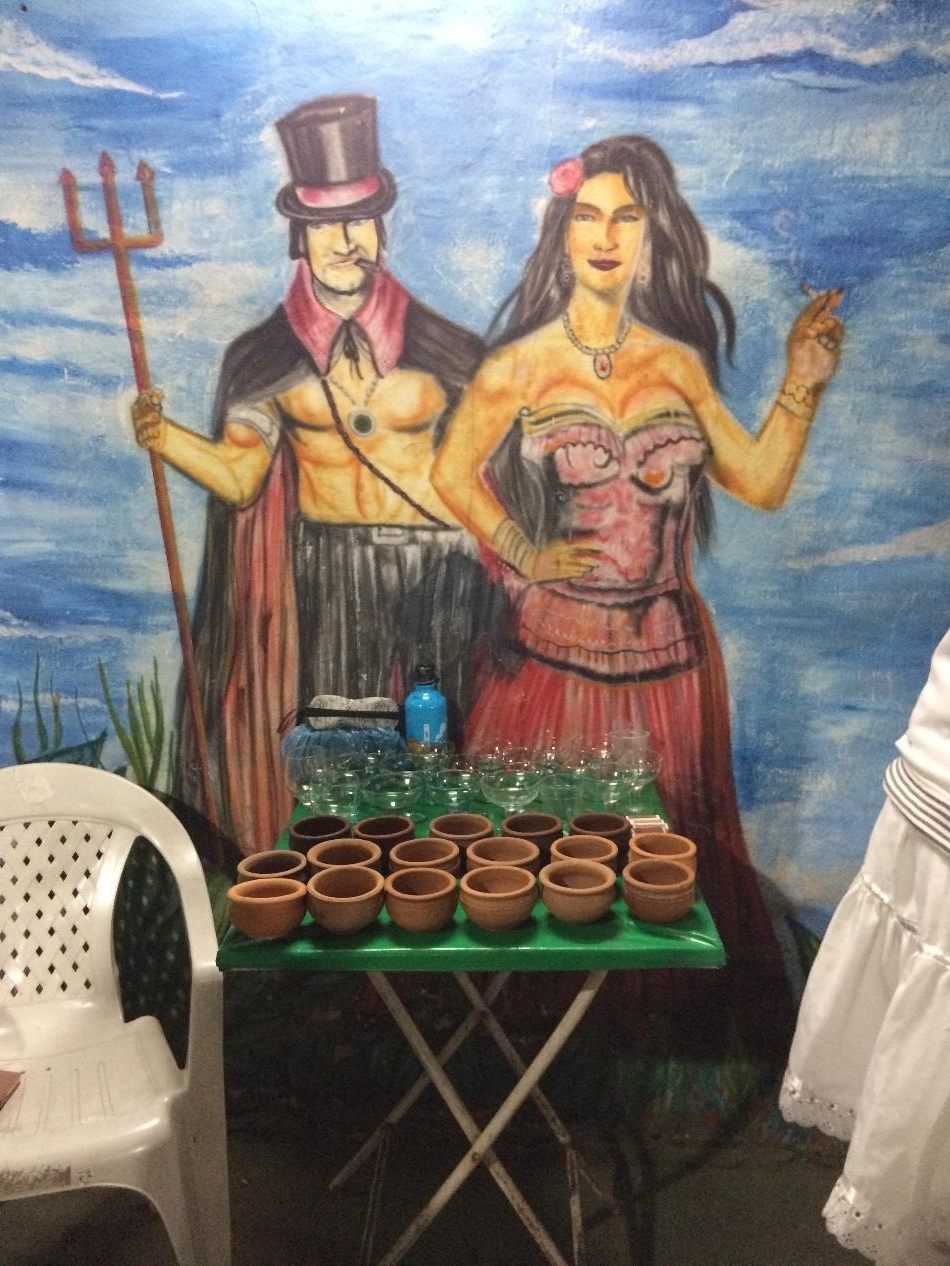
Image 1: Exú Tranca Rua (left) and Maria Padilha das 7 Encruzilhadas (right) depicted on the walls of the center. Photo by author.

When I started fieldwork in neighborhoods in Rio de Janeiro’s North zone in December 2021, the first thing my Brazilian friends told me was to be very careful. The area where I was based was notorious for its high number of armed robberies and for its proximity to a cluster of favelas. Shortly before my arrival in Brazil, the drug trafficking group that effectively controlled the favelas had expanded its territory by blocking roads and installing armed checkpoints at various street corners across the neighborhoods. The local leader (dono) of the group, who identified as a Pentecostal Christian, was accused of orchestrating disappearances, homicides, and extortions, and of destroying temples dedicated to Afro-Brazilian religious practices.

It was against this backdrop of violent events that I conducted an interview with Catarina, a frequent visitor of a local Umbanda center. Umbanda is an Afro-Brazilian religion that contains influences from Roman Catholicism, West-African religious traditions, indigenous beliefs, and Kardecist spiritism. In Umbanda, spiritual guides provide guidance and support on matters of health, money, love, and wellbeing. Catarina lived with her teenage daughter in a commercial district some 15 minutes away from the center, outside the zone of influence of the drug trafficking gang. As we sat in the patio of the center, shaded by the trees that surrounded the open space in front of the terreiro (indoor place of worship), I asked Catarina whether she hadn’t considered visiting a center located closer to her home in an area that was considered less dangerous. She responded the following:

There is a center close to me, which I visit sometimes, but I am not from that center. And I feel very much at peace here. Inside here, it doesn’t feel like I am in this particular neighborhood. It is as if a microclimate (microclima) was created inside here, with the trees and all that. Even if it takes forever for the sessions to start. If you arrive all worked up, inside here you are able to relax, think about life. And thank God, nothing has ever happened to us here. I think that is our protection (é proteção mesmo). Protection that the center gives, which the spirits (entidades) from here give until we arrive at our house. Because nothing ever happened when we left here. While everything is deserted, everything is black.

I was intrigued by Catarina’s attention to the atmospheric qualities of protection. Like other Umbanda practitioners whom I spoke to, Catarina spoke about the protection offered by the center as a material and embodied reality where the dangers of the street were temporarily kept at bay. This is a material and embodied reality that emerges through a series of ritual practices that involve an interplay between objects, bodies, and spirit entities, amongst other things. I offer two examples to illustrate the interplay between these different materialities inside the center.

Champagne and cigarettes

The largest altar in the Umbanda center was dedicated to a group of spirits known collectively as the spirits of the streets (povo da rua). It was located inside a separate building in the courtyard, closed off with an opaque door. The outside wall depicted a large mural painting of the Exú Tranca Rua, protector of the terreiros, and the pomba-gira Maria Padilha das 7 Encruzilhadas, guardian of love, protection, and courage (Image 1). Both figures play an important role in the center as they are called upon to cleanse the center from negative energies (limpar), to open new ways of thinking and being (abrir caminhos) and to shield practitioners from harm (proteger). Because of their ability to protect, the povo da rua are also referred to as guardian spirits (guardiões).

Different from other kinds of spirits, who emphasize benevolence and humility, the povo da rua embody sensuality as well as force. When they incorporate the bodies of the spirit mediums, they dance, smoke, drink, and flirt. To outsiders, the spirits’ human appetites are sometimes mistaken for sinful behavior and for provoking “bad things” (fazer mal). But for my interlocutors, “exú only does good things” (faz bem).

Inside the altar of the povo, a faint red light revealed a row of thirteen statues, representing particular spirits worshipped in the center. Twice a year, the povo receive an extensive offering (oferenda) from the spirit mediums to request guidance and protection for themselves or on behalf of a friend or a family member.

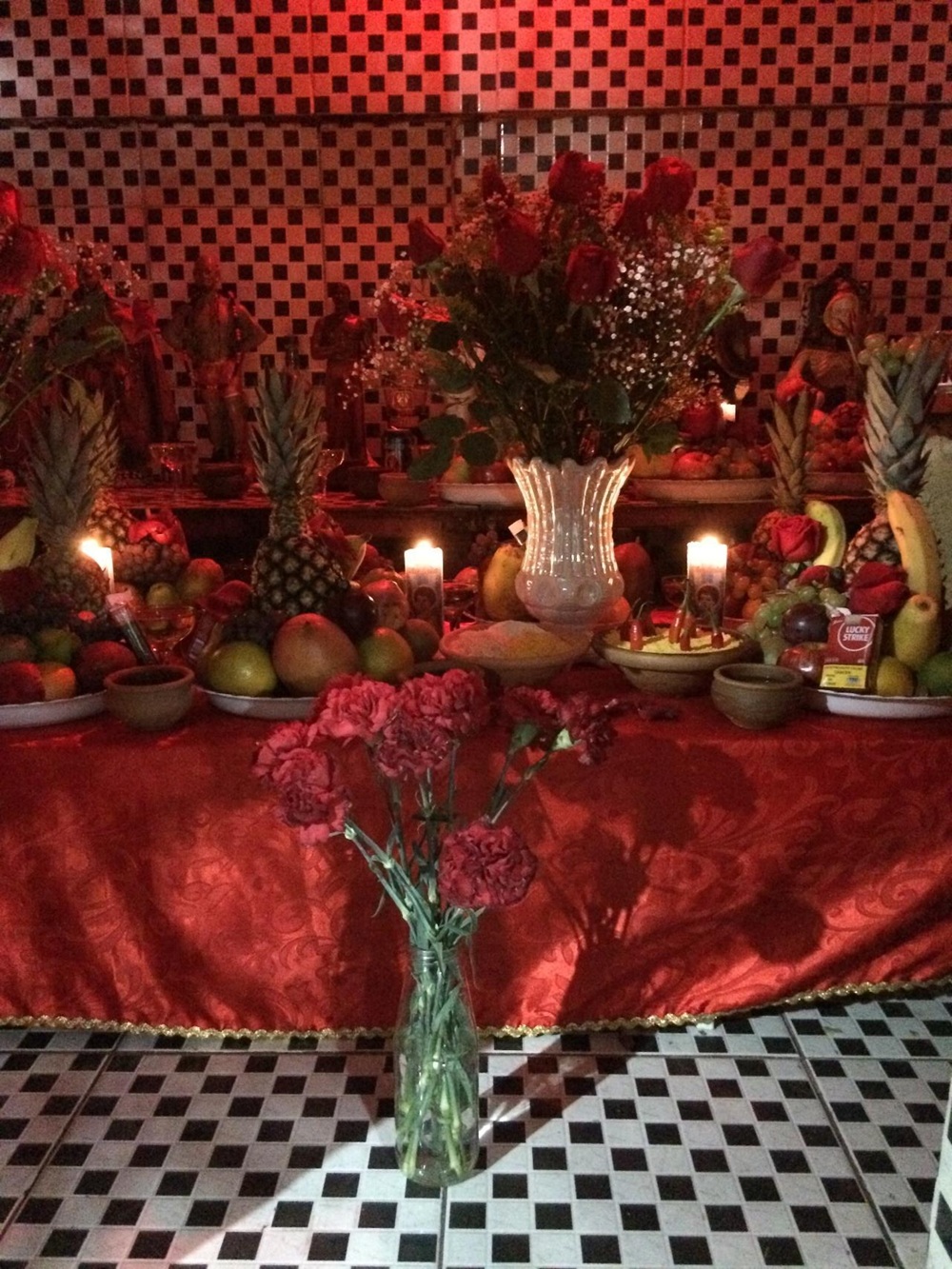
The offerings that I witnessed followed a specific order and were carried out individually. First, a big plate filled with tropical fruits was brought to the altar. The medium then took a pull of a cigarette to appease thefemale spirits. The remaining packet of cigarettes was placed alongside the plate of fruits on the altar. Next, the medium filled a glass of champagne. After taking a sip of the glass, the glass was also placed in front of the statues. To appease the male spirits, the medium took a pull of a cigar and exhaled in the shape of a circle. He or she then filled a glass of cachaça (white rum), took a sip, and placed it on the altar. In the final step, the spirit medium placed a handful of coins in a clay bowl. One of the coins was used to slowly move it over the body, starting with arms crossed, and then directing the coin over the head, knees, legs, and under one of the feet.

The individual offerings were complemented by the traditional food offering for exús, prepared in the small on-site kitchen: a big bowl of toasted manioc flour prepared in Dendê oil, filled with red chili peppers. Softly burning candles and vases filled with red roses and small white flowers were tucked in between the offerings (Image 2). According to the mediums, each of the items placed on the altar to feed the spirits absorbs the spirits’ capacity to cleanse and protect and contributes to the circulation of positive energy and spiritual force inside the center.

The process of preparing the offerings and placing them inside the altar took several hours. After about two weeks, once the offerings were received and “eaten” by the spirits, they were removed from the altar. The rotten fruits were discarded, and the ones that were still edible were taken back home. The flowers, cigarettes, candles, and manioc flower were dispatched near one of the city’s highway intersections, to serve those who wander through the city.

According to Zezé, one of the mediums who works at the center, the offerings to the spirits were not made in vain. When I spoke to him in an interview, he said the following:

The guardian spirits protect those who have faith. Up until today, inside here nothing bad has ever happened, while in the meantime a lot of bad things have happened outside. We’ve had cases where violence happened outside of the gate, shots were being fired, but not even the bullet shells made it in here. That, to me, is proof that this is a protected place.

Zezé’s words echoed those of Catarina. Despite the dangers that surrounded the center, in the comforting presence of the povo da rua, no bullets would pierce the center’s walls.

Image 2: Offerings for the povo da rua. Photo by author.

The swords of Ogum

Besides offerings to the spirits, mediums also channeled spiritual energy through incorporation sessions (giras). One of the sessions I attended at the center was dedicated to Ogum, an orixá associated with strength, courage, and battle. Inspired by African deities, orixás are at the top of the spiritual hierarchy in Umbanda. The session for Ogum was held in the indoor space adjacent to the courtyard where all the spirit incorporations took place. The entire room was painted light blue. Walls were covered with paintings, photos of mediums and visitors, and small spirit altars. A small sign right behind the door read “negative energies prohibited.”

Just like the other sessions, the session for Ogum started with a short prayer followed by drumming. The repetitive drum rhythm worked to induce a trance-like state amongst the mediums and the visitors. One by one, the spirits announced themselves through the bodies of the mediums, which were slowly moving towards the center of the room, with one leg lagging the other and their index fingers pointed out. Their reception was welcomed by the audience, whose clapping and singing grew louder as more spirits descended onto the room:

Eu tenho sete espadas pra me defenderI have seven swords to defend myself
Eu tenho Ogum em minha companhiaI have Ogum in my company
Eu tenho sete espadas pra me defenderI have seven swords to defend myself
Eu tenho Ogum em minha companhiaI have Ogum in my company
Ogum é meu paiOgum is my father
Ogum é meu guiaOgum is my guide
Ogum é meu paiOgum is my father
Na fé de ZambiIn the name of Zambi (the Creator)
E da Virgem MariaAnd the Virgin Mary

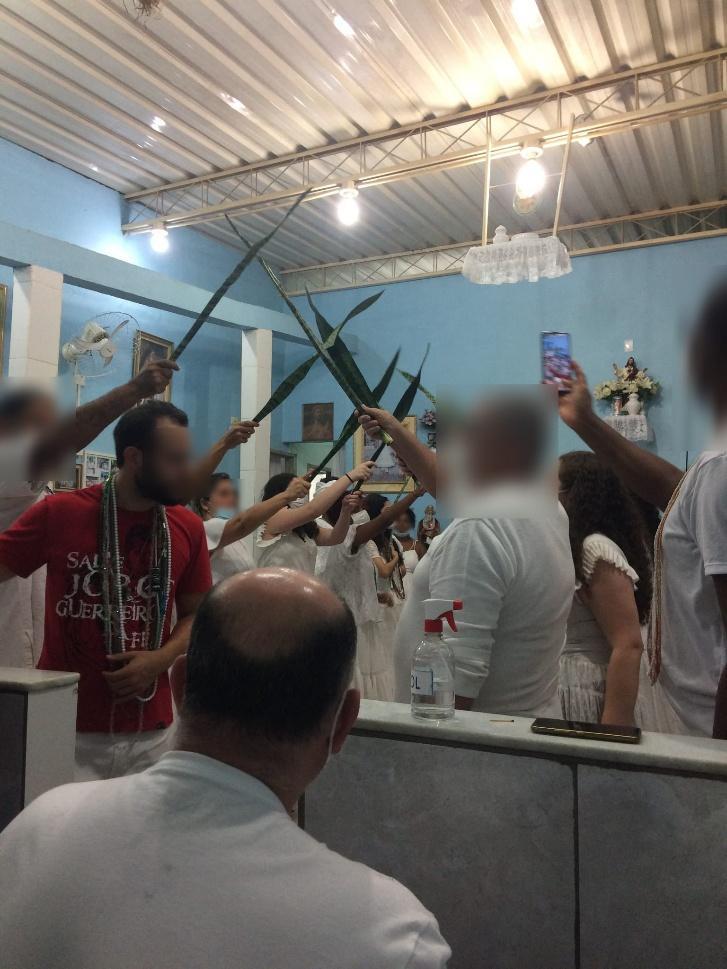
By the time Ogum finally announced his presence through the body of a medium it was already close to midnight. A spiritual caretaker guided Ogum to a room in the back of the building to prepare his costume. In the meantime, the other spirit mediums took a single leaf each from the sansevieria plant in the front of the room. A few moments later, Ogum re-entered the room with the air of a dignified man, wearing a red cape, a sword, and a knight’s helmet adorned with a red feather. The other mediums held up their leaves in the air and formed an arch (image 3). Carefully, Ogum was led under the arch and made his way to the front of the altar, where he greeted the mediums and the visitors with an embrace.

Towards the end of the session, the mediums handed each of the visitors one of the leaves to take back home and place it in front of their house. The “swords”, I was told, were considered as an extension of the protective power of Ogum cultivated during the session and served to protect the house from negative energies and to attract prosperity (prosperidade).

Image 3: The swords of Ogum. Photo by author.

Reflections

There is no shortage of people seeking protection and guidance in Brazilian cities, which statistics show are among the most violent on earth. Trapped between militias, drug trafficking groups, and the state, urban residents cultivate spaces where they feel safe, comfortable, and cared for. These spaces of security and comfort are rarely secular. They are inhabited by a range of otherworldly entities who are called upon to protect and to heal (see also Amoruso 2025. Willis 2024), including Afro-Brazilian spirits.

I have illustrated how Afro-Brazilian spirits and the mediums who incorporate them engage in affective relationships that contribute to a sacred, intimate space shielded from the dangers of the street. Each of the objects placed within the center takes part in this affective relationship in different ways: not merely in a symbolic manner, but by absorbing and circulating the spirit’s powers to cleanse, heal, and protect. The champagne and cigarettes on the altar dedicated to the guardian spirits become charged with spiritual powers, while the swords of Ogum, represented by the sansevieria leaves, become an extension of the protective power of the orixá.

My analysis moves from an understanding of security as something that is produced on the level of the state towards an understanding of security as something that is lived and felt in everyday interactions (see also Ghertner, McFann & Goldstein 2020: 3). Moreover, like Anderson (2009), I draw attention to the atmospheric quality of security as an affect that emerges between objects, bodies, and spaces. For ethnographers, it is essential to do justice to the ways in which the senses shape our everyday experiences and ontological realities.


Jolien van Veen is a PhD researcher at the department of Cultural Anthropology at Utrecht University. Her PhD is part of the ERC-funded project “Sacralizing Security: Religion, Violence and Authority in Mega-Cities of the Global South”. She has published in City & Society and the European Review of Latin American and Caribbean Studies.


References

Amoruso, Michael. 2025. Moved by the Dead: Haunting and Devotion in São Paulo, Brazil. University of North Carolina Press.

Anderson, Ben. 2009. “Affective Atmospheres”. Emotion, Space and Society 2: 77-81. DOI:10.1016/j.emospa.2009.08.005

Ghertner, D. Asher, Hudson McFann, and Daniel M. Goldstein, 2020. Futureproof: Security Aesthetics and the Management of Life. Duke University Press.

Willis, Laurie Denyer. 2023. Go With God: Political Exhaustion and Evangelical Possibility in Suburban Brazil. University of California Press.


Cite as: Veen, Jolien van 2025. “Atmospheric Security in Rio de Janeiro” Focaalblog December 22. https://www.focaalblog.com/2025/12/22/jolien-van-veen-atmospheric-security-in-rio-de-janeiro/

Tessa Diphoorn and Tomas Salem: Introduction: Sensing (In)Security. New Materialism and The Politics of Security

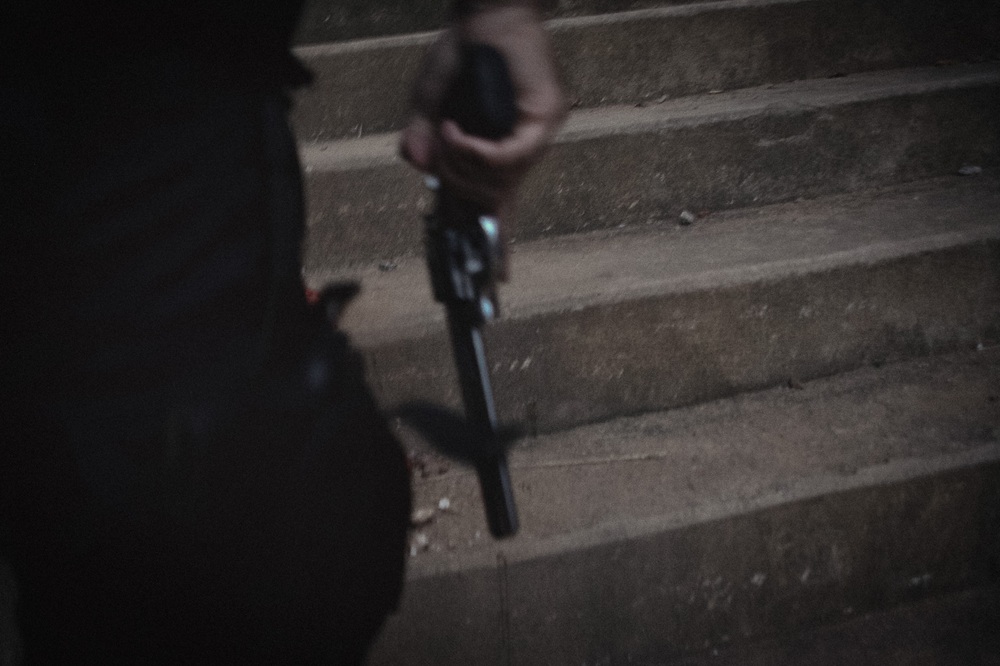
Image 1: Military police officer patrolling in Mangueira, Brazil. Photo by Tomas Salem

Palm Springs, mid-September 2025. The American flag flies at half-staff across the city in honour of Charlie Krik, right-wing political activist and Trump supporter who was shot and killed in Utah at the beginning of the month.

While gun violence is not foreign to Americans, the assassination of Kirk is met with shock, anger, and disbelief by many, but also with glee and a sense of divine justice by others, as Kirk ardently opposed gun control policies across his social media platforms, including his wildly popular podcast show.

In Palm Springs’ affluent middle-class neighbourhoods, a young couple working in the local art industry is quick to note the irony. They are not Trump supporters and politically far from the far-right, but like many Americans, they own guns which they use both for protection and play.

When a stranger passes out on the sidewalk in front of their home, smelling alcohol and old sweat, the guns offer a sense of security, and are carried as a precautionary measure. While the couple have sympathy for the man and his obvious suffering, they emphasise that this is a family neighbourhood. The kids that live here should not be exposed to these scenes.

As the young couple debates how to address the situation, a neighbour pulls up in a big, white pick-up truck. He wears a spotless, white polo shirt with SECURITY embroidered on the chest and carries a gun on his hip. Taking charge of the situation, he calls the police, who soon arrive to detain the man sleeping on the street corner.

The neighbours chat while they wait for the officers to arrive, and the security man explains that he lives a few houses down the road, that he is a former marine and police officer, and that he likes to keep his neighbourhood safe. The man is friendly and polite, and offers his number to the young couple, should they ever need assistance.

And indeed, they soon do: their roommate is a former substance addict and apparently, as the couple eventually speculate, also a practitioner of some sort of black magic. When he is asked not to treat himself to the soda cans that are in the fridge, he spirals into an escalating episode of rage.

He yells at them to fuck off at the top of his lungs, his anger reverberating through the home. “I have never felt so disrespected in my life,” Rob, the male half of the couple asserts. Over the next days and weeks, tension between the couple and the roommate builds as they try to evict him. “Oh yes, we all own guns,” Rob dryly notes when asked if the evicted roommate is armed.

Eventually, after weeks of emotional distress, they call on their security neighbour to negotiate the conditions of the roommates’ eviction. They commended his professional and calm demeanour. Their impression of the vigilante has changed from scepticism to trust. They feel safer that he is around, and prefer his assistance to that of the police—at least on this occasion.

As they clean out their old roommate’s room, they find bone fragments, human teeth, and a doll that they describe as having an unsettling energy. They burn the teeth in their yard and cleanse the room with sage and incense.

The scenes from contemporary US, observed by Tomas Salem, show how sensations of (in)security are perceived, constructed, and negotiated through a set of materialities that include guns, social media, unsettling bodies, national symbols, mind-altering substances, and ontologically ambiguous objects, as well as perceived energies, political pundits, and the institutions and agencies usually associated with the provision of security.

Some of these elements, such as guns, are commonly linked to the field of security and evoke strong emotions, reactions, and opinions.

Firearms are habitually subjected to processes of political polarisation and simultaneously perceived as elements of risk or guarantors of safety. Similarly, unsettling bodies—the drunk, the migrant, the racialised, or the emotionally volatile—also shape feelings of (un)safety and fear. Additionally, ontological assumptions about the life of objects can produce feelings of anxiety, restlessness, or insecurity, or they can calm such feelings.

Over the past decade, scholars and artists alike have begun to rethink security not just as a set of institutions or policies, but as something deeply felt, material, and sensory. From drone surveillance to facial recognition, from border fences to biometric databases, security today is not only managed through laws and strategies; it is experienced through bodies, affects, and technologies. The hum of a CCTV camera, the buzz of a phone alert, or the tension in a checkpoint queue all contribute to how security takes shape in everyday life.

In this series, we place the sensorial at the forefront of anthropological inquiry into everyday practices and understandings of (in)security.

What does it mean to sense security? Anthropologists working with ideas from new materialism and posthumanist thought have helped push this conversation forward. Rather than seeing humans as the only actors in our analysis of security, these perspectives draw attention to the agency of things and examine how technologies, infrastructures, and environments participate in producing (in)security.

The concept of sensing here works in multiple directions: humans sense danger or safety, but sensors, algorithms, and data infrastructures also “sense” the world, classifying and responding in ways that shape our collective experience. Security becomes not just something we enforce or feel, but something co-produced by human and nonhuman actors alike.

New materialist approaches remind us that sensing is never neutral. The technologies that claim to detect threat or measure risk often reproduce the same racialized and colonial hierarchies that have long structured the security field.

In this sense, studying sensing and materiality is also about uncovering how inequalities are embedded in the very textures of security, in codes, in infrastructures, and in atmospheres.

In this feature, we are interested in better understanding how embodied emotional registers are manipulated in political projects, especially those responding to widespread anxieties about the future. To sense (in)security is to inhabit a world where matter, technology, and emotion converge.

Which lives and movements are rendered visible, and which remain unseen? How do certain bodies become “suspicious” in the eyes of a security guard, vigilante neighbour, or algorithm?

By focusing on the sensorial as the locus of interplay between materiality and experience, and thus, of our ontology or perception of reality, the contributions reveal the nuanced dialectics of security and insecurity in contemporary life.

Key to this exploration are the ways in which bodies, objects, and technologies, from algorithms to uniforms and weapons, shape sensations of (in)security. We are interested in analysing how a sensorial approach that foregrounds sensorial understandings and interpretations provides in-depth analysis of how feelings of (in)security are experienced and translated.

This feature also underlines how anthropology offers a distinctive way to engage with these questions.

Ethnography brings us close to the affective atmospheres and sensory details of security worlds, including the fear, boredom, adrenaline, anticipation, or unease that circulate between people, technologies, and spaces. Thinking of security through sensing thus invites us to move beyond abstract notions of protection or control, and instead to ask how security feels, where it resides, and how it takes shape through the material world around us.

By zooming in on the often-invisible ways in which the sensorial is securitized, the diverse case studies that constitute this collection reveal how political orders and normative frameworks mobilize the senses to maintain control.

Like the scenes we observed in the United States, the essays in this feature trace how the sensory is mobilized to maintain, and sometimes subvert, orders of control across settings as diverse as the US border, Rio de Janeiro’s favelas, Rome’s Roma camps, Mozambique’s political protests, and Denmark’s urban margins.

Through its diverse cases, this feature emphasizes that security is not only a set of practices but a mode of perception. To sense (in)security means to rethink how we study security, and how we feel it as citizens and anthropologists.


Tessa Diphoorn is an Associate Professor at the Department of Cultural Anthropology at Utrecht University, and her research and teaching focus on policing, security, violence, and authority in Kenya and South Africa. She is the author of Twilight Policing. Private Security and Violence in Urban South Africa (University of California Press, 2016)the co-editor of the edited volume, Security Blurs: The Politics of Plural Security Provision (Routledge, 2019), and the co-curator of Nairobi Becoming: Security, Certainty, and Contingency (Punctum Books, 2024).

Tomas Salem is a social anthropologist who completed his PhD research on happiness, environmental ethics, and tourism at the University of Bergen. He is also the author of Policing the Favelas of Rio de Janeiro: Cosmologies of War and The Far-Right (Palgrave 2024). 


Cite as: Diphoorn, T. & Salem, T. 2025. “Sensing (In)Security. New materialism and The Politics of Security” Focaalblog December 22. https://www.focaalblog.com/2025/12/22/tessa-diphoorn-and-tomas-salem-introduction-sensing-insecurity-new-materialism-and-the-politics-of-security/