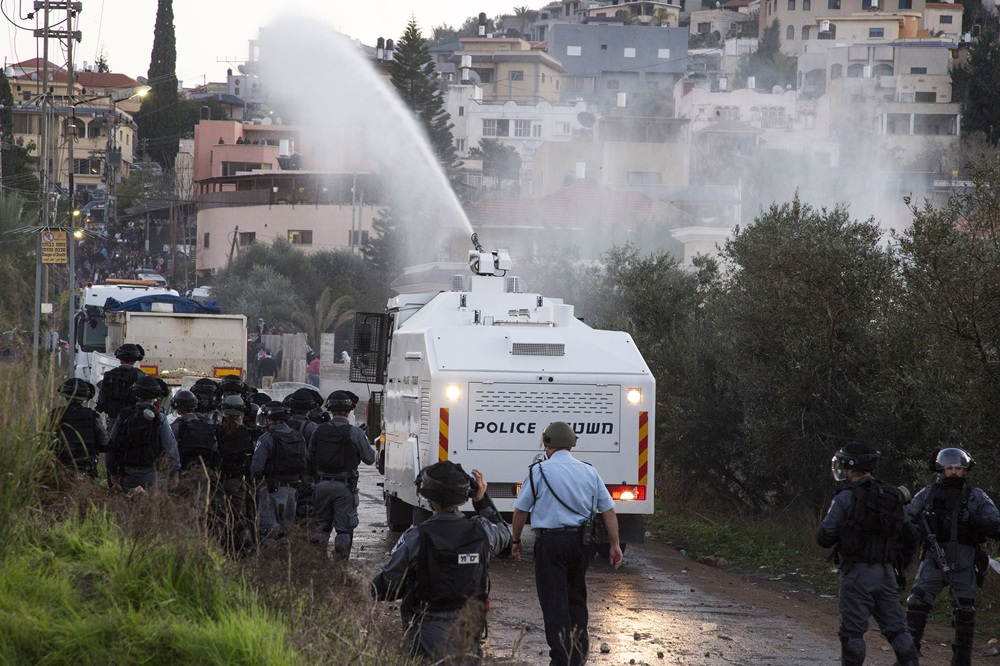
As we write this, in January 2026, there is, theoretically speaking, a ceasefire in place in Gaza. Unfortunately, this does not mean that the war, the genocide, the violence, and horrors have come to a stop as Israel is breaching the ceasefire on a daily basis. Violence and death are still omnipresent in Gaza and the largely overlooked Occupied Westbank. And so are the sights, smells, and sounds that we associate with death: they are everywhere, albeit experienced differently depending on one’s identity, locality, and positionality. These sounds, smells and sights remind us of the multitude of ways in which war and destruction enter daily lives. War habitually comes in the form of deadly violence, destruction, and famine, and makes itself present through ‘daily’ experiences, such as the sounds of the air raid sirens, the smell of death, and the sight of weaponry in the public sphere.
The senses, of course, cannot be separated from broader issues of embodiment. As several scholars working on the senses and embodiment have demonstrated, senses mediate lived reality and help us to understand it, through our bodies, in a political sense (e.g. Howes 1991; Pink 2015). As such, senses are a means of inquiry that help us understand the realities around us and how we feel this bodily. A focus on the senses can tell us something about what smells, sounds or sights make us feel comfortable and secure, which ones alarm us, frighten us, and how such experiences fluctuate over time and/or in different contexts for divergent groups of people. As such, sensory experiences serve as important mediators in violent conflicts.
In this piece we are interested in the ways war and its violence travel from battlefield spaces to civilian spaces. While it is more common to analyse the ways in which the two are blurred, meaning how the war itself invades civil spaces, we will focus on the ways that war, both purposefully and incidentally, enters Palestinian and Israeli spaces through the senses and what political message the senses convey to different actors in divergent contexts. We include several wars, such as the genocidal war in Gaza, but also the other wars Israel has waged and is still waging with other neighbours, such as Lebanon and Iran, and the ongoing violent occupation and increasing annexation of the Westbank. While we will not be able to delve into the relations between these separate fronts, or their own specificities, we will discuss war and violence are mediated through the senses and how sensorial experiences are individually and collectively interpreted.
We focus on two distinct ways in which the senses are attacked and/or affected in war in Israel/Palestine. First, we recognize the intentional use of sensorial attacks where the senses are purposefully weaponized by Israel and its military through the development and use of technologies that attack sight, sound, taste, and smell. Secondly, we will discuss the sensorial ‘byproducts’ of war’s violence and a society’s militarized characteristics. Although often done unintentionally, this also serves to normalize the war and its violence by bringing it into ‘civilian’ spaces. Here smell and sounds also become sources of conflict and security and they start to play a role in the making of the (enemy) other.
During times of emergency, the way we perceive and digest sensorial input is intensified and feelings of (in)security and fear are (re)constructed by, for example, the sounds of sirens warnings that rockets are on their way, but also through the sight of the huge number of weapons that have been flooded into the Israeli civil space in the last two years. For some, feelings of security increase with this sight of weapons, while for many others it is the opposite.
Intentional sensorial warfare
The direct attack on the senses during war is a practice that goes back many years. Think about the use of tear gas by Britain in WWI to help disperse crowds (Feigenbaum 2017), or the use of sound bombs in Brazil’s favela’s, employed by the military police in their ‘pacification’ efforts (Vieira de Oliviera 2019).
Over the last few decades, Israel has put itself on the map as a major player in the sale of defensive security products and knowledge, and as a specialist in technologies of ‘crowd control’, also known as ‘anti-riot’ weaponry, non-lethal, or even less-than-lethal weapons. The Israeli government, as well as several private companies developing such products sell these globally to clients interested in pacifying both external and internal ‘enemies’, such as protesting citizens (Grassiani 2022). Many of such technologies purposely attack the senses; the eyes, the nose, the ears and have been originally developed to disperse crowds in the Occupied Palestinian Territories, such as protests against the occupation and its violent repression. One notorious example of such an Israeli invention is a substance called Skunk, which has a terrible smell that sticks to anything that it encounters. Not only is it sprayed on people themselves, but it is also used as a form of communal punishment as it is sprayed on houses, leaving the stink lingering for a very long time (Joronen and Ghantous 2024). Another example is how Israeli soldiers release diesel fumes from their tanks—originally intended for battlefield camouflage—onto Palestinian civilians.
An additional technology designed by the Israeli military to disperse people is the ‘Scream’, an acoustic weapon also known as the ‘Shofar’, after the religious horn used during Jewish Holidays. It produces a very high-pitched sound that causes dizziness and feelings of nausea and was used by the Israeli military against Palestinian protestors for the first time in 2011.
More recently, during the genocide in Gaza, human rights organizations also reported the use of supersonic boom by Israeli Air Force fighter jets as a mean of deterrence and terrorizing, as well as the use of quadcopters by the Israeli Defence Forces (IDF). These drones fly very close to windows of houses and tents and broadcast horrific sounds of crying babies, attacking dogs, and constant ambulance sirens. These sounds were purposefully broadcasted as a form of psychological warfare, to terrorize people, and to draw them out of their dwellings (Euromed 2025). In an article in the Guardian, two Gazans relate about the ‘sonic hell’ that is the night in Gaza with the ‘high-pitched whirring that Palestinians call “Zanzana”’ of the drones and the loud explosions (Ahmed and Gonzalez Paz 2024). During the day people receive calls from the Israeli military where a computer voice tells them to evacuate. “You’ve got no option to actually talk to a human being, to ask questions, to negotiate’” says Zaharna in the article (Ahmed and Gonzalez Paz 2024).
Importantly, these technologies have all been designed and intended as an attack on the senses; they are intentional weapons developed and used by the Israeli state and its proxy violent actors.
Sensorial byproducts of war and militarization
In addition to intentional attacks, there are also many more mundane, yet very violent ways senses are targeted in civilian spaces. Those most affected in the case of Israel/Palestine are the Palestinians in both Gaza and the Westbank. Regarding Gaza, it is very difficult to speak about any ‘normal’ civilian space, as almost all infrastructures have been destroyed or damaged. There, Gazan civilians narrate extensively about the smell of death around them, as many bodies of the dead have yet to be found under the rubble. As mentioned above, attacks by sound have been deliberately used as a weapon, but the continuous sounds of the artillery attacks and drones around them similarly have a devastating effect on the civilian population. As Nadera Shalhoub-Kevorkian (2017) has demonstrated, the Israeli occupation of Palestine is also an ‘occupation of the senses’. She refers to the different mechanisms in which the senses are controlled by the Israeli occupation, such as through camera’s, checkpoints and other forms of surveillance and how these ‘sensory technologies …manage bodies, language, time and space’ (2017: 1279).
It is important to note that Israeli citizens are also affected by the ongoing war, although we do want to stress that this cannot at all be compared to what is experienced by residents in West bank and Gaza. Israeli civilians are affected by the ongoing war, which permeates both public spaces and private homes, not in the least through the government’s propaganda machine and society’s militarized character. Daily siren warnings signal incoming rockets, and the IDF issues additional alerts directly to citizens’ mobile phones through the Tzeva Adom (Red Colour) system. The sounds and sights of war—especially within Israel—dominate the national atmosphere, with television networks transformed into 24/7 news channels focused solely on war coverage.
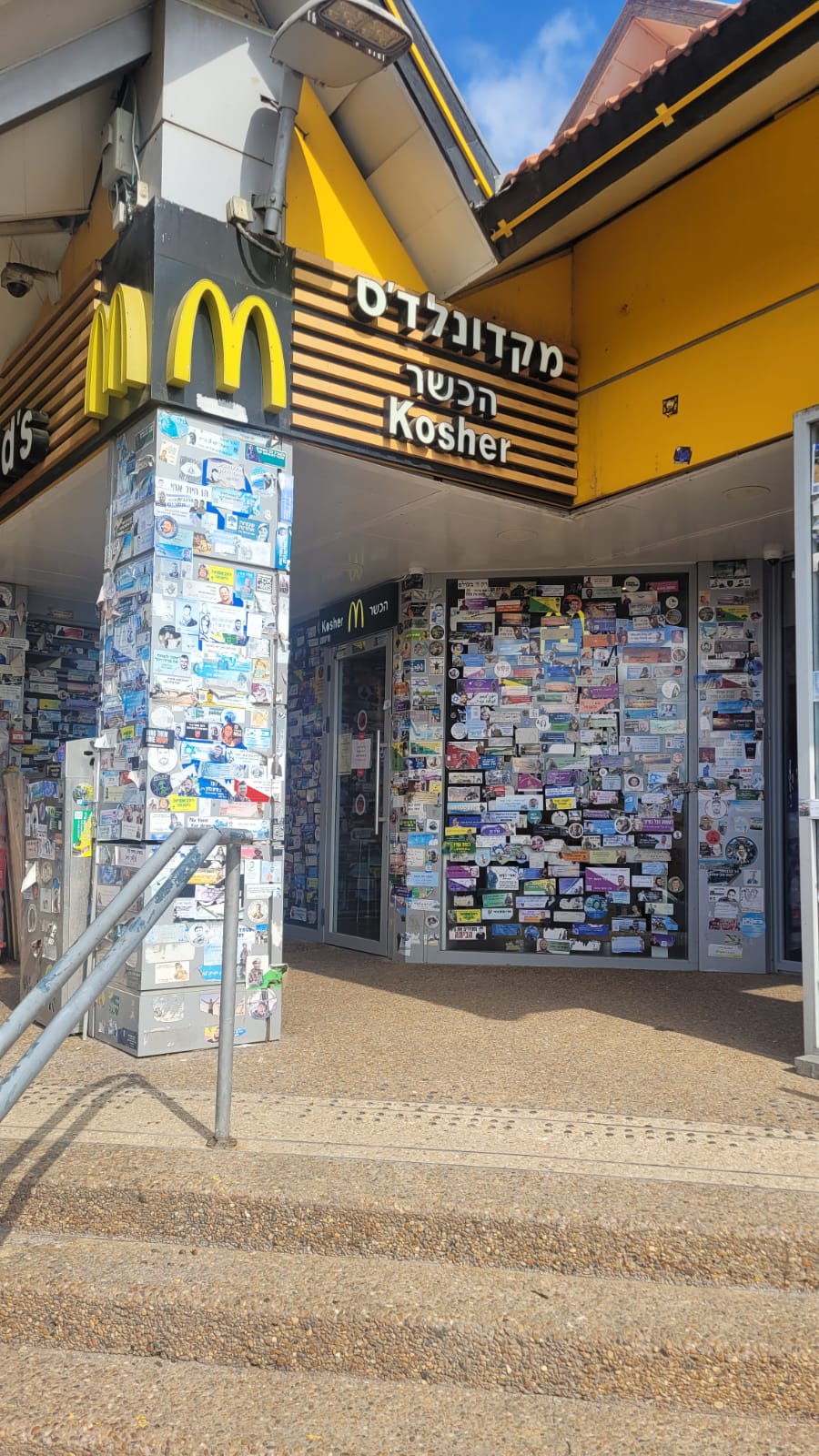
In the streets of Tel Aviv, the presence of conflict is inescapable: stickers commemorating fallen soldiers cover walls and signs, posters of Israeli hostages held in Gaza hang on public buildings, shops, and balconies, and yellow flags symbolizing the campaign to free the hostages flutter from nearly every other passing car. The status of war is also evident through the different sounds of ambulances after the Israeli emergency service changed these after the October 7 attack. This change has been made to prevent public confusion and panic, as the traditional ambulance siren was sometimes mistaken for rocket or air-raid alerts, which led people to believe there was an immediate security threat. To address this, emergency services began using alternative siren tones that are more similar to European or international ambulance sounds and clearly distinguishable from military warning alarms. At the same time, however, these exceptional urban sounds have also intensified the sense of emergency among residents.
It is important to realize that there is a high proximity of Palestinian/Israeli spaces that oftentimes completely overlap, and as such, it is difficult to distinguish between them. For example, Palestinian villages and towns that are located within Israel will have similar sensorial experiences as their Jewish neighbours (for example hearing warning sirens or war helicopters flying by), while at the same time they can have a completely different interpretation of these sounds and sights. For one community such sounds might be reassuring, for others they are threatening. Simultaneously, within Israel’s internationally acknowledged borders, some communities are also excluded from the warning sounds from the state that they are part of. This became painfully clear in April 2024, when the only person hurt by the Iranian attacks on Israel was a Bedouin girl, living in an unrecognized village without an alarm system or a proper shelter. In this case, the sound of silence during war time may be interpreted as very alarming and even terrifying.
With such instances, we are not speaking of the deliberate weaponization of the senses, as we do in Palestinian spaces, but rather of the effect on the senses as a byproduct of the militarization of Israeli public space and the normalization of war—its transformation into an ordinary aspect of daily life. This produces a highly selective perception of war, one centred almost entirely on the Israeli (Jewish) experience. In this experience, Gaza appears distant, portrayed as another world rather than a place merely seventy kilometres away, and for some even less. Israeli news coverage rarely addresses the personal suffering or death of individuals in Gaza, and Gazans are shown up close only in sanitized contexts—on the beach, for instance—when the image can be deemed free of visible violence. Although Israeli soldiers sometimes share photos from the fighting in Gaza on social media, and testimonies are increasingly surfacing that expose extreme violence, such images and stories seldom reach the broader public. Moreover, when Israeli activists attempt to circulate pictures of Palestinian child victims, such as on university campuses, they are frequently censured or punished.
Interestingly, the very sounds that evoke fear and terror among Palestinians often carry reassuring or even uplifting meanings for Israelis. The noises of Israeli aircraft and the Iron Dome anti-missile system are perceived as sounds of protection, embodying both national defence and technological superiority. Even the artillery fire directed toward Gaza—audible to Israelis living near the border and at times even in Tel Aviv—is frequently interpreted as a sign of justified retaliation and military strength. Many Israelis describe having developed an ability to discern between sounds that signal real danger and those that do not.
Concluding remarks
Conflict and war cannot be fully understood through geopolitical or military strategy alone; they must also be grasped as a deeply embodied and sensory reality. By centering the senses, we illustrate how war and violence migrate from the battlefield into the most intimate of civilian spaces, mediating how individuals and communities interpret their lived reality. We draw from the concept of the ‘occupation of the senses,’ by demonstrating that state power is exercised not merely through the management of land and borders, but also through the governance of bodies and sensory perception. Following Judith Butler (2009: 51), we conclude that the sensory regime in Israel/Palestine functions to differentiate ‘the cries we can hear from those we cannot,’ effectively pre-determining whose lives are deemed worthy of grief and defence. The sensory experiences discussed—from the ‘sonic hell’ in Gaza to the ‘uplifting’ sounds of artillery in Israel—serve as somatic evidence of this political chasm. Ultimately, by attending to the smell of fear and the sound of relief, we gain a more nuanced understanding of how war inhabits the body, ensuring that the violence of the conflict is felt—and remembered—long after the sirens fall silent.
Moving forward, we encourage further analysis of the long-term somatic effects of these sensory assaults on both populations. Future research might explore how the ‘olfactory duration’ of substances like Skunk water or the sounds of drones shapes the psychological landscape of survivors long after the physical violence ceases. By the same token, it is essential to analyse how those living under a sensory regime develop modes of ‘sensory resistance’ or alternative environmental interpretations to maintain agency and community. As militaries continue to deploy ‘less-than-lethal’ technologies, there is a pressing need to study how these sensory weapons are being adapted for use against protesters and marginalized groups globally, transforming the human body into an additional domain of war.
Erella Grassiani is Associate Professor at the Department of Anthropology, University of Amsterdam. Her work focuses on the Israeli military, the Israeli security industry and non-state violent groups. She is currently working on a new project on aroboreal nationalism.
Nir Gazit is a senior lecturer at the Department of Behavioral Sciences at the Ruppin Academic Center. His research interests include civil–military relations, political violence, and vigilantism.
References
Ahmed, Kaamil and Ana Lucia Gonzales Paz. 2024. ‘I hate the night’: Life in Gaza amid the incessant sounds of war. https://www.theguardian.com/world/ng-interactive/2024/oct/17/i-hate-the-night-life-in-gaza-amid-the-incessant-sounds-of-war
Butler, J. 2009. Frames of war. When is life grievable? London: Verso Books.
Euromed. 2025. ‘Israel intensifies use of quadcopters to terrorise and target civilians in Gaza, with terrifying sounds and home invasions’. https://euromedmonitor.org/en/article/6747/Israel-intensifies-use-of-quadcopters-to-terrorise-and-target-civilians-in-Gaza,-with-terrifying-sounds-and-home-invasions
Feigenbaum, Anna. 2017. Tear Gas: From the Battlefields of World War I to the Streets of Today. London: Verso Books.
Grassiani, Erella. 2022. “The Shifting Face of the Enemy: ‘Less than Lethal’ Weaponry and the Criminalised Protestor”. Journal of Illicit Economies and Development, 4 (3): 323–36.
Howes, David. 1991. “Sensorial anthropology.” In: Howes, David (ed.) The varieties of sensory experience: A sourcebook in the anthropology of the senses ( 167-191). Toronto: University of Toronto Press.
Joronen, M., & Ghantous, W. (2024). “Weathering violence: Atmospheric materialities and olfactory durations of ‘skunk water’ in Palestine”. Environment and Planning E: Nature and Space, 7(3): 1122-1141.
Pink, Sarah. 2015 Doing sensory ethnography. Sage Publications.
Shalhoub-Kevorkian, N. 2017. “The Occupation of the senses: the prosthetic and aesthetic of state terror”. British Journal of Criminology 57: 1279-1300.
Vieira de Oliveira, Pedro J. S. 2019. “Weaponizing Quietness: Sound Bombs and the Racialization of Noise.” Design and Culture 11 (2): 193–211.
Cite as: Grassiani, E and Gazit, N. 2026. “The Smell of Fear, The Sound of Relief: Sensing War in Israel/Palestine” Focaalblog February 17. https://www.focaalblog.com/2026/02/18/erella-grassiani-and-nir-gazit-the-smell-of-fear-the-sound-of-relief-sensing-war-in-israel-palestine/