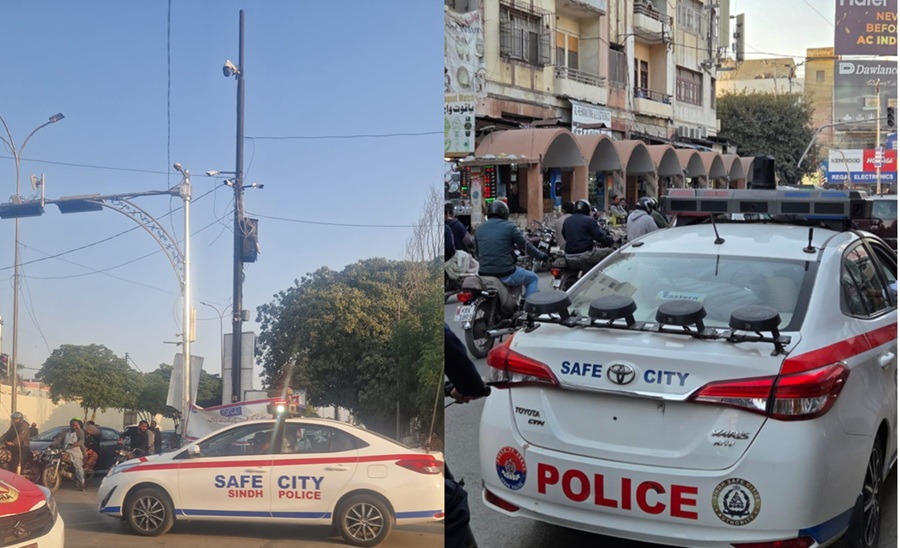
Over the past decade, Pakistan has been steadily expanding its digital security, policing, and surveillance architecture, which is sensorially and materially altering how security is experienced and enacted. The expansion has occurred through an assemblage of securitising narratives, non-transparent deployment of internationally procured smart policing technology used for urban surveillance, and state lawfare targeting digital behaviour through Pakistan’s primary cybercrime law, the Prevention of Electronic Crimes Act (PECA).
This online and offline blend indicates what I refer to as creeping digital authoritarianism in Pakistan. I approach digital authoritarianism as a transdisciplinary concept (explored in detail by Polyakova and Meserole 2019, Roberts and Oosterom 2024), as a strategy of governance that allows regimes, both democratic and authoritarian, to digitally and technologically control, manipulate, censor, surveil, and repress regime opponents and critics, domestic and abroad, for the consolidation of power. As a strategy, digital authoritarianism facilitates and enables the hyper-introduction of mass surveillance technologies, a pattern observed globally, especially in the aftermath of 9/11.
In this text, I attempt to explore the impact of such creeping digital authoritarianism in Pakistan. I specifically focus on the recent developments of smart policing technology (known locally as ‘Safe City’ projects) and the simultaneous weaponisation of legal frameworks designed for policing and punishing online political activity (PECA). These technologies, although seemingly disconnected, have a collective chilling effect on citizen behaviour, which is leading to patterns of self-censorship and self-discipline. I approach the notion of “chilling effect” through Stevens et al. (2023) definition, as an explanation of how the fear, or possibility, of “being watched affects an individual’s conduct, impacting behaviours such as what they saw, what websites they visit, what materials they post, what comments they make, who they interact with, and if, or how, they engage in political opposition.” Although this effect is more evident in PECA-related cases, there is an observable impact on how people experience the world around them, notably in efforts to assemble, mobilise, and resist in the presence of surveillance technology deployed and used in ad hoc ways, with limited public engagement or transparency.
In a rapidly proliferating global era of digital authoritarianism, this human-technology relationship between digital policing (including the arbitrary use of technology alongside legal tools and frameworks) and political participation has wide-ranging consequences, not limited to the undermining of political freedoms. Everyday, routine behaviours—such as posting on digital messaging and social media platforms—are being gradually affected.
Infrastructures of Control
In 2016, the government of Pakistan passed its first and primary cyber and electronic crimes legislation, PECA. Over the past few years, this law has witnessed several amendments, and hundreds of journalists, activists, and critics have faced charges under PECA, under the allegation of “spreading false narratives against state institutions” or “anti-state activities”. Between January and July 2025, an additional 99 cases were reportedly filed under PECA for “anti-state activities”, according to a report drafted by the Ministry of Interior. Some of these 2025 cases were directed at journalists and private citizens accused of making defamatory statements against the Chief Minister of Punjab, Maryam Nawaz, the daughter of a former prime minister and the niece of current prime minister.
In early 2025, Pakistan hastily amended PECA, criminalising the dissemination of “fake and false information”, yet what constitutes “fake and false information” remains undefined. As such, this has significantly increased state control over online and digital activity and created avenues for potential abuse of discretion by law enforcement agents seeking to protect “national interest”. Then, in September 2025, PECA empowered Pakistani telecommunication providers to censor online content deemed to be against “the interest of the glory of Islam” (or blasphemous content) or against the “integrity, security or defence of Pakistan”. It further authorised a federal policing body, the National Cyber Crime Investigation Agency (NCCIA), to investigate and arrest those accused of posting or publishing content or opinions reportedly against the interest of the state and key state institutions, chiefly the military and the judiciary.
Last year, Amnesty International published an extensive report detailing the “notable abuses” that internationally procured and sourced technologies are enabling in Pakistan, including mass surveillance and unlawful internet censorship. Part of this surveillance involves the monitoring of digital and social media platforms, weaponised through PECA.
The “Digital Dehshatgard”
Pakistan’s ascent towards digital authoritarianism has been carefully shaped by securitising narratives, with surveillance infrastructure and institutions gaining public legitimacy through the state-constructed risk of the so-called “digital dehshatgard (terrorist)”. The state’s introduction of the “digital terrorist” came in 2024, a label assigned to political opponents and activists reliant upon digital and social media platforms to generate critique against the armed forces and other state institutions. This narrative-construction helped set the stage for coordinated repression of opponents, and efforts towards “developing a strong national narrative” that would accompany media strategies, target disinformation, propaganda, and misinformation, while “positively influencing the younger generation” (The Express Tribune 2025).
Meanwhile, the procurement and development of digital surveillance infrastructure have been intricately connected to national growth and prosperity. Such technology is deemed vital for Pakistan’s “Digital Pakistan” vision, a strategy that seeks to create a digital ecosystem with information and communication technologies deployed across sectors. The introduction of surveillance technology across sectors is inevitable in today’s tech-dependent world, but risks fuelling digital authoritarianism. Pakistan’s attempts to control the internet, digital platforms, and information and communications systems, have escalated in the aftermath of a political fall-out between former prime minister Imran Khan’s political party (the Pakistan Tehreek-e-Insaaf) and the military, since 2023. These attempts gained traction in May 2025, following armed conflict with India, which saw widespread disinformation, including the use of AI-generated deepfakes, on both sides of the border.
Over time, securitised narrative-construction has carefully sought to legitimise the state’s encroachment into the digital realm, compromising the rights of social media users and undermining the security of activists, both online and offline.
The Legal Grind
In addition to the periodic censorship of social media platforms (including X and YouTube), banning the use of VPNs, or temporary shutdowns that throttle the internet, the state controls and monitors digital and online behaviour through PECA, which criminalizes free speech and uses broad language to equate online criticism with “cyber terrorism”. The law is frequently applied alongside the Anti-Terrorism Act, Pakistan’s primary counterterrorism legislation. This ensures that those who are charged under PECA and the ATA collectively can be tried in anti-terrorism courts, special courts that are created to avoid following due process and fair trial procedures. Such frameworks authorise state institutions such as the Pakistan Telecommunication Authority and the NCCIA, to survey and investigate online speech, censor content, and punish critical thought.
These institutions are further bolstered by their surveillance capacity, consisting of local social media cells that monitor online accounts and digital behaviours. This surveillance enables law enforcement agents to “build cases”, for which agencies may rely upon “crowd-sourced surveillance” (social media users who may be rewarded for registering police complaints against other users for posting “offensive” material online) or in-house complainants.
A recent infamous conviction of two lawyers, Imaan Mazari and Hadi Ali Chatha in January 2026, reveals the practice of relying upon in-house complainants. In this case, two human rights lawyers, Imaan and Hadi, were charged under PECA for tweets condemning the practice of enforced disappearances in Pakistan. The case was filed by an officer of the NCCIA itself. This has a direct bearing on how targets of this law experience insecurity because of such digital surveillance and the legal grind that follows.
As journalist Farieha Aziz (2025) writes, empowered by PECA, these agencies use technology for surveillance, monitoring, and subsequently punishing, subjecting their targets to “bail hearings, repeated court appearances, the stigma of being labelled ‘’anti-state’, and the constant threat of a lingering case—often without trial”. Through lengthy ordeals within and outside of the courtroom, state critics experience the violence of unregulated and unchecked technological and digital surveillance material.
The high-profile case and subsequent conviction of Imaan and Hadi—who have been sentenced for a total of 17 years in prison for their posts on X—shows how technology and law can work in tandem to realise digital authoritarianism in the absence of adequate safeguards and regulatory mechanisms. In other words, material technologies can be harnessed to filter and flag content that can later be criminalised under a state’s legal architecture. This combination of the material and the legal, if designed to prioritize regime interests over individual rights and liberties, paves the way for repression through hybrid online and offline monitoring.
“Leave Your Phone Outside”
The combination of PECA and various internet governance strategies has resulted in what activists on the ground call “process as punishment” (Aziz 2025). In the words of one activist who spoke to me in confidence, PECA (and accompanying laws) are usually applied by state agencies after a suspect (usually, an opponent or a critic) has been illegally detained by unknown agents of the state with their whereabouts not disclosed, typically based on social media content. The “disappearance” follows the formal registration of a police complaint, which may be dictated to the police “on the phone” by other agents of the state or by unknown complainants that may be patronised by state institutions. The registration of the complaint allows the suspect to be formally charged and for the investigation to begin. The whereabouts of the suspect are then disclosed, after the complaint has been registered. During this time, the suspect’s devices may be taken from them and unlocked through coercion. No warrants are obtained for such a search.
Reports of digital surveillance processes have become common over the past few years, resulting in journalists and activists critical of the state to self-censor and self-discipline. The most obvious example of this is the increasingly widespread use of the “disappearing messages” function on WhatsApp, a practice notably adopted by journalists, activists, and lawyers, to limit the information and communication that can be used by authorities as evidence to incriminate “suspects” under PECA, should their devices be searched, as they frequently are once an individual is taken into custody.
Even beyond users likely to be criminalized under PECA, civilians have told me in private conversations that they are less likely to forward messages received through WhatsApp since the law was introduced. Lawyer Rida Hosain (2025) has similarly explained that “Even clicking ‘repost’ on content that the state finds objectionable can subject an individual to criminal persecution.”
Beyond these platforms and messaging apps, insecurity is also felt by critics in their routine usage of electronic devices, such as their phones. It is common knowledge that after reports of state surveillance through the Lawful Intercept Management System (Amnesty International 2025), state critics and opponents are increasingly wary of their digital messaging platforms coming under state scrutiny. Not only are dissidents applying the “disappearing messages” function to their messaging platforms, but extra efforts are also made to physically distance themselves from such gadgets during meetings and conversations considered to be of “sensitive” nature.
During my fieldwork in Pakistan, respondents told me that it was common practice in some official spaces for civilians to leave their phones outside of meeting rooms or be requested to do so. In at least one interview with a politician, the gentleman himself tucked his phones deep inside his sofa cushions to potentially avoid our conversation being audio-recorded through his devices, demonstrating the chilling effect of creeping digital authoritarianism.
Other respondents have similarly revealed switching their WhatsApp over to international numbers, when they are able to, as correspondence from local numbers may be easy to track by the state through the telecommunications authority.
Eyes on the Road
While PECA serves to criminalise dissent online and through information and communication technologies, the Peaceful Assembly and Public Order (PAPO) Act has criminalised protest and peaceful assembly in the capital city of Islamabad. Upon being hastily passed in September 2024, PAPO has been used to charge political opponents and supporters of the PTI (Imran Khan’s party). Enabling such legal repression of urban resistance and the right to protest are expansive and expensive technological projects, known as “Safe City” projects.
Safe City projects are essentially digital surveillance and security infrastructure that seek to enhance policing and law enforcement in Pakistan through technological advancements, and the collection of vast quantities of data (Hong 2022). Pakistani authorities refer to implementation of “safe city” infrastructure as necessary for “effectively combating terrorism,” in response to an “emergent situation”. In other words, technological advancements are justified as a response to a range of “internal threats”, from domestic terrorism to civil unrest and political protest, depending upon how governments choose to label anti-state agitation. In this way, technology and politics are co-produced in the field of security governance.
Even though the procurement and deployment of such technology imply urgency, risk, and threat to the nation, governments overseeing these projects have been largely secretive and guarded about details and documentation about this infrastructure. However, it is generally understood that the procurement of such smart policing technology has included material equipped with artificial intelligence, webcams, bodycams, facial recognition technology, voice recognition technology, and more.
By framing the procurement of such technology as relevant for countering terrorism and “emergent situations”, securitising narratives are used to justify lucrative and expensive architecture, avoiding debates around the global supply chains and partnerships that enable this process and aid digital authoritarianism. This way, any debate on harms that may be associated with or produced by this new surveillance technology, is avoided, as technological advancement, including the incorporation of AI in policing and surveillance, becomes integral to national stability and progress.
What is also avoided is a critical consideration of how smart policing technology may be deployed through colonial frames, tropes, and logics, that are ingrained into postcolonial policing and pacification programmes. As is already known, population control and monitoring were crucial for imperial interests and the protection of the colonial regime in British India (before independence in 1947). The Safe City infrastructure in Pakistan is similarly seen as critical for population control.
In an interview with this author, an official overseeing one such project boasted that Safe City officers were “custodians of people’s data”, an alarming admission for a country still lacks data protection laws and allows internationally-procured technology to collect vast amounts of data on civilians, hoping to use this data as “inputs for safe city solutions” (Hong 2022).
While there exists a draft of a Personal Data Protection Bill since 2023, it has yet to be passed, which means there are no legal safeguards in place to determine how personal data collected through safe city technology will be stored, for how long, under what conditions, and to whom it will be accessible. Similarly, little protection is available to “suspects” in terms of how their data is extracted by law enforcement authorities, should they be charged under the PECA law.
Thus, digital control practices and the lack of legal safeguards have a chilling effect, with observable behavioural changes, especially in the work of journalists, lawyers, activists, and dissidents.
For example, public order policing, protests, and collective mobilization have been controlled and punished using both PECA as well as surveillance footage collected through Safe City cameras. During protests led by opponents critical of the military establishment’s removal of the former prime minister Imran Khan in May 2023, for instance, Safe City surveillance cameras were used by the police to identify protestors and political leaders.
As interviewees informed me after these protests, the military – a key player in Pakistan’s politics and law enforcement–had direct access to such surveillance data, raising concerns about the political weaponisation of such expansive technology. As per the police’s own admission, most of the arrests that were carried out in the aftermath of these protests were of individuals identified through CCTV cameras of the Safe City Authority in Punjab, aided by geotagging.
These arrests—which have included high profile political figures (including women and the former prime minister, Khan)—have deterred large-scale political demonstrations over the past two years, showing the impact of technologically enabled surveillance practices on political opposition, a chilling effect.
Separately, however, the use of technology for repression is also condemned by certain law enforcement officials. In the aftermath of the arrests of PTI workers and activists, when the police were asked by their military counterparts to “pick up” civilians identified through geo-tagging and Safe City cameras, in private conversations some police officials expressed feeling “uneasy” by the demands being placed on them.
It is thus worth considering what pressures such techno-authoritarianism places upon state agents themselves, who may not always be united in their perceptions or their discretion.
Buy First, Justify Later?
Pakistan is becoming a prominent consumer in the global marketplace of surveillance and censorship technology, but details of how this technology is procured, delivered, and deployed emerge only gradually, if at all. The logic is simple: “if it is available and can be bought, it should be bought.” Such technological advancement is presented as essential for Pakistan’s growth, security, and associated with the nation’s progress, thus it has seemingly acquired substantial public legitimacy.
While the state’s use of digital surveillance technology for policing protests and public assemblies has created a deterrence in street mobilisation in Pakistan, the extent to which it impacts civilians sensorially is hard to quantify as this technology is still being developed and deployed. The onset of digital authoritarianism in the country, however, is undeniable. It is grounded in human and non-human assemblages of policing institutions, legal frameworks, tools and technologies, and security-centric narratives, all of which are having a chilling effect on citizen’s behaviour.
In the absence of adequate legal safeguards or independent oversight mechanisms, technological advancements risk digital infrastructural harm, not limited to the undermining of personal freedoms.
Zoha Waseem is an Associate Professor in Criminology at the University of Warwick. She is interested in policing, law enforcement, digitalization, and urban (in)security with a focus on South Asia.
References
Ahmed, Z., Yilmaz, I., Akbarzadeh, S., and Bashirov, D. 2025. Contestations of Internet Governance and Digital Authoritarianism in Pakistan. International Journal of Politics, Culture, and Society, 38, 499-526.
Amnesty International. 2025. Shadows of Control: Censorship and Mass Surveillance in Pakistan. Available at: https://www.amnesty.org/en/documents/asa33/0206/2025/en/.
Aziz, F. 2026. Imaan-Hadi Conviction Marks the Death of Fair Trial in Pakistan. Dissent Today. Available at: https://dissenttoday.net/opinion/how-imaan-hadi-conviction-marks-the-death-of-fair-trial-in-pakistan.
Express Tribune, 2025. PM Leads high-level meeting to strengthen national narrative against terrorism. The Express Tribune. Available at: https://tribune.com.pk/story/2536922/pm-leads-high-level-meeting-to-strengthen-national-narrative-against-terrorism.
Hong, C. 2022. “Safe Cities” in Pakistan: Knowledge Infrastructures, Urban Planning, and the Security State. Antipode, 54(5), 1476-1496.
Hosain, R. 2026. Imaan-Hadi Arrest and a State at War with Dissent. Dawn. Available at: https://www.dawn.com/news/1968787/imaan-hadi-arrest-and-a-state-at-war-with-dissent.
Polyakova, A. and Meserole, C. 2019. Exporting digital authoritarianism: The Russian and Chinese Models. Policy Brief, Democracy and Disorder Series, 1-22. https://www.brookings.edu/wp-content/uploads/2019/08/FP_20190827_digital_authoritarianism_polyakova_meserole.pdf.
Roberts, T. and Oosterom, M. 2024. Digital Authoritarianism: A Systematic Literature Review. Information Technology for Development, 4, 860-884.
Stevens, A., Fussey, P., Murray, D., Hove, K., and Saki, O. 2023. ‘I Started Seeing Shadows Everywhere’: The Diverse Chilling Effects of Surveillance in Zimbabwe. Big Data and Society. DOI: 10.1177/20539517231158631.
Cite as: Wasseem, Z. 2026. “Creeping Digital Authoritarianism and (In)Security in Pakistan” Focaalblog April 14. https://www.focaalblog.com/2026/04/14/zoha-waseem-creeping-digital-authoritarianism-and-insecurity-in-pakistan/