Tag Archives: Turkey

Ståle Knudsen: The Invisible Hard Toilers of The Green Transition in The Maritime Sector: Shipyard Workers in Turkey

Image 1: Narrow spaces for shipyards in the bay of Tuzla. Photo by author

How do companies handle responsibilities to people and the environment when they operate abroad? What tools do they use, and what are the effects? These have been throughgoing concerns in my work during the last 10-15 years of research in Turkey. I have investigated how the ‘corporate social responsibility’ work of Austrian energy company OMV helped them gain social license to operate in a community in Turkey, and how the Norwegian energy company Statkraft sought to address ‘project affected people’ in a hydropower project through ‘IFC performance standards’. This research agenda culminated in the comparative project Energethics and the book Corporate Social Responsibility and the Paradoxes of State Capitalism (Knudsen 2023). When I realized a few years back that the construction of Norwegian boats in Turkey had become big business, I became curious about how Norwegian boat owners and state institutions handled the ethical dilemma involved in the praiseworthy effort of constructing ‘green ships’ under less praiseworthy labour conditions in Turkey. How is responsibility handled in such a context?

Dependent on Turkish shipyards

The green shift in the Norwegian maritime sector is largely considered a success. The electrification of car ferry connections is particularly highlighted: there are now over 80 battery ferries in operation in Norway. The authorities have provided significant support for this shift in order to achieve goals for reducing CO2 emissions, but also to position the Norwegian maritime industry for export within a new fossil-free maritime future. Through direct support via state institutions such as ENOVA (tasked to facilitate the energy transition in Norway) and Innovation Norway (promoting Norwegian export), ‘battery surcharges’ on ferry concessions from the Norwegian Public Roads Administration, and loan guarantee support from Eksfin (Eksport Finance Norway), the Norwegian authorities have made this green transition possible. However, Norwegian shipyards have not had the capacity to build all these new green boats and have been dependent on foreign shipyards, especially in Turkey. In addition, Norwegian shipowners save 10-30% when building at Turkish shipyards. In 2021, Turkish shipyards surpassed Norwegian shipyards in terms of volume of Norwegian newbuilds.

One may reasonably claim that the green shift in the maritime sector in Norway is partly being carried by underpaid and accident-prone Turkish workers. With 100,000 workers in the Turkish shipyard industry and an unclear social and political landscape, it is very difficult for shipping companies to clarify whether the conditions for the workers are satisfactory. With a background as a social anthropologist with good knowledge of Turkey, I have written a comprehensive report that attempts to deepen and nuance knowledge about the conditions at shipyards in Turkey. This blog post is based on that report.

Subcontractors

The most important thing to know about the shipyard industry in Turkey is that 80-90% of the workforce works for subcontractors. These workers are often migrant workers from other parts of Turkey, they work on short contracts, change shipyards frequently, live in overcrowded ‘bachelor dormitories’, and feel most connected to other workers from the same hometown and linguistic-ethnic group (many workers are Turkish Kurds and Arabs). These workers are paid daily wages, and as seasonal workers they prefer to work as much as possible. Some manage to establish small businesses themselves that have contracts with the shipyards, but most struggle with poor and unstable wages and are exposed to dangerous working conditions in many shipyards.
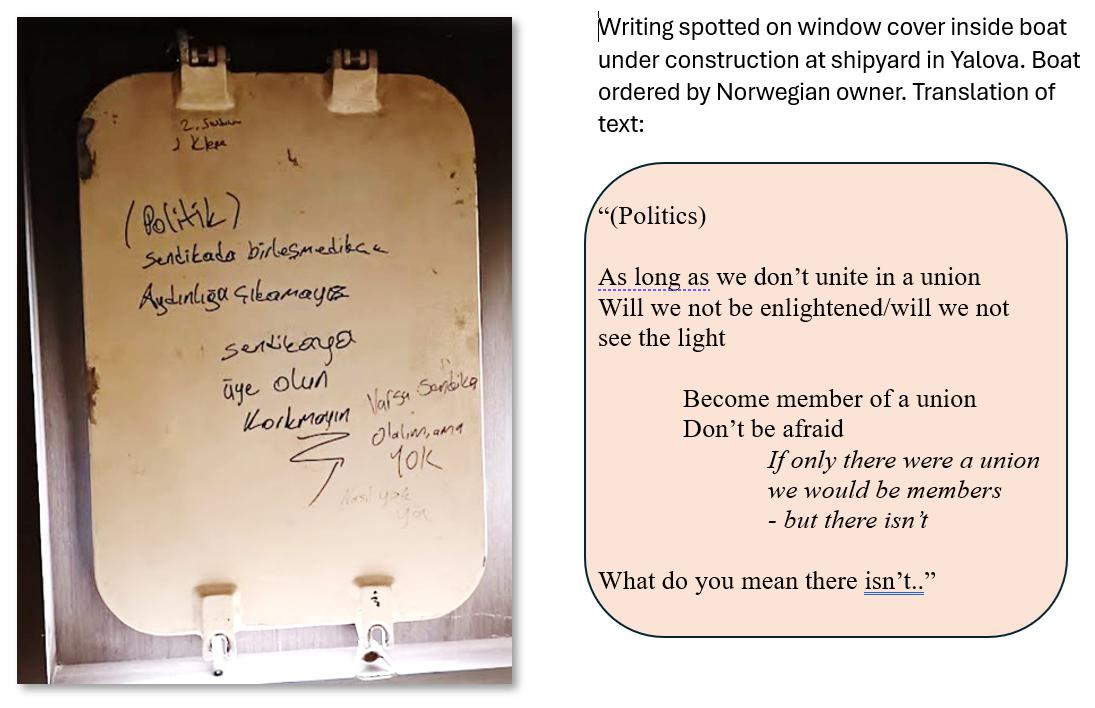
Image 2: The struggle of unions. Photo by author

Under such conditions, it is difficult for workers to cooperate and organize. It also does not help that laws and regulations in Turkey make effective union organizing in this sector difficult. There are two active unions at the shipyards in Turkey. The largest, DOK Gemi-İş, is politically and religiously conservative and relatively close to the authorities. They organize workers ‘on the floor’ who are directly employed by the shipyards, and have collective agreements with many shipyards. The other union, Limter-İş, has very few members, is politically positioned far out on the left, and mainly organizes workers employed by subcontractors. They often take an active role in coordinating and leading the many spontaneous protests that arise in response to lack of pay or in reaction to fatal accidents. Some shipyards actively oppose unions, and one of the largest shipyards, which also builds a lot for Norwegian shipowners, has even forced the conservative union out of their shipyard.

While the workers are very poorly organized, the employer side is represented by three organizations with significant resources and great influence with the political environment and authorities. In contrast to the union representatives, employees in the employer organizations are highly educated, have good command of English, and often represent the shipyards in international contexts. Recently, however, the Turkish Competition Authority opened an investigation into two of these organizations as well as 33 shipyards for alleged collusion to hold down the wages of shipyard workers.

Occupational accidents

Turkish shipyards have been notorious for many accidents and deaths. There are various explanations for this. While shipyard owners and their organizations, the conservative trade union, authorities and some academics point to a lack of education and ‘culture’, the radical trade union and other academics focus on structural reasons, particularly related to government policies and the large subcontracting sector. In the report, I argue that both of these explanations are valid. Since 2010, a number of measures have also been implemented that have improved conditions to some extent. It is likely that pressure from Norwegian shipowners has contributed to this. Nevertheless, the death toll has been on the rise again. According to the NGO Health and Safety Labour Watch/Turkey (İSİG), there were 19 and 17 deaths in fatal accidents at shipyards in 2022 and 2023 respectively (no official registration). By 2025, the number had fallen to ten deaths. However, these numbers exclude accidents in the large and often informal side industries. In December 2025, at one O’clock at night, a 16-year-old youth died in a fire in a workshop located in the ship industry site in Tuzla in the outskirts of Istanbul. They were producing pumps for ships.

What are Norwegian shipowners and authorities doing?

Many Norwegian shipowners have received loans from Eksfin for their construction projects in Turkey. In such cases, the shipowners must comply with a detailed guide for assessing employee rights at shipyards. This involves extensive ‘due diligence’ and follow-up inspections, which gives Eksfin and the shipowners ample opportunity to guide and, if necessary, put pressure on the shipyards.

Although there are probably significant differences between the shipyards, it is also difficult to know which shipyards are preferable. It also does not help that Norwegian shipowners who have boats built in Turkey rarely mention this in their reports in accordance with the Norwegian Transparency Act. Some shipowners with large construction contracts at Turkish shipyards do not mention at all that they build a lot in Turkey. At the same time, it is also the case that neither the Norwegian Public Roads Administration, ENOVA nor Innovation Norway set any special requirements for due diligence assessments. It is time for Norwegian shipowners and other relevant institutions to take a closer look at how they can together contribute to ensuring that the conditions at the shipyards they use in Turkey are satisfactory.

The limits of soft governance

Standards, certification and audits as operationalized by for example Eksfin may have some impact on labour conditions and safety, but these tools only enable insight into and influence over certain ‘immediate’ concerns, some of which are results of deeper dynamics which are beyond the reach of these tools. The subcontracting system, for instance, is one major driver for many of the challenges in the sector. However, the way shipbuilding is socially organized is beyond the reach of standards, certification and audits. Thus, the structural frames that ensure that the subcontracting system is reproduced, including the politics upholding those frames, and the capitalist system itself, are not addressed. Rather, the particular way of organizing capitalism in Turkey may indirectly be legitimized through these exercises.


Ståle Knudsen is professor at Department of Social Anthropology, University of Bergen where he pursues work in political ecology based on ethnographic work in Turkey and Norway. Recent thematic interests include energy, aquaculture, shipbuilding and corporate responsibility.


References

Knudsen, Ståle. (ed.)(2023). Corporate Social Responsibility and the Paradoxes of State Capitalism. Berghahn Books.


Cite as: Knudsen, S. 2026. “The Invisible Hard Toilers of The Green Transition in The Maritime Sector: Shipyard Workers in Turkey” Focaalblog January 28. https://www.focaalblog.com/2026/01/28/stale-knudsen-the-invisible-hard-toilers-of-the-green-transition-in-the-maritime-sector-shipyard-workers-in-turkey/
Chris Hann: Thanks, Türkiye

How does Recep Tayyip Erdoğan do it? In Spring 2023, the economy is in a mess, inflation accelerating, and corruption rife. Government aid in the wake of a devastating earthquake in Southeastern Anatolia on 6th February was badly mismanaged. The natural disaster revealed the structural shortcomings of poorly regulated construction and real-estate markets, symptomatic of a political economy given over to short-term profit maximization. In the elections just a few months later, the opposition came together behind an attractive and eloquent candidate, the economist Kemal Kılıçdaroğlu. Yet in the second round of voting on 28th May the incumbent triumphed by over two million votes.

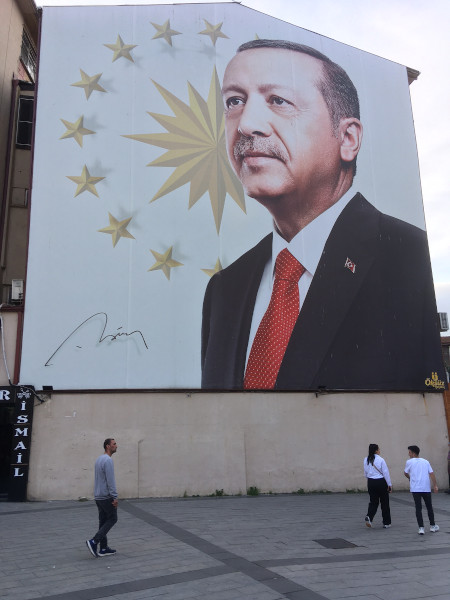
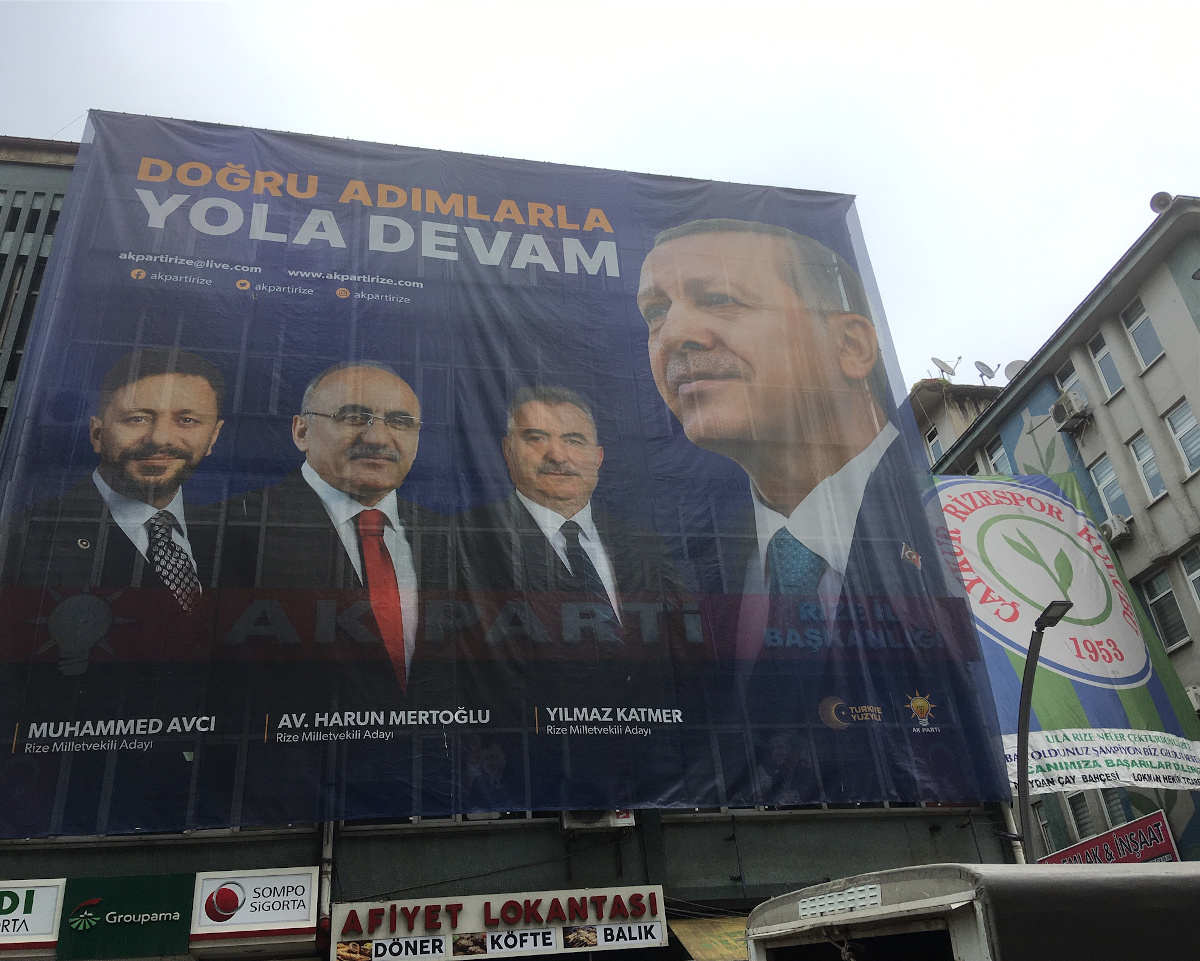
Image 1: Electoral poster for Erdoğan and his AKP party in central Rize, photo by author

If the polls ahead of the election were close enough to rattle Erdoğan, he betrayed no outward sign of discomfort. His imperturbable authority is one of his principal strengths. Critics highlight his control over swathes of the media and the mechanisms through which his Justice and Development Party (AKP) is able influence the votes of state employees. They point to illiberal policies on gender issues (particularly toward the LGTBQ community), arbitrary incarcerations such as that of philanthropist Osman Kavala, and more generally, the repression of a civil society. In his successful mobilization of Islamic sentiment against a secular “deep state” since the closing years of the last century, Erdoğan is categorized by many as a crude populist. In the centenary year of the republic established by Mustafa Kemal (later known as Atatürk), some critics allege that in his two decades of power Erdoğan has fatally undermined the fundamental principles of the secular state. With his AKP party dominating the newly elected National Assembly, the prospect of a more liberal form of democracy emerging in the next five years is tantamount to zero.  

Yet within a week of victory, before formally embarking on his new five-year term, Erdoğan made a well-publicized visit to the Atatürk Mausoleum in Ankara. He lauded the transformations of the inter-war decades, following the collapse of the Ottoman Empire. The extraordinarily high turnout at the May elections, he declared, had once again demonstrated the vitality of the country’s democracy. This ritual occasion was reported in the official media as a ziyaret, a word that has religious connotations in Islam. Has Turkish nationalism been grafted onto Islam such that the mausoleum of Atatürk is now analogous to a religious shrine?

Islamic Capitalism

Erdoğan made his name as a Mayor of Istanbul, but nowadays he regularly loses the biggest cities. He owes his re-election primarily to constituencies in inner Anatolia – including even voters directly affected by the February quake. By unleashing market forces, Erdoğan has continued policies that date back to the very beginning of electoral politics in the wake of the Second World War. Market capitalism struggled to displace a “Jacobin” (Duzgun 2022) variant of modernity which emerged in the late Ottoman era and in secular form continued to dominate in the Kemalist republic. In the changing international climate of the 1980s, Turgut Özal abandoned protectionism and embarked on neoliberal privatizations of state industries. Özal’s Motherland Party demonstrated that capitalism could thrive in an Islamic ideological frame. There were further hiccups and another military intervention in 1997, the Motherland Party faded along with earlier “religious” parties, but in the new century the AKP has sealed the victory of Islamic capitalism: albeit in a political framework that has become ever more authoritarian in the last decade.

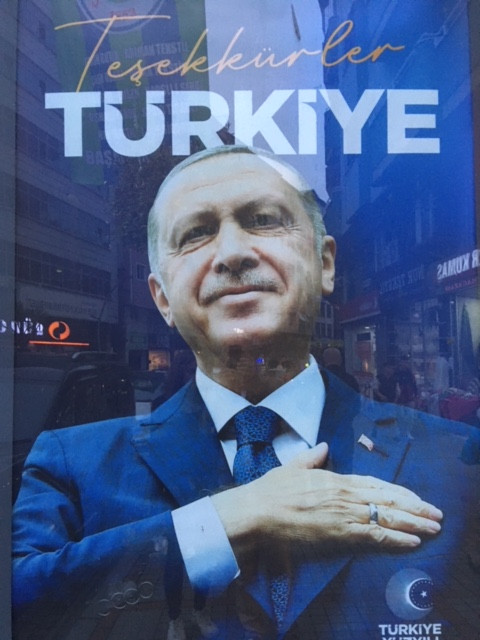
Image 2: “Thanks Türkiye” electoral poster for Erdoğan in Rize, photo by author

What does this mean in practice? It means first of all that the middle classes enjoy greater opportunities outside the public sector and that an entrepreneurial spirit is encouraged in town and countryside alike (For discussion and an anthropological analysis of how small businesses operate in a provincial city, see Deniz 2021). But incentives to invest and consume privately have been accompanied by huge public investments, both in material infrastructure (above all roads) and in social security. Public health provision has improved immeasurably and this contributes significantly to the electoral appeal of the AKP. These welfare accomplishments are seldom acknowledged by the regime’s liberal critics. But critics are right to insist that, far from stepping aside to allow private property and market forces to determine outcomes within an impartial legal framework, the AKP intervenes at every level to enable the proliferation of cronyism and rent-taking (Karadag 2013). Following the bloody attempt by sections of the armed forces and others to depose Erdoğan in 2016 and the transition thereafter from a parliamentary to a presidential system, the patron-client networks of the AKP have become a stranglehold across most of the country – even where a semblance of negotiating “agency” to citizens is allowed (see Evren 2022 for an analysis of how AKP-dominated networks shape the transformation of nature as well as property and power relations locally in a valley of northeast Anatolia).    

Nationalism and Ethnicity

Both presidential candidates played the national card. Kemal Kılıçdaroğlu proved savvy in his use of social media, whipping up anti-immigrant sentiment on Youtube in a vain effort to make good his deficit after the first round of elections on May 14th. He had little choice. The party he has led since 2010 is the Republican People’s Party (CHP), which dates back to the era of Atatürk. Traditionally a statist party (“Jacobin” in the political Marxist analysis of Duzgun 2022), the CHP has a much smaller membership than the AKP and cannot generate the donations that might enable it to compete more effectively. In the present conjuncture of Islamic crony capitalism, why would any Turkish businessman be inclined to support the opposition? In the run-up to the elections, the public sphere was awash with posters of President Erdoğan.

Fuller explanations of the outcome of the elections require closer engagement with the decline in ethnic diversity since the emergence of the republic. The Ottomans ruled over an extraordinarily multicultural empire, but nationalist modernization has forged Türkiye (as the country now likes to be known in English) gradually into a more homogenous society. However, some forms of diversity have proved resilient. A common religion and similar experiences of socio-economic transformation have not been enough to endear Kurds to the Kemalist Turkish nation-state. Türkiye’s largest ethnic minority comprises roughly fifteen million members. Although significant internal differentiation persists, generations of conflict have consolidated national consciousness. Kurds outnumber ethnic Turks across most of southeast Anatolia. Many have migrated to the big cities of the west and to Europe in order to improve their economic situation (but not all mobility has been voluntary). Even if they lose their language in the second or third generation, most diaspora Kurds will vote for their own political party whenever they have an opportunity to do so, and seldom for the AKP.

Image 3: Electoral poster for Erdoğan in central Rize, photo by author

The East Black Sea Coast

These variables play out differently in other regions with smaller minorities and quite different economic conditions. In accordance with the Lausanne agreements, the Pontic Greeks of the Black Sea coast were deported in 1923 (an instance of ethnic cleansing avant la lettre). Their material traces have receded steadily ever since. The splendid Hagia Sophia in Trebizond (today’s Trabzon) functioned for centuries as a mosque before being carefully restored by the Kemalists and opened as a museum in 1964. It was converted back into a mosque in 2013.

The family of Recep Tayyip Erdoğan comes from Rize, which is the last major city on Türkiye’s Black Sea coast, roughly half way between Trebizond and the Georgian border. Its population has doubled to over 100,000 in recent decades and it now boasts a university named after President Erdoğan. In this province, he won over 75% of the vote on 28th May. Most of the east Black Sea coast region is historically conservative and pious. Its subsistence-oriented rural economy was radically altered by changed by the expansion of tea as a cash crop from the 1950s (see Bellér-Hann and Hann 2000). The tea industry was an example of top-down Kemalist modernization, but peasant beneficiaries showed little gratitude and did not change their world view. The CHP has never done well here; in some towns and villages, the principal opposition to AKP comes not from CHP but from extreme nationalists.

But the province of Rize is not homogenous. An hour to the east in the direction of the border crossing to Georgia at Sarp, languages related to Georgian and Armenian are still spoken in the villages. The number of speakers is small and declining (probably below 100,000). In the absence of state support, the prospects for the survival of Lazi and Hemşinli cultural distinctiveness are poor. Unlike the case of the Kurds, ethnicity here does not appear to have an impact on party affiliation and voting behaviour.

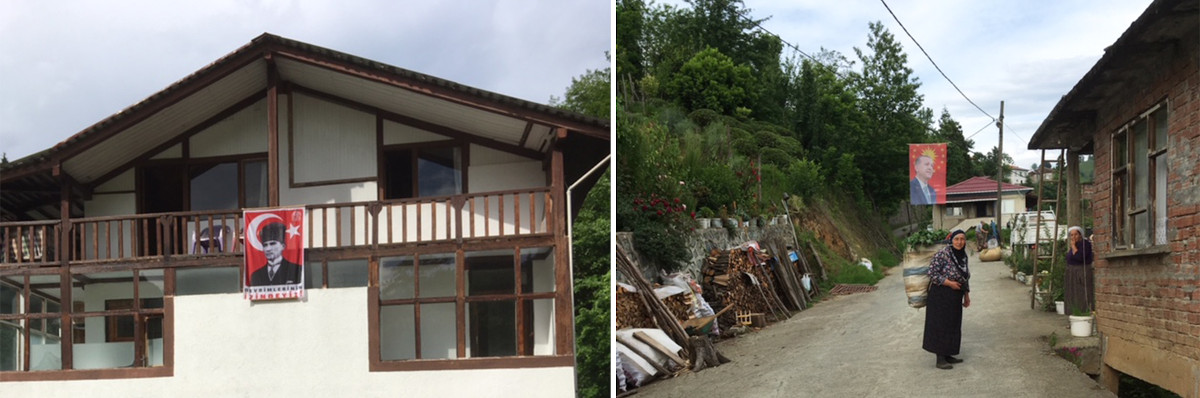
However, some minority citizens distance themselves from the Turks of Rize through their pride in being progressive in the Kemalist republican sense. They attach high value to a secular education and social mobility, which almost always implies geographical mobility. A few committed individuals hang posters of Atatürk on their balconies to proclaim their abiding loyalty to the revolutionary secular traditions of the Kemalists. In this way, the man who dominated the public sphere in the last century maintains a presence; but in this election period, it is a modest one in comparison with the Erdoğan images.

This progressive element is strong in the town of Fındıklı, with a population of barely 10,000, which is still run by the CHP. Erdoğan posters are less conspicuous here. In the first round, Fındıklı was the only district of Rize province in which the incumbent President failed to receive 50% of the votes cast. Recently, a new recreational zone including a Lazi cultural centre was created between the sea and the motorway that has transformed the ecology of the littoral (see Genç and Şendeniz 2022). In other towns of Rize and Trebizond, such an initiative would likely have been named after Erdoğan. That was out of the question here. There was pressure from above to bestow the name National Park, but it was finally named Atatürk Park.

Image 4: (Left) Poster of Atatürk in rural Çamlıhemşin and (Right) electoral poster for Erdoğan in a country lane in Fındıklı, photos by author

But though it is possible to fight the occasional rearguard action successfully, enlightened Lazi landowners nostalgic for Kemalism are not sufficiently numerous to generate an electoral majority against Erdoğan. The success of the tea industry has promoted mobility: the children of the well-educated migrate to the big cities and cast their votes there. Arduous harvesting labour in their native villages is largely undertaken by immigrants, most of whom come from poorer western regions of the Black Sea coast. Some have settled permanently, giving rise to a significant population replacement and hastening the demise of the Lazi language (even activists concede that it would make little sense to teach Lazuri to primary school children who are not of Lazi ethnicity). These sharecroppers retain their conservative worldview. Kemalism has not been as kind to them as it has been to their landlords and the appeal of Erdoğan is strong – sometimes strong enough for them to display posters on quiet country roads. Both owners and sharecroppers approve of the fact that the AKP has refrained from a full-scale privatization of the state enterprise that has set the standard and dominated this sector since the 1950s.

In the second round, after picking up the votes of a candidate further to the right, even in Fındıklı Erdoğan obtained a majority.

Conclusions

Recep Tayyip Erdoğan is a gifted politician whose calm autocratic persona goes down well with large sections of the population. He has consolidated his stature as a statesman who stands up for an independent Türkiye on the world stage, whereas his rival Kılıçdaroğlu did little to dispel the view that he would be a puppet of the West, in particular of the USA. Rather like the situation in Hungary in 2022, a fragmented opposition driven to uniting behind a single candidate succeeded only in enhancing the standing and aura of the incumbent.

President Erdoğan is especially popular among citizens with low education and few qualifications. This includes much of the European diaspora as well as post-peasants in Anatolia who continue to the cities but are also prepared to relocate to meet labour needs within the countryside. The evidence from the east Black Sea cost shows that multiple factors interact to shape voting patterns. Uneven development in the Kemalist era has led to new class divisions, while fostering socio-cultural homogenization through new processes of internal migration. The persistence of the state corporation regulating the tea industry symbolizes continuity with statist traditions.

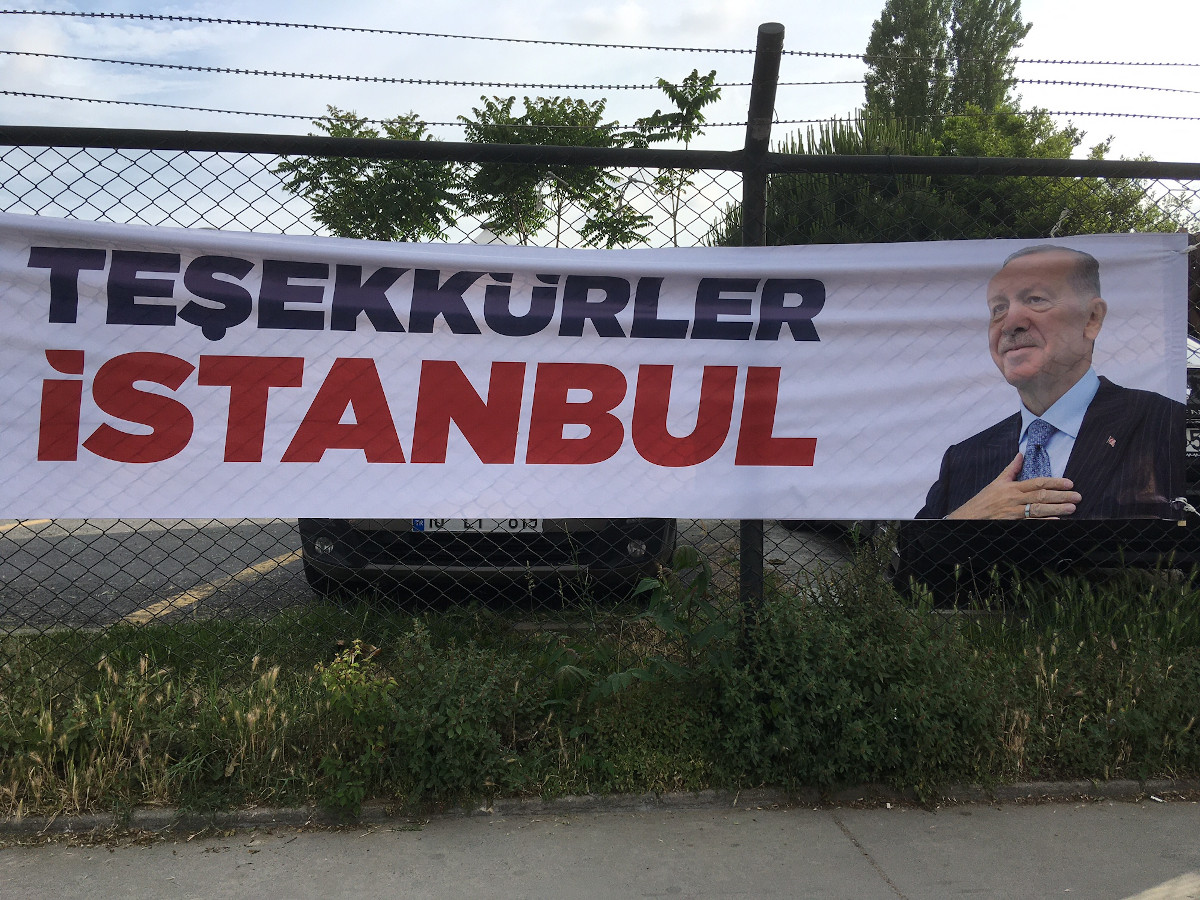
Image 5: “Thanks Istanbul” (some citizens of Istanbul were scornful of post-election posters expressing the President’s thanks to a metropolis that actually gave a majority to his opponent), photo by author

In the centenary year of the republic, Erdoğan is frequently mocked by liberal critics at home and abroad as a throwback to the days of Ottoman Sultans. Comparisons with Mustafa Kemal are perhaps more appropriate. Like his illustrious military forerunner, Erdoğan has transformed his country. The two will blend seamlessly as centenary festivities build up in the second half of this year. Erdoğan’s version of the authoritarian state resonates better with both local religious heritage and global capitalism. He has mastered ways of communicating with the masses that work for this country in this century. Within days of his re-election, the AKP machine was putting up new posters all over the country: in trademark pose, the supreme leader has his right hand on his breast, his lips form a faint smug smile, and the text proclaims “Thanks, Türkiye.”


Chris Hann is Emeritus Director of the Max Planck Institute for Social Anthropology and a Fellow of Corpus Christi College, Cambridge.


References

Bellér-Hann, Ildikó and Chris Hann 2000. Turkish Region. State, Market and Social Identities on the East Black Sea Coast. Oxford: James Currey.

Deniz, Ceren 2021. The Formation of Peripheral Capital. Value Regimes and the Politics of Labour in Anatolia. Berlin: LIT Verlag.

Duzgun, Eren 2022. Capitalism, Jacobinism and International Relations: Revisiting Turkish Modernity. Cambridge: Cambridge University Press.

Evren, Erdem 2022. Bulldozer Capitalism. Accumulation, Ruination, and Dispossession in Northeastern Turkey. New York: Berghahn Books.

Genç Fatma and Özlem Şendeniz (eds) 2022. Beyond the Land. Looking at the Black Sea as a Marine Environment. Fındıklı: Gola Yayınları. Bilingual publication (Turkish title is Karadan Öte: Deniz Olarak Karadeniz’e Bakmak); pdf available at https://golader.org/projeDetay/36

Karadag, Roy 2013. “Where Does Turkey’s New Capitalism Come From? Comment on Eren Duzgun” European Journal of Sociology 54 (1): 147-152.


Cite as: Hann, Chris 2023 “Thanks, Türkiye” Focaalblog 16 June. Thanks, Türkiye https://www.focaalblog.com/2023/06/16/chris-hann-thanks-turkiye/

Ståle Knudsen: Debts and the end for infrastructure fetishism in Turkey

The immense new Istanbul Airport, additional spectacular bridges over the straights, the Marmaray metro/train tunnel under the Bosporus, high-speed trains, highways, extension of the Istanbul metro network, energy projects. These were highlights in a campaign video for the Justice and Development Party (AKP) candidate Binali Yıldırım in the rerun of the Istanbul mayoral election in June. The video was made by a “social media follower” and acclaimed by Yıldırım, who shared it on his Twitter account. It was accompanied by the text “Well, who made this?”

Continue reading

Cemile Gizem Dinçer and Eda Sevinin: Migration, activist research, and the politics of location: An interview with Nicholas De Genova (part 2)

The second part of this interview with Nicholas De Genova moves into an analysis of the so-called refugee crisis since 2015 and possibilities for militant academic research that challenges the increasingly hard-right consensus in Europe and beyond.

The first part is published here and traces De Genova’s intellectual biography, the question of militant research, his work on migration in the United States, and his recent shift to research in Europe and collaborations with the European, especially Italian, school of autonomy of migration research.

Continue reading

Cemile Gizem Dinçer and Eda Sevinin: Migration, activist research, and the politics of location: An interview with Nicholas De Genova (part 1)

In Turkey, especially after the Syrians’ arrival following 2011, the field of migration studies has more or less confined itself to mainstream discussions such as integration, social cohesion, data collection, and so on. At this point, the work of Nicholas De Genova and the wider literature on the autonomy of migration open up a new horizon for discussing migration. De Genova has had a decisive influence in shaping our approach to migration and borders. We hope that this interview, conducted in Istanbul when Nicholas attended the conference “Migration, Social Transformation and Differential Inclusion in Turkey,” will be read across Turkey and make his work accessible to students, activists, and everyone interested in migration. We had a long conversation on topics ranging from the recent “refugee crisis” and alternative ways to think about migration and politics, activism, and academia in general.

Continue reading