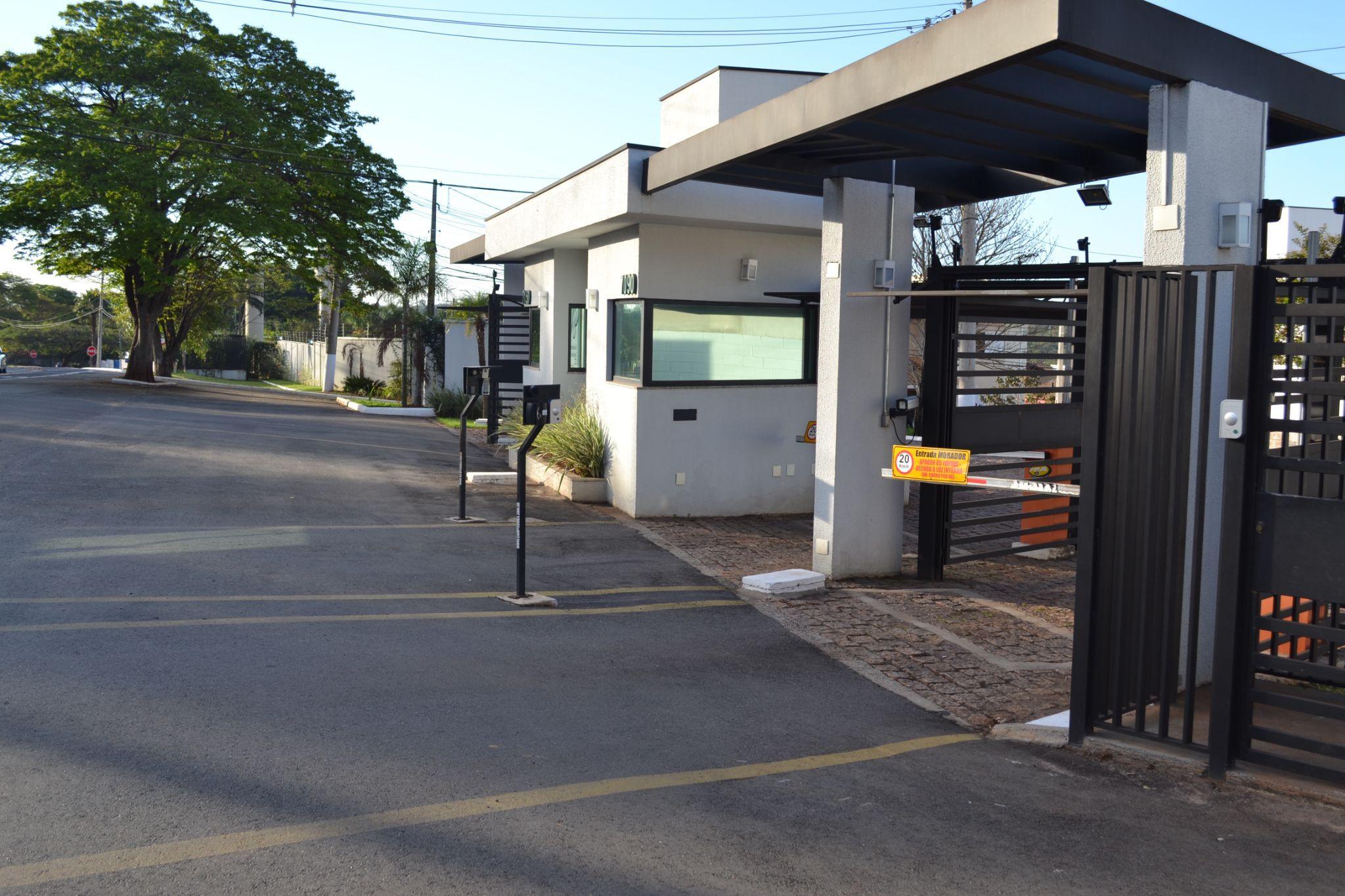
Tag Archives: security

Alice McAlpine-Riddell: Zap, Dazzle and Pink! The Aesthetic and Vibrant Enchantment of Tasers

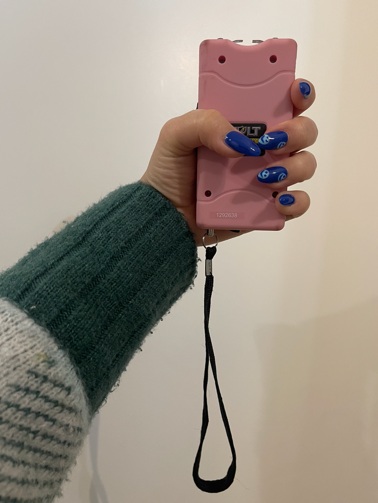
Image 1: Marysol holding one of her pink tasers. Photo by author.

It is the summer of 2022, and I am volunteering with Wes at a queer multi-purpose community space in Brooklyn, New York City. The space is bright pink, adorned with colourful rainbow motifs, hand-painted floating clouds, and neon signage. Today, our responsibilities are to keep the space open for community members to hang out and to sell thrifted, donated, and locally made clothing. Wes is performative, energetic, and talkative. He is an aspiring musician, and we often spend our time together styling him in the clothes for sale in the space which he wears to perform trending dances for his TikTok videos.

Wes grew up in a Haitian household in Connecticut. During his upbringing, safety was rarely discussed, as his family would turn to prayer to address concerns instead. Upon moving to the city, he rarely feels safe: “I don’t think I’m ever really safe, walking around in Brooklyn, to be honest with you.” To provide a certain sense of safety, Wes employs certain safety practices while moving through the city, and this includes carrying a pink taser, a hand-held weapon that uses electrical current to temporarily incapacitate a person.

His pink taser is revealed to me during that afternoon after a young woman walks in and exclaims, “I had to come in cos this place looks gay as hell!” before sitting on the couch and chatting with us. Within a few minutes, seemingly unprompted, she whips a baby-pink object out of her bag. She turns the object, which I’m unable to identify, on. It makes a loud crack and sets off a bright white flash, like an aggressive fly-zapper. I jump, but Wes remains calm, and without missing a beat, he proclaims: “I have the exact same taser!” forging a connection through the sonic and the pink. They both smile knowingly at each other, acknowledging the shared experience, before the conversation moves on.

When discussing this encounter with him later on, I mention that the noise and lights really took me by surprise. He responds, “Yeah, that’s actually helpful, because when people see it, they are like ‘oh okay!’ and I’ve never had to use mine on anyone, but I’ve walked with it ready to go. I’ve just felt better walking and holding it”. For Wes, the jarring crackle and bright white lights attract attention, signalling caution to be taken by others walking on the street while simultaneously instilling a sense of well-being in himself. He concludes, “plus it has a little flashlight too. And it’s pink!”

My conversation with Wes highlights the sensorial nature of objects of security, of pink tasers which zap, crackle, and flash. During my ethnographic fieldwork in Brooklyn, I regularly encountered the ownership of safety gadgets amongst my female and queer interlocutors. These safety gadgets include tasers, pepper sprays, and kubotans, which are plastic blunt stabbing objects frequently attached to keychains.

These security objects are often coded as feminine, by both the producers and consumers, from pink tasers and pocketknives adorned with text reading ‘PRINCESS’ to kubotans shaped like cat’s ears and alarms described as looking like “cute Tamagotchi’s”, small handheld digital pet games prolific in the early 2000s. Like Wes, my other interlocutors commonly reference pinkness and cuteness in conversations about their gadgets/weapons, expressing feelings of enchantment, comfort, safety, and excitement.

In this piece I explore the power of pinkness and other captivating visuals, alongside the jolting zap of the taser, to dissect the aesthetics and sensations of (in)security that operate powerfully in the potential. Seeing as none of my interlocutors have ever used their gadgets functionally in self-defence they rather operate across multiple enactments; infusing senses of reassurance and wellbeing, enabling sociality and connection while also securitizing imagined Others on the street who are situated as a potential threat.

Image 2: Pink and sparkly stun guns and pepper sprays for sale in the U.S. Photo by author.

Security aesthetics and enchanting technology

Security is not just a force to be subjected to but also an aesthetic, a mode of sense perception. Security feels, smells, looks, sounds, and tastes certain ways. It encompasses subjective judgements of taste (Ghertner, et al., 2020) and normative aesthetic assumptions, like the statement ‘pink guns are for girls.’ From enclosed architectures of gated communities to the haptics of drone warfare, encountering and performing security is an embodied and sensorial experience. To feel unsafe or insecure itself is an intuitive and embodied sensation, often described as a gut instinct or a sixth sense (Elbek, 2025; Sisnowski, 2026).

Safety gadgets like Wes’ taser are technologies of security that entice the senses. Situating pink tasers as a security aesthetic connects to Alfred Gell’s theory of art and agency. Gell gives the example of an elaborately decorated Trobriand canoe in which the decoration appears impossibly intricate, serving to beguile, intrigue, and impress, enhancing the social and political power of the canoe and its creators.

Gell uses this example to develop his theory of technologies of enchantment. The enchanting power of art lies in the technical processes they embody. In turn, technical processes cast a spell over us, making the world appear enchanted (2006, 163). The pink taser exhibits this two-way technological enchantment as both an aesthetic and technical object, as captivation through pinkness and brightness and as an electrifying weapon.

Similarly to the design of the Trobriand canoe, pinkness enacts power. As an aesthetic, pink is potent and over-determined, saturated with normativity and intersecting power dynamics. It is the socially constructed colour of vulnerability, femininity, and cuteness. Pink is of the body, it allures and entices as ‘the pan-racial color of erotic orifices,’ (Yano, 2013, 34), sites of pleasure and pain, of birth and shame. Pink can also be ironic and seditious, operating as a defiant punk aesthetic that winks back (Yano, 2013) at sexual normativity and gender stereotyping. Similarly, cuteness evokes powerlessness or weakness but also a secondary sense of exploitation or manipulation (Ngai, 2012), and a feeling of being hood-winked. In this sense, pinkness mobilizes expectations of passivity and pliancy which can function as a means of subversive protection.

Such pinkness is enacted in diverse ways. For example, for Rosa, a young trans woman, visibly carrying her pink pepper spray on the street adds to her level of ‘passing’ and her sense of safety, due to the normative gendered association of pink as an aesthetic choice. For both Wes and Rosa, the pinkness of their safety gadgets subversively winks back, as what appears cute and pink and therefore, vulnerable, unthreatening, and unassuming, are in fact the very opposite, as potentially harmful weapons.

As the potential for violence is concealed, power dynamics become troubled, as categories like aggressor and aggressed increasingly blur. In this sense gender and sexuality are at once mediated and weaponized, performed and subverted, through safety gadgets as technologies of aesthetic security.

Dazzling weapons

Gell further describes art as weapons of psychological warfare which dazzle (2006). A historical example being the dazzling camouflage painted onto warships in WW1 to confound and beguile submarine periscopes, as waves crashed confusingly against the ship’s razzle dazzle designs. Similarly enchanting designs are now being employed by anti-surveillance artist-protestors to avoid facial recognition technology (Roderick, 2019 – 2021).

Image 3: Photograph of British Kil class patrol gunboat HMS Killour painted in dazzle camouflage. Photo by Oscar Parkes from the Imperial War Museum collections.

Dazzling pink and zapping, flashing tasers capture attention while simultaneously producing perplexity, as a technology of enchantment that captivates as both a psychological weapon and a weapon in potential. The visceral sounds and visuals further exude a vitality. It radiates what Jane Bennett describes as thing-power (2010) which demands attention, provoking both joy and fear through its presence. In this sense, materiality has the capacity to act and affect, to vibrantly exert power, and do things in the world across assemblages of entangled people, objects, relationalities, and modalities (Bennett, 2010). In the case of the pink taser, such vibrancy and vitality allure the senses, enacting a sense of well-being and safety for Wes while affecting other bodies in diverse manners, from shock or excitement to connection or attention.

The power of the potential

These vibrant and pink security aesthetics in turn also (de)construct and socially situate divergent bodies. Queered and gendered bodies vibrate between insecure and threat, as the visual wink of the pink plays on the supposition of vulnerability interrupted by crackles of potential violence.

The term potential is of significance here, as the location of such enchantment and vitality. The power and potency of the pink taser operates in its potential to harm, as Wes states above, he walks with his taser “ready to go” but he has never discharged it and stunned anyone in self-defence.

Rather, for Wes a feeling of improved well-being is achieved through just “walking and holding” his taser, as enchantment functions through (in)animation in the sense that the aesthetics and vitality of the taser simultaneously animates the object and instils the potential to inanimate and disarm others.

While operating in the potential, the taser is enacted in multiple ways; as a technology of enchantment but also as a means of sociality, as a vibrant accessory to present to and connect with others. The aesthetic potency of sound, colour, and brightness entices the senses across divergent relations; between Wes and the unknown other on the street, and between Wes and the other taser owner; but also between myself and Wes, as an ethnographic learning opportunity through my moment of shock, and as an encounter with self, as Wes exclaims “and its pink!” demonstrating his own enchantment.

Indeed, none of my interlocutors have ever discharged their safety gadgets functionally to disarm, stun, or stab. Unlike Wes, sometimes other safety gadgets remain unused at the bottom of their handbags. For example, Fernanda is a born and bred New Yorker who grew up on Staten Island. She is very safety conscious and attributes this to her upbringing in an immigrant family, where conversations surrounding personal safety were constant throughout her childhood. Fernanda owns an array of safety gadgets including a kubuton, which she describes as a “stabby stick” and is often relegated to the bottom of her bag.

As she explains, “walking with friends and everyone else is fine and you are there walking with this little shank in your hand, it’s weird, it’s uncomfortable for everyone.” Objects mediate social relations, and this includes expectations and normativity. Fernanda doesn’t feel comfortable having her kubuton out of her bag. In her hand, the kubuton runs contrary to the social norms of her friendship group and she worries that her modality of feeling (un)safe misaligns with those of her friends which could make them feel uncomfortable.

Another young woman, Marysol, is in her late twenties and moved to Brooklyn for her postgraduate studies. She owns two pink tasers and usually carries one with her whenever she is moving through the city. One day she witnesses a violent subway attack. When she tells me about the incident she concludes exclaiming, “the one day I don’t have my taser, I legit see someone get stabbed!”

Here her taser is noticeable in its absence, however, I am left thinking what would she have done if she had her taser with her as she normally does? Intervening and inserting herself in the situation with a taser has the potential to make herself and those around her more unsafe. Others shared my concerns, in particular worries about being disarmed, a lack of training, and the close combat that necessitates use of certain safety gadgets. Perhaps the comfort of things (Miller, 2008) is a comfort of the presence and potency of safety gadgets in the potential; of a stabby stick at the bottom of a handbag to avoid social discomfort and judgement, of the reassurance of just having one’s taser with them or carrying it flashing and zapping as a warning to potential or imagined attackers.

To conclude, safety gadgets like pink tasers demonstrate the entanglement of (in)security and the sensorial. From the attention-grabbing pinkness and brightness of a zapping taser that entices the senses to senses of well-being, comfort, and enchantment produced by carrying tasers on oneself while moving through the city. By operating in the potential, these gadgets infuse a sense of reassurance into their carriers while also securitizing imagined Others on the street who are sensed and situated as a potential threat.

Moving beyond care or control, protection or punishment, Wes’ pink taser exists at an intersection of security, sensoriality, and sociality. It is an object that invokes excitement, connection, and enchantment, but also attention, caution, and violence. The pink taser troubles which bodies are imagined as insecure and as threatening, by playing into tropes of queer sexuality, femininity, and vulnerability, intermixed with a fear of the Other, by a dazzling wink of the pink and a crackle and zap with the potential to electro-cute.


Alice McAlpine-Riddell is an anthropologist and early career researcher whose work focuses on practices and experiences of safety, security, and surveillance for gendered and queered bodies in urban spaces.


References

Bennett, J., (2010) Vibrant Matter: A political ecology of things, London: Duke University Press.

Elbek, L. L. (2025) ‘Sniffing Out Trouble? What and how the ‘Police Nose’ Smells’, Focaalblog December 24. https://www.focaalblog.com/2025/12/24/laust-lund-elbek-sniffing-out-trouble-what-and-how-the-police-nose-smells/

Ghertner, D. A., McFann, H. and Goldstein, D. M., (2020) ‘Introduction: Security Aesthetics of and beyond the Biopolitical’, Futureproof: Security Aesthetics and the Management of Life, New York, USA: Duke University Press.

Gell, A., (2006) The Art of Anthropology: Essays and Diagrams, London School of Economics Monograph on Social Anthropology, E. Hirsch (eds). Oxford: Berg.

Miller, D. (2008) The Comfort of Things, London, UK: Polity Press.

Ngai, S., (2015) Our Aesthetic Categories: Zany, Cute, Interesting, Cambridge, MA: Harvard University Press.

Roderick, E., (2019 – 2021), ‘The Dazzle Club, 2019 – 2021’, Emily Roderick (website) https://emilyroderick.com/work/the-dazzle-club/

Sisnowski, M., (2026), ‘Gut Feeling, Adrenaline and Fried Onions: Sensing Aggression in German Health and Welfare Services’, Focaalblog January 24. https://www.focaalblog.com/2026/01/23/maja-sisnowski-gut-feeling-adrenaline-and-fried-onions-sensing-aggression-in-german-health-and-welfare-services/

Yano, C., (2013) Pink Globalization: Hello Kitty’s Trek Across the Pacific, Durham, NC: Duke University Press.


Cite as: McAlpine-Riddell, A. 2026 “Zap, Dazzle and Pink! The Aesthetic and Vibrant Enchantment of Tasers” Focaalblog January 26. https://www.focaalblog.com/2026/01/26/alice-mcalpine-riddell-zap-dazzle-and-pink-the-aesthetic-and-vibrant-enchantment-of-tasers/
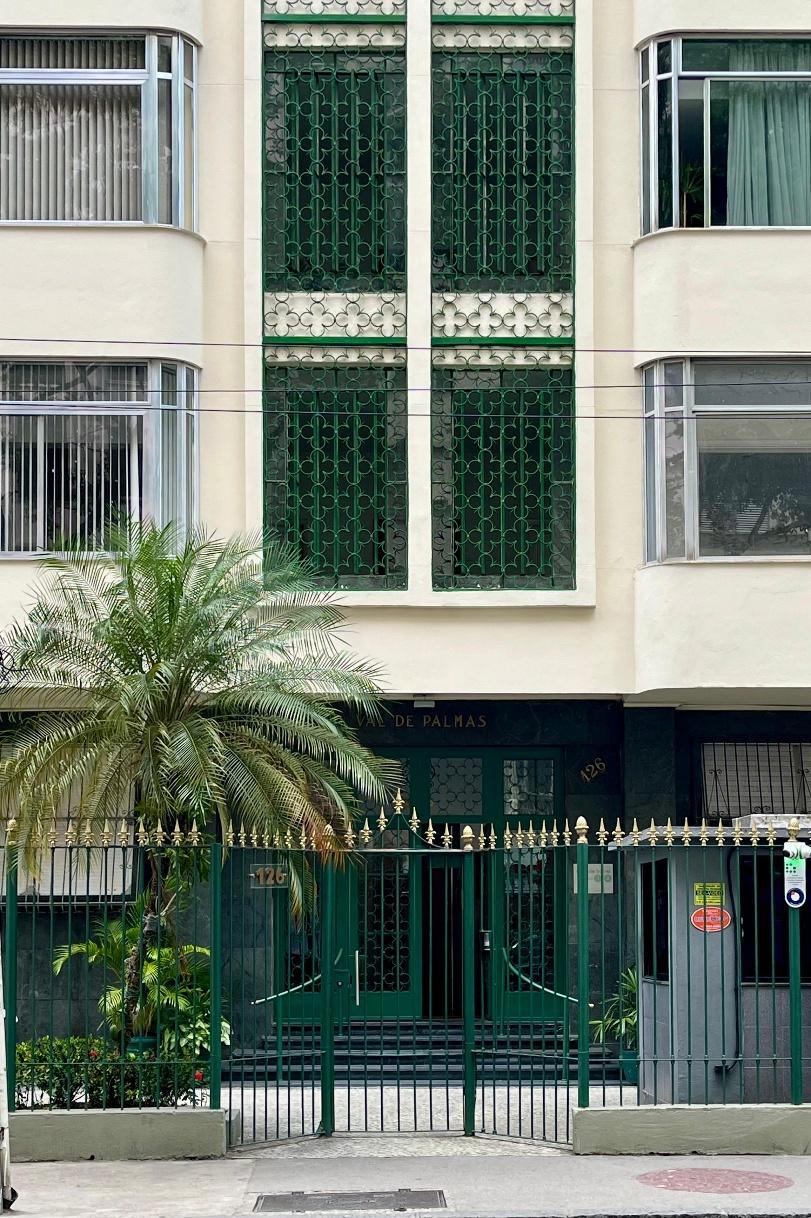
Susana Durão and Tilmann Heil: Care, Cordiality, and Control. Multisensorial Encounters with More-than-Security in Urban Brazil

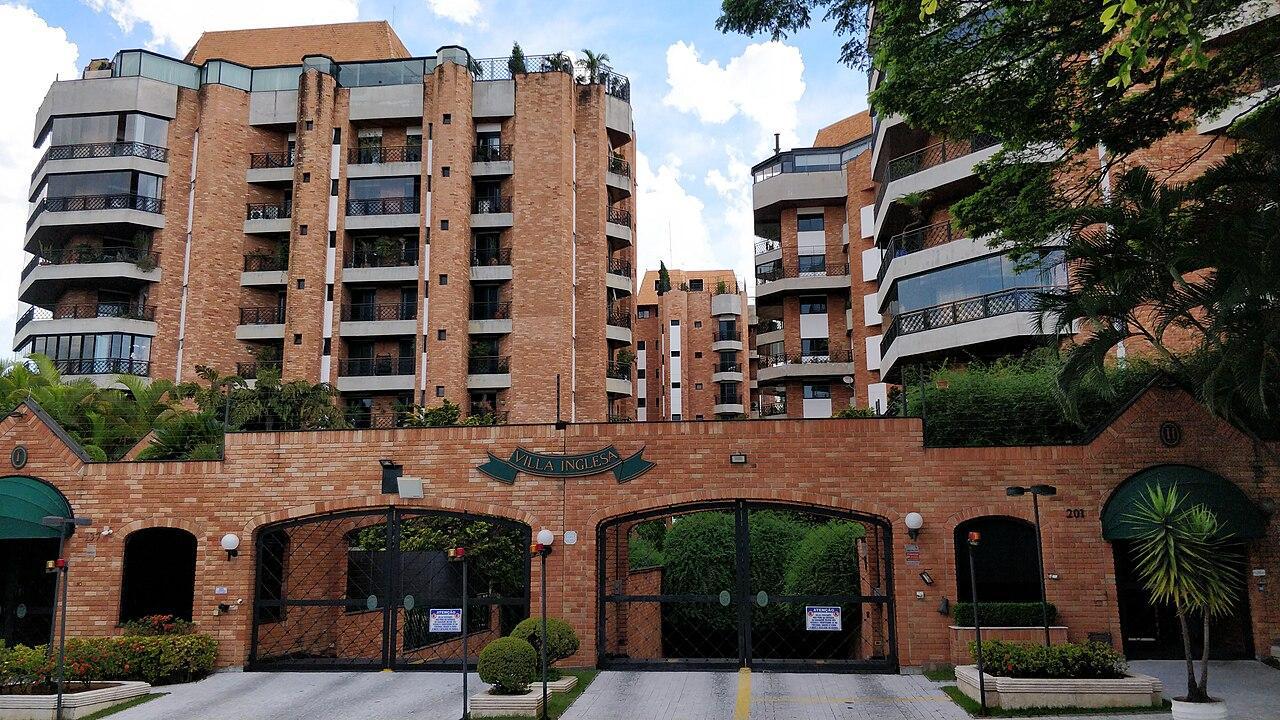
Image 1: Gated community ‘Vila Inglesa’ in São Paolo. Photo by Cornelius Kibelka

In urban Brazil, portarias–entry halls and porters lodges–and their staff absorb the circulation of people and goods as they pass between the streets and domestic spaces. In Rio de Janeiro’s and São Paulo’s middle-class neighbourhoods, the relative calm at the portaria turns into a hustle and bustle at certain times of the day. In a block of small apartments, the rhythm of movement picks up in the evenings, when domestic and maintenance workers leave the premises, residents return home from work to pick up their orders and mail, and deliveries from restaurants, shops, and pharmacies arrive in ever shorter intervals.

Doormen strike a delicate and demanding balance of control, cordiality, and care, attending to the routine coming and going as well as to specially tailored requests. For example, although building regulations often demand the residents to pick up their own orders, in many buildings, porters patiently pass on the codes to the delivery boys, carefully guard the goods until pick up, or even dispatch them in the elevator to the recipient. It is only late in the evening when the sensorial overload in the interstitial zone of the portaria dies down. Later at night, nothing remains but the quiet perseverance of the night porters who, struggling with their fatigue, attend to people returning home late and night time visitors, who arrive in the dark and leave before dawn.

In cities where private security workers like doormen and their equipment are part of the ordinary (White and Diphoorn 2024; Durão 2023), the doormen’s accounts of the world they inhabit disclose the density of the socio-techno-material relations in portarias. Often derived from brief and localized tasks and encounters, the sensory density builds up over time and enriches the socio-techno-material mediations of urban inequality (Heil et al. 2025).

As Northeastern migrants in the country’s richer Southeast, racialized men and women most often constitute the staff at portarias. Their stories unravel the material and sensorial making of more-than-security in the urban. Shaped by the interplay of care, cordiality, and control, we ask how more-than-security is constitutive of the social, racial, gender, and material hierarchies that grow out of colonial and neoliberal logics. We argue that the socio-material worlds of porters as well as their embodied and multisensorial engagements with this world reveal a subaltern archive of the making of (in)security in contemporary urban Brazil. While the infrastructure of portarias materially provides for the provision of hospitality and security, the multisensorial and embodied practice of porters foregrounds the intricate entanglements of care, cordiality, and control in these transit spaces and the interactions with the people who pass.

By engaging in dialogue with those who breathe life into portarias, we account for the subaltern registers of the urban that, according to Ananya Roy (2011), describe significant features of contemporary dynamics, which urban theory has been unable or unwilling to account for. We draw from our continuous long-term fieldwork on private security in São Paulo (Durão) and on social hierarchization and difference in Rio de Janeiro (Heil), starting in the 2010s. Attending to the logics of control, cordiality, and care in portarias in urban Brazil, anthropology can learn about the everyday layering of neoliberal and colonial logics as well as the material, sensory and embodied experiences that reproduce and reconfigure the social, racial, and gendered hierarchies at stake at the threshold from public to private.

To (not) care

At first glance, the infrastructure of portarias facilitates both hospitality and security. Providing for hospitality, it taps into a hotel aesthetic with shiny receptions and uniformed staff who greet hosts and guests, manage registration devices, and announce someone’s arrival. In contrast, special security devices disrupt the smooth material surface of hospitality. For example, double gates, fencing, and turnstiles interrupt the circuit of people and things, performing the securitization of buildings, their inhabitants, and their assets.

Workers who attend to the coming and going of people, services, and things are always (expected to be) already present at the entrance (Durão 2023). This holds for nearly any residential arrangement in urban Brazil, from social housing to the utmost luxury homes. While there are contemporary discussions about a complete virtualization of control in such spaces, especially among the middle class, such systems of remote doormen are far from comprehensive implementation. At best, more elaborate gadgets–from responders to biometric recognition and outsourced security cameras that are part of networked digital vigilance across the whole city–are added to existing security assemblages that porters are a part of. Porters themselves reproduce the discourse of those residents who believe that it is them–the cordial and caring staff –who are needed for it to feel right when arriving back home. As one doorman said: “Nothing compares to our presence at the front desk; no technology of a remote gatehouse takes care of the residents or the building itself when there is a problem” (emphasis added).

Image 2: Portaria of a vertical condominium. Photo by Tilmann Heil

A middle-aged man from the country’s Northeast, Junior, served the afternoon-evening shift at the portaria of a middle-class condominium in Rio de Janeiro’s privileged southern zone with some 100 small apartments. Every night, he was feeling exhausted from the swell of deliveries that arrived with vain motor boys. Their behaviour could be intimidating or simply unnerved but, for Junior, it did not amount to being offensive. Most of the time, Junior was light-hearted at work and cultivated decent relations with residents and everybody else who stopped by. Not only did he receive and dispatch deliveries for the recipients, but he also compensated for regular technological glitches and badly designed spatial setups to best attend to the inhabitants’ needs and sensibilities. Normally up for a joke to cheer people up, Junior also knew well when a calmer and more careful approach was appropriate or in his best interest. Like Junior, many doormen were convinced that attuning to the cordial routines of the coming and going was more important than technology. This also held true when they swiftly attended to the expectation of informal care and when unknown people and behaviour demanded vigilance and control.

Delivery boys were a case in point. To Junior, they were a security risk who, protected with helmets, could carry out a quick raid in the building. The owners’ assembly had debated whether to keep motor boys out of the building by making it mandatory for residents to receive their orders at the gate. However, the residents decided against it, letting convenience overrule the emergent sense of insecurity. Junior had adapted to the decision but in private left no doubt on his part: he would not risk his life for the residents in the event of an armed burglary. Keeping his views to himself, he avoided any unnecessary stress by maintaining a sense of cordial care.

While Junior was ready to frequently go out of his way, he could become irritable and upset when residents and visitors imposed their desire to have him serve them instead of doing his job. Having to wait in the rain for a moment while Junior attended to another immediate demand, Ligia, a resident, lashed out that the building’s standards left much to be desired. Why had Junior not rushed to the gate with an umbrella to protect her? Junior had jokingly asked where she had seen such service performed by an average doorman. He still found the expectation absurd and a breach of both common sense and respect for him and his work. For Junior, Ligia was among the two or three “crazy” residents with anachronistic expectations who seemed to be a rule of any apartment building. All that remained between Ligia and Junior were minimally cordial greetings.

While Junior was still directly employed by the building, Julia worked as an outsourced access controller (controladora de acesso) in a gated community of some 330 residents in São Paulo. Having moved to São Paulo as a young married woman, she had followed her sister-in-law’s advice and started to work at a portaria. She had timidly adopted the protocols and routines of politeness and control from her co-workers. She struggled with the feeling of being permanently compared with her sister-in-law who worked alternating shifts, was already known, and had more experience on the job.

If someone unknown arrived, Julia greeted and, in painstaking fashion, requested all key information – destination, purpose, full name, ID, previous visits. After completing a facial registration and announcing the visitor, she provided them with the information on how to leave later. While everything had been going well, Julia felt increasingly exposed to blackmail from one of the residents. The resident claimed to be dissatisfied with Julia’s lack of friendliness and her apparent inability or unwillingness to show more affection and attention whenever he entered or left the condominium. Julia felt she was being accused of failing to be welcoming, something she highly valued in her interactions with residents.

Increasingly under pressure, Julia began to fall ill, gain weight, and suffer from nervous breakdowns. The day she missed work to see a psychiatrist, without prior notice, she was fired “for just cause” by her service company. After the fact, she realized that her dismissal was due to the same resident, for whom Julia had never felt right. He had asked the condominium manager to make her redundant, which the service company used to end her contract with them. Julia assessed the work at portarias as follows: “Outsourcing is a cruel world because everyone considers themselves our bosses: the employer, the supervisors, the building manager, the caretaker, the residents, and even their children.” While she had initially found the role of providing hospitality as part of access control agreeable, she had come to develop a strong dislike of the system that had effectively rendered her a disposable resource.

Image 3: Portaria of a horizontal condominium. Photo by Susana Durão

A good-looking young black man, Zé was a janitor acting as a doorman in an upper middle-class building in Rio de Janeiro’s southern zone. During conversations, Zé had shared numerous stories of doing residents a favour as well as working extra hours and additional shifts. During a shift as a porter, a son of a resident ordered Zé to look after some belongings he had temporarily placed on the sidewalk for pickup. While generally feeling inclined to go out of his way, Zé had disliked the way the request had been posed, eventually halted the task, and returned to his actual duties. Zé was aware that his refusal to outperform for an ill-tempered son of an owner might get him into trouble. And so it happened. When the son returned, he verbally attacked Zé and almost physically assaulted him. This entire experience conflicted with Zé’s love for looking after the building and its inhabitants in the best way possible.

Yet, to care had to feel right. Young, gay and black, Zé had no illusions about the place in society to which the son had tried to forcefully assign him: racialized servitude, that is, a colonial fantasy of hierarchy prevalent among Brazilian middle-classes and elites. The portaria was one of the spaces in which they could try to subordinate people to feel authority, guarded and cared for. Those for whom Zé went out of his way at least maintained an appearance of basic respect and appreciation for the care he gave.

On the day, Zé sought the resident warden to relay his view of the incident. Rather than the lack of what Zé would normally judge to feel right based on a demonstration of respect and appreciation, he foregrounded the risk of physical violence after rejecting to deviate from his contractual tasks, namely, to deliver security-hospitality in the premises of the building. It clearly transpired that Zé knew his rights, so he obtained what he demanded: two weeks off with full pay.

When Zé returned to work, a lingering tension prevailed whenever the resident passed, yet it was buried under the performance of a rather cold hospitality. The incident inscribed itself into multiple layers of abusive behaviour in which society’s colonial dependence on servitude materialized. The worst behaviour emerged when contempt for the staff made residents behave as if anything was allowed. Such were the moments when Zé, acting as janitor, once more found himself ambushed: responding to complaints about a sickening smell, he eventually tracked down human faeces hung outside an open corridor window as the cause of the nuisance in an explicit attempt to humiliate Zé. It remained unclear who had played a trick on Zé, reinforcing the sense of how widespread the contempt was for Zé and other workers in precarious conditions like him.

Conclusions

From failing to be friendly enough behind a glass window or providing immediate shelter from rain, to fearing physical violence or deliberate humiliation, the stories of the workers of portarias like Julia, Junior and Zé are plenty. Their stories provide deep insights into the socio-material and sensorial logics of more-than-security in urban Brazil. The porters’ embodied experiences and sensory memories linked to the portaria, its devices, and types of encounters reveal how they experience the pleasures and discontents of cordially providing a sense of security and hospitality as well as informal care. The entanglements of acts of cordiality, care, and control performed by doormen in portarias show the confluence of the effects of neoliberal outsourcing and the country’s colonial past that establish a net of unequal interdependence and servitude. Their interplay specifies the multiple tensions in which the hierarchies of class, race, region of origin, and gender continuously co-constitute one another.

A first contradiction emerges from the ever-more widespread material security infrastructure and the confident affirmations of doormen that they are effectively and affectively indispensable at the portarias. In contrast to security personnel trained to defend while providing hospitality (Robb Larkins 2023), the porters are aware that the care work they perform for the people is vital for the coming and going in portarias precisely because it extends beyond a narrow provision of security.

Yet far from simply feeling appreciated, let alone recognised for the complex and multiple duties performed, doormen put up with the local effects of the multi-layered history of service and servitude in Brazil and their colonial and neoliberal roots. Junior, Julia and Zé were all from the country’s Northeastern states and had come through family networks to work in the Southeastern metropoles. While unobtrusive routine prevailed, specific encounters made them easily feel the logics of racist subordination in which the aspiring and traditional middle classes of Rio de Janeiro and São Paulo engaged, also – but not only – when faced with the hard-working Northeastern “Others” (Schucman 2012). Such subordination showed the violent effects of the intersections of class, gender, region of origin, and race. For Julia, the exigencies to be overly nice and pleasing were distinct from the risk of physical abuse, as in the case of Zé.

Given specific visceral reminders, porters could hardly forget the multiple hierarchies into which they were placed. The enduring impact of the colonial past was particularly evident in how workers of portarias navigated the provision or denial of care in spaces that were otherwise characterised by a calming sensation of hospitality-security. For doormen, all they expected was to treat (and be treated) well, based on a bare minimum of reciprocity and respect. Yet too often service was demanded on the terms of servitude. However, the conflicting influence of growing neoliberal outsourcing and formal workers’ rights could alter the course of events. Those directly employed, such as Junior and Zé, were able to voice their dissatisfaction and give space to their emotional push back against what seemed to be utter abuse. They firmly believed that the more-than-security they provided was not easily outsourced. In contrast, Julia was already employed through a service provider, which enhanced her precarity. Still affectively abused, she was simply made redundant, with no opportunity to push back.

The ensuing effects are perverse: on the one hand, the subaltern multisensorial archives of portarias reveal the increased vulnerability of workers when neoliberal logics intersect with colonial social and (infra)structures. On the other hand, the limits of neoliberal profit maximization become apparent in the thorough investment of residents in the personal and potentially abusive touch of relations of care, cordiality, and control that still define the circulation of people and other things in the entry halls and porters’ lodges of urban Brazil.


Susana Durão is Professor and Researcher in Anthropology at the State University of Campinas in Sao Paulo, Brazil.

Tilmann Heil is a Visiting Professor in Anthropology at the University of Leuven and Principal Investigator of the Global South Studies at the University of Cologne.


References

Durão, Susana 2023. Conviviality in Inequality. Security in the City (São Paulo). Mecila Working Paper Series 62.

Heil, Tilmann, Fran Meissner, and Nikolaus Vertovec 2025. Techno-Material Entanglements and the Social Organisation of Difference. Ethnic and Racial Studies: 1–17. doi: 10.1080/01419870.2025.2469694.

Robb Larkins, Erika 2023. The Sensation of Security. Private Guards and Social Order in Brazil. Police/Worlds. Ithaca: Cornell University Press.

Roy, Ananya 2011. Slumdog Cities. Rethinking Subaltern Urbanism. International Journal of Urban and Regional Research 35 (2): 223–238. doi: 10.1111/j.1468-2427.2011.01051.x.

Schucman, Lia Vainer 2012. Entre O “Encardido”, O “Branco” E O “Branquíssimo”. Raça, Hierarquia E Poder Na Construção Da Branquitude Paulistana. Doctoral Thesis, Social Psychology, Universidade de São Paulo, São Paulo.

White, Adam, and Tessa Diphoorn 2024. The Everyday Political Economy of Private Security. Policing and Society 34 (1-2): 1–9. doi: 10.1080/10439463.2023.2268256.


Cite as: Durão, S. & Heil, T. 2025. “Care, Cordiality, and Control. Multisensorial Encounters with More-than-Security in Urban Brazil” Focaalblog December 24. https://www.focaalblog.com/2025/12/24/susana-durao-and-tilmann-heil-care-cordiality-and-control-multisensorial-encounters-with-more-than-security-in-urban-brazil/

Bjørn Enge Bertelsen: Pots that go bang in the night: Noise and rhythm as enacting popular security amidst political protest in Mozambique

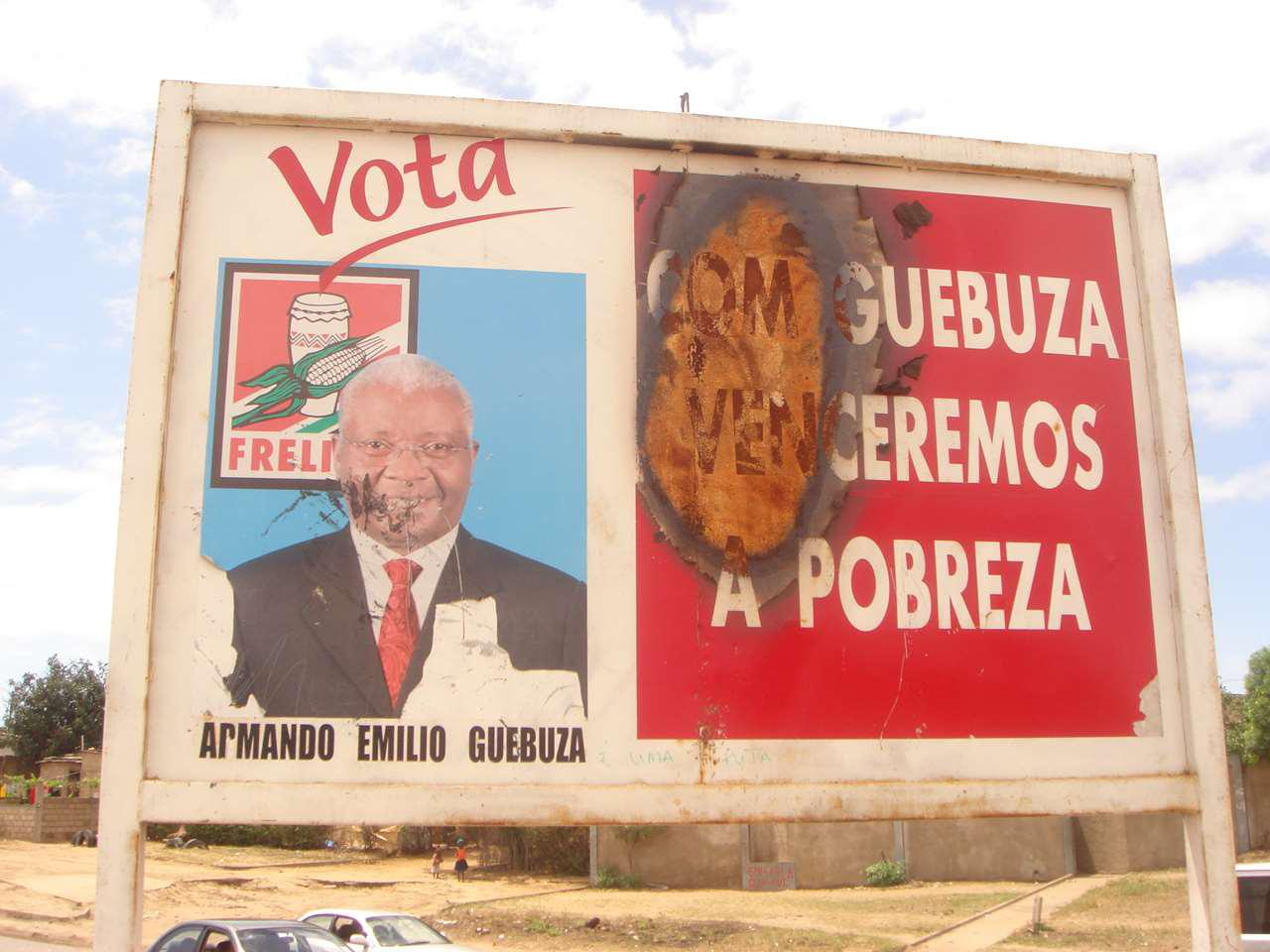
Image 1: Photo of an election poster for former Mozambican president Armando Guebuza. The poster burnt down and destroyed in relation to the uprisings in Maputo 2010. Photo by author

Introduction

The pots and pans that were banged at night in Mozambique in late 2024 and early 2025 are now silent. However, their legacy is neither muted nor forgotten—reflecting similarly the trajectories of other forms of protest the last decades which has shaken Mozambique and, especially, its ruling party (see Bertelsen 2014).

What unfolded was extraordinary: The country’s heavily contested presidential and parliamentary election of 9th October 2024 was followed by loud street-based protests and riots across Mozambican cities which were often met with brutal violence by police and security forces. The clashes between young men and the police left around 400 dead and thousands injured.

Here I would like to draw attention to a form of protest that was somewhat eclipsed by the street-fighting, namely the banging of pots by female protestors in their homes and on the street. These female protestors engaged the collective sensorium of urban citizens and shifted the very sense of security and insecurity in this highly unpredictable political situation. Beating pots—on balconies, in courtyards, in kitchens with open windows and in the streets—mediated the population’s sense of insecurity, amounting to a gendered form of collective rejection of the violence of the state apparatus. For Mozambique, this marked a definite shift in terms of both the participation and the format of political opposition in the country, the noise also, crucially, instilling fear in the erstwhile security apparatus and the police

Maputo 2024 and 2025: Protests, rhythm, collective security

Centuries of Portuguese colonial rule and violence ended with liberation in 1975 at the hands of Frente de Libertação de Moçambique (Frelimo – Front for the Liberation of Mozambique). In the half-century that followed, Mozambique has seen ongoing civil war conditioned respectively by Cold War dynamics (1976/77-1992), experiments in Afrosocialism (1980s), and multiparty elections from 1994 onwards. Given the merging of the Frelimo party with the Mozambican state apparatus in this period (Bertelsen 2016), few were surprised when Frelimo won in October 2024, securing the party elite victory in both the parliamentary and presidential elections.

However, in Mozambique’s last election Frelimo attained a majority so improbable that it defied even the most cynical of expectations among experts and citizens alike. For instance, ghost armies of voters—politically loyal subjects conjured from the realms of both the living and the dead—were called up to attain majorities for Frelimo in districts widely known as opposition party strongholds. Rampant ballot-stuffing bolstered other draconian moves, including manipulation of the country’s complex vote-counting system and widespread voter intimidation.

Formal complaints by the opposition were initially quashed, deepening the unpopularity of Frelimo. Protestors rapidly took to the streets and engaged police and security forces in sustained battles. By 27 January 2025, 313 protestors were registered as killed. While there had been protests against previous elections, the scale, form and distribution surpassed these (Feijó and Chiure 2025a, 2025b).

Central to the protests unfolding over several months was how Venancio Mondlane—popularly called VM7 and the founder of a new opposition party—emerged to contest the result. His firebrand speeches drew heavily on his background as a pastor in the Pentecostal church Igreja Ministério Divina Esperança. VM7’s dramatic contestation included well-orchestrated social media broadcasts from his exile in South Africa and a dramatic heroic re-entry into Maputo on 9 January 2025 where he was greeted like a hero—all cast, recast and morphed on social media.

Revisiting such events in November 2025, these months of unrest and protests also assumed a new and, for Mozambique, unprecedented shape—or, better, shapelessness. Evading the violence of the streets and residing within their apartments, on balconies or in courtyards, every night, female citizens banged their pots and pans for hours, chanting slogans against the Frelimo regime and the stolen election, sometimes accompanied by blowing whistles. In many video clips circulating on social media, one may see that the officers from the police force and the security apparatus are visibly affected by the noise surrounding them, treading more carefully and being visibly nervous.

The format, scale and space of these protests and how they affect also those meant to exert control on the streets, mark a shift in the Mozambican political landscape as the rhythms of protest were also emitted from areas of Maputo inhabited by segments of the population often characterised as wealthy or upper middle class—groups commonly perceived as allied with or integral to the Frelimo-state and not previously having been important parts of protests. Further, it is equally surprising, therefore, that Taela (2025: 6) and others suggest that it was initiated in Eduardo Mondlane University’s student housing—where banging pots was accompanied by throwing books and papers out of the windows onto the streets. Clips of protests have continuously filled the pluriverse of social media and across Maputo residents were informed about what was happening, including both wealthy areas downtown, as well as poorer areas, such as in the bairros Mafalala, Maxaquene, and Chamanculo. Some of the first images and clips surfaced immediately after the election and soon came to visually and graphically dominate several of the popular digital channels Mozambicans follow.

In the weeks and months to follow, the banging of pots rapidly turned into a massively popular mode of protest, mobilising especially women and girls and inserting them into a politics of resistance against the stolen elections. As Taela notes (2025: 6, my translation from Portuguese):

The pots and pans only came out of the cupboards at night, after protesters faced extreme police repression on the streets during the day. Banging pots and pans, known as panelaço, emerged as a strategy for those who wanted to protest but did not want to do so on the streets.

As shown in the many clips on social media, noise started after dark and the rhythms churned out from households were often rapid and intense — rhythms sometimes layered, with sounds ranging from the metallic drum of cheap aluminium pots to the deep humming of cast iron kitchenware. Many clips capture entire neighbourhoods banging in synced rhythm—but, crucially, with few of the protestors being visible.

The repeated banging of pots generated a sense of unification, collectivity, and participation mirroring the mass congregations that usually define street protests but in this case often marked by becoming heard, not seen, as well as being nocturnal, not diurnal. On the street in the same clips, one may see the heavily armed state security forces moving uncertainly through the dimly lit streets, navigating endless cascades of drumming and humming being poured over them. In some clips, the same forces nervously fire teargas grenades against balconies only to be met by a more massive wall of noise.

In many respects, Maputo’s panelaço of 2024 and 2025 constituted an act of resistance that transcended electoral and party-political registers: By amplifying and transmogrifying the soundscape of food-preparation from the individual households and into the public sphere, also collectivizing the sounds, what was repelled by noise was not only ghostly voters but also ossified politics, societal structures, and the gendering of space. This was also an explicit subtext in the many items on social media, namely that women were banging pots to be audibly present as a collective and that women’s politics should be recognized. In many of the acts, including during daytime, women set up kitchens in the streets where they cooked for protestors— extending the private realm of the kitchen onto the violently contested public spaces. Thus, these protests and practices may also be seen as extending care for others in its most inclusive sense. The symbolic importance of the pots should not be underestimated, as noted in a Facebook post by Zito Ossumane that was widely shared in Mozambique (translated from Portuguese):

The pots and pans, in a desperate gesture, decided to speak. They sacrificed themselves, banging against each other in a metallic hymn, invoking the god of kitchens and stoves. It was a collective prayer, a cry for help that spread throughout Mozambique, as if the noise of one neighborhood could travel through the bowels of the entire country. […] The revolution of the pots and pans has already begun. May the revolution of everything else come.

Panelaço: Shifting timespace, generative noise, sonic agency

The nocturnal banging of pots and their rhythm—synchronicity and non-synchronicity, collectivity and not—is not unique to Mozambique nor to postcolonial Africa. Writing on Paris and the 2016 nocturnal Nuit Debout protest—a form of charivari protest well-known from across Europe and North America—Shaw (2017: 117) notes “that the move to the night might be seen as an attempt to find a timespace in which a more open and creative politics is possible, strategically responding to the reduction in the freedom to protest in the more heavily surveyed day.”

Precisely the evasion, the slipping away into the night, the search for other than a securitized and striated space, is central here; in Paris the hypersurveilled urban spaces and in Maputo the security forces and their oftentimes indiscriminate diurnal violence exacted on protestors and civilians. Both index long-standing practices of evading statist domains of control, surveillance and, ultimately, notions of security defined by a central government. Further, in such evasion there is also a blurring of the public and private as protestors would often be confined to homes due to the imposed nightly curfew, left to consume news on TV or social media. Engaging in banging pots and pans may, in some sense, be interpreted as an inclusive, low-stakes form of protest, reflecting other social media activism as a facile way to “vent frustration” by protesting from the comfort of your home. However, here the Paris and Maputo cases diverge somewhat as in the latter those banging the pots were constantly fearing teargas grenades and shots launched at their balconies—as well as the volatility and violence of the situation being underscored by the number of casualties in daytime street protests.

Within contexts that are increasingly conditioned by non-democratic forms of securitization—including places like Mozambique—we, as anthropologists, also need to shift our attention to include the full sensorium: our own and of the fellow humans we engage. This includes exploring also what is entailed by “radical listening”, as Brandon LaBelle has called it. He also notes that “from an insurrectionary urgency, gestures and acts are made that force into being a heterogeneous space of social becoming, whose weakness or invisibility, whose transience or strangeness upset or elide established structures to produce what I think of as unlikely publics” (LaBelle 2018: 14-15).

Arguably, the nocturnal beating did produce what we might, with LaBelle, call “unlikely publics” with noise, rhythmicity, and the rearticulation of the quotidian kitchenware into powerful messages of distrust, assertiveness, collectivity. These forms also carved out yet another terrain for a gendered and classed form of political agency in a violent, state-orchestrated security state environment, instilling fear in the powers-that-be and their agents in the streets

Noise against the nocturnal body of democracy

The political theorist Achille Mbembe connects the nocturnal to various capacities and dimensions of the postcolony in many of his writings (Mbembe 2003). Crucially, he draws our attention to what he calls “the nocturnal body” of democracy. This is a form of organ constituted by the (often hidden) violent parts of democracy and statecraft, exemplified by the plantation and the penal colony.

The image of the nocturnal body aptly captures the shape of the postcolonial state of Mozambique and its long-standing impulse to deploy violence against its citizens—both at day and night (see Machava 2025). However, what is spectacular about the protests in Maputo in 2024 and 2025 and the many incarnations of citizen-led uprisings before that (Bertelsen 2014; de Brito 2017), is that the body of the populace unites through rhythms the source of which is invisible yet tangibly, corporally, and sensorially experienced.

The paradoxical combination of tangible and elusive in the nocturnal acts of panelaço showcase protests that are multivocal, yet highly gendered through transforming quotidian objects into vessels for resounding, collective rhythms of resistance and protests. Crucial here is also the enshrouding in darkness of protestors, effectively obscuring the waxing and waning numbers of those who beat the pans—although the many deformed pots and pans are there for everyone to see during daylight. It also underscores the possibilities inherent in the pliability of the political that is attained via collective (but not organized) efforts, indexing also the forms of articulation available in the restrictive political ontology dominating Mozambique (cf. Sumich and Bertelsen 2021).

This in situ generation of a sensorium of security beyond both the state and the marketized commodity form of metal gates, guards, guns, and alarms is significant and is a form of protest with long historical roots that has become globalised—from Argentina to France, from Canada to the Philippines. In Mozambique, its collective format is poised against the massive nocturnal body of the one-party state and its street-level presences. Finally, if noise should be approached as generative, as suggested by Serres (2007 [1980]), then the nocturnal beating pots, the rhythmic banging and its endless recursivity, as reproduced and shared by digital channels, generates an enduring, common sonic space of collective security against the violence of the state’s nocturnal body.


Bjørn Enge Bertelsen is professor of social anthropology at the University of Bergen. He has published on political violence, postcolonialism, urban transformation, and socio-cultural dynamics, most of which is based on his long-term research in Mozambique since 1998.


References

Bertelsen, Bjørn Enge. 2014. Effervescence and Ephemerality: Popular Urban Uprisings in Mozambique. Ethnos, 81(1): 25–52.

Bertelsen, Bjørn Enge. 2016. Violent Becomings: State Formation, Sociality, and Power in Mozambique. New York: Berghahn Books.

de Brito, Luís, ed. 2017. Agora eles têm medo de nós! – Uma colectânea de textos sobre as revoltas populares em Moçambique (2008-2012). Maputo: Instituto de Estudos Sociais e Económicos (IESE).

Feijó, João, and Rita Chiúre. 2025a. “Afinal ‘foi só Maputo’? A geografia do protesto pós-eleitoral”. Destaque Rural #324. Maputo: Observatório do Meio Rural (OMR).

Feijó, João, and Rita Chiúre. 2025b. “Quem saiu às ruas? Uma análise dos actores em protesto durante as manifestações pós-eleitorais”. Destaque Rural #331. Maputo: Observatório do Meio Rural (OMR).

Machava, Benedito Luís. 2025. The Morality of Revolution: Reeducation Camps and the Politics of Punishment in Socialist Mozambique, 1968–1990. Ohio University Press.

Mbembe, Achille. 2003. “Life, Sovereignty, and Terror in the Fiction of Amos Tutuola.” Research in African Literatures 34(4): 1–26.

Serres, Michel. 2007 [1980]. The parasite. Minneapolis: University of Minnesota Press.

Shaw, Robert. 2017. “Pushed to the margins of the city: The urban night as a timespace of protest at Nuit Debout, Paris.” Political Geography 59:117-125.

Sumich, Jason and Bjørn Enge Bertelsen. 2021. “Just out of reach: Imminence, meaning and political ontology in Mozambique”. Current Anthropology, 62(3): 287-308.

Taela, Kátia. 2025. “A ‘Revolução das Panelas’: Mulheres, Crise de Cidadania e Protestos em Moçambique Contemporâneo”. Destaque Rural #337. Maputo: Observatório do Meio Rural


Cite as: Bertelsen, B. E. 2025. “Pots that go bang in the night: Noise and rhythm as enacting popular security amidst political protest in Mozambique” Focaalblog December 24. https://www.focaalblog.com/2025/12/24/bjorn-enge-bertelsen-pots-that-go-bang-in-the-night-noise-and-rhythm-as-enacting-popular-security-amidst-political-protest-in-mozambique/