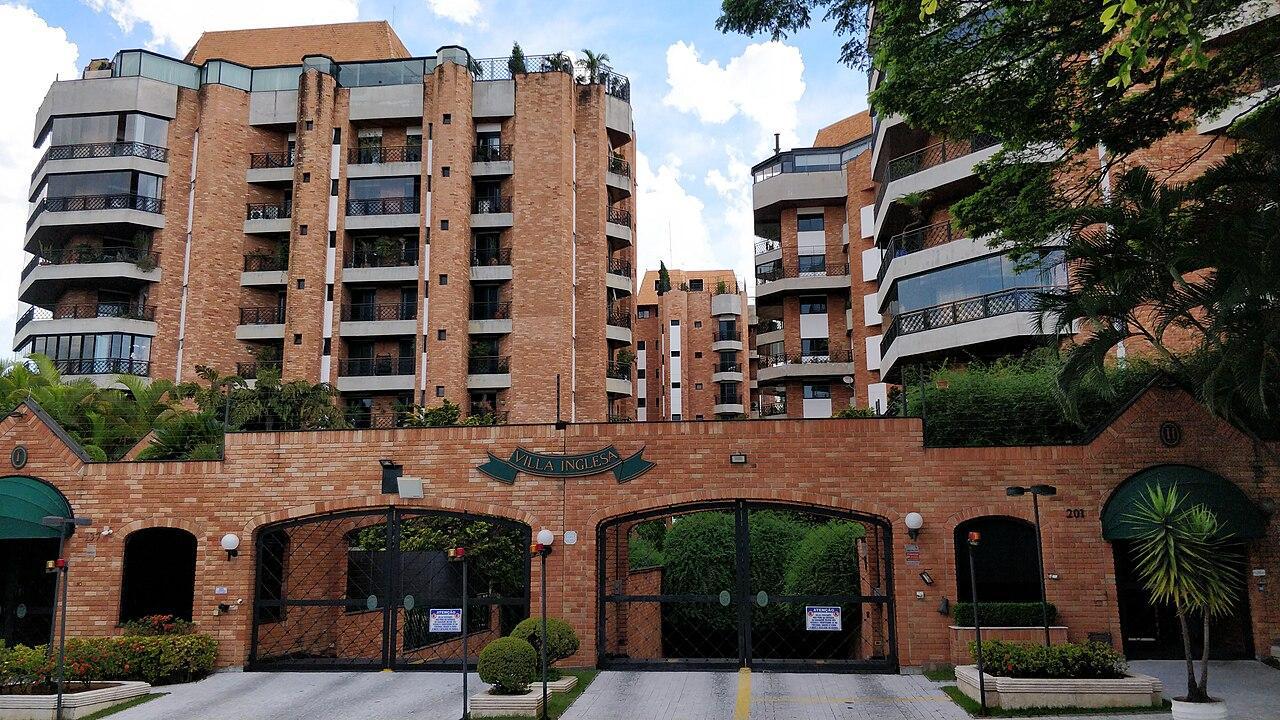

In urban Brazil, portarias–entry halls and porters lodges–and their staff absorb the circulation of people and goods as they pass between the streets and domestic spaces. In Rio de Janeiro’s and São Paulo’s middle-class neighbourhoods, the relative calm at the portaria turns into a hustle and bustle at certain times of the day. In a block of small apartments, the rhythm of movement picks up in the evenings, when domestic and maintenance workers leave the premises, residents return home from work to pick up their orders and mail, and deliveries from restaurants, shops, and pharmacies arrive in ever shorter intervals.
Doormen strike a delicate and demanding balance of control, cordiality, and care, attending to the routine coming and going as well as to specially tailored requests. For example, although building regulations often demand the residents to pick up their own orders, in many buildings, porters patiently pass on the codes to the delivery boys, carefully guard the goods until pick up, or even dispatch them in the elevator to the recipient. It is only late in the evening when the sensorial overload in the interstitial zone of the portaria dies down. Later at night, nothing remains but the quiet perseverance of the night porters who, struggling with their fatigue, attend to people returning home late and night time visitors, who arrive in the dark and leave before dawn.
In cities where private security workers like doormen and their equipment are part of the ordinary (White and Diphoorn 2024; Durão 2023), the doormen’s accounts of the world they inhabit disclose the density of the socio-techno-material relations in portarias. Often derived from brief and localized tasks and encounters, the sensory density builds up over time and enriches the socio-techno-material mediations of urban inequality (Heil et al. 2025).
As Northeastern migrants in the country’s richer Southeast, racialized men and women most often constitute the staff at portarias. Their stories unravel the material and sensorial making of more-than-security in the urban. Shaped by the interplay of care, cordiality, and control, we ask how more-than-security is constitutive of the social, racial, gender, and material hierarchies that grow out of colonial and neoliberal logics. We argue that the socio-material worlds of porters as well as their embodied and multisensorial engagements with this world reveal a subaltern archive of the making of (in)security in contemporary urban Brazil. While the infrastructure of portarias materially provides for the provision of hospitality and security, the multisensorial and embodied practice of porters foregrounds the intricate entanglements of care, cordiality, and control in these transit spaces and the interactions with the people who pass.
By engaging in dialogue with those who breathe life into portarias, we account for the subaltern registers of the urban that, according to Ananya Roy (2011), describe significant features of contemporary dynamics, which urban theory has been unable or unwilling to account for. We draw from our continuous long-term fieldwork on private security in São Paulo (Durão) and on social hierarchization and difference in Rio de Janeiro (Heil), starting in the 2010s. Attending to the logics of control, cordiality, and care in portarias in urban Brazil, anthropology can learn about the everyday layering of neoliberal and colonial logics as well as the material, sensory and embodied experiences that reproduce and reconfigure the social, racial, and gendered hierarchies at stake at the threshold from public to private.
To (not) care
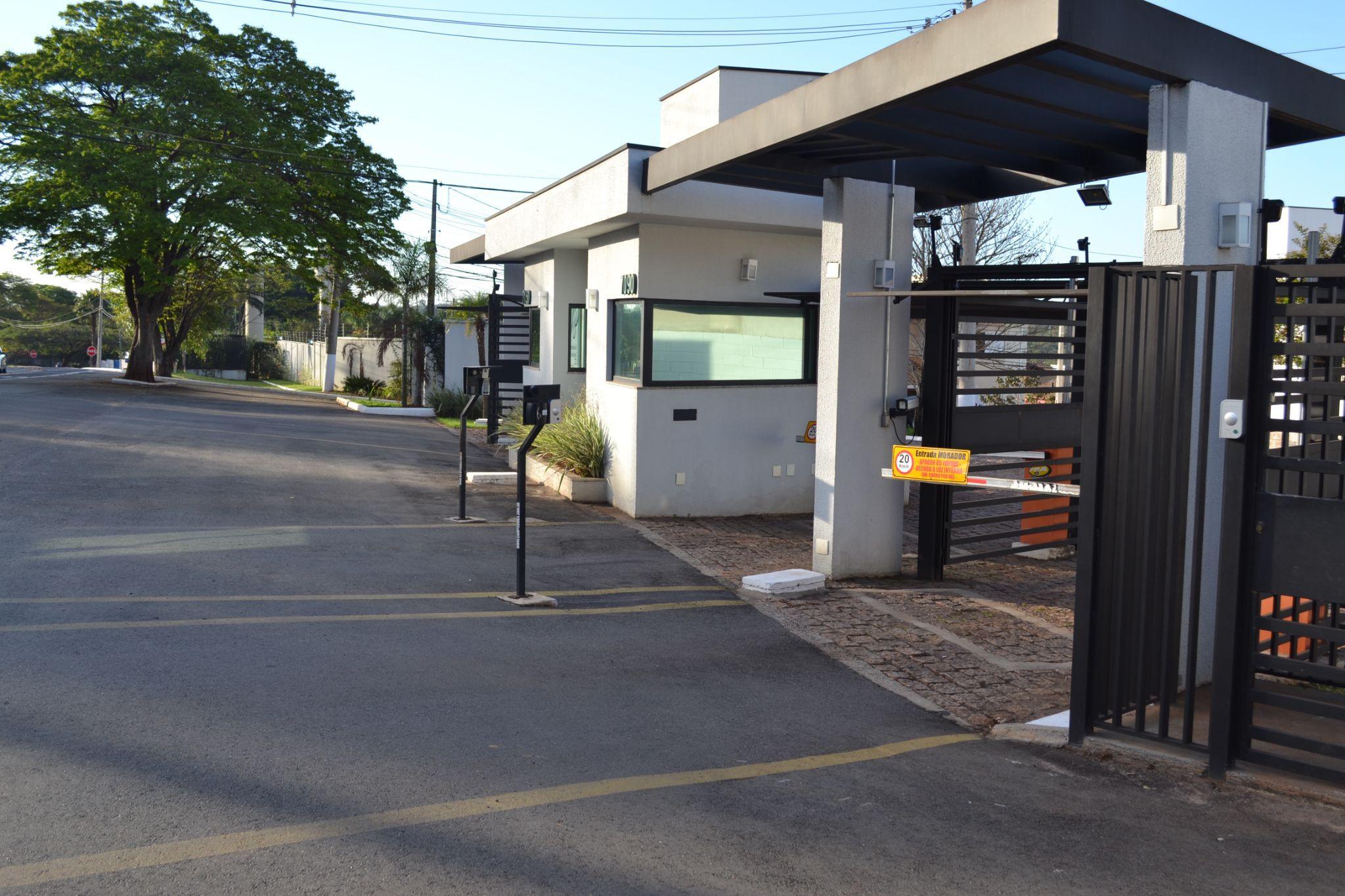
At first glance, the infrastructure of portarias facilitates both hospitality and security. Providing for hospitality, it taps into a hotel aesthetic with shiny receptions and uniformed staff who greet hosts and guests, manage registration devices, and announce someone’s arrival. In contrast, special security devices disrupt the smooth material surface of hospitality. For example, double gates, fencing, and turnstiles interrupt the circuit of people and things, performing the securitization of buildings, their inhabitants, and their assets.
Workers who attend to the coming and going of people, services, and things are always (expected to be) already present at the entrance (Durão 2023). This holds for nearly any residential arrangement in urban Brazil, from social housing to the utmost luxury homes. While there are contemporary discussions about a complete virtualization of control in such spaces, especially among the middle class, such systems of remote doormen are far from comprehensive implementation. At best, more elaborate gadgets–from responders to biometric recognition and outsourced security cameras that are part of networked digital vigilance across the whole city–are added to existing security assemblages that porters are a part of. Porters themselves reproduce the discourse of those residents who believe that it is them–the cordial and caring staff –who are needed for it to feel right when arriving back home. As one doorman said: “Nothing compares to our presence at the front desk; no technology of a remote gatehouse takes care of the residents or the building itself when there is a problem” (emphasis added).
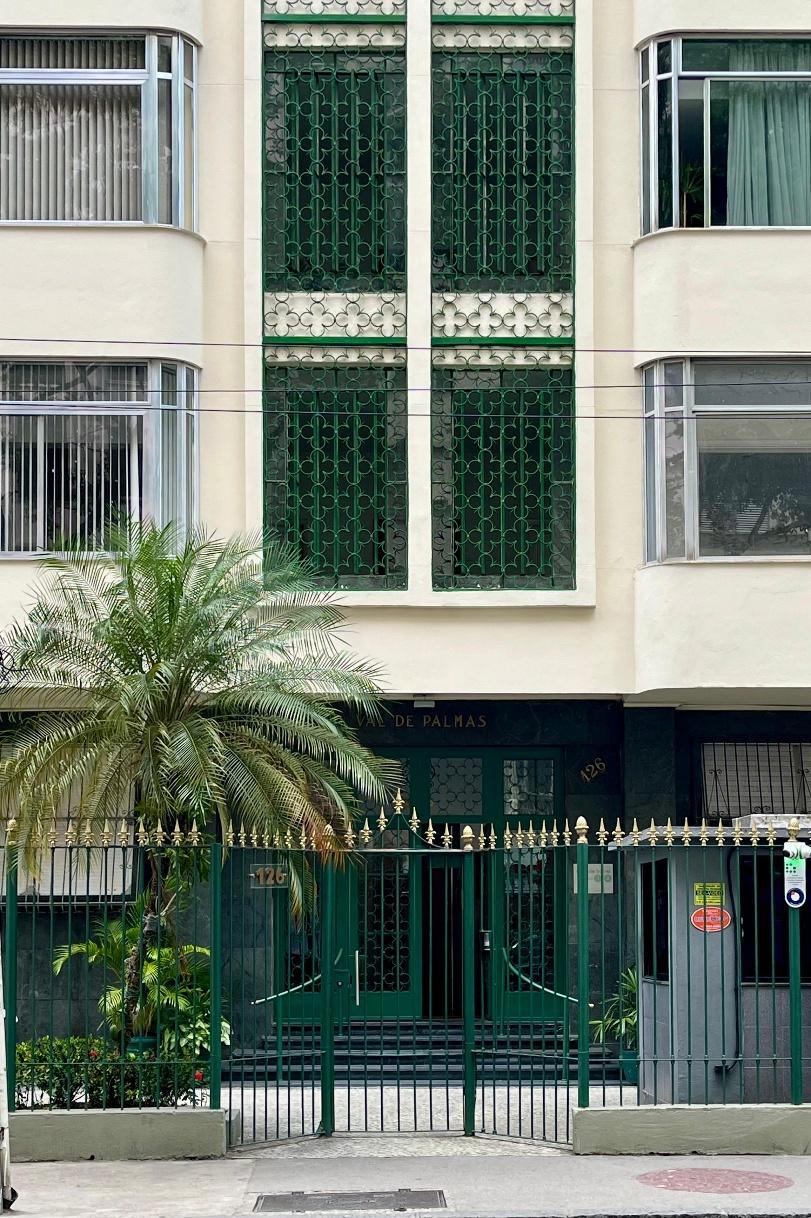
A middle-aged man from the country’s Northeast, Junior, served the afternoon-evening shift at the portaria of a middle-class condominium in Rio de Janeiro’s privileged southern zone with some 100 small apartments. Every night, he was feeling exhausted from the swell of deliveries that arrived with vain motor boys. Their behaviour could be intimidating or simply unnerved but, for Junior, it did not amount to being offensive. Most of the time, Junior was light-hearted at work and cultivated decent relations with residents and everybody else who stopped by. Not only did he receive and dispatch deliveries for the recipients, but he also compensated for regular technological glitches and badly designed spatial setups to best attend to the inhabitants’ needs and sensibilities. Normally up for a joke to cheer people up, Junior also knew well when a calmer and more careful approach was appropriate or in his best interest. Like Junior, many doormen were convinced that attuning to the cordial routines of the coming and going was more important than technology. This also held true when they swiftly attended to the expectation of informal care and when unknown people and behaviour demanded vigilance and control.
Delivery boys were a case in point. To Junior, they were a security risk who, protected with helmets, could carry out a quick raid in the building. The owners’ assembly had debated whether to keep motor boys out of the building by making it mandatory for residents to receive their orders at the gate. However, the residents decided against it, letting convenience overrule the emergent sense of insecurity. Junior had adapted to the decision but in private left no doubt on his part: he would not risk his life for the residents in the event of an armed burglary. Keeping his views to himself, he avoided any unnecessary stress by maintaining a sense of cordial care.
While Junior was ready to frequently go out of his way, he could become irritable and upset when residents and visitors imposed their desire to have him serve them instead of doing his job. Having to wait in the rain for a moment while Junior attended to another immediate demand, Ligia, a resident, lashed out that the building’s standards left much to be desired. Why had Junior not rushed to the gate with an umbrella to protect her? Junior had jokingly asked where she had seen such service performed by an average doorman. He still found the expectation absurd and a breach of both common sense and respect for him and his work. For Junior, Ligia was among the two or three “crazy” residents with anachronistic expectations who seemed to be a rule of any apartment building. All that remained between Ligia and Junior were minimally cordial greetings.
While Junior was still directly employed by the building, Julia worked as an outsourced access controller (controladora de acesso) in a gated community of some 330 residents in São Paulo. Having moved to São Paulo as a young married woman, she had followed her sister-in-law’s advice and started to work at a portaria. She had timidly adopted the protocols and routines of politeness and control from her co-workers. She struggled with the feeling of being permanently compared with her sister-in-law who worked alternating shifts, was already known, and had more experience on the job.
If someone unknown arrived, Julia greeted and, in painstaking fashion, requested all key information – destination, purpose, full name, ID, previous visits. After completing a facial registration and announcing the visitor, she provided them with the information on how to leave later. While everything had been going well, Julia felt increasingly exposed to blackmail from one of the residents. The resident claimed to be dissatisfied with Julia’s lack of friendliness and her apparent inability or unwillingness to show more affection and attention whenever he entered or left the condominium. Julia felt she was being accused of failing to be welcoming, something she highly valued in her interactions with residents.
Increasingly under pressure, Julia began to fall ill, gain weight, and suffer from nervous breakdowns. The day she missed work to see a psychiatrist, without prior notice, she was fired “for just cause” by her service company. After the fact, she realized that her dismissal was due to the same resident, for whom Julia had never felt right. He had asked the condominium manager to make her redundant, which the service company used to end her contract with them. Julia assessed the work at portarias as follows: “Outsourcing is a cruel world because everyone considers themselves our bosses: the employer, the supervisors, the building manager, the caretaker, the residents, and even their children.” While she had initially found the role of providing hospitality as part of access control agreeable, she had come to develop a strong dislike of the system that had effectively rendered her a disposable resource.
A good-looking young black man, Zé was a janitor acting as a doorman in an upper middle-class building in Rio de Janeiro’s southern zone. During conversations, Zé had shared numerous stories of doing residents a favour as well as working extra hours and additional shifts. During a shift as a porter, a son of a resident ordered Zé to look after some belongings he had temporarily placed on the sidewalk for pickup. While generally feeling inclined to go out of his way, Zé had disliked the way the request had been posed, eventually halted the task, and returned to his actual duties. Zé was aware that his refusal to outperform for an ill-tempered son of an owner might get him into trouble. And so it happened. When the son returned, he verbally attacked Zé and almost physically assaulted him. This entire experience conflicted with Zé’s love for looking after the building and its inhabitants in the best way possible.
Yet, to care had to feel right. Young, gay and black, Zé had no illusions about the place in society to which the son had tried to forcefully assign him: racialized servitude, that is, a colonial fantasy of hierarchy prevalent among Brazilian middle-classes and elites. The portaria was one of the spaces in which they could try to subordinate people to feel authority, guarded and cared for. Those for whom Zé went out of his way at least maintained an appearance of basic respect and appreciation for the care he gave.
On the day, Zé sought the resident warden to relay his view of the incident. Rather than the lack of what Zé would normally judge to feel right based on a demonstration of respect and appreciation, he foregrounded the risk of physical violence after rejecting to deviate from his contractual tasks, namely, to deliver security-hospitality in the premises of the building. It clearly transpired that Zé knew his rights, so he obtained what he demanded: two weeks off with full pay.
When Zé returned to work, a lingering tension prevailed whenever the resident passed, yet it was buried under the performance of a rather cold hospitality. The incident inscribed itself into multiple layers of abusive behaviour in which society’s colonial dependence on servitude materialized. The worst behaviour emerged when contempt for the staff made residents behave as if anything was allowed. Such were the moments when Zé, acting as janitor, once more found himself ambushed: responding to complaints about a sickening smell, he eventually tracked down human faeces hung outside an open corridor window as the cause of the nuisance in an explicit attempt to humiliate Zé. It remained unclear who had played a trick on Zé, reinforcing the sense of how widespread the contempt was for Zé and other workers in precarious conditions like him.
Conclusions
From failing to be friendly enough behind a glass window or providing immediate shelter from rain, to fearing physical violence or deliberate humiliation, the stories of the workers of portarias like Julia, Junior and Zé are plenty. Their stories provide deep insights into the socio-material and sensorial logics of more-than-security in urban Brazil. The porters’ embodied experiences and sensory memories linked to the portaria, its devices, and types of encounters reveal how they experience the pleasures and discontents of cordially providing a sense of security and hospitality as well as informal care. The entanglements of acts of cordiality, care, and control performed by doormen in portarias show the confluence of the effects of neoliberal outsourcing and the country’s colonial past that establish a net of unequal interdependence and servitude. Their interplay specifies the multiple tensions in which the hierarchies of class, race, region of origin, and gender continuously co-constitute one another.
A first contradiction emerges from the ever-more widespread material security infrastructure and the confident affirmations of doormen that they are effectively and affectively indispensable at the portarias. In contrast to security personnel trained to defend while providing hospitality (Robb Larkins 2023), the porters are aware that the care work they perform for the people is vital for the coming and going in portarias precisely because it extends beyond a narrow provision of security.
Yet far from simply feeling appreciated, let alone recognised for the complex and multiple duties performed, doormen put up with the local effects of the multi-layered history of service and servitude in Brazil and their colonial and neoliberal roots. Junior, Julia and Zé were all from the country’s Northeastern states and had come through family networks to work in the Southeastern metropoles. While unobtrusive routine prevailed, specific encounters made them easily feel the logics of racist subordination in which the aspiring and traditional middle classes of Rio de Janeiro and São Paulo engaged, also – but not only – when faced with the hard-working Northeastern “Others” (Schucman 2012). Such subordination showed the violent effects of the intersections of class, gender, region of origin, and race. For Julia, the exigencies to be overly nice and pleasing were distinct from the risk of physical abuse, as in the case of Zé.
Given specific visceral reminders, porters could hardly forget the multiple hierarchies into which they were placed. The enduring impact of the colonial past was particularly evident in how workers of portarias navigated the provision or denial of care in spaces that were otherwise characterised by a calming sensation of hospitality-security. For doormen, all they expected was to treat (and be treated) well, based on a bare minimum of reciprocity and respect. Yet too often service was demanded on the terms of servitude. However, the conflicting influence of growing neoliberal outsourcing and formal workers’ rights could alter the course of events. Those directly employed, such as Junior and Zé, were able to voice their dissatisfaction and give space to their emotional push back against what seemed to be utter abuse. They firmly believed that the more-than-security they provided was not easily outsourced. In contrast, Julia was already employed through a service provider, which enhanced her precarity. Still affectively abused, she was simply made redundant, with no opportunity to push back.
The ensuing effects are perverse: on the one hand, the subaltern multisensorial archives of portarias reveal the increased vulnerability of workers when neoliberal logics intersect with colonial social and (infra)structures. On the other hand, the limits of neoliberal profit maximization become apparent in the thorough investment of residents in the personal and potentially abusive touch of relations of care, cordiality, and control that still define the circulation of people and other things in the entry halls and porters’ lodges of urban Brazil.
Susana Durão is Professor and Researcher in Anthropology at the State University of Campinas in Sao Paulo, Brazil.
Tilmann Heil is a Visiting Professor in Anthropology at the University of Leuven and Principal Investigator of the Global South Studies at the University of Cologne.
References
Durão, Susana 2023. Conviviality in Inequality. Security in the City (São Paulo). Mecila Working Paper Series 62.
Heil, Tilmann, Fran Meissner, and Nikolaus Vertovec 2025. Techno-Material Entanglements and the Social Organisation of Difference. Ethnic and Racial Studies: 1–17. doi: 10.1080/01419870.2025.2469694.
Robb Larkins, Erika 2023. The Sensation of Security. Private Guards and Social Order in Brazil. Police/Worlds. Ithaca: Cornell University Press.
Roy, Ananya 2011. Slumdog Cities. Rethinking Subaltern Urbanism. International Journal of Urban and Regional Research 35 (2): 223–238. doi: 10.1111/j.1468-2427.2011.01051.x.
Schucman, Lia Vainer 2012. Entre O “Encardido”, O “Branco” E O “Branquíssimo”. Raça, Hierarquia E Poder Na Construção Da Branquitude Paulistana. Doctoral Thesis, Social Psychology, Universidade de São Paulo, São Paulo.
White, Adam, and Tessa Diphoorn 2024. The Everyday Political Economy of Private Security. Policing and Society 34 (1-2): 1–9. doi: 10.1080/10439463.2023.2268256.
Cite as: Durão, S. & Heil, T. 2025. “Care, Cordiality, and Control. Multisensorial Encounters with More-than-Security in Urban Brazil” Focaalblog December 24. https://www.focaalblog.com/2025/12/24/susana-durao-and-tilmann-heil-care-cordiality-and-control-multisensorial-encounters-with-more-than-security-in-urban-brazil/